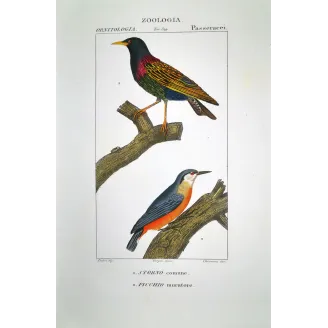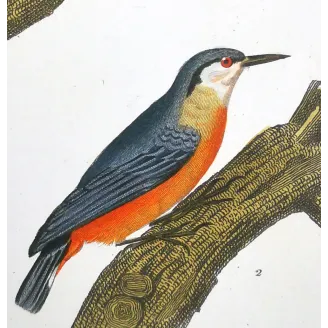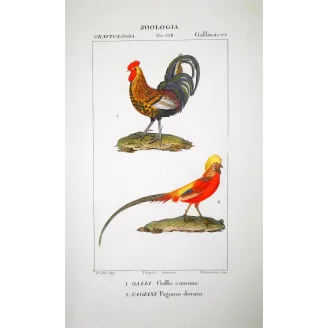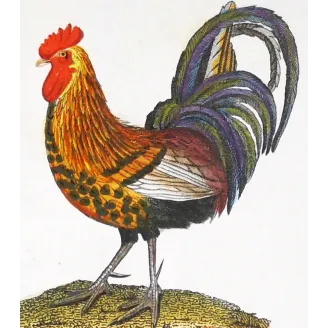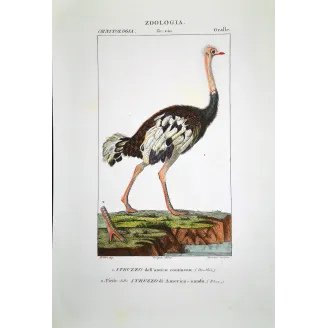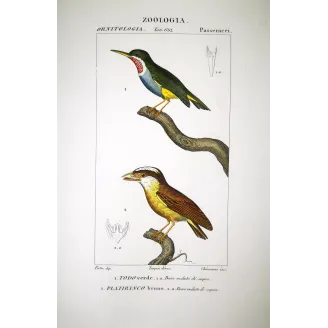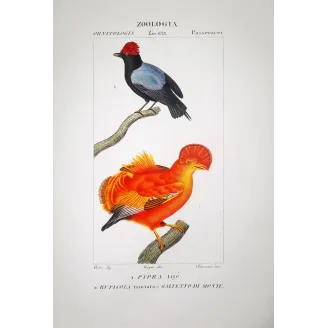
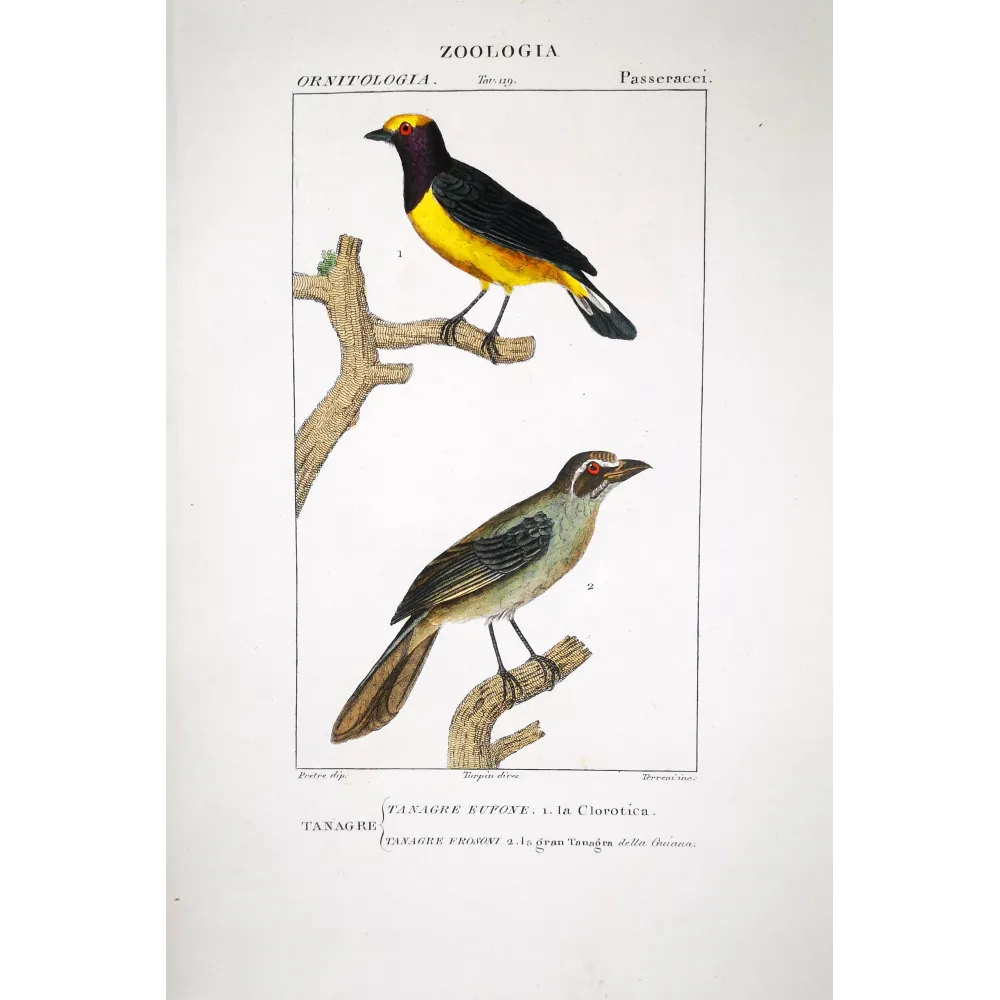
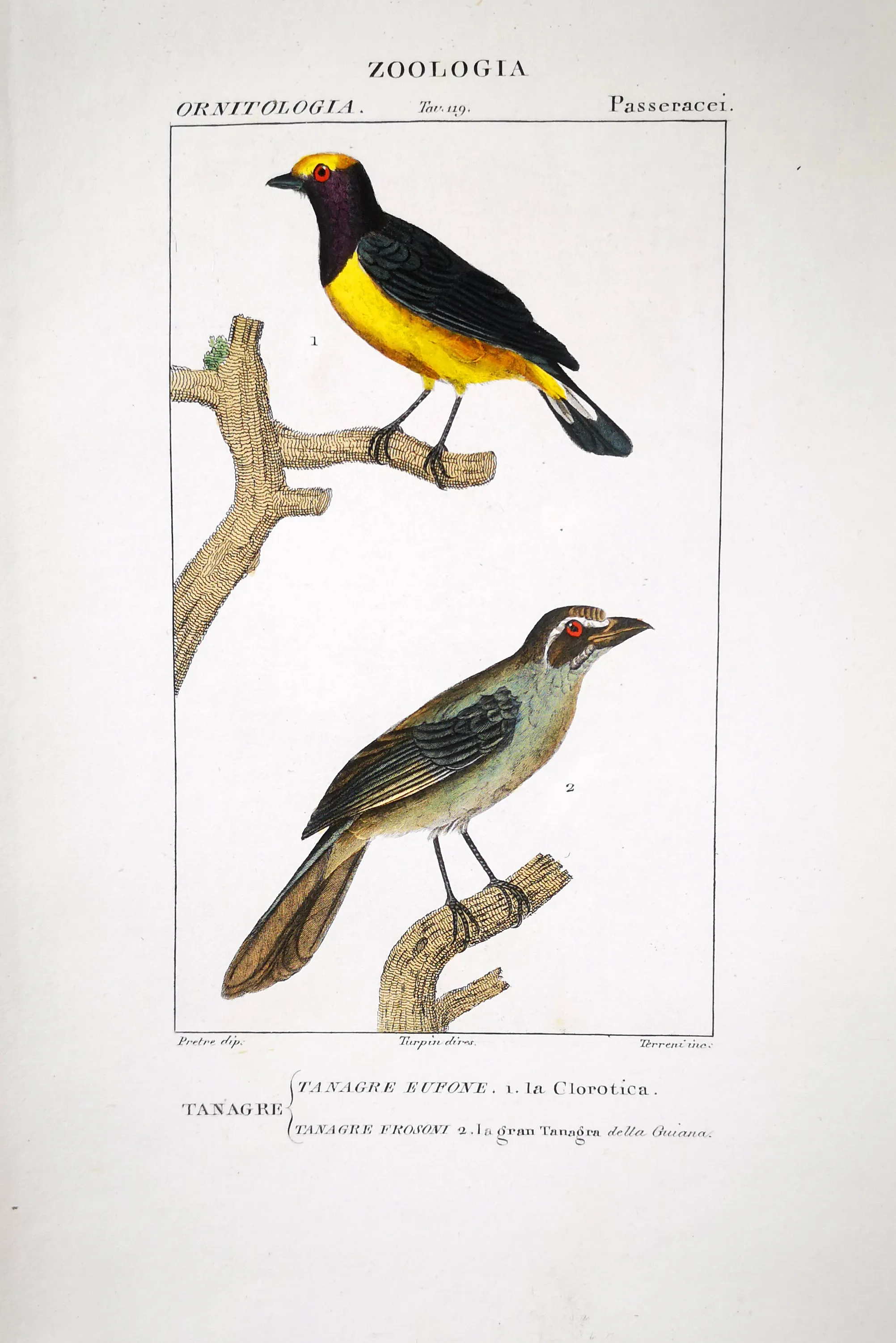
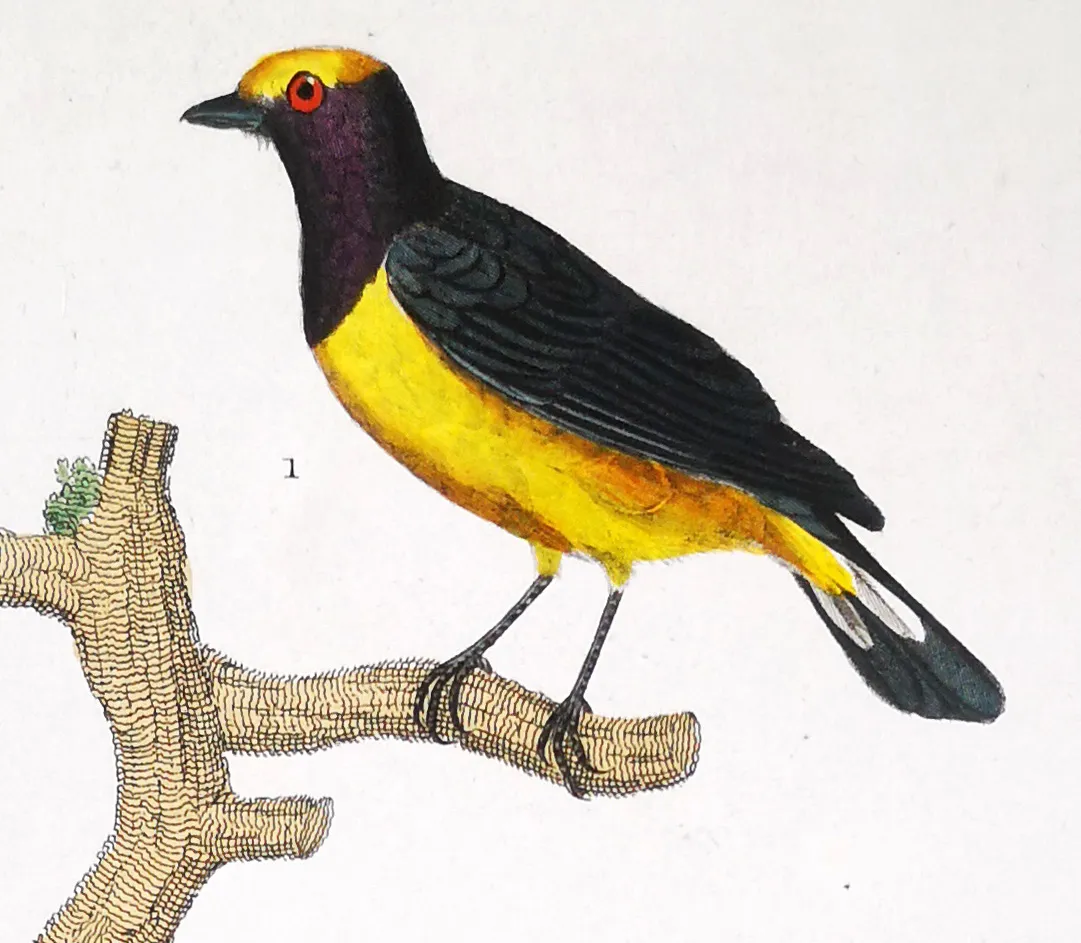
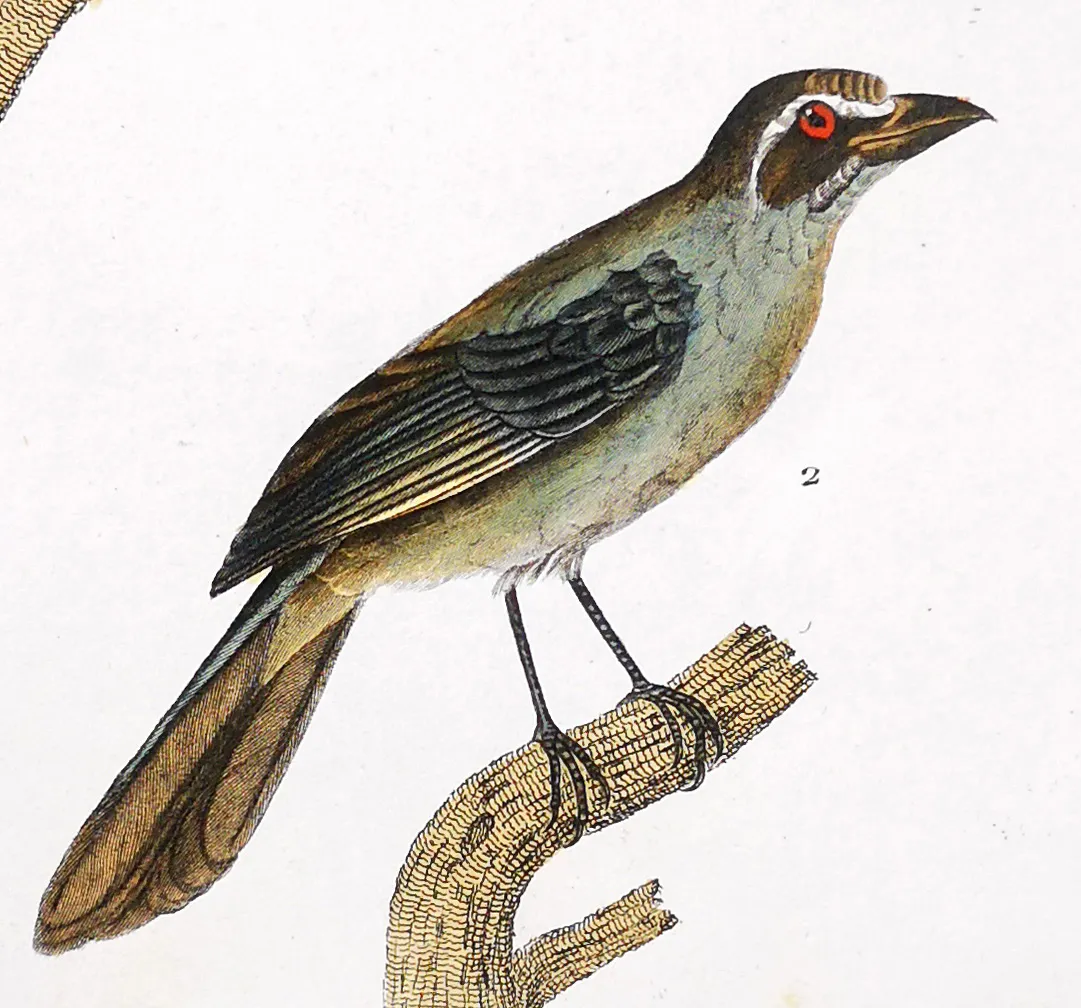
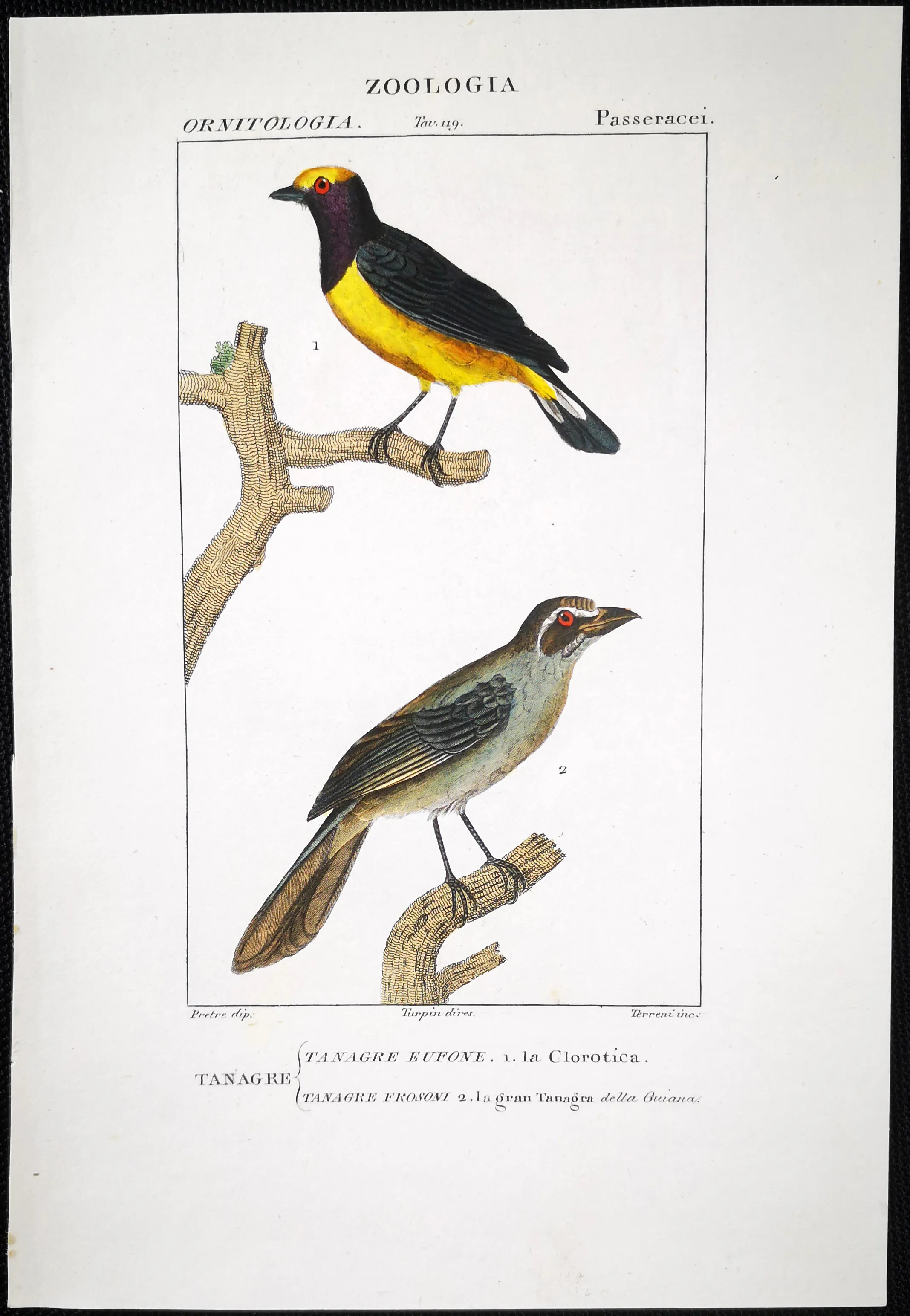


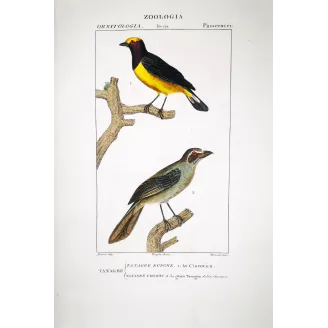
Graceful composition of a Yellow Tanager and a more subtly colored species from the Guyana region.
 Delivery policy
Your print will be carefully prepared and shipped worldwide via trusted couriers (UPS or similar).
 Authentic antique prints
Original engravings from the 17th–19th century.
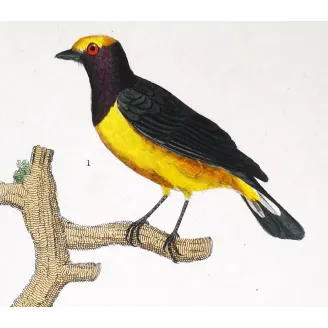
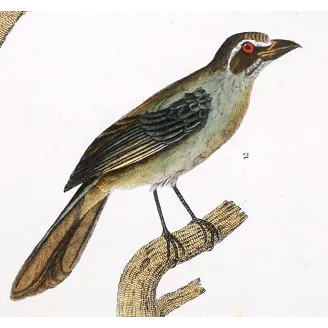
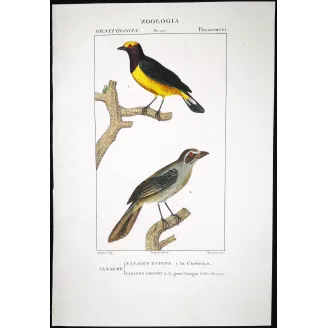
This refined ornithological engraving presents two vibrant South American passerines identified in the plate as Tanagre Eufone (la Clototica) and Tanagre Frosoni (la gran Tangara della Guiana). The sheet belongs to the ornithological section of the Dizionario di Scienze Naturali, where Pierre Antoine Prêtre captures the chromatic brilliance of tropical avifauna with disciplined precision.
Set against a luminous ground, the two birds create a striking vertical composition. The upper figure glows with saturated yellow contrasted by a deep violet-black mantle, while the lower bird introduces muted greens and olive tones, producing a balanced yet vivid ensemble.
— • —
The Tanagre Eufone commands attention through chromatic intensity. The luminous yellow underparts are carefully modulated, avoiding flatness, while the dark plum-violet head and wing create a sculptural counterweight. The red orbital ring provides a subtle focal accent.
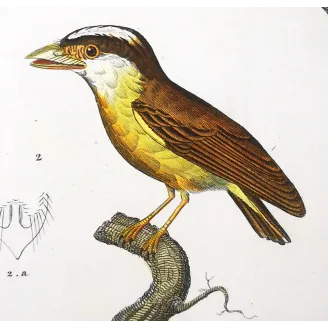
Below, the Tangara della Guiana offers tonal sophistication. Olive-green plumage transitions softly across the wing, while the warm brown tail and crest introduce quiet texture. The two perches, rendered in neutral bark tones, frame the birds without competing for attention. The overall effect is jewel-like yet measured—an exemplary nineteenth-century tropical cabinet plate.
The “Tanagre Eufone” is associated with species of the genus Euphonia, small Neotropical birds renowned for their intense yellow and contrasting dark plumage. In nineteenth-century natural history works, euphonias were admired for their purity of color and compact elegance.
The “gran Tangara della Guiana” refers to tanagers of the family Thraupidae, among the most chromatically diverse bird groups of South America. Their presence in European scientific publications reflected both colonial exploration and the growing fascination with tropical biodiversity. As a 19th-century tropical bird print, this engraving combines scientific interest with strong decorative appeal.
This engraving forms part of the historic Dizionario di Scienze Naturali, a monumental early nineteenth-century encyclopedic enterprise once preserved within a noble library and today housed in the Sacchetti Collection. Each plate reflects a period in which scientific ambition was matched by exceptional artisanal execution — from disciplined copperplate linework to luminous hand-applied color.
These works represent a moment when natural history illustration achieved both scientific rigor and aesthetic refinement. To discover the full story behind these rare prints and their noble provenance, we invite you to read our editorial feature “Not Just Another Print”.
The engraving is in very good antique condition. The impression is clean and well-defined, with preserved original hand-colouring. The paper is smooth early nineteenth-century wove paper (non-laid), consistent with Italian scientific editions of the period. No watermark has been observed. Minor age toning, if present, is consistent with antique paper and does not affect the legibility or decorative quality of the plate.
For further context on Pierre Antoine Prêtre and his contribution to nineteenth-century zoological illustration, see our editorial feature:
Pierre Antoine Prêtre – Illustrator of Natural Science and Marine Life
Specific References
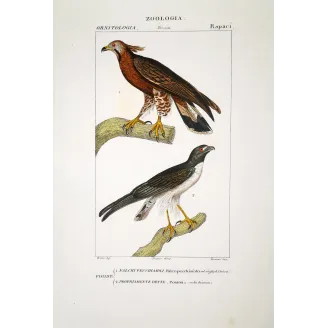
Finely drawn buzzards with a harmonious and naturalistic composition.
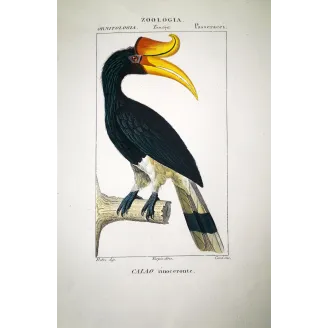
Beautiful 19th century illustration of the Buceros rhinoceros, commonly known as the Rhinoceros Hornbill.
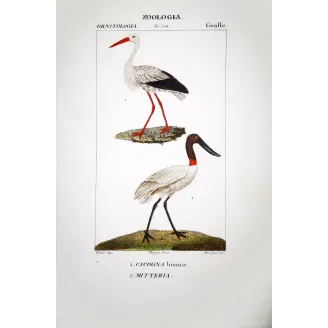
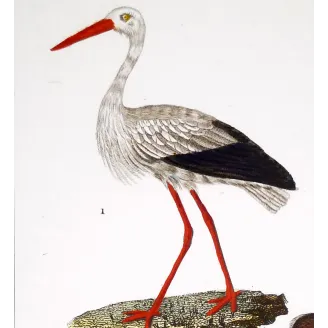
Graceful stork and robust jabiru presented with classic naturalistic balance.
Vividly colored engraving of a European Green Woodpecker and a Eurasian Wryneck, masterfully rendered by Prêtre.
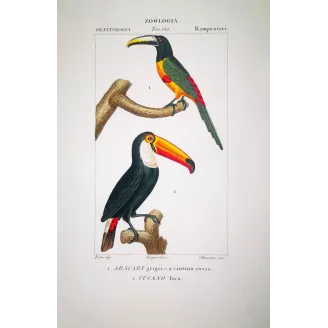
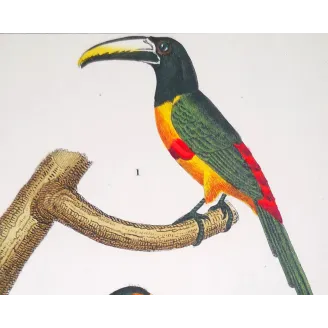
Colored illustration depicting two South American toucans: the Toco and the Red-belted Aracari.
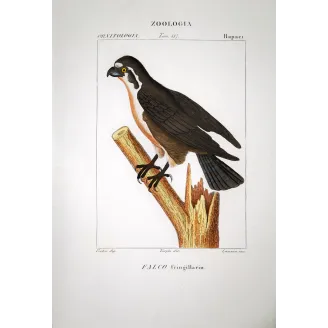
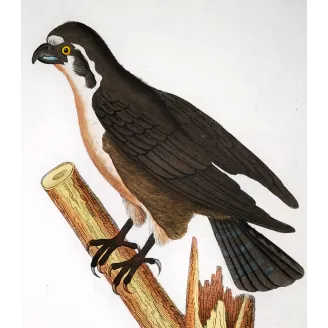
Majestic raptor captured in perfect hunting pose with detailed feathers.
Imposing rendering of the Old World Ostrich and anatomical study of a Rhea foot.
Delicate birds from the New World: the vibrant Green Todus and a brown Platyrinchus with unique beak features.
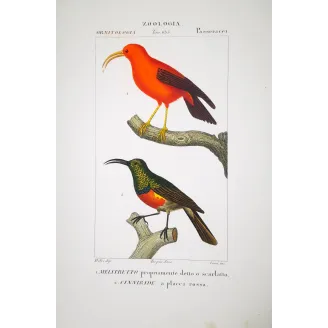
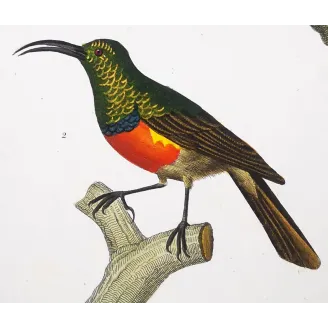
Brilliantly colored honeycreeper and sunbird illustration with tropical vibrancy, captured by Prêtre.
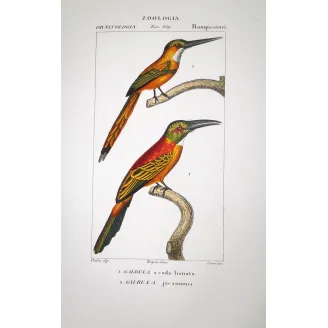
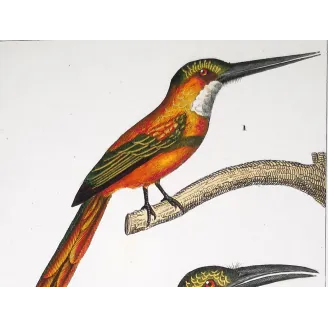
Two vibrant Jacamar birds with metallic plumage and long sharp beaks on stylized branches.
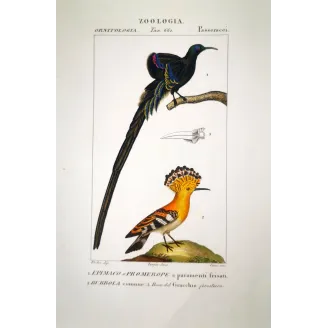
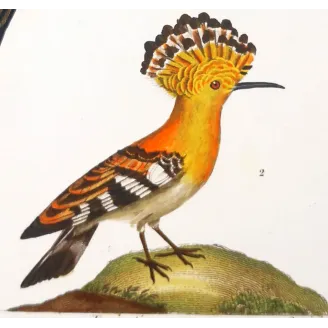
A long-tailed Promerops and a vivid Hoopoe bird, both perched and richly colored against a clean background.
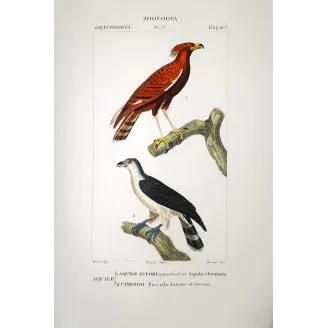
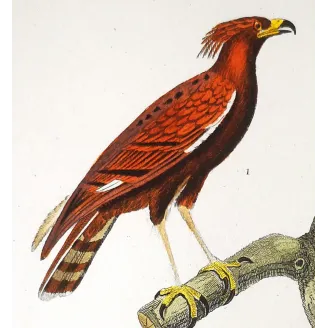
A lively contrast between a fiery red hawk-eagle and a smaller black-and-white goshawk.
Elegant depiction of a Scythrope and a vividly colored red-and-green Trogon perched on branches.
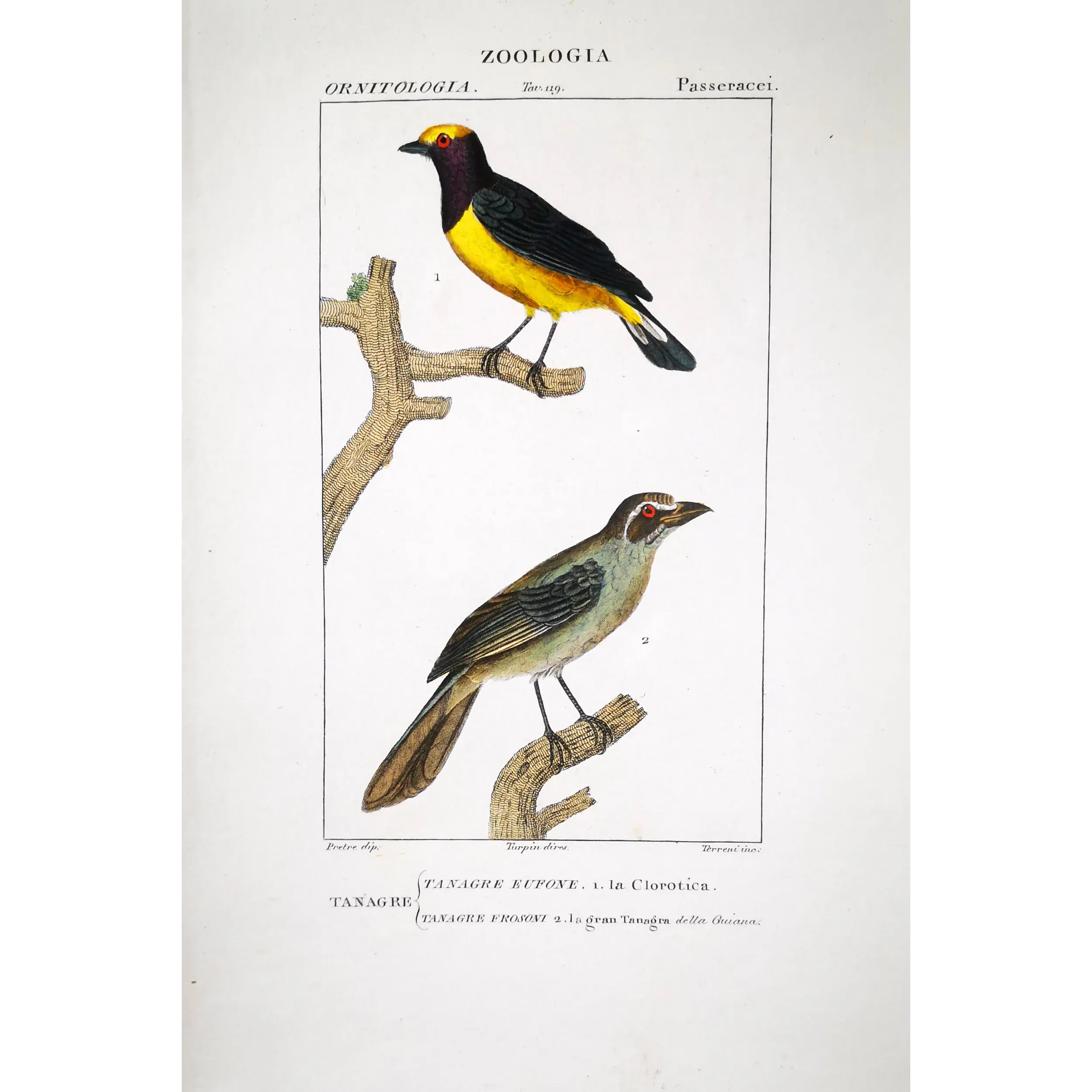
Graceful composition of a Yellow Tanager and a more subtly colored species from the Guyana region.