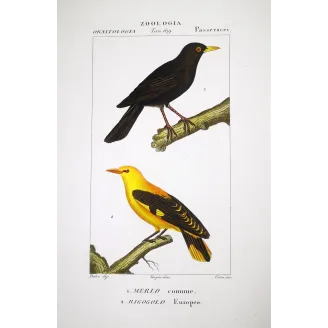
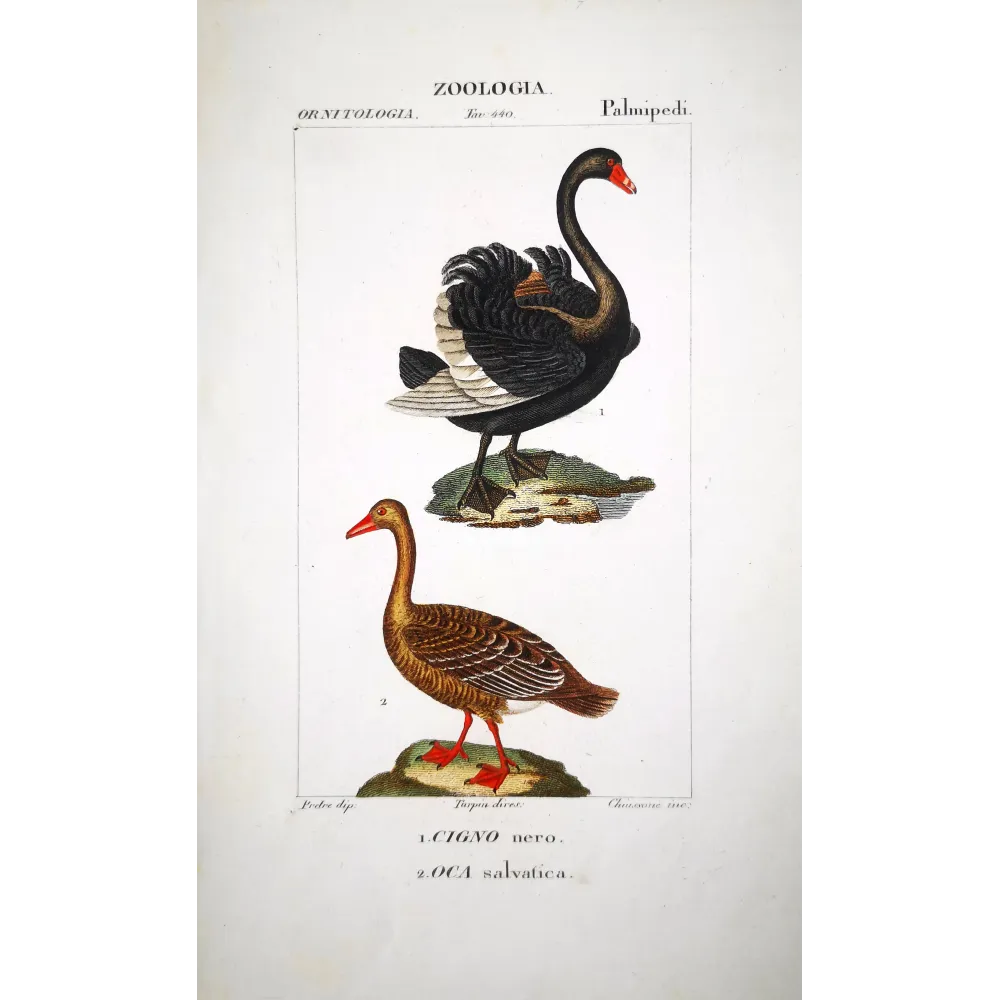
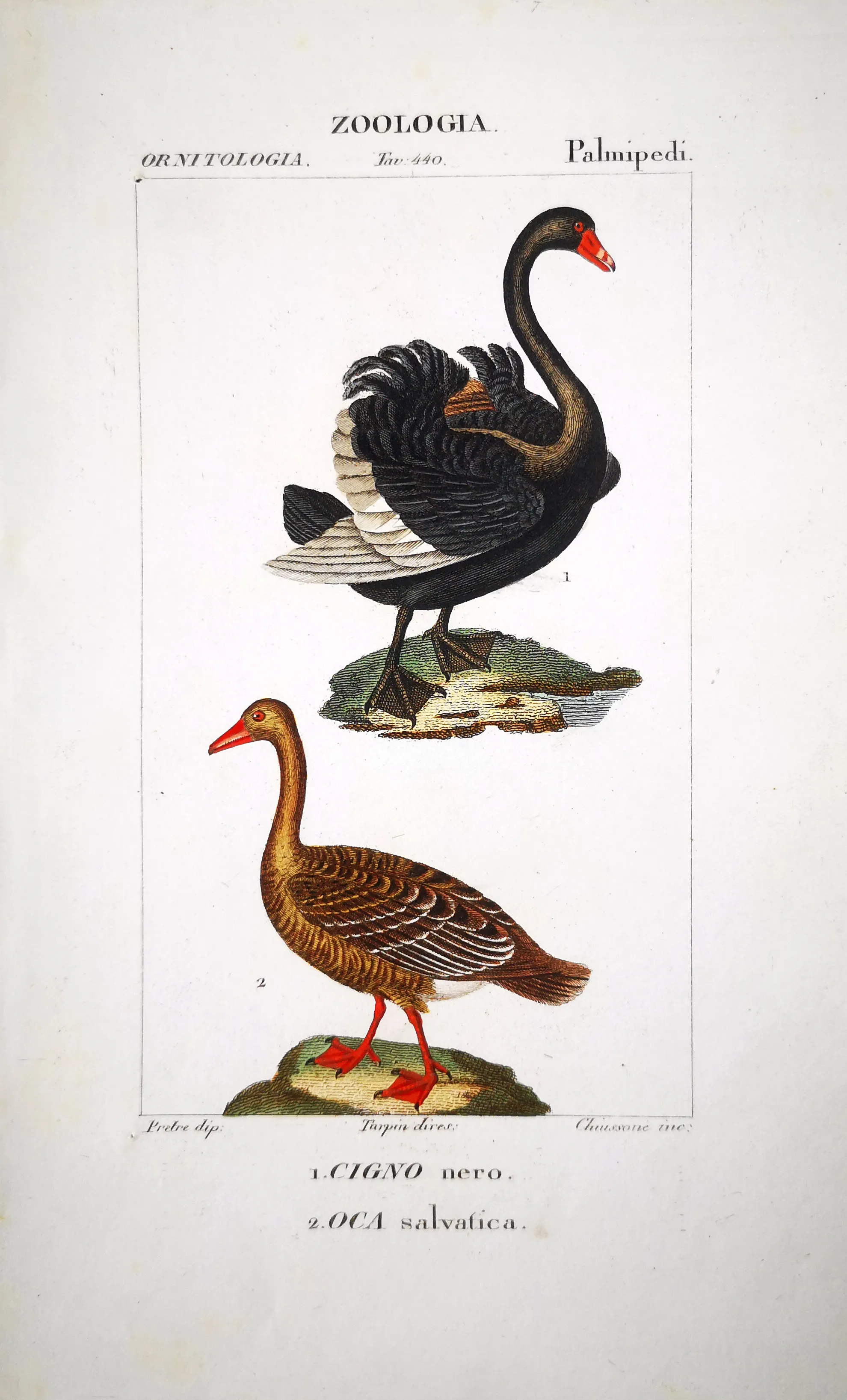
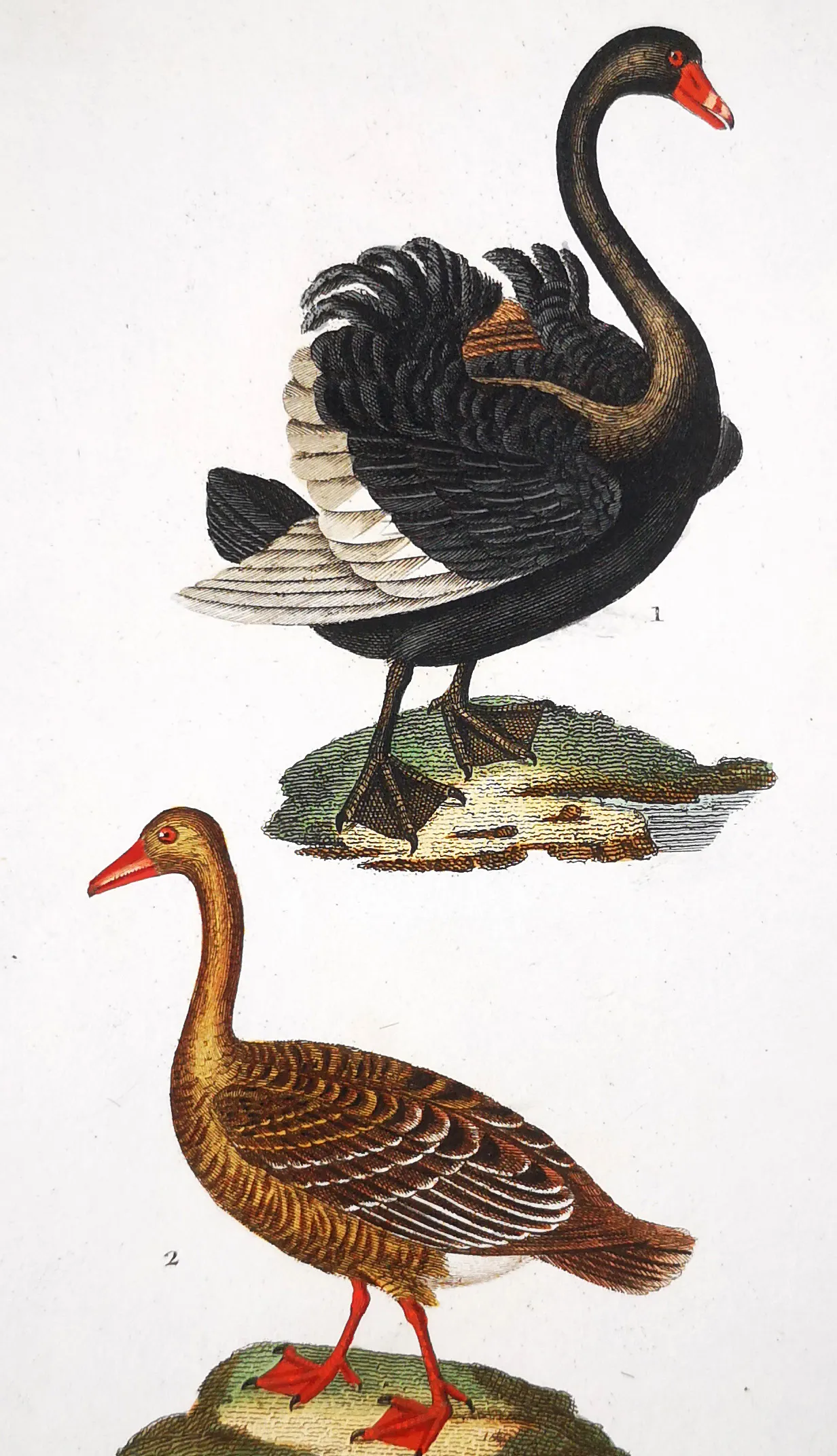
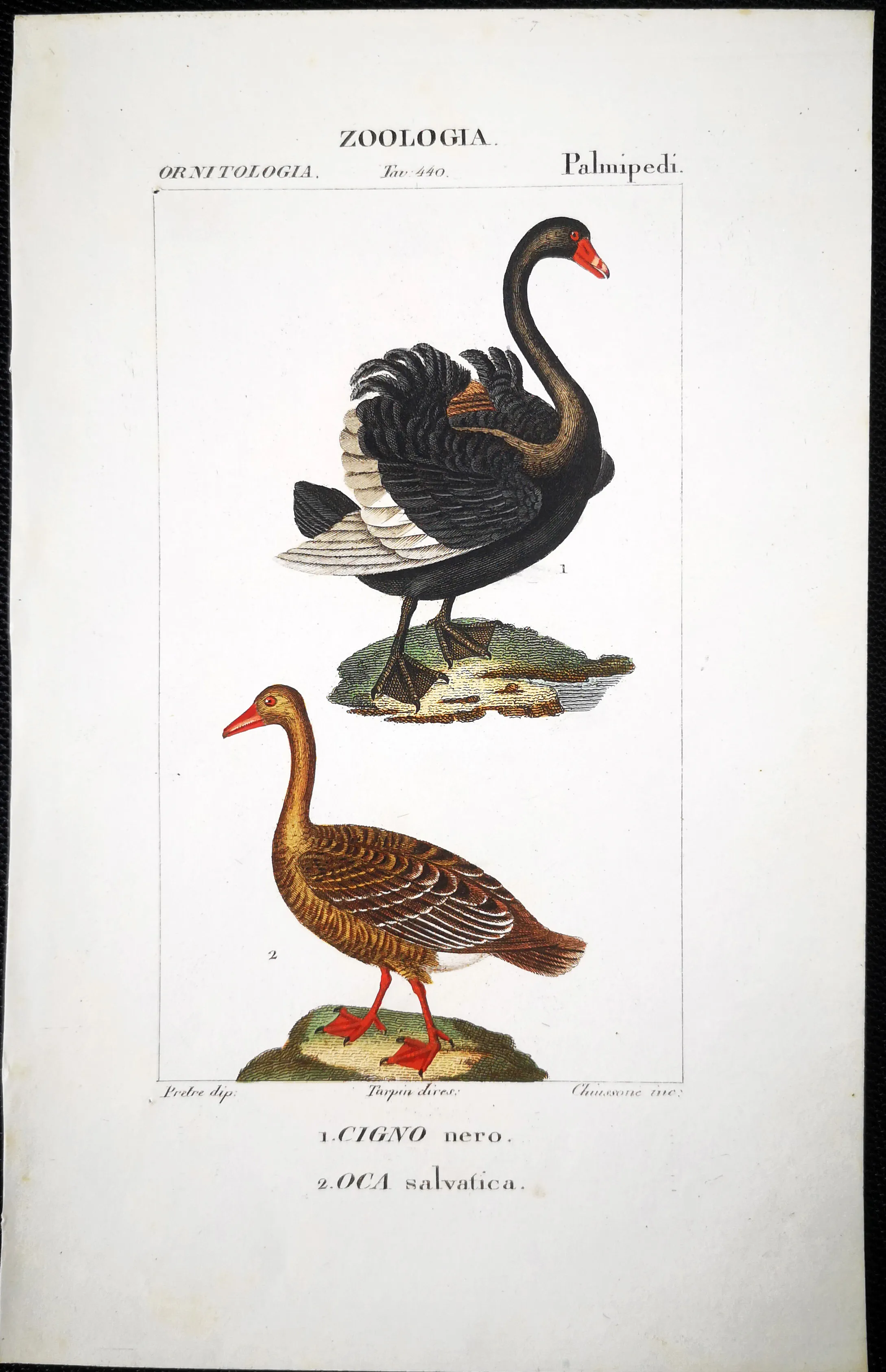



Graceful waterfowl including a striking black swan and a wild goose.
 Delivery policy
Your print will be carefully prepared and shipped worldwide via trusted couriers (UPS or similar).
 Authentic antique prints
Original engravings from the 17th–19th century.
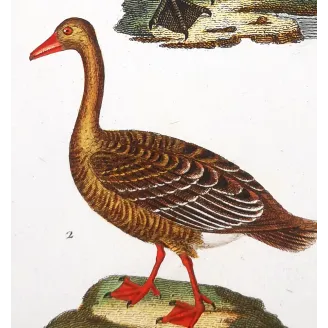
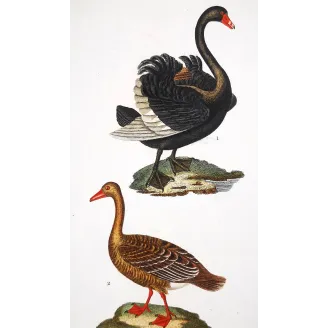
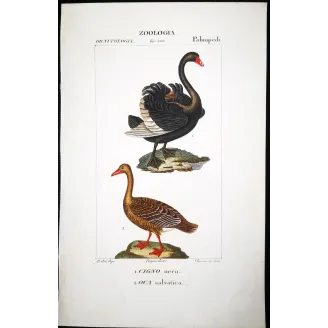
This refined ornithological engraving presents two waterfowl species identified in the plate as Cigno nero (Black Swan) and Oca salvatica (Wild Goose). The sheet belongs to the ornithological section of the Dizionario di Scienze Naturali, where Pierre Antoine Prêtre balances sculptural presence with naturalistic restraint.
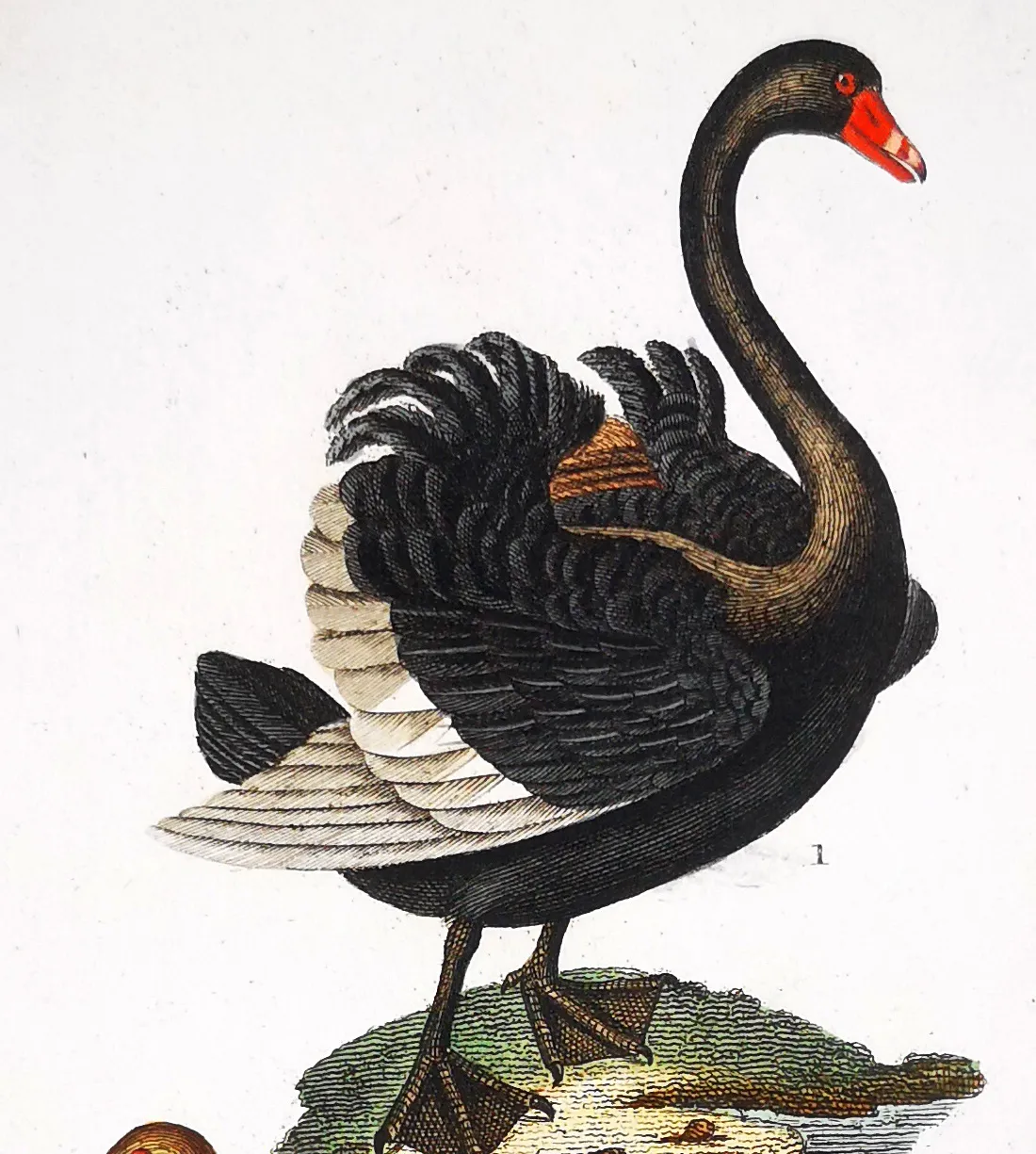
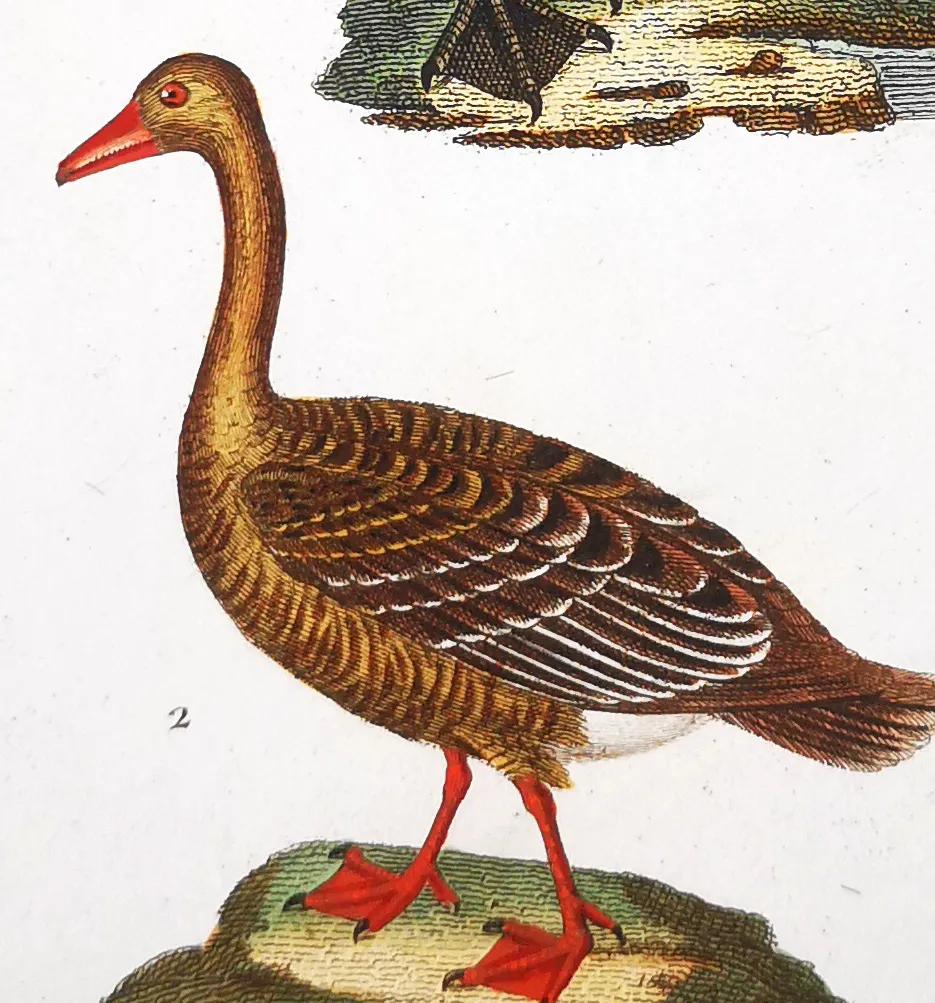
The upper figure dominates through the unmistakable curved neck and deep black plumage of the swan, while the lower goose introduces warm brown tonalities that soften and stabilize the composition.
— • —
The Black Swan is rendered with remarkable tonal depth. Though primarily black, the plumage reveals subtle layering across the wing, with pale feather undersides adding rhythm and texture. The vivid red bill and eye create a focused chromatic accent, preventing the composition from appearing visually heavy.
Below, the Wild Goose is articulated through fine feather striations in chestnut and ochre. Its red legs and bill echo the upper figure’s accents, creating chromatic continuity. The generous negative space around both birds preserves the museum-like clarity characteristic of early nineteenth-century natural history engraving.
The Black Swan (Cygnus atratus) is native to Australia and became a symbol of rarity and the unexpected in European intellectual history. Its introduction to European science challenged long-held assumptions about the color of swans, making it both a zoological and philosophical icon.
The Wild Goose is associated with European migratory species within the genus Anser. Geese have long been part of European rural life and natural history observation, providing a grounded counterpoint to the exoticism of the Black Swan. Together, the pairing reflects the global scope of nineteenth-century ornithological study.
This engraving forms part of the historic Dizionario di Scienze Naturali, a monumental early nineteenth-century encyclopedic enterprise once preserved within a noble library and today housed in the Sacchetti Collection. Each plate reflects a period in which scientific ambition was matched by exceptional artisanal execution — from disciplined copperplate linework to luminous hand-applied color.
These works represent a moment when natural history illustration achieved both scientific rigor and aesthetic refinement. To discover the full story behind these rare prints and their noble provenance, we invite you to read our editorial feature “Not Just Another Print”.
The engraving is in very good antique condition. The impression is clean and well-defined, with preserved original hand-colouring. The paper is smooth early nineteenth-century wove paper (non-laid), consistent with Italian scientific editions of the period. No watermark has been observed. Minor age toning, if present, is consistent with antique paper and does not affect the legibility or decorative quality of the plate.
For further context on Pierre Antoine Prêtre and his contribution to nineteenth-century zoological illustration, see our editorial feature:
Pierre Antoine Prêtre – Illustrator of Natural Science and Marine Life
Specific References
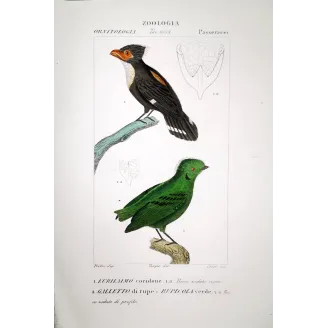
Rare birds of the jungle: the crest-faced Corydon and a luminous green Rupicola.
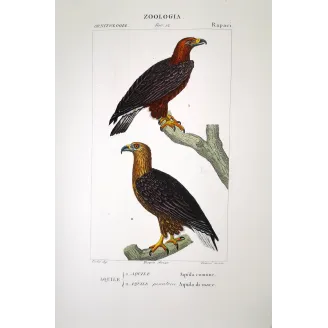
Impressive pairing of two majestic eagles, captured with remarkable precision and power.
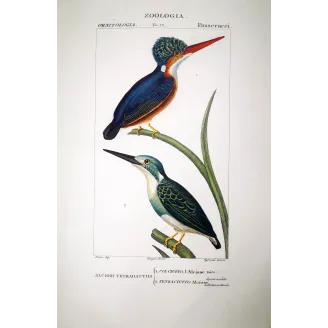
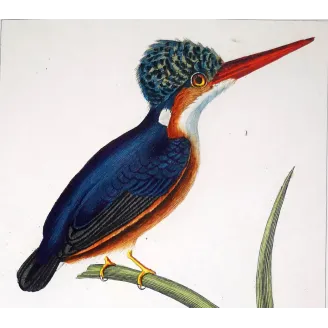
Refined old print with two specimens of South American halcyons: one crested and one with a green-blue livery.
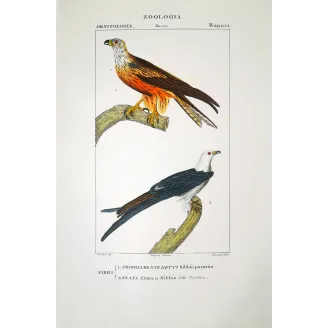
Parasitic Kite & Elanus (Milvus sp. & Elanus sp.) – Original Hand-Colored Engraving by Prêtre, Antique Print.
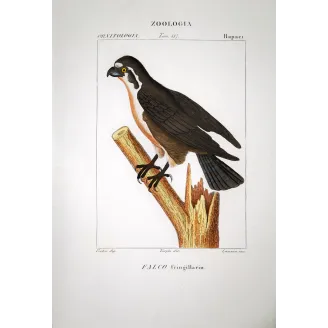
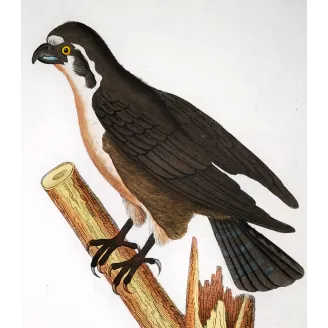
Majestic raptor captured in perfect hunting pose with detailed feathers.
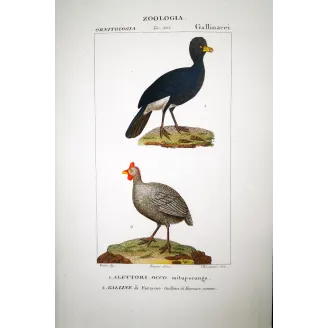
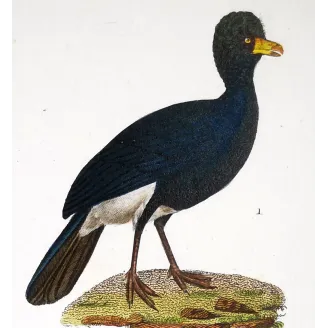
Elegant engraving of a guinea fowl and a Mituporanga, with rich textures and natural posture.
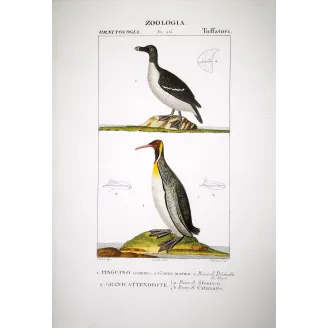
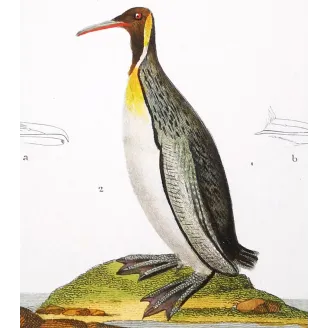
Charming illustration of two aquatic birds with accurate anatomical and marine details.
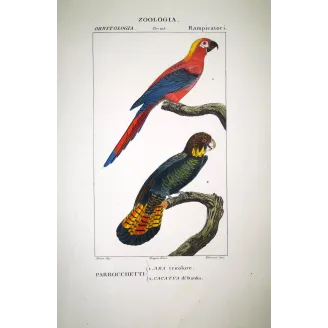
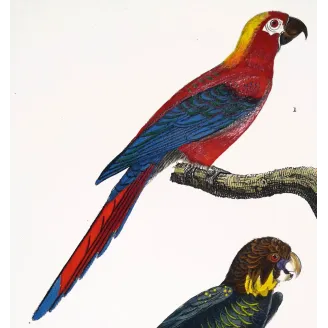
Vibrant parakeets perched on branches: a scarlet macaw and a black cockatoo with yellow and red highlights.
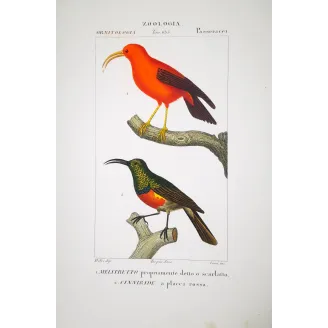
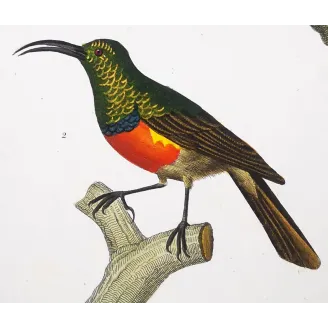
Brilliantly colored honeycreeper and sunbird illustration with tropical vibrancy, captured by Prêtre.
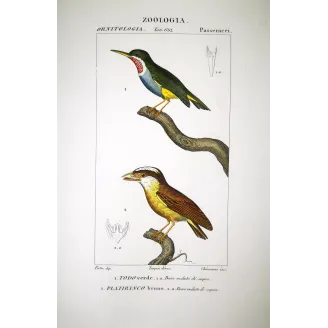
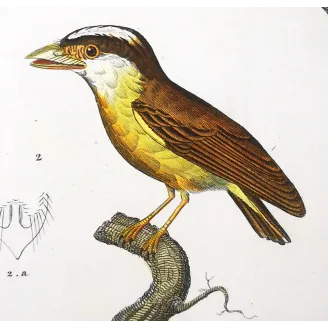
Delicate birds from the New World: the vibrant Green Todus and a brown Platyrinchus with unique beak features.
Exquisite depiction of the ornate Greater Bird-of-Paradise alongside the striking Common Hill Myna.
Elegant depiction of a Scythrope and a vividly colored red-and-green Trogon perched on branches.
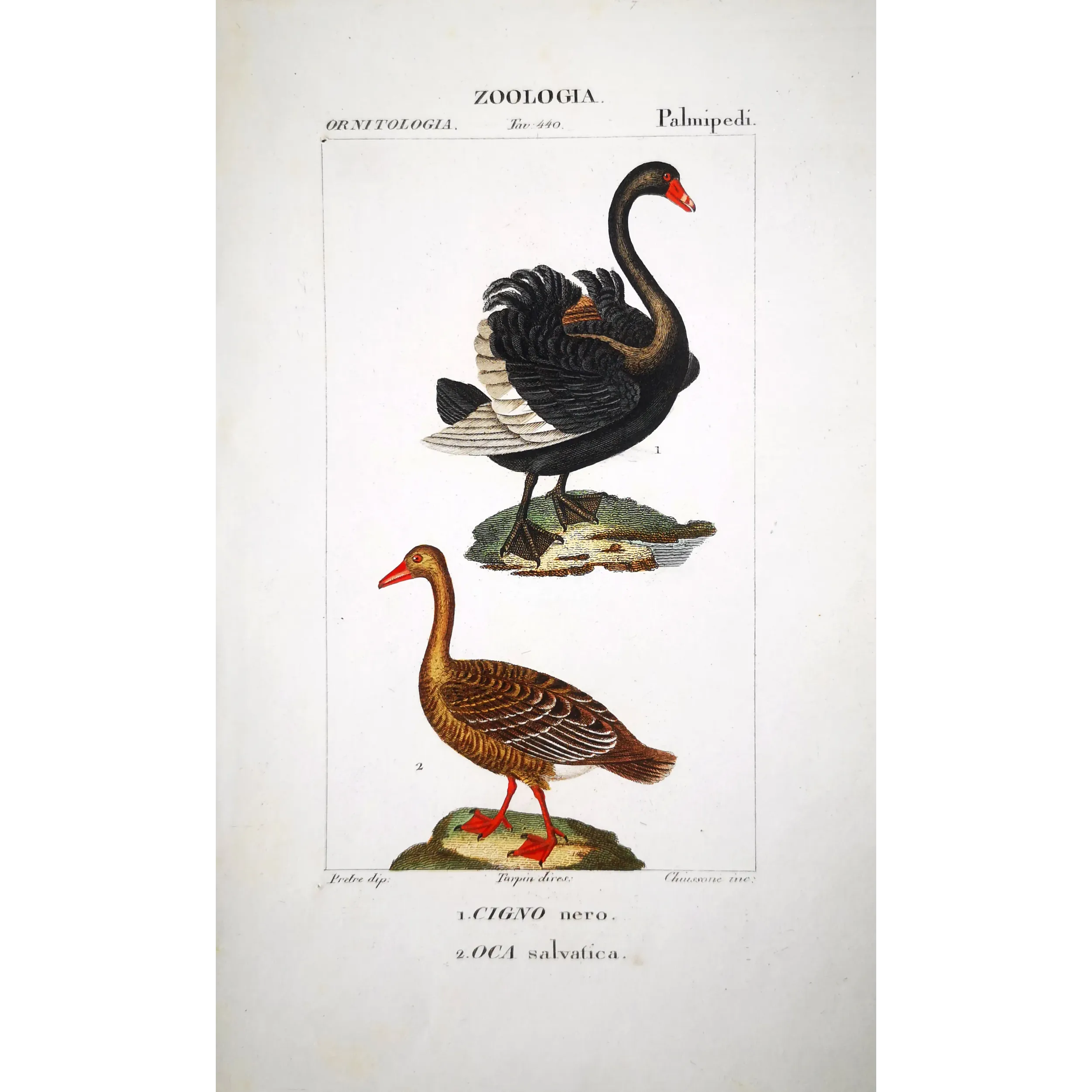
Graceful waterfowl including a striking black swan and a wild goose.