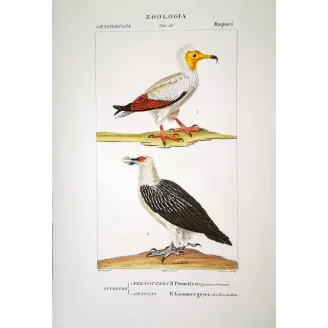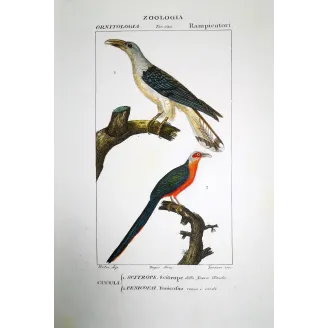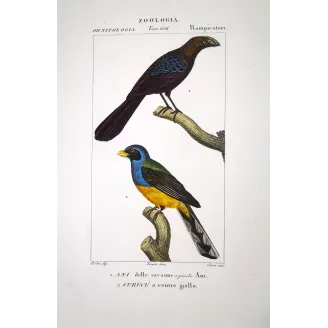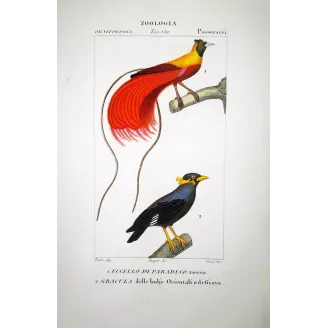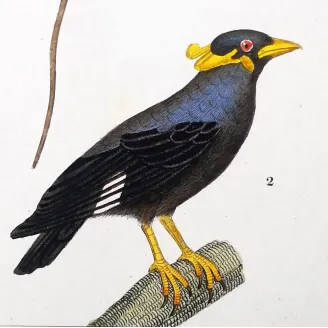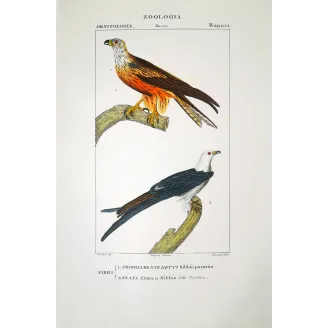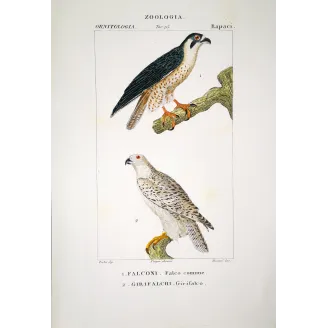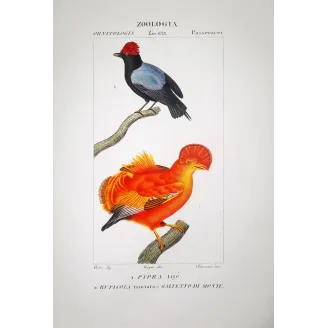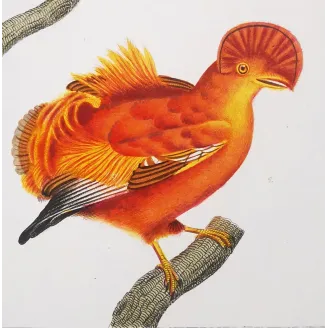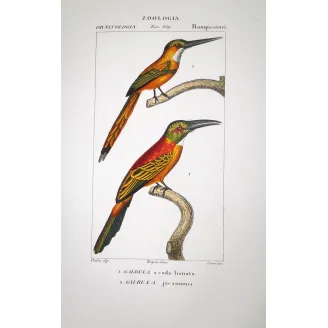
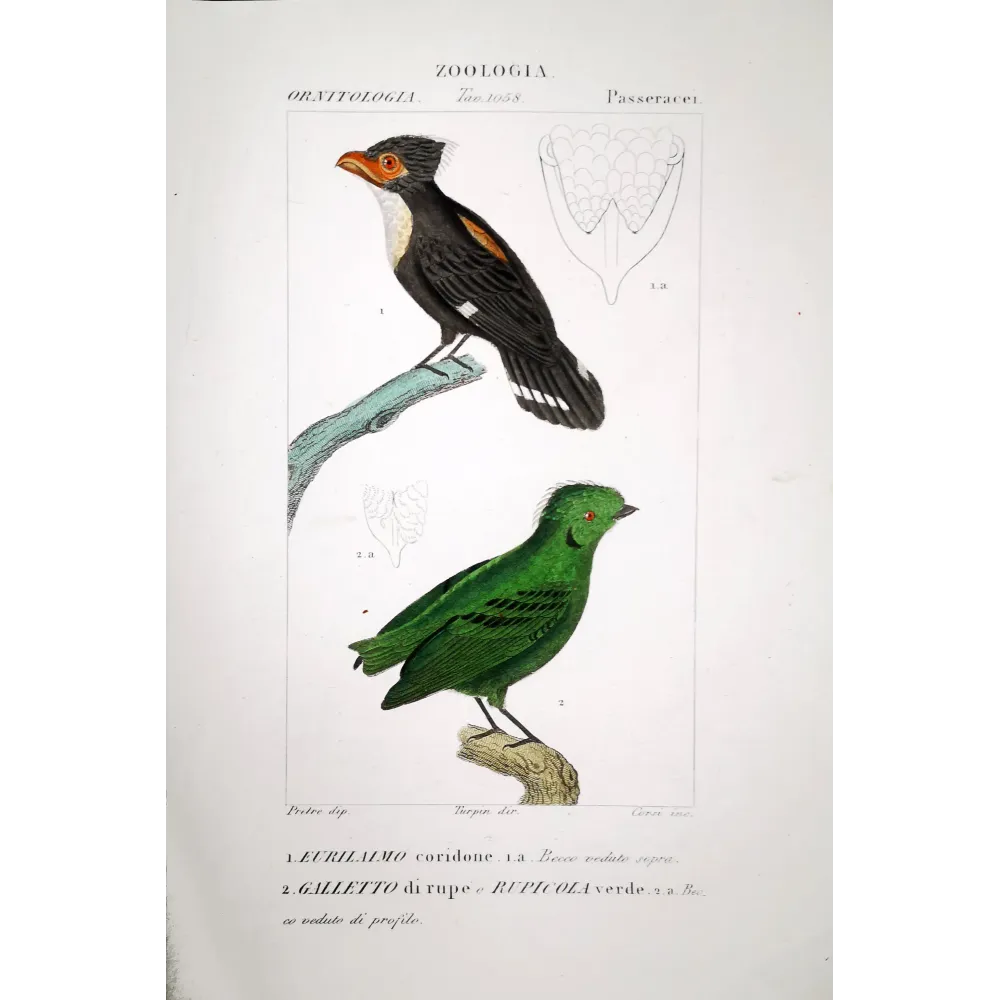
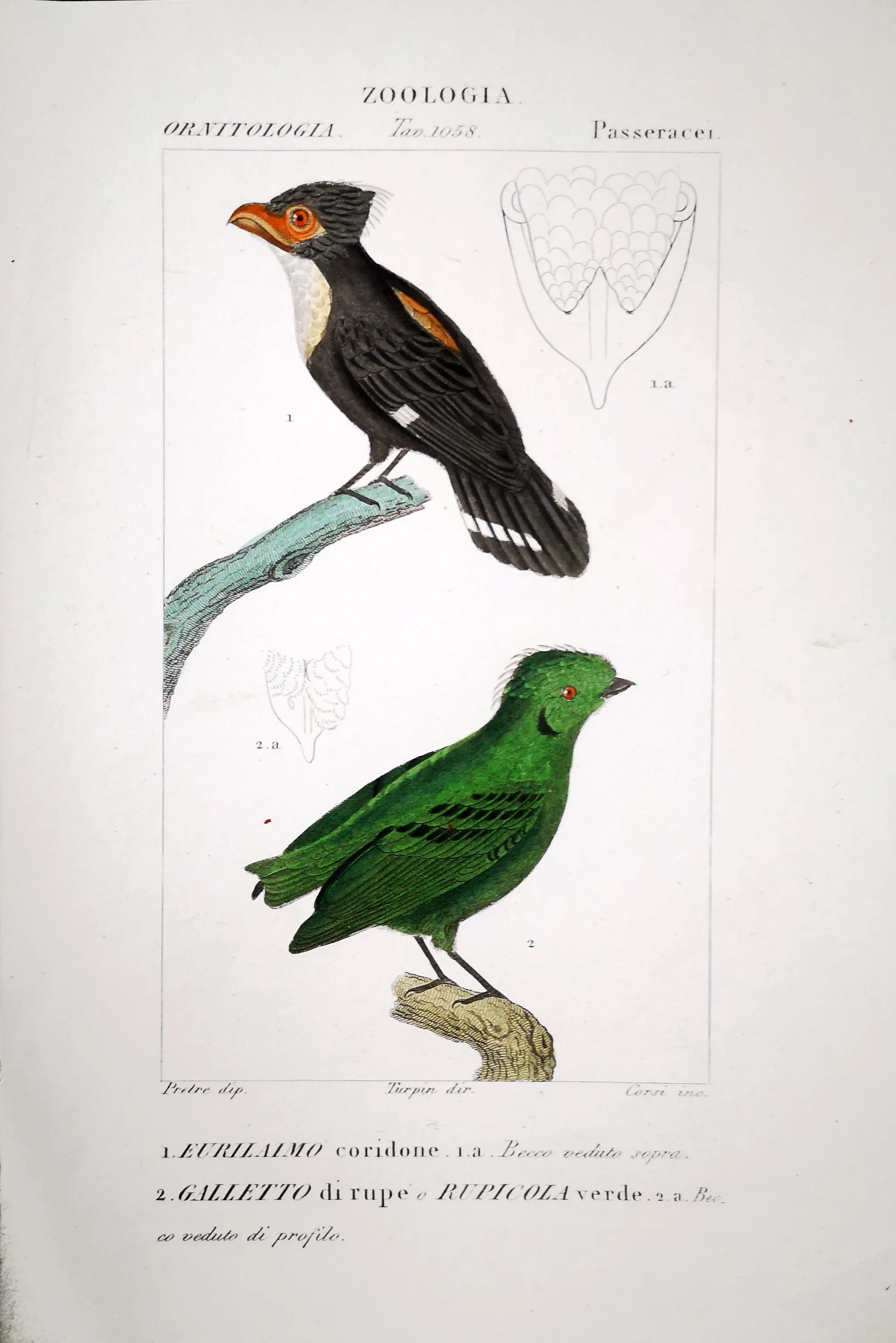
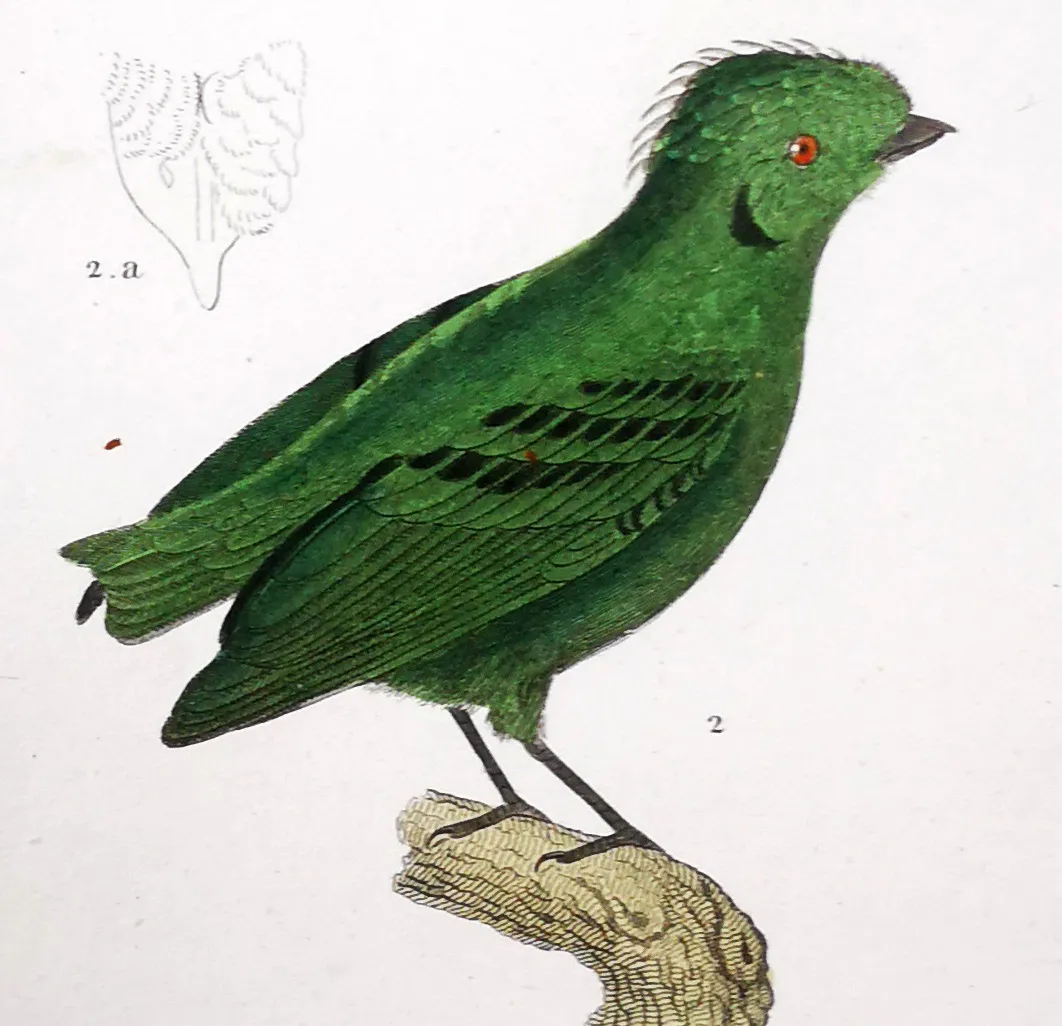
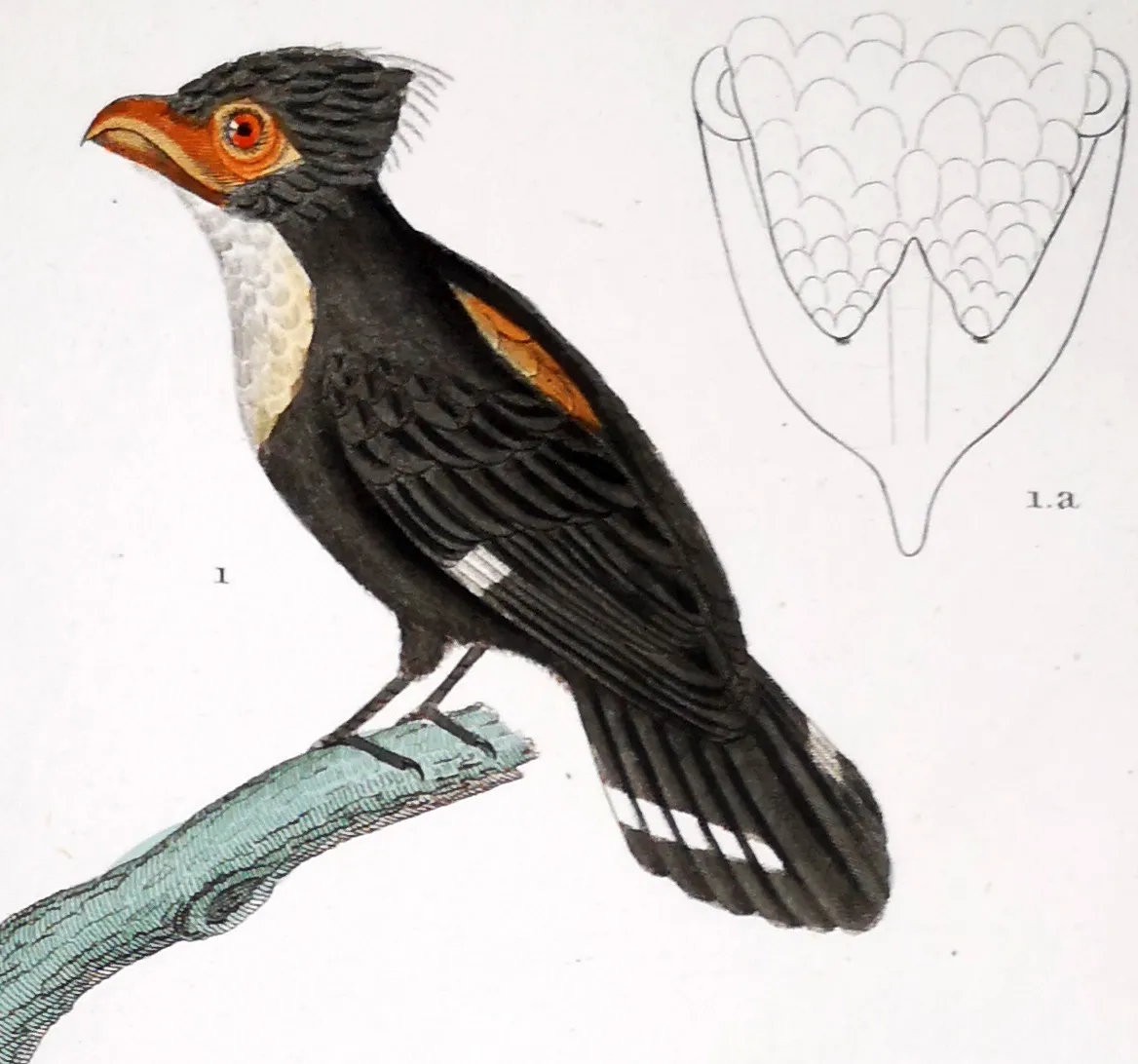
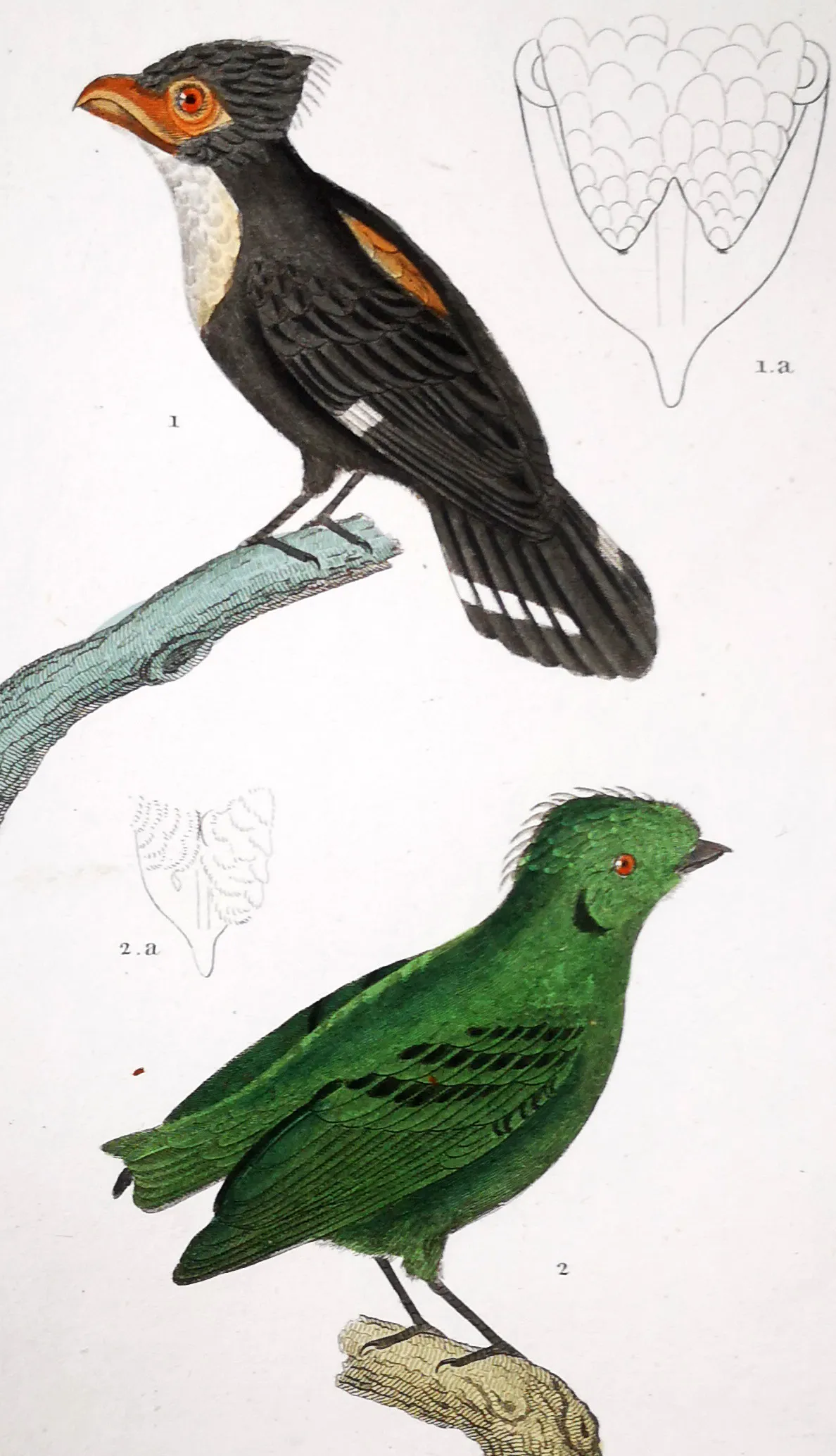
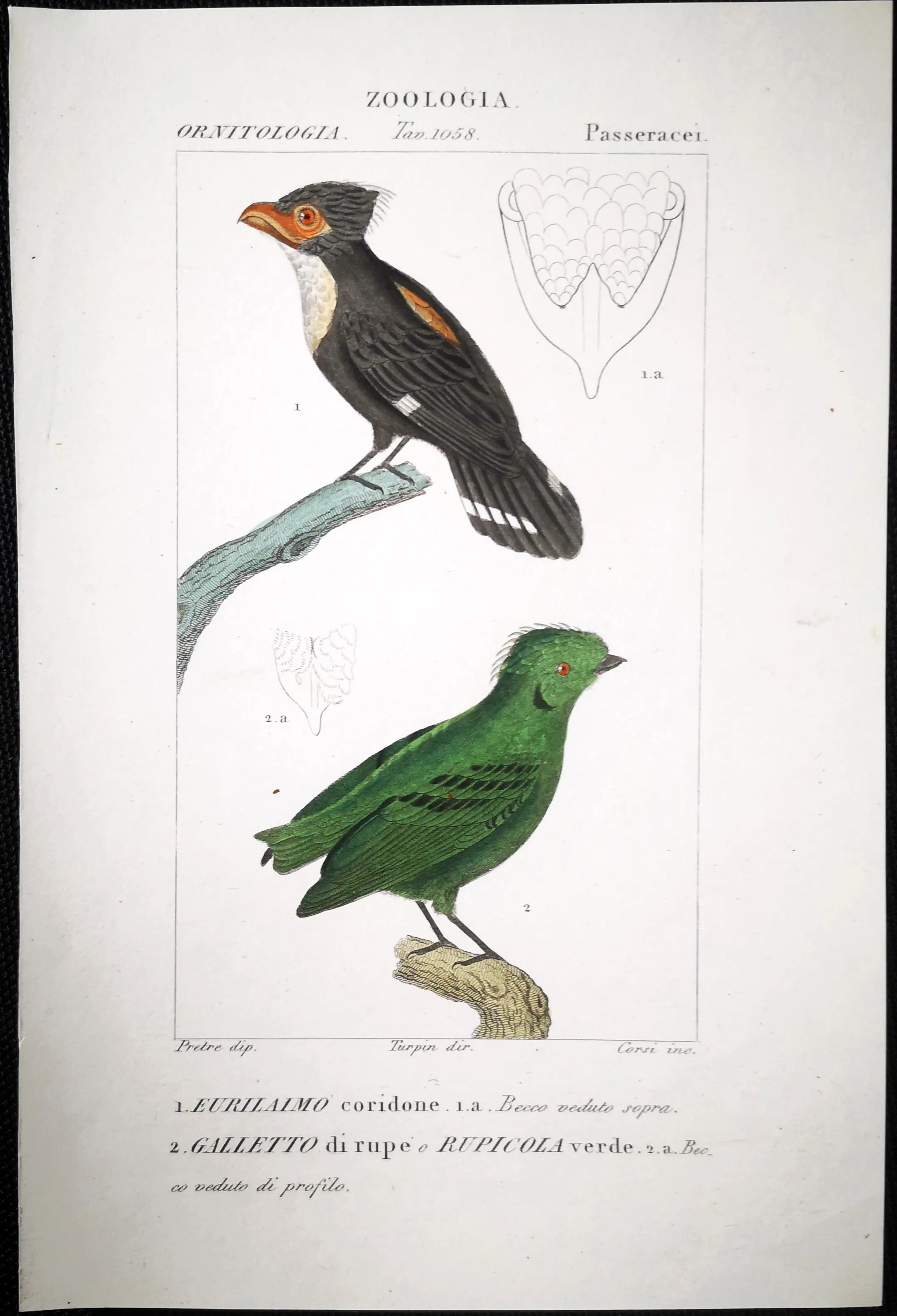



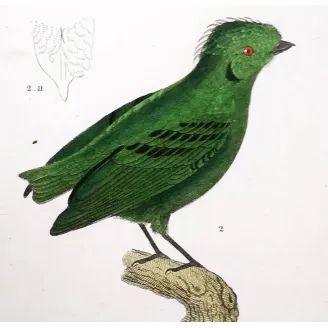

Rare birds of the jungle: the crest-faced Corydon and a luminous green Rupicola.
 Delivery policy
Your print will be carefully prepared and shipped worldwide via trusted couriers (UPS or similar).
 Authentic antique prints
Original engravings from the 17th–19th century.
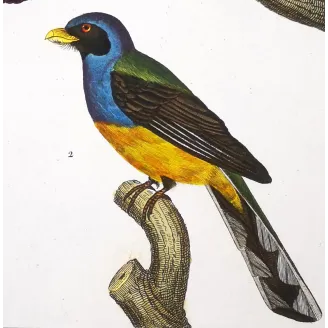
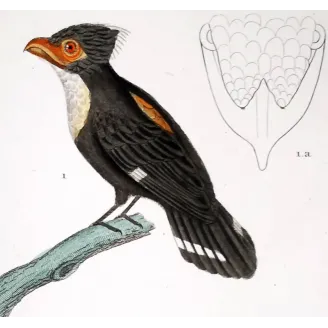
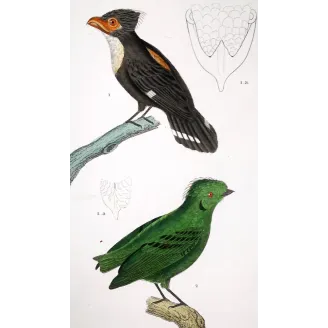
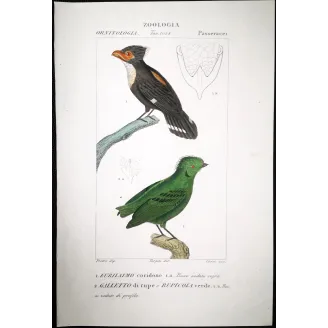
This ornithological engraving presents two exotic passerine birds identified in the plate as Eurilalmo coridone and Galletto di rupe o Rupicola verde, accompanied by anatomical beak studies. The sheet belongs to the ornithological section of the Dizionario di Scienze Naturali, where Pierre Antoine Prêtre combines scientific discipline with striking chromatic balance.
The upper bird, darker and more structured, contrasts with the saturated emerald tone of the lower Rupicola. Together they create a refined vertical composition that balances intensity with restraint.
— • —
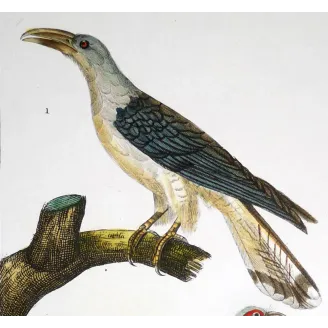
The Eurilalmo is rendered in velvety charcoal tones enriched by subtle brown and copper highlights across the wing. A warm ochre facial marking and pale throat provide visual contrast, while the clean white bars in the tail add graphic rhythm.
Below, the Green Rupicola introduces saturated emerald plumage that dominates the lower register. The compact posture and dense feather articulation give the bird a sculptural solidity. The inclusion of beak diagrams reinforces the encyclopedic nature of the plate, typical of early nineteenth-century comparative zoology.
The Eurilalmo coridone is associated with broadbills of the genus Eurylaimus, tropical birds native to Southeast Asia, admired for their strong bills and contrasting facial markings. Their morphology made them particularly suitable subjects for anatomical study.
The “Rupicola verde” refers to species within the genus Rupicola, commonly known as cock-of-the-rock birds, native to South America. While some species are famous for vivid orange crests, green variants and related tropical forms were equally fascinating to nineteenth-century naturalists. Their saturated plumage and compact form translate beautifully into hand-colored engraving, offering collectors a composition both exotic and visually balanced.
This engraving forms part of the historic Dizionario di Scienze Naturali, a monumental early nineteenth-century encyclopedic enterprise once preserved within a noble library and today housed in the Sacchetti Collection. Each plate reflects a period in which scientific ambition was matched by exceptional artisanal execution — from disciplined copperplate linework to luminous hand-applied color.
These works represent a moment when natural history illustration achieved both scientific rigor and aesthetic refinement. To discover the full story behind these rare prints and their noble provenance, we invite you to read our editorial feature “Not Just Another Print”.
The engraving is in very good antique condition. The impression is clean and well-defined, with preserved original hand-colouring. The paper is smooth early nineteenth-century wove paper (non-laid), consistent with Italian scientific editions of the period. No watermark has been observed. Minor age toning, if present, is consistent with antique paper and does not affect the legibility or decorative quality of the plate.
For further context on Pierre Antoine Prêtre and his contribution to nineteenth-century zoological illustration, see our editorial feature:
Pierre Antoine Prêtre – Illustrator of Natural Science and Marine Life
Specific References
Two striking hawks from Australia, finely illustrated with warm natural tones.
Elegant depiction of a Scythrope and a vividly colored red-and-green Trogon perched on branches.
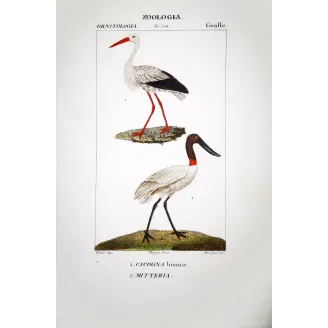
Graceful stork and robust jabiru presented with classic naturalistic balance.
Colorful engraving of two exotic birds: the Ani and the vibrant Yellow-bellied Curuçu.
Vividly colored engraving of a European Green Woodpecker and a Eurasian Wryneck, masterfully rendered by Prêtre.
Parasitic Kite & Elanus (Milvus sp. & Elanus sp.) – Original Hand-Colored Engraving by Prêtre, Antique Print.
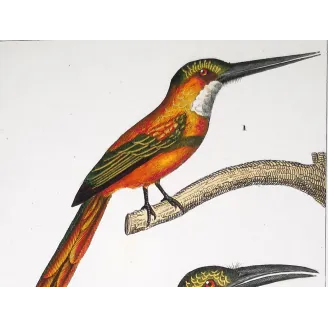
Two vibrant Jacamar birds with metallic plumage and long sharp beaks on stylized branches.
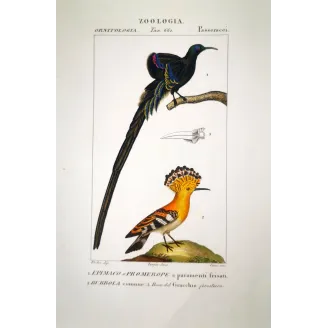
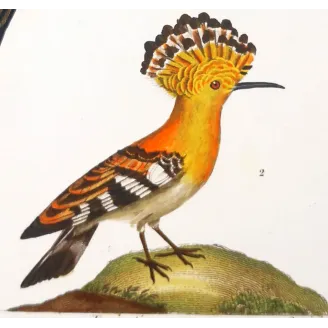
A long-tailed Promerops and a vivid Hoopoe bird, both perched and richly colored against a clean background.
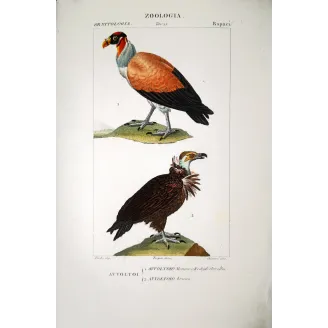
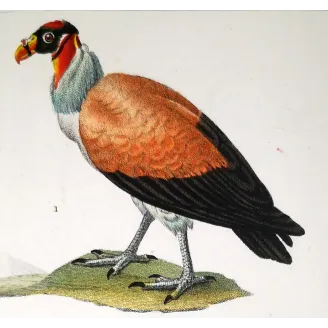
Original early 19th-century hand-colored engraving depicting King Vulture and Brown Vulture from the Dizionario di Scienze Naturali.
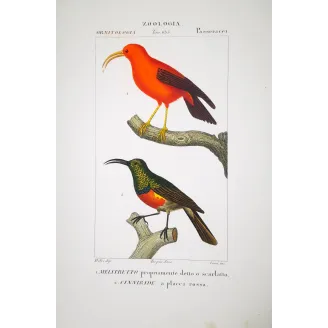
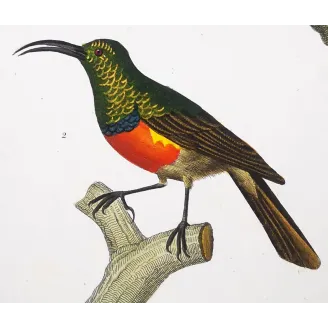
Brilliantly colored honeycreeper and sunbird illustration with tropical vibrancy, captured by Prêtre.
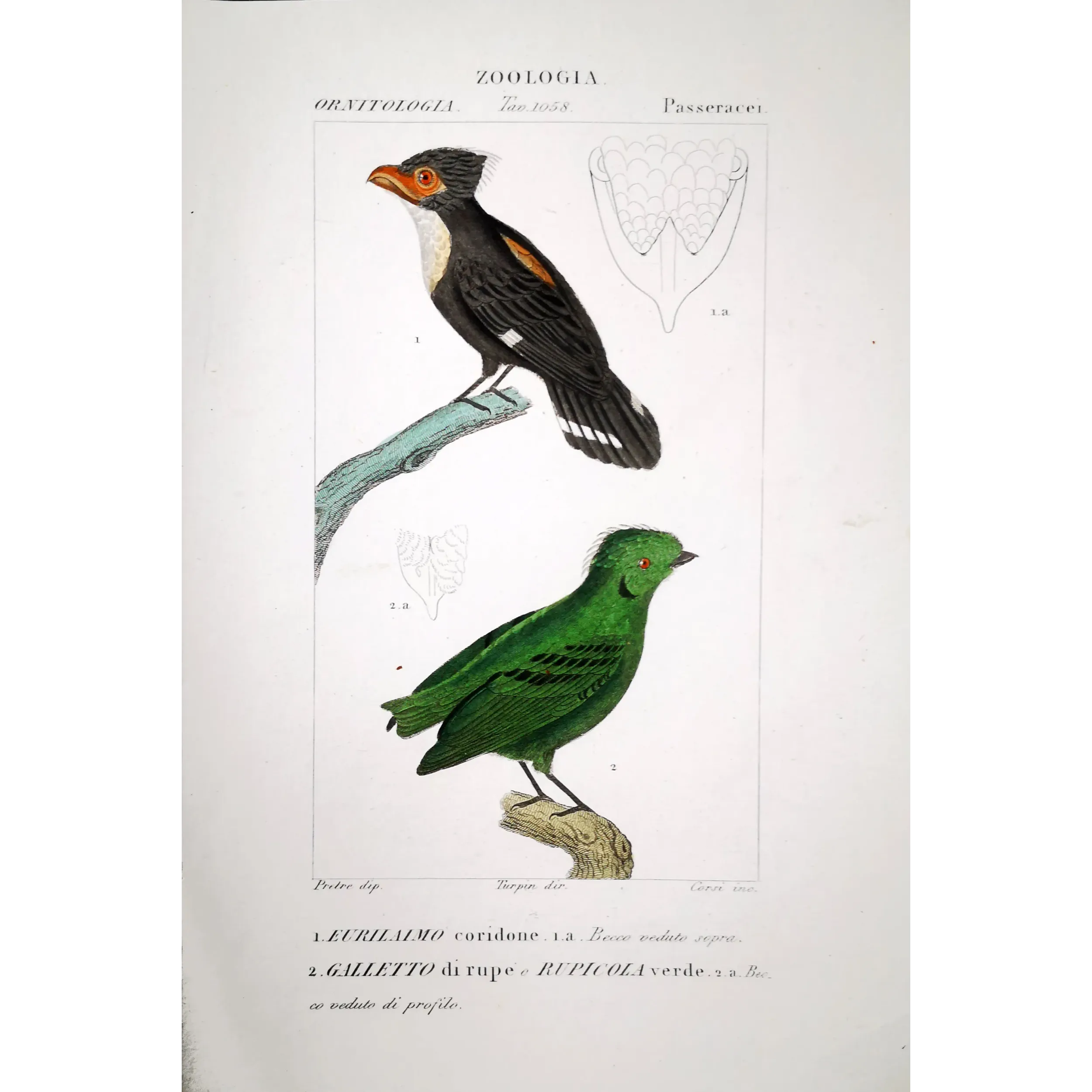
Rare birds of the jungle: the crest-faced Corydon and a luminous green Rupicola.