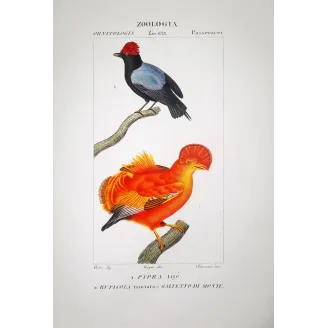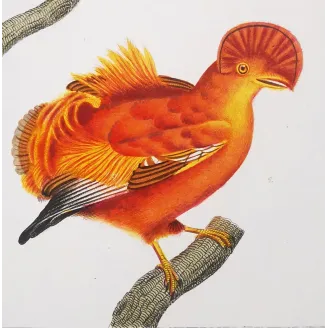
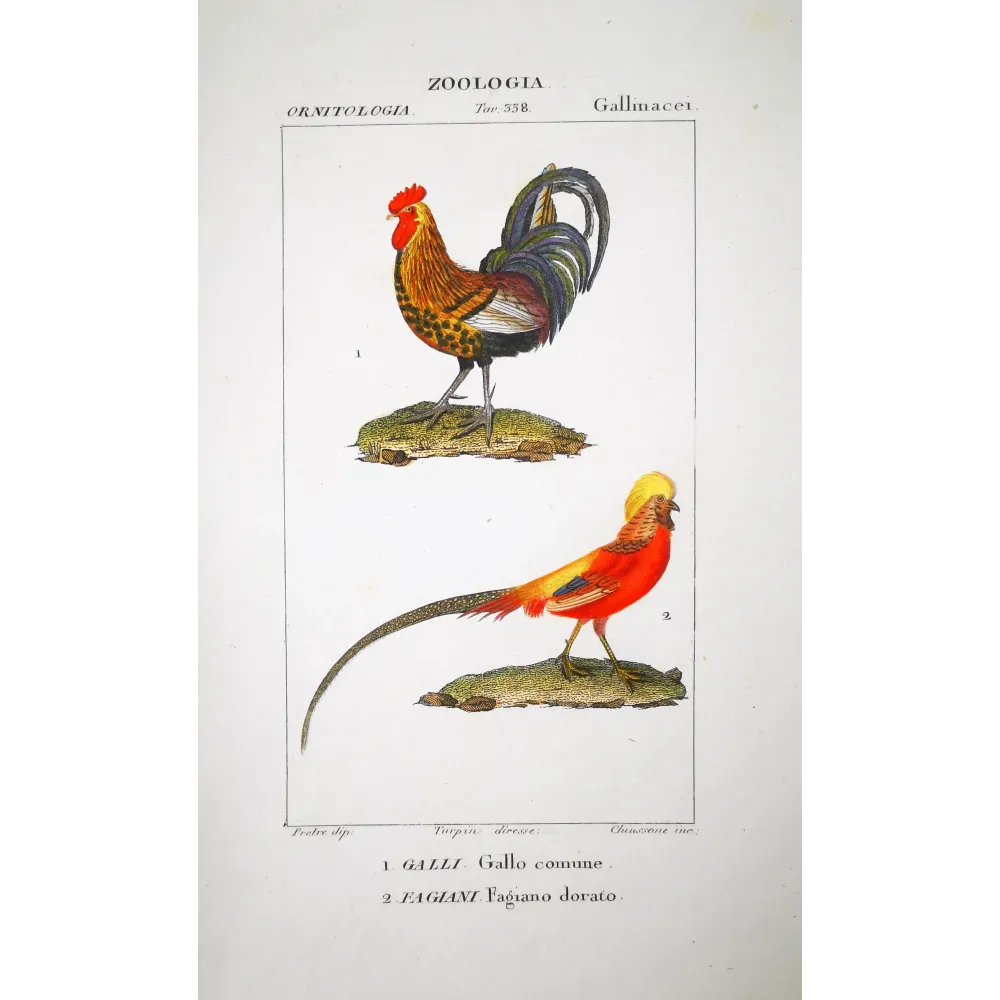
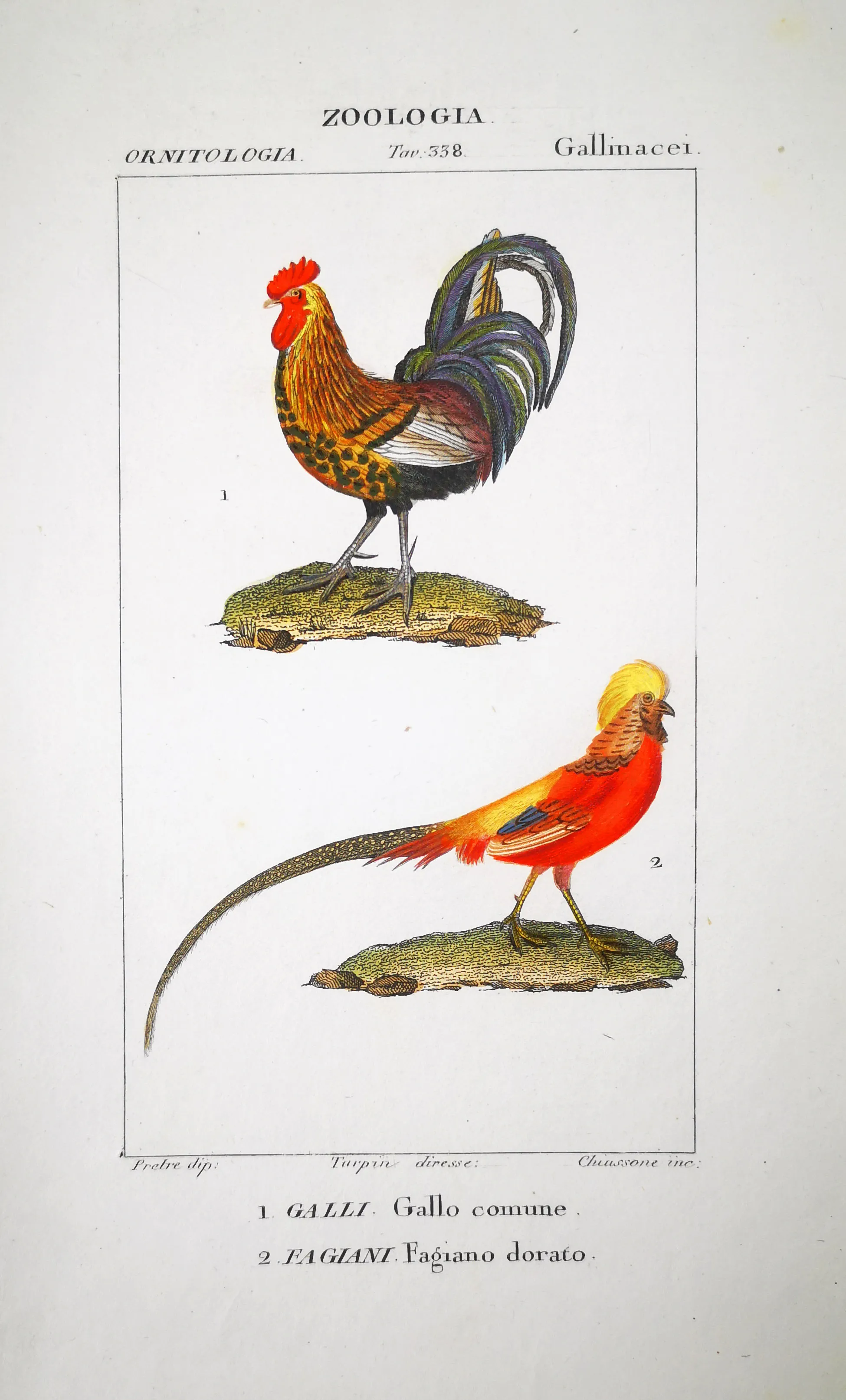
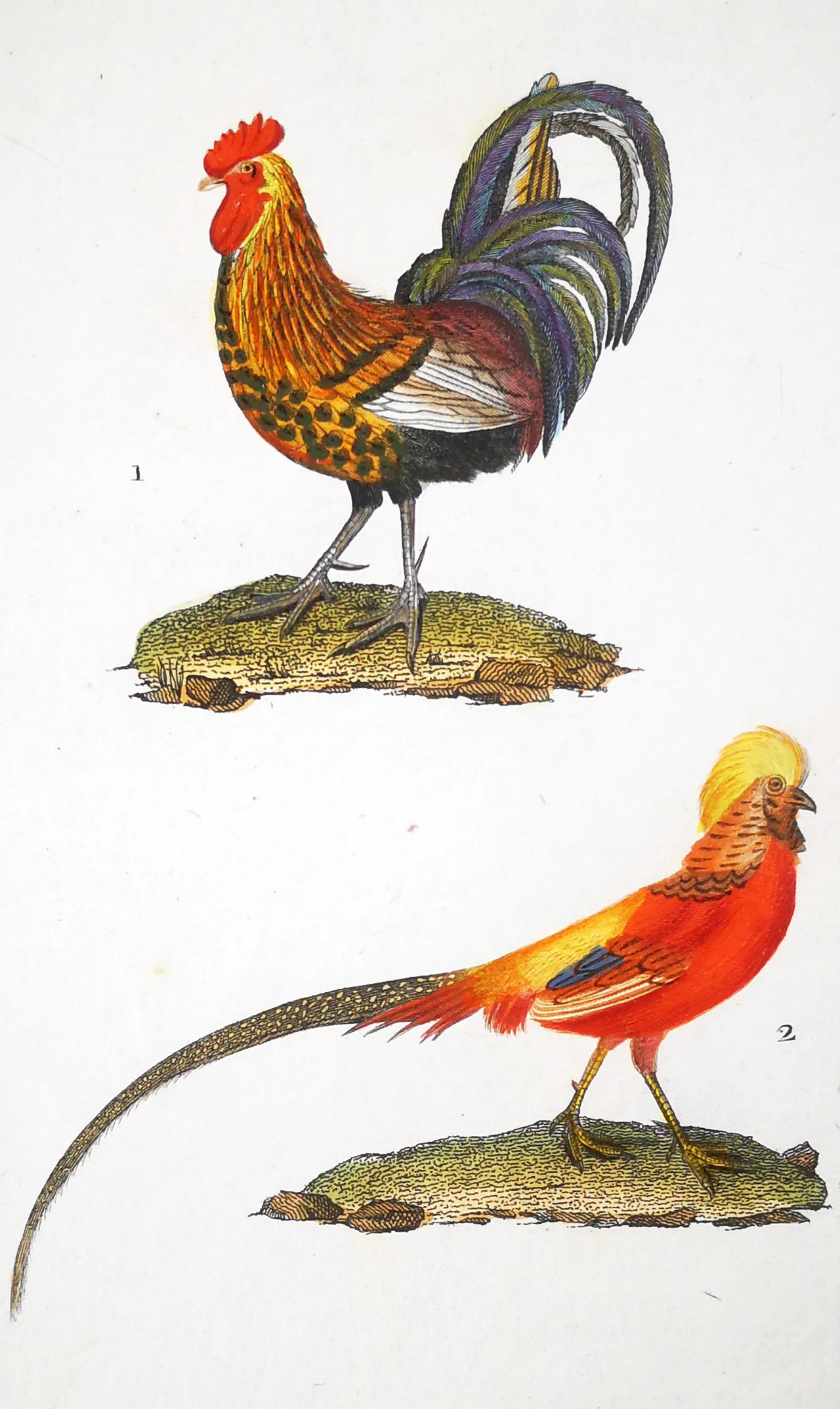
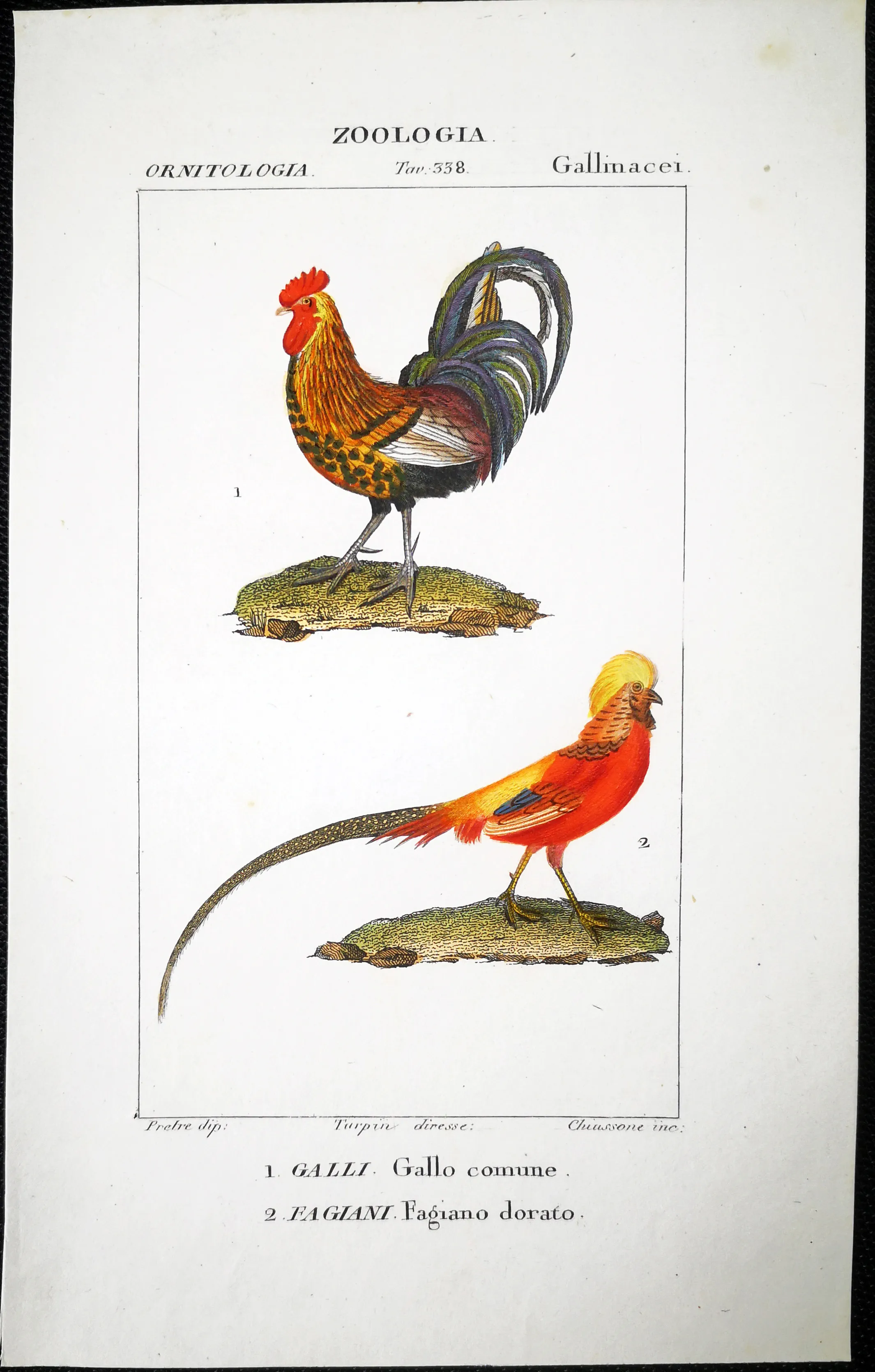



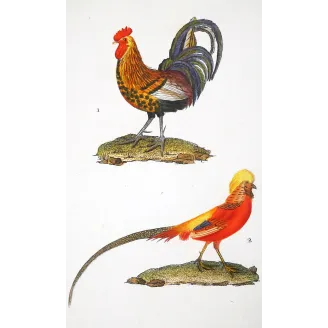
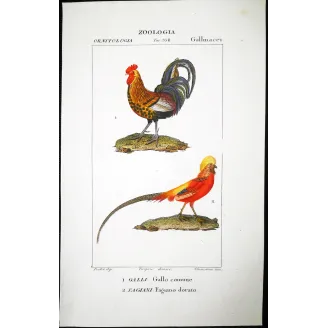
Spectacular plumage of a domestic rooster and a golden pheasant.
 Delivery policy
Your print will be carefully prepared and shipped worldwide via trusted couriers (UPS or similar).
 Authentic antique prints
Original engravings from the 17th–19th century.
This refined ornithological engraving presents two gallinaceous birds identified in the plate as Gallo comune and Fagiano dorato. The sheet belongs to the ornithological section of the Dizionario di Scienze Naturali, where Pierre Antoine Prêtre combines domestic familiarity with exotic brilliance.
The upper rooster stands with upright confidence, while the lower golden pheasant introduces elongated elegance and striking chromatic richness, creating a composition that balances structure and ornament.
— • —
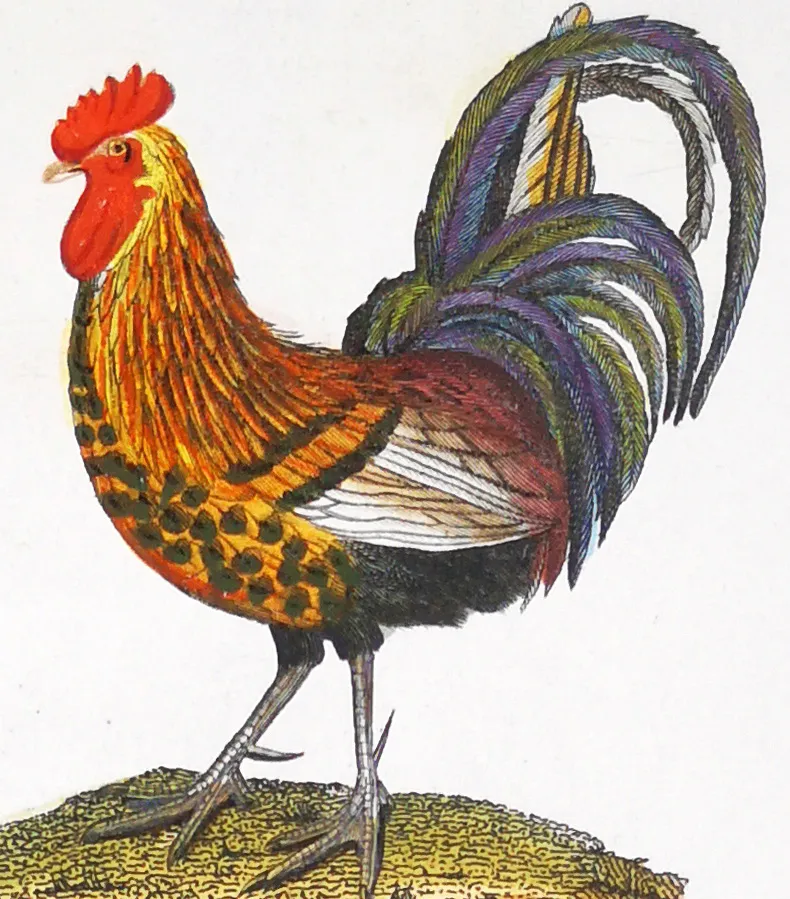
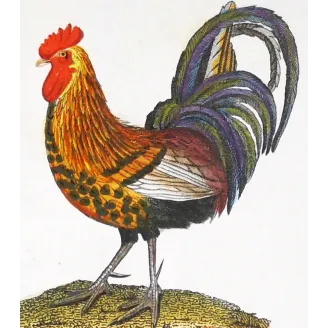
The Rooster is articulated through layered feather detail, where greens, russet tones, and iridescent tail plumes create controlled complexity. The bright red comb provides a focal accent against the darker mantle.
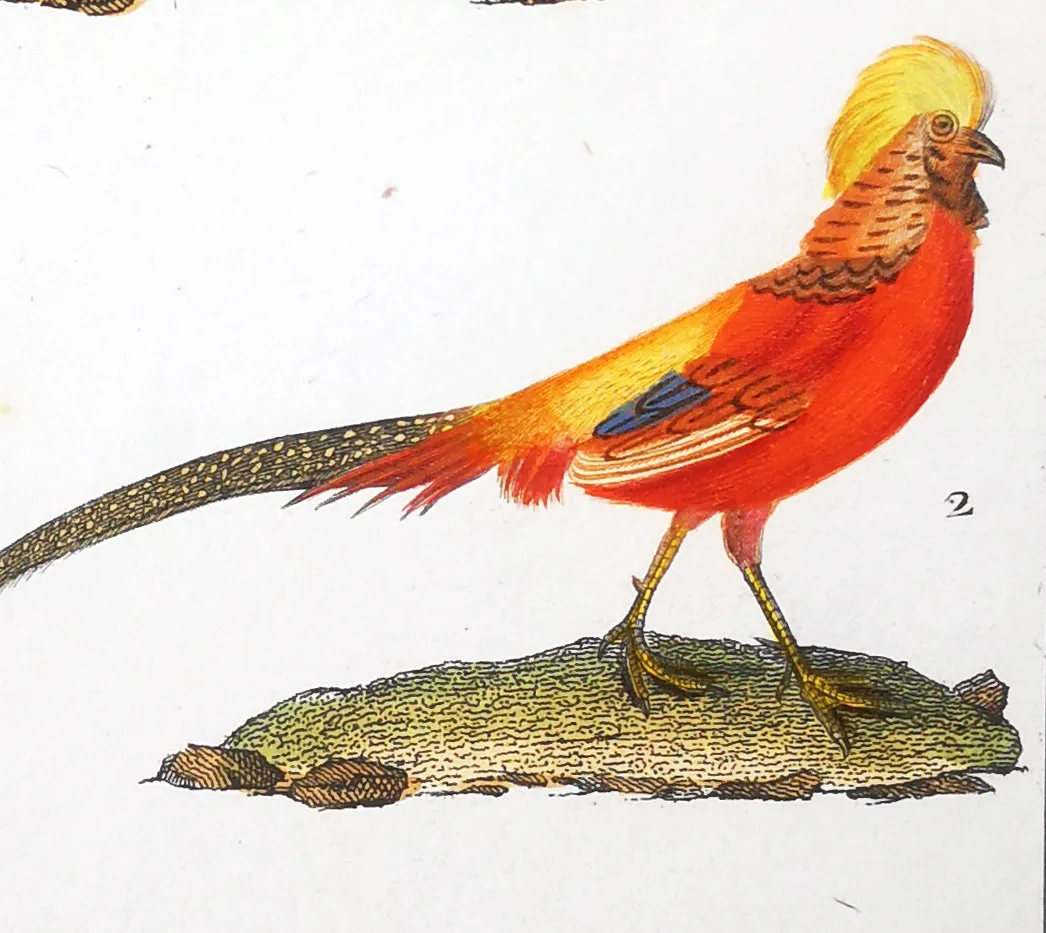
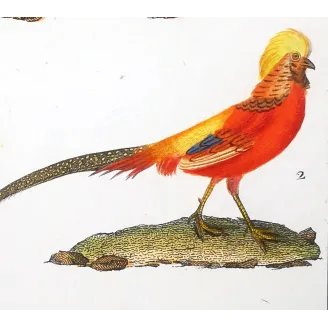
Below, the Golden Pheasant radiates saturated crimson and luminous yellow across the crest and body, contrasted by cool blue wing patches and a long speckled tail. The horizontal extension of the tail introduces movement, while generous negative space maintains the cabinet-like clarity characteristic of early nineteenth-century zoological engraving.
The domestic rooster is associated with Gallus gallus domesticus, long symbolizing vigilance and rural life in European iconography. Its inclusion reflects the encyclopedic ambition to document both wild and domesticated species.
The Golden Pheasant (Chrysolophus pictus) is native to western China and was highly prized in European ornamental collections for its extraordinary coloration. In nineteenth-century natural history illustration, pheasants were celebrated for their elaborate plumage, which translated vividly into hand-applied pigments. This plate therefore juxtaposes rural familiarity with exotic display.
This engraving forms part of the historic Dizionario di Scienze Naturali, a monumental early nineteenth-century encyclopedic enterprise once preserved within a noble library and today housed in the Sacchetti Collection. Each plate reflects a period in which scientific ambition was matched by exceptional artisanal execution — from disciplined copperplate linework to luminous hand-applied color.
These works represent a moment when natural history illustration achieved both scientific rigor and aesthetic refinement. To discover the full story behind these rare prints and their noble provenance, we invite you to read our editorial feature “Not Just Another Print”.
The engraving is in very good antique condition. The impression is clean and well-defined, with preserved original hand-colouring. The paper is smooth early nineteenth-century wove paper (non-laid), consistent with Italian scientific editions of the period. No watermark has been observed. Minor age toning, if present, is consistent with antique paper and does not affect the legibility or decorative quality of the plate.
For further context on Pierre Antoine Prêtre and his contribution to nineteenth-century zoological illustration, see our editorial feature:
Pierre Antoine Prêtre – Illustrator of Natural Science and Marine Life
Specific References
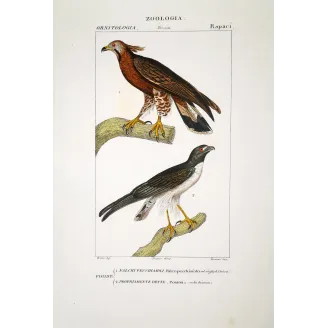
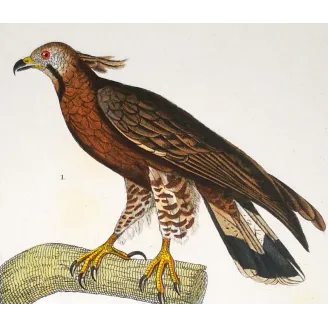
Finely drawn buzzards with a harmonious and naturalistic composition.
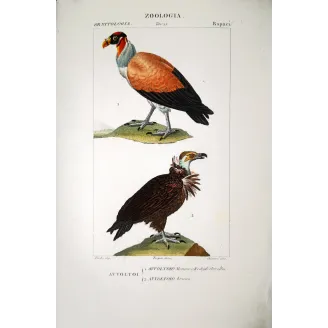
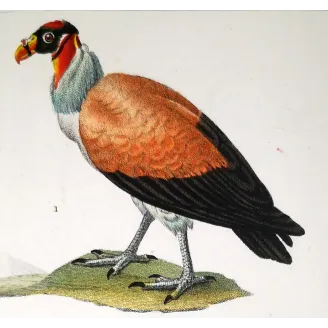
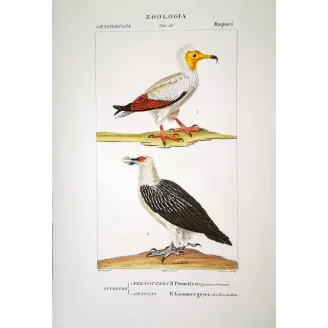
Original early 19th-century hand-colored engraving depicting King Vulture and Brown Vulture from the Dizionario di Scienze Naturali.
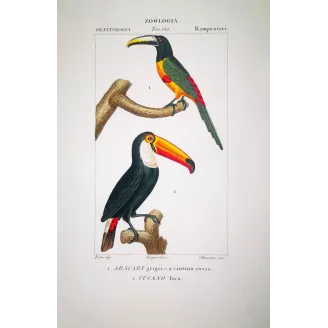
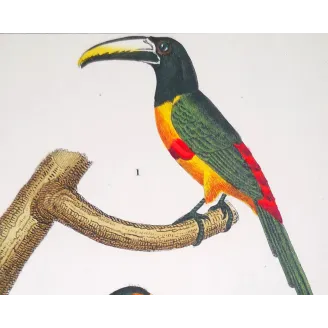
Colored illustration depicting two South American toucans: the Toco and the Red-belted Aracari.
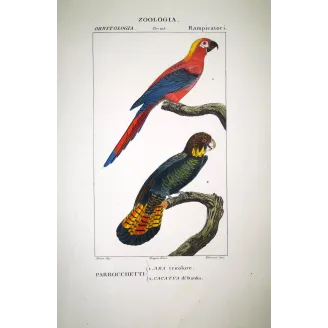
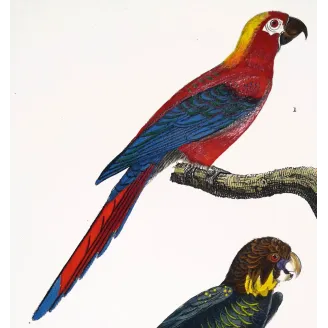
Vibrant parakeets perched on branches: a scarlet macaw and a black cockatoo with yellow and red highlights.
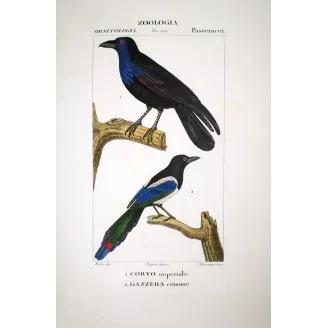
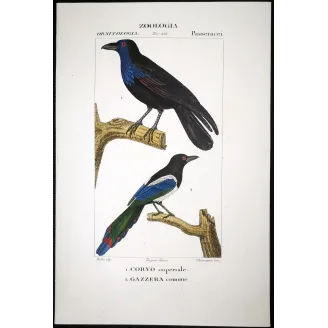
Striking contrast between the dark Imperial Crow and the vividly patterned Common Magpie.
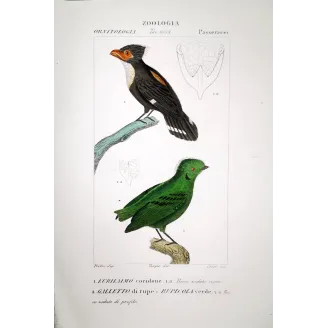
Rare birds of the jungle: the crest-faced Corydon and a luminous green Rupicola.
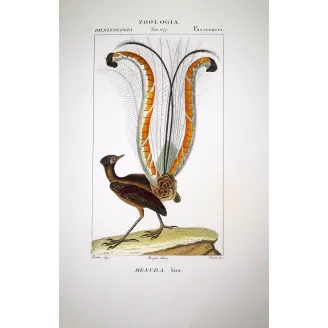
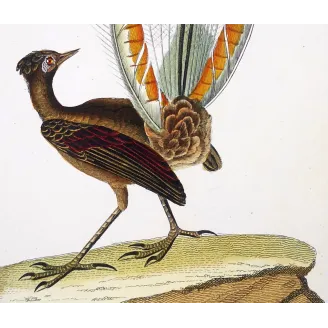
Two exotic birds from Australia, depicted with vivid hand-coloring.
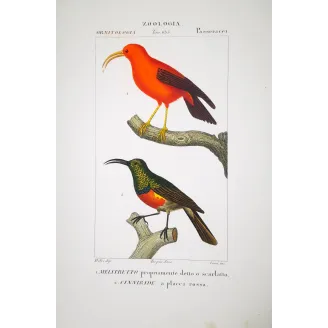
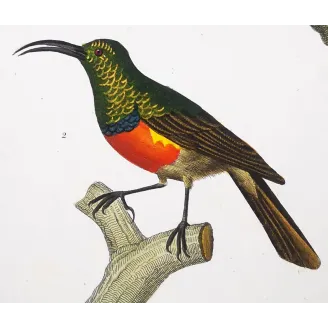
Brilliantly colored honeycreeper and sunbird illustration with tropical vibrancy, captured by Prêtre.
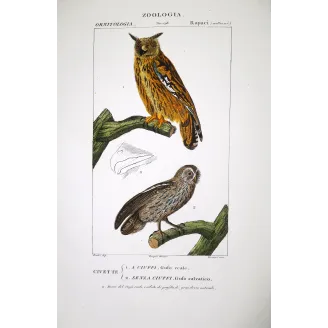
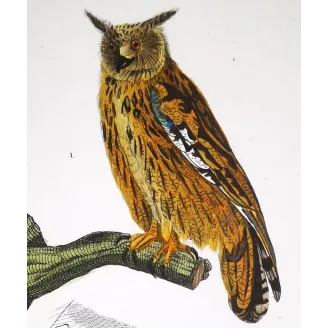
Nocturnal birds of prey elegantly rendered, showing sharpness and grace.
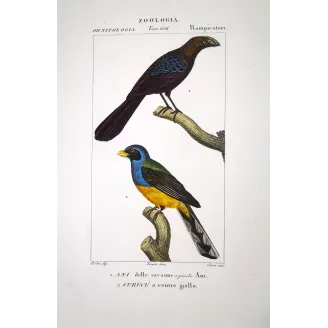
Colorful engraving of two exotic birds: the Ani and the vibrant Yellow-bellied Curuçu.
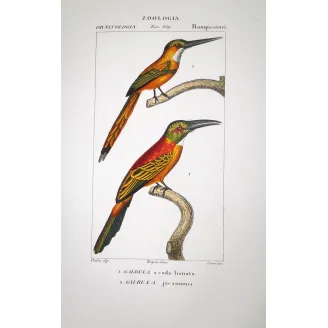
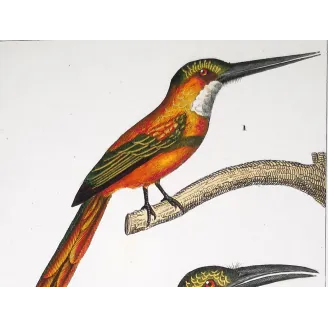
Two vibrant Jacamar birds with metallic plumage and long sharp beaks on stylized branches.
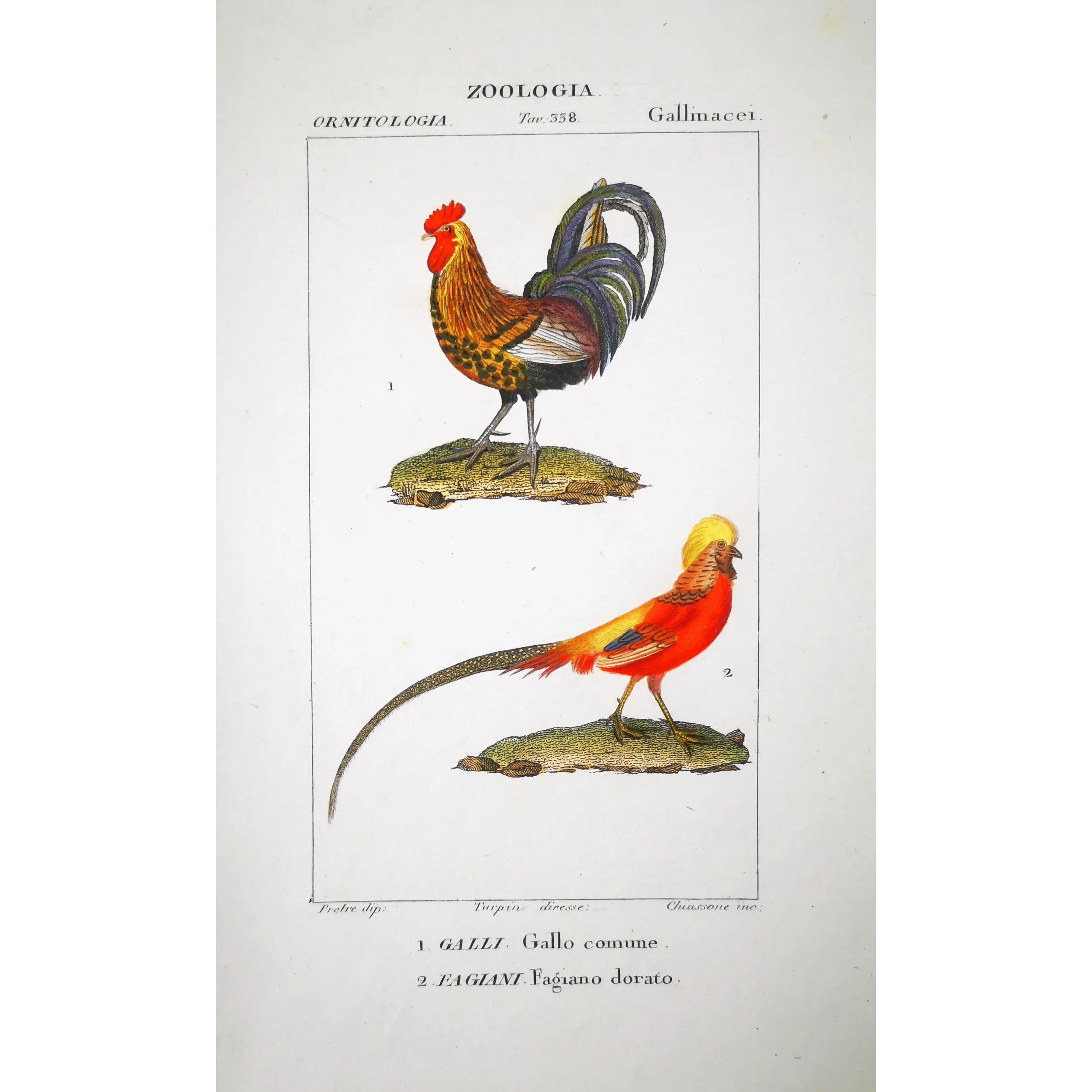
Spectacular plumage of a domestic rooster and a golden pheasant.