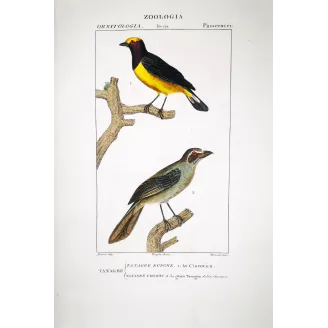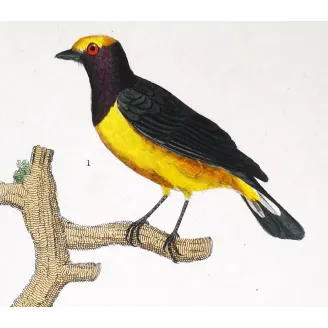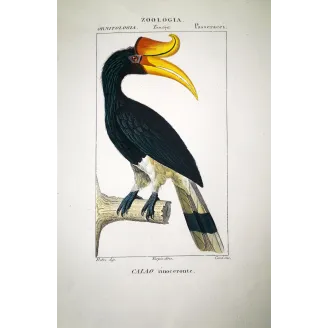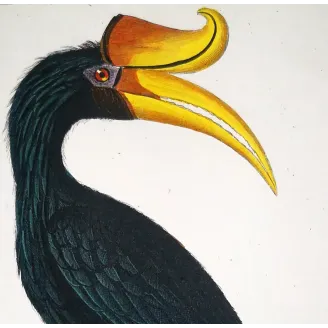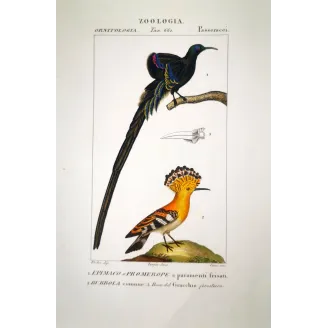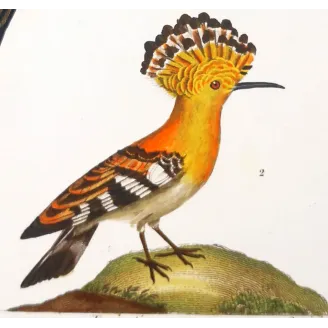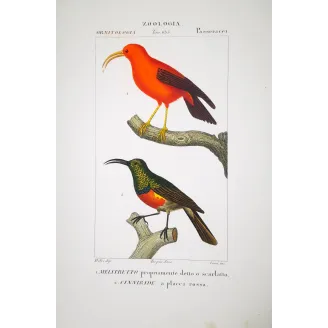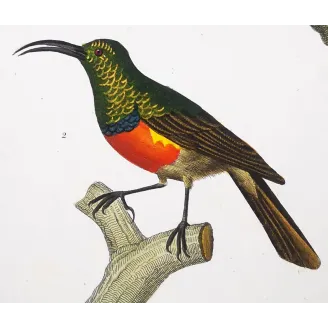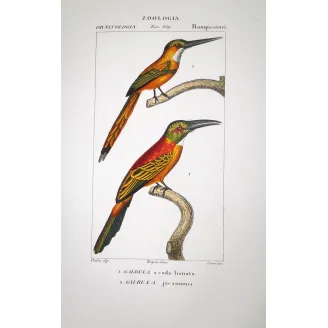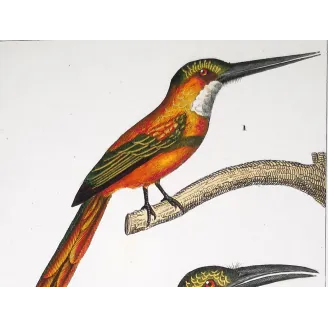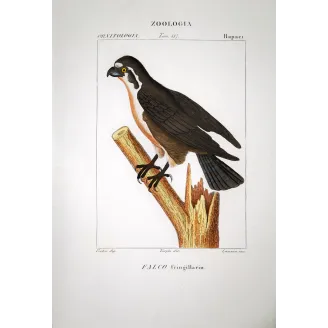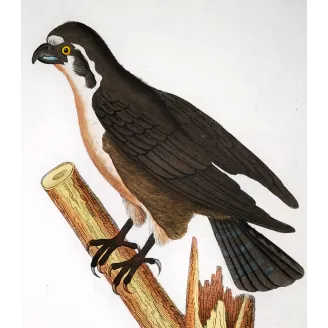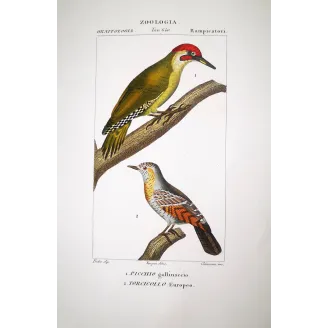
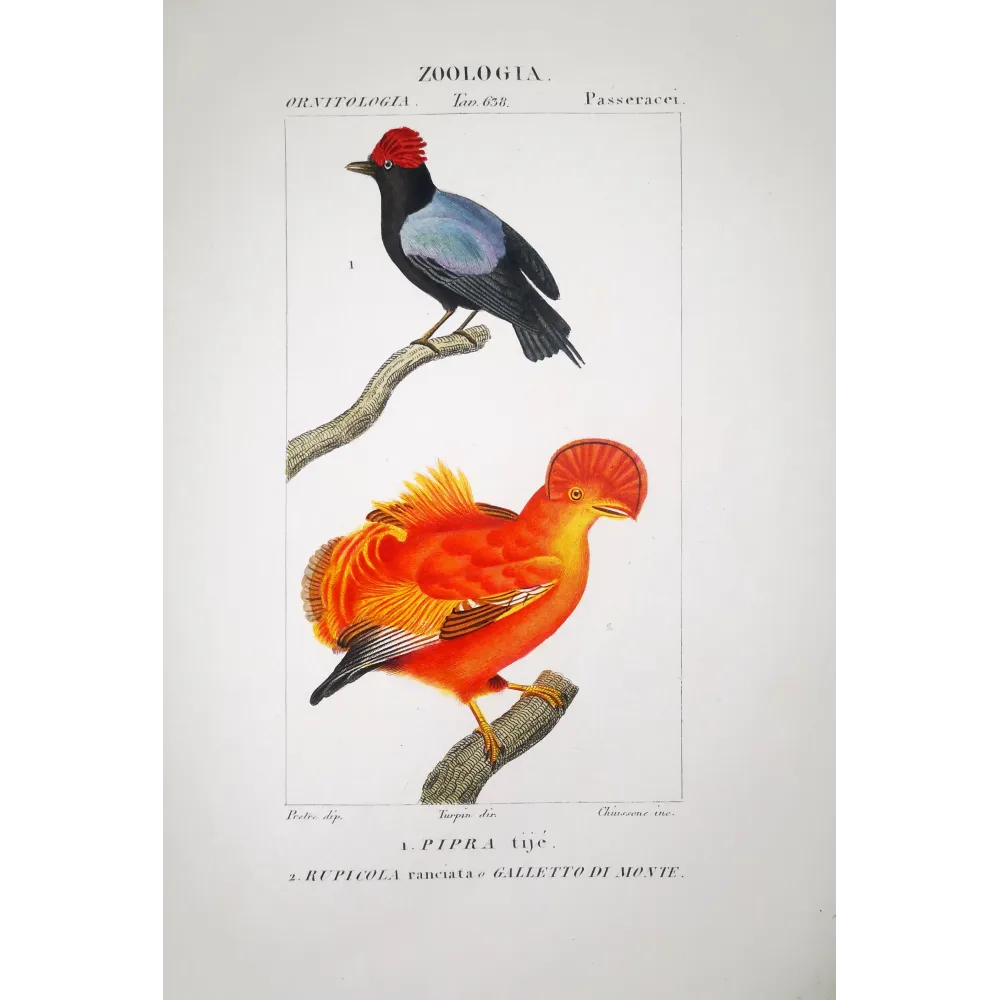
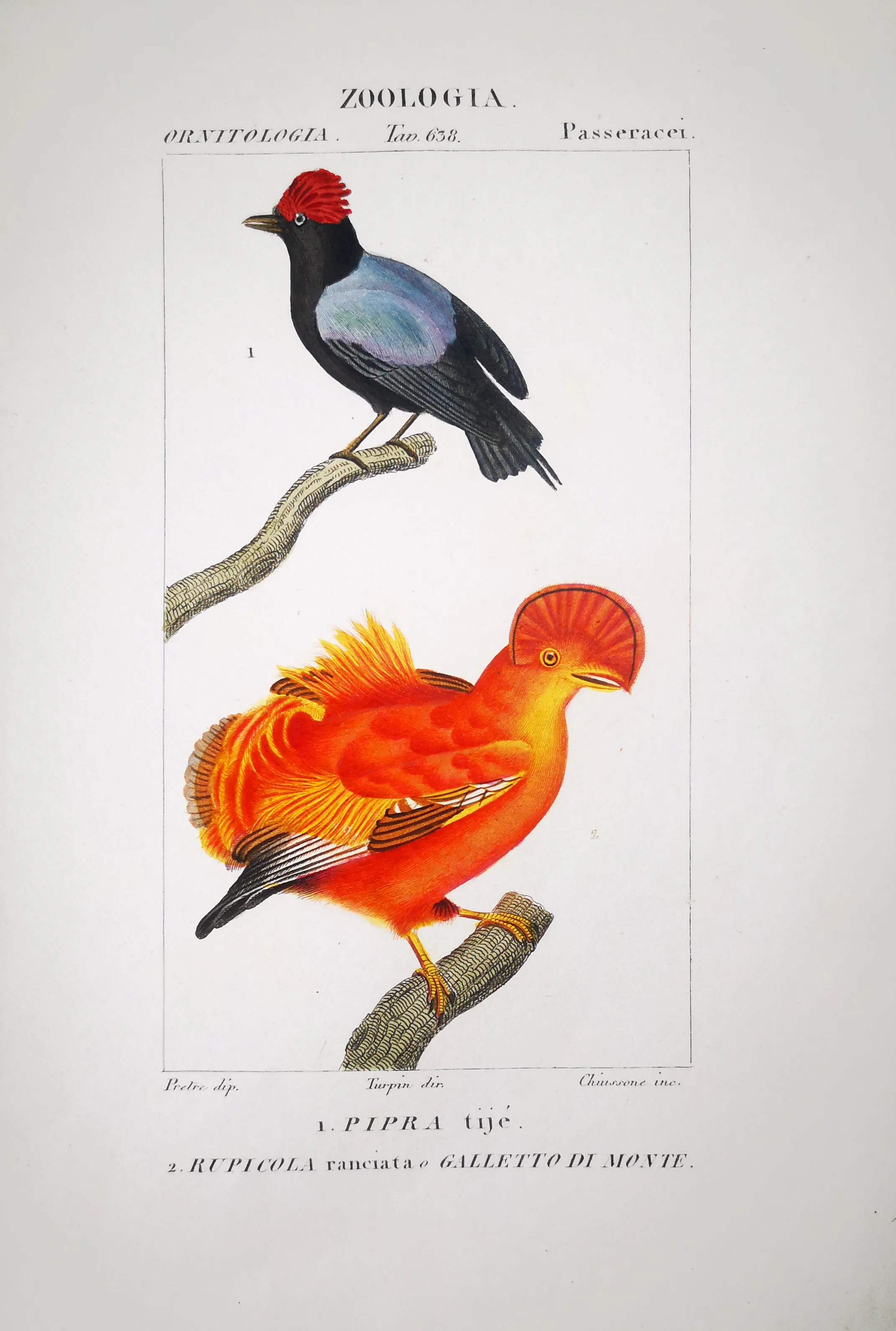
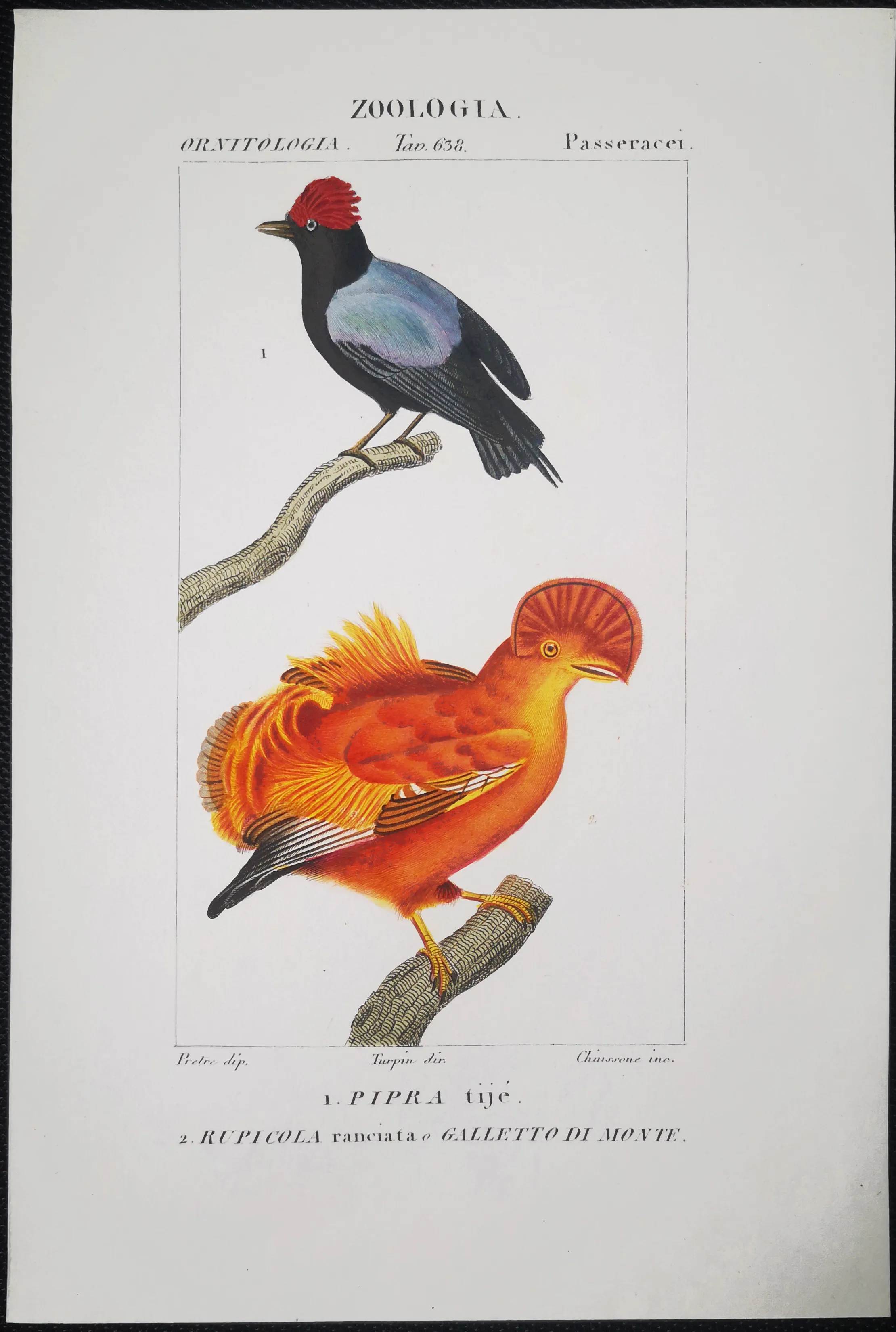



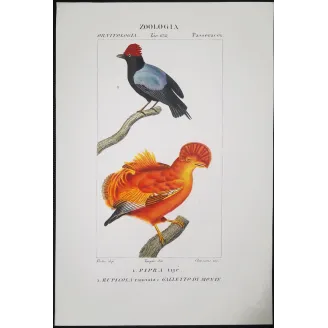
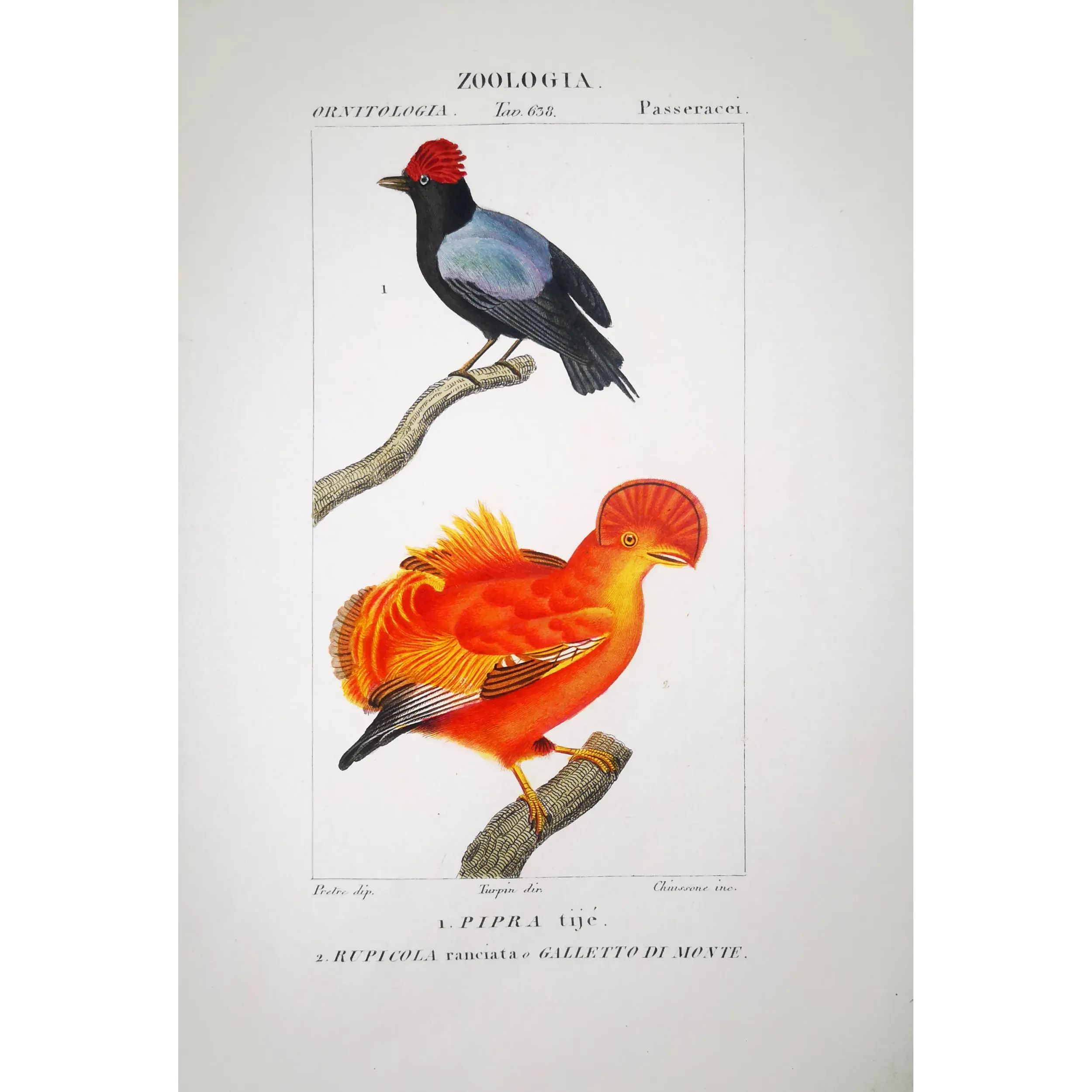
Brilliantly colored engraving of South American birds by Prêtre.
 Delivery policy
Your print will be carefully prepared and shipped worldwide via trusted couriers (UPS or similar).
 Authentic antique prints
Original engravings from the 17th–19th century.
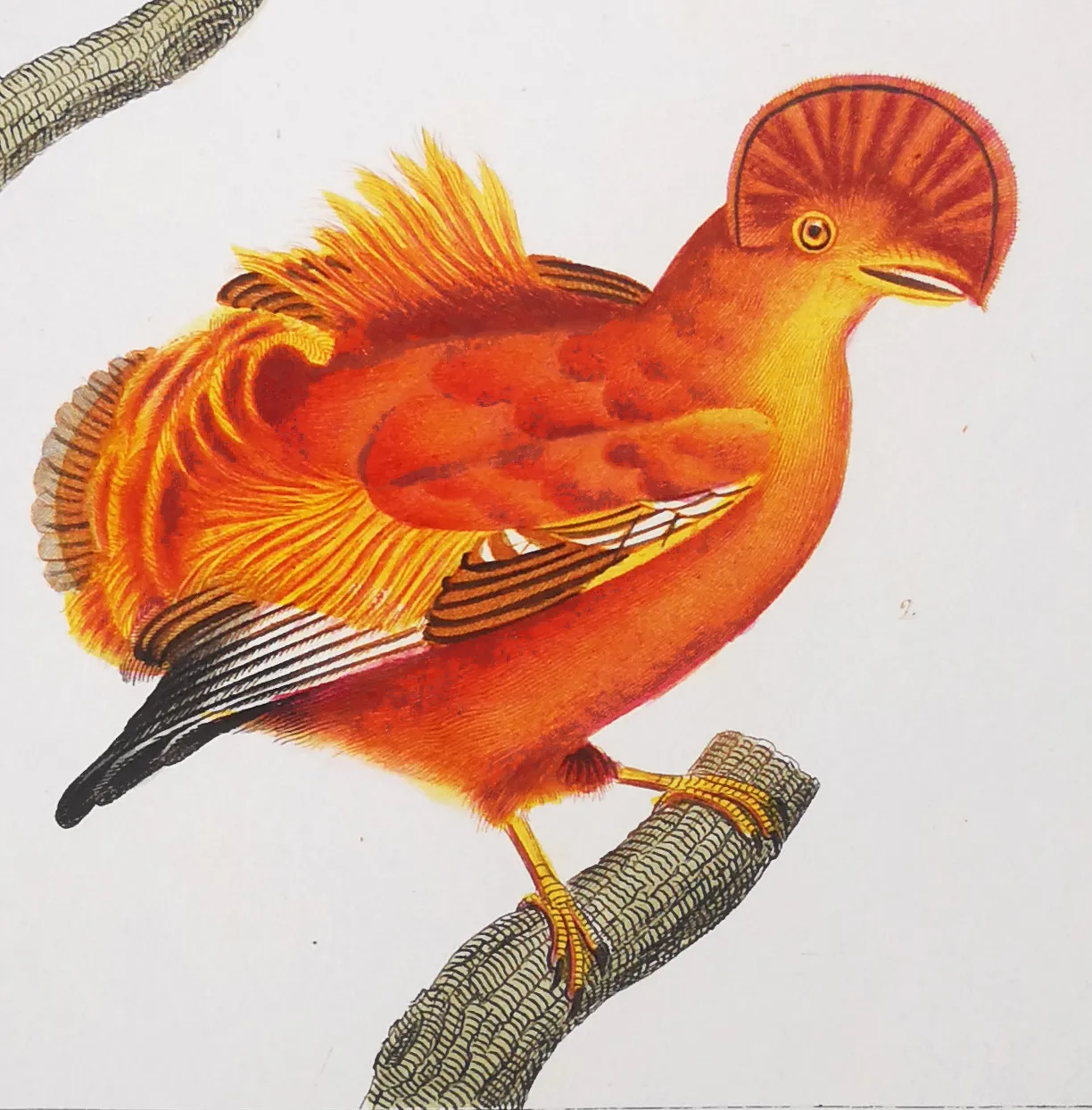
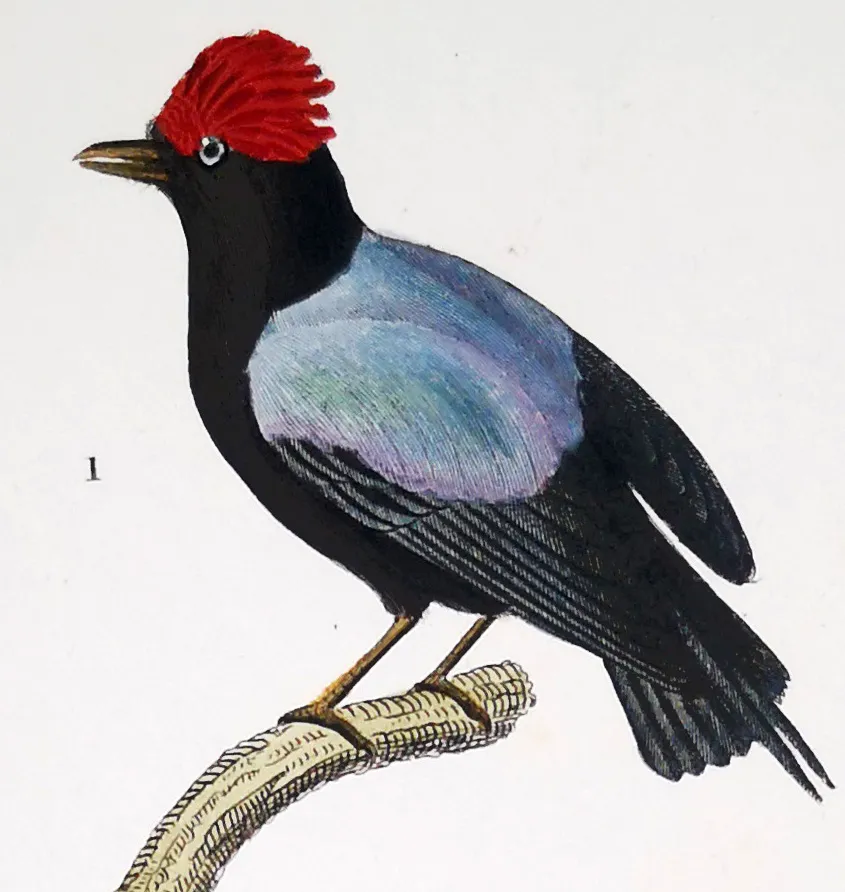
This vivid ornithological engraving presents two remarkable South American passerines: the Pipra tijé (a manakin species within the genus Pipra) and the celebrated Rupicola ranciata, commonly known as the Cock-of-the-Rock (Rupicola peruvianus). Conceived within the ornithological section of the Dizionario di Scienze Naturali, the composition contrasts structural restraint with exuberant display.
The upper figure, compact and dark with a vivid crimson crest and iridescent bluish shoulder, introduces chromatic tension. Below, the Cock-of-the-Rock dominates with blazing orange plumage and its unmistakable semicircular crest — a silhouette that became emblematic of tropical ornithology in nineteenth-century Europe.
— • —
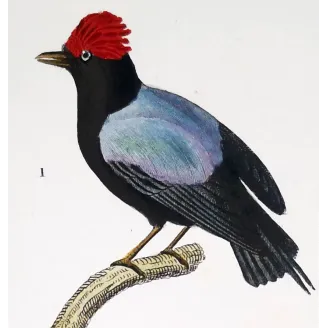
The plate is organized around chromatic hierarchy. The manakin above acts as a visual prelude: deep black body, red crown, and cool violet-blue wing patch create a restrained but sophisticated palette. Its poised stance offers compositional balance and prepares the eye for the spectacle below.
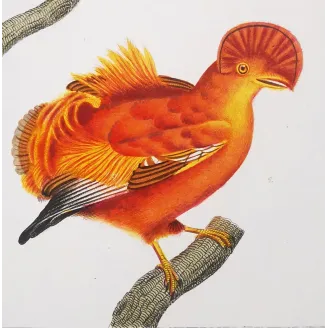
The lower Rupicola is pure theatrical presence. The saturated orange body and sculptural crest form a bold, almost modern block of color. Fine feather articulation along the wings and tail prevents the form from becoming flat, preserving anatomical clarity while sustaining visual drama. The pairing exemplifies the encyclopedic method: contrast between species, clarity of morphology, and immediate decorative authority.
The genus Pipra includes small, vibrantly colored manakins native to the Neotropics. Known for elaborate courtship displays, these birds fascinated early naturalists for their behavioral as well as chromatic distinctiveness.
The Andean Cock-of-the-Rock (Rupicola peruvianus) became one of the most iconic tropical birds represented in nineteenth-century natural history. Its extraordinary crest and intense coloration made it a symbol of exotic biodiversity. European collectors regarded it as a marvel of form and color — a perception faithfully transmitted through engravings such as this.
This engraving forms part of the historic Dizionario di Scienze Naturali, a monumental early nineteenth-century encyclopedic enterprise once preserved within a noble library and today housed in the Sacchetti Collection. Each plate reflects a period in which scientific ambition was matched by exceptional artisanal execution — from disciplined copperplate linework to luminous hand-applied color.
These works represent a moment when natural history illustration achieved both scientific rigor and decorative refinement. To discover the full story behind these rare prints and their noble provenance, we invite you to read our editorial feature “Not Just Another Print”.
The engraving is in very good to excellent antique condition. The impression remains clear and sharply defined, with vibrant original hand-coloring. The paper is smooth early nineteenth-century wove paper (non-laid), consistent with Italian scientific editions of the period. No watermark has been observed. Minor age toning, if present, is consistent with antique paper and does not diminish the plate’s visual impact.
For further context on Pierre Antoine Prêtre and his contribution to nineteenth-century zoological illustration, see our editorial feature:
Pierre Antoine Prêtre – Illustrator of Natural Science and Marine Life
Specific References
Graceful composition of a Yellow Tanager and a more subtly colored species from the Guyana region.
Beautiful 19th century illustration of the Buceros rhinoceros, commonly known as the Rhinoceros Hornbill.
A long-tailed Promerops and a vivid Hoopoe bird, both perched and richly colored against a clean background.
Brilliantly colored honeycreeper and sunbird illustration with tropical vibrancy, captured by Prêtre.
Two vibrant Jacamar birds with metallic plumage and long sharp beaks on stylized branches.
Majestic raptor captured in perfect hunting pose with detailed feathers.
Parasitic Kite & Elanus (Milvus sp. & Elanus sp.) – Original Hand-Colored Engraving by Prêtre, Antique Print.
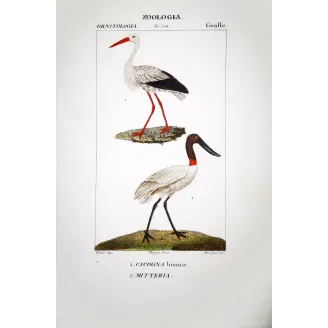
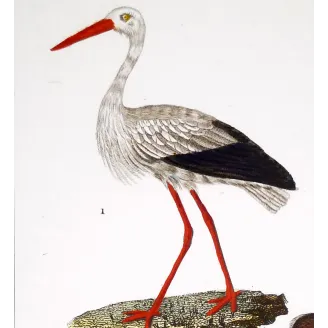
Graceful stork and robust jabiru presented with classic naturalistic balance.
Exquisite depiction of the ornate Greater Bird-of-Paradise alongside the striking Common Hill Myna.
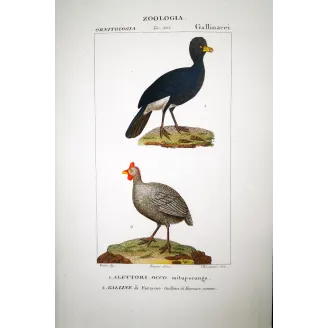
Elegant engraving of a guinea fowl and a Mituporanga, with rich textures and natural posture.
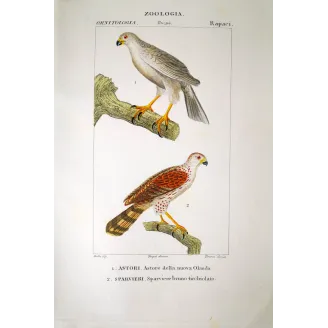
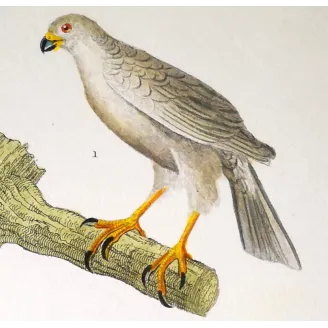
Two striking hawks from Australia, finely illustrated with warm natural tones.
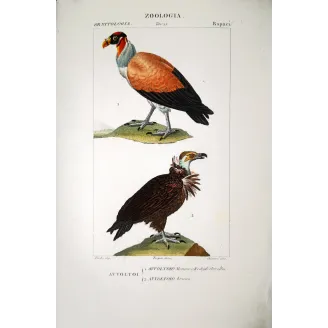
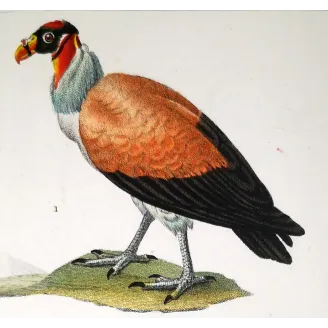
Original early 19th-century hand-colored engraving depicting King Vulture and Brown Vulture from the Dizionario di Scienze Naturali.
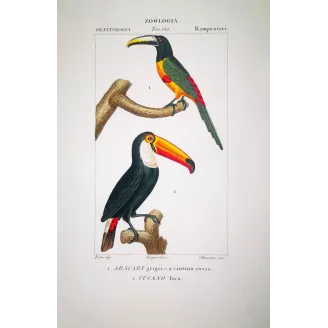
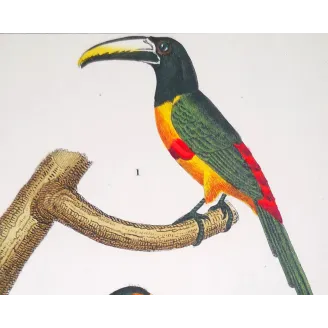
Colored illustration depicting two South American toucans: the Toco and the Red-belted Aracari.
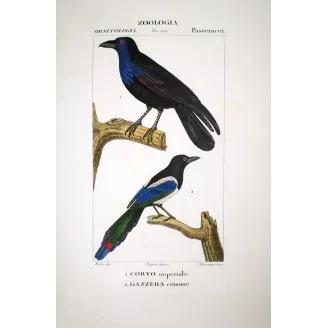
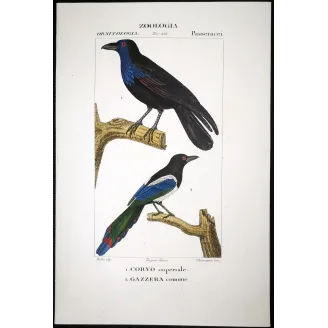
Striking contrast between the dark Imperial Crow and the vividly patterned Common Magpie.
Brilliantly colored engraving of South American birds by Prêtre.