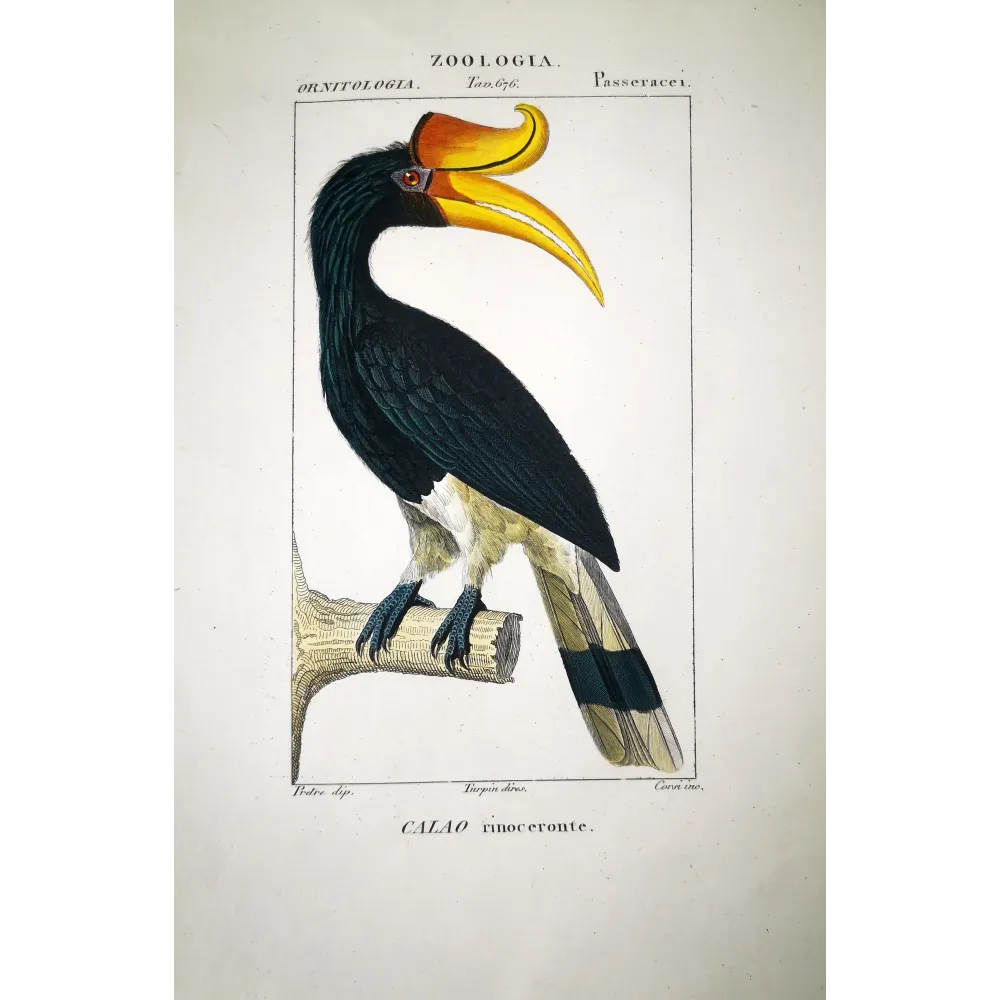
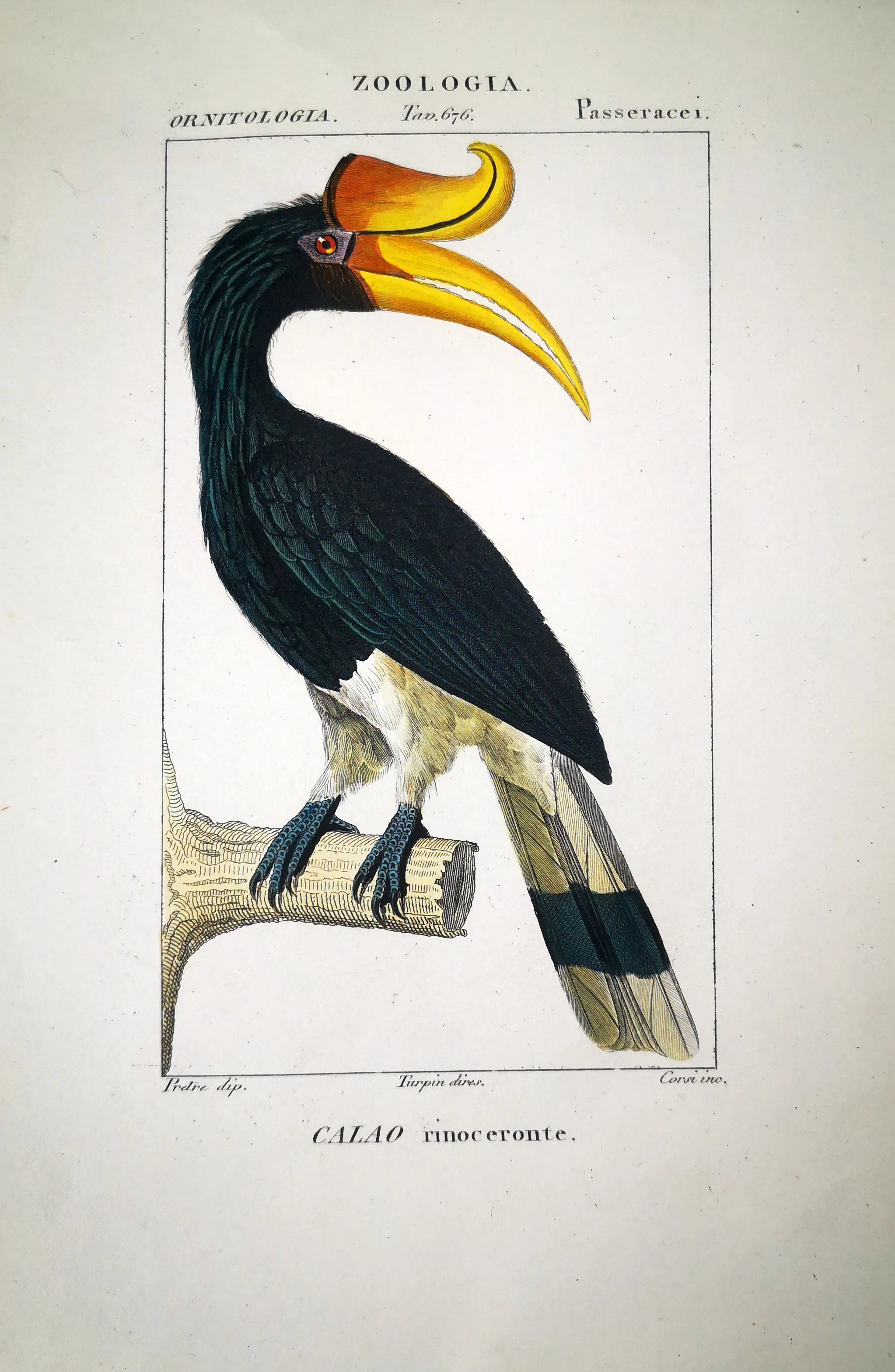
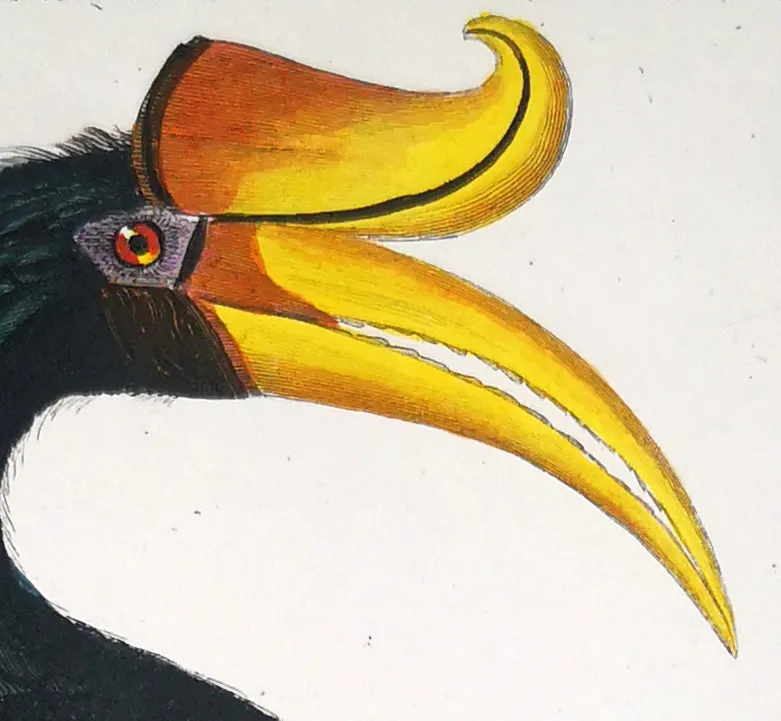
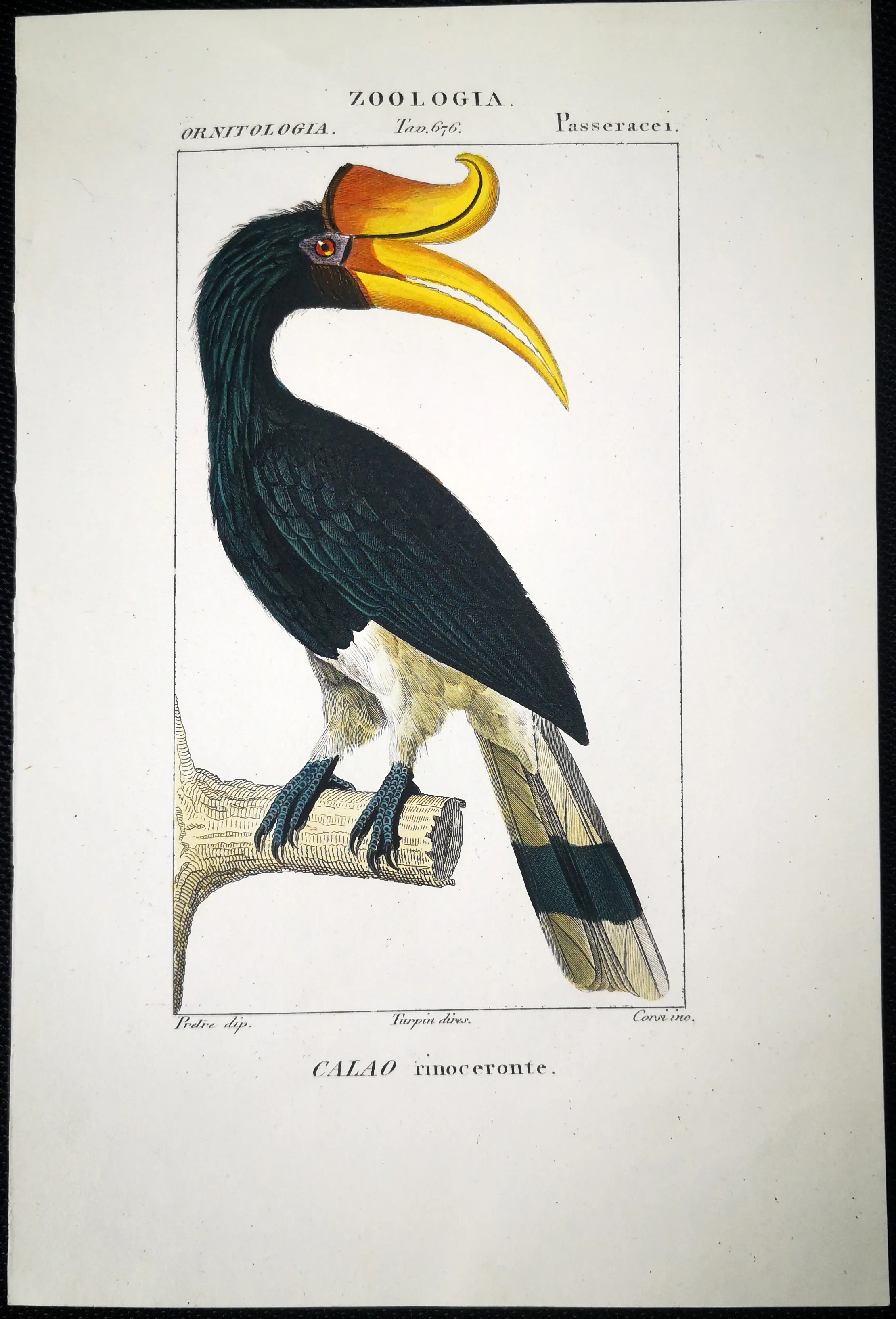



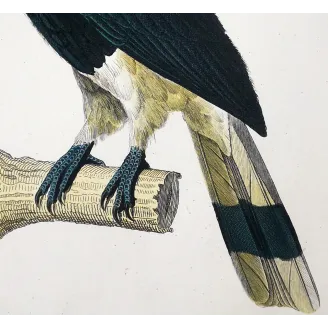
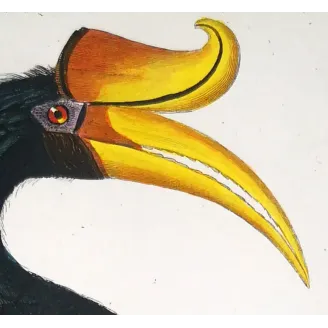
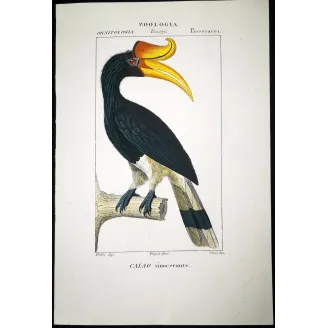

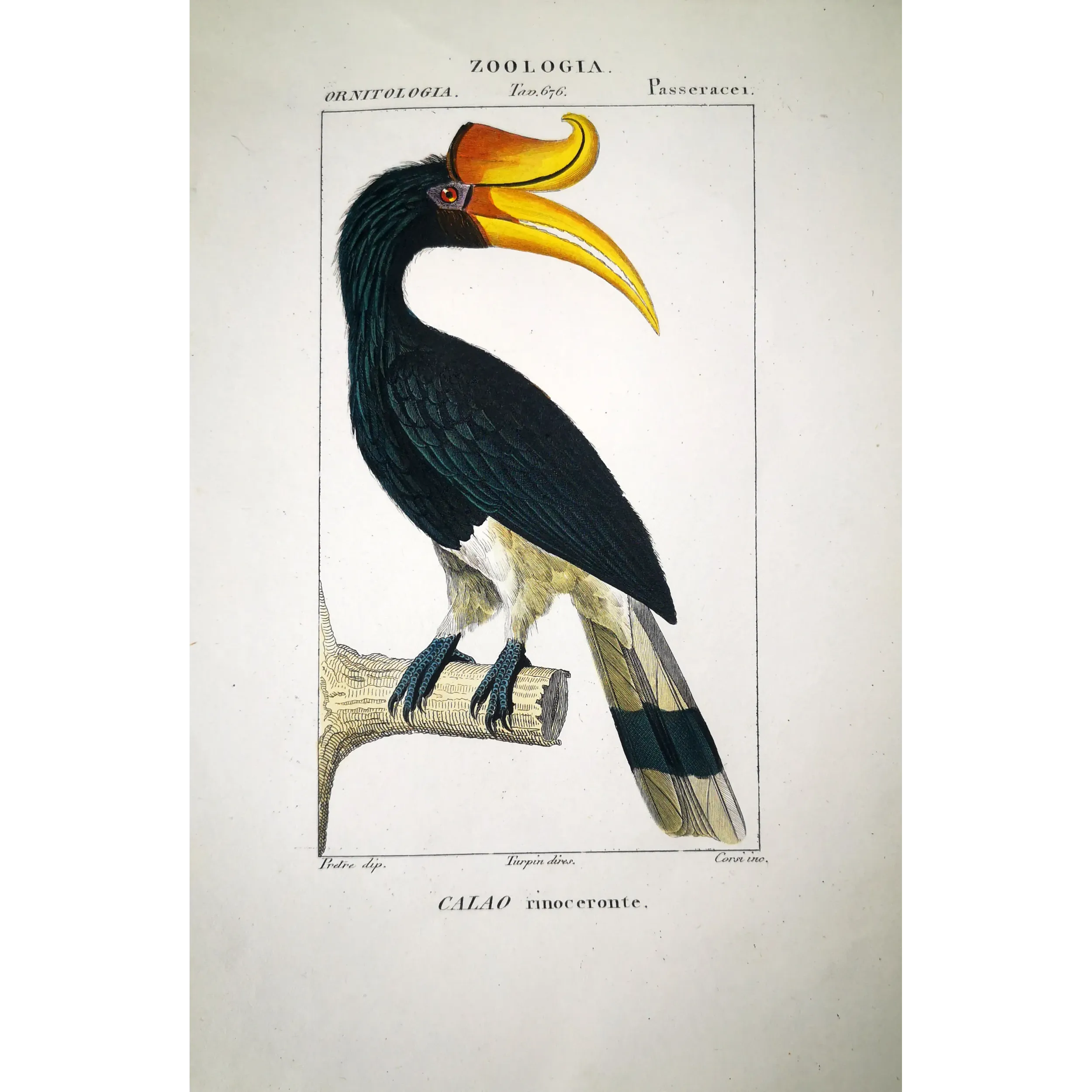
Beautiful 19th century illustration of the Buceros rhinoceros, commonly known as the Rhinoceros Hornbill.
 Delivery policy
Your print will be carefully prepared and shipped worldwide via trusted couriers (UPS or similar).
 Authentic antique prints
Original engravings from the 17th–19th century.
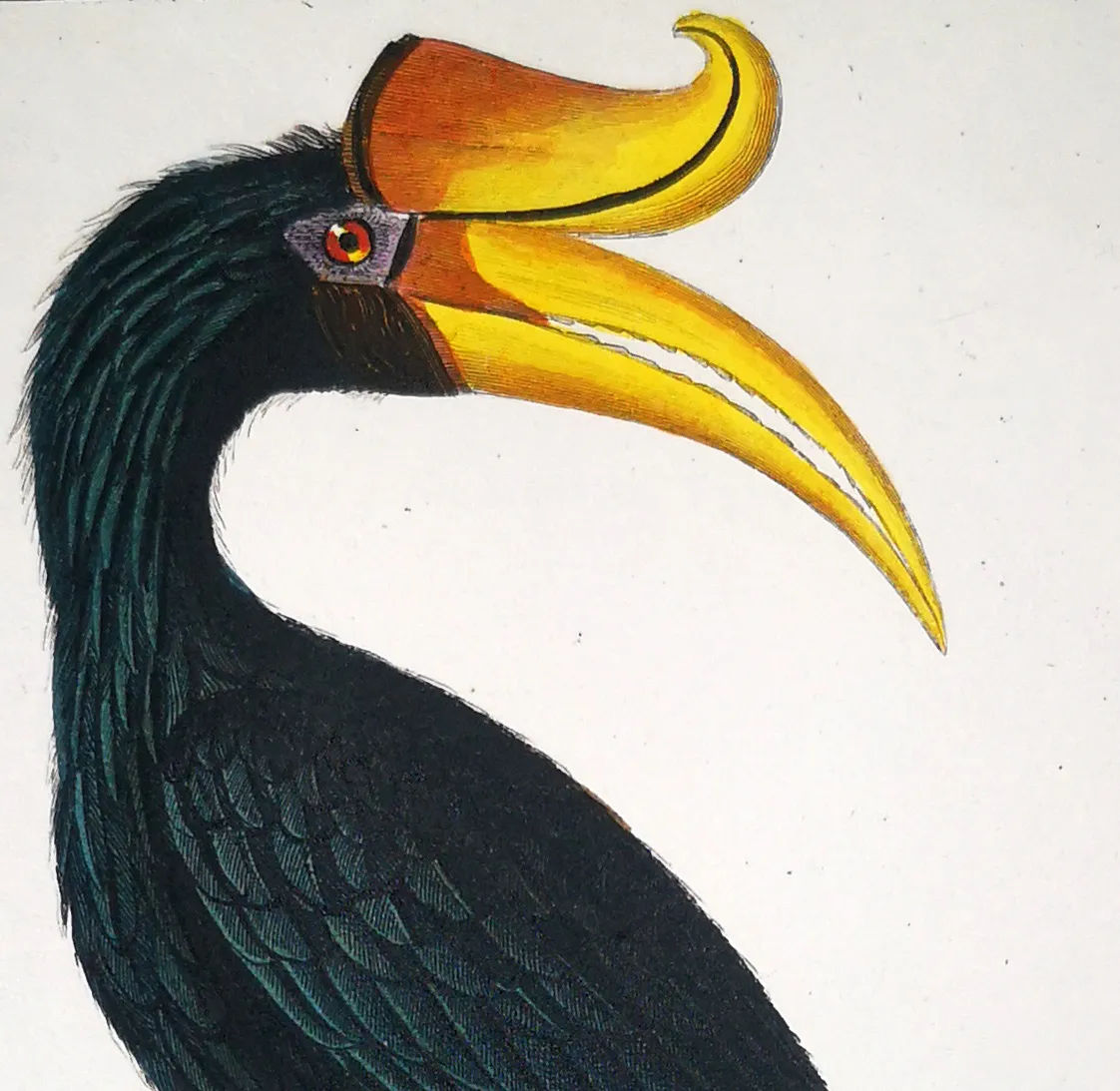
This striking ornithological engraving depicts the Rhinoceros Hornbill (Buceros rhinoceros), here titled “Calao rinoceronte”, portrayed with monumental clarity and a distinctly sculptural silhouette. The plate presents the bird in strict profile, allowing the immense bill and casque—its most iconic anatomical feature—to be read with scientific precision and strong visual authority. Few nineteenth-century bird subjects feel as immediately emblematic: this is a creature designed by nature to look ceremonial.
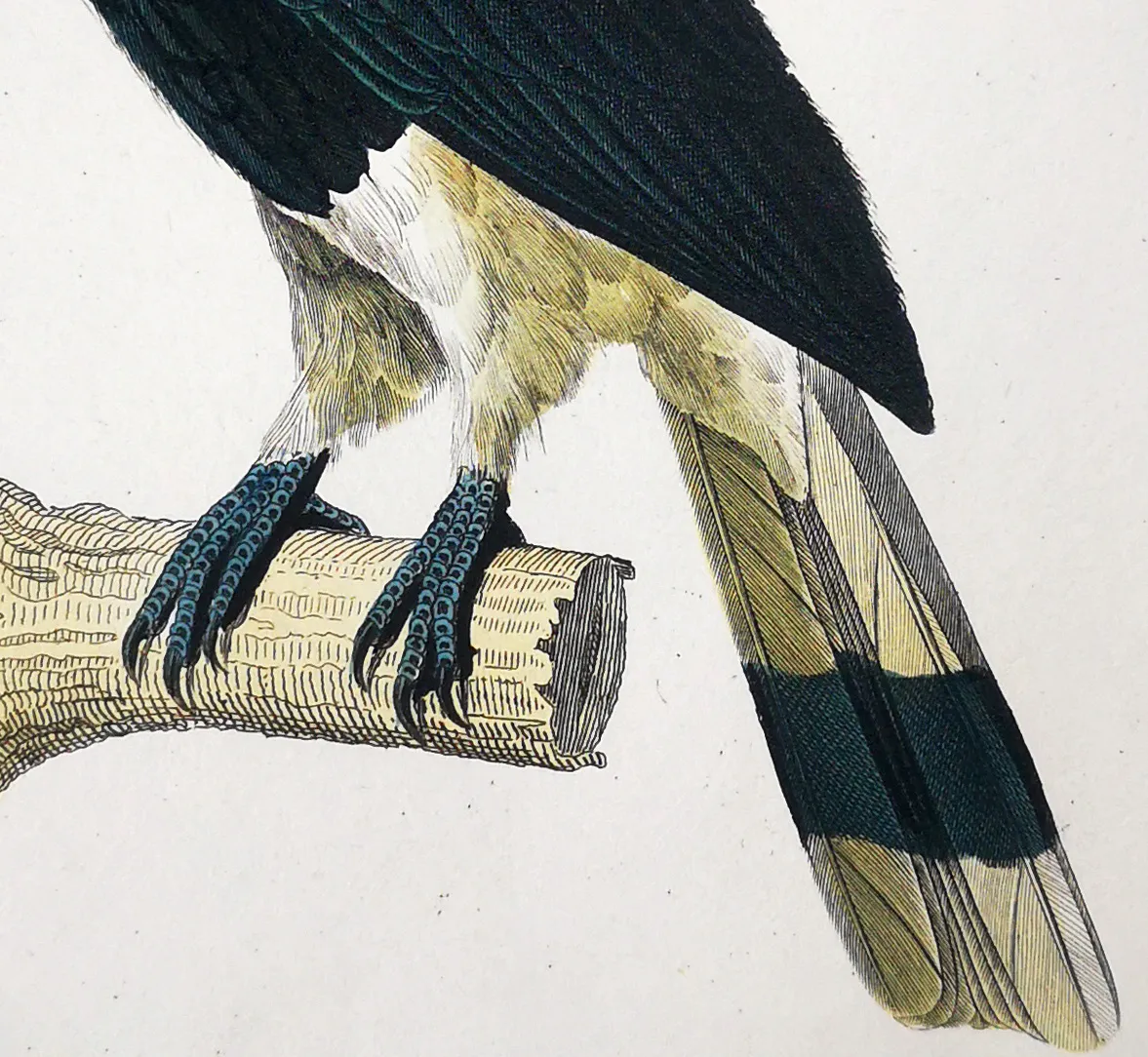
Rather than relying on landscape context, the composition isolates form and proportion. The hornbill’s dark plumage is rendered with disciplined texture and subtle tonal depth, while the warm ochre-to-golden range of the bill introduces a vivid focal crescendo. The banded tail, the pale leg tones, and the restrained perch element complete a balanced “museum specimen” presentation—an encyclopedic image, but one with the gravitas of a portrait.
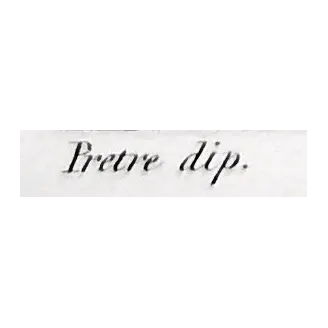
The plate belongs to the Italian edition of the Dizionario di Scienze Naturali (Florence, Battelli press), one of the most ambitious encyclopedic scientific enterprises of its time, for which Pierre Antoine Prêtre produced some of the most accomplished zoological illustrations of the nineteenth century.
— • —
The aesthetic power of this plate lies in its controlled contrasts. The bird’s body reads as a deep, velvet-black mass—quietly animated by fine feather articulation—set against a pale ground that functions like a gallery wall. The beak and casque form an architectural counterweight: bold, curved volumes shaded to suggest real thickness and weight, almost like polished horn or carved wood.
The overall impression is one of refined drama without excess. It is an ideal print for curated interiors where a single, iconic natural form can carry the room—especially in studies, libraries, or minimal spaces that benefit from a focal subject with graphic strength and historical presence.
The Rhinoceros Hornbill (Buceros rhinoceros) is among the most celebrated birds of Southeast Asian rainforests, associated with mature canopy habitats in regions such as the Malay Peninsula, Sumatra, and Borneo. Its extraordinary casque is not mere ornament: it supports display and recognition behaviours, and its imposing profile made it a natural “signature species” for early naturalists seeking emblematic forms. Hornbills are also ecologically significant as major seed dispersers, moving fruit seeds across distances and helping sustain forest regeneration—an intersection of spectacle and function that explains their lasting prestige in both science and collecting culture.
This plate forms part of the historic Dizionario di Scienze Naturali, a monumental early nineteenth-century encyclopedic enterprise once preserved within a noble library and today housed in the Sacchetti Collection. Each engraving reflects a period in which scientific ambition was matched by exceptional artisanal execution — from the disciplined copperplate line to the luminous hand-colouring applied individually to every impression.
The result is not merely zoological documentation, but a refined synthesis of scholarship and craftsmanship. To discover the full story behind these rare prints and their noble provenance, we invite you to read our editorial feature “Not Just Another Print”.
The engraving is in very good antique condition. The impression is clean and well-preserved, with strong definition and carefully retained hand-colouring. The paper is smooth early nineteenth-century wove paper (non-laid), consistent with Italian scientific editions of the period. No watermark has been observed. A faint area of age toning may be present, consistent with antique paper and not affecting the legibility or decorative impact of the image.
For further context on Pierre Antoine Prêtre and his contribution to nineteenth-century zoological illustration, see our editorial feature:
Pierre Antoine Prêtre – Illustrator of Natural Science and Marine Life
Specific References
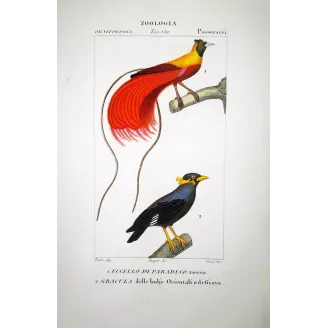
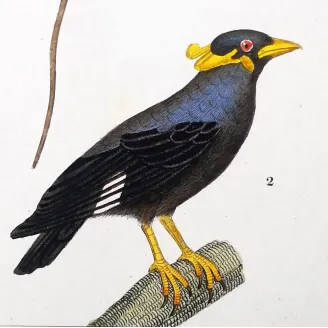
Exquisite depiction of the ornate Greater Bird-of-Paradise alongside the striking Common Hill Myna.
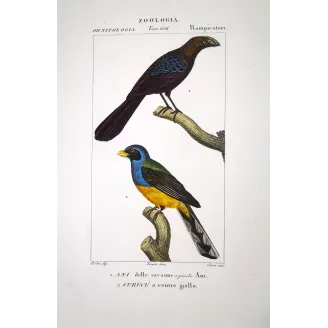
Colorful engraving of two exotic birds: the Ani and the vibrant Yellow-bellied Curuçu.
Two striking hawks from Australia, finely illustrated with warm natural tones.
Two exotic birds from Australia, depicted with vivid hand-coloring.
Finely drawn buzzards with a harmonious and naturalistic composition.
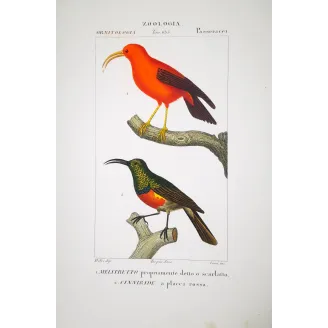
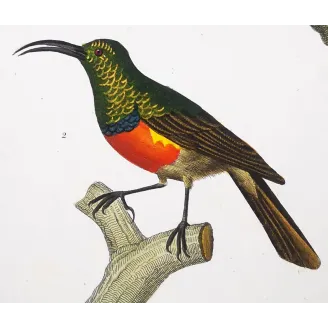
Brilliantly colored honeycreeper and sunbird illustration with tropical vibrancy, captured by Prêtre.
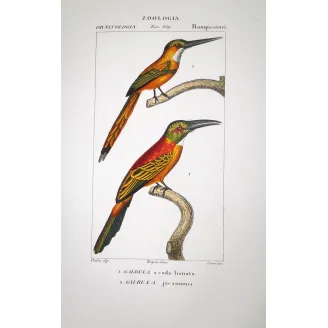
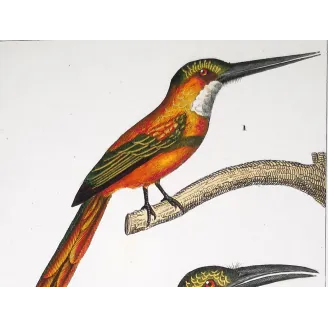
Two vibrant Jacamar birds with metallic plumage and long sharp beaks on stylized branches.
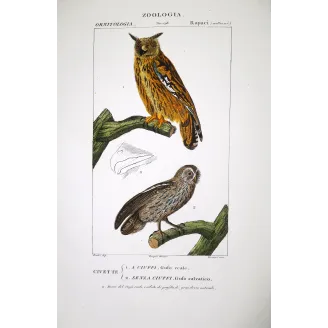
Nocturnal birds of prey elegantly rendered, showing sharpness and grace.
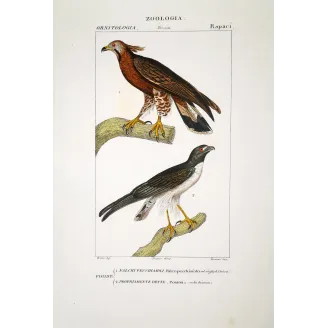
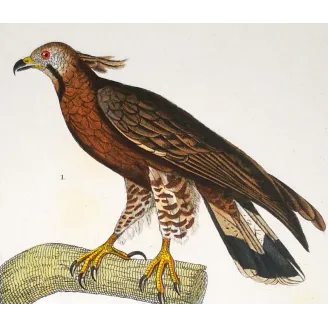
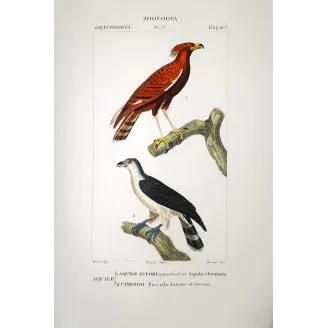
A lively contrast between a fiery red hawk-eagle and a smaller black-and-white goshawk.
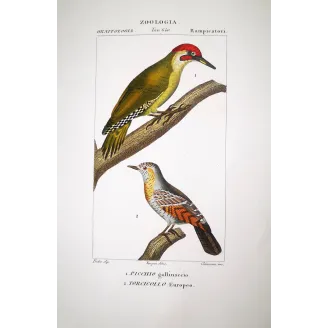
Vividly colored engraving of a European Green Woodpecker and a Eurasian Wryneck, masterfully rendered by Prêtre.
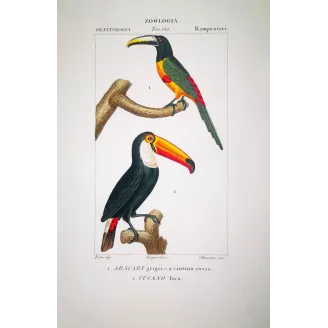
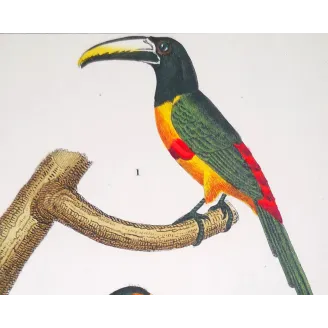
Colored illustration depicting two South American toucans: the Toco and the Red-belted Aracari.
Beautiful 19th century illustration of the Buceros rhinoceros, commonly known as the Rhinoceros Hornbill.