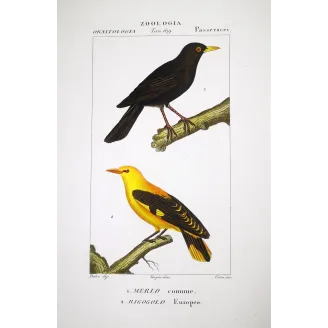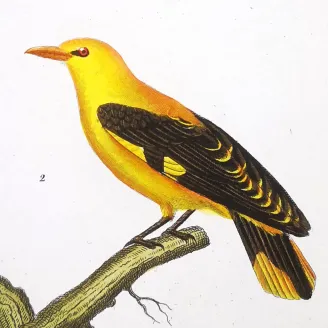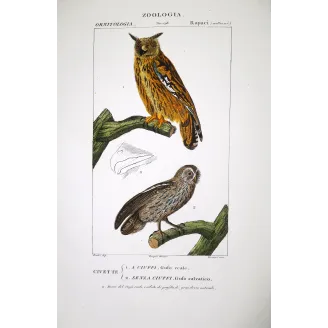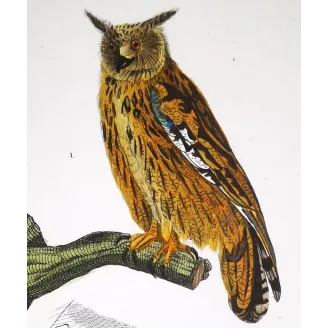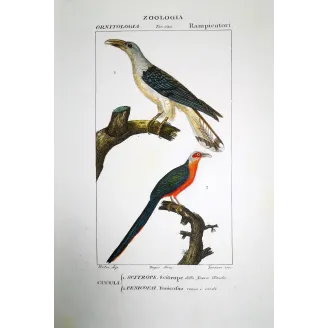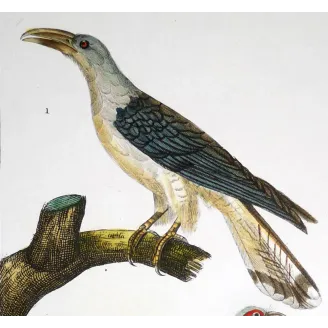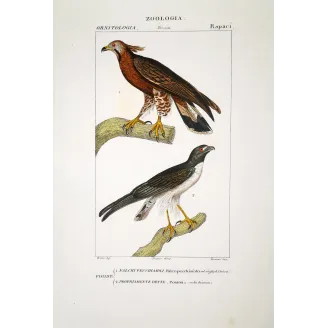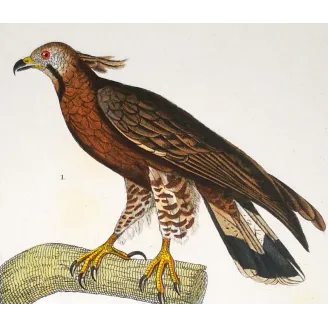
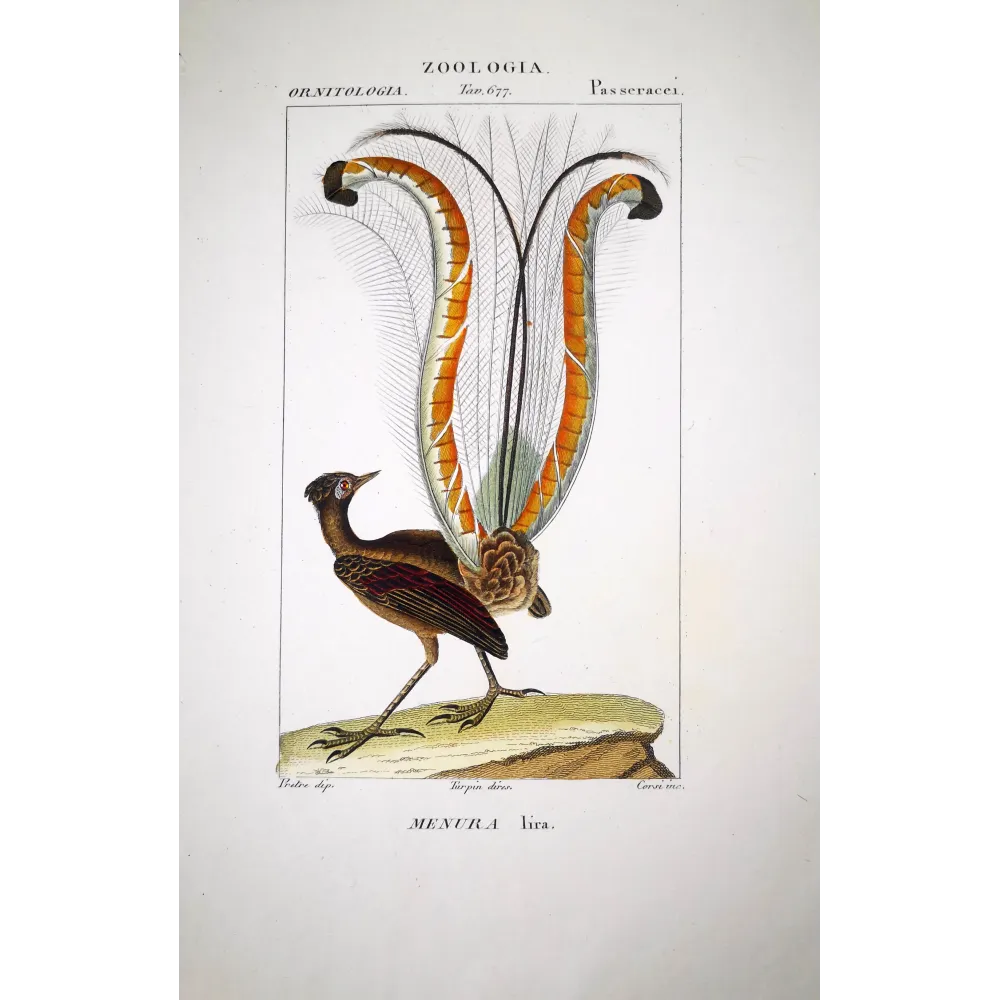
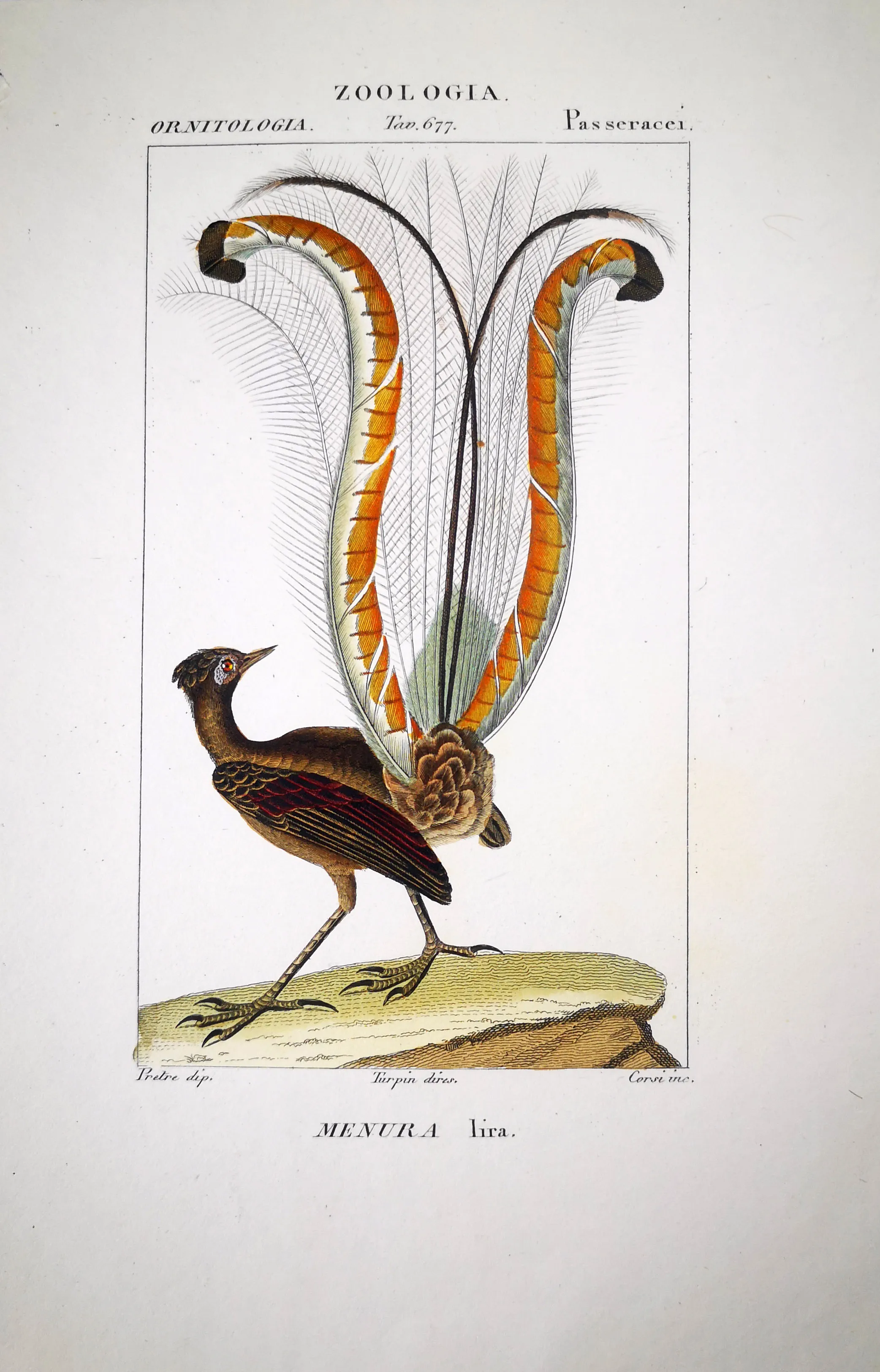
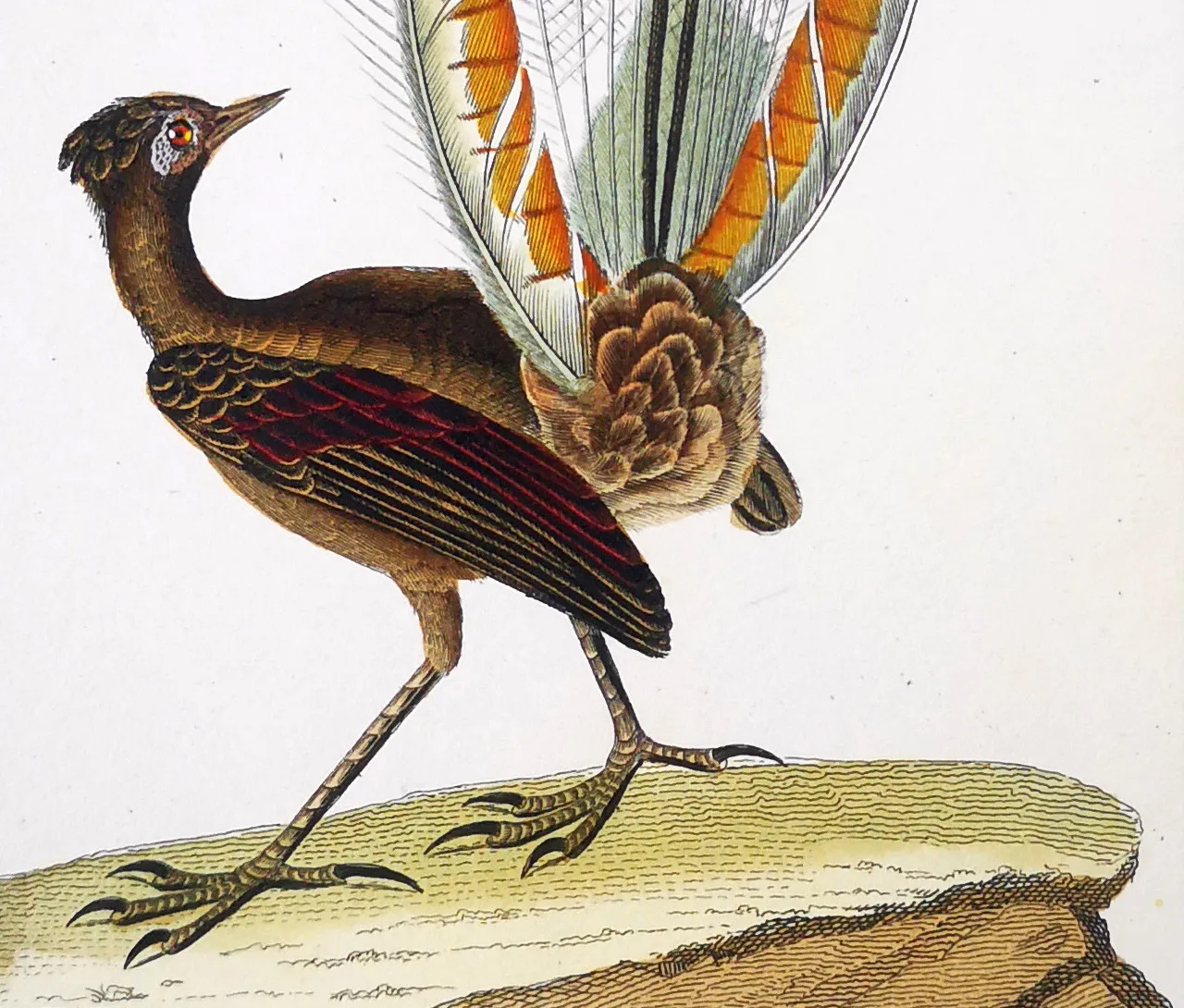
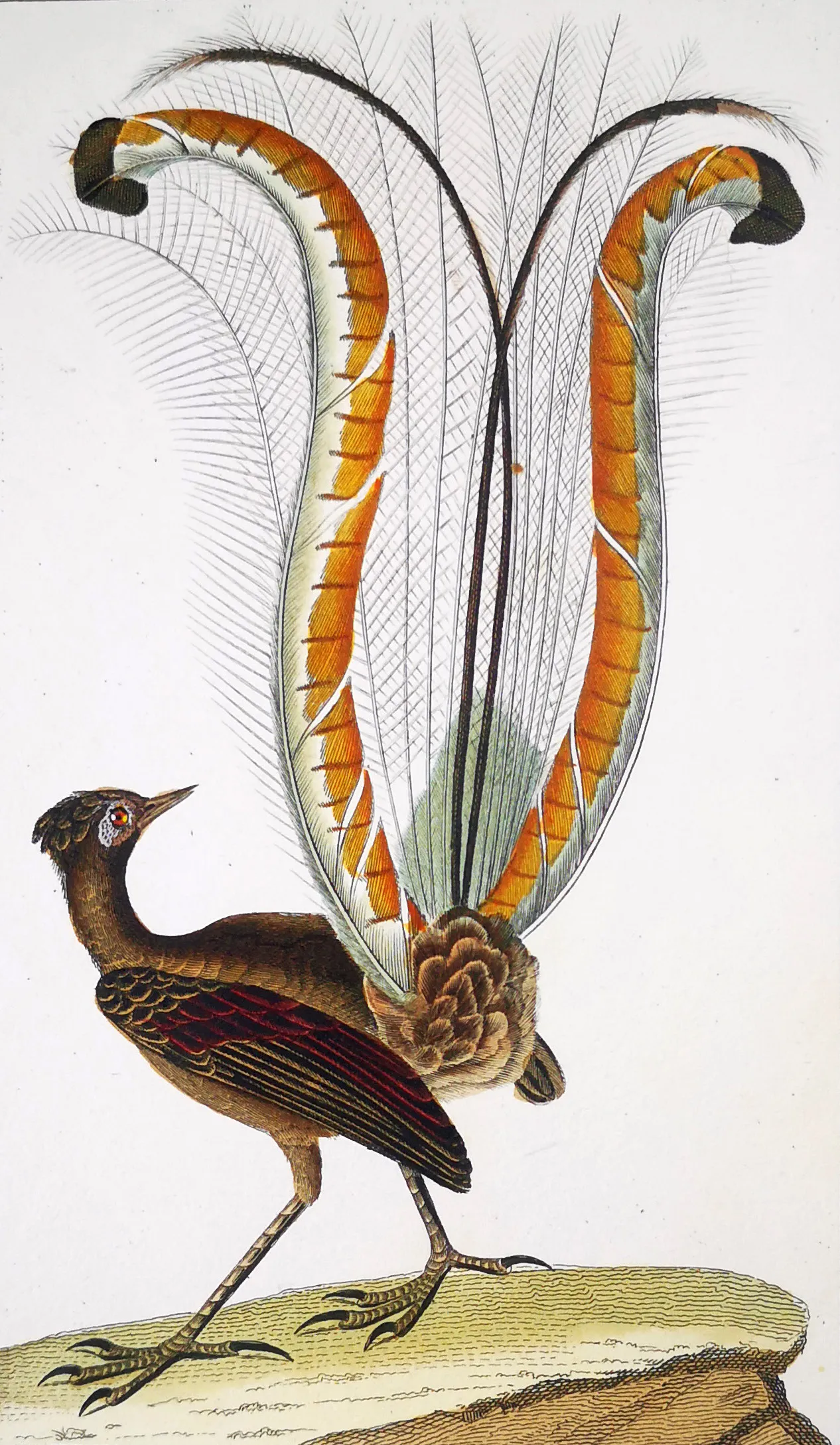


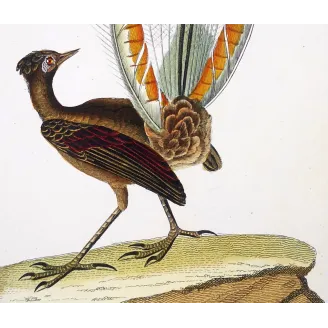
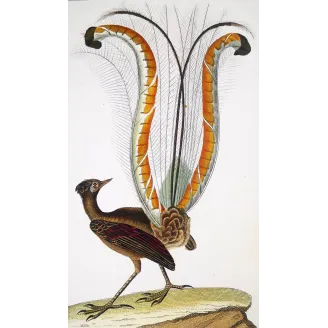
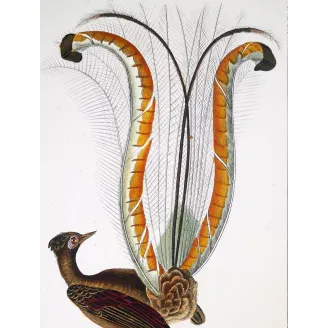
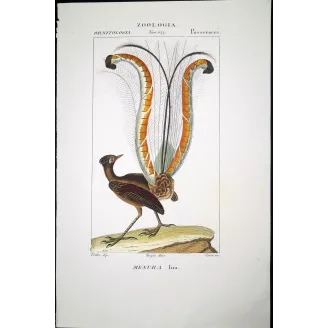

Antique illustration of the lyrebird by Prêtre.
 Delivery policy
Your print will be carefully prepared and shipped worldwide via trusted couriers (UPS or similar).
 Authentic antique prints
Original engravings from the 17th–19th century.
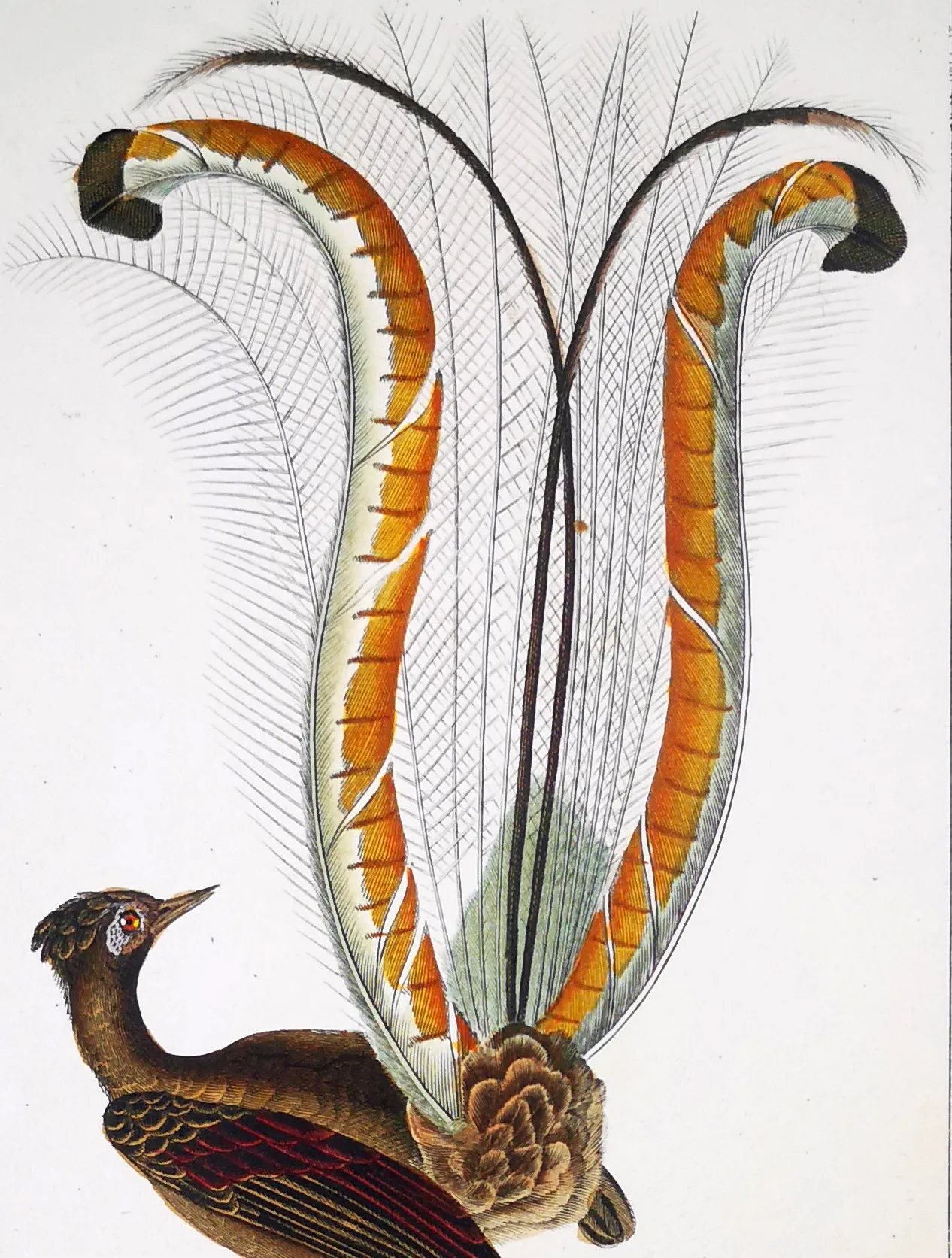
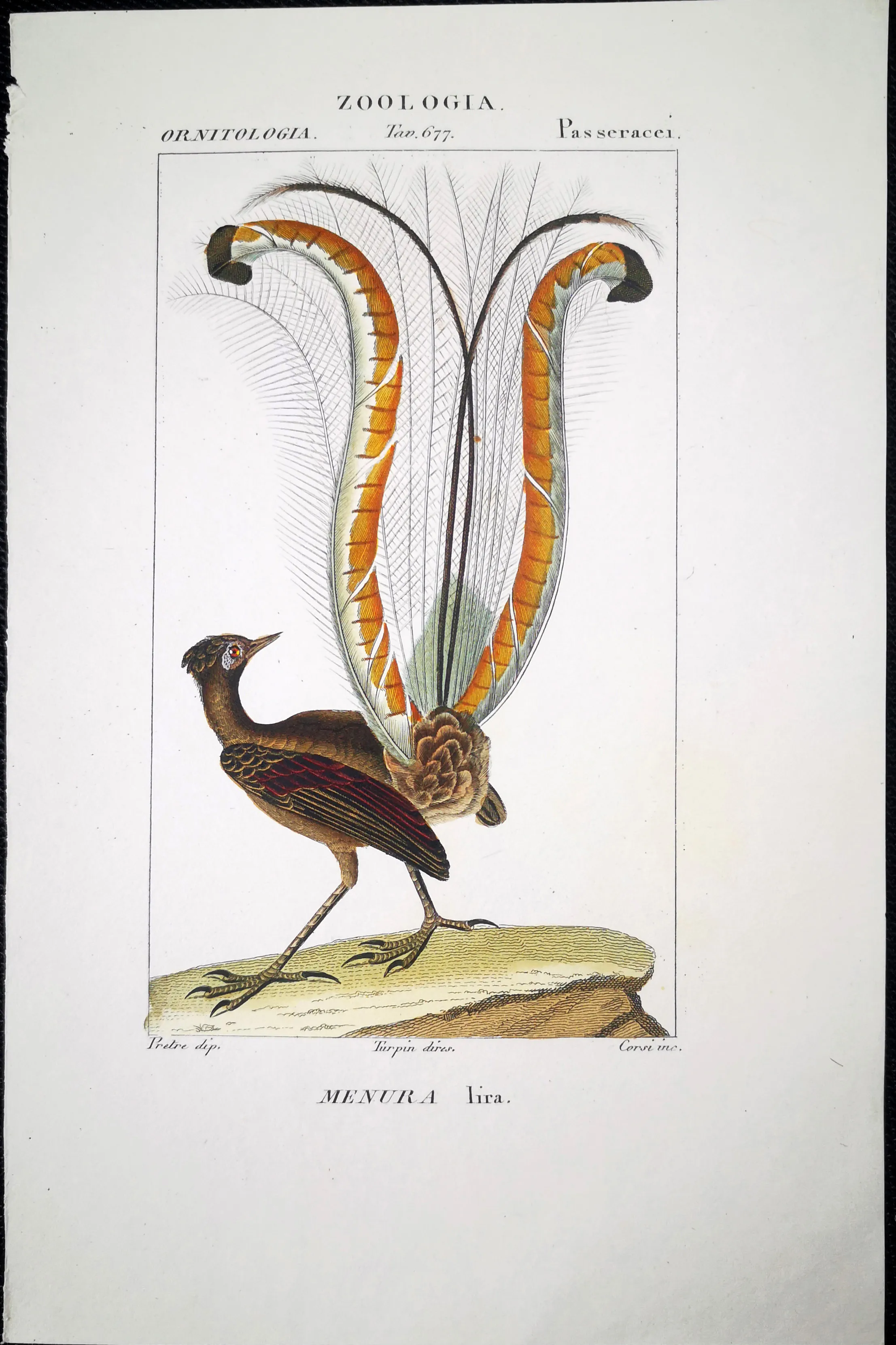
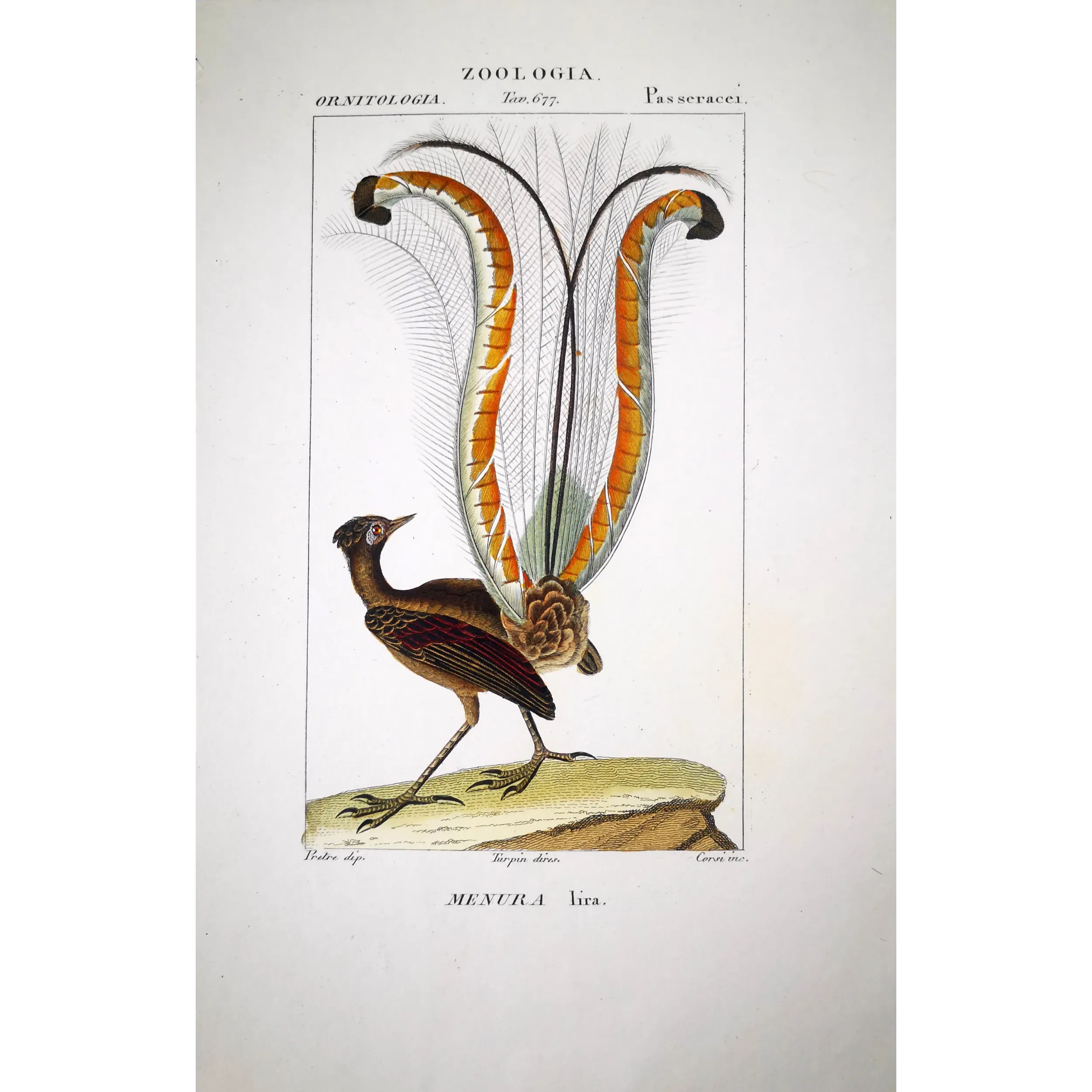
This remarkable ornithological engraving depicts the celebrated Menura lira, known today as the Superb Lyrebird (Menura novaehollandiae). Within the early nineteenth-century imagination, few birds embodied exotic refinement as completely as the lyrebird, whose extraordinary tail feathers form a natural “lyre” when displayed. The plate isolates the figure against a pale ground, allowing the sculptural logic of the tail to dominate the composition with almost architectural authority.
Produced for the Italian edition of the Dizionario di Scienze Naturali (Florence, Battelli press), the engraving reflects the disciplined scientific clarity associated with Pierre Antoine Prêtre under the editorial direction of Turpin. Each feather is articulated with precision, balancing ornamental drama with anatomical fidelity.
— • —
The composition is built around vertical symmetry and rhythmic curvature. The elongated outer tail feathers rise and curve inward, framing the fine filaments that form a delicate lattice within the upper register. The warm amber tones of the inner plumes contrast subtly with the darker outer feathers, while the bird’s compact body anchors the display below with understated chromatic restraint.
Unlike plates that rely on bold coloration, this engraving achieves impact through structure and proportion. The lyrebird’s poised stance, balanced upon a rocky outcrop, reinforces the impression of controlled elegance. It is a work that reads almost like a study in natural design—ornament generated by geometry.
The Superb Lyrebird (Menura novaehollandiae) is native to southeastern Australia and is renowned not only for its elaborate tail but also for its extraordinary vocal mimicry. Males use their lyre-shaped tail during courtship displays, raising and fanning the feathers to create one of the most iconic silhouettes in ornithology.
During the nineteenth century, the lyrebird became emblematic of the expanding scientific awareness of Australia’s unique fauna. Its unusual morphology fascinated European naturalists, and engravings such as this allowed scholars and collectors to study its distinctive tail structure long before photography was available.
This engraving forms part of the historic Dizionario di Scienze Naturali, a monumental early nineteenth-century encyclopedic enterprise once preserved within a noble library and today housed in the Sacchetti Collection. Each plate reflects a period in which scientific ambition was matched by exceptional artisanal execution — from disciplined copperplate linework to luminous hand-applied color.
These works represent a moment when natural history illustration reached a balance between scholarship and aesthetic refinement. To discover the full story behind these rare prints and their noble provenance, we invite you to read our editorial feature “Not Just Another Print”.
The engraving is in very good to excellent antique condition. The impression remains clear and well-defined, with carefully preserved original hand-coloring. The paper is smooth early nineteenth-century wove paper (non-laid), consistent with Italian scientific editions of the period. No watermark has been observed. Minor age toning, if present, is consistent with antique paper and does not detract from the visual presence of the image.
For further context on Pierre Antoine Prêtre and his contribution to nineteenth-century zoological illustration, see our editorial feature:
Pierre Antoine Prêtre – Illustrator of Natural Science and Marine Life
Specific References
Nocturnal birds of prey elegantly rendered, showing sharpness and grace.
Beautiful engraving combining sacred symbolism and elegant coastal shapes.
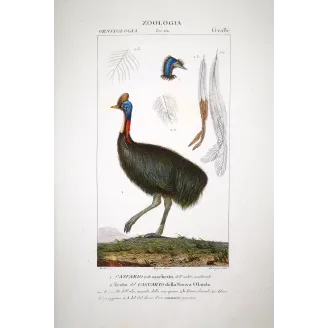
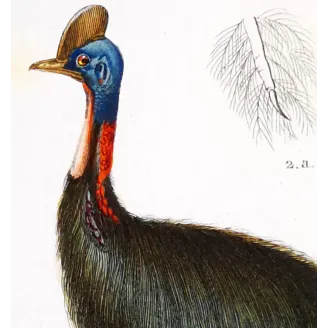
Impressive antique engraving of the Southern Cassowary, a striking flightless bird from New Guinea and northern Australia.
Majestic raptor captured in perfect hunting pose with detailed feathers.
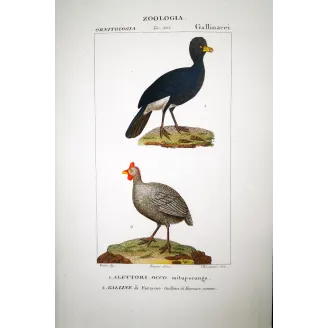
Elegant engraving of a guinea fowl and a Mituporanga, with rich textures and natural posture.
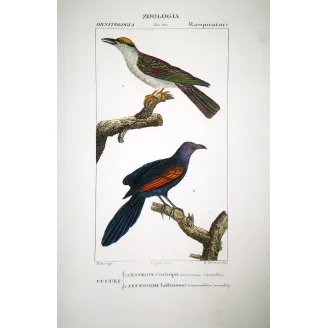
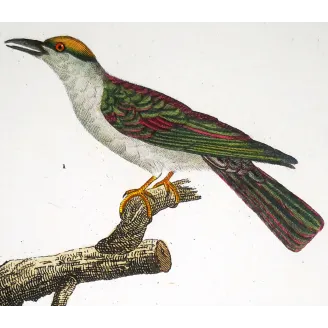
Elegant depiction of a Scythrope and a vividly colored red-and-green Trogon perched on branches.
Finely drawn buzzards with a harmonious and naturalistic composition.
Charming illustration of two aquatic birds with accurate anatomical and marine details.
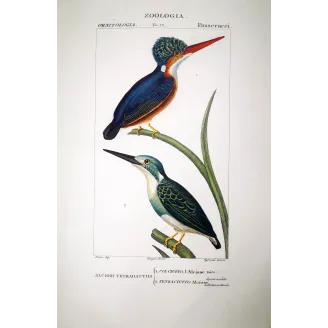
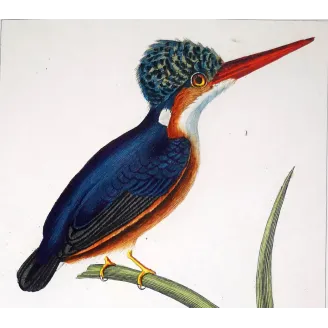
Refined old print with two specimens of South American halcyons: one crested and one with a green-blue livery.
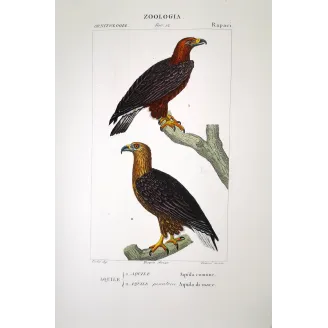
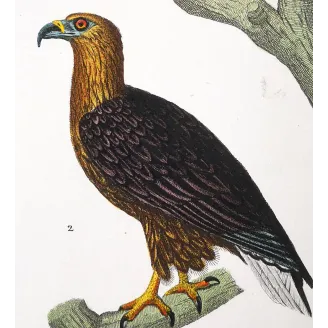
Impressive pairing of two majestic eagles, captured with remarkable precision and power.
Two exotic birds from Australia, depicted with vivid hand-coloring.
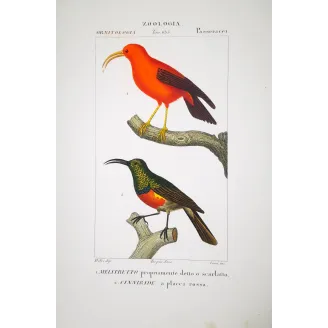
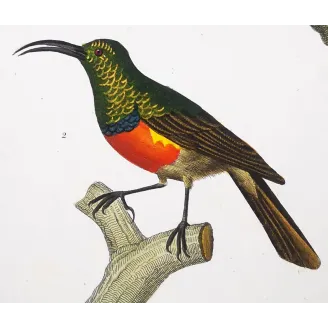
Brilliantly colored honeycreeper and sunbird illustration with tropical vibrancy, captured by Prêtre.
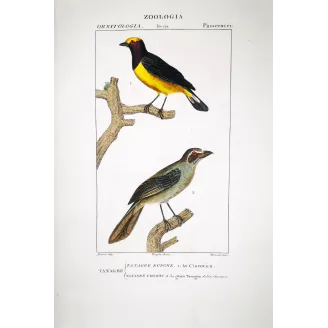
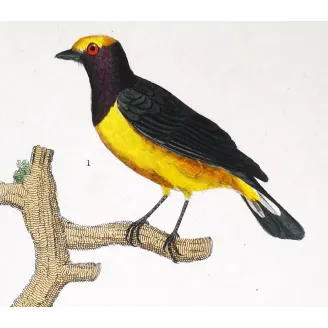
Graceful composition of a Yellow Tanager and a more subtly colored species from the Guyana region.
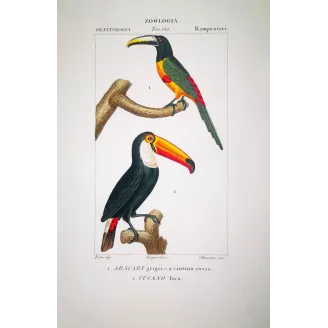
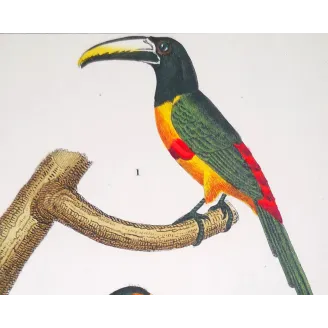
Colored illustration depicting two South American toucans: the Toco and the Red-belted Aracari.
Antique illustration of the lyrebird by Prêtre.