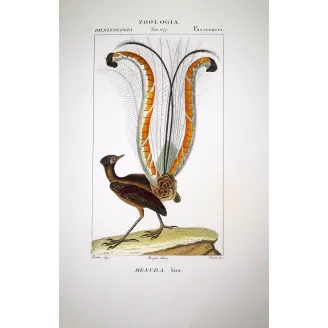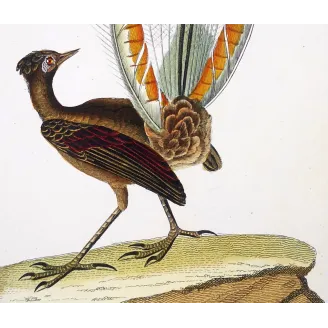
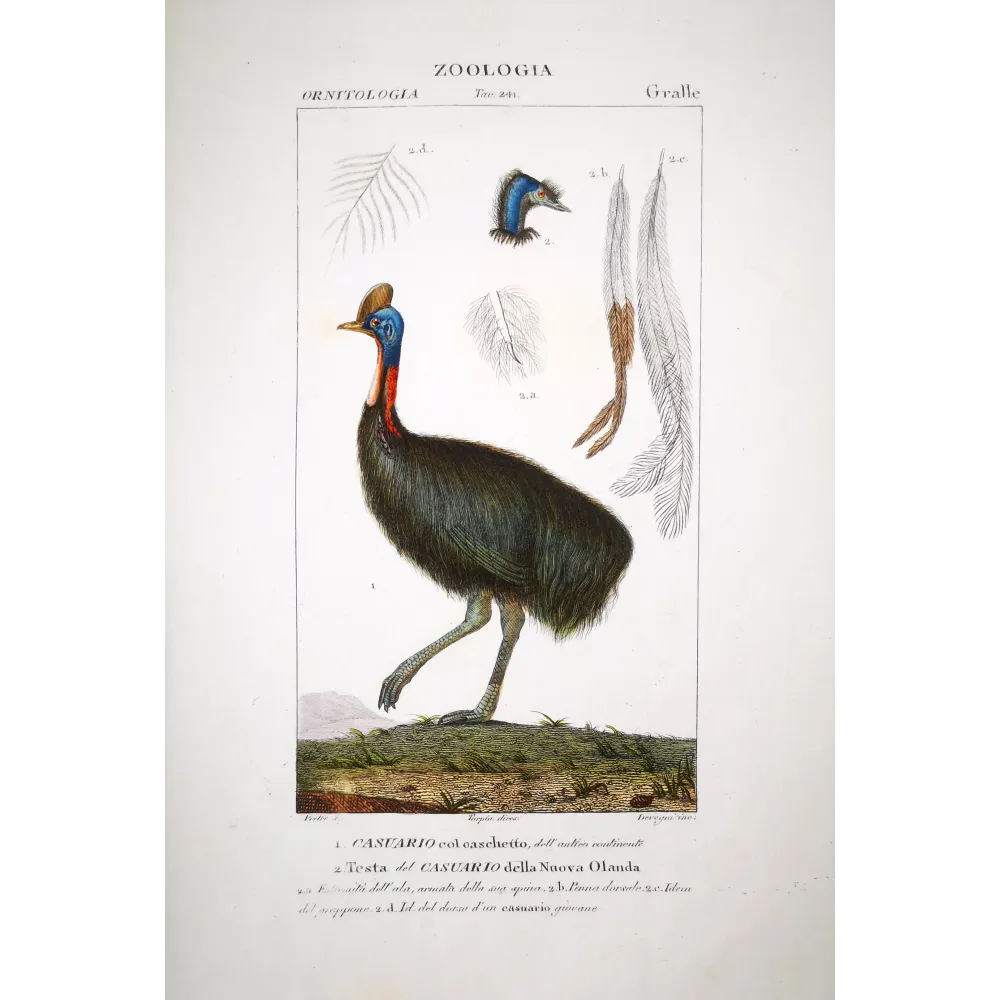
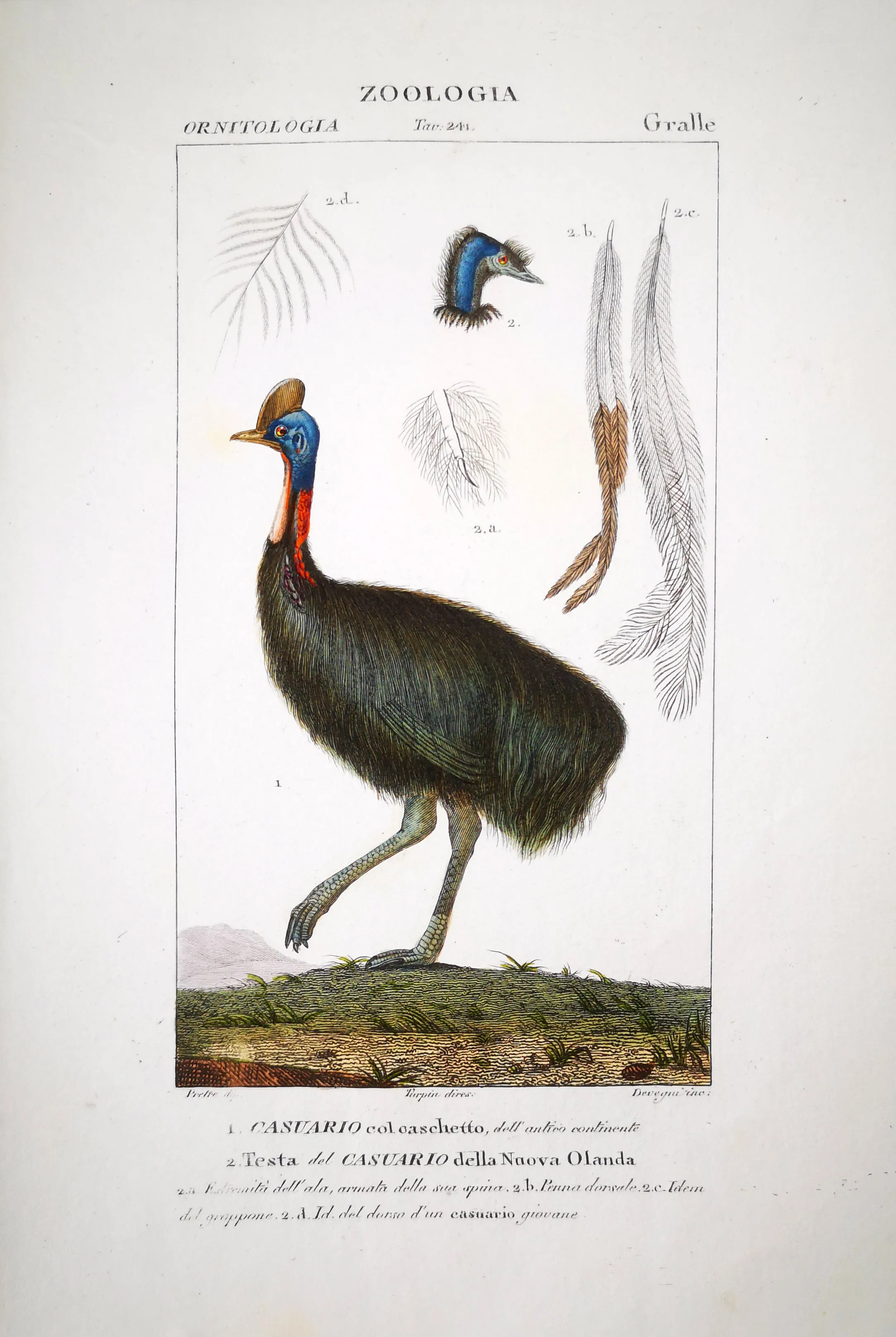
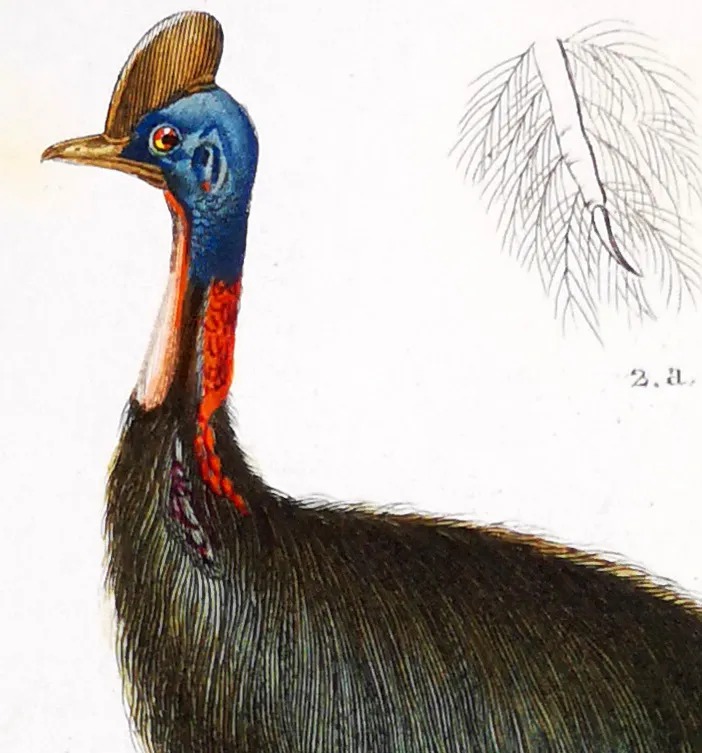
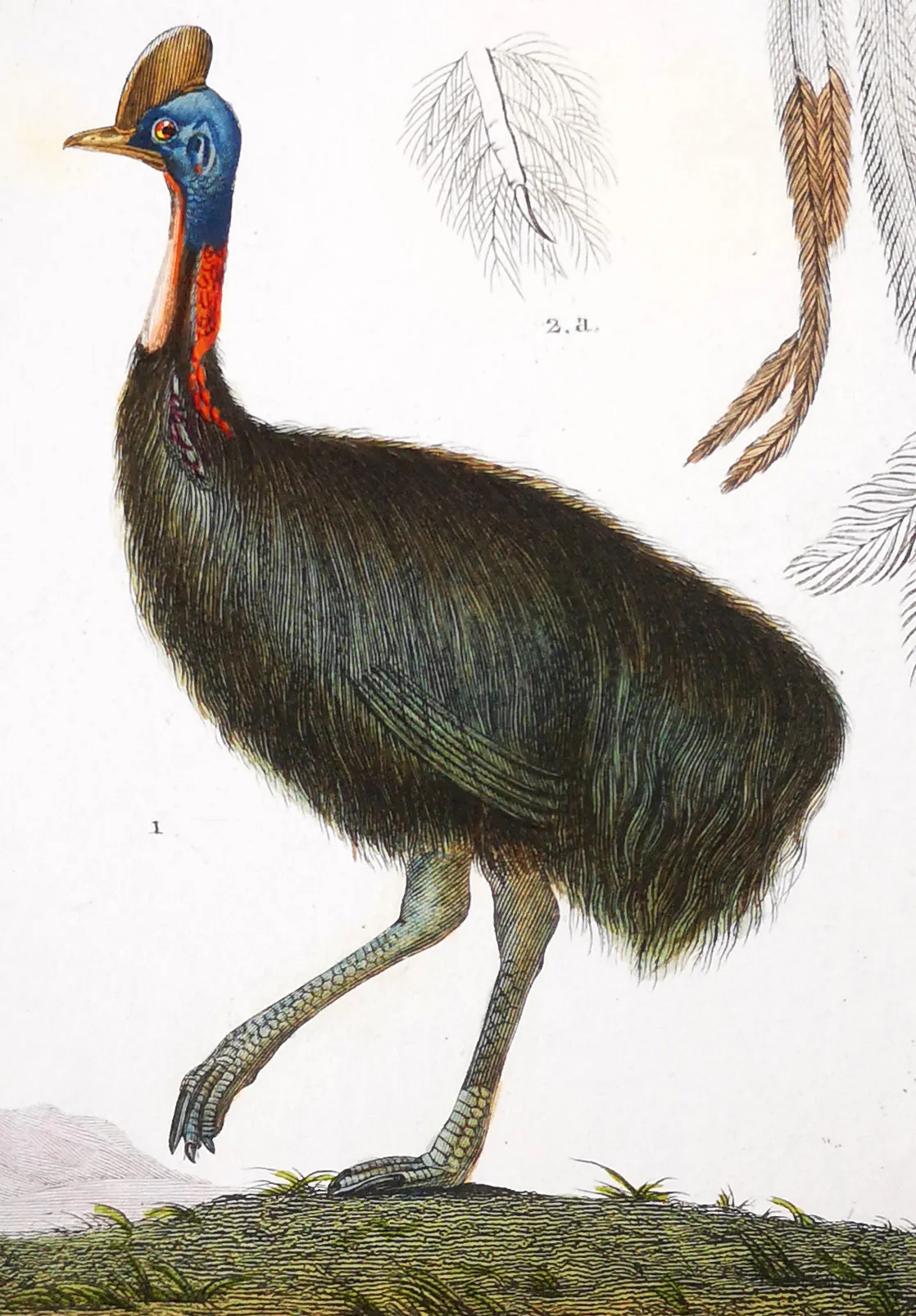
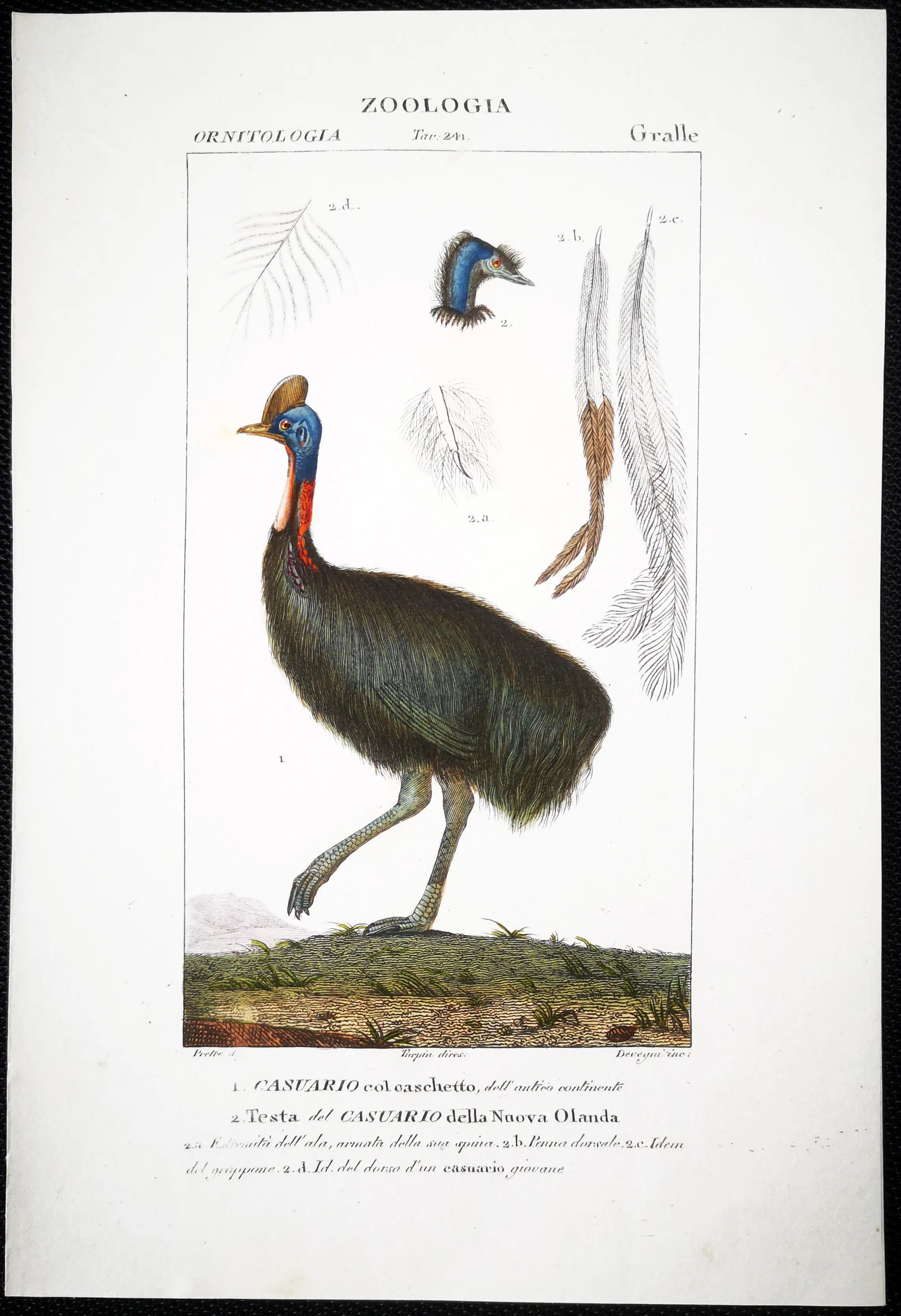


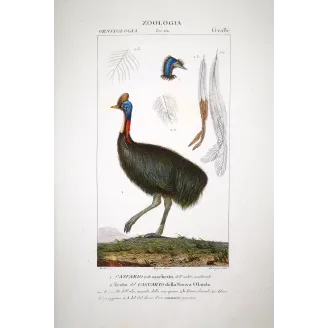
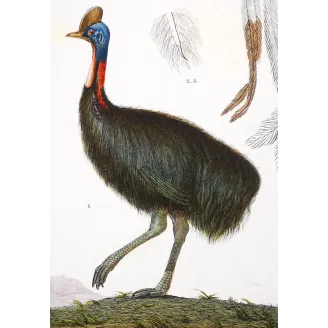
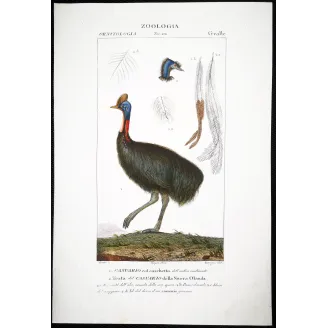
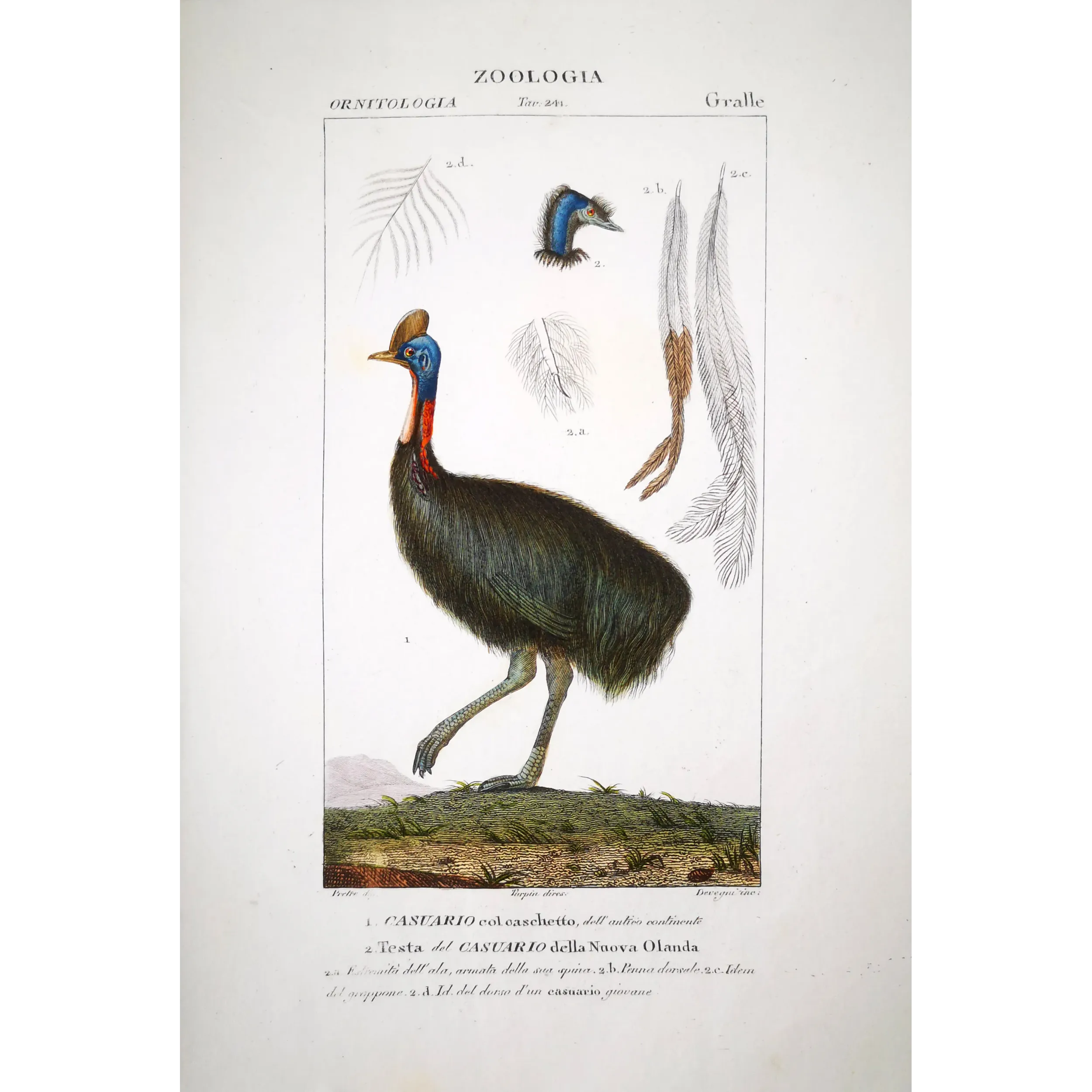
Impressive antique engraving of the Southern Cassowary, a striking flightless bird from New Guinea and northern Australia.
 Delivery policy
Your print will be carefully prepared and shipped worldwide via trusted couriers (UPS or similar).
 Authentic antique prints
Original engravings from the 17th–19th century.
This imposing ornithological engraving presents the Casuario col caschetto, identified in modern taxonomy with the genus Casuarius, most commonly associated with the Southern Cassowary (Casuarius casuarius). Unlike many tropical bird plates that rely on chromatic brilliance, this composition commands attention through scale, mass, and anatomical presence.
The central figure is accompanied by detailed studies of the head, feathers, and structural elements, reinforcing the encyclopedic intent of the Dizionario di Scienze Naturali. Produced under the scientific direction of Turpin and drawn by Pierre Antoine Prêtre, the plate reflects a disciplined balance between visual authority and morphological precision.
— • —
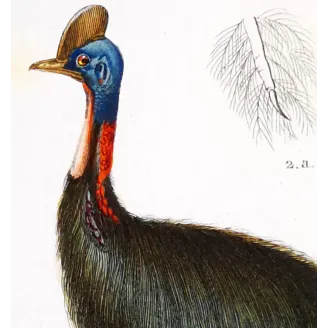
The cassowary’s dark, dense plumage forms a powerful chromatic mass that contrasts with the luminous blue skin of the head and the vivid red throat. The casque—its distinctive helmet-like structure—introduces sculptural geometry, while the elongated legs and grounded stance convey weight and stability.
The supplementary anatomical studies in the upper register lend the sheet a museum-like clarity. These details elevate the engraving beyond decorative appeal, transforming it into a study of structure and adaptation. The overall effect is both dramatic and scholarly: a portrait of one of the most formidable birds of the Australasian fauna.
Cassowaries are large, flightless birds native to New Guinea and northeastern Australia. Known for their powerful legs and distinctive casque, they fascinated nineteenth-century naturalists as examples of evolutionary divergence within avian species. Their prehistoric appearance, combined with vibrant head coloration, made them emblematic of the unique fauna of the “new” southern continents.
Engravings such as this allowed European scholars to study exotic species with anatomical clarity long before photography was available. The inclusion of feather and head studies reflects the scientific priorities of the period: classification through comparison and structural observation.
This engraving forms part of the historic Dizionario di Scienze Naturali, a monumental early nineteenth-century encyclopedic enterprise once preserved within a noble library and today housed in the Sacchetti Collection. Each plate reflects a period in which scientific ambition was matched by exceptional artisanal execution — from disciplined copperplate linework to luminous hand-applied color.
These works represent a moment when natural history illustration achieved both scientific rigor and aesthetic refinement. To discover the full story behind these rare prints and their noble provenance, we invite you to read our editorial feature “Not Just Another Print”.
The engraving is in very good to excellent antique condition. The impression remains clear and well-defined, with preserved original hand-coloring. The paper is smooth early nineteenth-century wove paper (non-laid), consistent with Italian scientific editions of the period. No watermark has been observed. Minor age toning, if present, is consistent with antique paper and does not diminish the plate’s presence.
For further context on Pierre Antoine Prêtre and his contribution to nineteenth-century zoological illustration, see our editorial feature:
Pierre Antoine Prêtre – Illustrator of Natural Science and Marine Life
Specific References
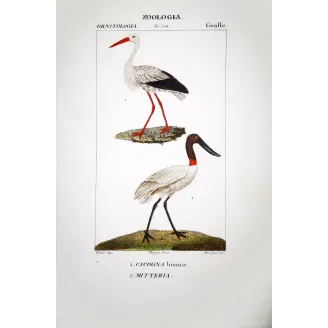
Graceful stork and robust jabiru presented with classic naturalistic balance.
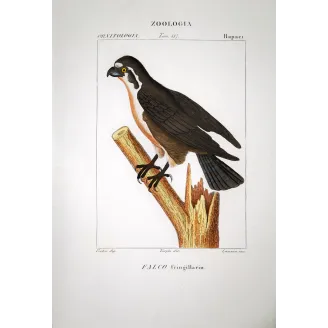
Majestic raptor captured in perfect hunting pose with detailed feathers.
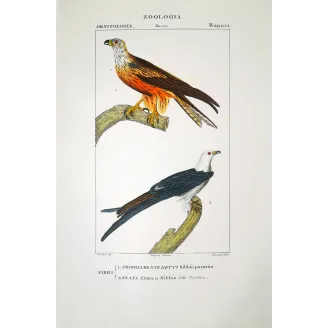
Parasitic Kite & Elanus (Milvus sp. & Elanus sp.) – Original Hand-Colored Engraving by Prêtre, Antique Print.
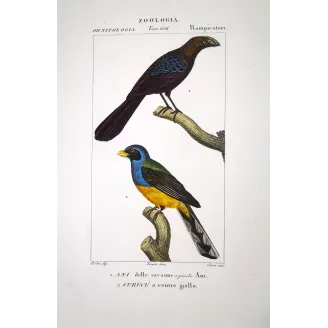
Colorful engraving of two exotic birds: the Ani and the vibrant Yellow-bellied Curuçu.
Elegant depiction of a Scythrope and a vividly colored red-and-green Trogon perched on branches.
Charming illustration of two aquatic birds with accurate anatomical and marine details.
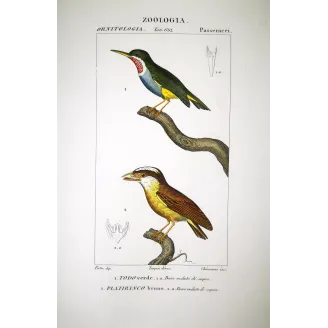
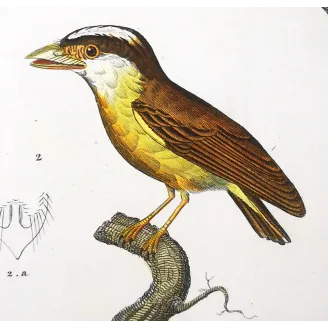
Delicate birds from the New World: the vibrant Green Todus and a brown Platyrinchus with unique beak features.
Impressive pairing of two majestic eagles, captured with remarkable precision and power.
Two vibrant Jacamar birds with metallic plumage and long sharp beaks on stylized branches.
Two striking hawks from Australia, finely illustrated with warm natural tones.
Nocturnal birds of prey elegantly rendered, showing sharpness and grace.
Rare birds of the jungle: the crest-faced Corydon and a luminous green Rupicola.
Graceful composition of a Yellow Tanager and a more subtly colored species from the Guyana region.
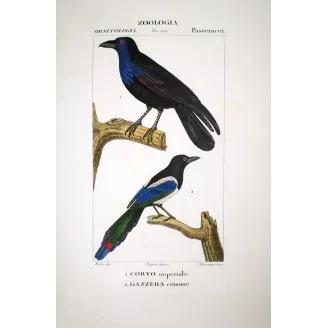
Striking contrast between the dark Imperial Crow and the vividly patterned Common Magpie.
Vividly colored engraving of a European Green Woodpecker and a Eurasian Wryneck, masterfully rendered by Prêtre.
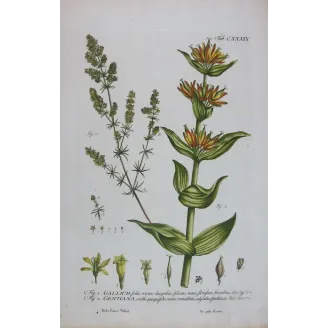
An elegant 18th-century botanical engraving depicting Gentian and Bedstraw, combining structured vertical growth with delicate botanical detail. The vivid hand-coloring and dual composition create a refined and visually engaging natural history print.
Impressive antique engraving of the Southern Cassowary, a striking flightless bird from New Guinea and northern Australia.