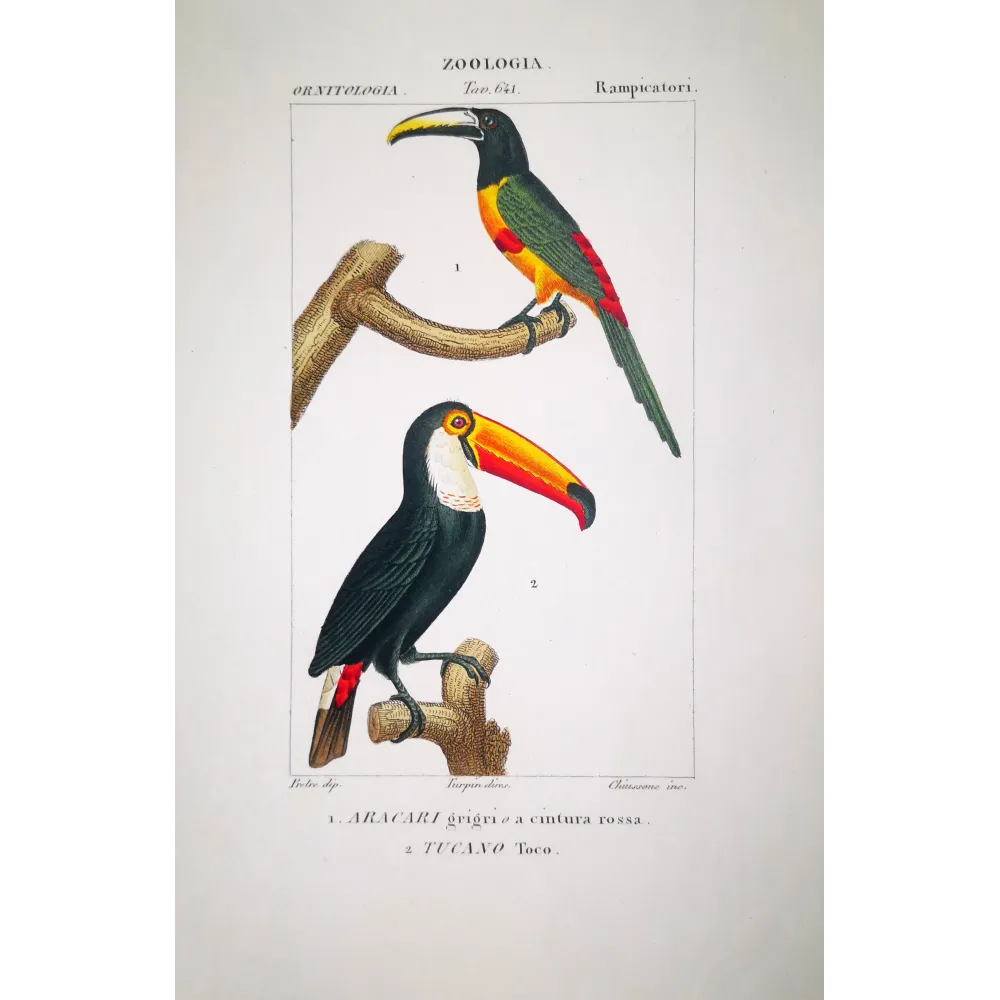
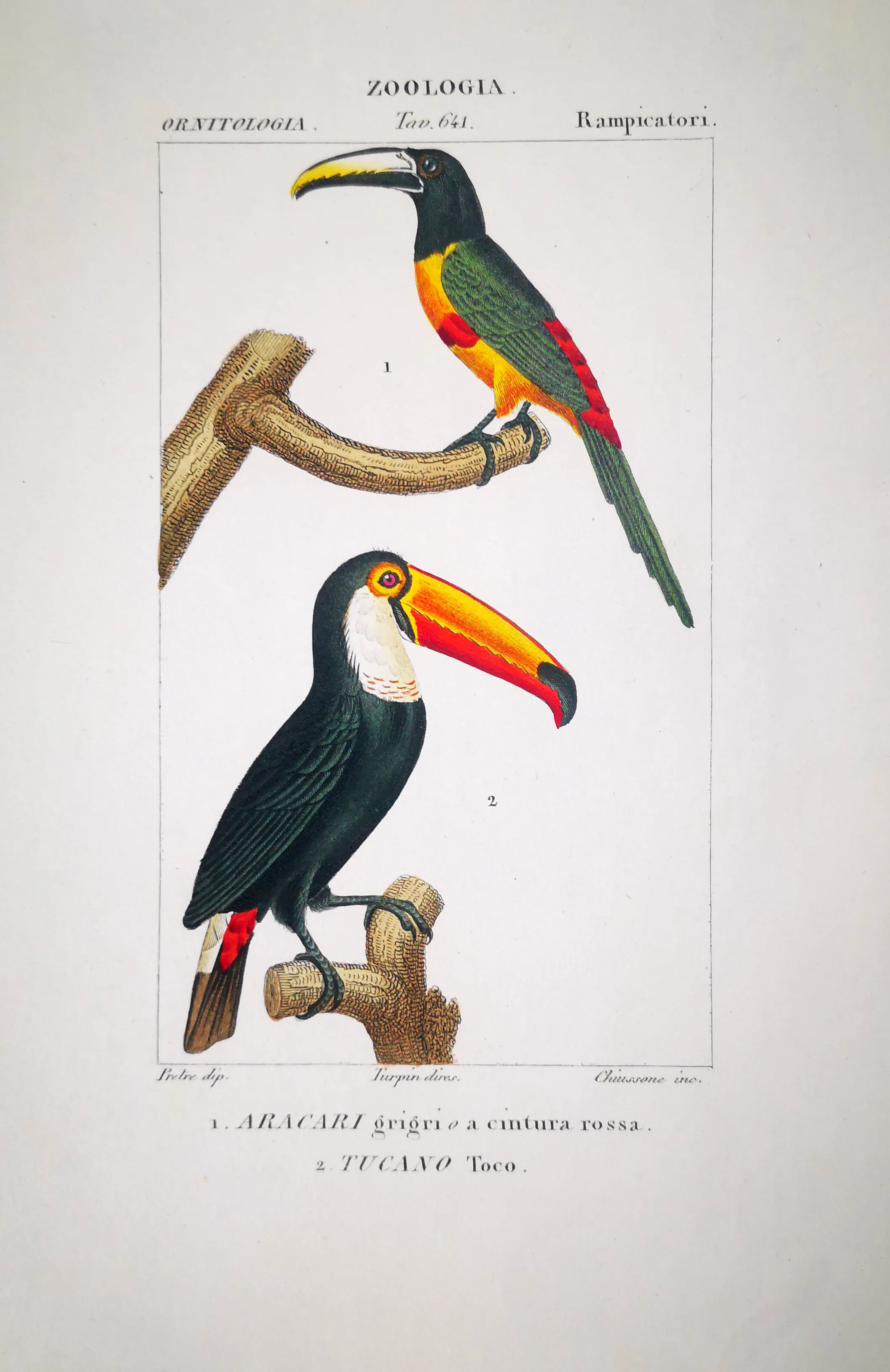
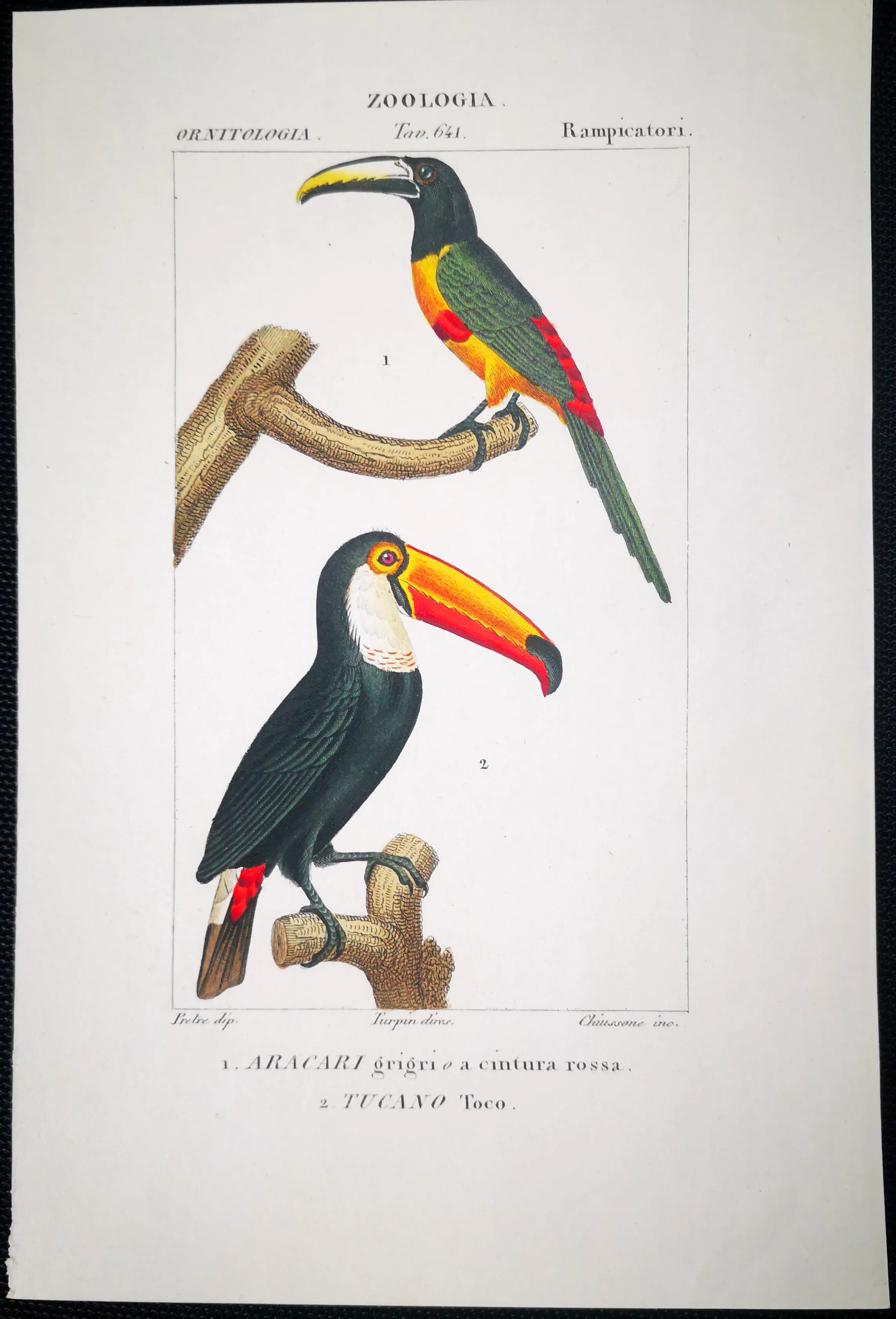



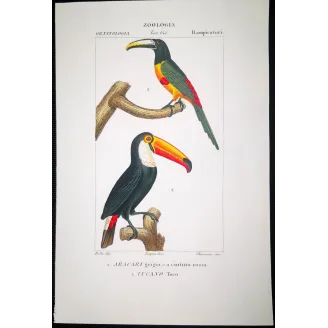
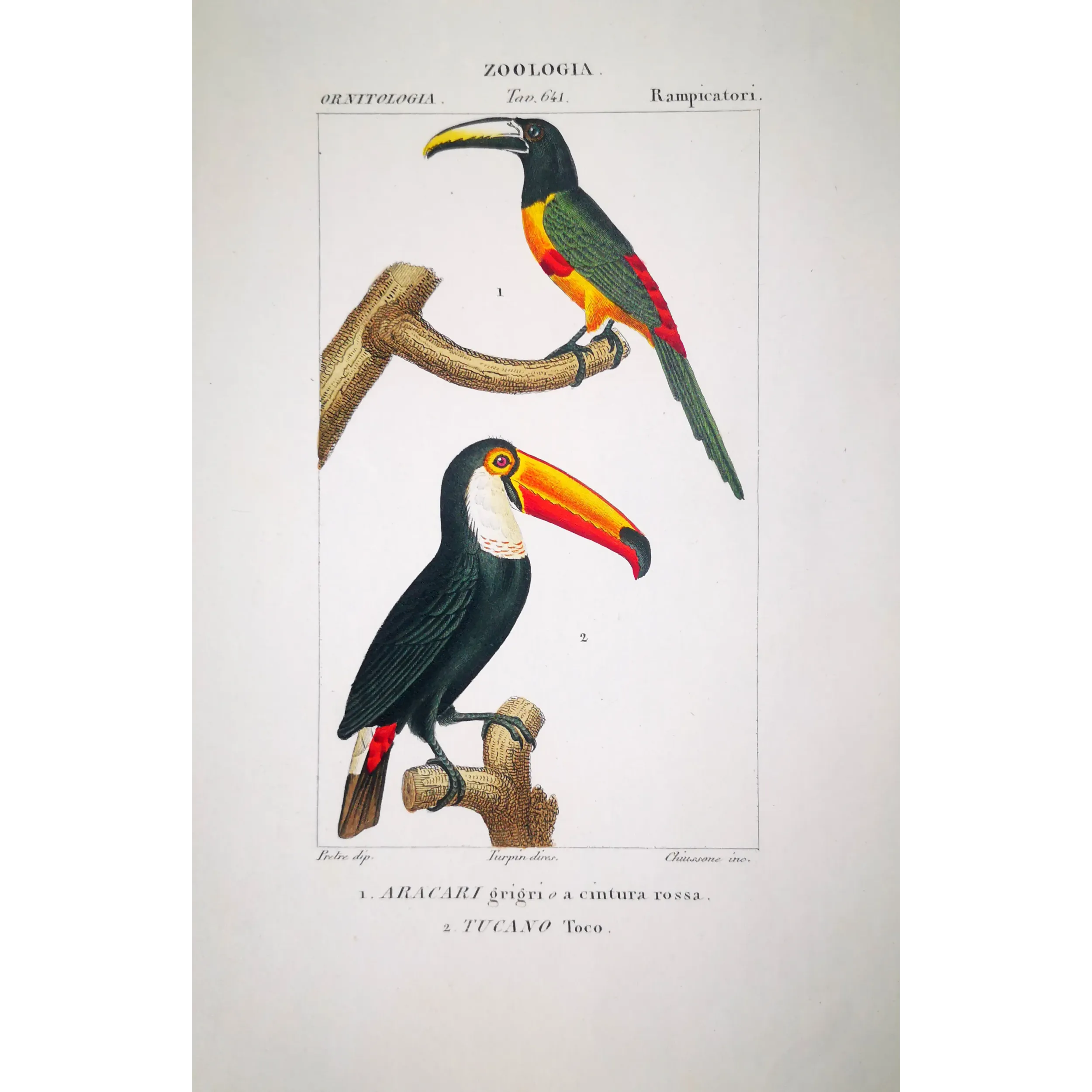
Colored illustration depicting two South American toucans: the Toco and the Red-belted Aracari.
 Delivery policy
Your print will be carefully prepared and shipped worldwide via trusted couriers (UPS or similar).
 Authentic antique prints
Original engravings from the 17th–19th century.
This vibrant ornithological engraving presents two emblematic birds of the South American canopy: the Red-breasted Aracari (Pteroglossus castanotis), here titled “Aracari grigio a cintura rossa”, and the unmistakable Toco Toucan (Ramphastos toco), listed as “Tucano Toco”. Conceived as a comparative plate, the composition offers not only taxonomic clarity but a refined dialogue of colour, silhouette, and proportion. The work belongs to the Italian edition of the Dizionario di Scienze Naturali (Florence, Battelli press), for which Pierre Antoine Prêtre produced some of the most accomplished zoological illustrations of the early nineteenth century.
The staging is intentionally spare. Both birds are placed on naturalistic branches yet isolated against a clean ground, allowing the viewer to focus on bill architecture, plumage structure, and chromatic contrast without landscape distraction. This disciplined presentation transforms exotic spectacle into curated scientific elegance.
The result is a true “statement” engraving: two instantly recognizable tropical species rendered with confident copperplate line and luminous period hand-colouring, capable of anchoring both classical and contemporary interiors.
— • —
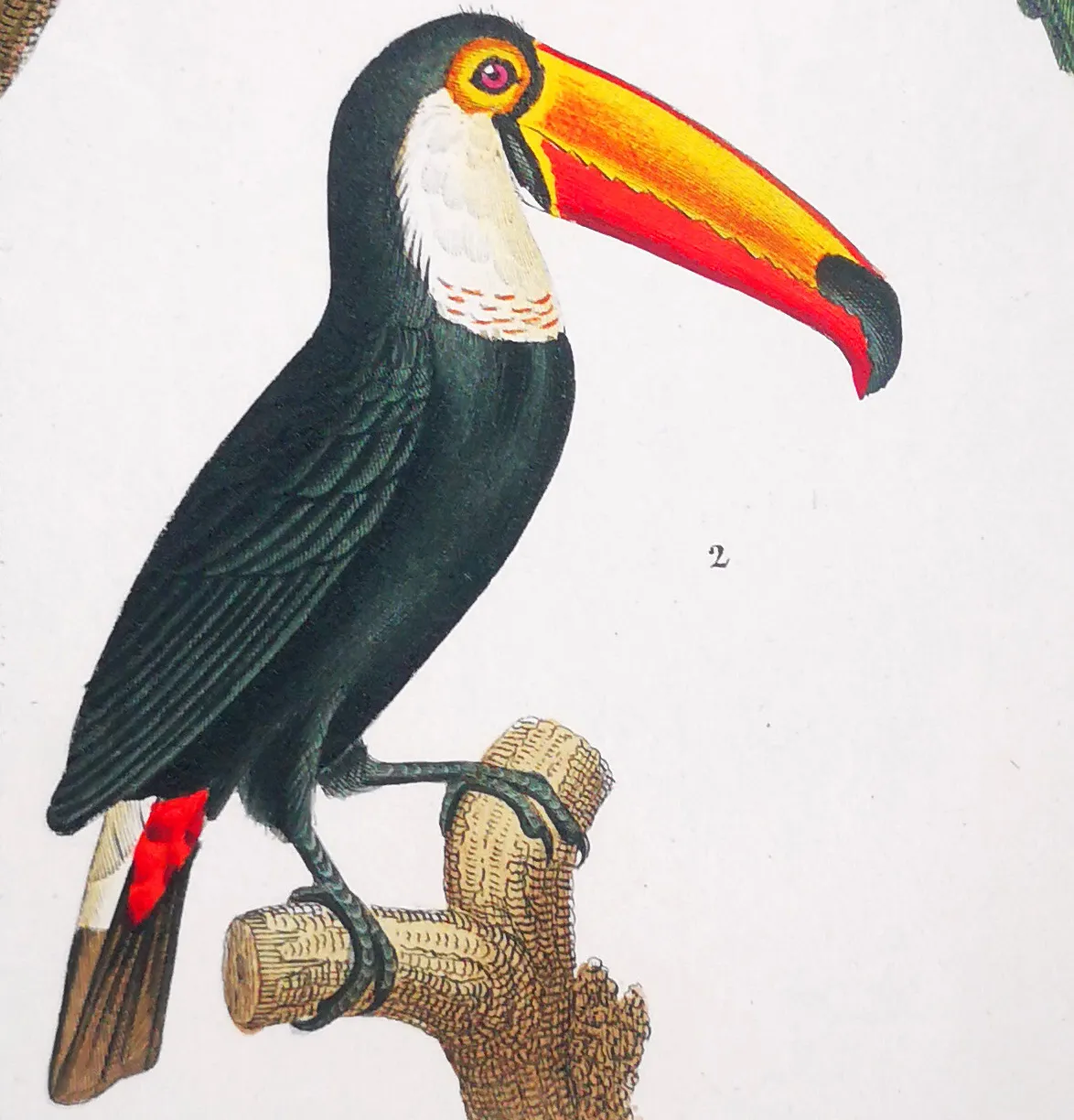
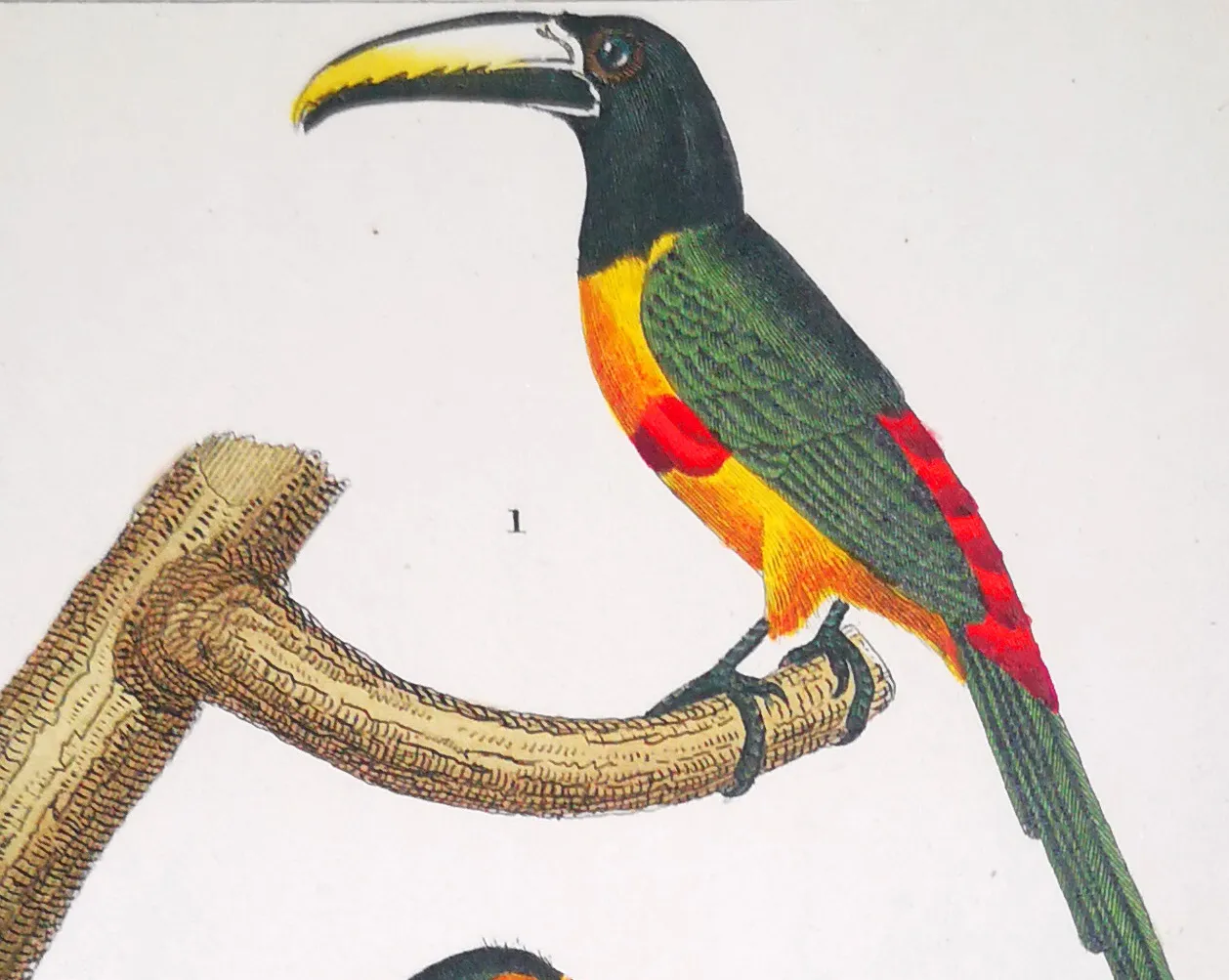
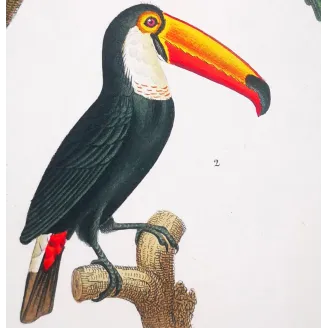
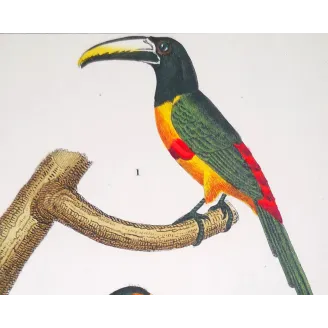
The composition is structured as a vertical duet. The Aracari, positioned above, introduces a slender, agile rhythm. Its dark head and elongated bill are balanced by vivid chromatic transitions — emerald greens, golden yellows, and a decisive red breast band that reads almost like a ceremonial sash. Below, the Toco Toucan anchors the sheet with compositional gravity. Its velvety black body and clean white throat create a bold graphic mass from which the immense orange bill emerges as a luminous focal point.
Colour application is measured rather than excessive. Saturation is controlled, the blacks remain matte and deep, and the orange-red spectrum of the toucan’s bill is shaded with subtle tonal variation. Together, the two figures establish a balance between tropical vibrancy and scientific restraint — a hallmark of Prêtre’s most refined bird plates.
The Toco Toucan (Ramphastos toco) and the Red-breasted Aracari (Pteroglossus castanotis) both belong to the Ramphastidae family, a group native to the forests of Central and South America. The Toco Toucan is perhaps the most internationally recognized species of the family, distinguished by its monumental orange bill — a structure that plays roles in feeding, thermoregulation, and social signaling. Its exaggerated proportions made it a favourite subject among nineteenth-century naturalists seeking visually authoritative species.
The Red-breasted Aracari, generally smaller and more agile, is characterized by its vivid plumage bands and elongated form. Both species are primarily frugivorous and act as important seed dispersers, contributing directly to rainforest regeneration. Their ecological role, combined with their striking morphology, explains their prominence in early scientific illustration and their enduring appeal to collectors of antique natural history prints.
This plate forms part of the historic Dizionario di Scienze Naturali, a monumental early nineteenth-century encyclopedic enterprise once preserved within a noble library and today housed in the Sacchetti Collection. Each engraving reflects a period in which scientific ambition was matched by exceptional artisanal execution — from the disciplined copperplate line to the luminous hand-colouring applied individually to every impression.
The result is not merely zoological documentation, but a refined synthesis of scholarship and craftsmanship. To discover the full story behind these rare prints and their noble provenance, we invite you to read our editorial feature “Not Just Another Print”.
The engraving is in very good antique condition. The impression is clean and well-preserved, with strong definition and carefully retained period hand-colouring. The paper is smooth early nineteenth-century wove paper (non-laid), consistent with Italian scientific editions of the period. No watermark has been observed. Minor age toning may be present, consistent with antique paper and not affecting the decorative impact or legibility of the illustration.
For further context on Pierre Antoine Prêtre and his contribution to nineteenth-century zoological illustration, see our editorial feature:
Pierre Antoine Prêtre – Illustrator of Natural Science and Marine Life
Specific References
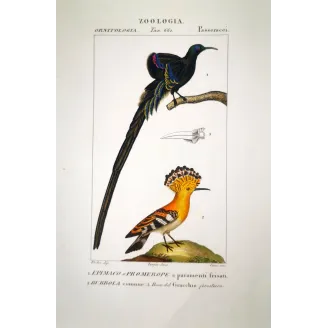
A long-tailed Promerops and a vivid Hoopoe bird, both perched and richly colored against a clean background.
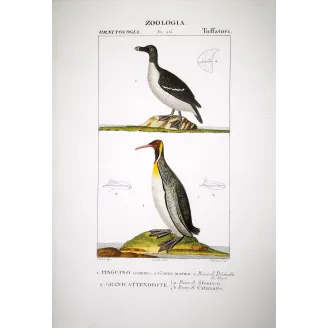
Charming illustration of two aquatic birds with accurate anatomical and marine details.
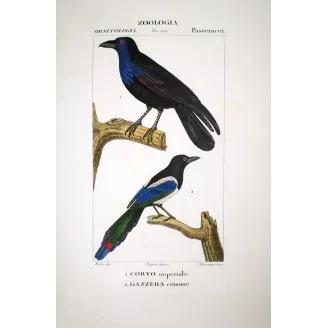
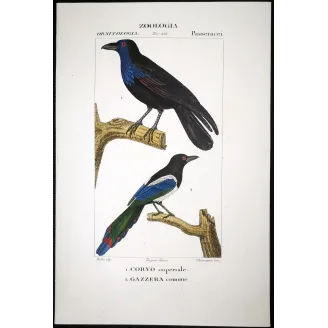
Striking contrast between the dark Imperial Crow and the vividly patterned Common Magpie.
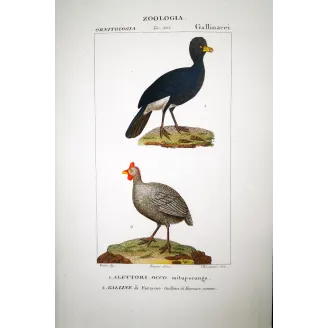
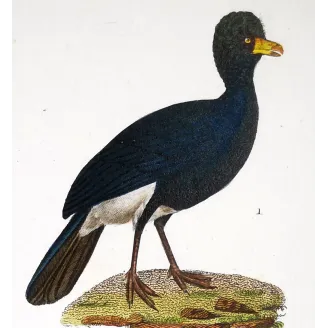
Elegant engraving of a guinea fowl and a Mituporanga, with rich textures and natural posture.
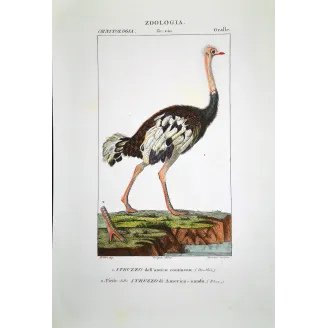
Imposing rendering of the Old World Ostrich and anatomical study of a Rhea foot.
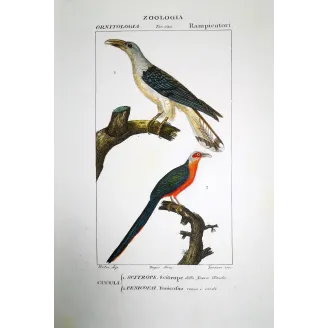
Elegant depiction of a Scythrope and a vividly colored red-and-green Trogon perched on branches.
Majestic raptor captured in perfect hunting pose with detailed feathers.
Parasitic Kite & Elanus (Milvus sp. & Elanus sp.) – Original Hand-Colored Engraving by Prêtre, Antique Print.
Nocturnal birds of prey elegantly rendered, showing sharpness and grace.
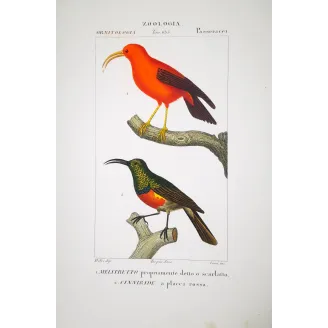
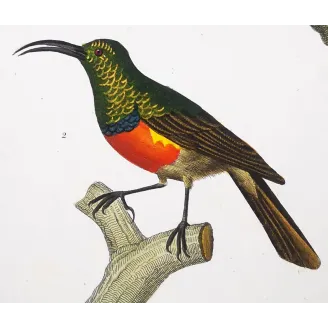
Brilliantly colored honeycreeper and sunbird illustration with tropical vibrancy, captured by Prêtre.
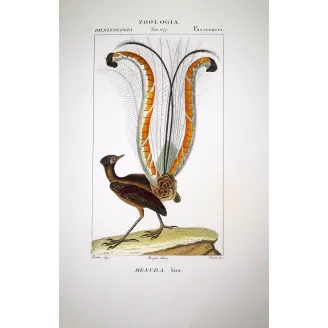
Two exotic birds from Australia, depicted with vivid hand-coloring.
Finely drawn buzzards with a harmonious and naturalistic composition.
Colored illustration depicting two South American toucans: the Toco and the Red-belted Aracari.