


Exquisite depiction of the ornate Greater Bird-of-Paradise alongside the striking Common Hill Myna.
 Delivery policy
Your print will be carefully prepared and shipped worldwide via trusted couriers (UPS or similar).
 Authentic antique prints
Original engravings from the 17th–19th century.
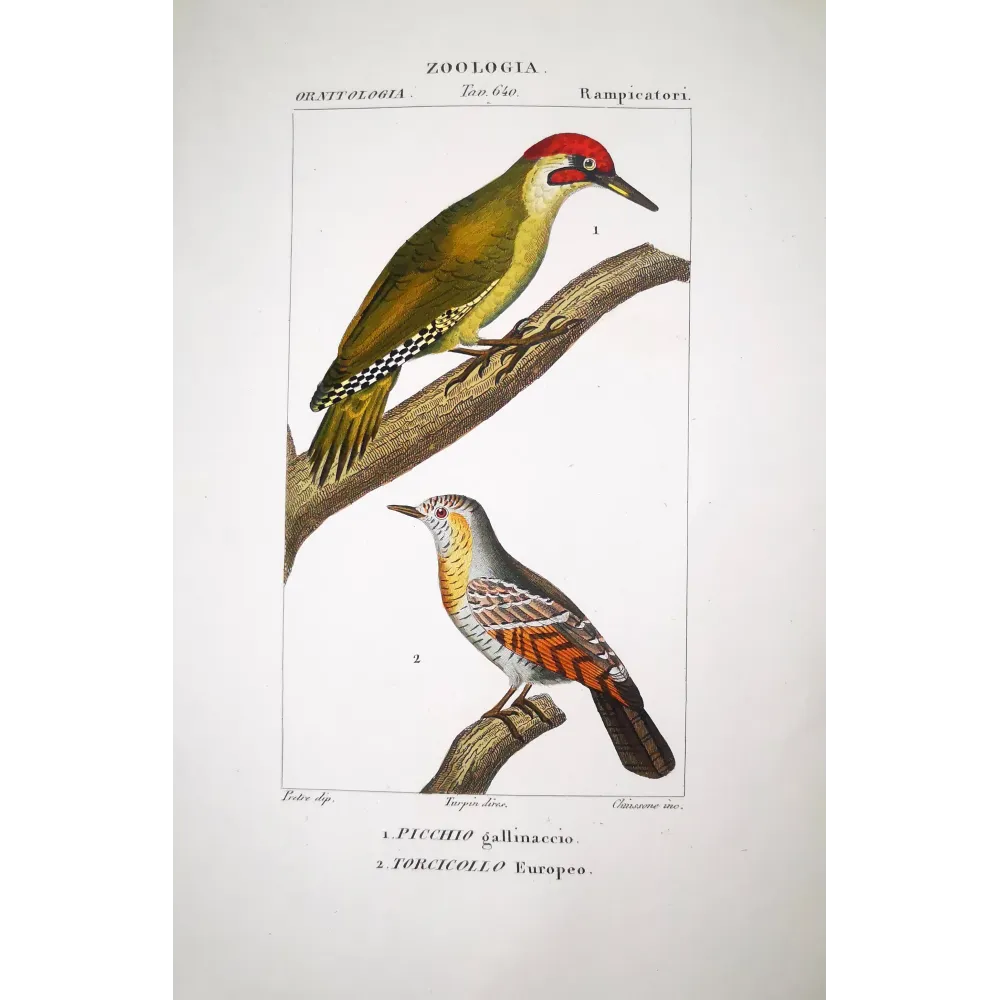
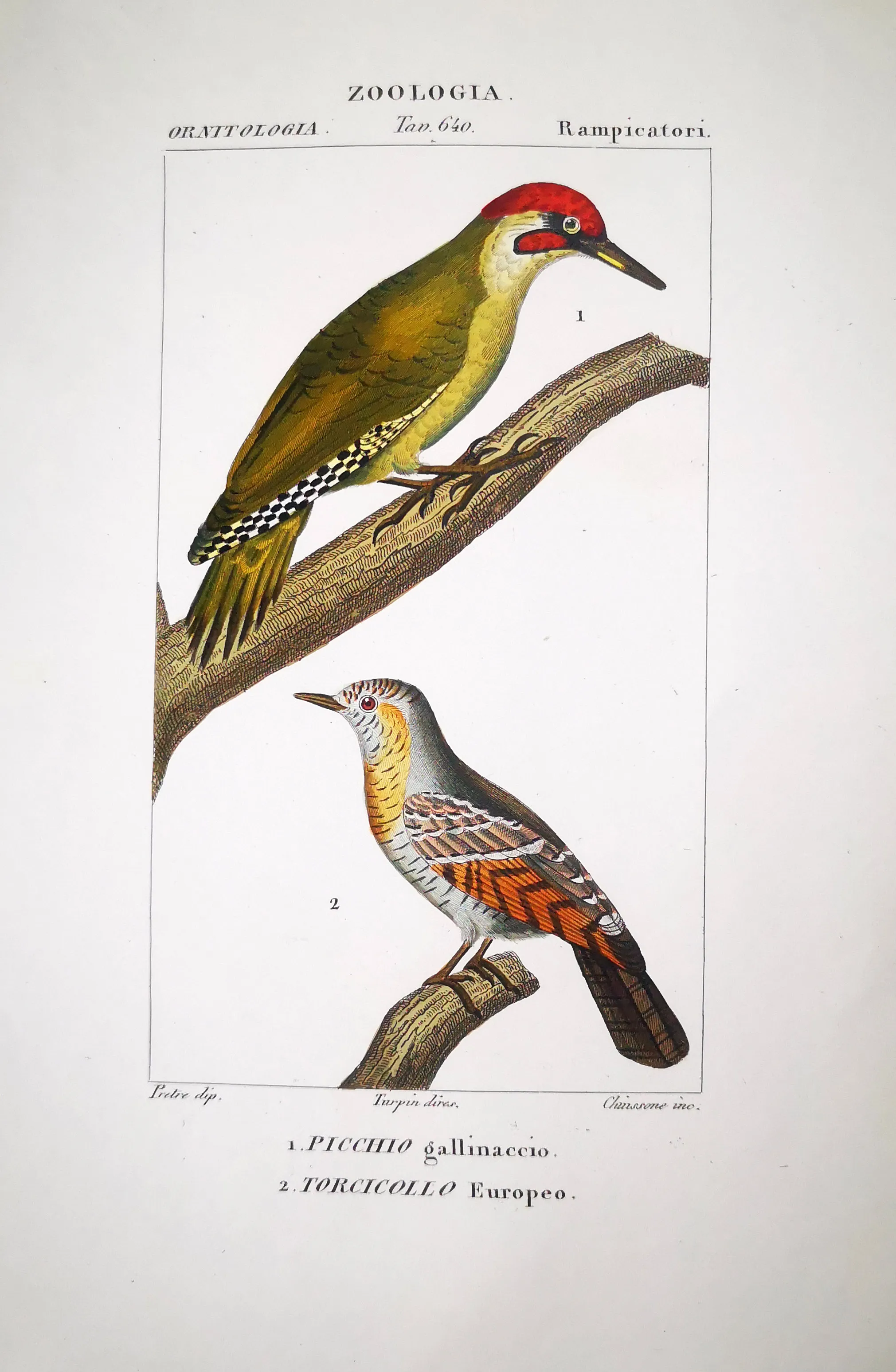
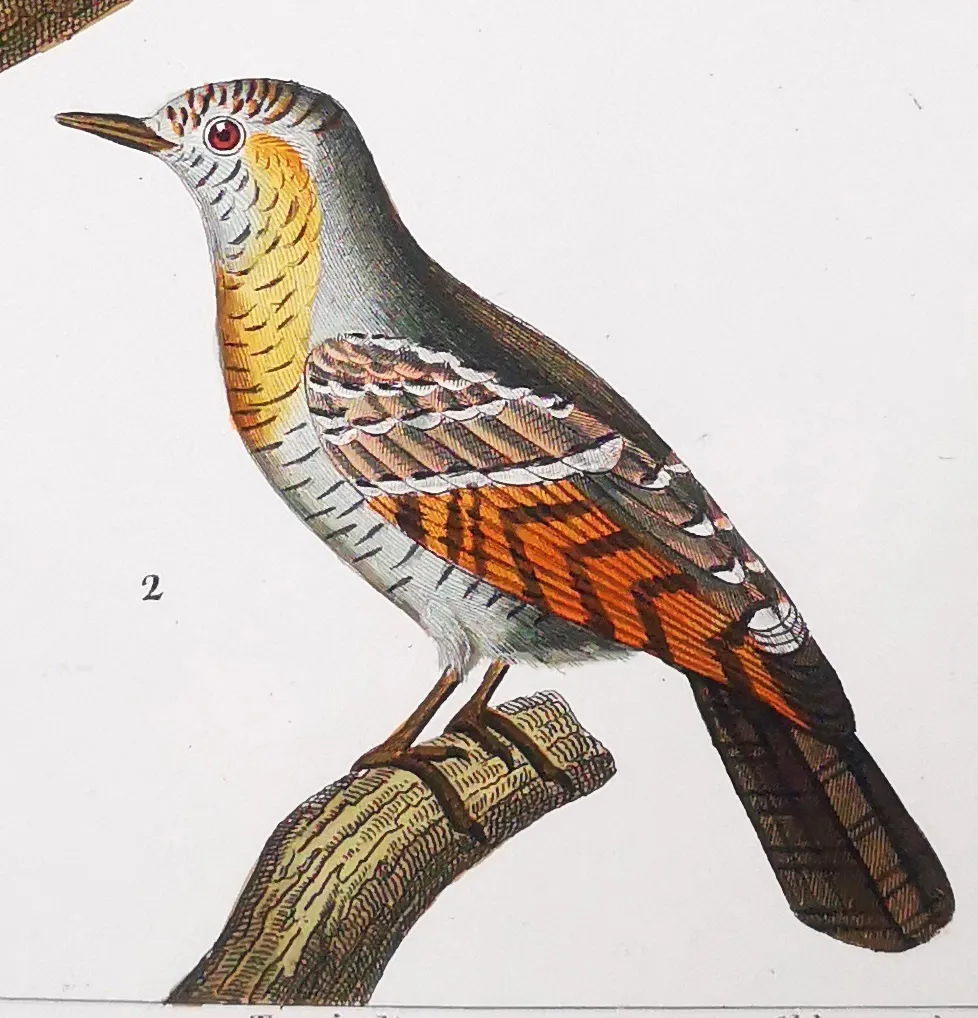
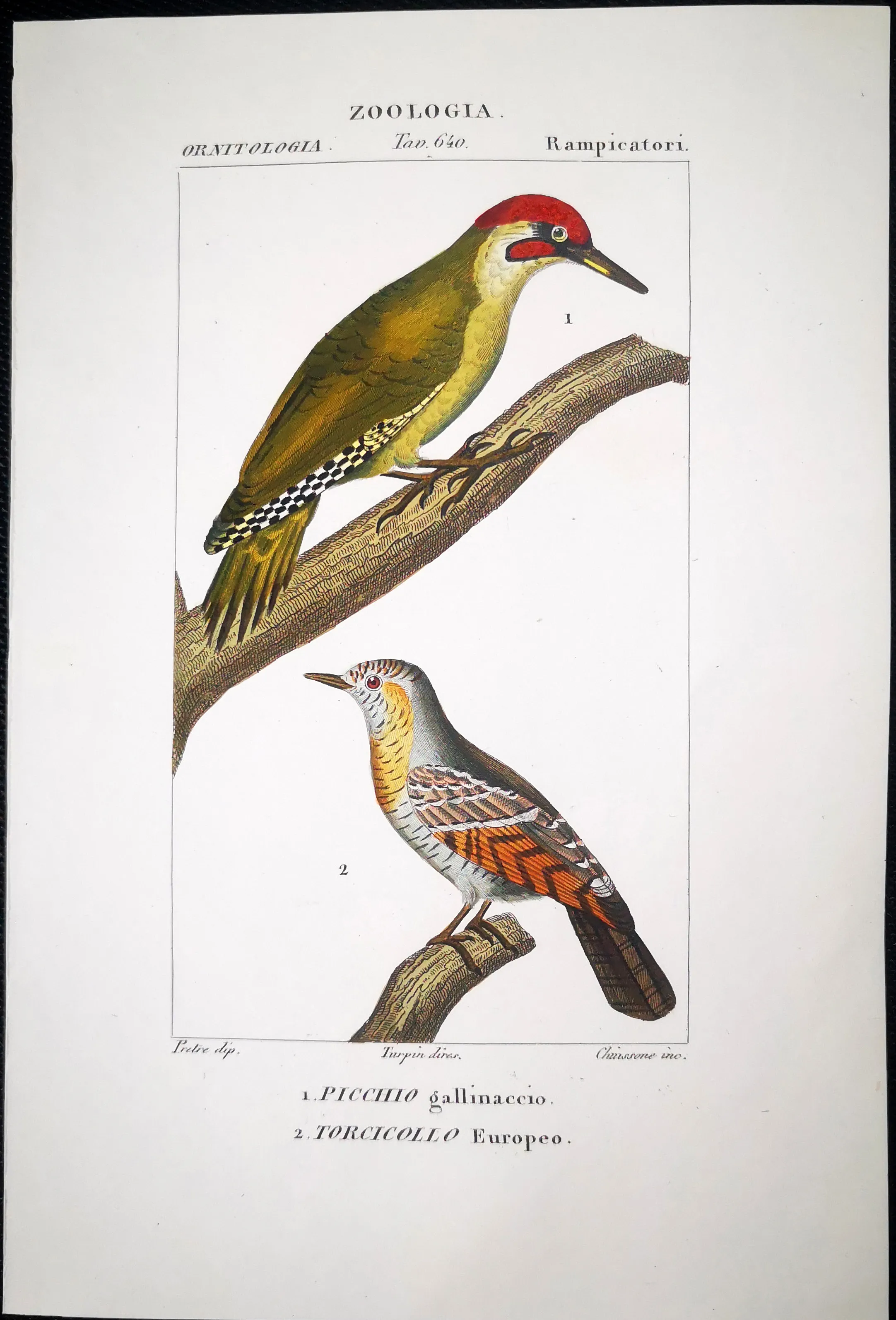
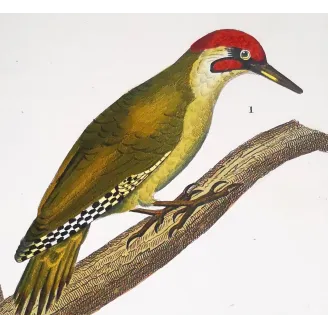
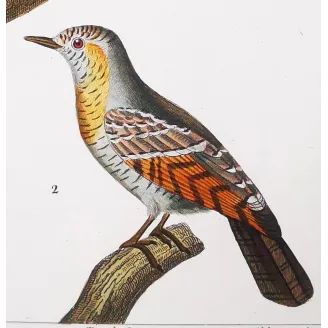
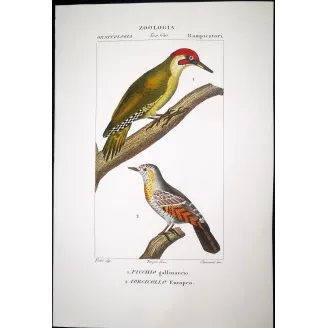
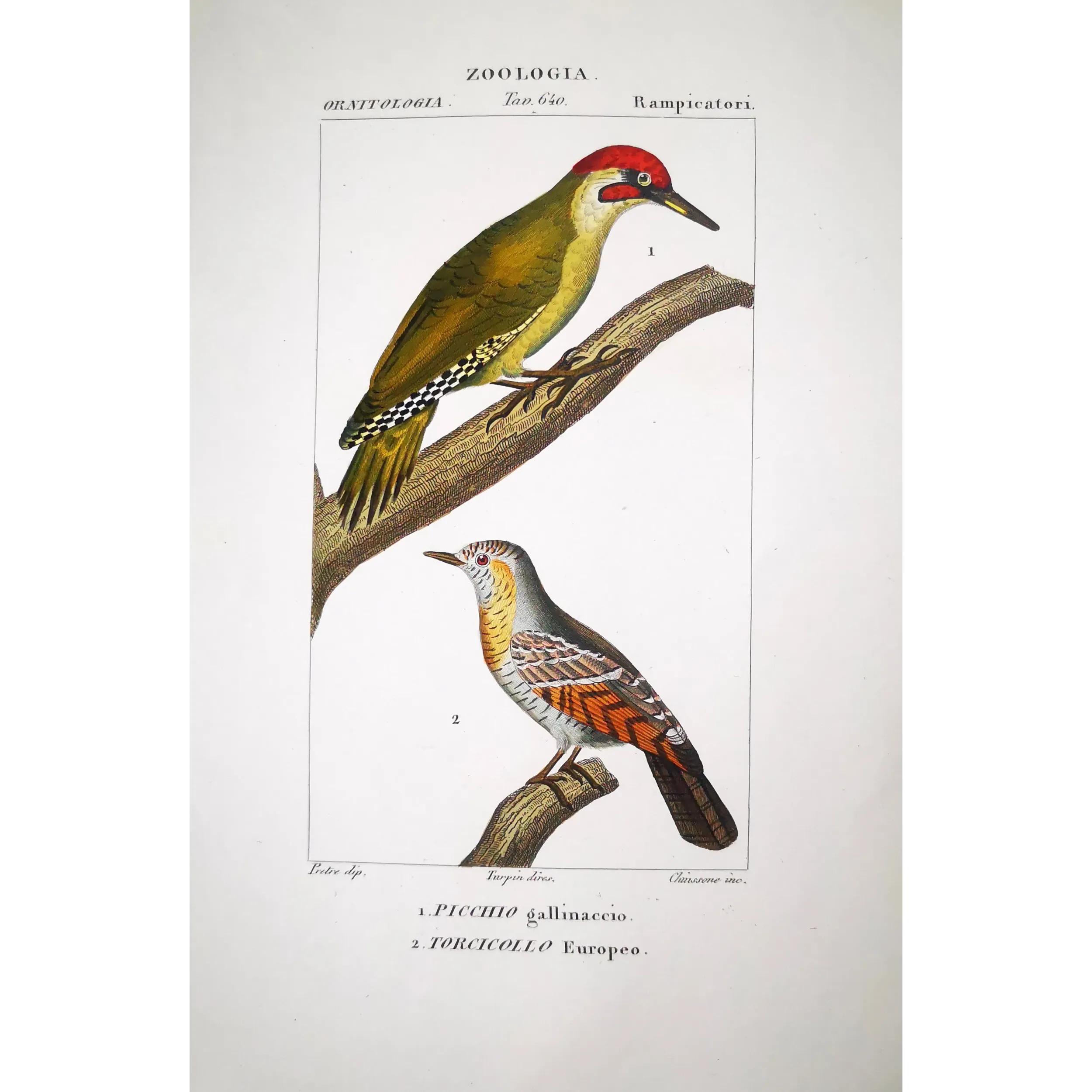
This refined ornithological engraving presents two characteristic European woodland species: the European Green Woodpecker (“Picchio gallinaccio”, Picus viridis) and the Eurasian Wryneck (“Torcicollo europeo”, Jynx torquilla). Conceived as a comparative plate within the ornithological section of the Dizionario di Scienze Naturali, the composition balances strength and subtlety—pairing a robust trunk-clinging woodpecker with the more delicately patterned wryneck.
The engraving reflects the disciplined scientific vision associated with Pierre Antoine Prêtre under the editorial direction of Turpin: each bird isolated against a clean ground, allowing morphology, plumage logic, and posture to speak with clarity.
— • —
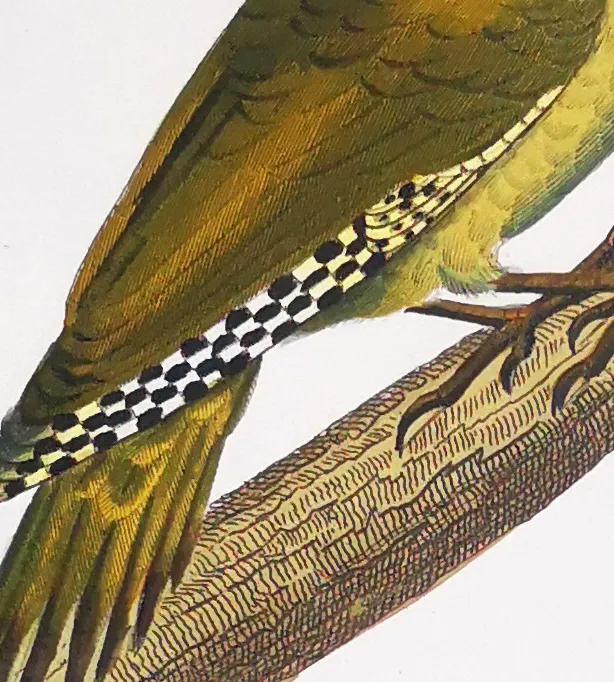
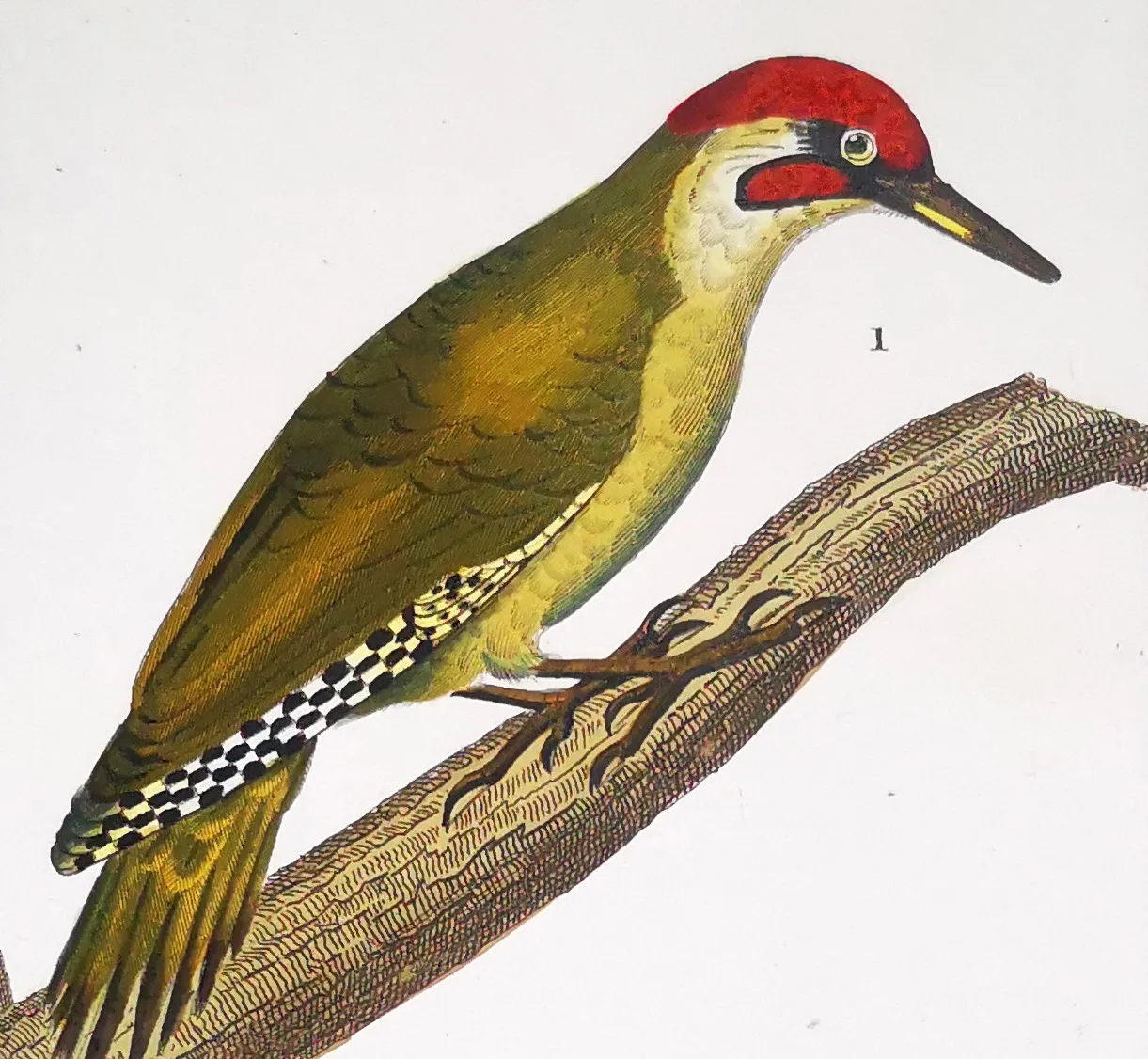
The upper figure—the Green Woodpecker—introduces a strong vertical rhythm. Its olive-green body, red crown, and subtle black-and-white flank patterning create a restrained yet vivid palette. The red cap and facial markings form a compositional focal point, while the sturdy perch emphasizes its natural climbing stance.
Below, the Eurasian Wryneck offers a quieter chromatic register. Soft greys, warm ochres, and finely barred wing feathers create a more camouflaged appearance. The contrast between the two birds is not theatrical but analytical: one bold and structural, the other subtle and cryptic. Together they produce a harmonious cabinet-style presentation, ideal for interiors that favor natural history elegance over tropical spectacle.
The European Green Woodpecker (Picus viridis) is widely distributed across Europe and is known for its distinctive laughing call and its preference for feeding on ants. Unlike many woodpeckers, it often forages on the ground, using its long tongue to extract insects—an anatomical specialization that fascinated early naturalists.
The Eurasian Wryneck (Jynx torquilla), although related to woodpeckers, differs markedly in behavior and plumage. Its cryptic feather pattern provides camouflage against tree bark, and its remarkable defensive behavior—twisting the neck in serpentine motion—gave rise to its common name. Nineteenth-century encyclopedias valued such comparative pairings, where related species could be studied side by side to illustrate variation within a broader family group.
This plate forms part of the historic Dizionario di Scienze Naturali, a monumental early nineteenth-century encyclopedic enterprise once preserved within a noble library and today housed in the Sacchetti Collection. Each engraving reflects a period in which scientific ambition was matched by exceptional artisanal execution — from the disciplined copperplate line to the luminous hand-colouring applied individually to every impression.
The result is not merely zoological documentation, but a refined synthesis of scholarship and craftsmanship. To discover the full story behind these rare prints and their noble provenance, we invite you to read our editorial feature “Not Just Another Print”.
The engraving is in very good antique condition. The impression is clean and well-preserved, with balanced and carefully retained period hand-colouring. The paper is smooth early nineteenth-century wove paper (non-laid), consistent with Italian scientific editions of the period. No watermark has been observed. Minor age toning may be present, consistent with antique paper and not affecting the clarity or decorative quality of the image.
For further context on Pierre Antoine Prêtre and his contribution to nineteenth-century zoological illustration, see our editorial feature:
Pierre Antoine Prêtre – Illustrator of Natural Science and Marine Life
Specific References
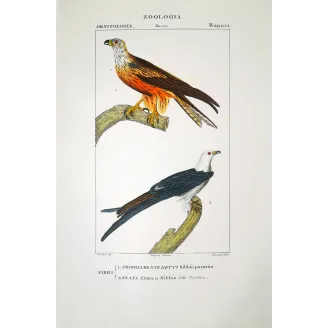
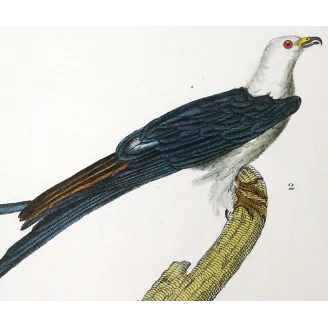
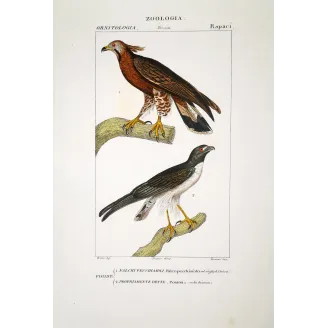
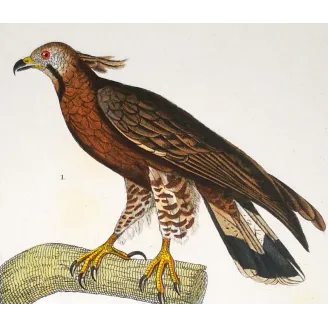
Parasitic Kite & Elanus (Milvus sp. & Elanus sp.) – Original Hand-Colored Engraving by Prêtre, Antique Print.
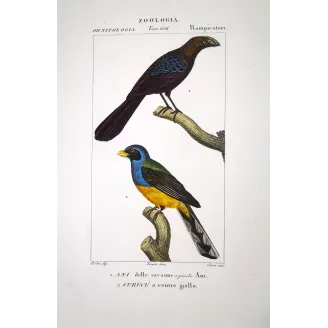
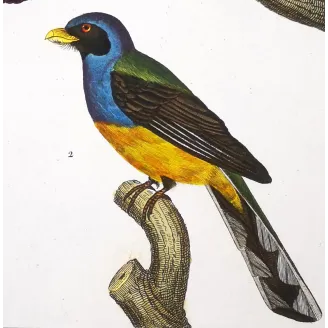
Colorful engraving of two exotic birds: the Ani and the vibrant Yellow-bellied Curuçu.
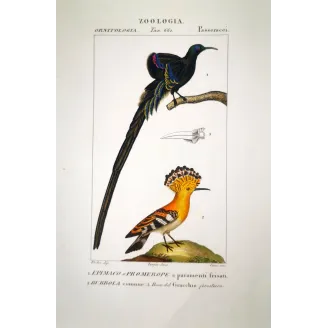
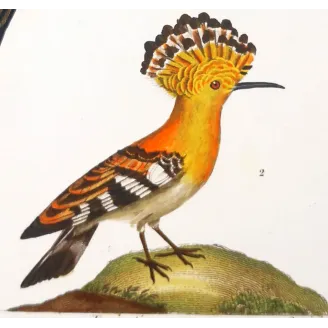
A long-tailed Promerops and a vivid Hoopoe bird, both perched and richly colored against a clean background.
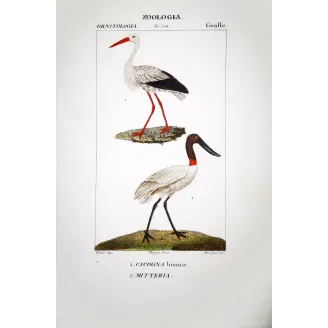
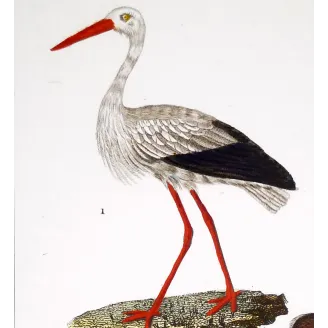
Graceful stork and robust jabiru presented with classic naturalistic balance.
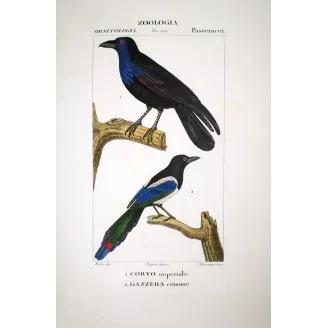
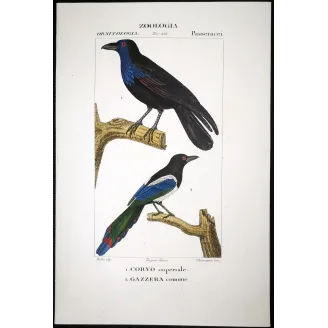
Striking contrast between the dark Imperial Crow and the vividly patterned Common Magpie.
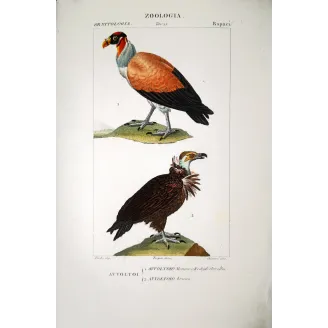
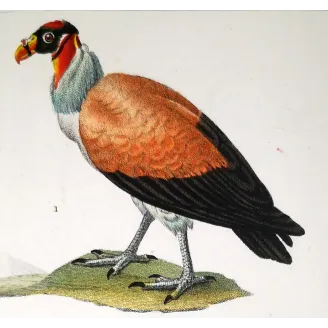
Original early 19th-century hand-colored engraving depicting King Vulture and Brown Vulture from the Dizionario di Scienze Naturali.
Beautiful engraving combining sacred symbolism and elegant coastal shapes.
Finely drawn buzzards with a harmonious and naturalistic composition.
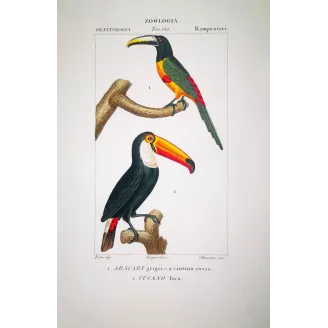
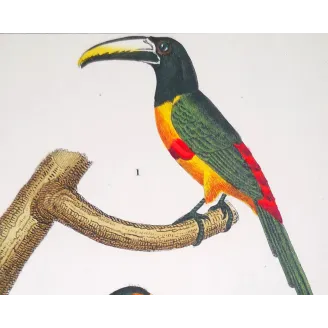
Colored illustration depicting two South American toucans: the Toco and the Red-belted Aracari.
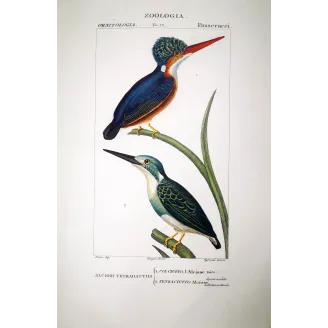
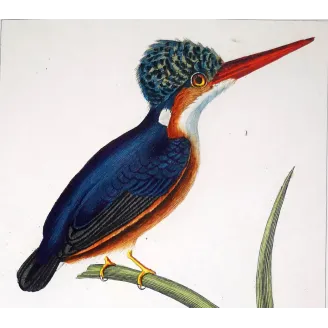
Refined old print with two specimens of South American halcyons: one crested and one with a green-blue livery.
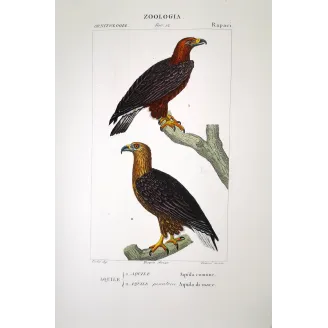
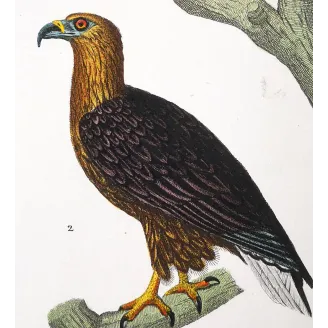
Impressive pairing of two majestic eagles, captured with remarkable precision and power.
Beautiful 19th century illustration of the Buceros rhinoceros, commonly known as the Rhinoceros Hornbill.
Exquisite depiction of the ornate Greater Bird-of-Paradise alongside the striking Common Hill Myna.