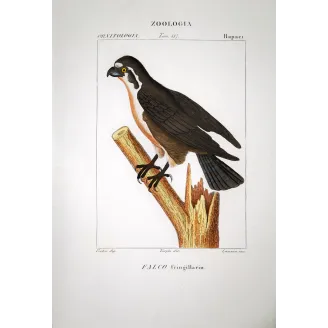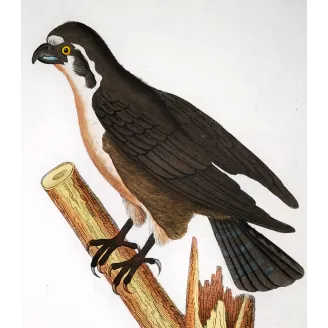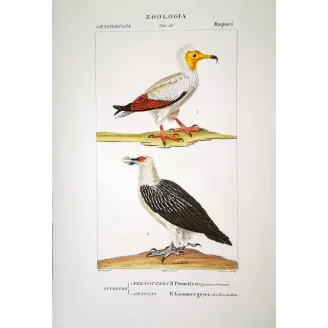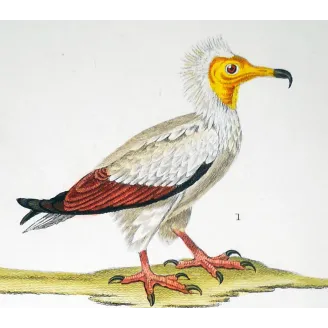
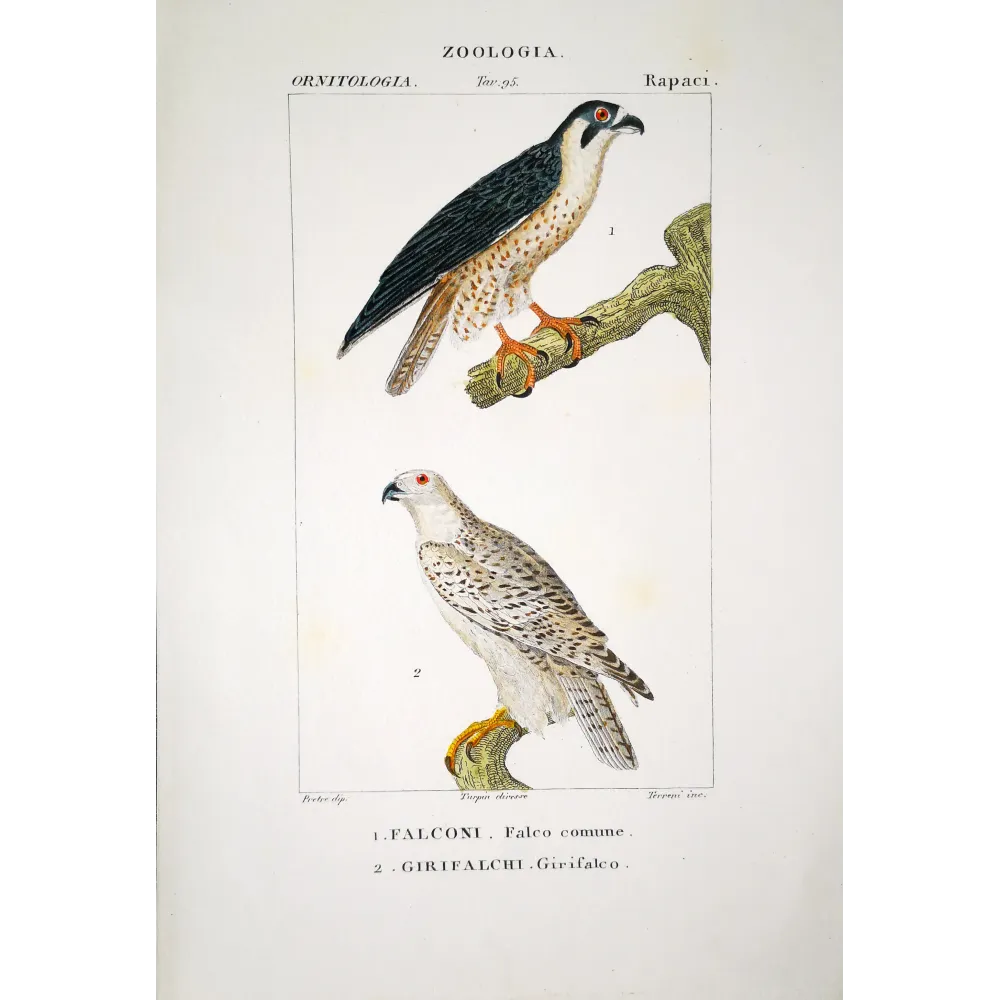
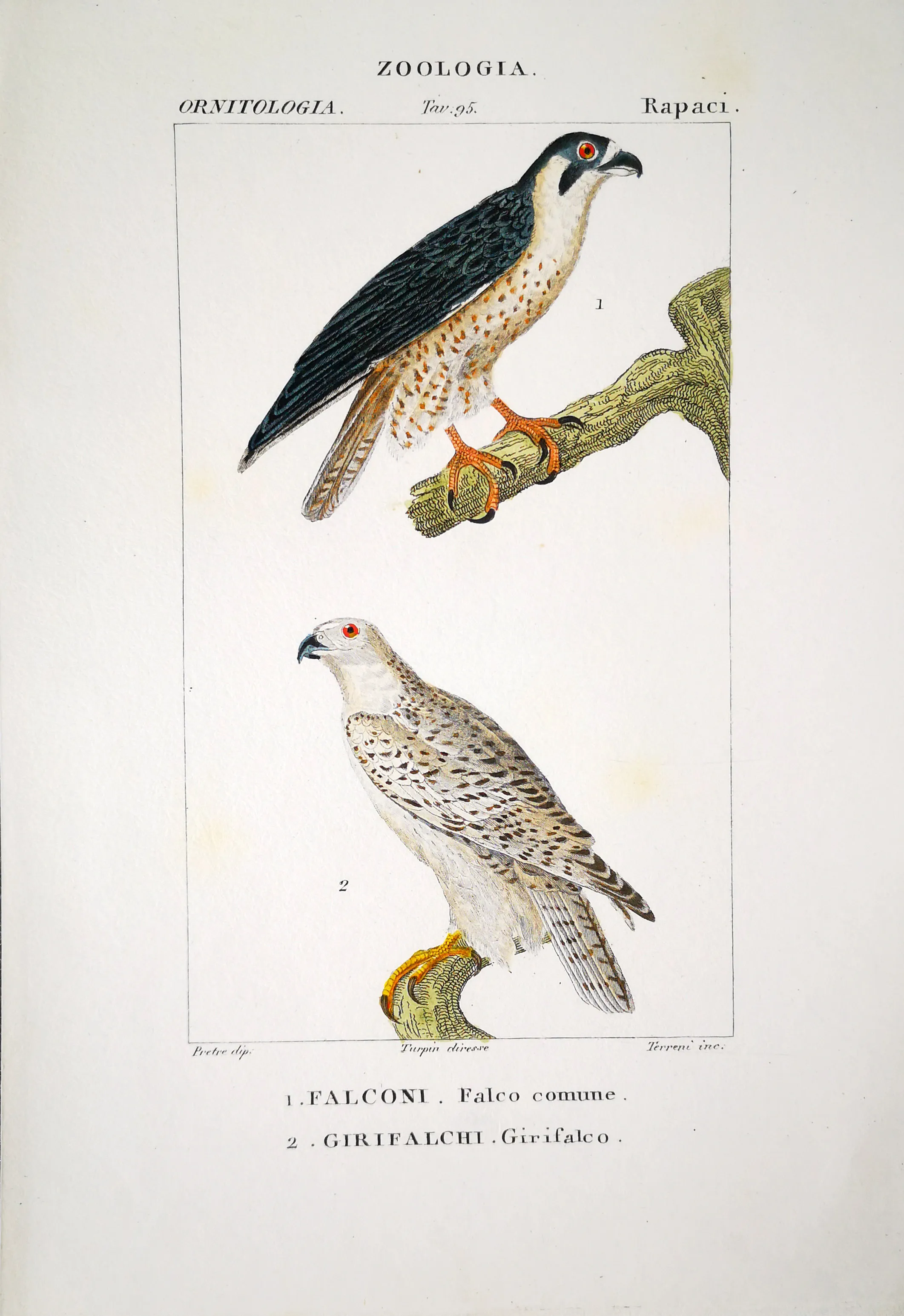
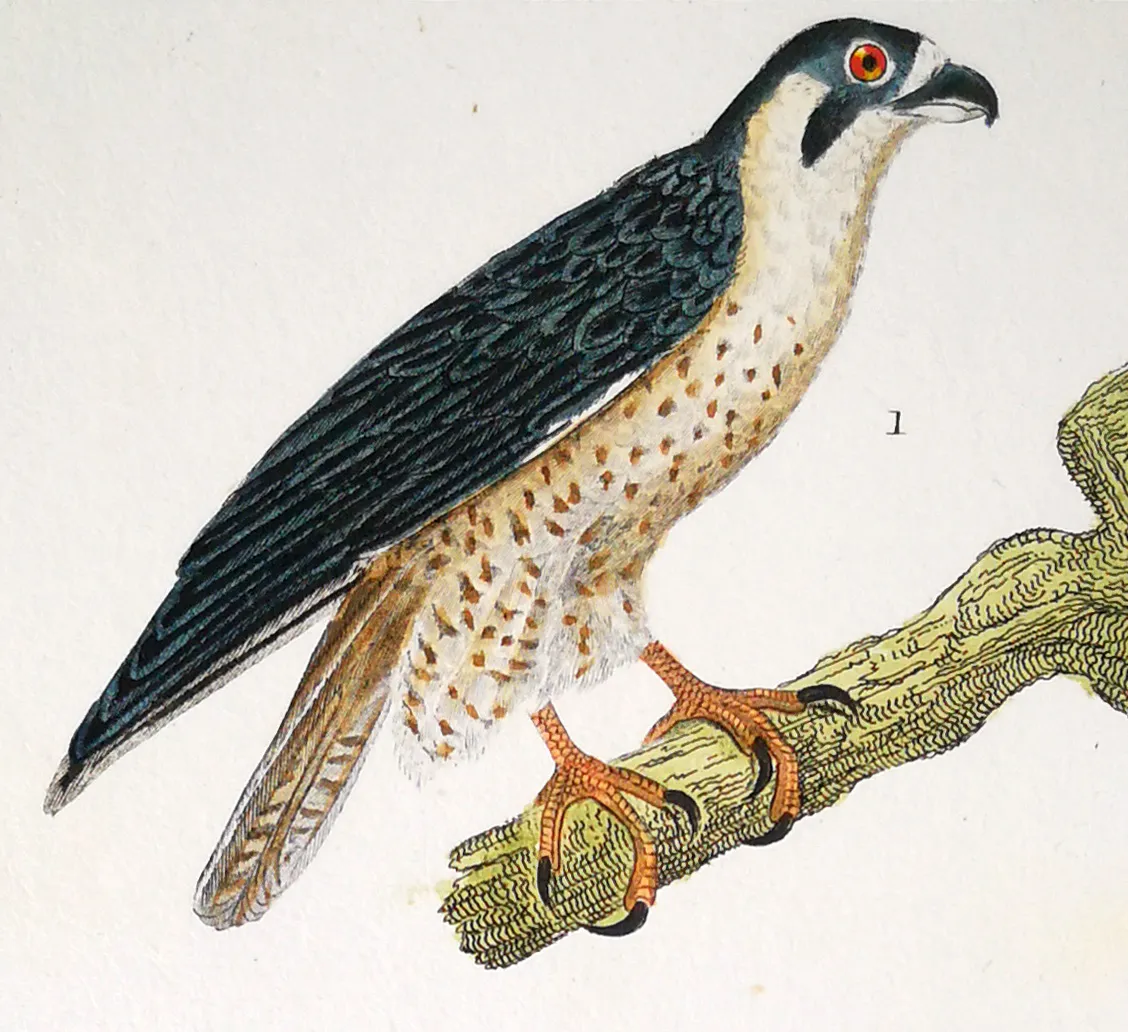


Two powerful falcons depicted with elegance and sharpness.
 Delivery policy
Your print will be carefully prepared and shipped worldwide via trusted couriers (UPS or similar).
 Authentic antique prints
Original engravings from the 17th–19th century.
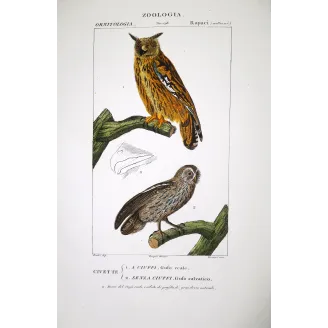
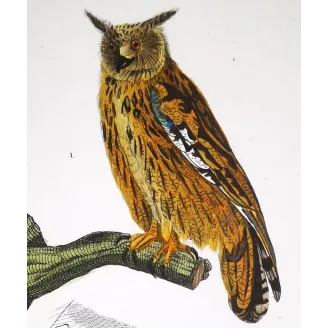
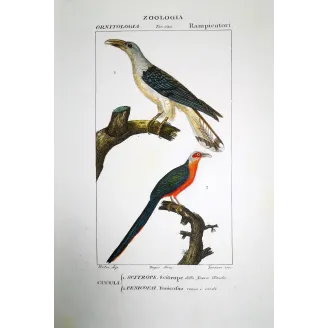
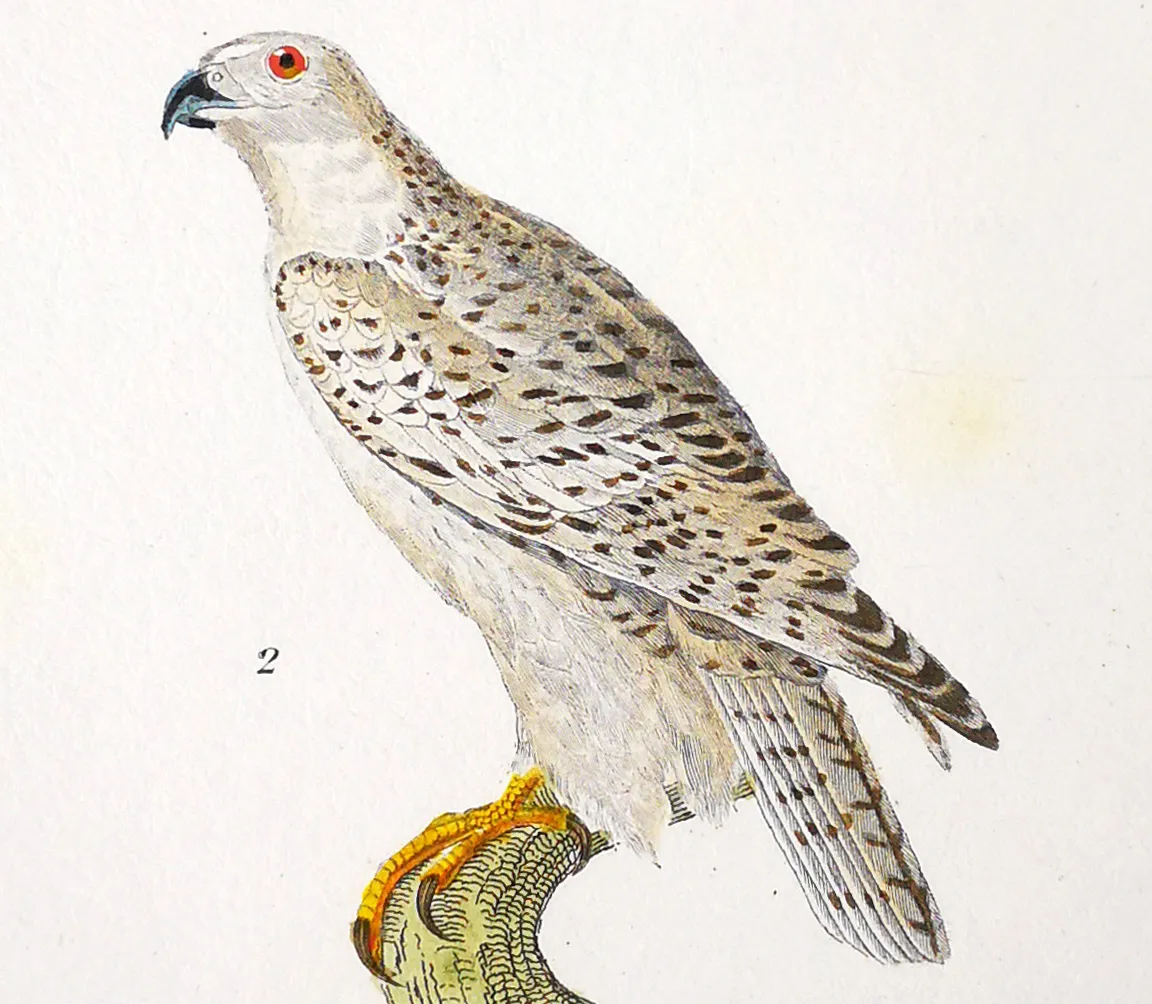
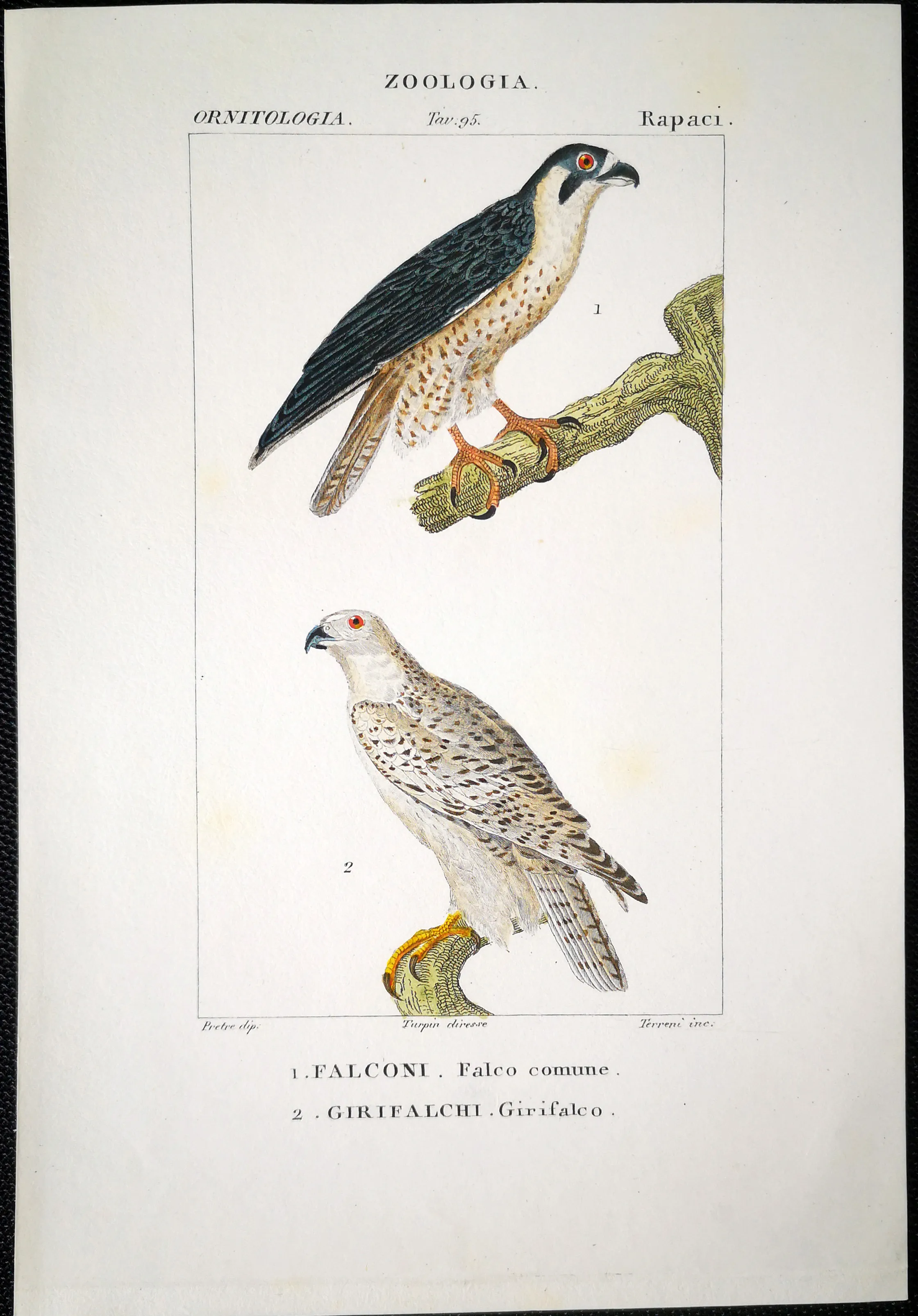
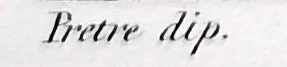
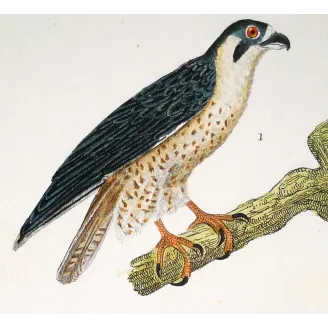
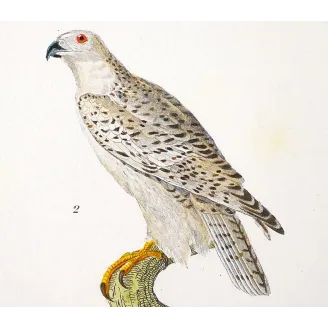
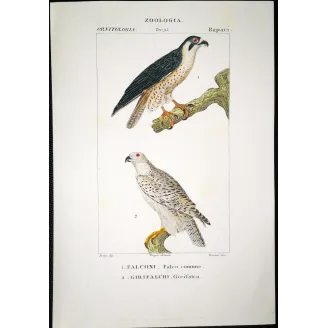
This ornithological engraving presents two raptors identified in the plate as Astore della nuova Olanda and Sparviere bruno ticchiolato. The sheet forms part of the ornithological section of the Dizionario di Scienze Naturali, where Pierre Antoine Prêtre depicts birds of prey with scientific discipline and elegant compositional clarity.
The upper bird, rendered in pale silver-grey plumage, contrasts with the richly speckled warm-toned sparrowhawk below, creating a refined vertical dialogue between two species of similar form yet distinct temperament.
— • —
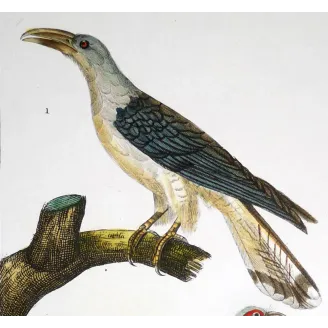
The upper hawk is articulated through subtle gradations of grey and ivory, the clean tonal transitions emphasizing feather structure without excess ornament. The yellow talons introduce chromatic tension against the neutral branch.
Below, the sparrowhawk displays layered rust, ochre, and brown spotting across the chest and wing coverts. The careful copperplate linework preserves both scientific legibility and decorative refinement, typical of early nineteenth-century Italian engraving.
The term Astor was historically applied to large hawks within the genus Accipiter. The “Astore della nuova Olanda” refers to a species associated with Australian territories (“New Holland” in early European geography), commonly linked to Accipiter species.
The sparrowhawk, also within the genus Accipiter, represents smaller agile woodland raptors known for rapid flight and precision hunting. Their inclusion in nineteenth-century encyclopedic works reflects expanding global taxonomy and European scientific interest in newly documented territories.
This engraving belongs to the monumental Dizionario di Scienze Naturali, an ambitious early nineteenth-century encyclopedic project preserved within a noble Roman library and today part of the Sacchetti Collection. Each plate embodies a period when scientific expansion and artisanal engraving reached exceptional levels of precision.
To discover the broader historical and cultural context behind these refined natural history prints, we invite you to read our editorial feature “Not Just Another Print”.
The engraving is in very good antique condition. The impression is sharp and the original hand-colouring remains vibrant. The paper is smooth early nineteenth-century wove paper (non-laid), consistent with Italian scientific editions of the period. No watermark has been observed. Minor age toning may be present, consistent with its age.
For further insight into Pierre Antoine Prêtre’s role in nineteenth-century zoological illustration, see our editorial feature:
Pierre Antoine Prêtre – Illustrator of Natural Science and Marine Life
Specific References
Nocturnal birds of prey elegantly rendered, showing sharpness and grace.
Charming illustration of two aquatic birds with accurate anatomical and marine details.
Brilliantly colored honeycreeper and sunbird illustration with tropical vibrancy, captured by Prêtre.
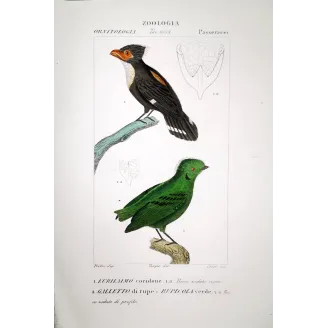
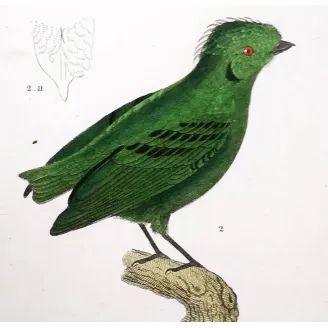
Rare birds of the jungle: the crest-faced Corydon and a luminous green Rupicola.
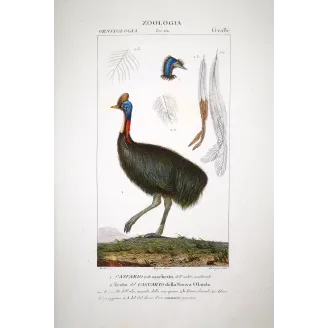
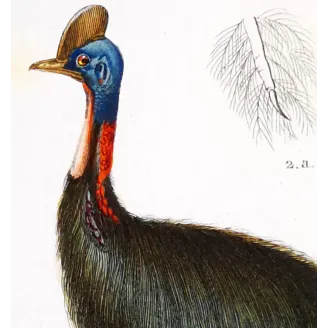
Impressive antique engraving of the Southern Cassowary, a striking flightless bird from New Guinea and northern Australia.
Exquisite depiction of the ornate Greater Bird-of-Paradise alongside the striking Common Hill Myna.
Elegant depiction of a Scythrope and a vividly colored red-and-green Trogon perched on branches.
Majestic raptor captured in perfect hunting pose with detailed feathers.
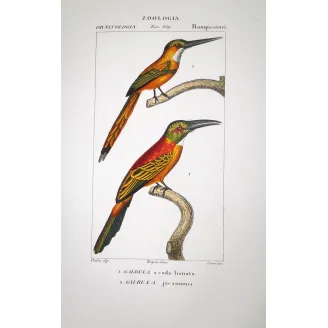
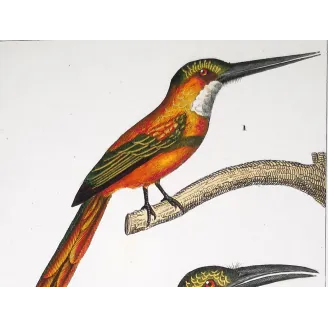
Two vibrant Jacamar birds with metallic plumage and long sharp beaks on stylized branches.
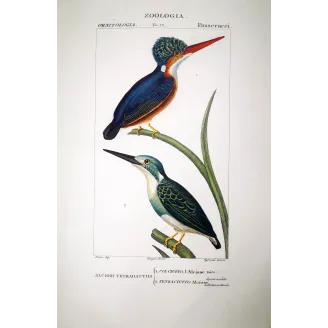
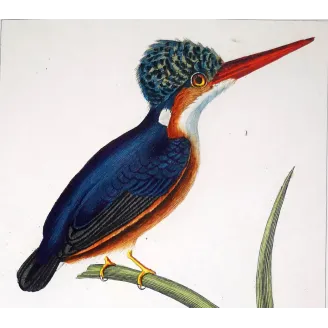
Refined old print with two specimens of South American halcyons: one crested and one with a green-blue livery.
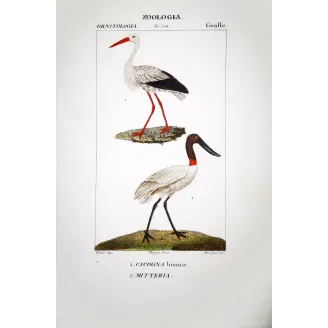
Graceful stork and robust jabiru presented with classic naturalistic balance.
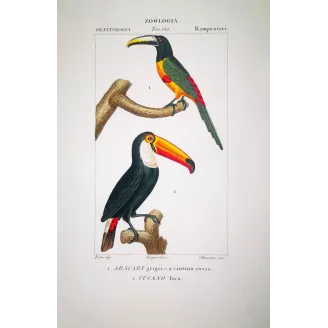
Colored illustration depicting two South American toucans: the Toco and the Red-belted Aracari.
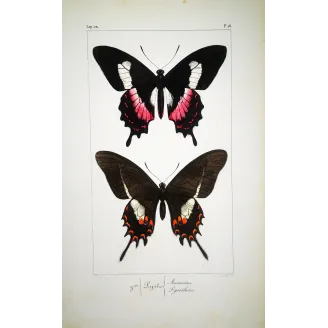
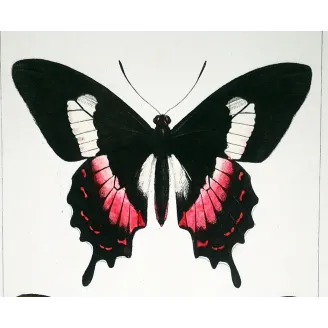
Cattleheart Swallowtail Butterflies (Parides lysithous group) – Antique Hand-Colored Engraving, Exotic Butterflies (1835)
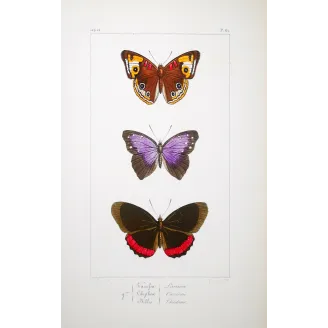
Striking butterflies in deep red, violet, and dark tones with eye-like markings. A refined 1835 engraving with strong decorative character.
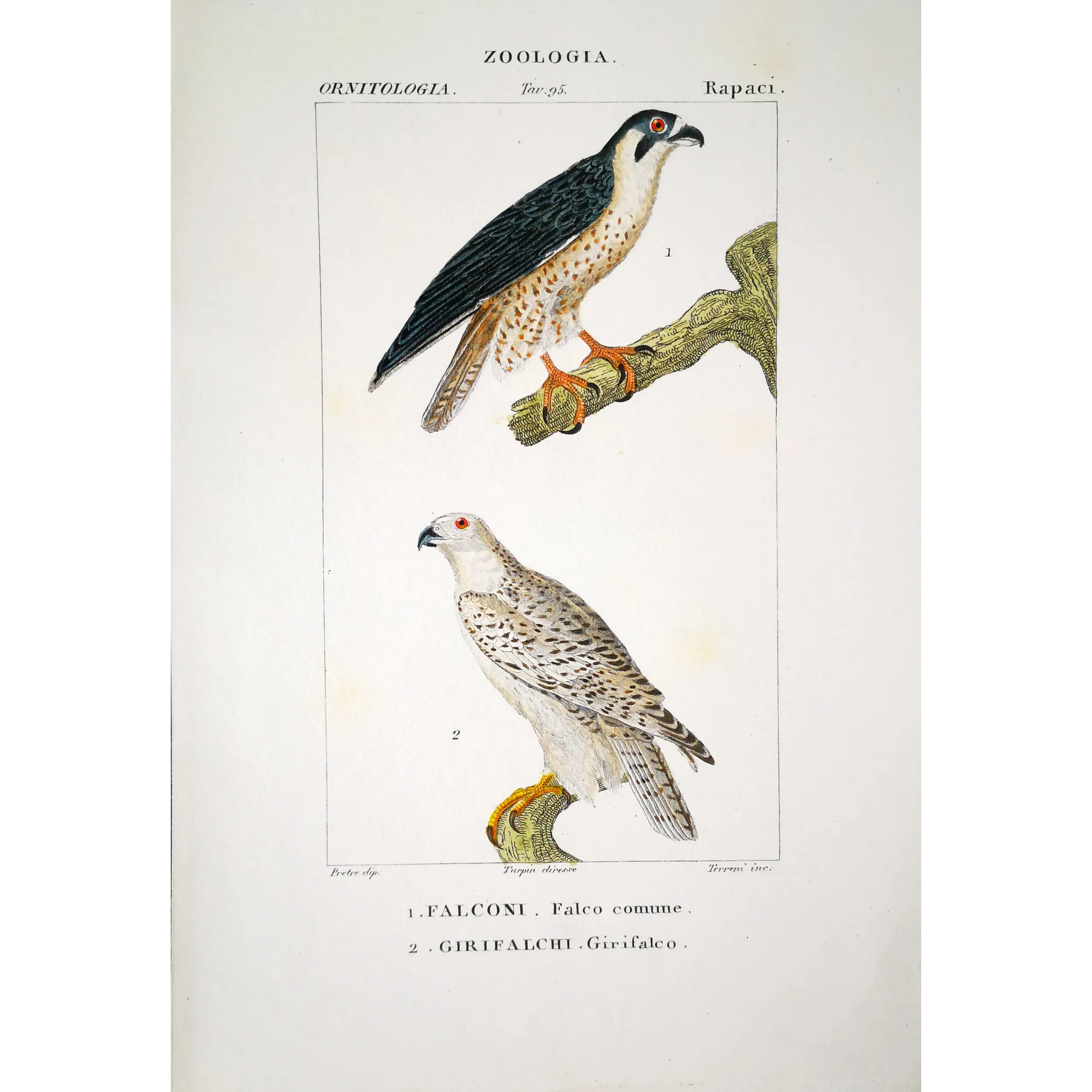
Two powerful falcons depicted with elegance and sharpness.