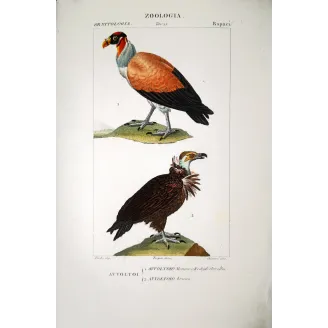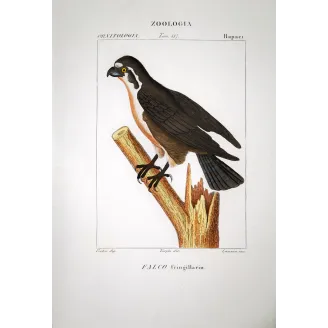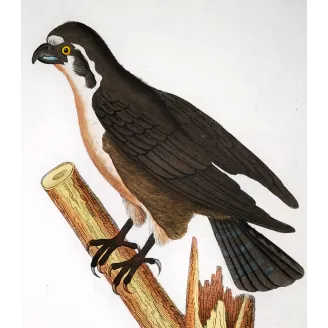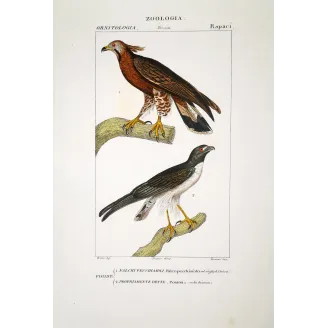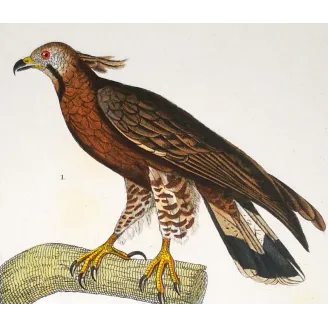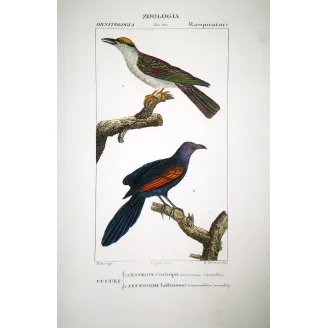
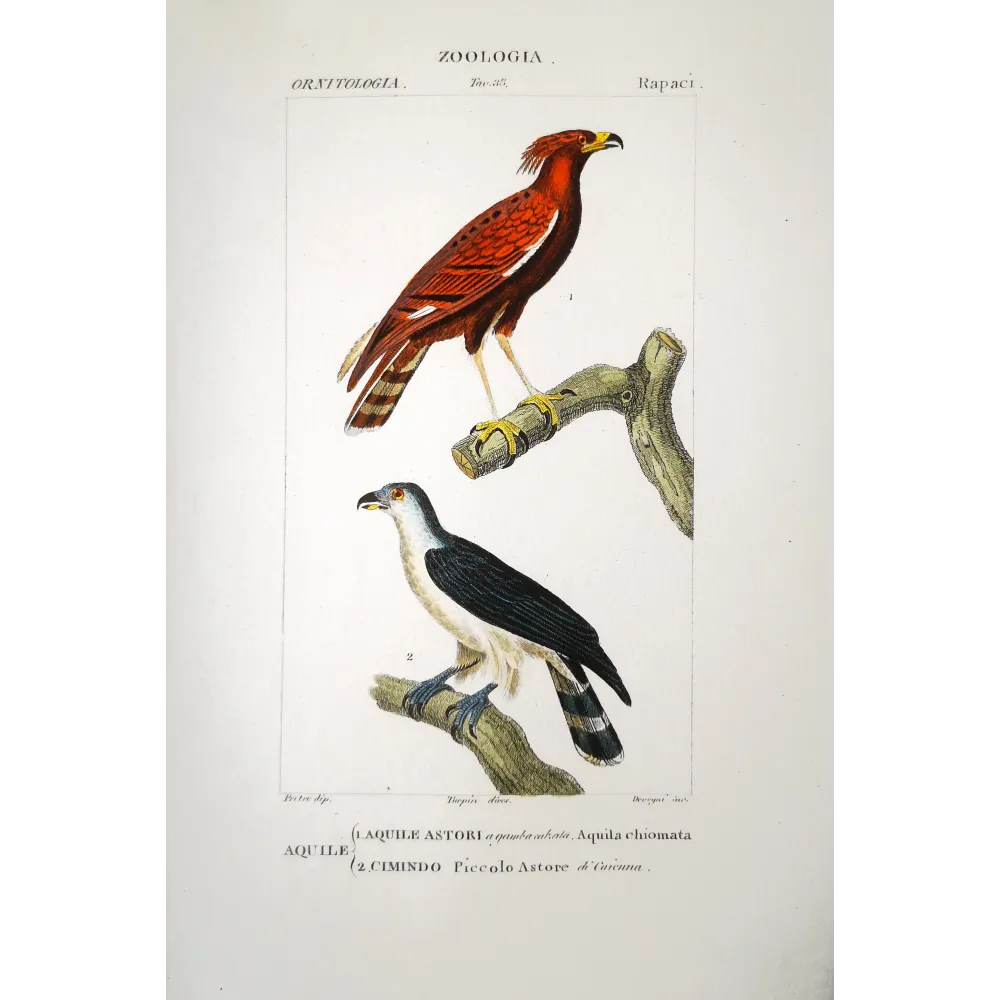
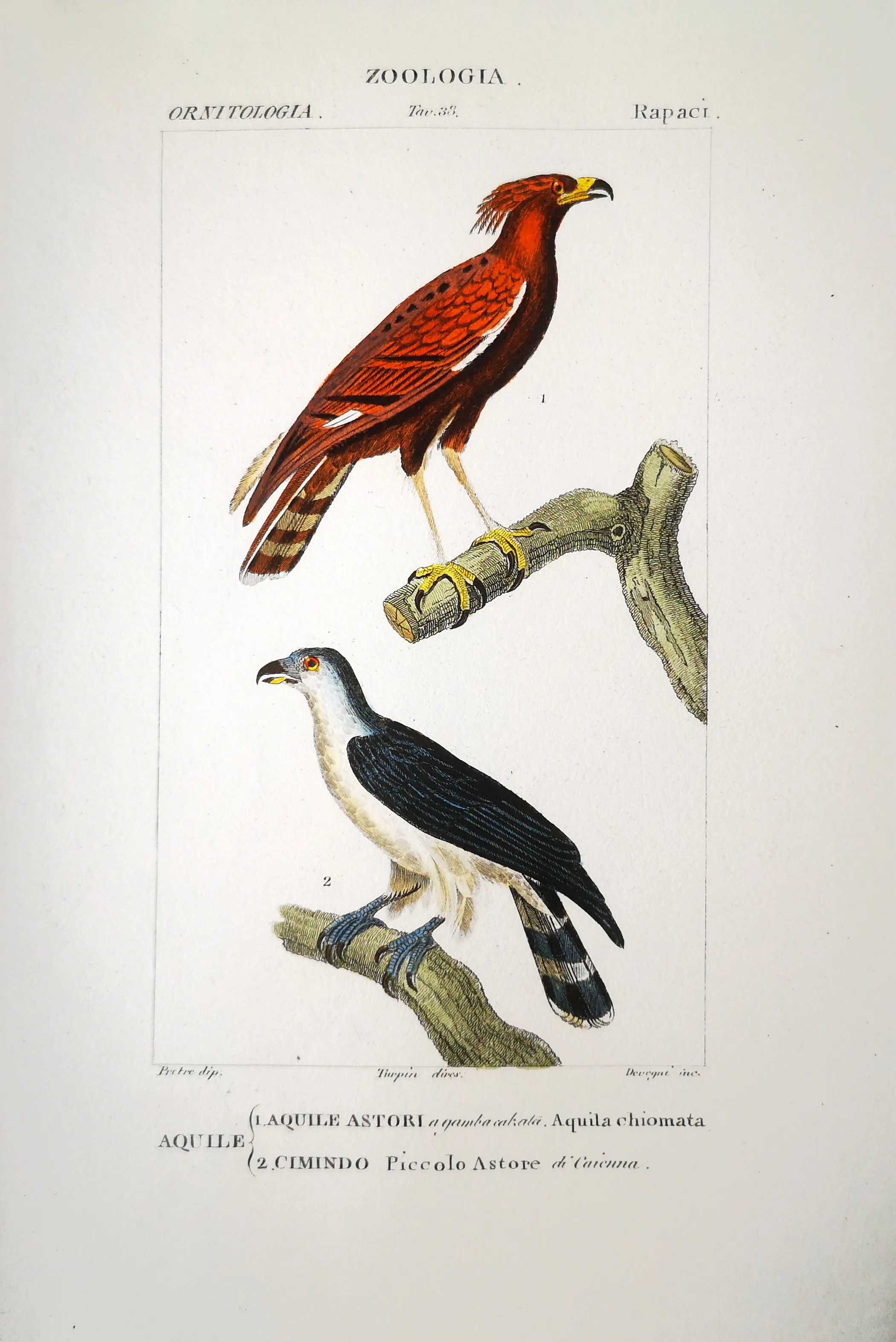
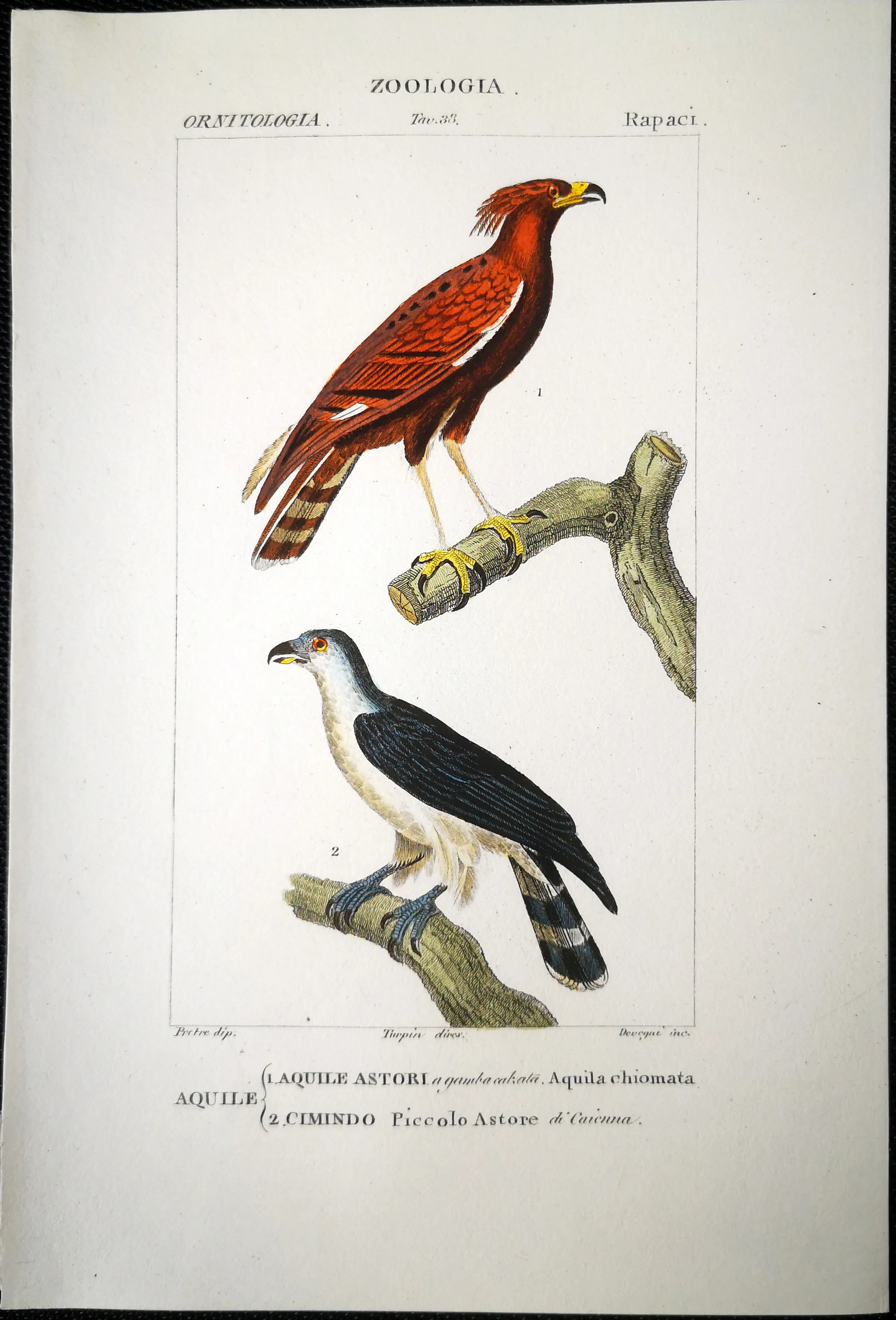


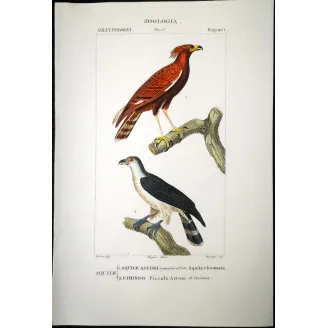
A lively contrast between a fiery red hawk-eagle and a smaller black-and-white goshawk.
 Delivery policy
Your print will be carefully prepared and shipped worldwide via trusted couriers (UPS or similar).
 Authentic antique prints
Original engravings from the 17th–19th century.
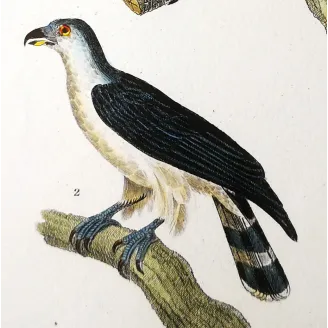
This refined ornithological engraving presents two raptors identified in the plate as Aquila a gamba calzata – Aquila chiomata and Cimindo – Piccolo Astore di Caienna. The sheet forms part of the ornithological section of the Dizionario di Scienze Naturali, where Pierre Antoine Prêtre depicts birds of prey with scientific clarity and dramatic compositional balance.
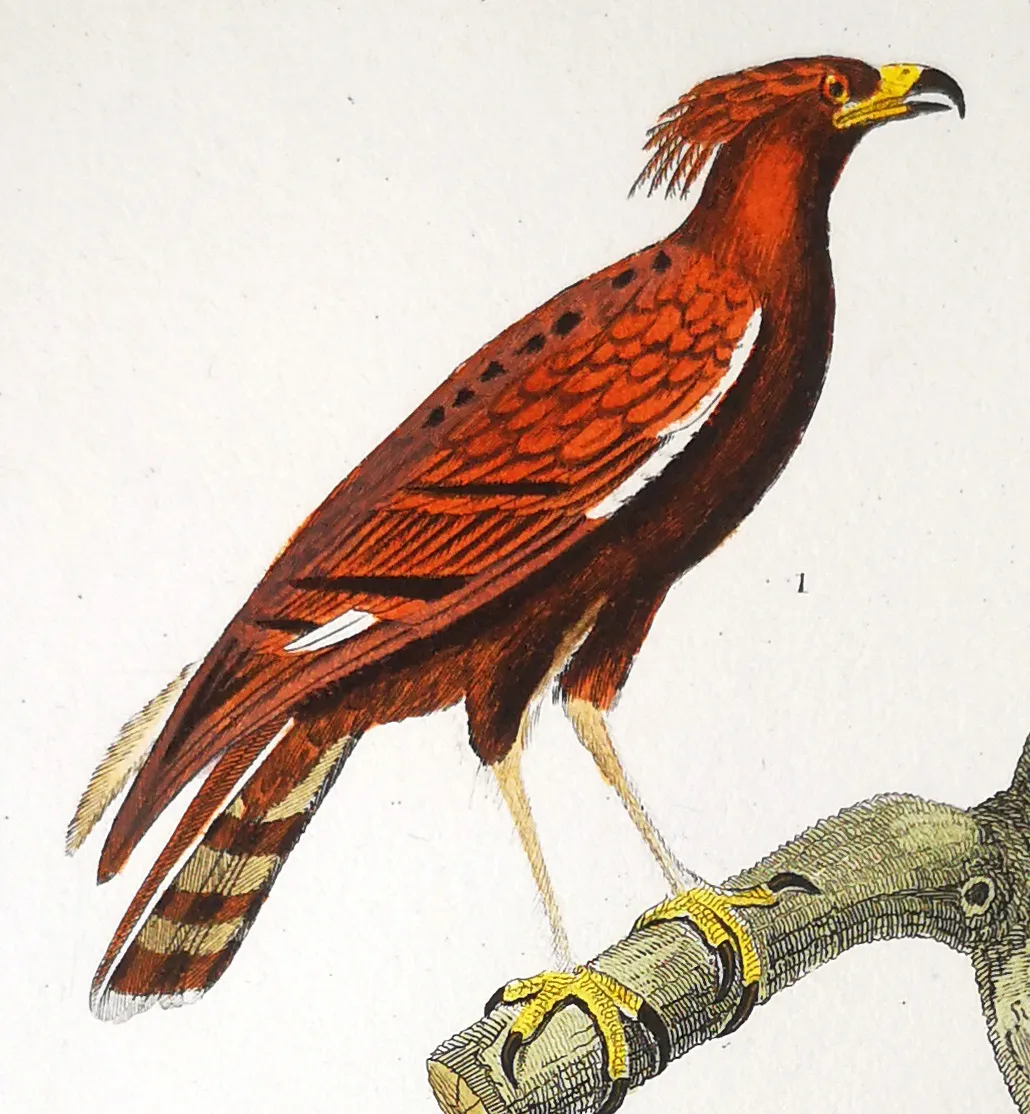
The upper crested eagle commands attention with its rich reddish plumage and assertive stance, while the lower bird introduces chromatic contrast and elegant restraint.
— • —
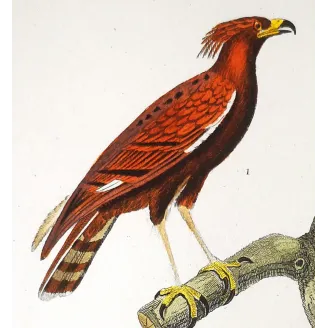
The Aquila chiomata (associated with Nisaetus or crested eagle species) is rendered in deep terracotta and rust tones, articulated through disciplined copperplate linework. The crest and feather layering introduce expressive vitality.
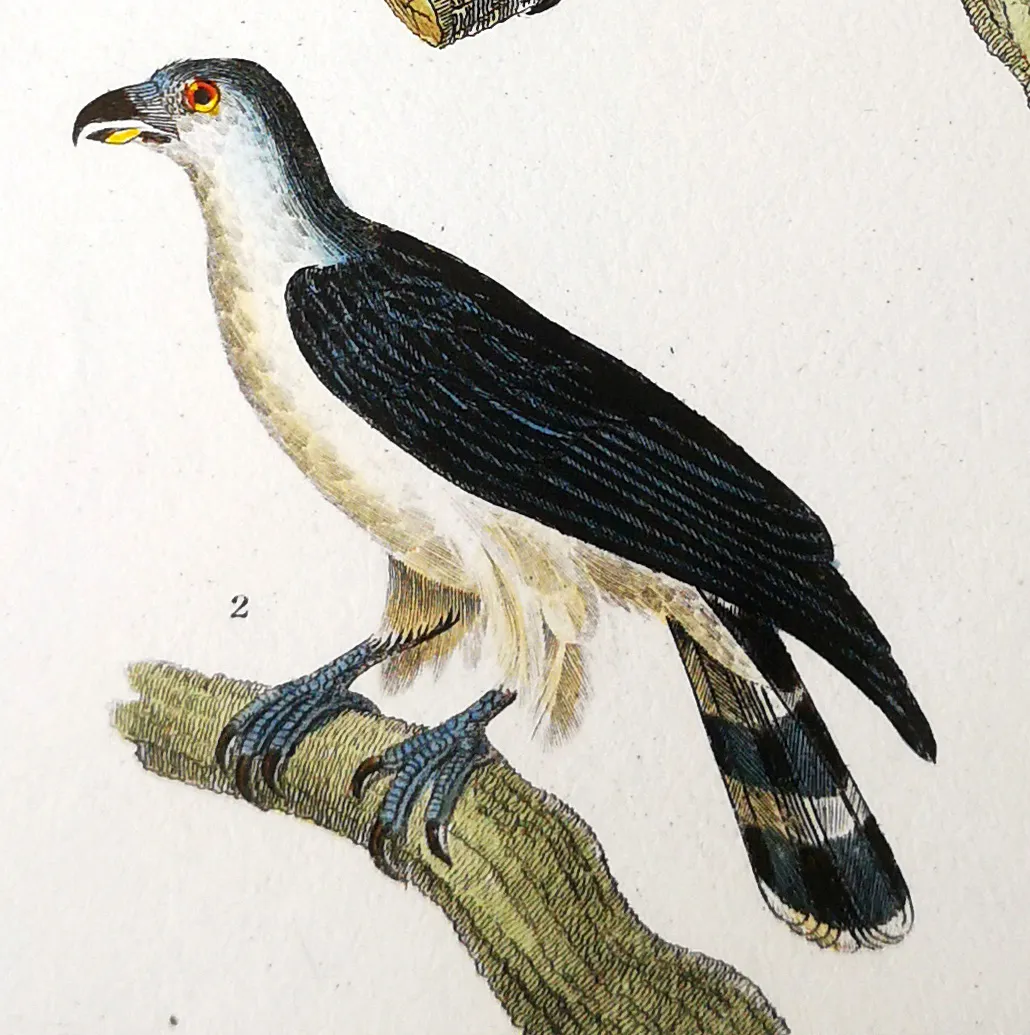
Below, the Cimindo (associated with Accipiter species) displays cooler grey and charcoal plumage. The interplay between warm and cool tonalities creates compositional equilibrium while preserving the scientific precision characteristic of early nineteenth-century engraving.
Crested eagles are large forest raptors known for their striking plumage and upright posture. Historically grouped within Aquila, they are today often classified under genera such as Nisaetus.
The Cimindo, described as originating from Cayenne (Caienna), reflects the expanding geographic scope of nineteenth-century zoology. Such plates illustrate Europe’s growing scientific documentation of South American fauna.
This engraving forms part of the monumental Dizionario di Scienze Naturali, an ambitious early nineteenth-century encyclopedic enterprise preserved within a noble Roman library and today part of the Sacchetti Collection. Each plate reflects a moment when scientific exploration and artisanal engraving achieved remarkable refinement.
To explore the broader historical narrative behind these rare natural history engravings, we invite you to read our editorial feature “Not Just Another Print”.
The engraving is in very good antique condition. The impression remains sharp and the original hand-colouring is well preserved. The paper is smooth early nineteenth-century wove paper (non-laid), consistent with Italian scientific editions of the period. No watermark has been observed. Minor age toning may be present, consistent with its age.
For further insight into Pierre Antoine Prêtre’s contribution to nineteenth-century zoological illustration, see our editorial feature:
Pierre Antoine Prêtre – Illustrator of Natural Science and Marine Life
Specific References
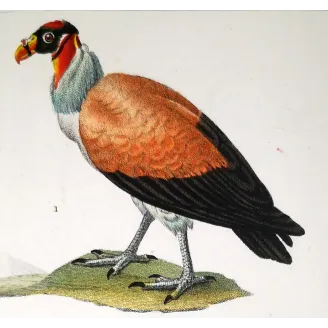
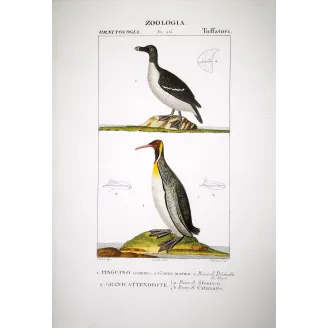
Original early 19th-century hand-colored engraving depicting King Vulture and Brown Vulture from the Dizionario di Scienze Naturali.
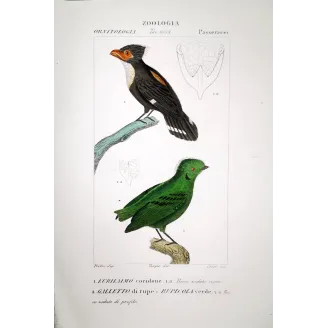
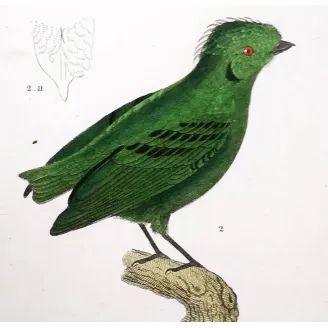
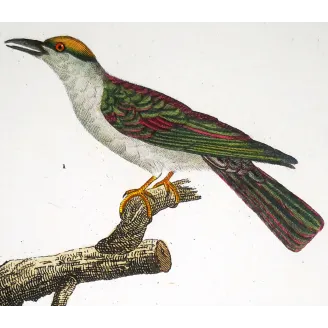
Rare birds of the jungle: the crest-faced Corydon and a luminous green Rupicola.
Majestic raptor captured in perfect hunting pose with detailed feathers.
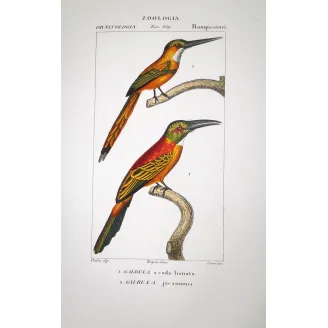
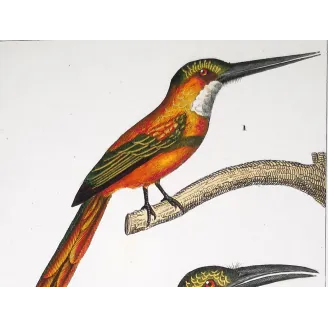
Two vibrant Jacamar birds with metallic plumage and long sharp beaks on stylized branches.
Beautiful engraving combining sacred symbolism and elegant coastal shapes.
Finely drawn buzzards with a harmonious and naturalistic composition.
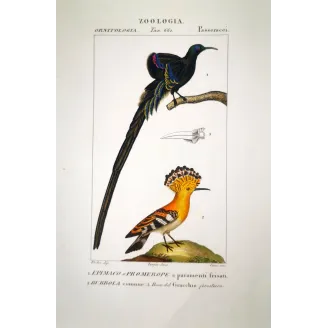
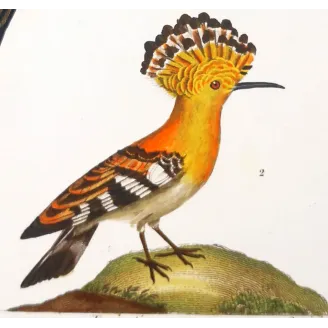
A long-tailed Promerops and a vivid Hoopoe bird, both perched and richly colored against a clean background.
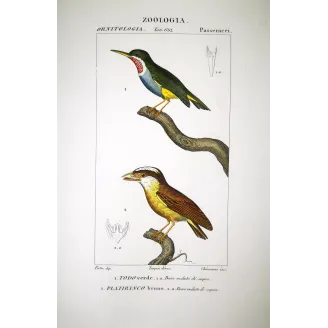
Delicate birds from the New World: the vibrant Green Todus and a brown Platyrinchus with unique beak features.
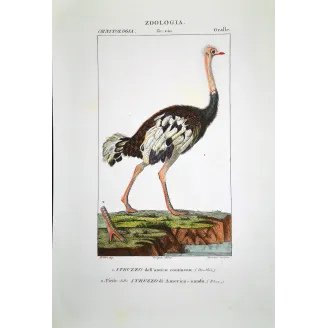
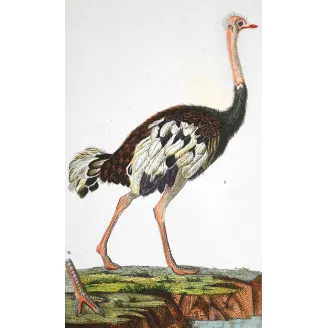
Imposing rendering of the Old World Ostrich and anatomical study of a Rhea foot.
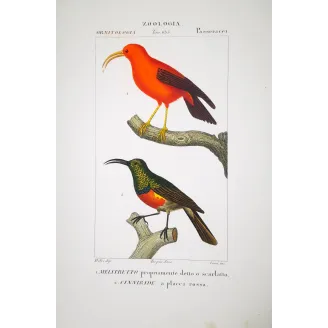
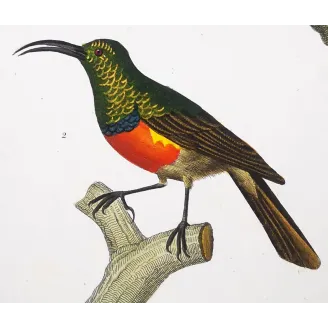
Brilliantly colored honeycreeper and sunbird illustration with tropical vibrancy, captured by Prêtre.
Two exotic birds from Australia, depicted with vivid hand-coloring.
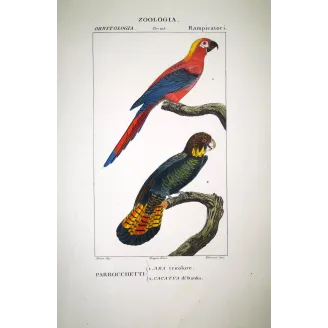
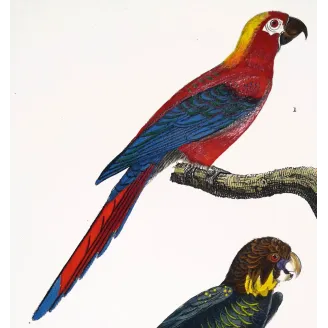
Vibrant parakeets perched on branches: a scarlet macaw and a black cockatoo with yellow and red highlights.
Charming illustration of two aquatic birds with accurate anatomical and marine details.
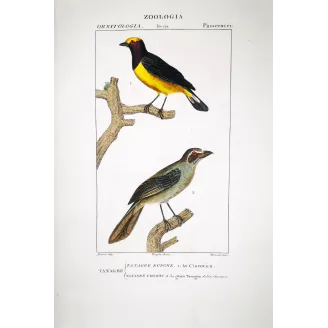
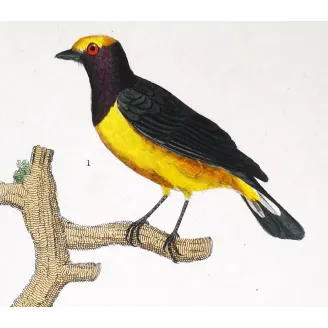
Graceful composition of a Yellow Tanager and a more subtly colored species from the Guyana region.
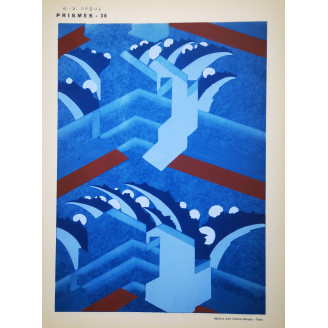
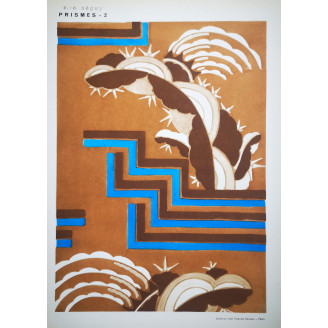
Original 1931 pochoir print by Émile-Allain Séguy. From the rare portfolio *Prismes*.
Original 1931 pochoir print by Émile-Allain Séguy. From the rare portfolio *Prismes*.
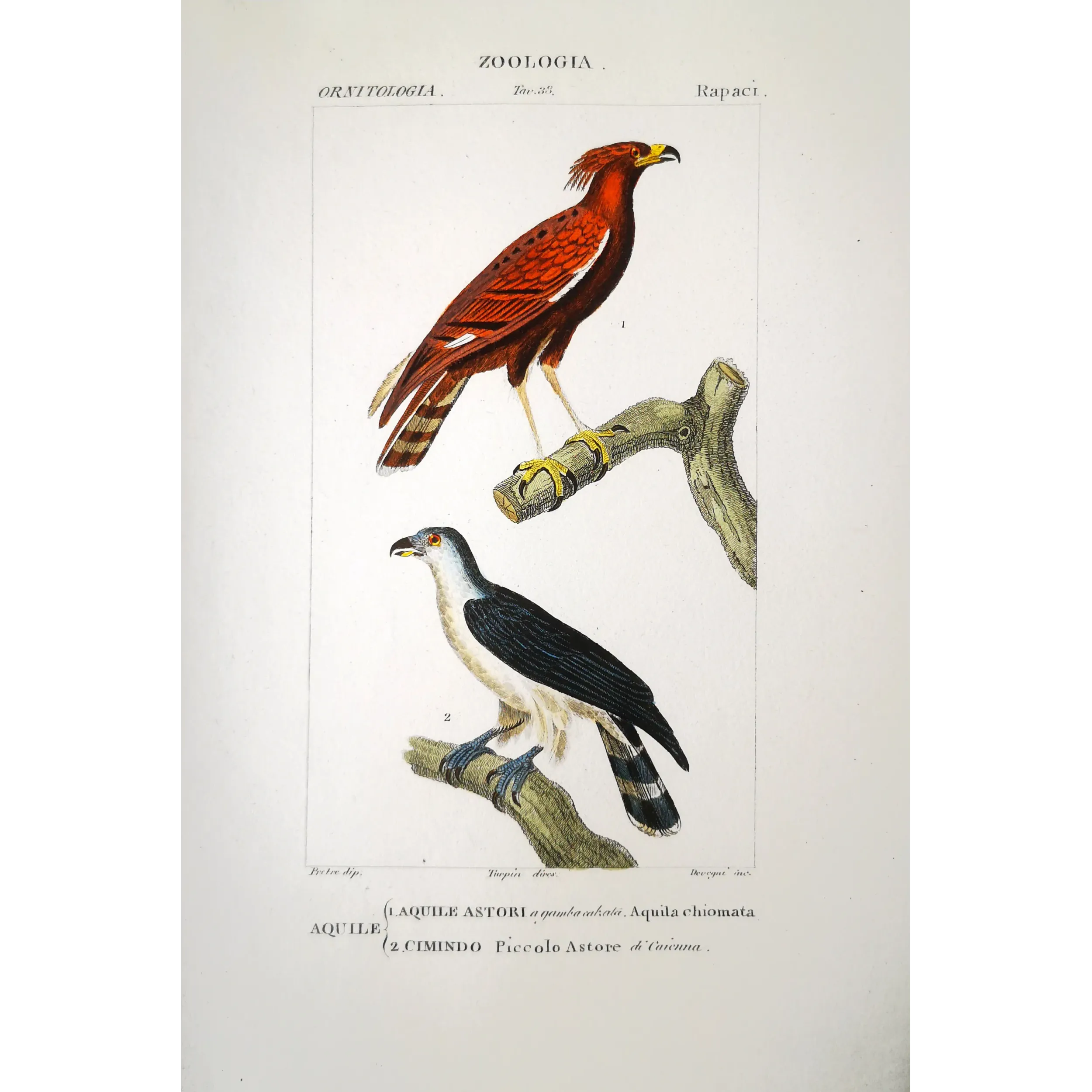
A lively contrast between a fiery red hawk-eagle and a smaller black-and-white goshawk.