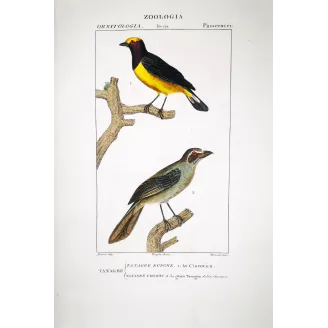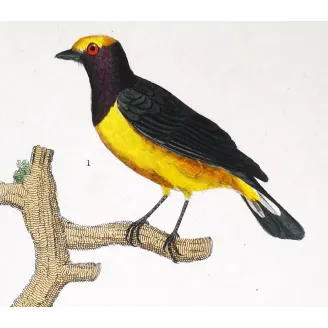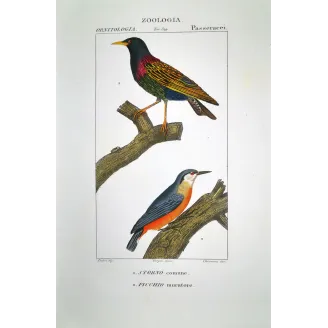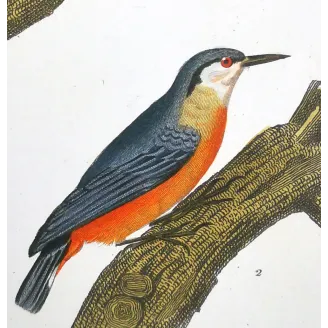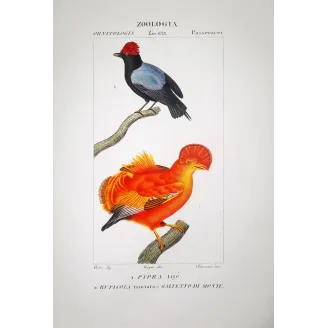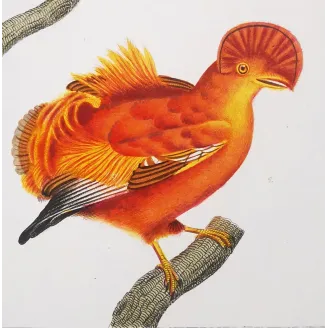
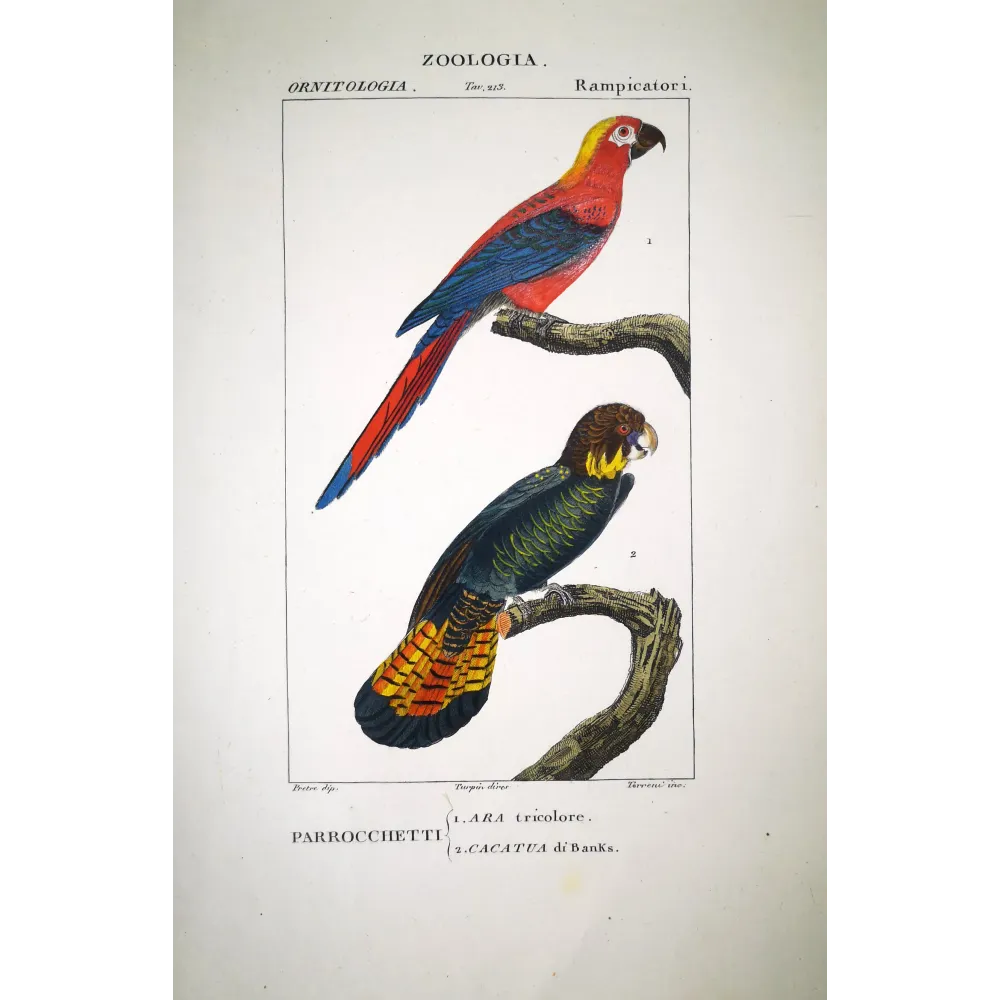
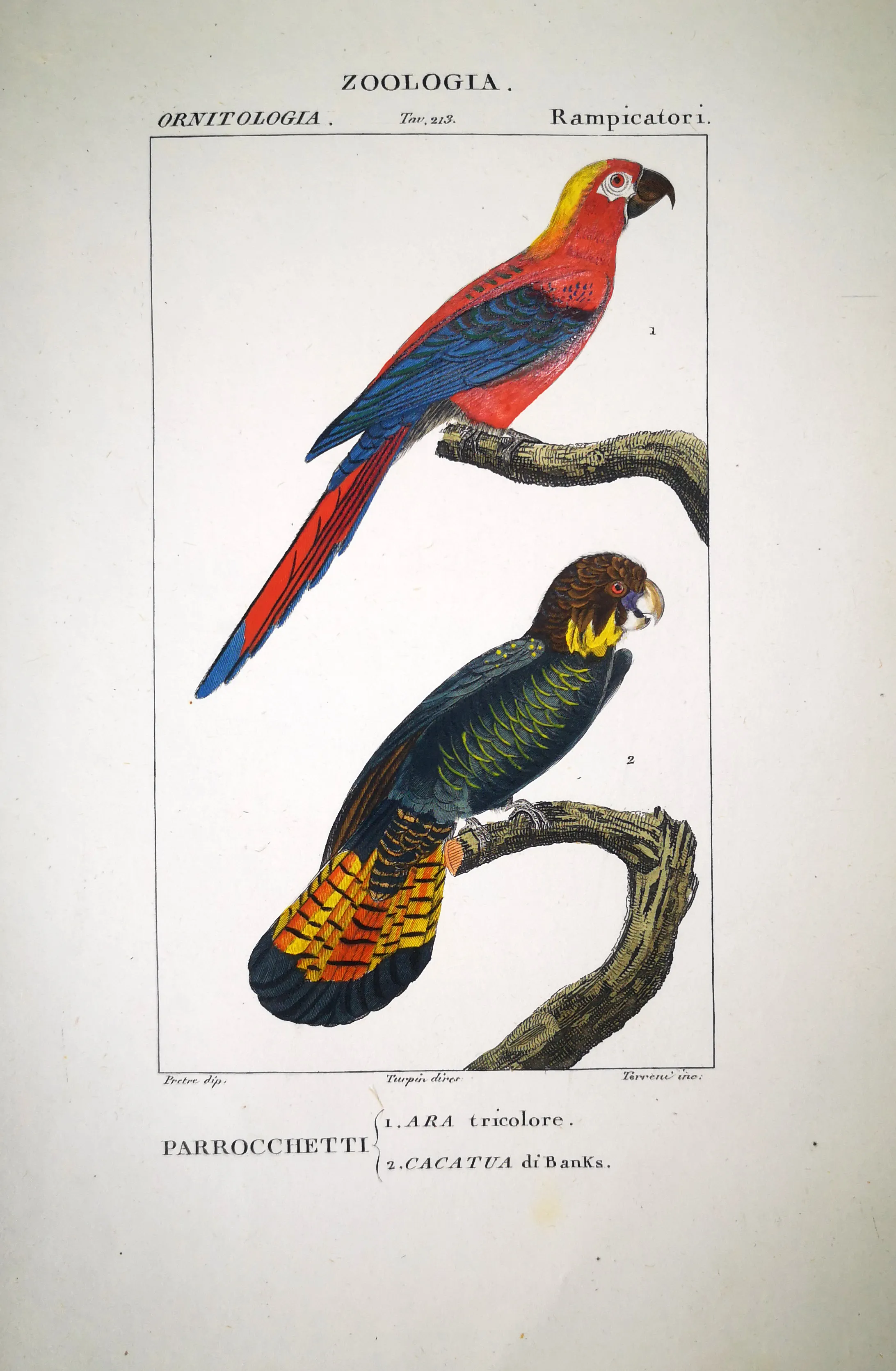
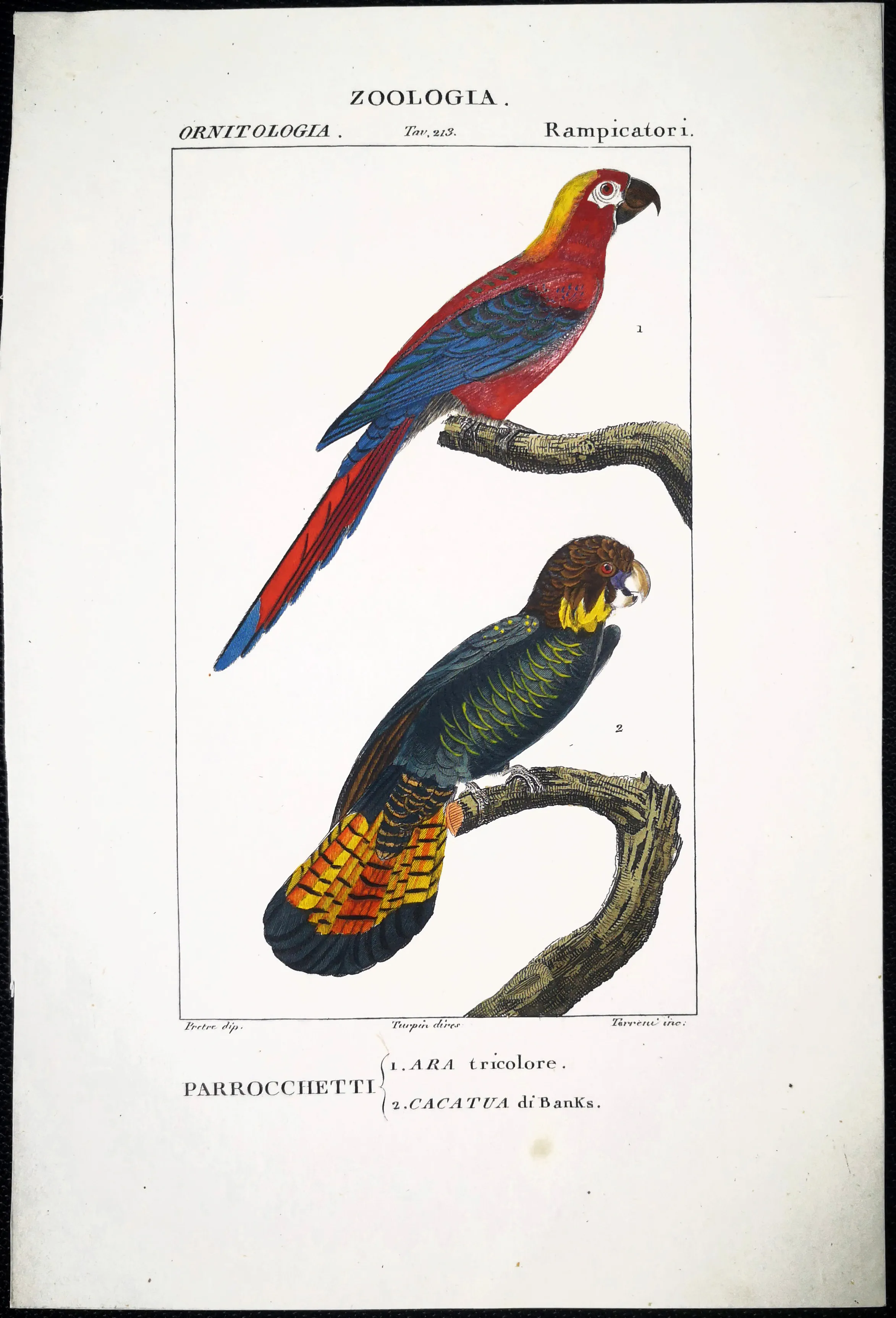


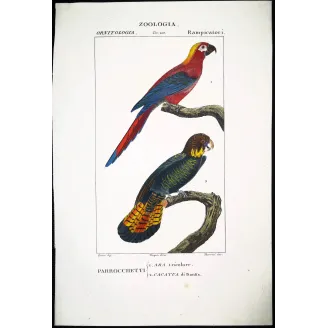
Vibrant parakeets perched on branches: a scarlet macaw and a black cockatoo with yellow and red highlights.
 Delivery policy
Your print will be carefully prepared and shipped worldwide via trusted couriers (UPS or similar).
 Authentic antique prints
Original engravings from the 17th–19th century.
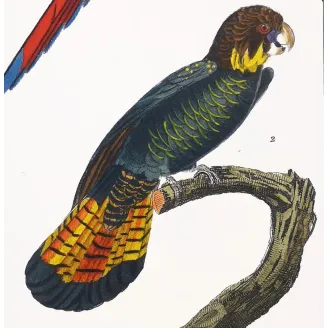
This spectacular ornithological engraving presents two highly emblematic parrots under the heading “Parrocchetti”: Ara tricolore (commonly associated with the Cuban Macaw, Ara tricolor) and the Banks’ Cockatoo (“Cacatua di Banks”, today referred to as Calyptorhynchus banksii). Arranged as a disciplined comparative plate, the birds are staged on natural branches against a clean field, allowing colour, bill architecture, and feather structure to read with the clarity of a cabinet specimen while retaining the visual impact of a true decorative statement.
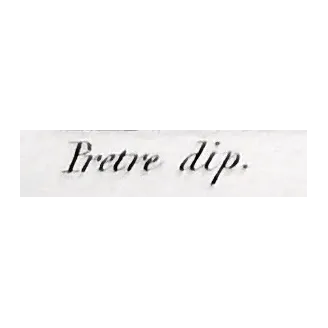
Prêtre’s strength is evident in the orchestration of extremes: the upper macaw is rendered in a commanding scarlet register punctuated by saturated blues and a golden crown, while the lower cockatoo introduces a darker, more enigmatic palette—charcoal plumage animated by luminous yellow accents and a tail pattern that reads almost like a woven textile. The plate is both scientific and theatrical, but never crowded: each figure holds its own space with calm authority.
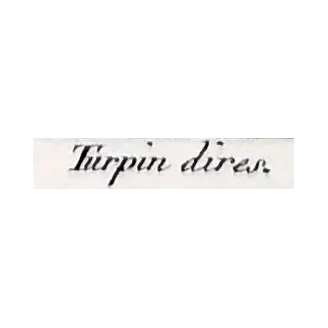
The engraving belongs to the Italian edition of the Dizionario di Scienze Naturali (Florence, Battelli press), one of the most ambitious encyclopedic scientific enterprises of its time, for which Pierre Antoine Prêtre produced some of the most accomplished zoological illustrations of the early nineteenth century.
— • —
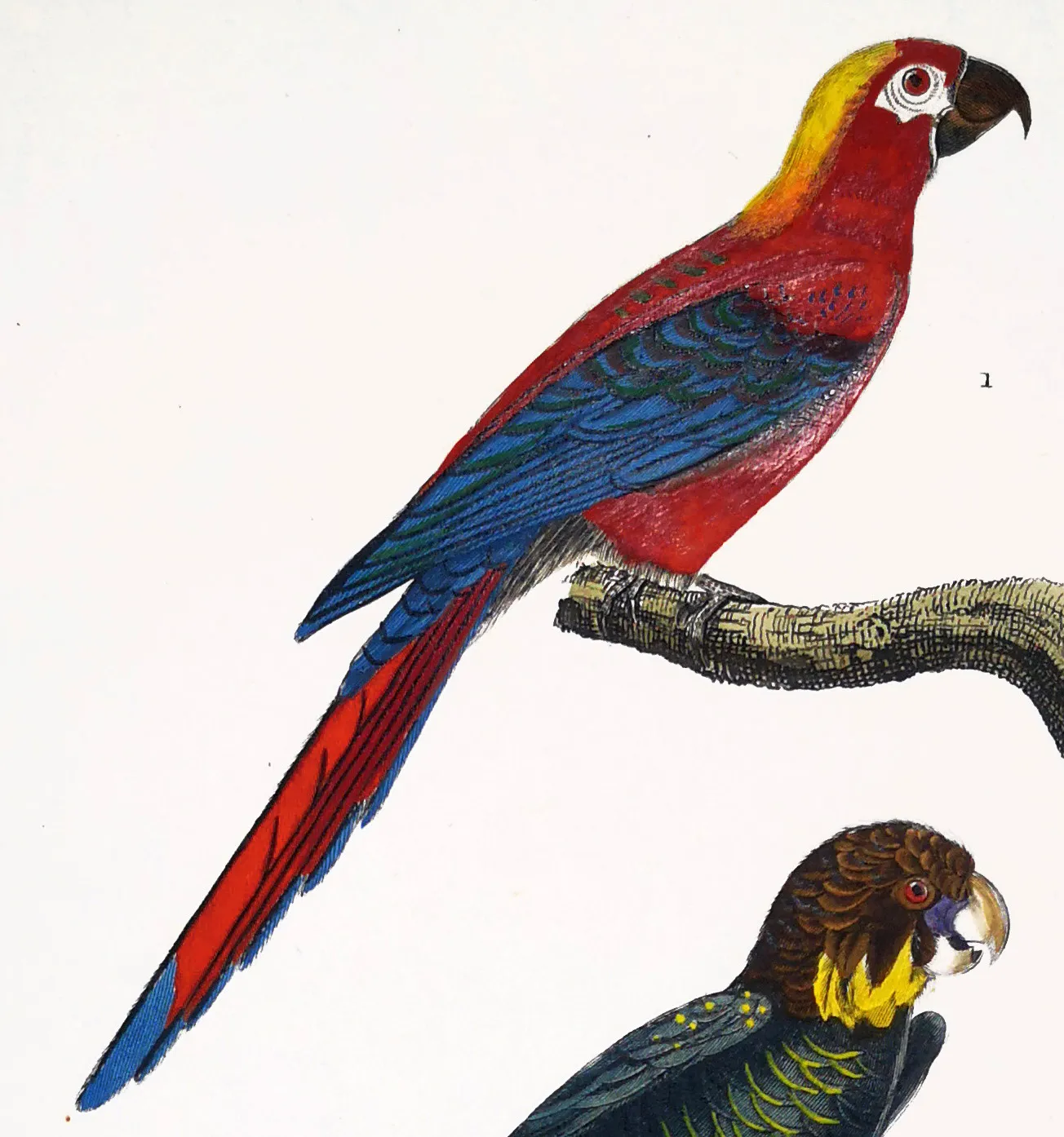
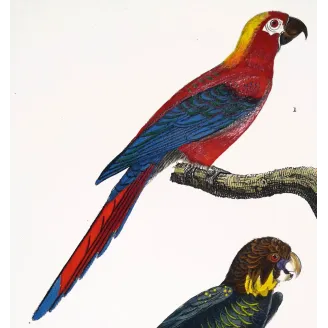
The composition is built around contrast and hierarchy. The macaw occupies the upper register like a ceremonial banner—long tail sweeping diagonally, scarlet body dominating, and blue wing feathers layered with confident structure. The colouring is vivid but controlled: reds remain warm and velvety rather than flat, and the blues are shaded to preserve depth and feather articulation.
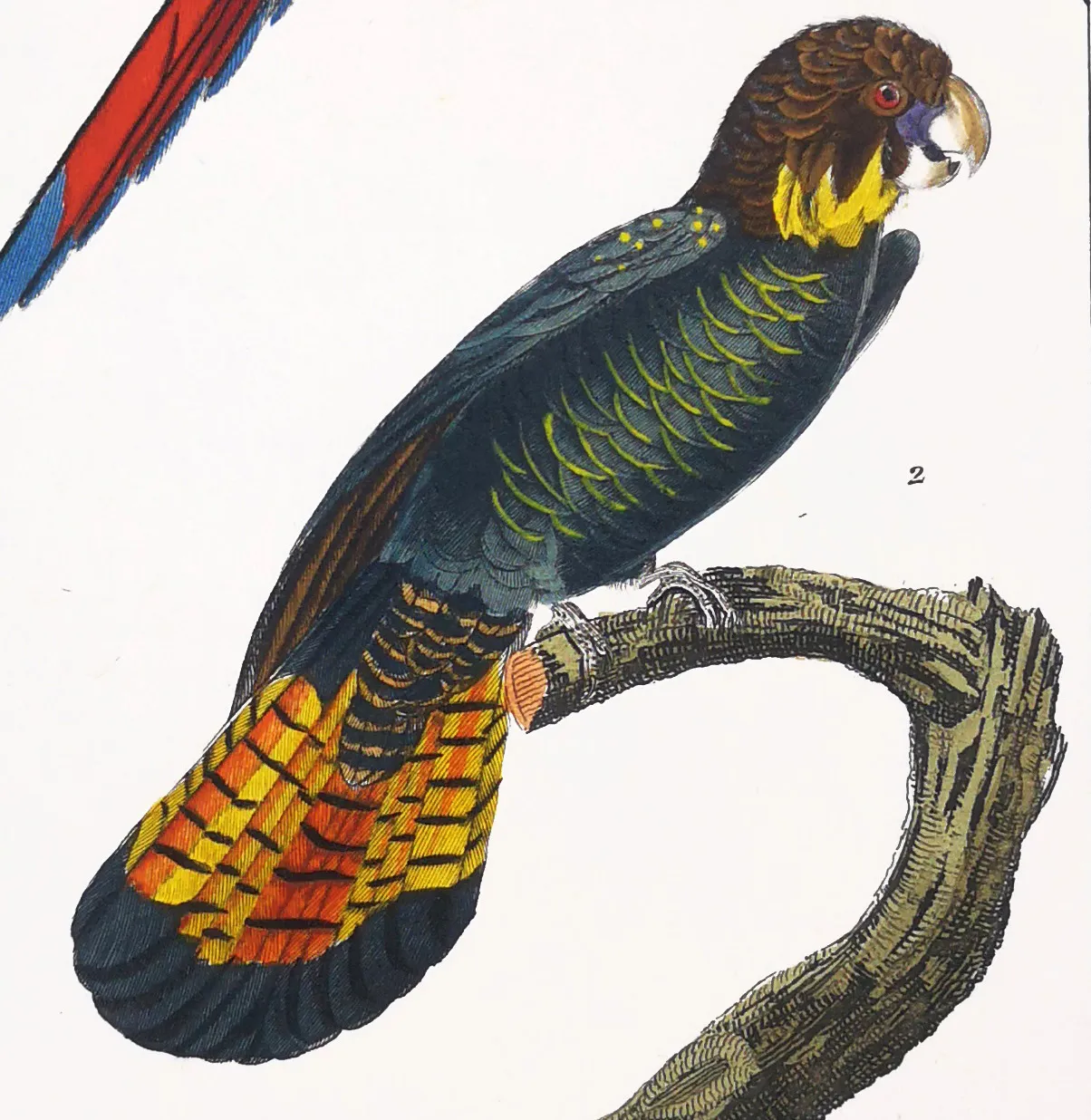
Below, the Banks’ Cockatoo shifts the tone toward quiet drama. Dark plumage becomes a stage for pattern: olive-to-gold scalloping across the wing, a strong pale bill, and a remarkable tail with bands of amber and flame. Together, the pair produces a refined “gallery contrast”: one bird as pure chromatic authority, the other as texture and pattern—an exceptionally modern pairing for interior display.
“Ara tricolore” is historically linked to the Cuban Macaw (Ara tricolor), a Caribbean species once prized in European natural history for its spectacular red-and-blue plumage and now widely regarded as extinct. In early nineteenth-century encyclopedias, macaws represented the very idea of tropical abundance: bold colour, elongated tail geometry, and a powerful hooked bill—traits that translated brilliantly into engraved form.
“Cacatua di Banks” refers to the Banks’ Black Cockatoo (Calyptorhynchus banksii), an Australian species admired for its dramatic dark plumage and striking yellow or red accents. Beyond their visual power, parrots were compelling to early science because their beaks, feet, and feather patterning offered clear comparative markers for classification. This plate captures that encyclopedic method while delivering a composition of unmistakable decorative impact—two birds chosen as much for iconic presence as for zoological interest.
This plate forms part of the historic Dizionario di Scienze Naturali, a monumental early nineteenth-century encyclopedic enterprise once preserved within a noble library and today housed in the Sacchetti Collection. Each engraving reflects a period in which scientific ambition was matched by exceptional artisanal execution — from the disciplined copperplate line to the luminous hand-colouring applied individually to every impression.
The result is not merely zoological documentation, but a refined synthesis of scholarship and craftsmanship. To discover the full story behind these rare prints and their noble provenance, we invite you to read our editorial feature “Not Just Another Print”.
The engraving is in very good antique condition. The impression remains clean and well-preserved, with strong definition and vivid, carefully retained period hand-colouring. The paper is smooth early nineteenth-century wove paper (non-laid), consistent with Italian scientific editions of the period. No watermark has been observed. Minor age toning may be present, consistent with antique paper and not affecting the overall decorative impact.
For further context on Pierre Antoine Prêtre and his contribution to nineteenth-century zoological illustration, see our editorial feature:
Pierre Antoine Prêtre – Illustrator of Natural Science and Marine Life
Specific References
Graceful composition of a Yellow Tanager and a more subtly colored species from the Guyana region.
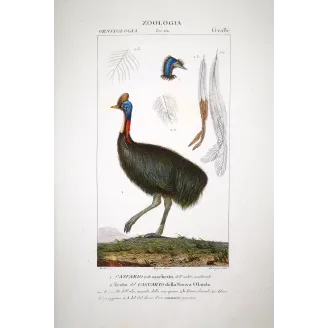
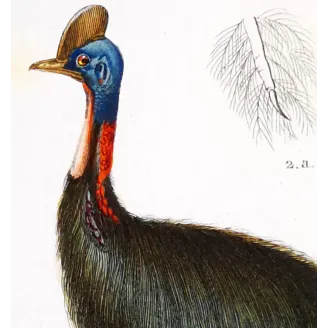
Impressive antique engraving of the Southern Cassowary, a striking flightless bird from New Guinea and northern Australia.
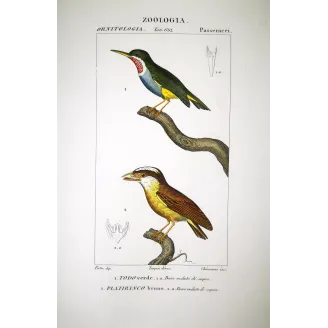
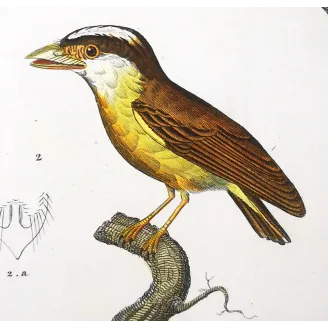
Delicate birds from the New World: the vibrant Green Todus and a brown Platyrinchus with unique beak features.
Finely drawn buzzards with a harmonious and naturalistic composition.
Beautiful engraving combining sacred symbolism and elegant coastal shapes.
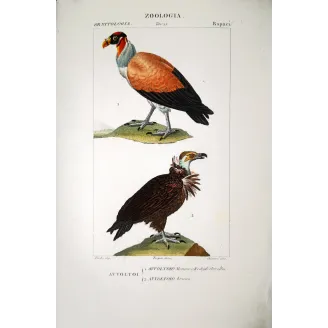
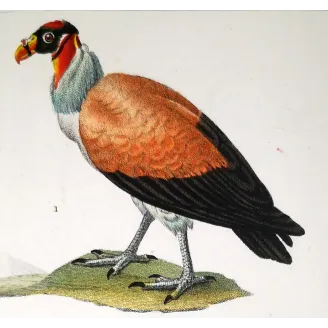
Original early 19th-century hand-colored engraving depicting King Vulture and Brown Vulture from the Dizionario di Scienze Naturali.
Exquisite depiction of the ornate Greater Bird-of-Paradise alongside the striking Common Hill Myna.
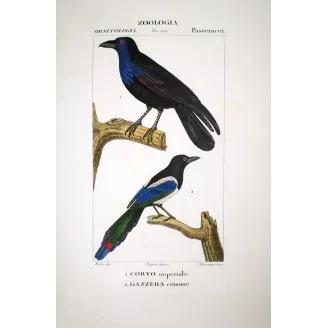
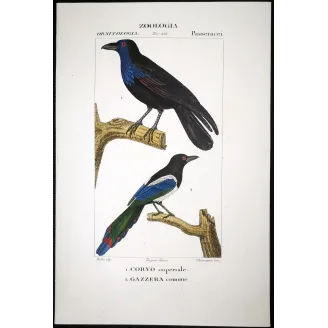
Striking contrast between the dark Imperial Crow and the vividly patterned Common Magpie.
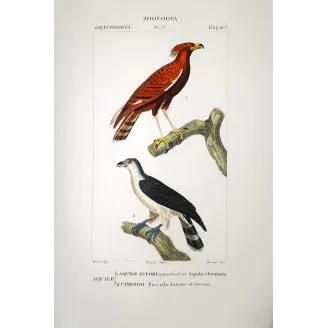
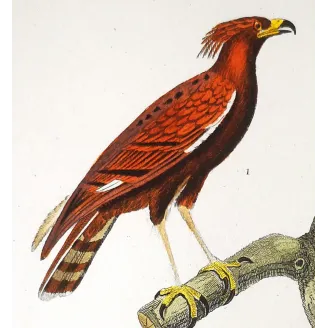
A lively contrast between a fiery red hawk-eagle and a smaller black-and-white goshawk.
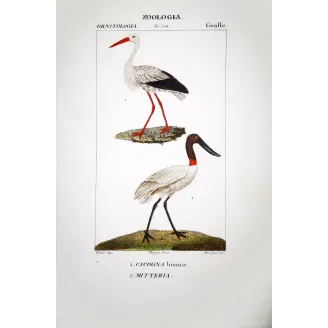
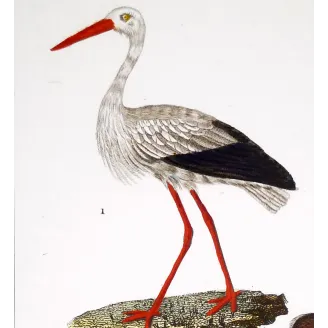
Graceful stork and robust jabiru presented with classic naturalistic balance.
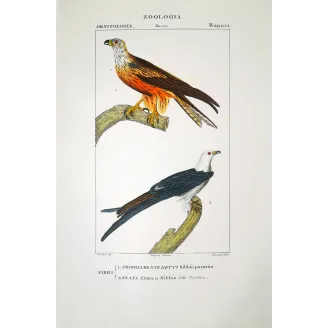
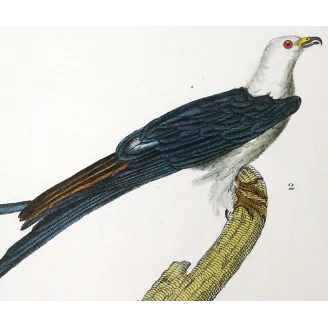
Parasitic Kite & Elanus (Milvus sp. & Elanus sp.) – Original Hand-Colored Engraving by Prêtre, Antique Print.
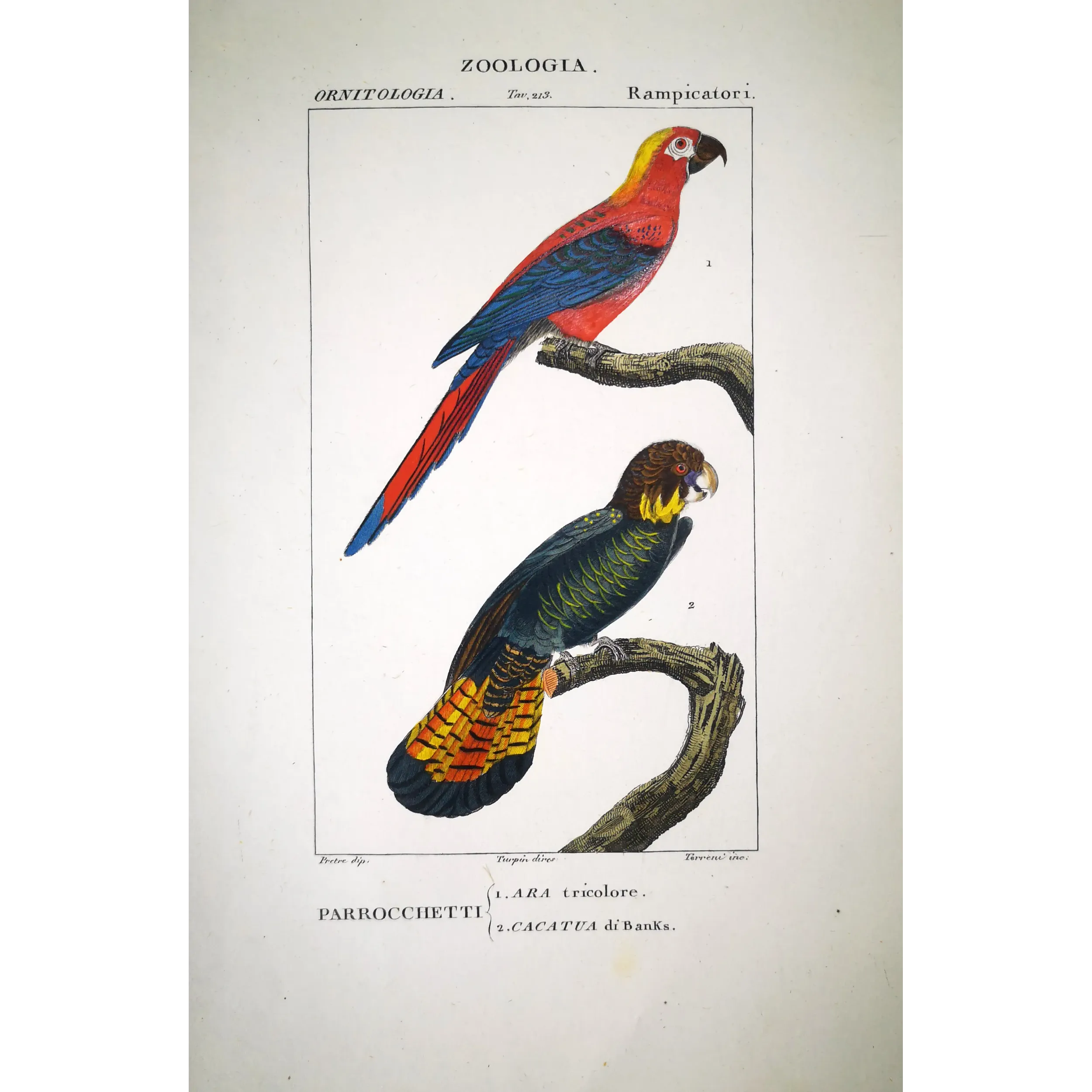
Vibrant parakeets perched on branches: a scarlet macaw and a black cockatoo with yellow and red highlights.