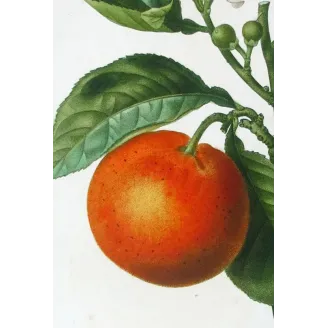
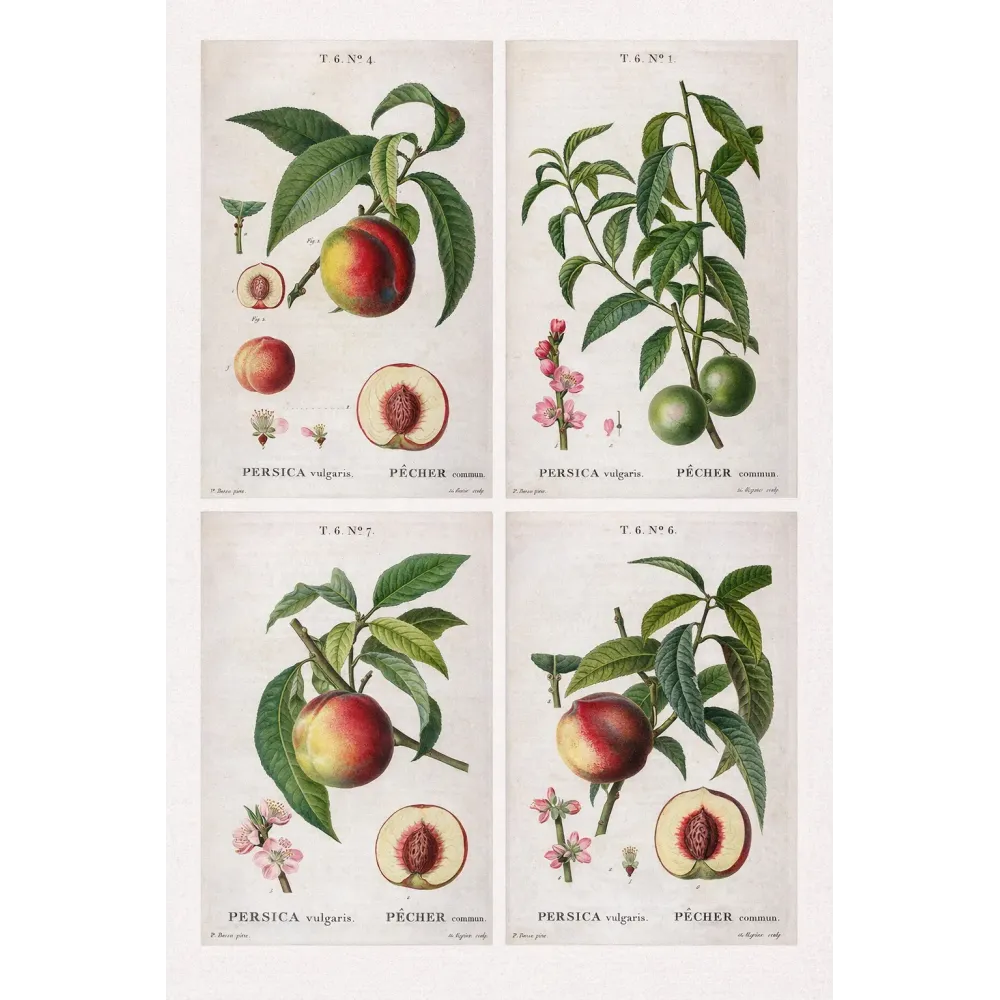
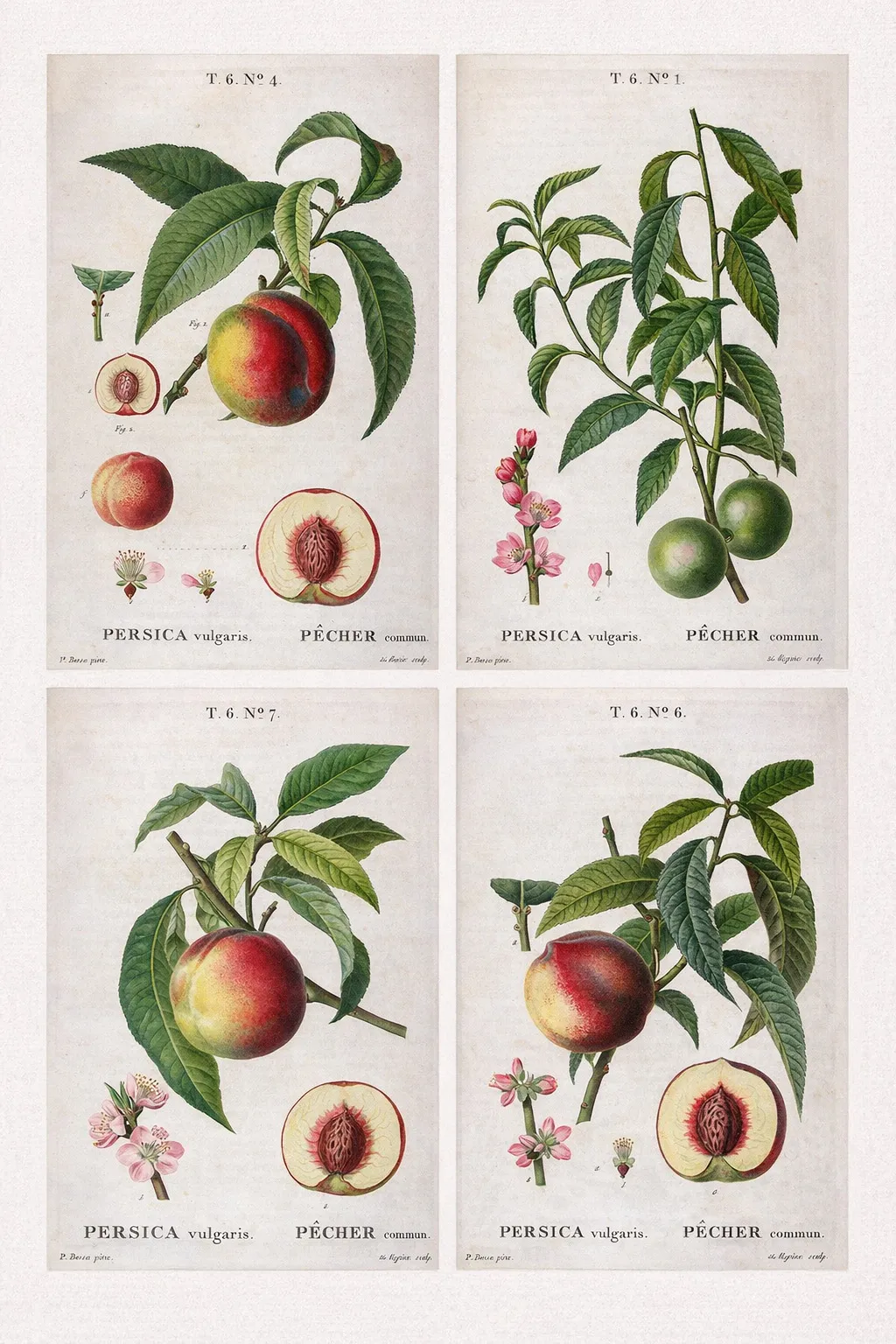
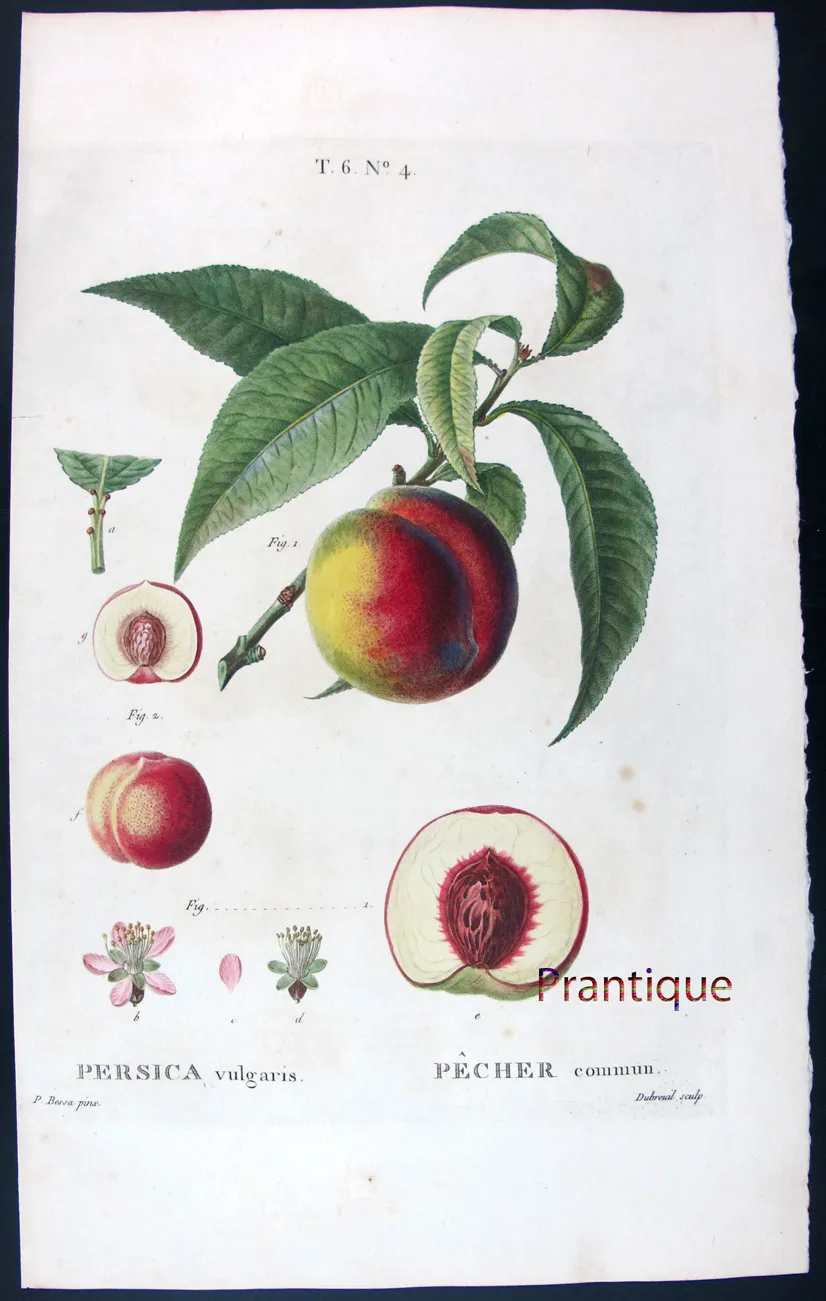
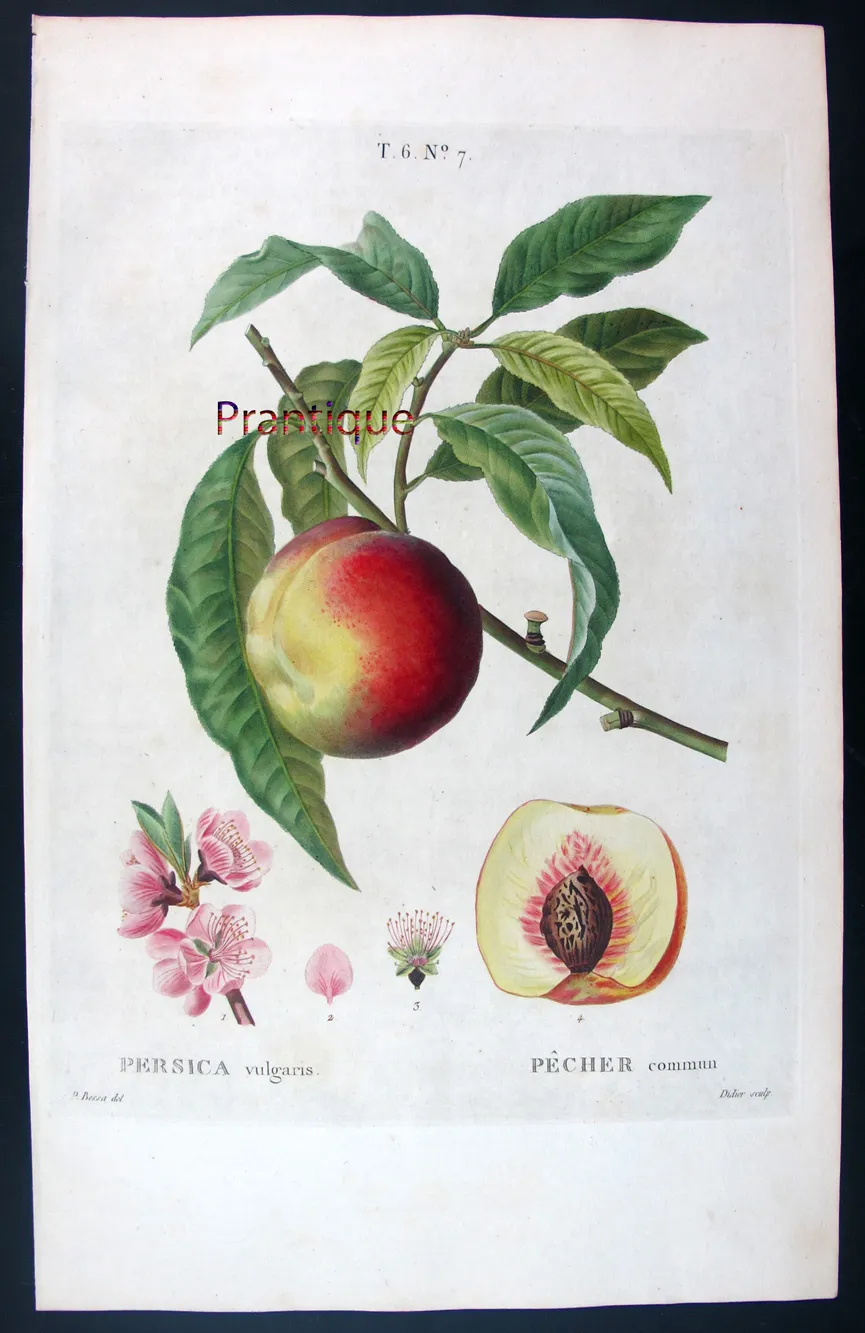
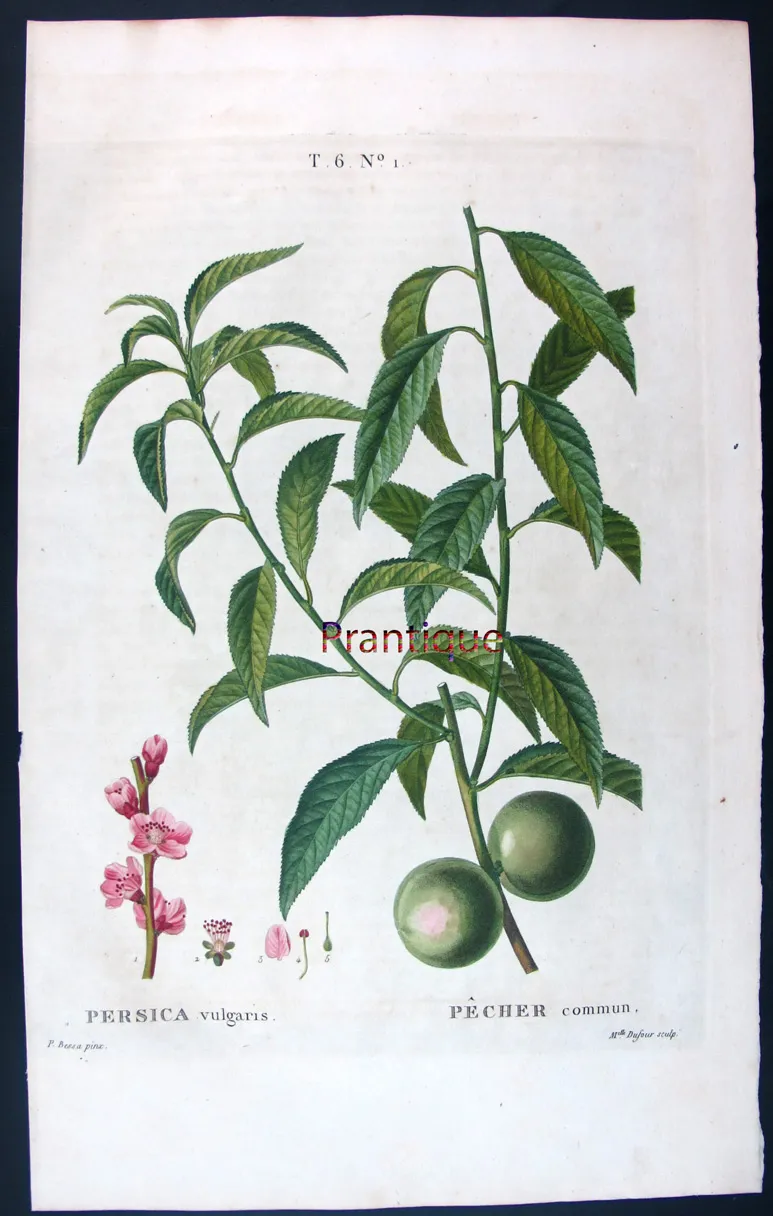
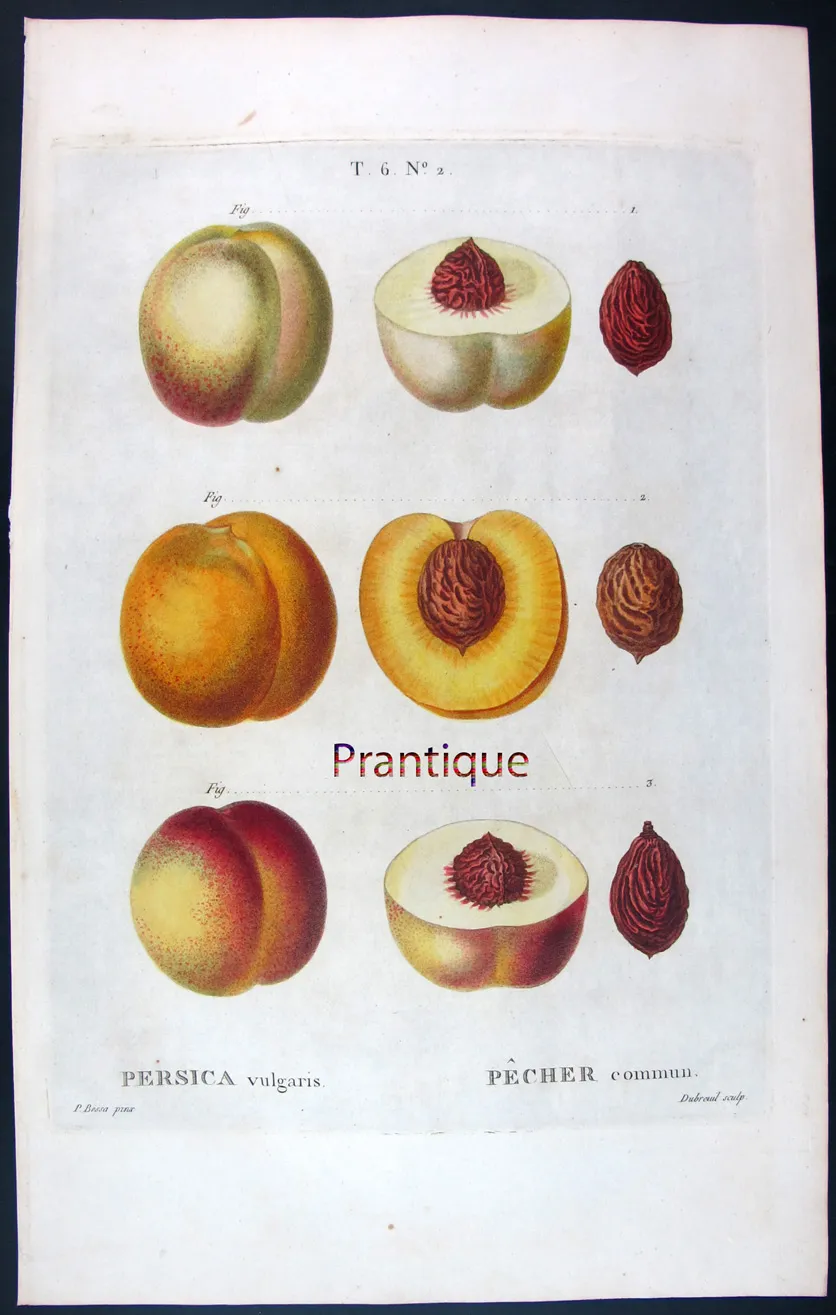
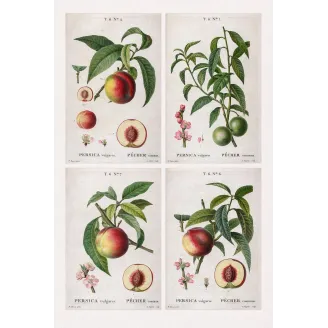
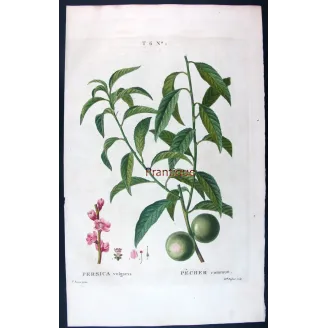
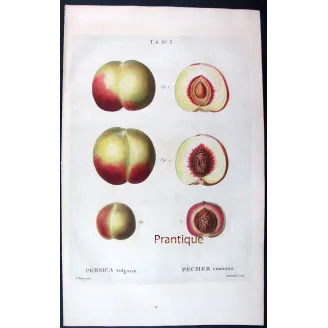
Original pochoir print of the peach tree, Prunus persica, with detailed flowering and fruit.
 Delivery policy
Your print will be carefully prepared and shipped worldwide via trusted couriers (UPS or similar).
 Authentic antique prints
Original engravings from the 17th–19th century.
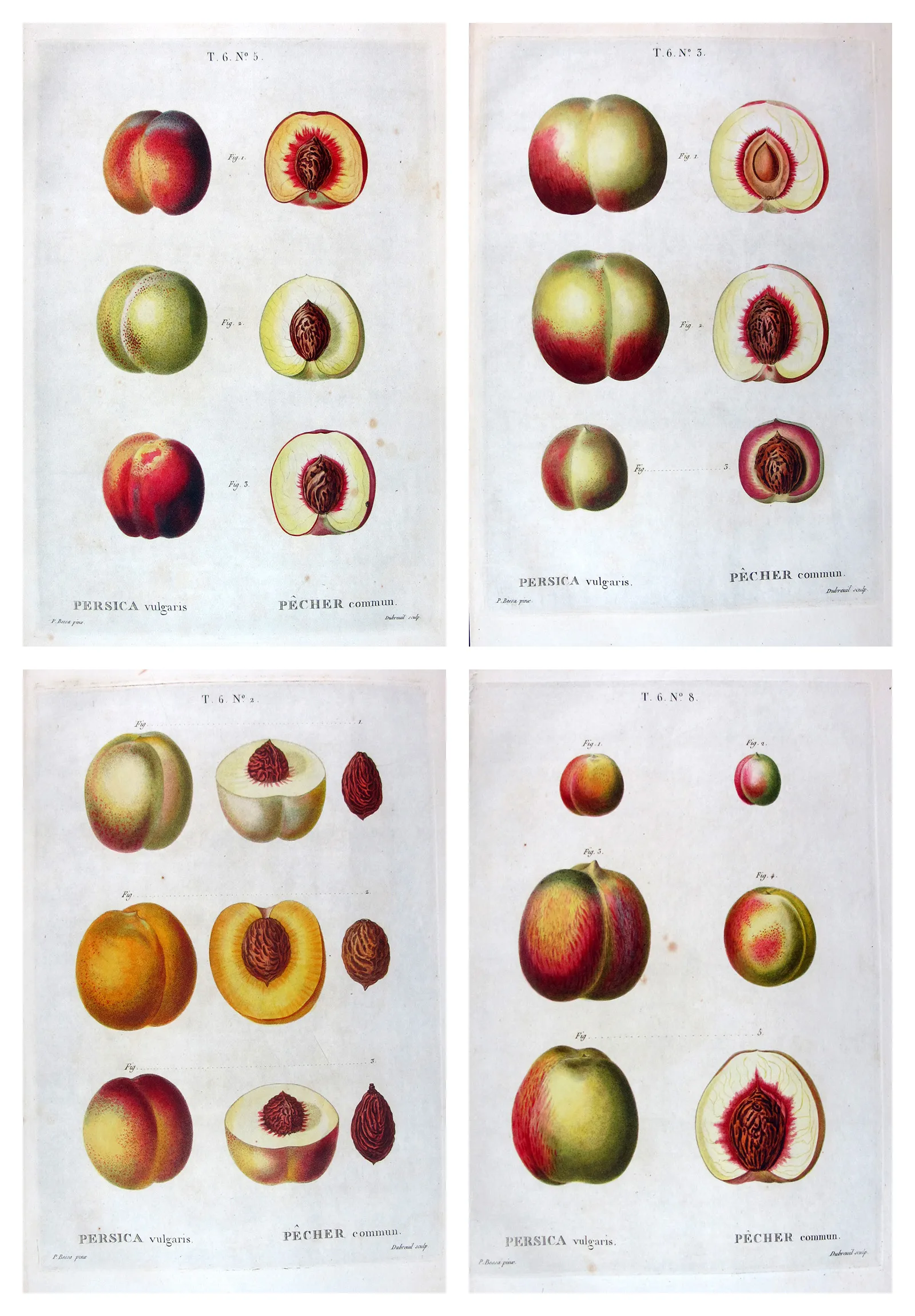
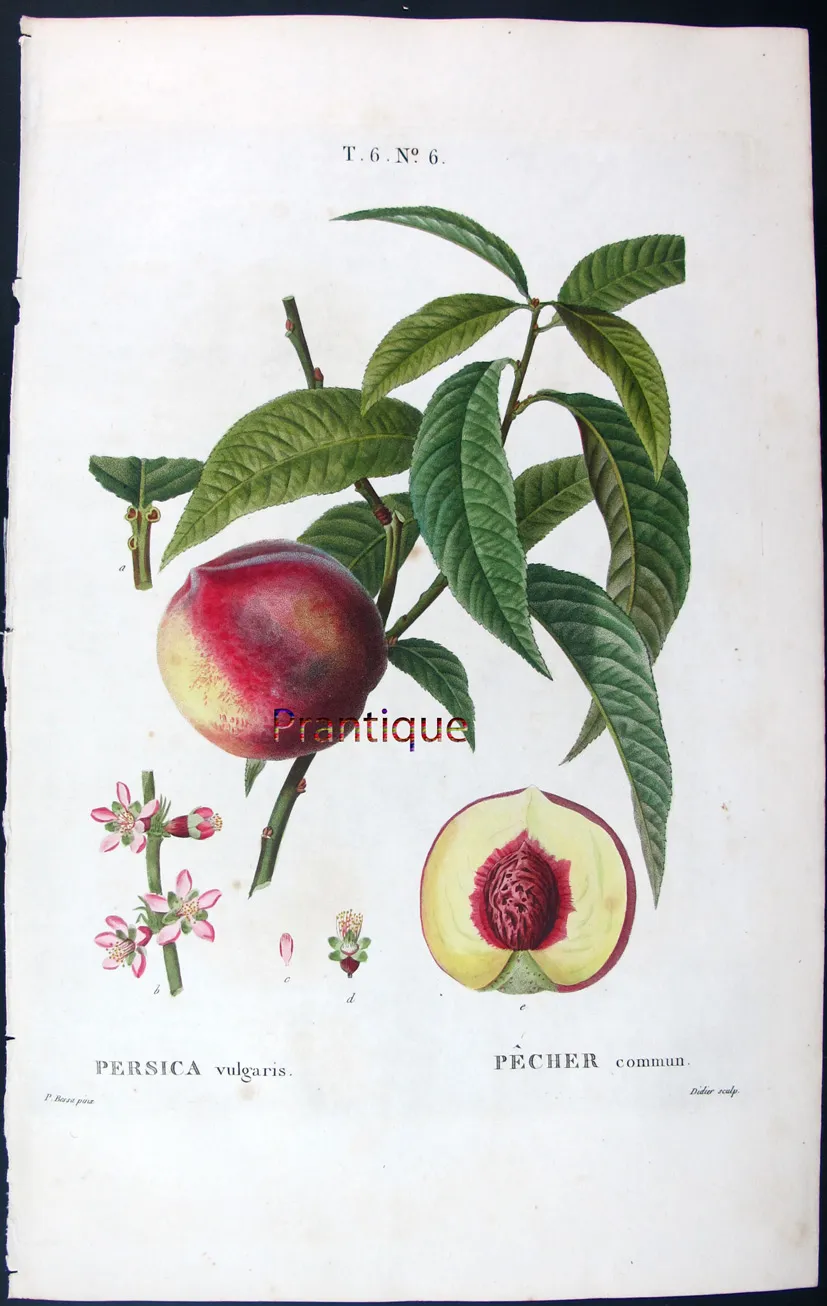
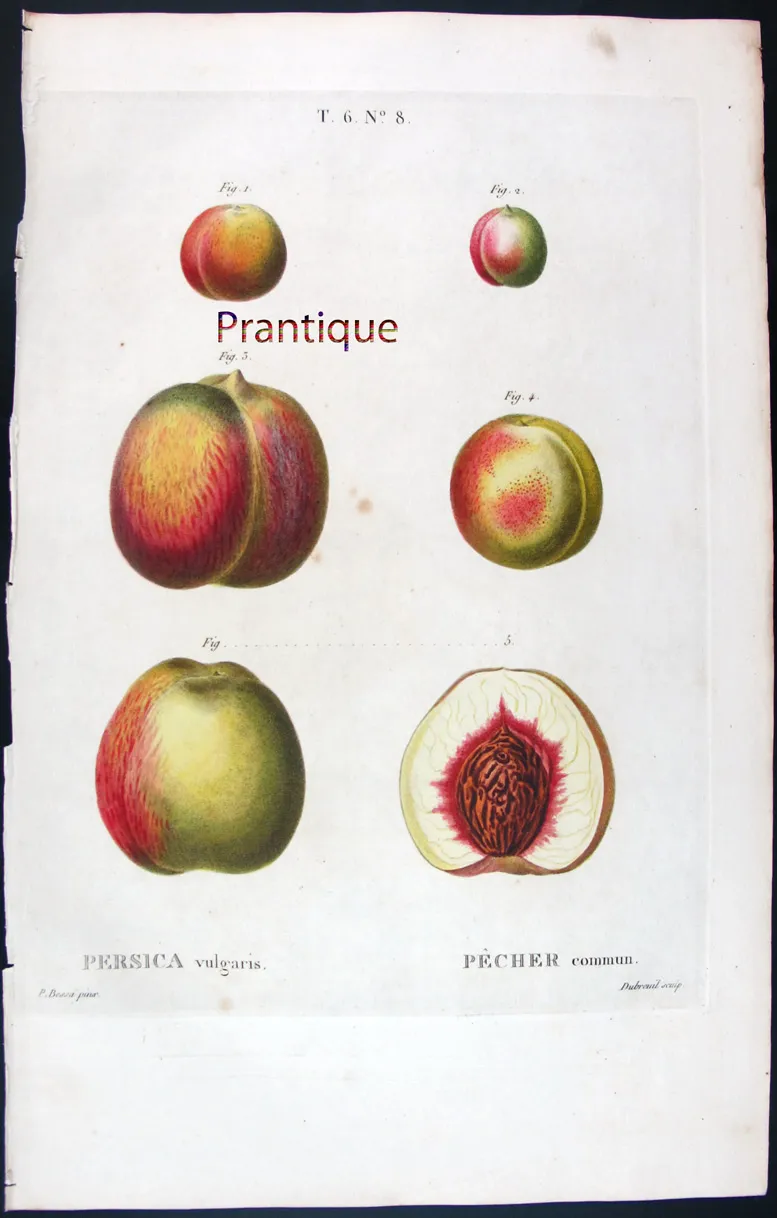
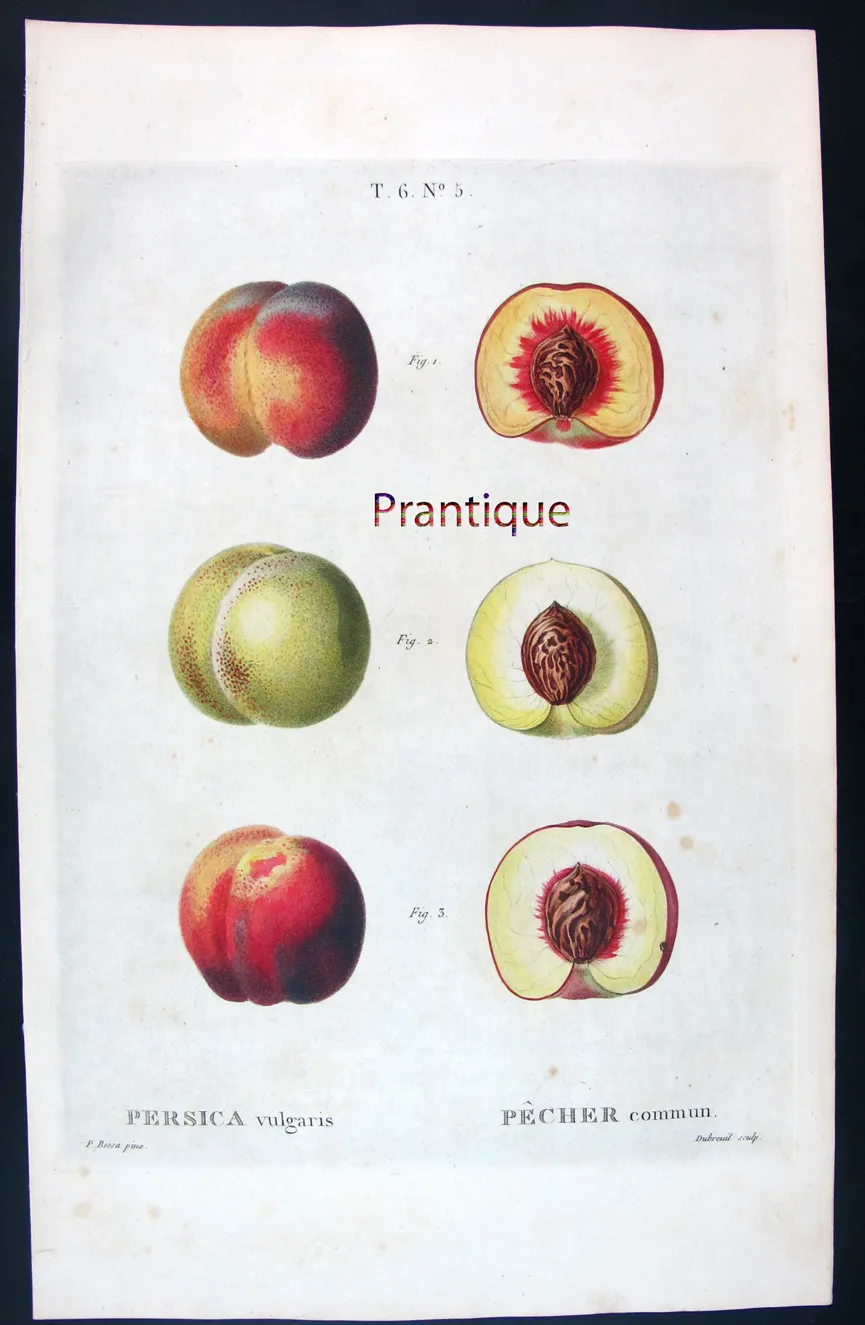
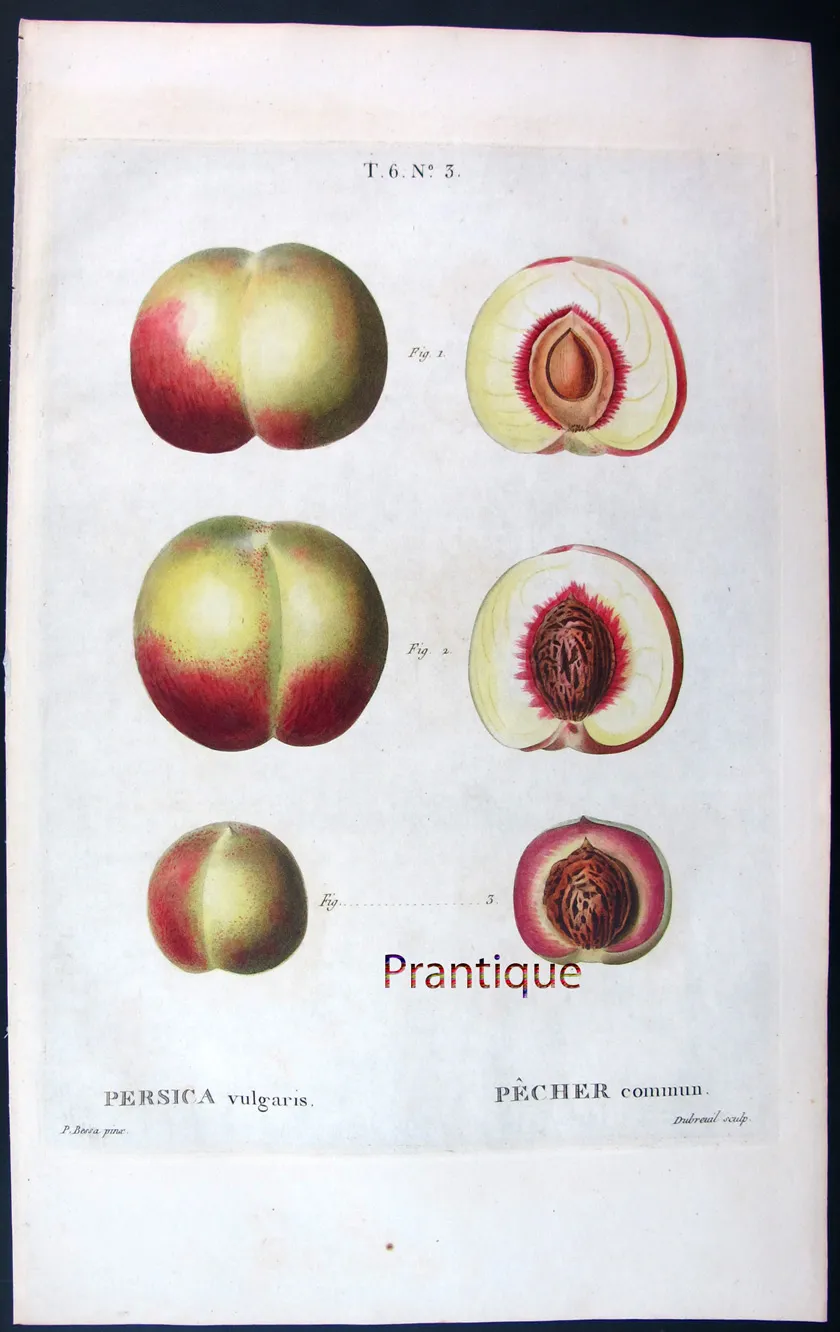
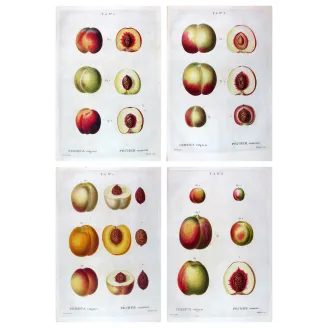
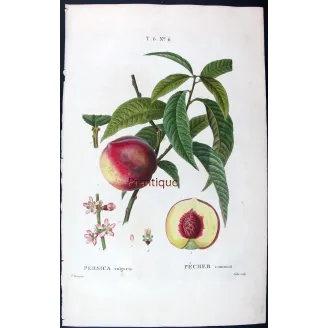
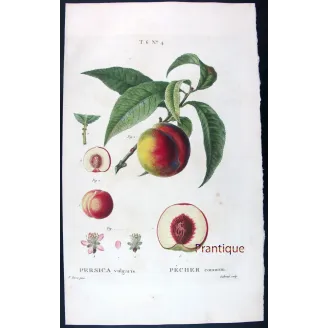
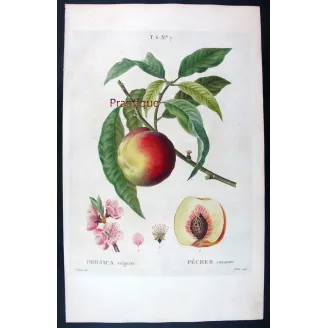
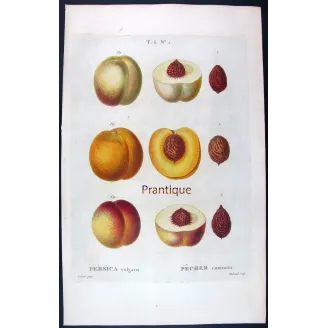
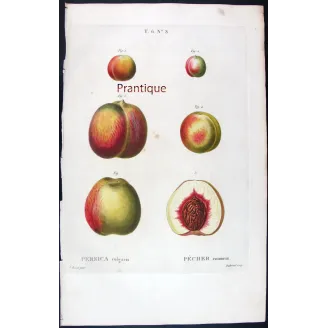
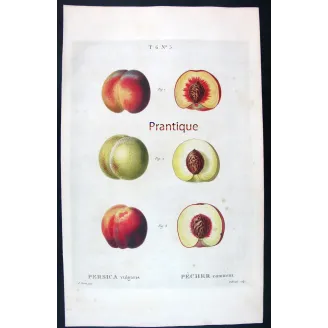
This exceptional ensemble brings together eight original early nineteenth-century engravings dedicated to the cultivated peach, Persica vulgaris. Conceived as a systematic visual study, the group documents multiple French cultivars through complete botanical representation: flowering branches, foliage structure, whole fruits, sectional views, and meticulously rendered stones.
More than decorative fruit imagery, this corpus reflects the refined agricultural culture of Napoleonic France, when pomology stood at the intersection of science, aristocratic horticulture, and artistic excellence. Pancrace Bessa’s hand translates living matter into luminous form, preserving varietal identity with both precision and aesthetic restraint.
Each plate contributes a distinct chapter to the study of the peach. Branches bearing fruit illustrate natural growth habit and leaf morphology. Complementary plates isolate individual fruits in elevation and cross-section, revealing pulp texture, chromatic gradation, and the sculptural architecture of the stone.
Seen together, the eight engravings form a coherent pomological archive — a rare survival of varietal documentation that would once have served botanists, horticulturists, and collectors of refined orchards.
The ensemble comprises all eight documented French peach cultivars as presented in Arbres et Arbustes. Read as a complete set, the plates function as a museum-grade study of French pomology, grouping varieties by ripening time, type (including pavie, i.e., clingstone peaches), and distinctive coloration.
Together, these cultivars illustrate differences in seasonality, coloration, flesh texture, and stone morphology — offering insight into early nineteenth-century French pomological classification and agricultural refinement.
Pancrace Bessa, among the most accomplished botanical artists of his generation, combines clarity of line with subtle chromatic modelling. The delicate transitions from pale ivory flesh to carmine blush, the velvety bloom of the skin, and the anatomical fidelity of the stones reveal a hand trained equally in observation and refinement.
Such complete varietal groupings seldom remain intact. When preserved together, they transcend decorative function and assume documentary and historical significance.
All eight engravings are preserved in like brand-new antique condition, with exceptionally fresh original hand colouring and strong impressions throughout. The sheets remain clean, stable, and visually balanced.
Importantly, all botanical imagery, engraved lettering, and compositional integrity remain fully intact. The ensemble retains both its aesthetic coherence and documentary value, presenting as a remarkably well-preserved and highly desirable complete series.
For further context on Pancrace Bessa and his distinctive contribution to French botanical illustration, see our editorial feature:
Specific References
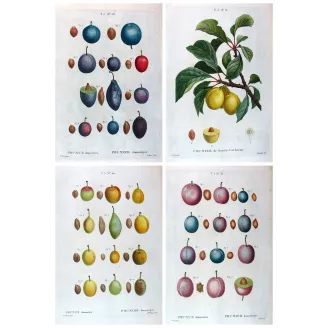
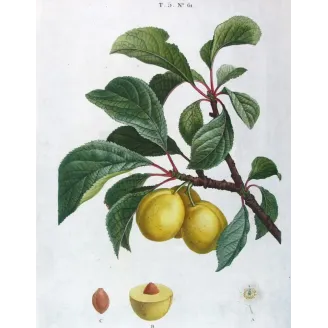
Botanical illustration of the Saint Catherine plum, a delicate fruit-bearing tree, by Pancrace Bessa.
Depiction of golden grapes with vivid green leaves in fine detail.
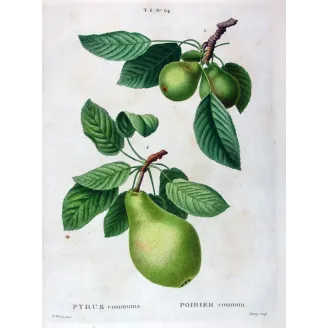
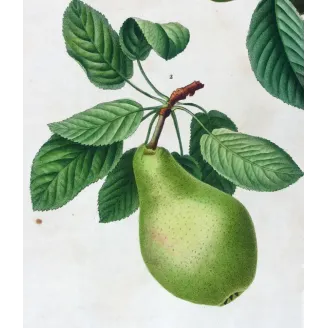
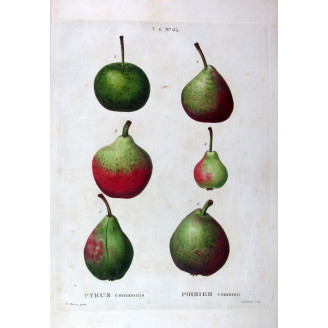
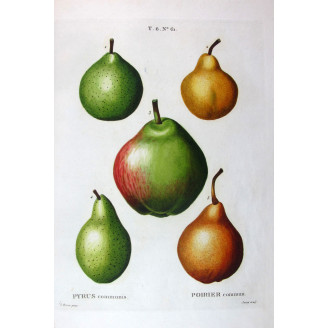
A refined early 19th-century botanical engraving depicting cultivated pear varieties (Pyrus communis), drawn by Pancrace Bessa and engraved for Arbres et Arbustes. Executed with restraint and clarity, the plate exemplifies the elegance of French pomological illustration, uniting scientific precision with a calm, decorative sensibility. The harmonious composition and subtle hand-colouring make it a timeless and highly collectible work.
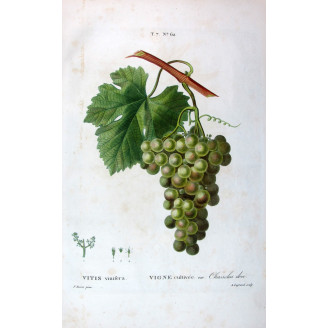
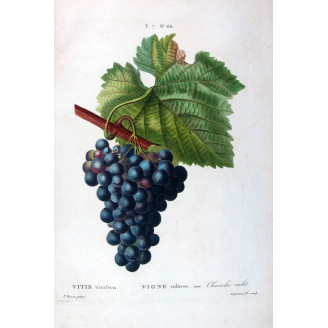
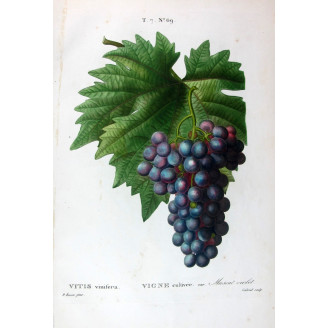
Original antique print of the cultivated Chasselas grape vine, Vitis vinifera, by Pancrace Bessa.
Elegant depiction of a rich purple Muscat grape variety by Pancrace Bessa.
A refined study of five historic pear cultivars, combining varietal precision with sculptural balance and luminous hand-colouring.
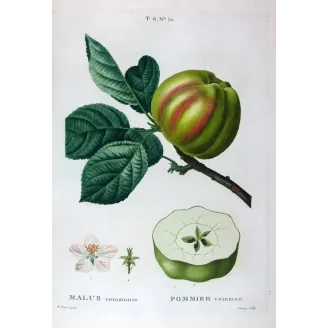
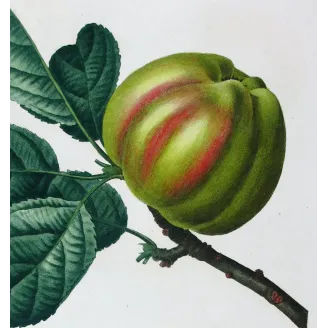
A finely executed early 19th-century botanical engraving illustrating a cultivated apple variety (Malus communis), drawn by Pancrace Bessa for Arbres et Arbustes. The composition combines precise botanical observation with refined decorative balance, presenting fruit and foliage with clarity and quiet elegance. Exceptional hand-colouring and careful modelling reflect the sophistication of French pomological illustration at its height.
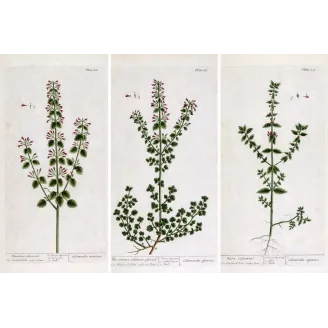
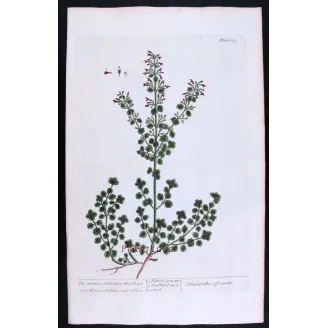
A curated botanical trio illustrating three closely related Calamintha species — officinalis, montana, and aquatica — as engraved and hand-colored by Elisabeth Blackwell for A Curious Herbal (1737–1739). Presented together, these plates offer a rare comparative view of medicinal, habitat-specific, and morphological variation within a single genus, reflecting early modern botanical practice and apothecary knowledge.
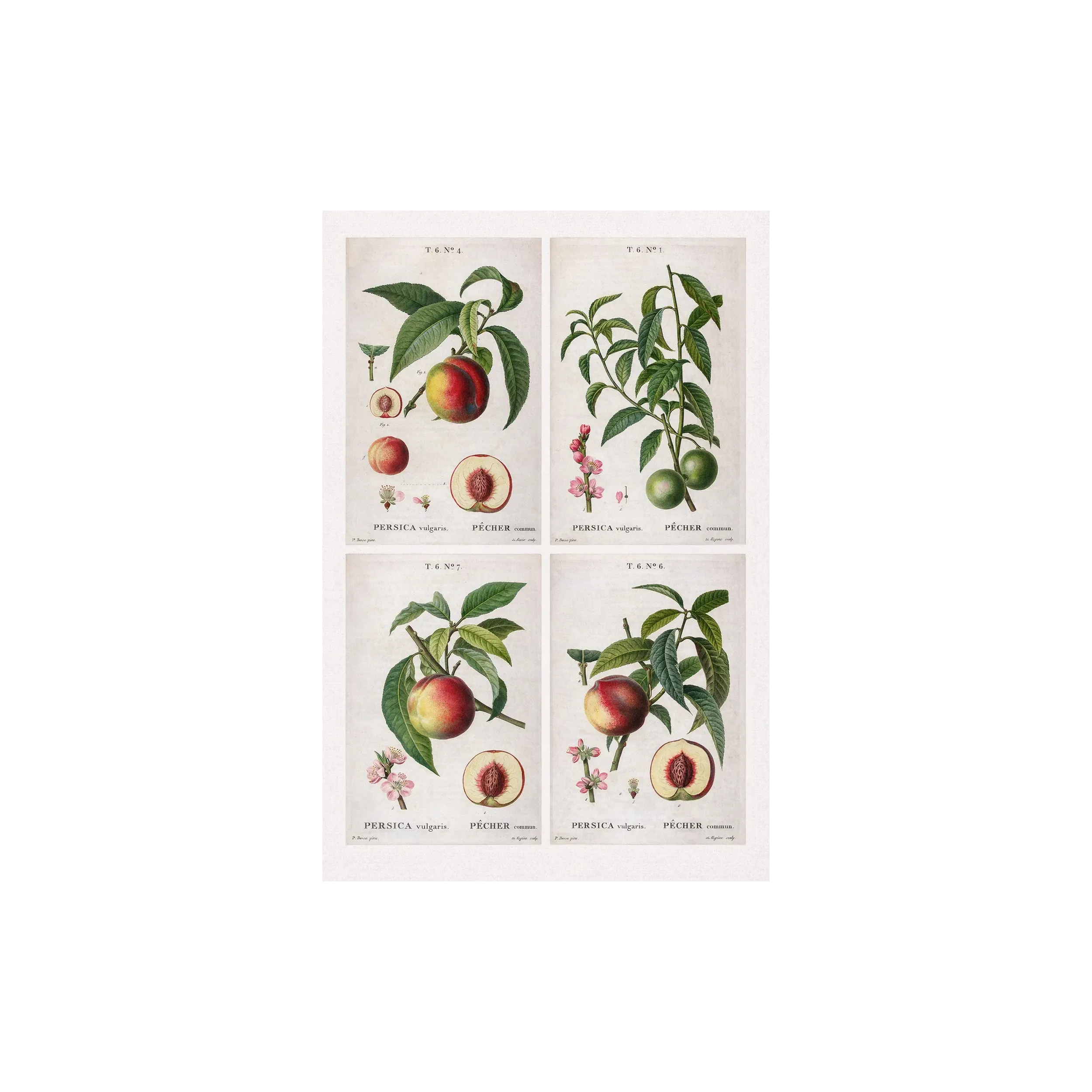
Original pochoir print of the peach tree, Prunus persica, with detailed flowering and fruit.