
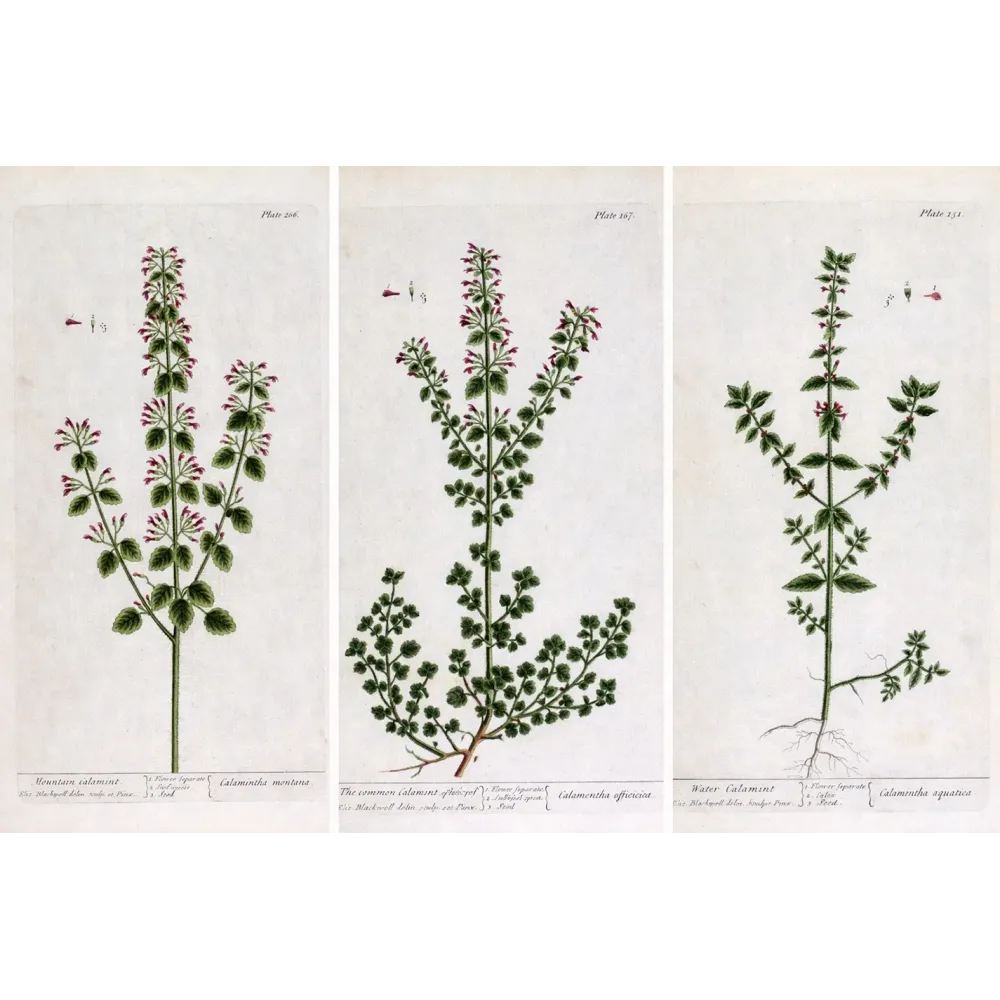
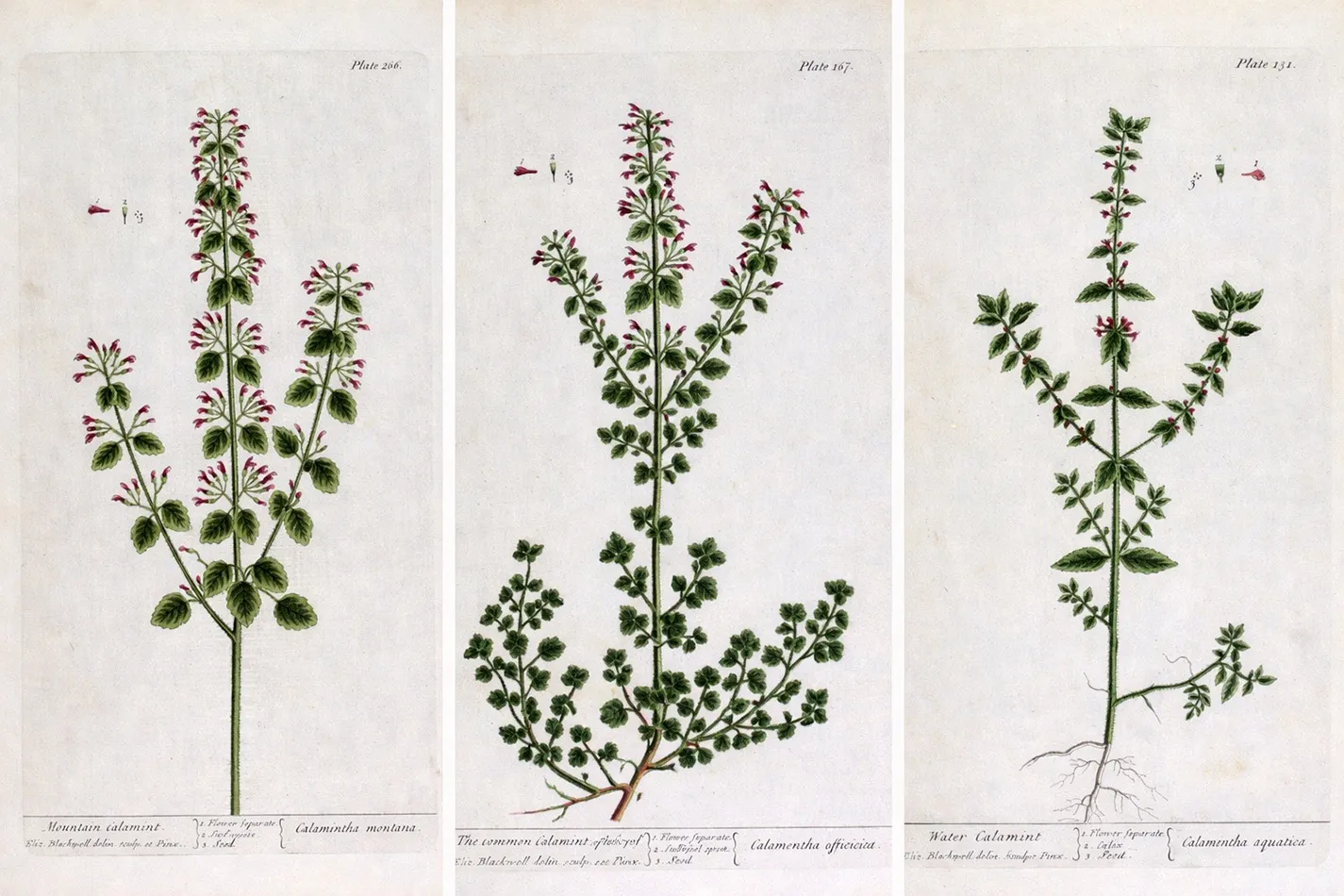
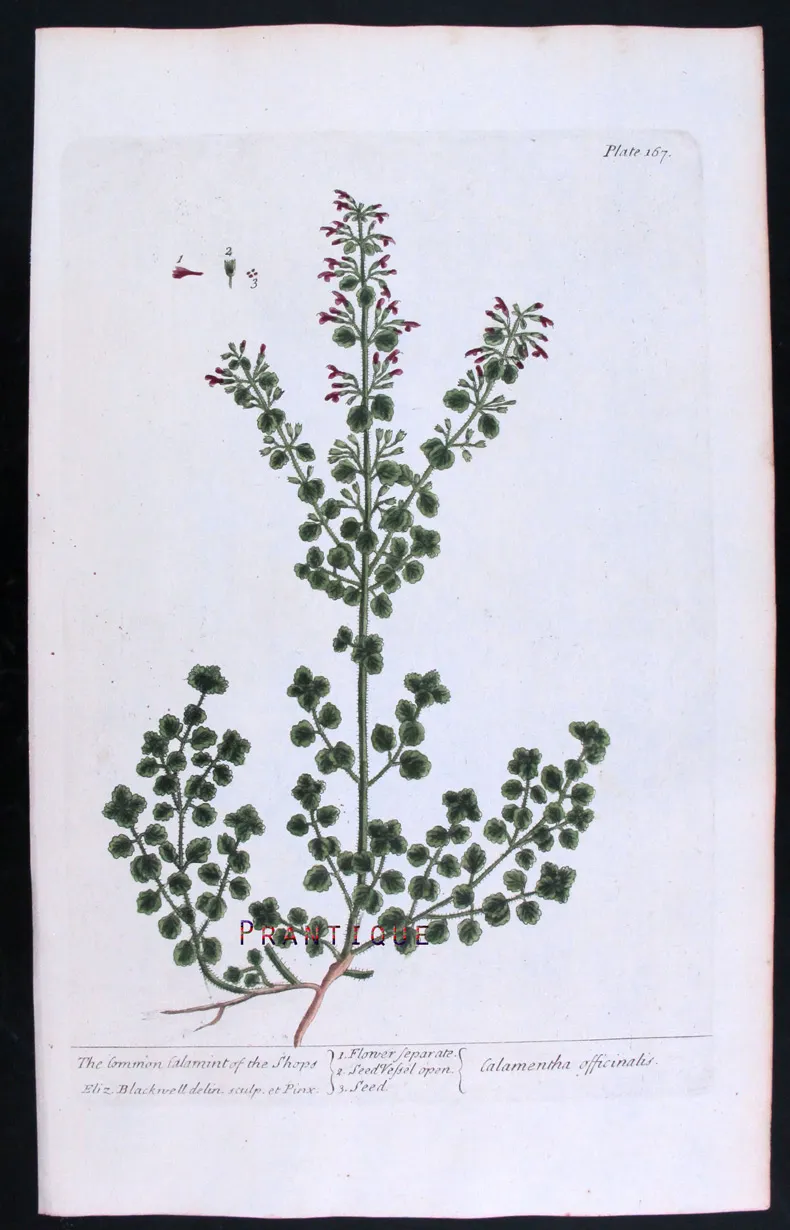
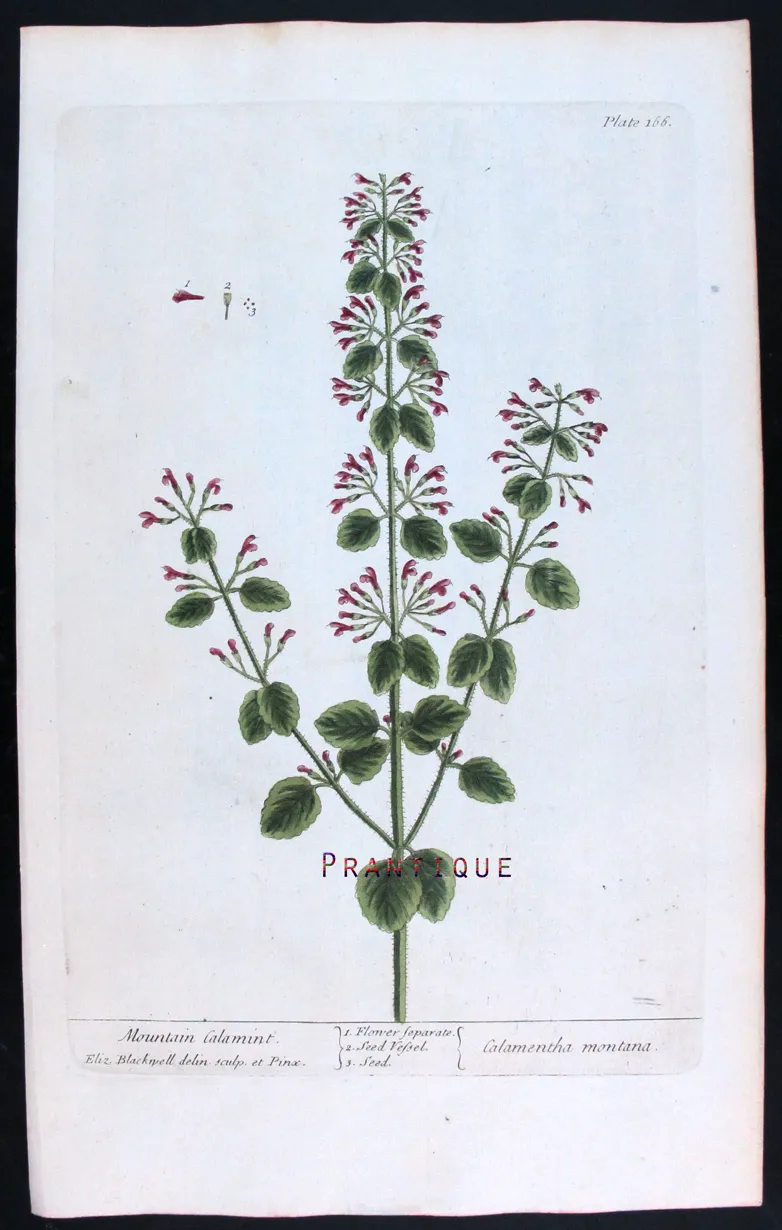
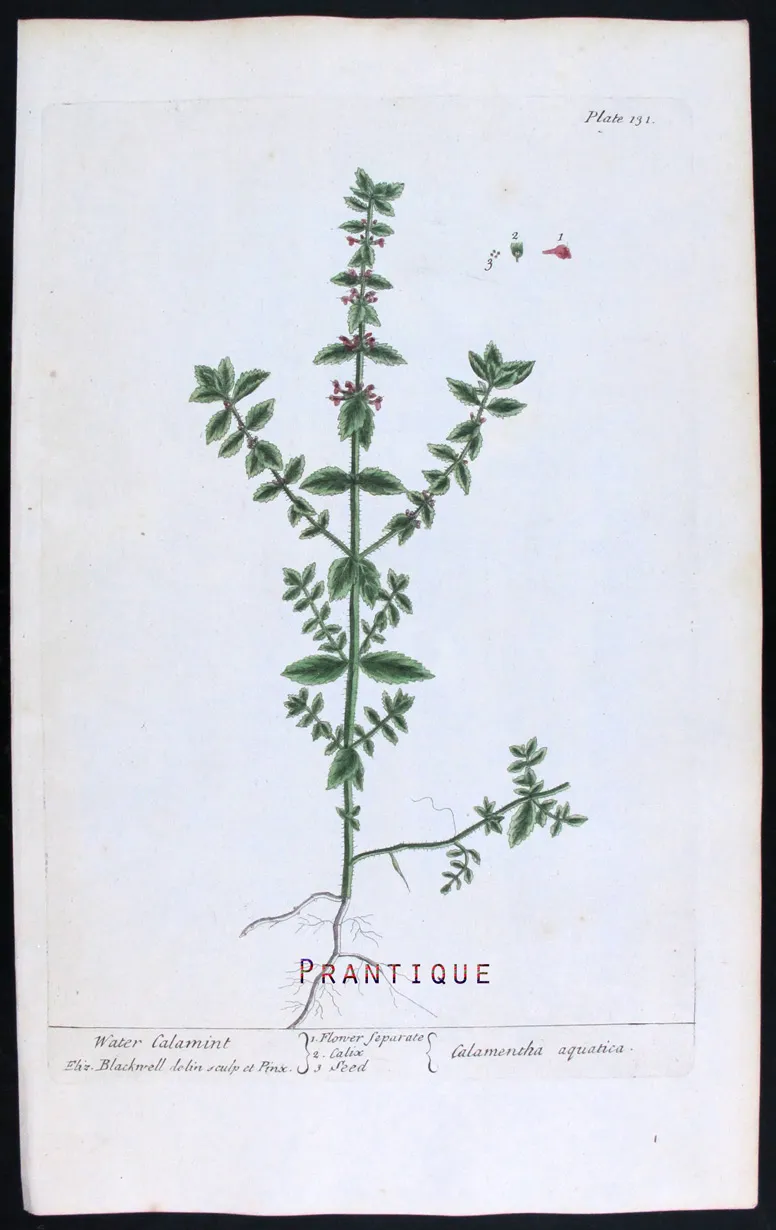
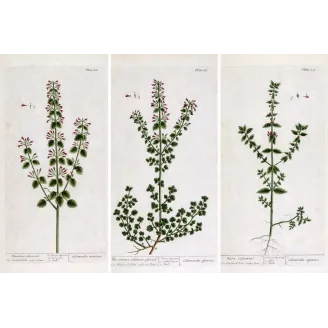
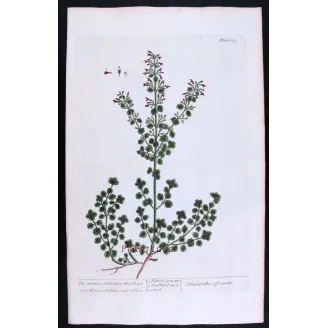
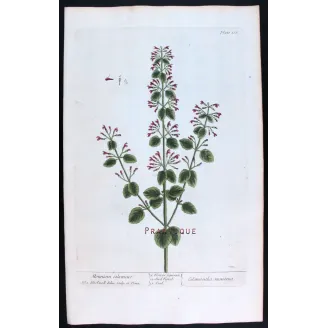
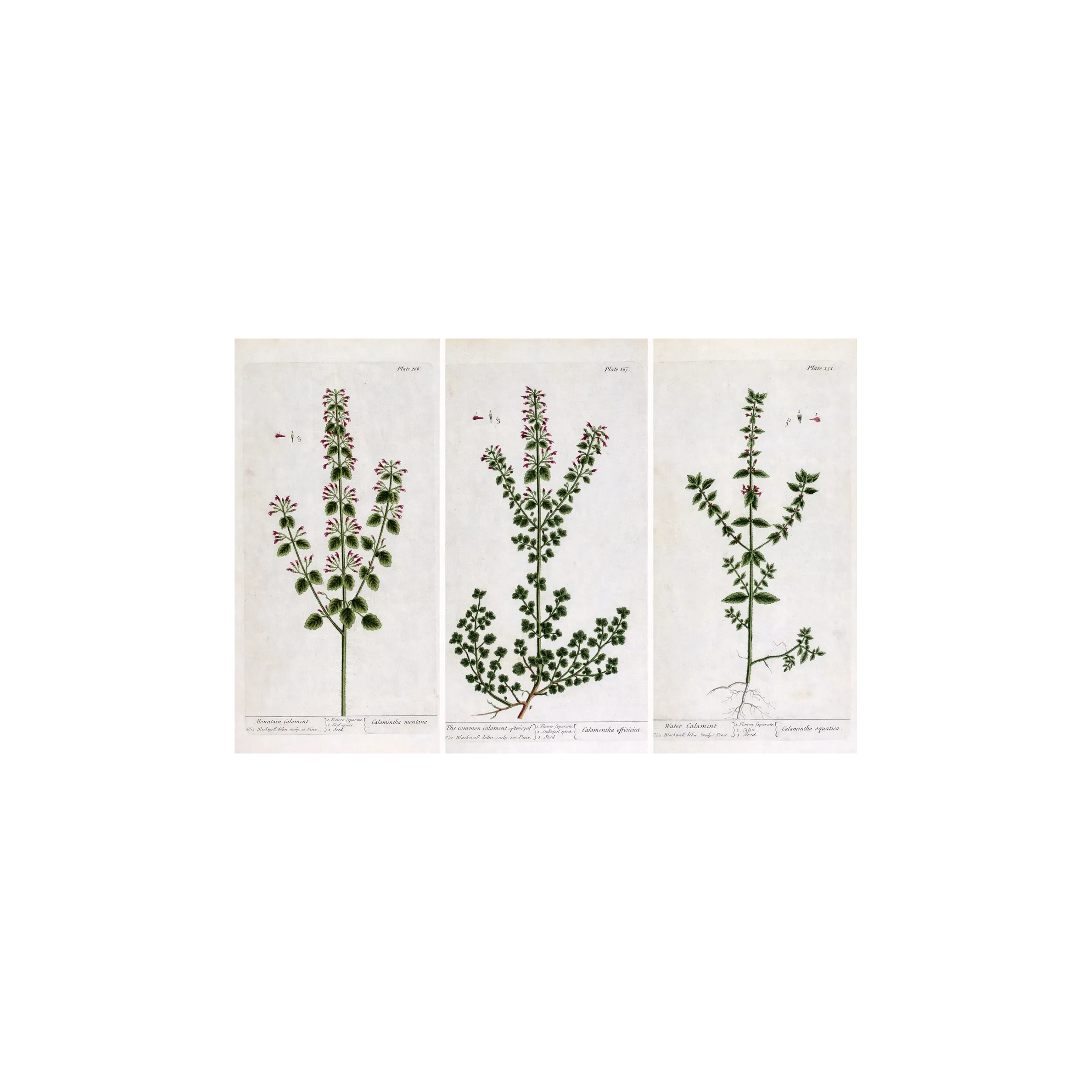
A curated botanical trio illustrating three closely related Calamintha species — officinalis, montana, and aquatica — as engraved and hand-colored by Elisabeth Blackwell for A Curious Herbal (1737–1739). Presented together, these plates offer a rare comparative view of medicinal, habitat-specific, and morphological variation within a single genus, reflecting early modern botanical practice and apothecary knowledge.
 Delivery policy
Your print will be carefully prepared and shipped worldwide via trusted couriers (UPS or similar).
 Authentic antique prints
Original engravings from the 17th–19th century.
This curated trio brings together three closely related Calamintha species as illustrated by Elisabeth Blackwell in A Curious Herbal, offering a rare comparative view of botanical form, habitat, and medicinal application within a single genus.
Rather than presenting isolated specimens, this set reflects an early modern approach to botanical understanding, in which plants were studied through variation as much as through type. The three plates document the officinal, mountain, and aquatic forms of calamint, each adapted to distinct environments yet united by shared morphological traits.
Created in the early eighteenth century, these engravings exemplify Blackwell’s method of combining scientific observation with practical medical intent. Drawing, engraving, and hand-colouring were executed by the same hand, ensuring visual coherence across the entire group.
— • —
The trio illustrates a structured botanical narrative. Calamintha officinalis represents the standardized medicinal form commonly stocked by apothecaries, valued for reliability and consistency of use. Calamintha montana reflects a habitat-specific variant adapted to upland conditions, while Calamintha aquatica documents a moisture-loving form associated with riverbanks and wetlands.
Seen together, the plates reveal how early herbalists distinguished plants not only by name but by growth habit, leaf structure, and environmental context. This comparative approach was essential for correct identification and safe medicinal use in an era before formalized taxonomy.
Although unified by a consistent engraving style, each plate presents a distinct visual rhythm. The officinal form displays a balanced, upright habit with dense foliage and regular flowering. The mountain calamint appears more compact and resilient in structure, while the aquatic variety adopts a lighter, more open arrangement suited to damp environments.
Together, the trio achieves visual harmony through variation. Subtle differences in leaf shape, branching pattern, and flower distribution create a nuanced composition when viewed as a set, reinforcing the scientific and aesthetic value of comparative display.
In early European medicine, calamints were valued for their aromatic and warming qualities, particularly in digestive and restorative preparations. Distinguishing between officinal and wild forms was crucial, as potency and application could vary significantly. By presenting three related species together, this group embodies the practical logic of A Curious Herbal: to serve physicians, apothecaries, and informed readers through accurate visual knowledge.
All three engravings are preserved in exceptionally fine antique condition, printed on original handmade laid paper. Period watermarks are present where applicable, consistent with eighteenth-century papermaking practices. Surfaces remain fresh and stable, with only minimal, age-appropriate signs consistent with early hand-coloured works. Impressions are crisp and legible, with original engraved inscriptions intact on each plate, including the credit “Eliz. Blackwell delin. sculp. et pinx.”.
Each engraving within this trio may also be examined individually, allowing closer study of form, habitat, and medicinal use within the Calamintha genus:
Each plate is also available individually, though this curated set offers the most complete botanical and historical perspective on the genus as presented in A Curious Herbal.
For further context on Elisabeth Blackwell and the medical-botanical framework of the work, see our editorial feature:
Specific References
Elegant 18th-century hand-colored engraving of the Male Fern by Elizabeth Blackwell, with finely shaded fronds ideal for nature-inspired walls or botanical galleries.
Delicate pea stems with curling tendrils and soft green pods, elegantly hand-colored.
Lively 18th-century engraving of Polypody of the Oak by Elizabeth Blackwell, showing rhythmic fern fronds and creeping rhizomes, perfect for naturalist or woodland-themed decor.
Dramatic lichen plate with sculptural fronds and rocky support, perfect for collectors who love unusual, textural natural history subjects.
19th-century hand-colored engraving of Water Pepper (Hydropiper), a graceful botanical with slender leaves and pink florets.
Graceful 18th-century botanical engraving of the Female Fern by Elizabeth Blackwell, with airy fronds and exposed root, beautiful in minimalist or nature-focused spaces.
Fine engraving of Black Alder with berries and elegant branching, ideal for natural interiors.
Fine 18th-century botanical of the Wild Pine, with graceful hanging cones and delicate needles ideal for woodland-themed interiors and natural history walls.
18th-century hand-colored engraving of the Almond Tree by Elisabeth Blackwell, with blossom, fruit and kernel beautifully rendered.
Charming 18th-century engraving of Sage by Elizabeth Blackwell, with blue-green leaves and delicate flowers, perfect for kitchen walls or herb-themed gallery displays.
Original 18th-century engraving of the Wild Cucumber by Elisabeth Blackwell, with spined fruit and yellow flowers.
Fine 18th-century hand-colored engraving of Euphorbium by Elisabeth Blackwell, a striking botanical study ideal for collectors.
Elegant botanical engraving of Great Figwort (Scrophularia major) with branching stems, clustered flowers and root detail.
18th-century hand-colored engraving of Rhapontic with broad leaves and sculptural root, ideal for botanical décor.
Elegant Silver Fir with upright cones and finely spaced needles, a refined forest motif for sophisticated interiors and collectors of conifer imagery.
A curated botanical trio illustrating three closely related Calamintha species — officinalis, montana, and aquatica — as engraved and hand-colored by Elisabeth Blackwell for A Curious Herbal (1737–1739). Presented together, these plates offer a rare comparative view of medicinal, habitat-specific, and morphological variation within a single genus, reflecting early modern botanical practice and apothecary knowledge.


