

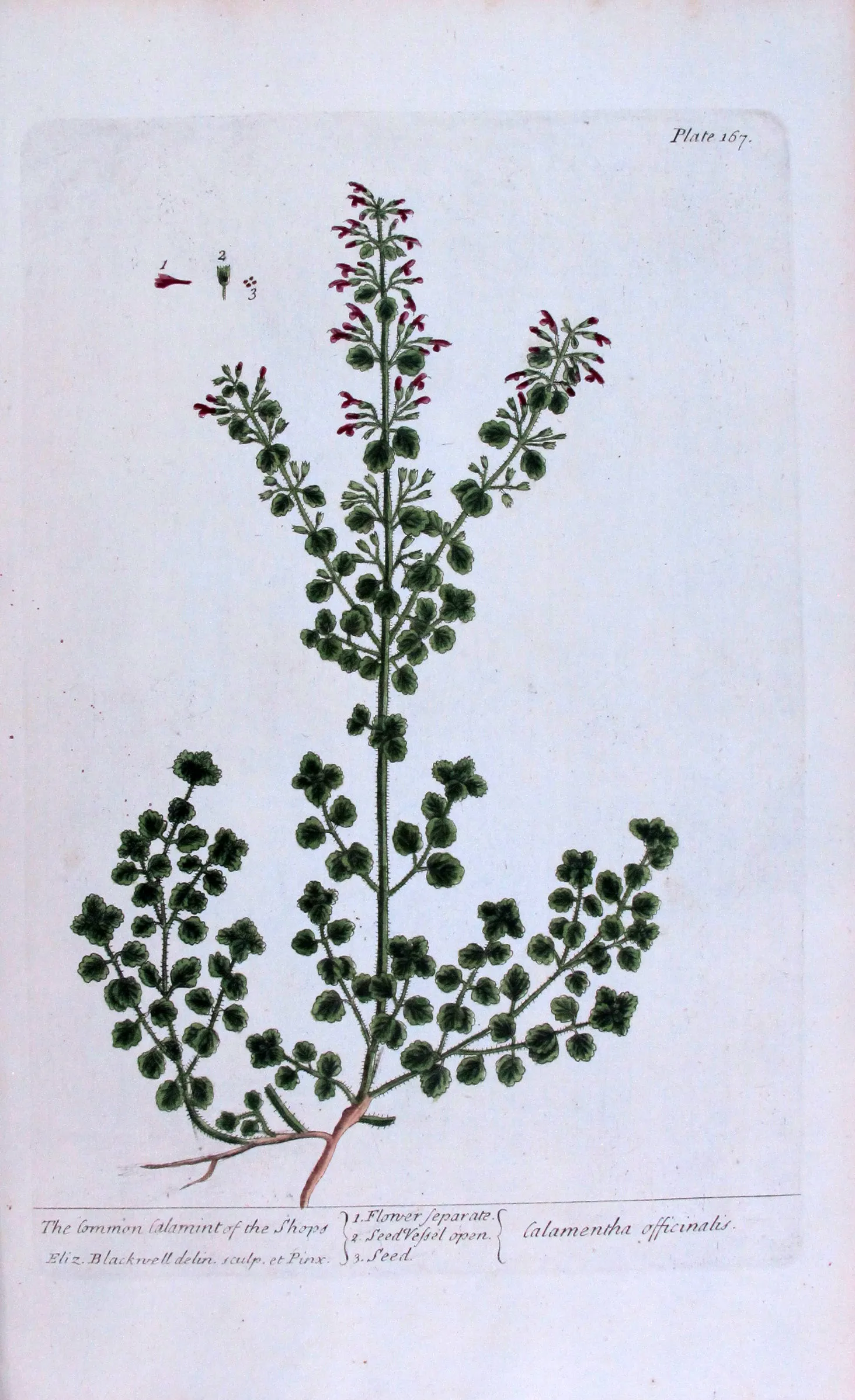

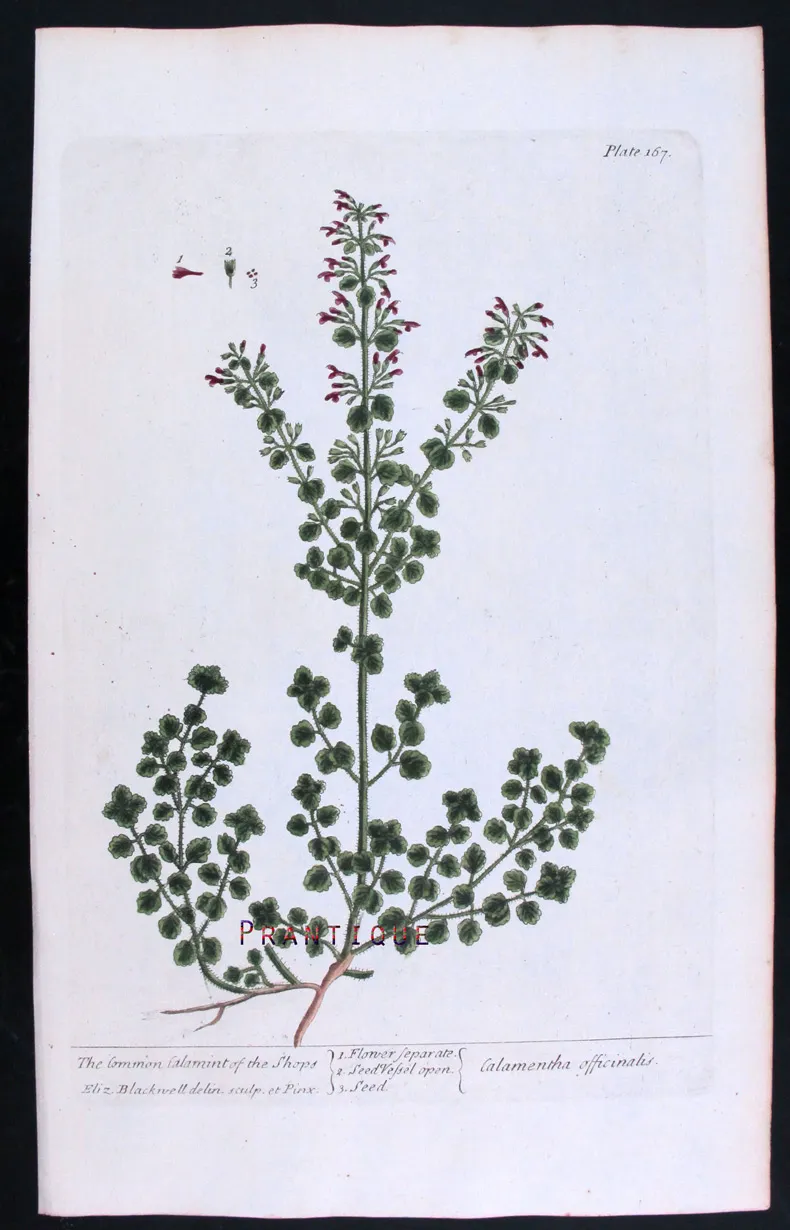


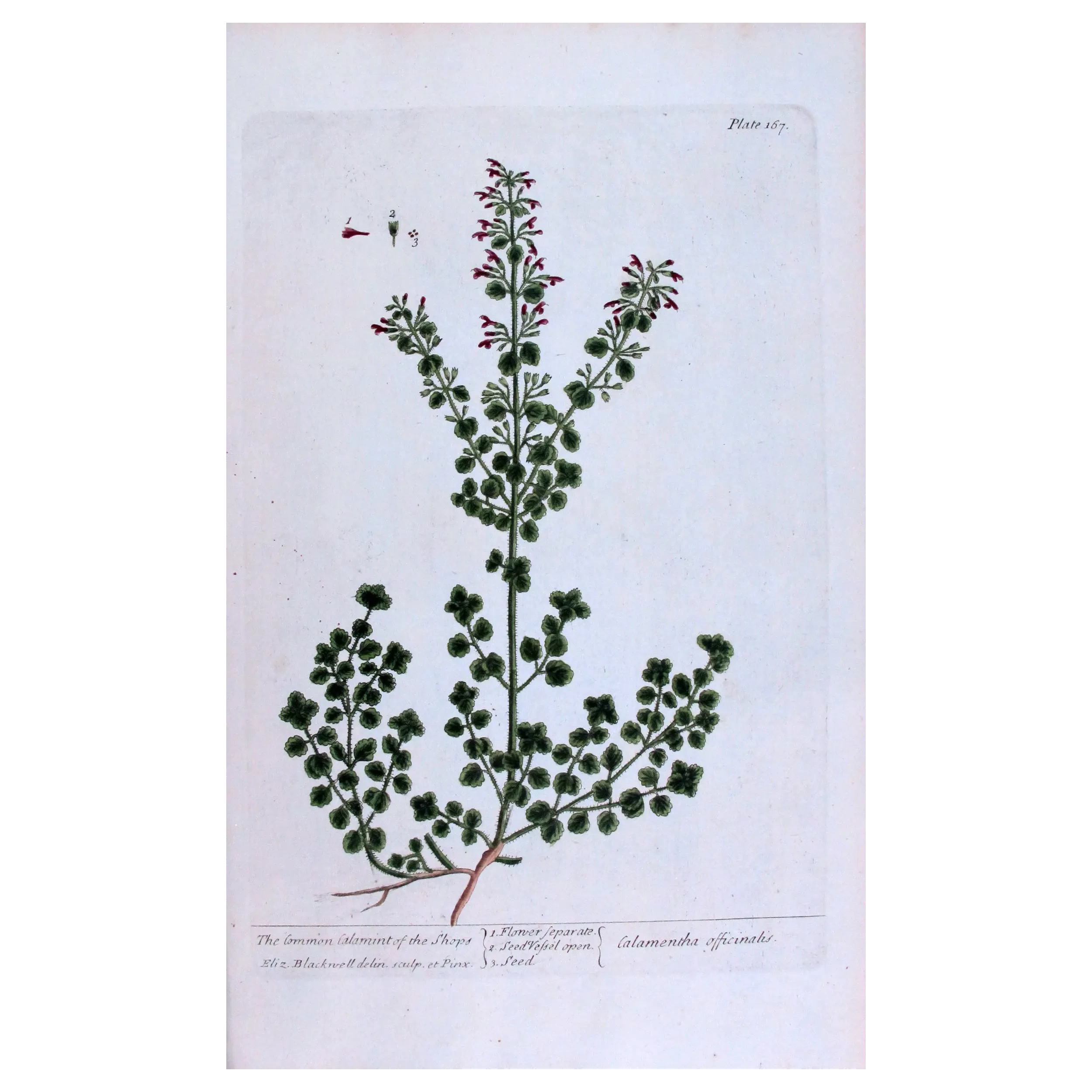
Hand-colored botanical engraving of the Common Calamint, with dense foliage and soft pink-purple florets.
 Delivery policy
Your print will be carefully prepared and shipped worldwide via trusted couriers (UPS or similar).
 Authentic antique prints
Original engravings from the 17th–19th century.
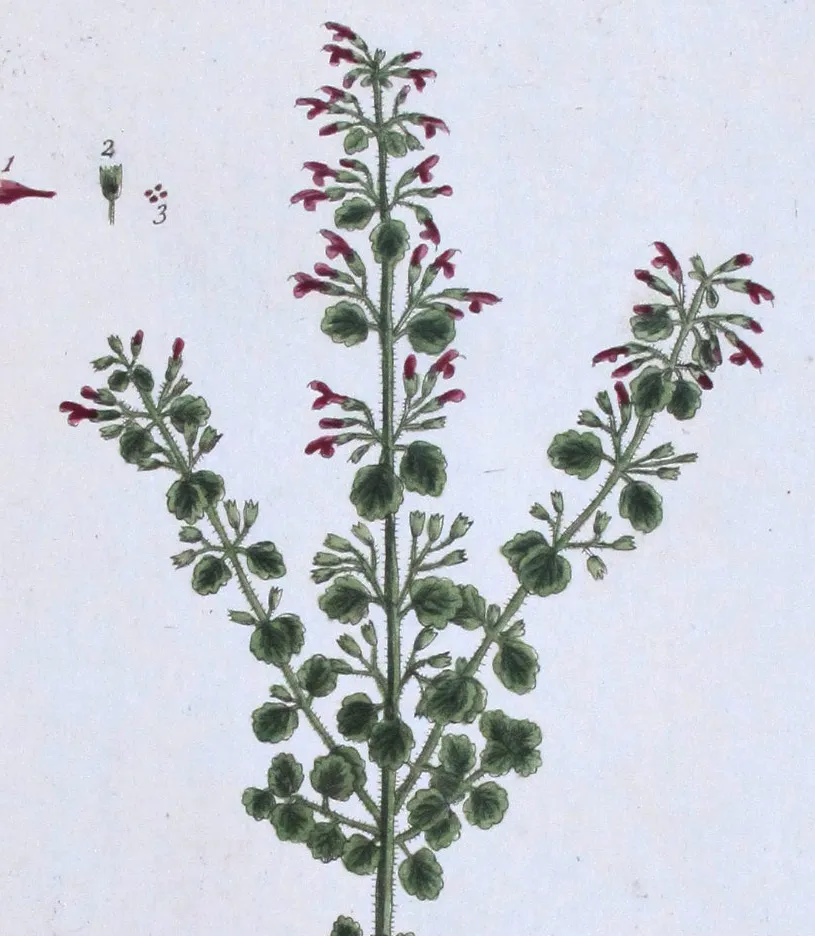
This refined botanical engraving depicts the Common Calamint (Calamintha officinalis), shown with its characteristic upright habit, branching stems, and clusters of small tubular flowers arranged along the upper portions of the plant.
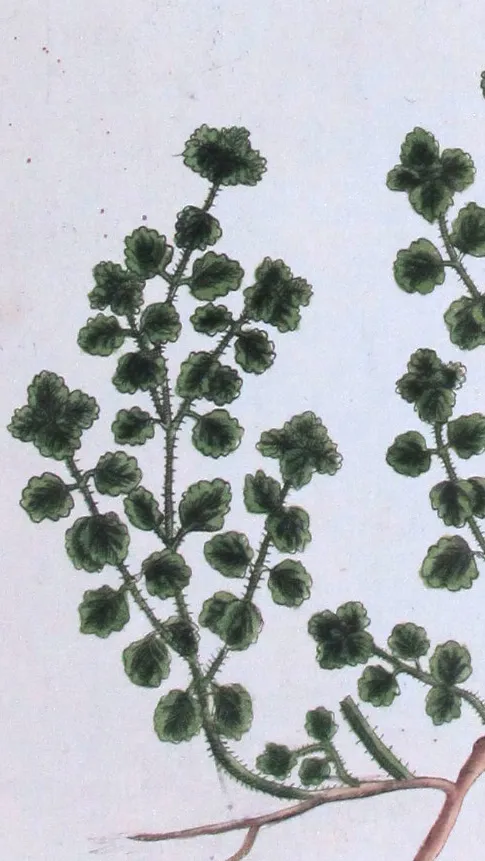
The composition presents a well-balanced structure: rounded, softly crenate leaves populate the lower and lateral branches, while the flowering stems rise vertically, creating a clear hierarchy between vegetative and reproductive growth. Elisabeth Blackwell’s rendering privileges legibility, allowing leaf form, flower structure, and overall habit to be read distinctly.
Created in the early eighteenth century, this plate forms part of A Curious Herbal, a landmark work in which scientific illustration, engraving, and hand-colouring were executed by Elisabeth Blackwell herself, ensuring exceptional coherence between observation and representation.
— • —
The plant is organized around a strong central stem from which lateral branches extend symmetrically, forming a stable and upright silhouette. The rounded leaves create a dense, rhythmic texture, while the small reddish flowers introduce delicate points of contrast without overwhelming the composition.
Subtle tonal gradations model the foliage with depth, and the restrained hand-colouring preserves clarity and balance. The overall effect is calm and orderly, emphasizing botanical accuracy over ornament while retaining a quiet decorative elegance.
Common Calamint (Calamintha officinalis) was widely used in early European medicine as an aromatic and warming herb, valued for its digestive and restorative properties. Frequently sold by apothecaries and herbalists, it occupied a practical place in everyday remedies rather than elite pharmacology. Its clear depiction in herbals was essential, as several closely related species shared similar appearances but differed in strength and application. Blackwell’s plate reflects this need for precise visual distinction, presenting the plant in a manner suited to both identification and practical use.
In A Curious Herbal, Calamintha officinalis carries particular significance as the standardized medicinal form most commonly stocked by early apothecaries. Unlike habitat-specific variants gathered in the wild, “officinal” plants were valued for reliability and consistency of use. The plate mirrors this status through its balanced habit, clear flowering structure, and complete presentation of key features, making it both a practical reference and a visual archetype within the genus.
The engraving is in exceptionally fine antique condition, printed on original handmade laid paper. A period watermark is visible on the sheet, consistent with contemporary eighteenth-century papermaking practices. The surface remains fresh and stable, with no notable defects. The hand-colouring is well preserved, and the impression is crisp and fully legible throughout. The engraved credit “Eliz. Blackwell delin. sculp. et pinx.” is present and clear, confirming the unified authorship of the plate.
This engraving forms part of a rare group of three related Calamintha species illustrated by Elisabeth Blackwell, each documenting a distinct botanical and medicinal profile within the same genus. While Calamintha officinalis stands as the standardized apothecary reference, the companion plates offer valuable comparative insight into habitat-specific variation and historical identification practice.
Collectors and scholars interested in the full botanical narrative may explore the complete curated trio here:
Three Calamints – Botanical Trio from A Curious Herbal
For further context on Elisabeth Blackwell and the medical-botanical framework of A Curious Herbal, see our editorial feature:
Specific References
18th-century hand-colored engraving of a Garden Cucumber by Elisabeth Blackwell, with curling tendrils and yellow blossoms.
Elegant olive branches with vivid green leaves and fruit in subtle yellow tones.
Hand-colored 18th-century engraving of the Sweet Cistus of Candy, a graceful botanical plate by Elisabeth Blackwell.
Hand-colored engraving of Water Figwort (Scrophularia aquatica), featuring vertical stems, red blossoms and a caterpillar study.
Light, airy branching with soft yellow flowers and delicately cut bluish-green foliage.
19th-century hand-colored engraving of Water Calamint, with delicate pink blooms and fine botanical details.
Elegant 18th-century hand-colored engraving of the Male Fern by Elizabeth Blackwell, with finely shaded fronds ideal for nature-inspired walls or botanical galleries.
Elegant 18th-century hand-colored engraving of a Raspberry Bush by Elisabeth Blackwell, with ripe fruit and soft blossom.
Lively 18th-century engraving of Polypody of the Oak by Elizabeth Blackwell, showing rhythmic fern fronds and creeping rhizomes, perfect for naturalist or woodland-themed decor.
18th-century hand-colored engraving of the Almond Tree by Elisabeth Blackwell, with blossom, fruit and kernel beautifully rendered.
Original 18th-century engraving of the Wild Cucumber by Elisabeth Blackwell, with spined fruit and yellow flowers.
Fine 18th-century engraving of the Medlar Tree by Elisabeth Blackwell, featuring fruit, blossom, and botanical detail.
Broad heart-shaped leaves with yellow tubular blooms, beautifully rendered in subtle tones.
Fine 18th-century engraving of the Cornel Tree by Elisabeth Blackwell, with red fruit and delicate foliage.
Elegant pink-white blossoms with upright stems and finely shaped leaves, a graceful 18th?century botanical.
Hand-colored botanical engraving of the Common Calamint, with dense foliage and soft pink-purple florets.


