

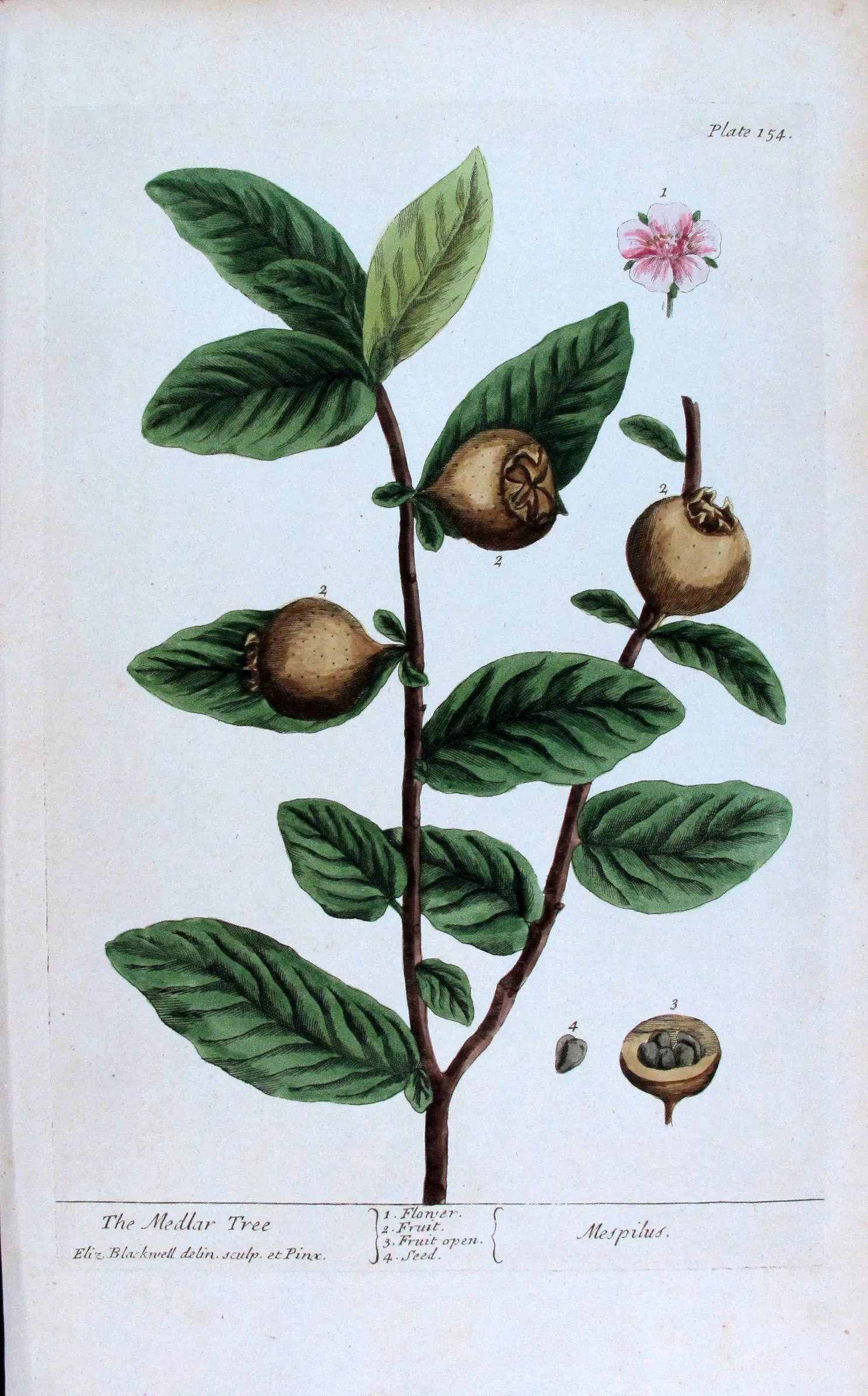
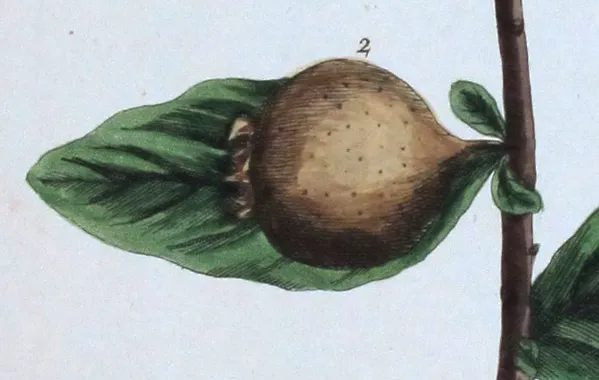
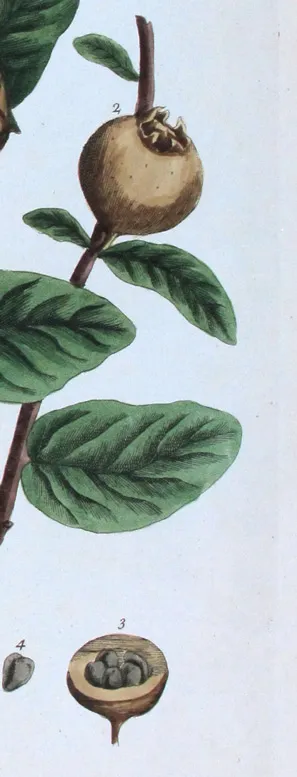
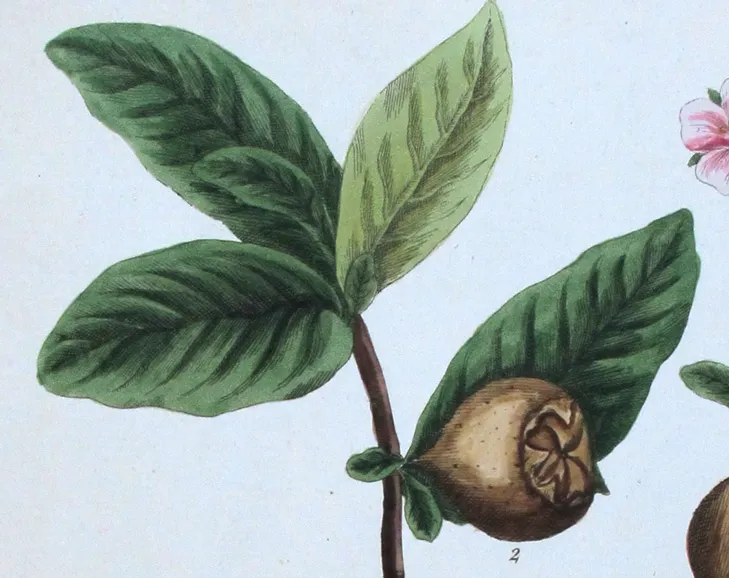
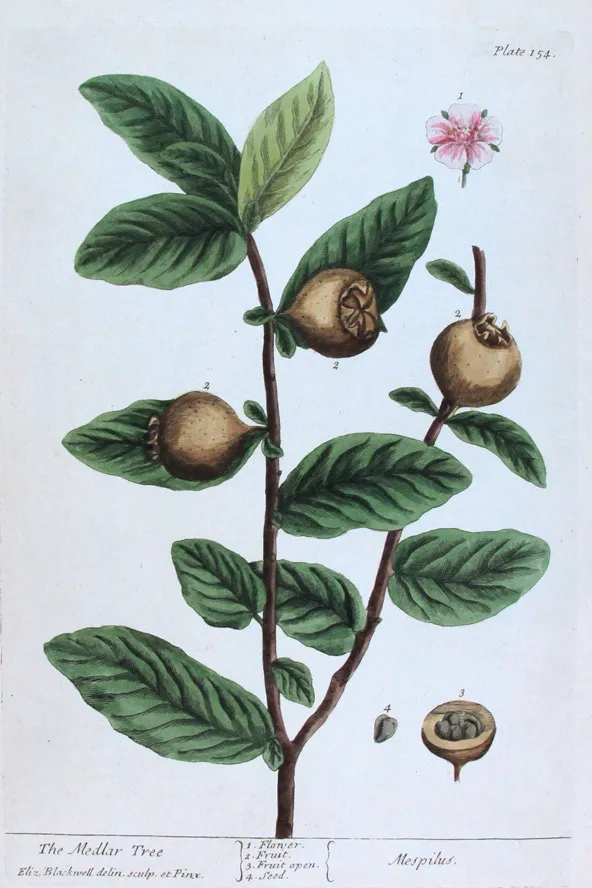
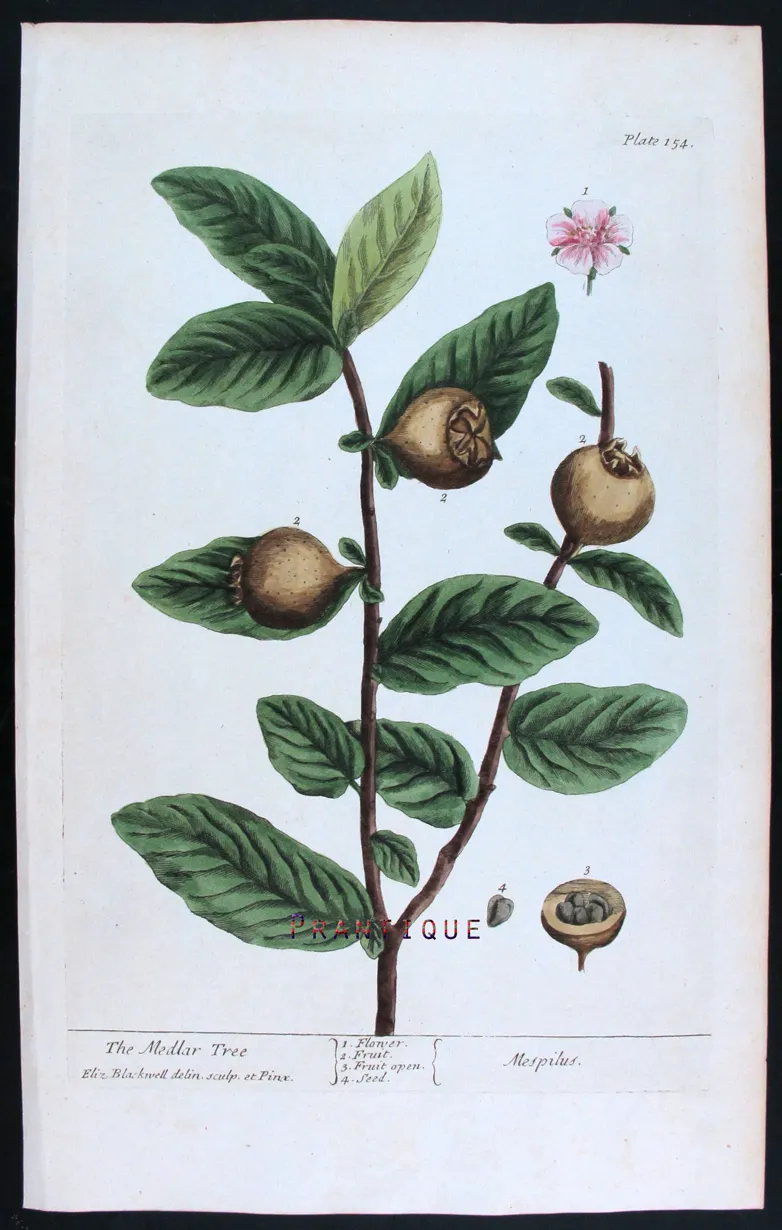


Fine 18th-century engraving of the Medlar Tree by Elisabeth Blackwell, featuring fruit, blossom, and botanical detail.
 Delivery policy
Your print will be carefully prepared and shipped worldwide via trusted couriers (UPS or similar).
 Authentic antique prints
Original engravings from the 17th–19th century.
This refined botanical engraving presents The Medlar Tree, depicting a fruit-bearing branch with measured clarity and understated visual authority, balancing foliage, fruit, and stem in a composed and intelligible arrangement.
The composition is articulated with careful restraint: broad, softly veined leaves frame the rounded fruits, allowing each element to be read distinctly. Elisabeth Blackwell’s approach emphasizes structural accuracy and botanical legibility, while preserving a quiet elegance grounded in direct observation rather than embellishment.
Created in the early eighteenth century, this plate forms part of A Curious Herbal, a foundational medical and botanical work notable for its unified authorship, in which drawing, copper engraving, and hand-colouring were all executed by the same hand.
— • —
The composition develops vertically along a central stem, punctuated by large leaves that create a calm, rhythmic progression across the sheet. The fruits introduce points of visual weight, counterbalancing the upward movement of the branch and anchoring the image.
Subtle tonal gradations model both foliage and fruit with depth and softness, avoiding strong contrasts. The restrained palette reinforces the engraving’s documentary function while maintaining a harmonious and composed visual presence.
The medlar (Mespilus) occupied a particular place in early European medicine and horticulture, valued primarily for its fruit. Unlike many cultivated fruits, medlars were traditionally consumed only after a period of softening, a distinctive characteristic well known to early practitioners and gardeners. As a result, accurate depiction of the fruiting stage was essential in medical and botanical reference works. Its inclusion in A Curious Herbal reflects the importance of documenting not only medicinal plants, but also fruit-bearing species whose identification and use depended on visual recognition at specific stages of maturity.
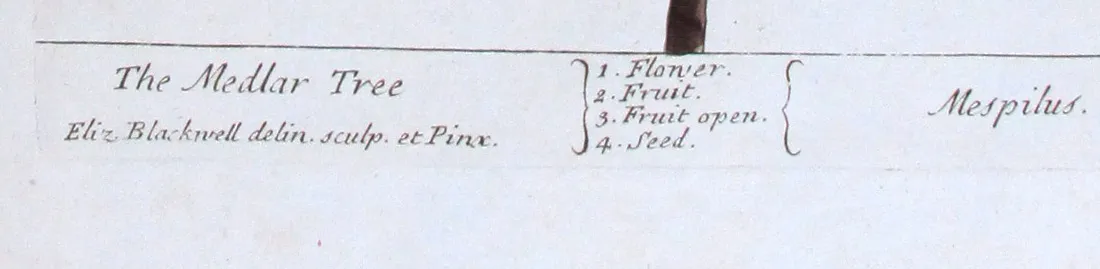
The engraving is in exceptionally fine antique condition, printed on original handmade laid paper typical of early 18th-century botanical publications. No watermark has been observed. The sheet remains fresh and clean, with a stable surface and no notable defects. The original hand-colouring is well preserved, and the impression is crisp and legible throughout. These qualities correspond to a “like brand new” state of preservation and confirm the authenticity of the print as an original production from A Curious Herbal. The engraved credit “Eliz. Blackwell delin. sculp. et pinx.” is present and fully legible, attesting that the drawing, engraving, and hand-colouring were executed by Elisabeth Blackwell herself.
For further context on Elisabeth Blackwell and the singular unity of authorship behind A Curious Herbal, see our editorial feature:
Specific References
Dramatic lichen plate with sculptural fronds and rocky support, perfect for collectors who love unusual, textural natural history subjects.
18th-century hand-colored engraving of the Wilding or Crab Tree by Elisabeth Blackwell, with blossom and fruit details.
18th-century hand-colored engraving of Rhapontic with broad leaves and sculptural root, ideal for botanical décor.
Hand-colored engraving of Water Figwort (Scrophularia aquatica), featuring vertical stems, red blossoms and a caterpillar study.
Elegant botanical engraving of the Bean plant with pods and seed details.
Lively 18th-century engraving of Polypody of the Oak by Elizabeth Blackwell, showing rhythmic fern fronds and creeping rhizomes, perfect for naturalist or woodland-themed decor.
Elegant pink-white blossoms with upright stems and finely shaped leaves, a graceful 18th?century botanical.
Elegant 18th-century hand-colored engraving of a Raspberry Bush by Elisabeth Blackwell, with ripe fruit and soft blossom.
Broad heart-shaped leaves with yellow tubular blooms, beautifully rendered in subtle tones.
18th-century hand-colored engraving of the Almond Tree by Elisabeth Blackwell, with blossom, fruit and kernel beautifully rendered.
Charming study with pink blossoms and vivid red rosehips, a classic countryside motif.
Light, airy branching with soft yellow flowers and delicately cut bluish-green foliage.
Hand-colored 18th-century engraving of the Sweet Cistus of Candy, a graceful botanical plate by Elisabeth Blackwell.
Fine 18th-century botanical of the Wild Pine, with graceful hanging cones and delicate needles ideal for woodland-themed interiors and natural history walls.
A graceful hand-colored engraving of Marshmallow (Althaea officinalis) with soft pink flowers and expressive root study.
18th-century hand-colored engraving of a Garden Cucumber by Elisabeth Blackwell, with curling tendrils and yellow blossoms.
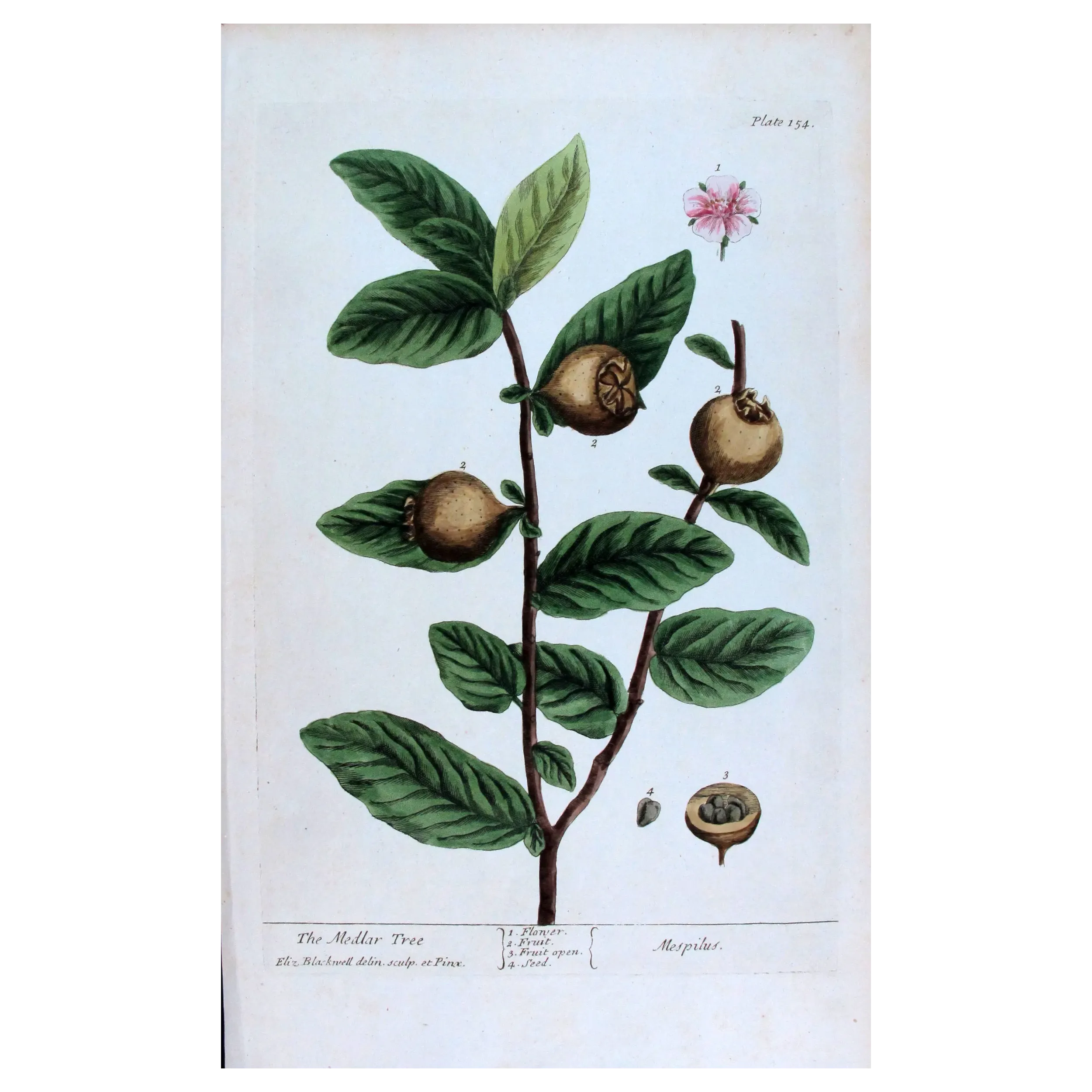
Fine 18th-century engraving of the Medlar Tree by Elisabeth Blackwell, featuring fruit, blossom, and botanical detail.


