
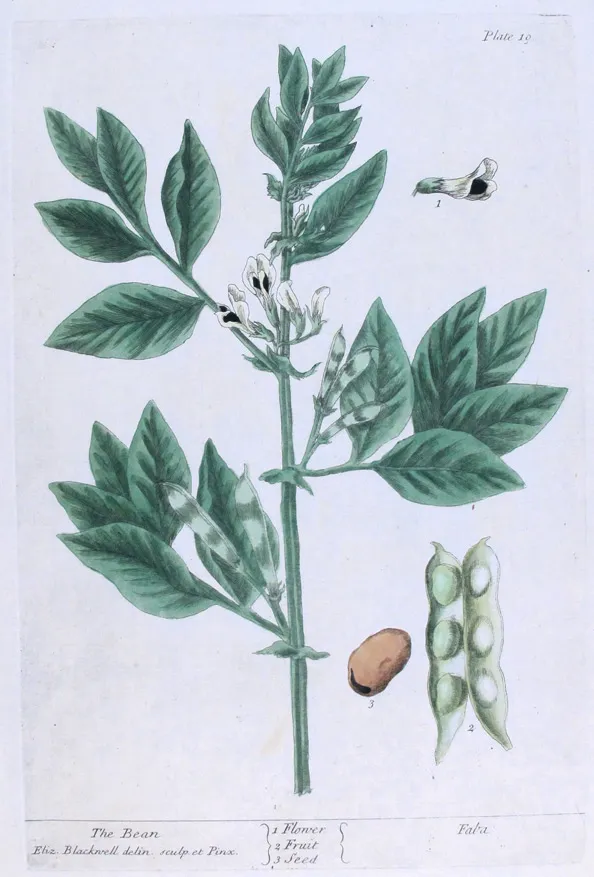
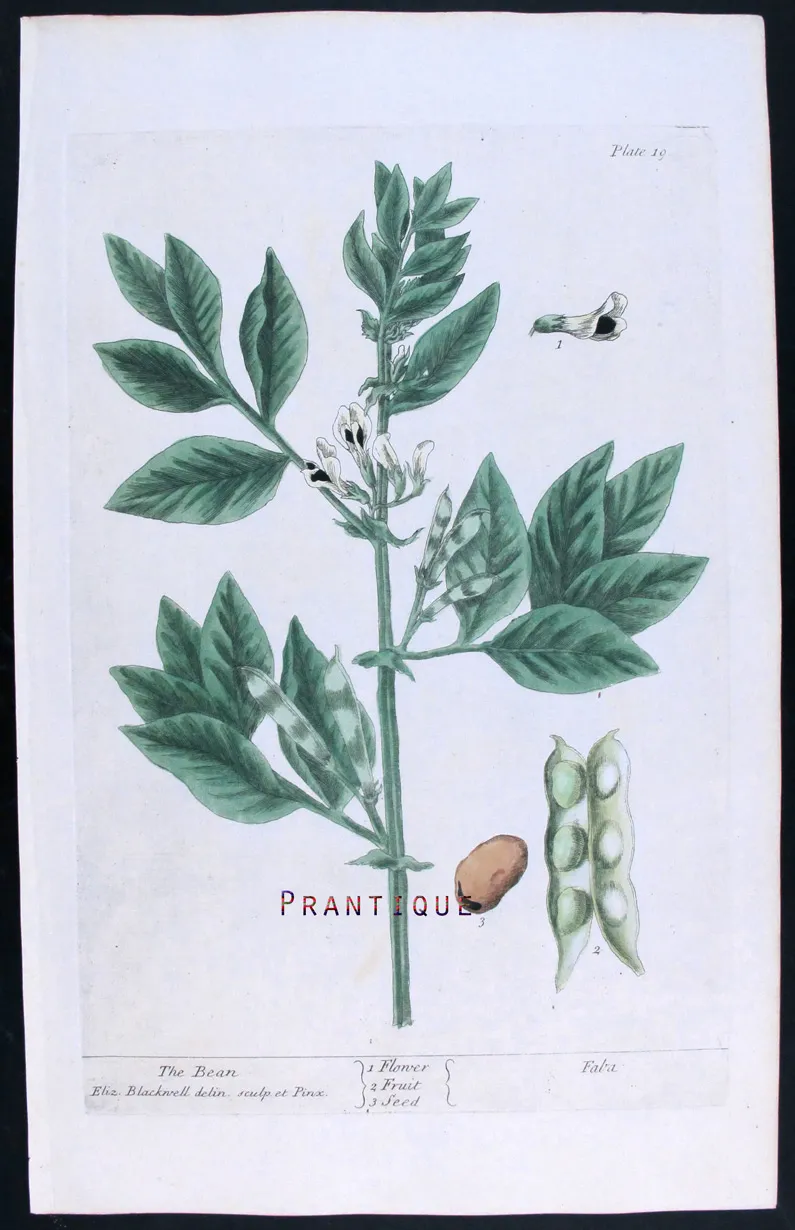


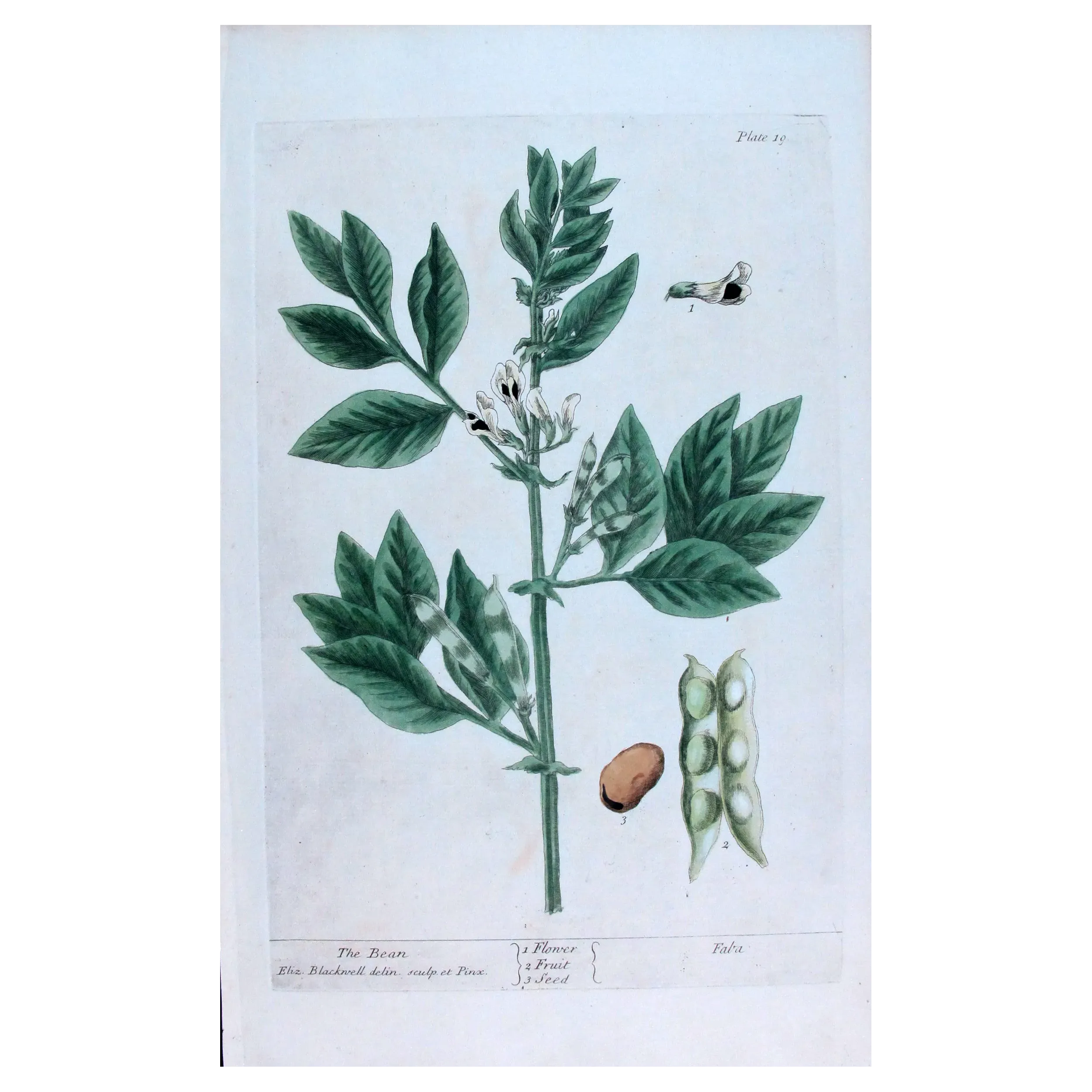
Elegant botanical engraving of the Bean plant with pods and seed details.
 Delivery policy
Your print will be carefully prepared and shipped worldwide via trusted couriers (UPS or similar).
 Authentic antique prints
Original engravings from the 17th–19th century.
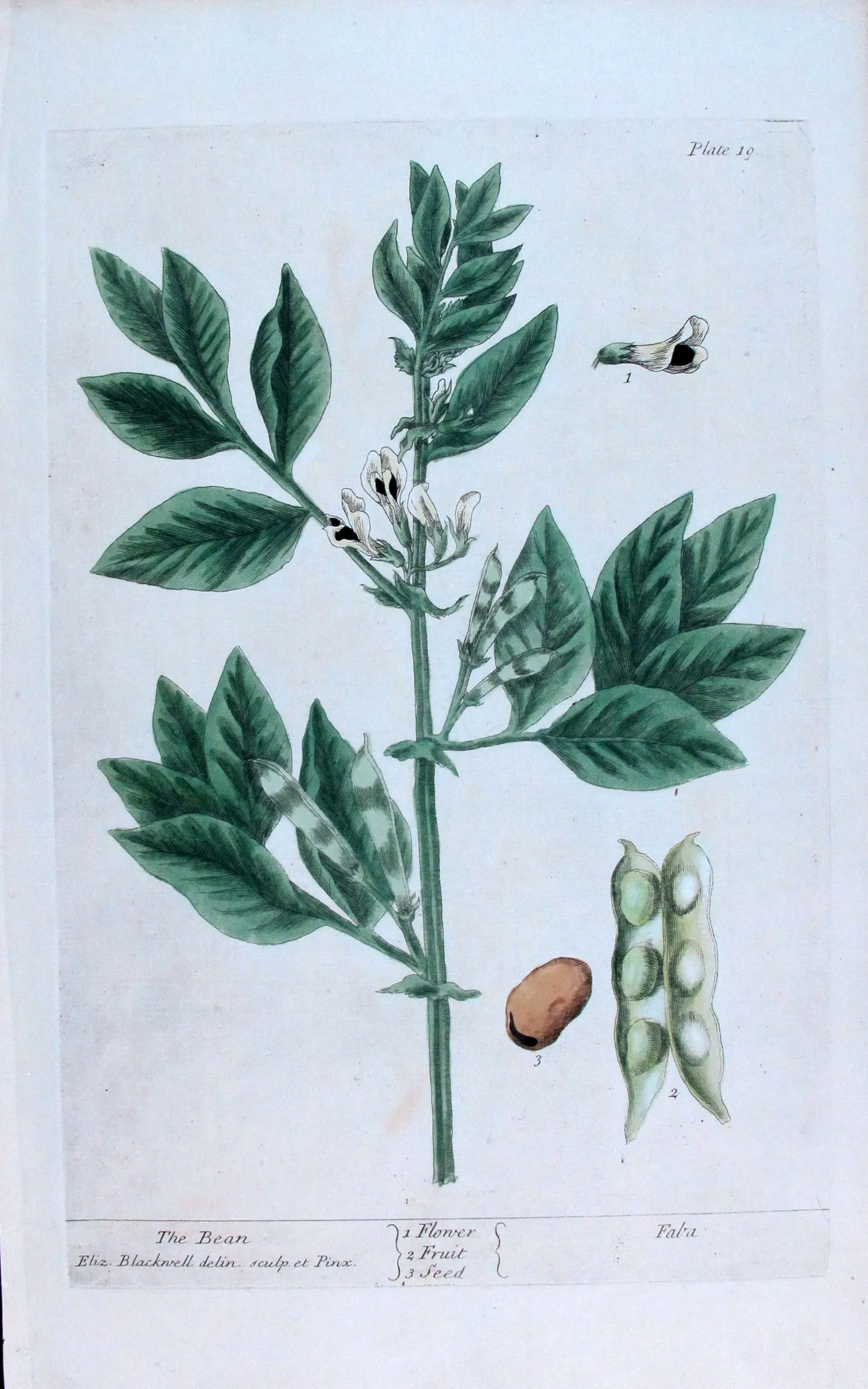
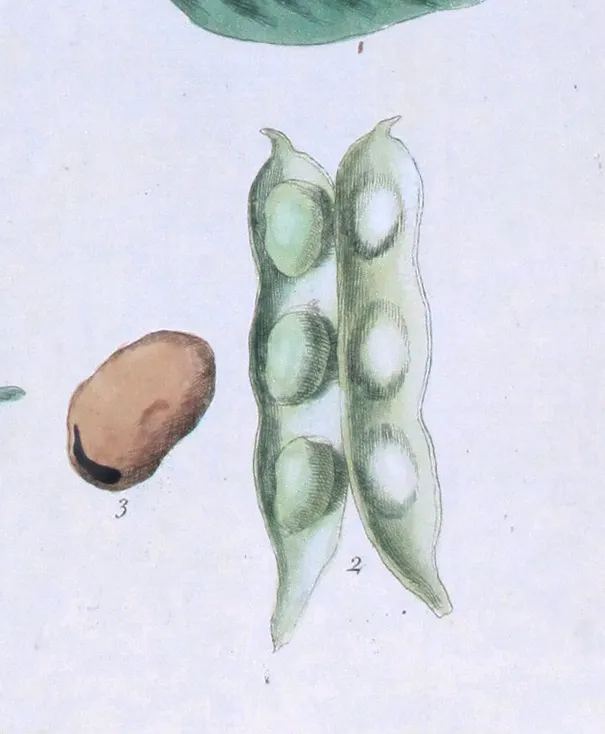
This refined botanical engraving depicts The Bean (Vicia faba), one of the most widely cultivated and historically significant food plants in Europe. The plate presents the plant in a clear and balanced composition, illustrating its upright growth, characteristic foliage, and flowering structure alongside detailed views of fruit and seed.
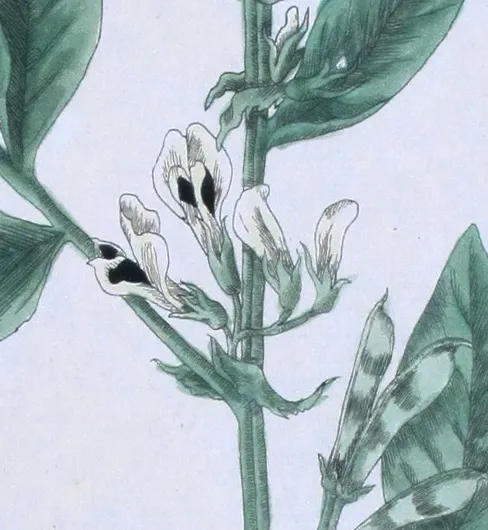
Broad, softly shaded leaves frame the central stem, while pale blossoms emerge at the nodes with restrained elegance. To the side, the opened pod and individual seed are shown with precision, reinforcing the engraving’s analytical purpose and its role as a practical visual reference.
Produced in the early eighteenth century, this engraving forms part of A Curious Herbal (1737–1739), a landmark botanical and medical work distinguished by the rare unity of authorship in which drawing, copper engraving, and hand-colouring were executed by :contentReference[oaicite:0]{index=0} herself.
— • —
The composition is calm and architectural, built around a strong vertical axis that gives the plant a dignified presence. The alternating leaves create a steady visual rhythm, while the auxiliary details—pod and seed—are positioned to maintain clarity without disturbing the overall balance.
The restrained palette and generous use of negative space contribute to a sense of order and legibility. This visual simplicity, combined with careful observation, gives the engraving a timeless quality that reads as both informative and quietly decorative.
Vicia faba, commonly known as the broad bean or fava bean, has been cultivated since antiquity and held a central place in European agriculture and diet. In early modern herbals, the plant was valued not only as a staple food source but also for its presence in household remedies and agricultural knowledge. Accurate visual identification of flowers, pods, and seeds was essential, particularly in an era when written descriptions were often supplemented—or replaced—by images. Blackwell’s engraving reflects this practical tradition, presenting the bean as a complete and intelligible subject rooted in everyday life, cultivation, and use.
The engraving is preserved in like brand new antique condition, printed on original handmade laid paper typical of early eighteenth-century botanical publications. A period watermark is visible on the sheet, consistent with contemporary papermaking practices. The surface remains clean and stable, with a crisp impression and fresh original hand-colouring throughout. No notable defects are present. The engraved credit “Eliz. Blackwell delin. sculp. et pinx.” is fully legible, confirming that the drawing, engraving, and hand-colouring were executed by Elisabeth Blackwell herself.
For further context on Elisabeth Blackwell and the singular unity of authorship behind A Curious Herbal, see our editorial feature:
Specific References
Hand-colored 18th-century engraving of the Sweet Cistus of Candy, a graceful botanical plate by Elisabeth Blackwell.
18th-century hand-colored engraving of the Wilding or Crab Tree by Elisabeth Blackwell, with blossom and fruit details.
Charming study with pink blossoms and vivid red rosehips, a classic countryside motif.
Fine engraving of Great Centaury (Centaurium majus) with pinkish florets, slender stems, and a butterfly study.
A curated botanical trio illustrating three closely related Calamintha species — officinalis, montana, and aquatica — as engraved and hand-colored by Elisabeth Blackwell for A Curious Herbal (1737–1739). Presented together, these plates offer a rare comparative view of medicinal, habitat-specific, and morphological variation within a single genus, reflecting early modern botanical practice and apothecary knowledge.
Fine 18th-century engraving of the Cornel Tree by Elisabeth Blackwell, with red fruit and delicate foliage.
Hand-colored 18th-century engraving of Yellow Asphodel, a vivid botanical composition from Elisabeth Blackwells A Curious Herbal.
Refined 18th-century engraving of Mountain Calamint by Elizabeth Blackwell, with upright stems and pink blossoms, ideal for calm, herbal or cottage-inspired interiors.
Hand-colored engraving of Water Figwort (Scrophularia aquatica), featuring vertical stems, red blossoms and a caterpillar study.
Striking composition of the Pitch Tree with tall central stem and large cones, bringing strong graphic presence to botanical displays or rustic interiors.
Elegant 18th-century hand-colored engraving of a Raspberry Bush by Elisabeth Blackwell, with ripe fruit and soft blossom.
Fine engraving of Black Alder with berries and elegant branching, ideal for natural interiors.
Dramatic lichen plate with sculptural fronds and rocky support, perfect for collectors who love unusual, textural natural history subjects.
Lively 18th-century engraving of Polypody of the Oak by Elizabeth Blackwell, showing rhythmic fern fronds and creeping rhizomes, perfect for naturalist or woodland-themed decor.
Elegant Silver Fir with upright cones and finely spaced needles, a refined forest motif for sophisticated interiors and collectors of conifer imagery.
Graceful engraving of Wheat varieties with seed details, ideal for rustic décor.
Elegant botanical engraving of the Bean plant with pods and seed details.