



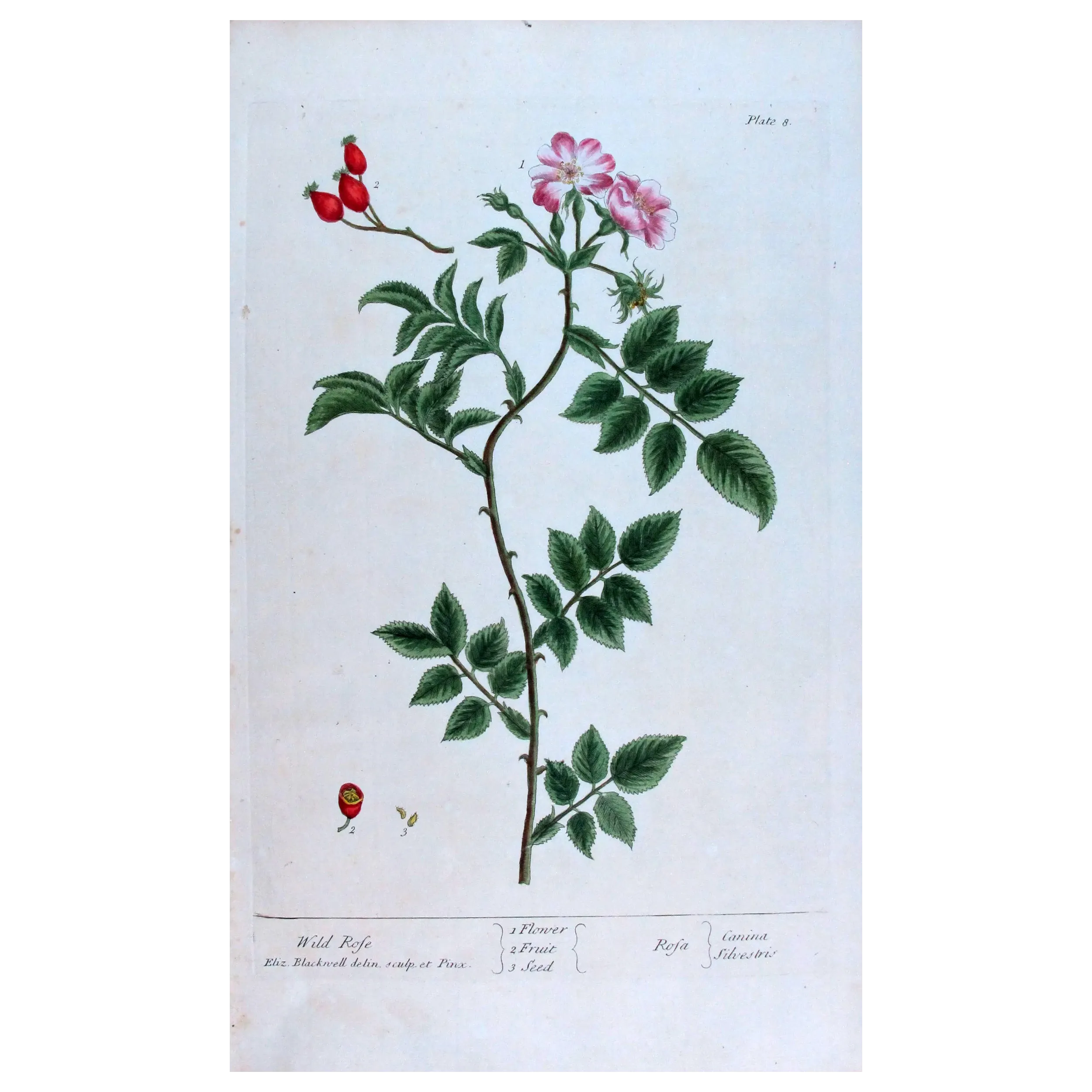
Charming study with pink blossoms and vivid red rosehips, a classic countryside motif.
 Delivery policy
Your print will be carefully prepared and shipped worldwide via trusted couriers (UPS or similar).
 Authentic antique prints
Original engravings from the 17th–19th century.
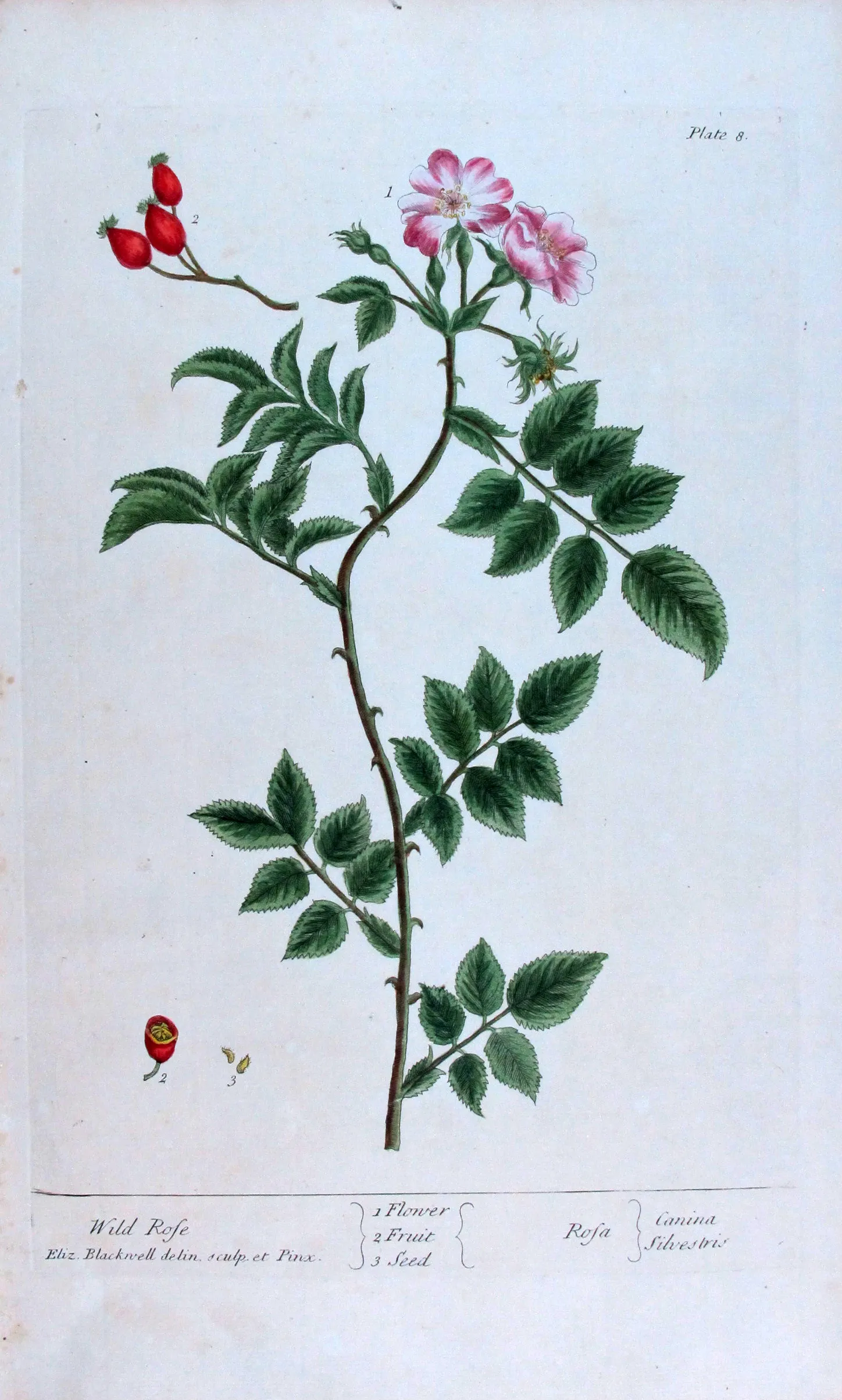
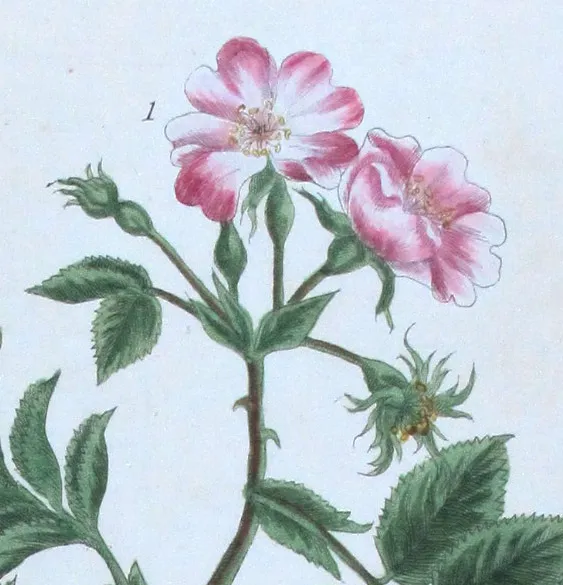
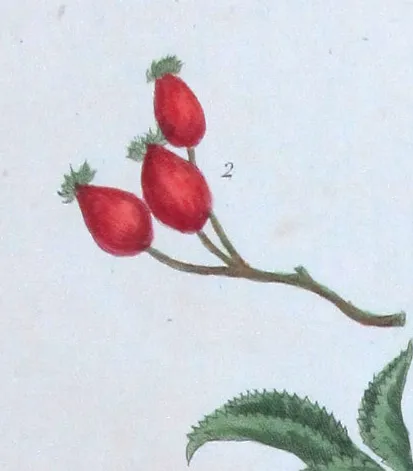
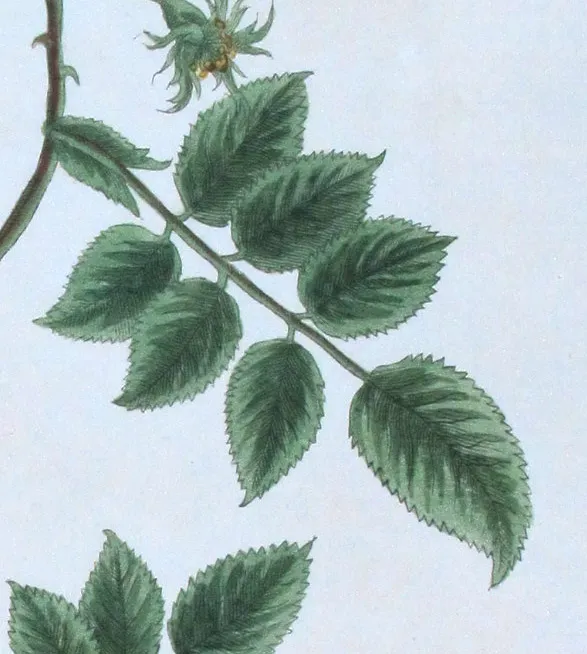
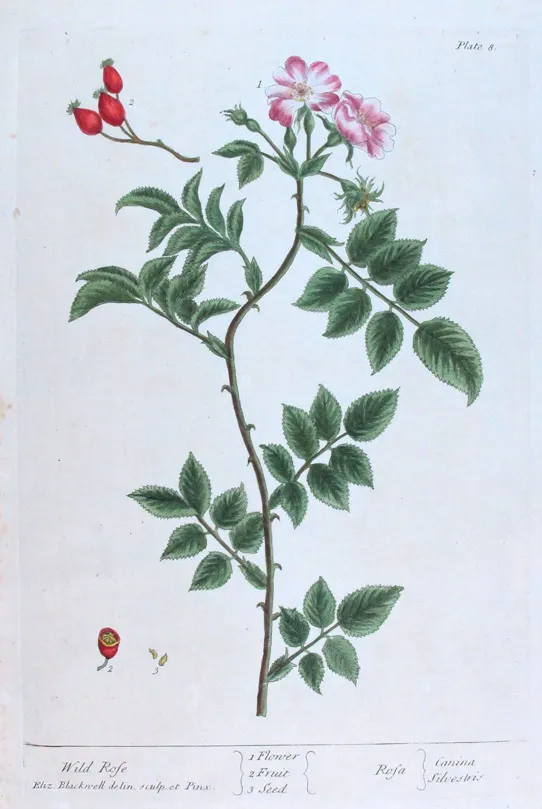
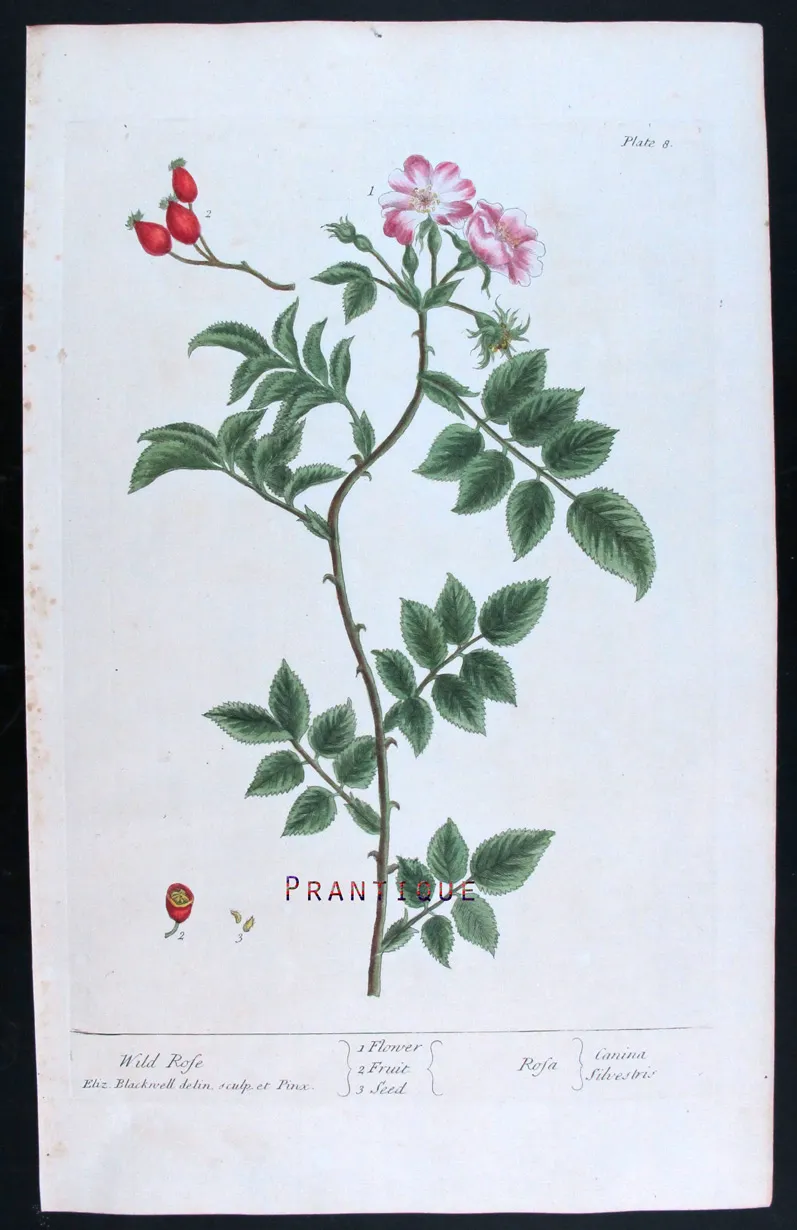
This refined botanical engraving depicts the Wild Rose (Rosa canina), presenting a flowering branch with simple five-petalled blossoms, serrated compound leaves, and mature fruit arranged for clear botanical identification.
The composition combines delicacy and structure: pale pink flowers crown the upper stem, while vivid red rose hips punctuate the branches with visual emphasis. Elisabeth Blackwell carefully balances floral elegance with analytical clarity, allowing leaf, flower, fruit, and seed to be read distinctly within a natural, slightly asymmetrical form.
Created in the early eighteenth century, this plate belongs to A Curious Herbal, a foundational medical and botanical work distinguished by the unity of its production, in which drawing, copper engraving, and hand-colouring were executed by the same hand.
— • —
The plant is structured along a gently rising central stem, from which lateral branches extend with organic irregularity. The open flowers provide softness and rhythm at the apex, while the rounded rose hips introduce visual weight and chromatic contrast.
Subtle tonal modelling gives depth to the leaves and fruit without excessive contrast. The restrained palette—greens, pale pinks, and deep reds—supports both scientific legibility and decorative harmony, making the image equally suited to study and display.
The wild rose, commonly known as dog rose (Rosa canina), was one of the most important native medicinal plants in early European herbal medicine. Its fruits, or rose hips, were valued for their astringent and restorative properties and were used in syrups, conserves, and remedies long before their vitamin content was scientifically understood. Because different rose species could vary in medicinal strength, accurate visual identification of flowers, leaves, and hips was essential. Blackwell’s plate reflects this practical focus, documenting the plant across multiple stages of growth and emphasizing the fruit as a key therapeutic component.
The engraving is in exceptionally fine antique condition, printed on original handmade laid paper typical of early 18th-century botanical publications. A period watermark is visible on the sheet, consistent with contemporary papermaking practices. The surface remains fresh and stable, with light, even age-related toning. The impression is crisp and legible throughout, with well-preserved margins. The engraved credit “Eliz. Blackwell delin. sculp. et pinx.” is present and fully legible, confirming the unified authorship of the plate.
For further context on Elisabeth Blackwell and the medical-botanical framework of A Curious Herbal, see our editorial feature:
Specific References
Refined 18th-century engraving of Mountain Calamint by Elizabeth Blackwell, with upright stems and pink blossoms, ideal for calm, herbal or cottage-inspired interiors.
Lively 18th-century engraving of Polypody of the Oak by Elizabeth Blackwell, showing rhythmic fern fronds and creeping rhizomes, perfect for naturalist or woodland-themed decor.
Striking composition of the Pitch Tree with tall central stem and large cones, bringing strong graphic presence to botanical displays or rustic interiors.
Fine engraving of Great Centaury (Centaurium majus) with pinkish florets, slender stems, and a butterfly study.
Graceful engraving of Wheat varieties with seed details, ideal for rustic décor.
Delicate engraving of Madder with berries and exposed roots, ideal for refined botanical décor.
Elegant botanical engraving of Great Figwort (Scrophularia major) with branching stems, clustered flowers and root detail.
Graceful 18th-century botanical engraving of the Female Fern by Elizabeth Blackwell, with airy fronds and exposed root, beautiful in minimalist or nature-focused spaces.
Striking palm fronds paired with warm golden dates, a highly decorative composition.
Elegant olive branches with vivid green leaves and fruit in subtle yellow tones.
A dynamic pine composition with cones, needles, and golden pollen clusters.
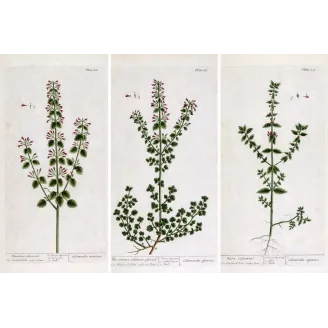
A curated botanical trio illustrating three closely related Calamintha species — officinalis, montana, and aquatica — as engraved and hand-colored by Elisabeth Blackwell for A Curious Herbal (1737–1739). Presented together, these plates offer a rare comparative view of medicinal, habitat-specific, and morphological variation within a single genus, reflecting early modern botanical practice and apothecary knowledge.
Lively Hawthorn branch with crisp green leaves and clusters of rich red berries, a classic countryside motif for warm, welcoming interiors.
Fine 18th-century engraving of the Medlar Tree by Elisabeth Blackwell, featuring fruit, blossom, and botanical detail.
Elegant botanical engraving of the Bean plant with pods and seed details.
Charming study with pink blossoms and vivid red rosehips, a classic countryside motif.