
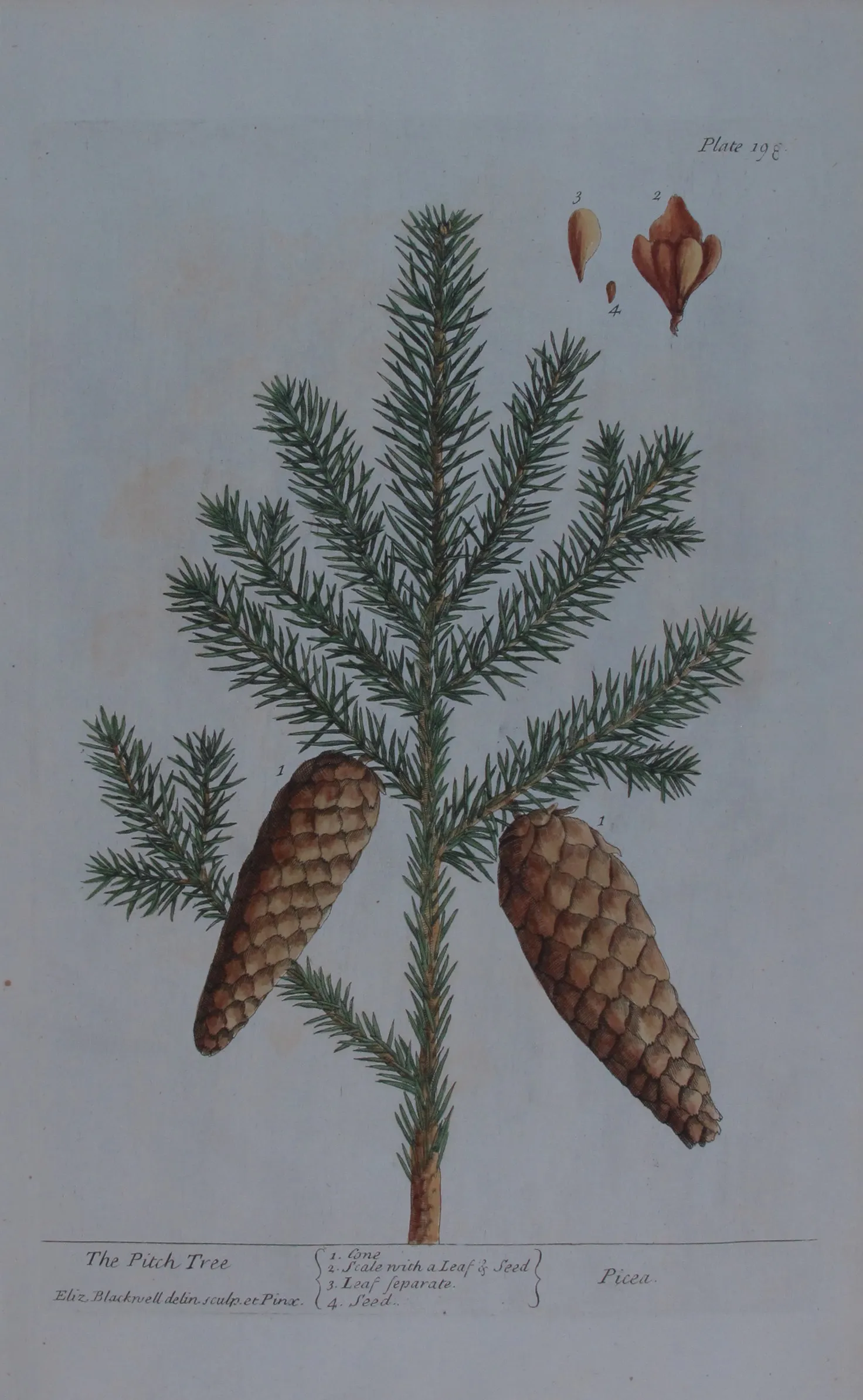
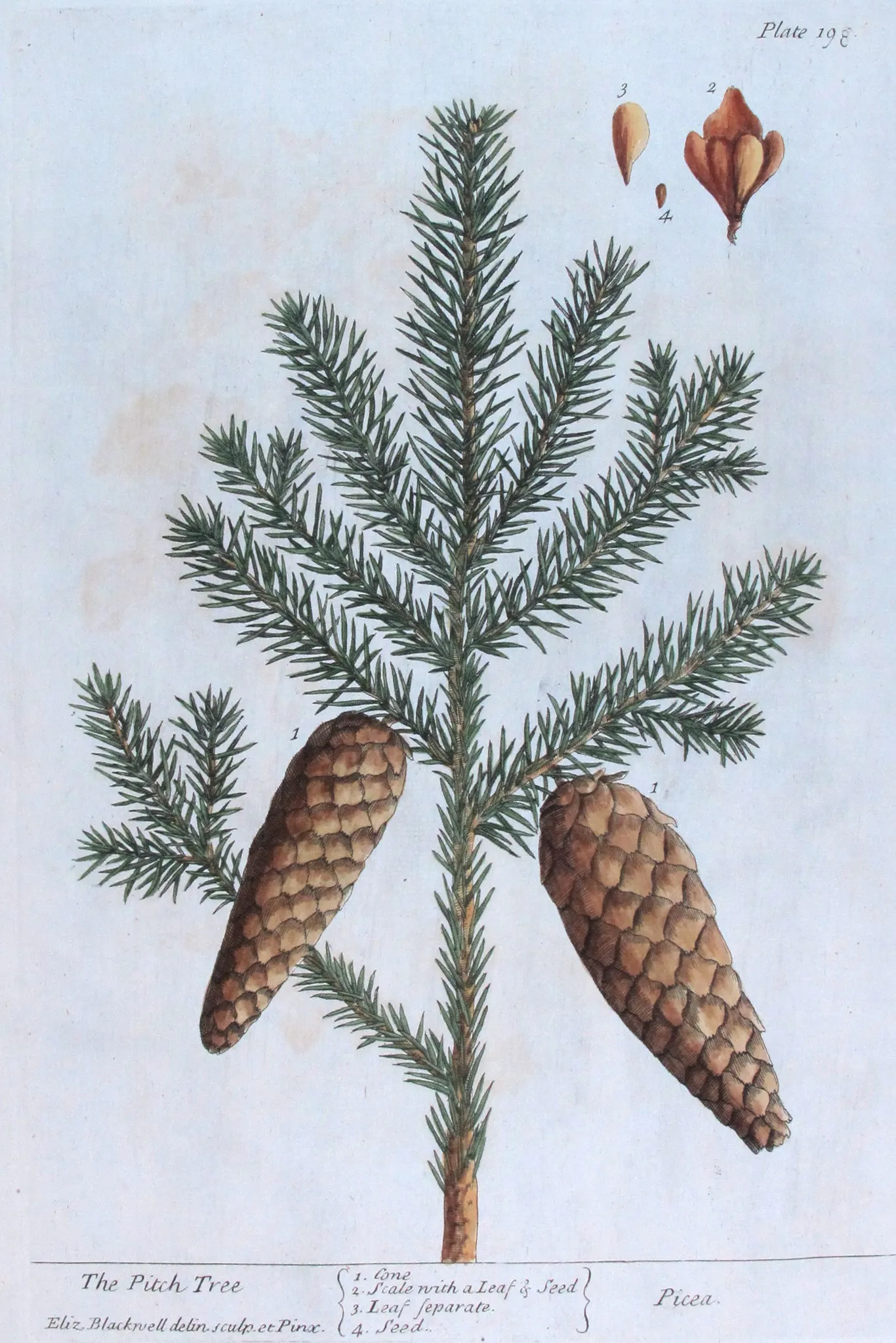
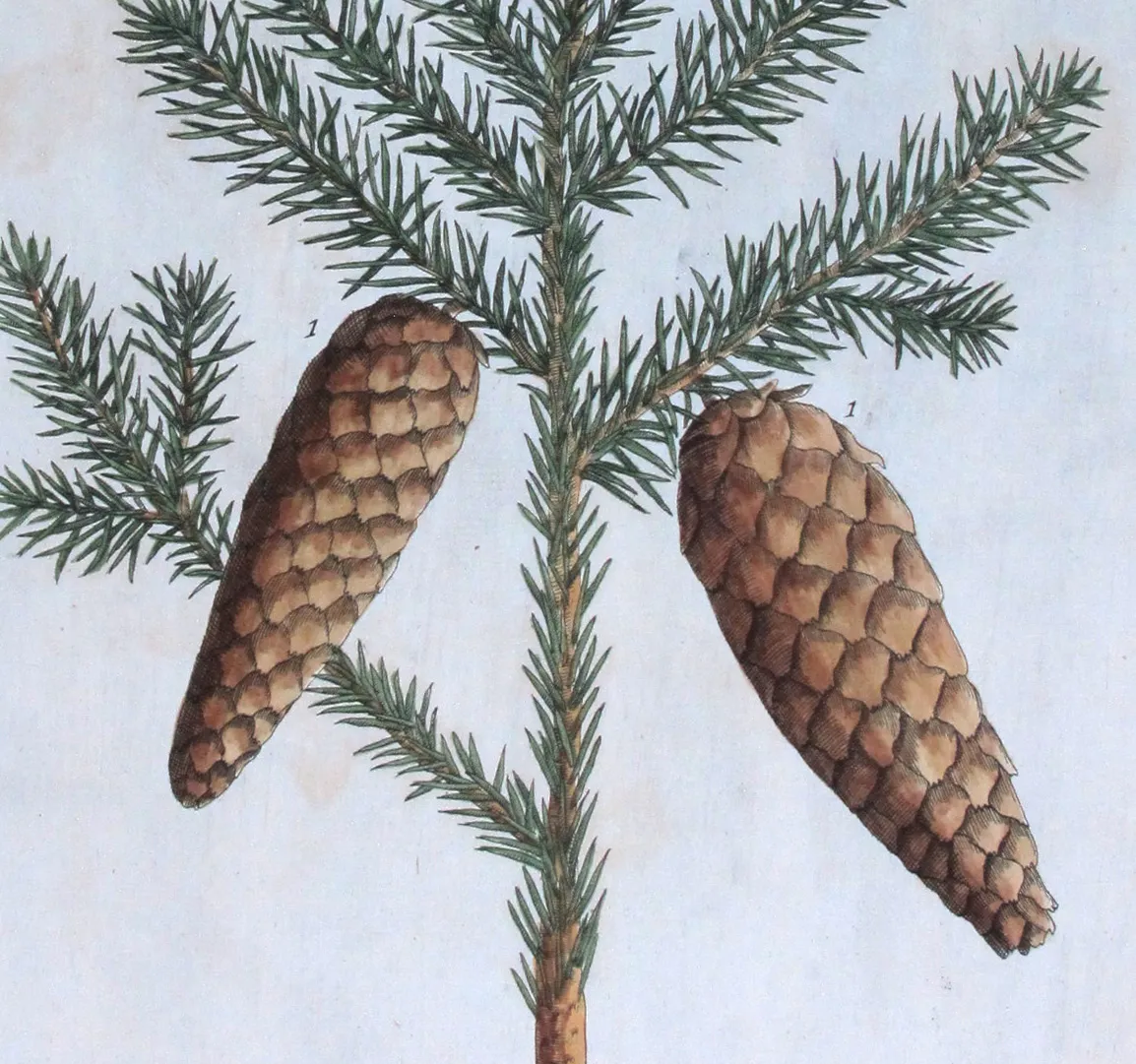
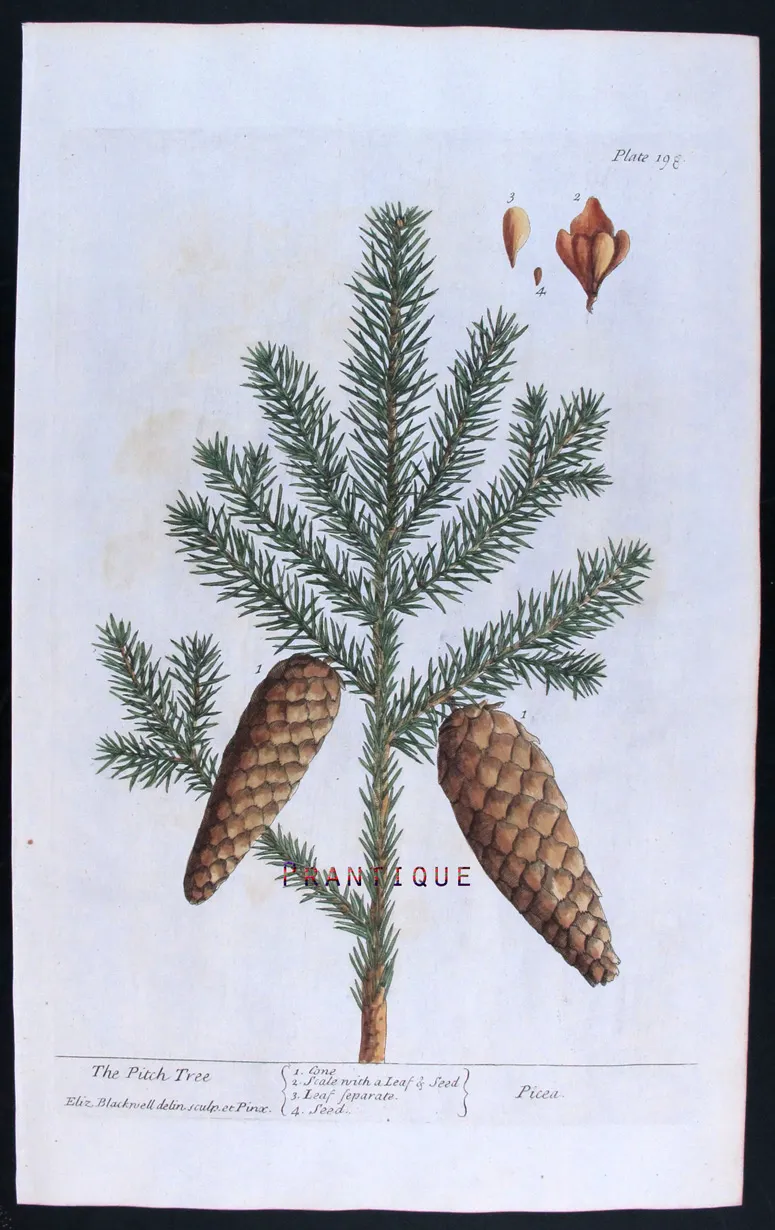


Striking composition of the Pitch Tree with tall central stem and large cones, bringing strong graphic presence to botanical displays or rustic interiors.
 Delivery policy
Your print will be carefully prepared and shipped worldwide via trusted couriers (UPS or similar).
 Authentic antique prints
Original engravings from the 17th–19th century.
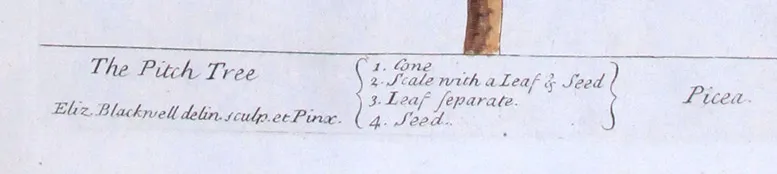
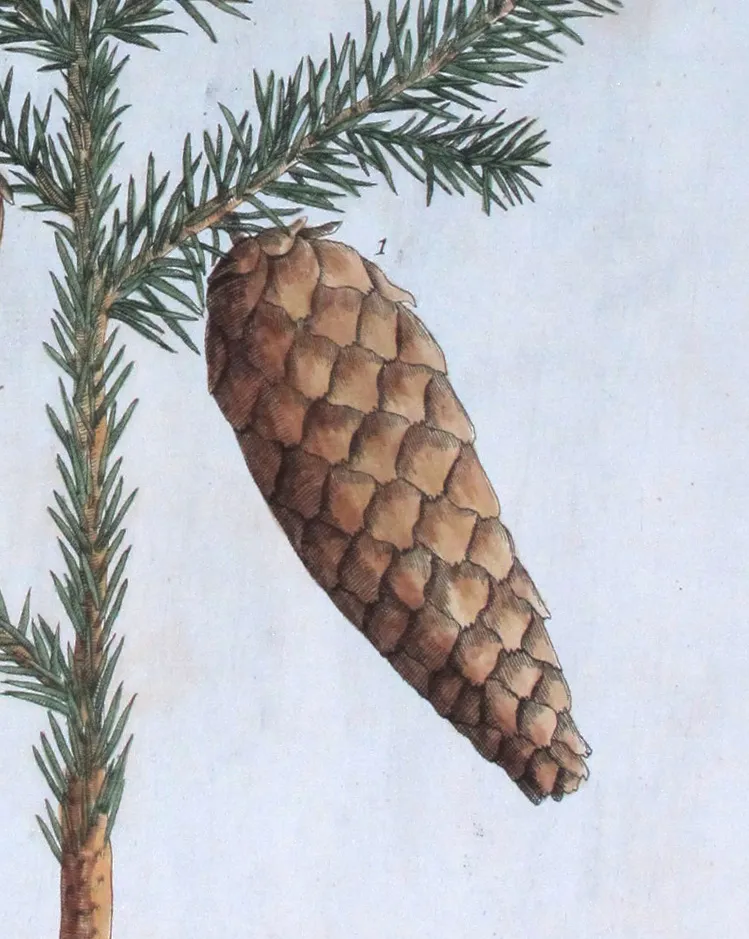
This refined botanical engraving depicts the Pitch Tree (Picea), presenting a conifer branch with needles, cones, and seed details arranged for precise botanical reference.
The specimen is rendered with a compact, upright structure, its short, dense needles forming a firm, textured silhouette. The illustrated cones hang prominently from the branches, while Elisabeth Blackwell’s disciplined approach ensures that each element is clearly defined and proportioned within the composition.
Created in the early eighteenth century, this plate belongs to A Curious Herbal, a foundational medical and botanical work distinguished by the unity of its production, in which drawing, copper engraving, and hand-colouring were executed by the same hand.
— • —
The composition is structured around a central vertical axis, with branches extending symmetrically to create visual stability. The dense needles generate a compact surface texture, contrasted by the elongated form and patterned scales of the cones.
Subtle tonal modulation defines the foliage and cones without excessive contrast, reinforcing the engraving’s analytical clarity. The restrained palette emphasizes structure over ornament, resulting in an image of quiet authority and botanical precision.
Pitch-producing conifers were of particular importance in early medicine, craft, and domestic practice. The resin obtained from trees commonly referred to as “pitch trees” was used in external medicinal preparations, warming plasters, and protective sealants, and played a practical role in everyday life well beyond botanical study. Because the quality and properties of pitch varied among different conifers, herbals placed emphasis on distinguishing these trees accurately. Blackwell’s plate reflects this applied concern, presenting needles, cones, and seed structure as diagnostic features that supported correct identification of resin-bearing species.
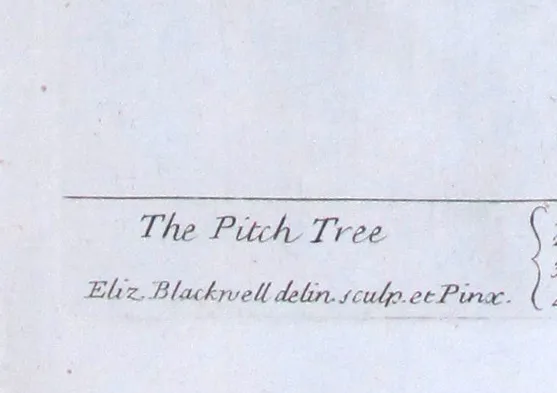
The engraving is in very good antique condition, printed on original handmade laid paper typical of early 18th-century botanical publications. No watermark has been observed. The surface remains stable and clean, with light, even age-related toning consistent with period paper. A light offset stain is visible in the upper left area of the sheet, unobtrusive and consistent with historical printing or storage practices. The impression remains clear and legible, with well-preserved margins overall. The engraved credit “Eliz. Blackwell delin. sculp. et pinx.” is present and fully legible, confirming the unified authorship of the plate.
For further context on Elisabeth Blackwell and the unified authorship behind A Curious Herbal, see our editorial feature:
Specific References
Striking palm fronds paired with warm golden dates, a highly decorative composition.
Elegant botanical engraving of the Bean plant with pods and seed details.
Broad heart-shaped leaves with yellow tubular blooms, beautifully rendered in subtle tones.
Elegant botanical engraving of Great Figwort (Scrophularia major) with branching stems, clustered flowers and root detail.
A curated botanical trio illustrating three closely related Calamintha species — officinalis, montana, and aquatica — as engraved and hand-colored by Elisabeth Blackwell for A Curious Herbal (1737–1739). Presented together, these plates offer a rare comparative view of medicinal, habitat-specific, and morphological variation within a single genus, reflecting early modern botanical practice and apothecary knowledge.
18th-century hand-colored engraving of the Wilding or Crab Tree by Elisabeth Blackwell, with blossom and fruit details.
Hand-colored 18th-century engraving of Yellow Asphodel, a vivid botanical composition from Elisabeth Blackwells A Curious Herbal.
Dramatic lichen plate with sculptural fronds and rocky support, perfect for collectors who love unusual, textural natural history subjects.
Hand-colored 18th-century engraving of the Sweet Cistus of Candy, a graceful botanical plate by Elisabeth Blackwell.
Original 18th-century engraving of the Wild Cucumber by Elisabeth Blackwell, with spined fruit and yellow flowers.
Graceful vertical stem with rounded leaves and yellow blossoms, paired with a prominent root study.
18th-century hand-colored engraving of a Garden Cucumber by Elisabeth Blackwell, with curling tendrils and yellow blossoms.
Lively 18th-century engraving of Polypody of the Oak by Elizabeth Blackwell, showing rhythmic fern fronds and creeping rhizomes, perfect for naturalist or woodland-themed decor.
Delicate pea stems with curling tendrils and soft green pods, elegantly hand-colored.
Elegant 18th-century hand-colored engraving of a Raspberry Bush by Elisabeth Blackwell, with ripe fruit and soft blossom.
Delicate engraving of Madder with berries and exposed roots, ideal for refined botanical décor.
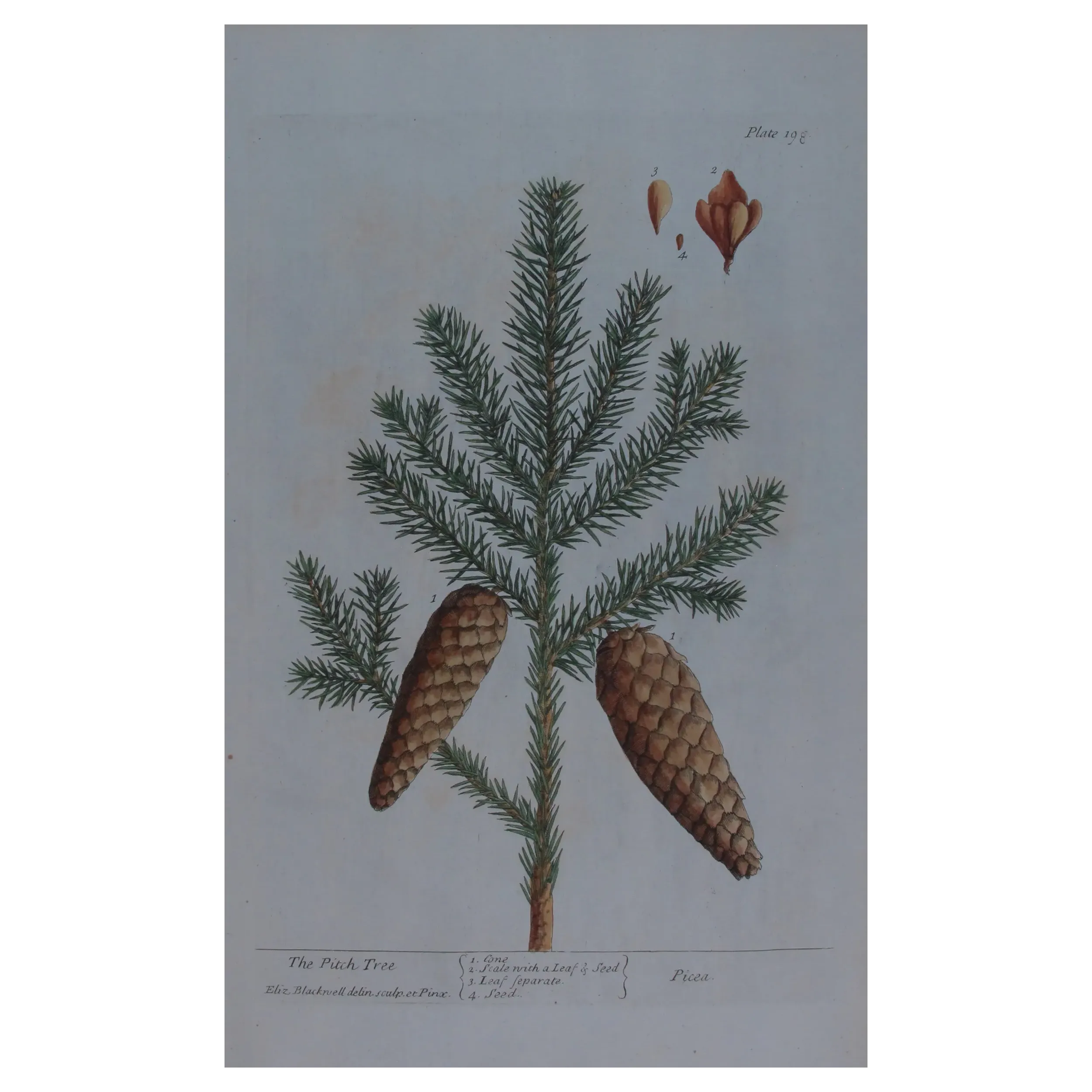
Striking composition of the Pitch Tree with tall central stem and large cones, bringing strong graphic presence to botanical displays or rustic interiors.