



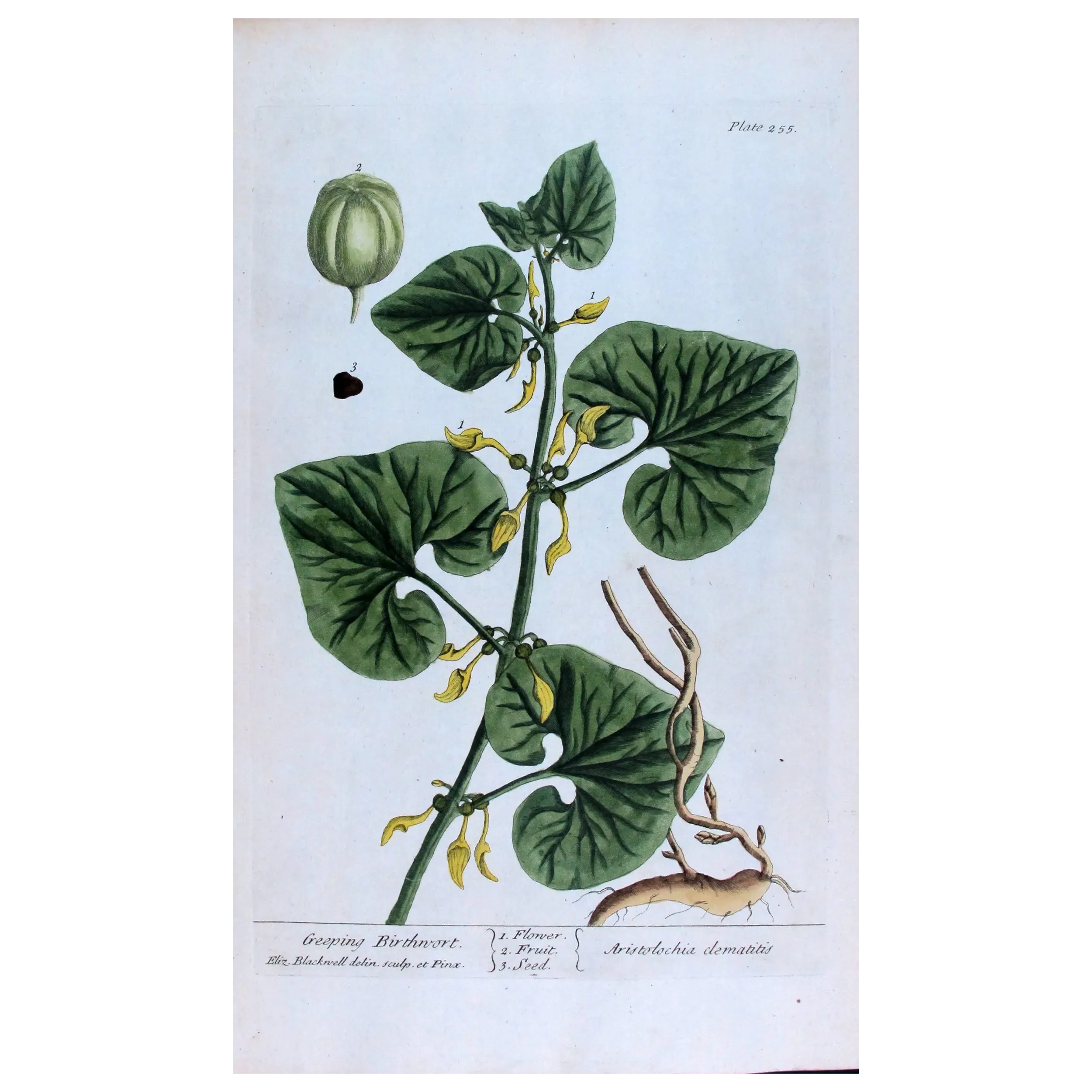
Broad heart-shaped leaves with yellow tubular blooms, beautifully rendered in subtle tones.
 Delivery policy
Your print will be carefully prepared and shipped worldwide via trusted couriers (UPS or similar).
 Authentic antique prints
Original engravings from the 17th–19th century.
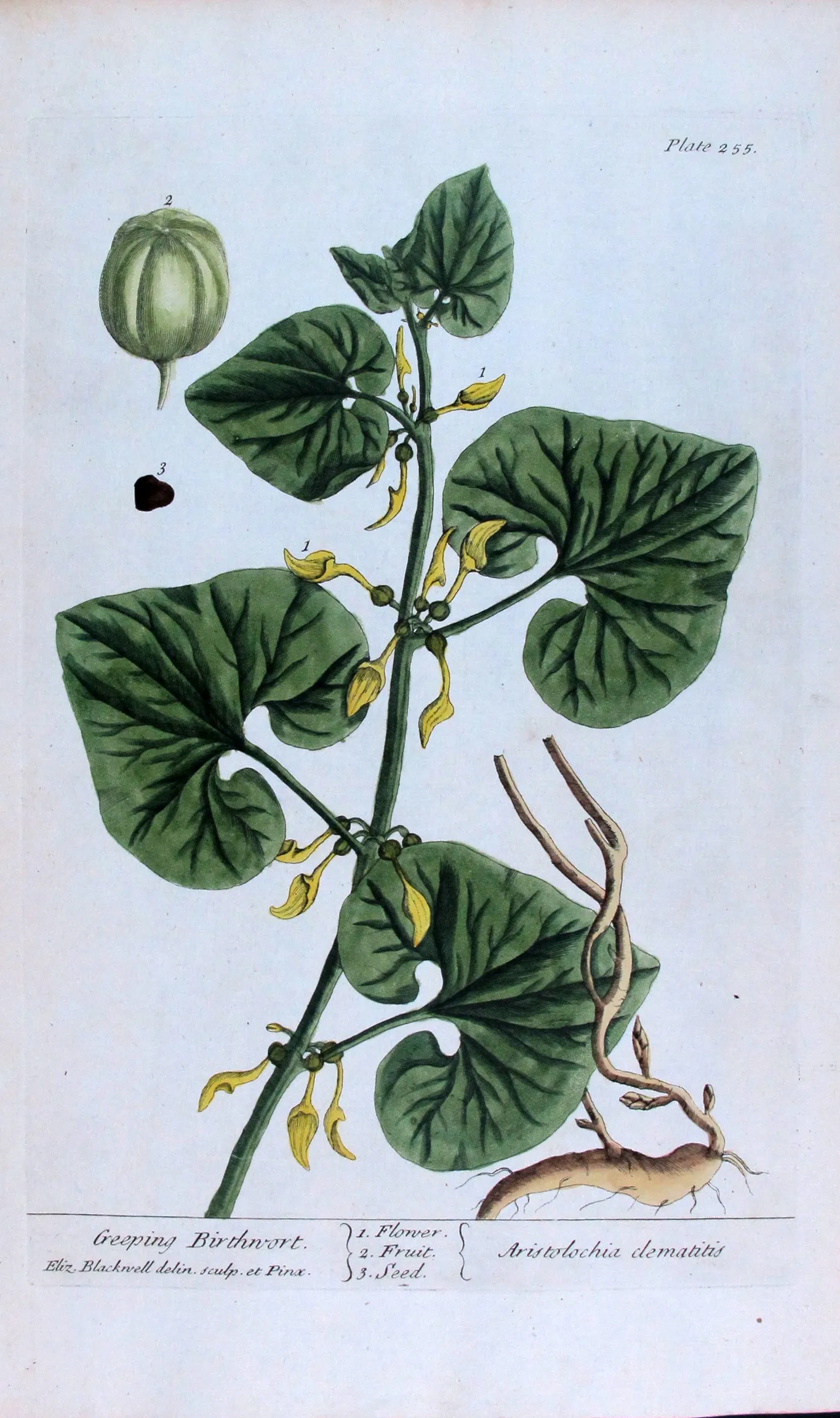
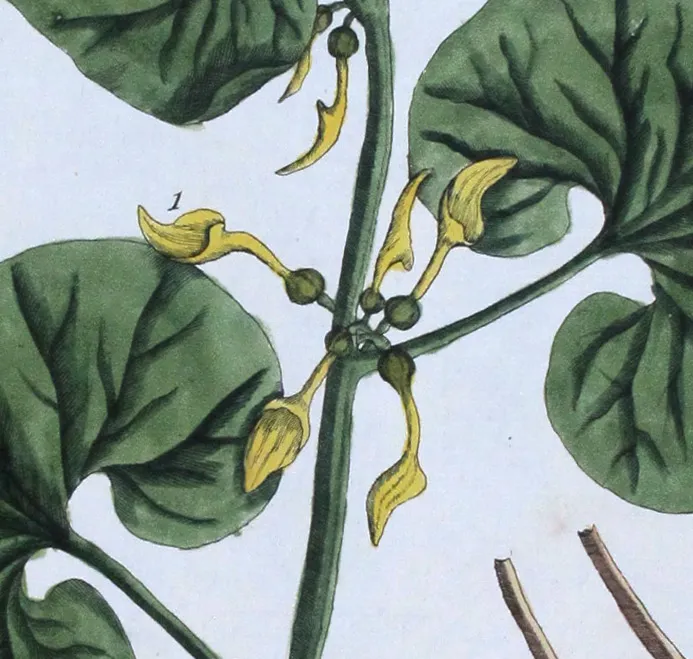
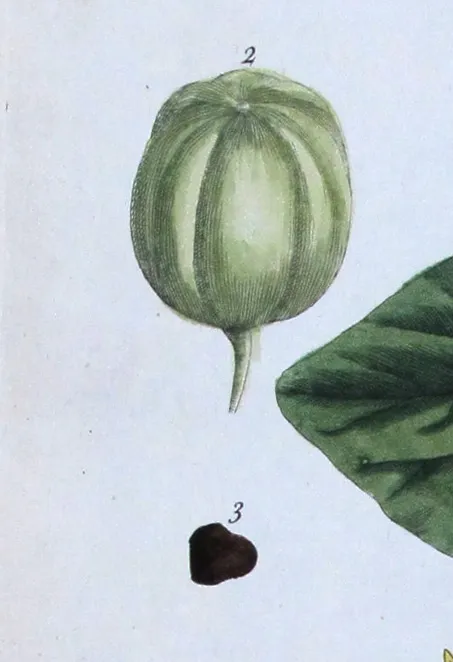
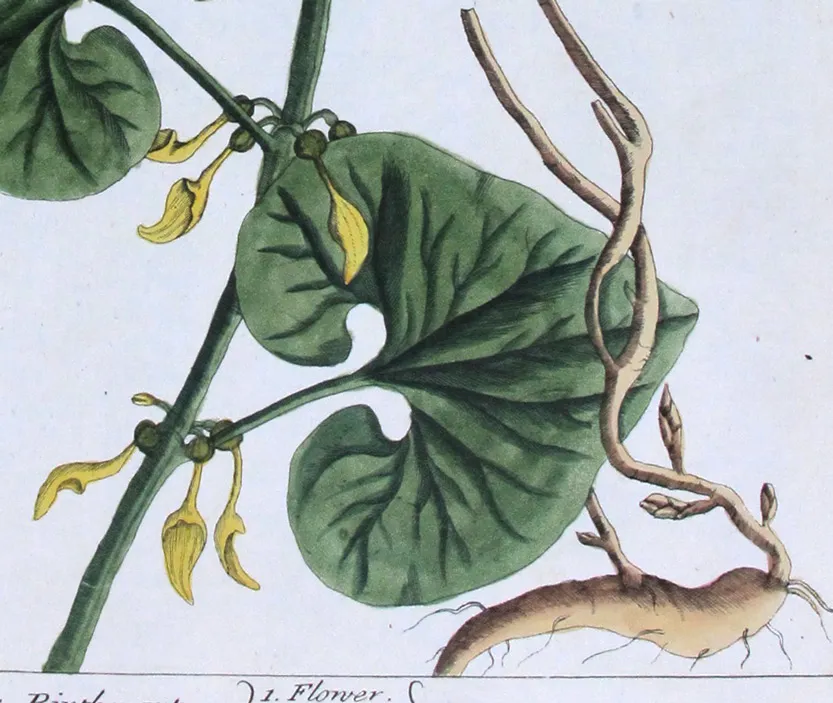
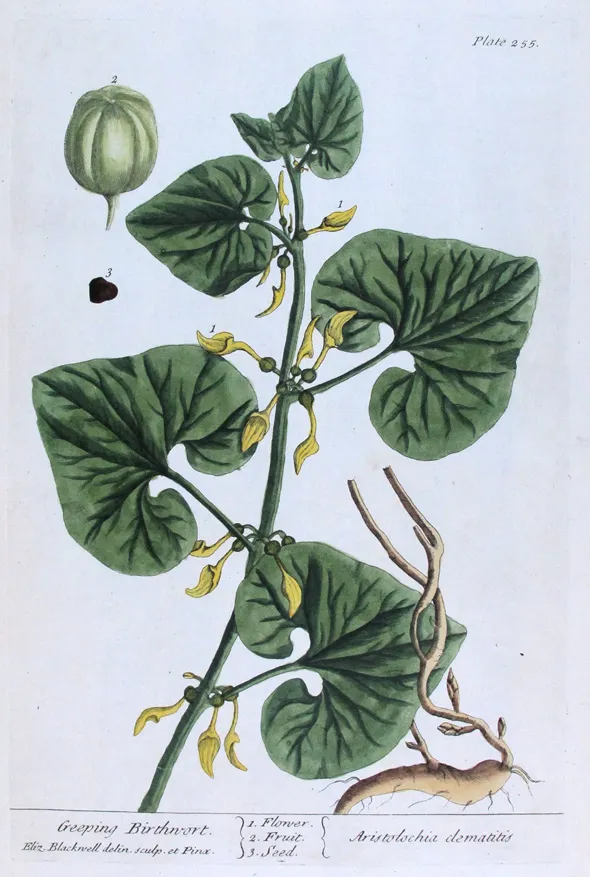
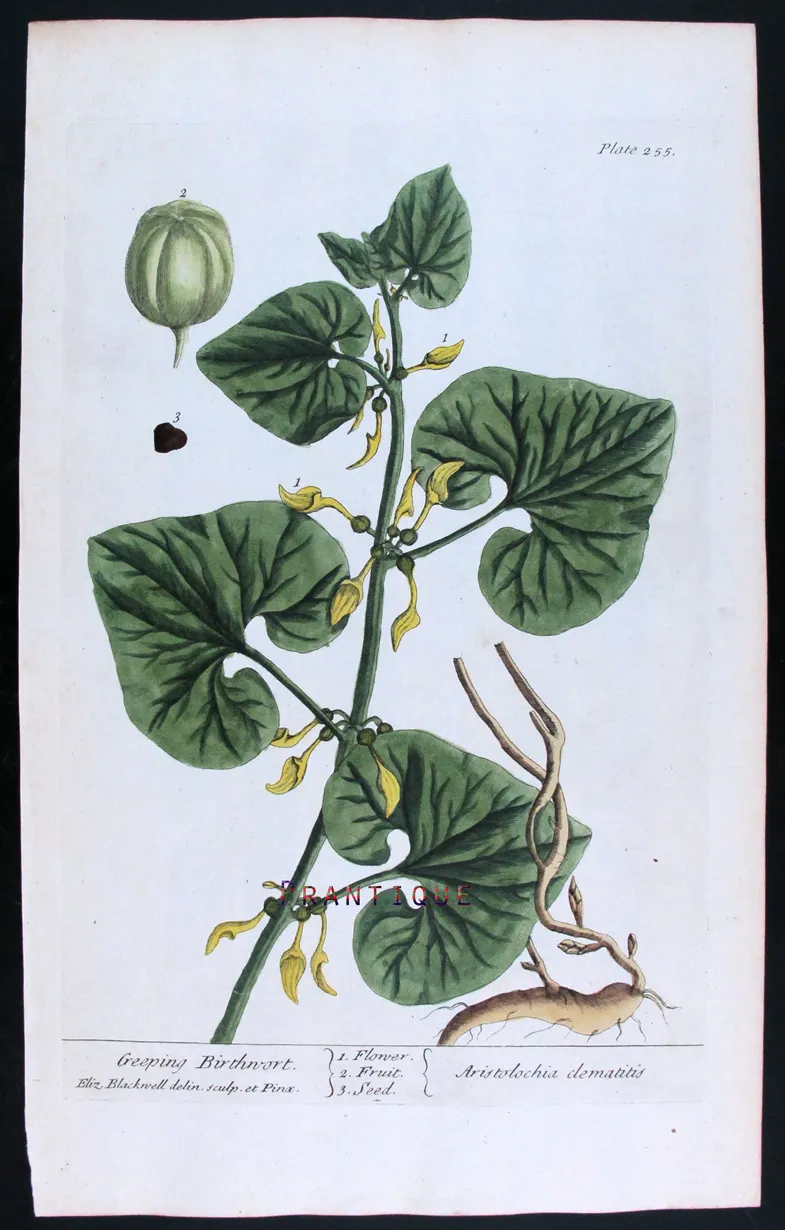
This striking botanical engraving depicts Creeping Birthwort (Aristolochia clematitis), a vigorous medicinal herb characterized by broad, heart-shaped leaves, slender climbing stems, and distinctive tubular yellow flowers emerging from the leaf axils.
The composition presents the plant in a clear, ascending structure: the main stem rises diagonally across the sheet, supporting large, veined foliage that creates a strong visual rhythm. Separate details of flower, fruit, and seed are included, reinforcing the plate’s function as a precise botanical and medical reference.
Produced in the early eighteenth century, this engraving forms part of A Curious Herbal, Elisabeth Blackwell’s monumental work dedicated to documenting useful plants through direct observation, accurate copper engraving, and carefully controlled hand-colouring.
— • —
The plate is dominated by the expansive, cordate leaves, whose bold scale and pronounced venation lend the composition a sense of weight and vitality. These broad forms contrast with the slender stems and the delicate curvature of the flowers, creating a dynamic interplay between mass and line.
Restrained hand-colouring emphasizes natural variation within the foliage, using layered greens to model depth and surface texture. The yellow flowers introduce subtle points of warmth without disrupting the overall harmony, preserving both clarity and visual balance.
Creeping birthwort (Aristolochia clematitis) held a complex and prominent role in early European medicine. Traditionally associated with childbirth and women’s health, it was used in preparations intended to stimulate labor and aid postnatal recovery. Its strong physiological effects made accurate identification essential, as misuse could carry significant risks.
Today the plant is also recognized as emblematic of the limits of early herbal medicine, since some of its harmful properties were only understood centuries later. In this sense, Blackwell’s plate stands not only as a botanical portrait, but as a historical document of medical practice in transition—where visual accuracy served as a primary safeguard for physicians and apothecaries.
The engraving is in exceptionally fine antique condition, printed on original handmade laid paper. A period watermark is visible, consistent with eighteenth-century papermaking practices. The sheet remains fresh and stable, with light, even age-related toning. The hand-colouring is well preserved, and the impression is crisp and fully legible. The engraved credit “Eliz. Blackwell delin. sculp. et pinx.” is present and clear, confirming the unified authorship of the plate.
This plate belongs to a small and historically revealing group of Aristolochia subjects illustrated in A Curious Herbal, documenting plants that were once central to early medicine and later reassessed as knowledge advanced. For a close comparative companion within the same genus, see:
Long Birthwort (Aristolochia longa) — Companion Plate from A Curious Herbal
For further context on Elisabeth Blackwell and the medical-botanical framework of A Curious Herbal, see our editorial feature:
Specific References
Hand-colored engraving of Water Figwort (Scrophularia aquatica), featuring vertical stems, red blossoms and a caterpillar study.
Elegant botanical engraving of Great Figwort (Scrophularia major) with branching stems, clustered flowers and root detail.
Graceful engraving of Wheat varieties with seed details, ideal for rustic décor.
Lively Hawthorn branch with crisp green leaves and clusters of rich red berries, a classic countryside motif for warm, welcoming interiors.
Original 18th-century engraving of the Wild Cucumber by Elisabeth Blackwell, with spined fruit and yellow flowers.
A curated botanical trio illustrating three closely related Calamintha species — officinalis, montana, and aquatica — as engraved and hand-colored by Elisabeth Blackwell for A Curious Herbal (1737–1739). Presented together, these plates offer a rare comparative view of medicinal, habitat-specific, and morphological variation within a single genus, reflecting early modern botanical practice and apothecary knowledge.
18th-century hand-colored engraving of the Almond Tree by Elisabeth Blackwell, with blossom, fruit and kernel beautifully rendered.
Elegant olive branches with vivid green leaves and fruit in subtle yellow tones.
A dynamic pine composition with cones, needles, and golden pollen clusters.
Elegant botanical engraving of the Bean plant with pods and seed details.
18th-century hand-colored engraving of a Garden Cucumber by Elisabeth Blackwell, with curling tendrils and yellow blossoms.
Charming study with pink blossoms and vivid red rosehips, a classic countryside motif.
Fine engraving of Great Centaury (Centaurium majus) with pinkish florets, slender stems, and a butterfly study.
Elegant Silver Fir with upright cones and finely spaced needles, a refined forest motif for sophisticated interiors and collectors of conifer imagery.
Fine 18th-century engraving of the Medlar Tree by Elisabeth Blackwell, featuring fruit, blossom, and botanical detail.
Broad heart-shaped leaves with yellow tubular blooms, beautifully rendered in subtle tones.