

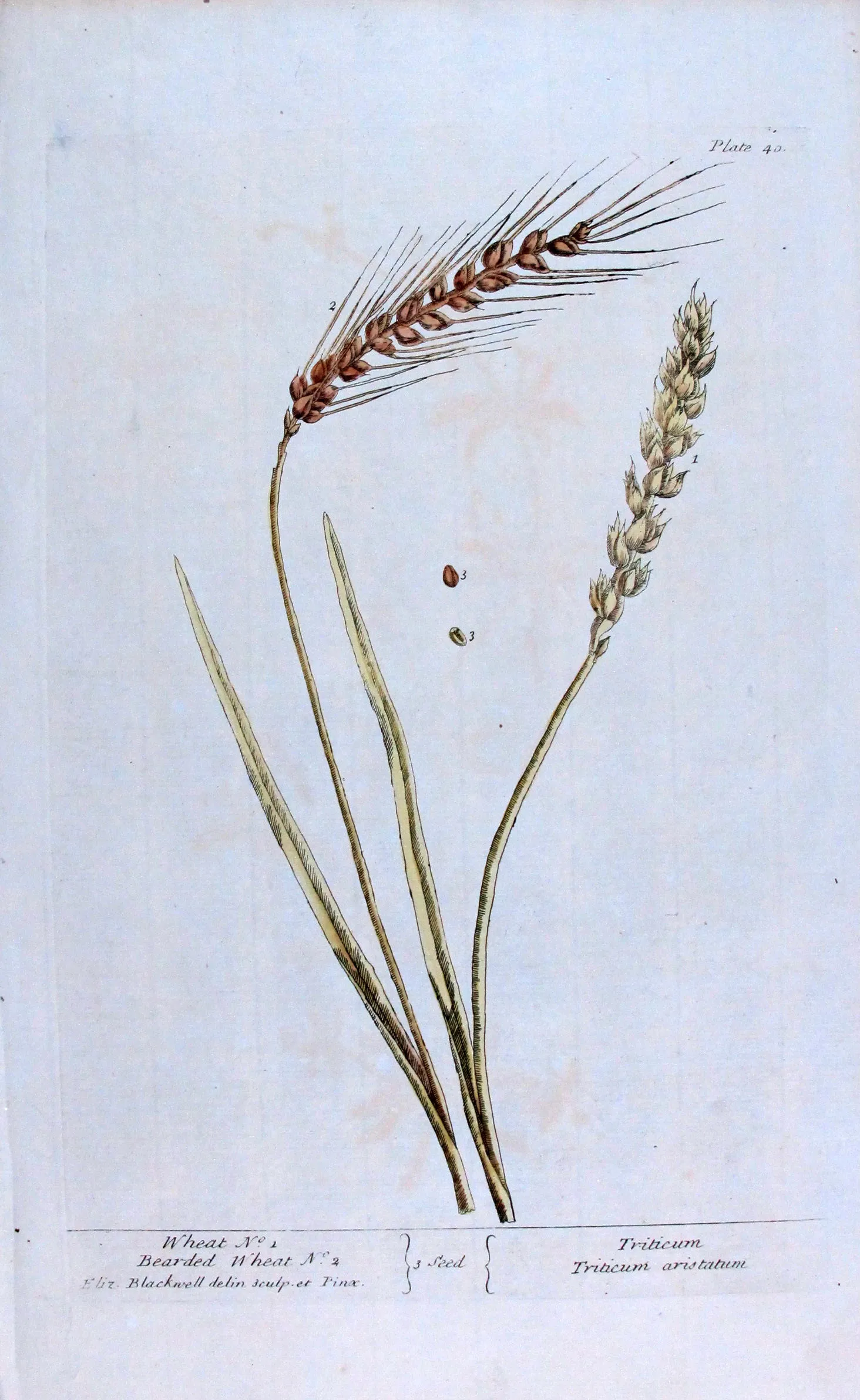

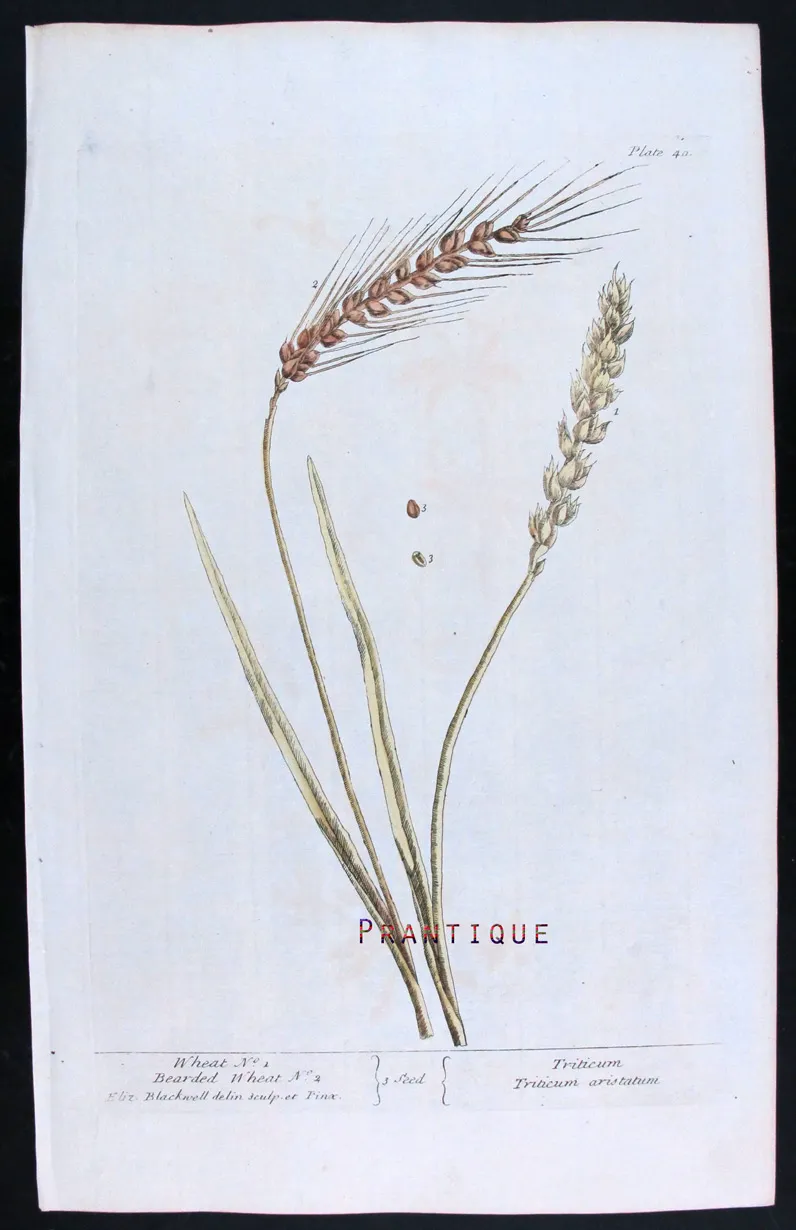


Graceful engraving of Wheat varieties with seed details, ideal for rustic décor.
 Delivery policy
Your print will be carefully prepared and shipped worldwide via trusted couriers (UPS or similar).
 Authentic antique prints
Original engravings from the 17th–19th century.
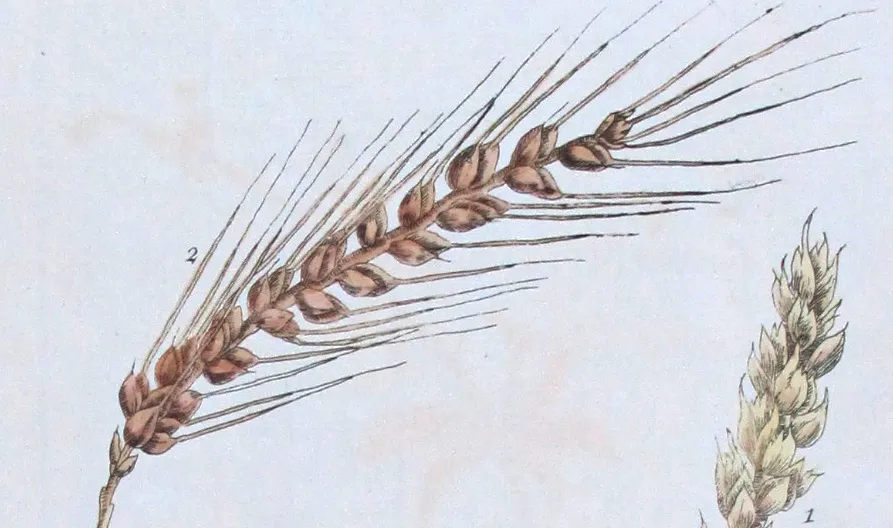
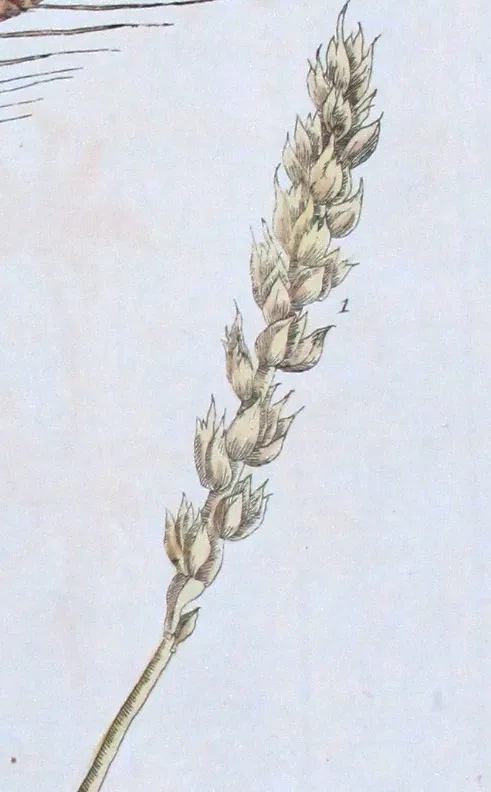
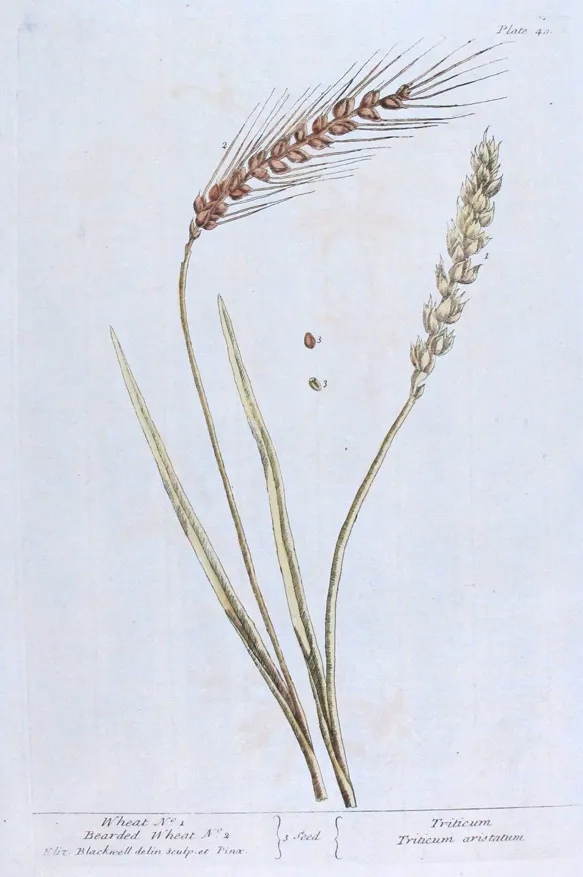
This elegant botanical engraving depicts Wheat (Triticum), including both a standard form and a bearded variety, presented with clarity and restraint. The plate illustrates the grain-bearing stems alongside detailed views of the seed, offering a concise and authoritative representation of one of the most fundamental cultivated plants in human history.
Slender stalks rise with quiet balance, each crowned by carefully rendered ears that differ subtly in structure and texture. The restrained palette and fine line work emphasize form over ornament, allowing the viewer to focus on botanical structure and variation rather than decorative flourish.
Produced in the early eighteenth century, this engraving forms part of A Curious Herbal (1737–1739), a landmark botanical and medical work distinguished by the rare unity of authorship in which drawing, copper engraving, and hand-colouring were executed by :contentReference[oaicite:0]{index=0} herself.
— • —
The composition is deliberately minimal, built around vertical lines that convey stability and order. The contrast between the smooth ear and the bearded variety introduces subtle visual tension, while the isolated seed details reinforce the engraving’s analytical clarity.
Generous negative space surrounds the forms, lending the plate a quiet, almost meditative quality. This restraint gives the engraving a timeless presence, well suited to refined interiors where understatement and balance are valued.
Triticum, or wheat, has been a cornerstone of agriculture and human sustenance since antiquity. In early modern Europe, knowledge of grain varieties was essential not only for cultivation but also for trade, storage, and food security. Herbals such as A Curious Herbal documented wheat not as an exotic specimen, but as a plant of daily and civilizational importance. Blackwell’s engraving reflects this role through its sober presentation, emphasizing structure, grain formation, and varietal distinction. The result is a botanical image rooted in utility and continuity—an illustration of the plant that underpinned economies, diets, and landscapes for centuries.
The engraving is preserved in like brand new antique condition, printed on original handmade laid paper typical of early eighteenth-century botanical publications. A period watermark is visible on the sheet, consistent with contemporary papermaking practices. The surface remains clean and stable, with a crisp impression and well-preserved original hand-colouring throughout. No notable defects are present. The engraved credit “Eliz. Blackwell delin. sculp. et pinx.” is fully legible, confirming that the drawing, engraving, and hand-colouring were executed by Elisabeth Blackwell herself.
For further context on Elisabeth Blackwell and the singular unity of authorship behind A Curious Herbal, see our editorial feature:
Specific References
Fine engraving of Black Alder with berries and elegant branching, ideal for natural interiors.
Elegant pink-white blossoms with upright stems and finely shaped leaves, a graceful 18th?century botanical.
Original 18th-century engraving of the Wild Cucumber by Elisabeth Blackwell, with spined fruit and yellow flowers.
Delicate engraving of Madder with berries and exposed roots, ideal for refined botanical décor.
Hand-colored botanical engraving of the Common Calamint, with dense foliage and soft pink-purple florets.
A dynamic pine composition with cones, needles, and golden pollen clusters.
Striking composition of the Pitch Tree with tall central stem and large cones, bringing strong graphic presence to botanical displays or rustic interiors.
18th-century hand-colored engraving of a Garden Cucumber by Elisabeth Blackwell, with curling tendrils and yellow blossoms.
Graceful 18th-century botanical engraving of the Female Fern by Elizabeth Blackwell, with airy fronds and exposed root, beautiful in minimalist or nature-focused spaces.
Elegant botanical engraving of the Bean plant with pods and seed details.
Fine 18th-century engraving of the Cornel Tree by Elisabeth Blackwell, with red fruit and delicate foliage.
19th-century hand-colored engraving of Water Calamint, with delicate pink blooms and fine botanical details.
Striking palm fronds paired with warm golden dates, a highly decorative composition.
Fine engraving of Great Centaury (Centaurium majus) with pinkish florets, slender stems, and a butterfly study.
Graceful vertical stem with rounded leaves and yellow blossoms, paired with a prominent root study.
Hand-colored 18th-century engraving of the Sweet Cistus of Candy, a graceful botanical plate by Elisabeth Blackwell.
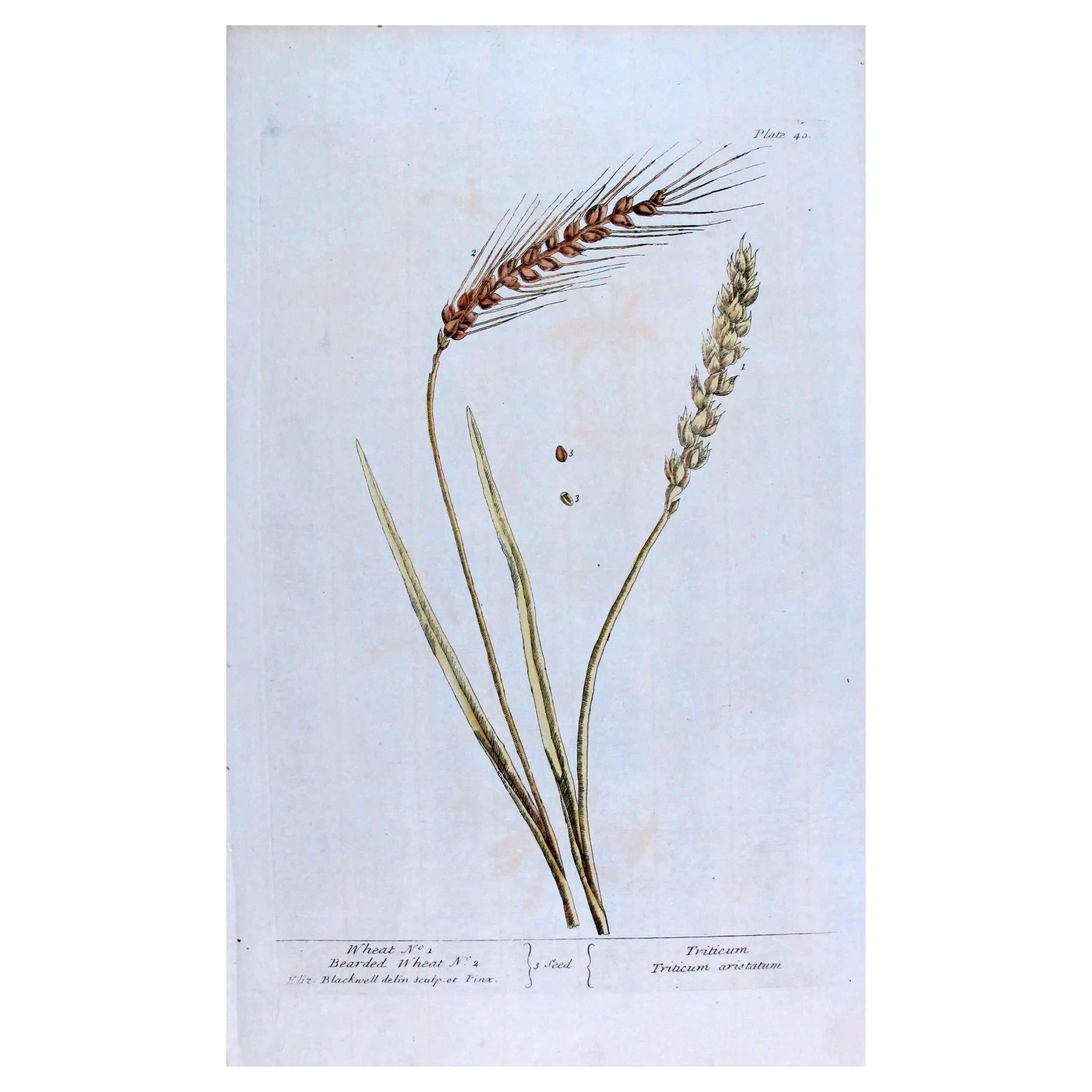
Graceful engraving of Wheat varieties with seed details, ideal for rustic décor.


