

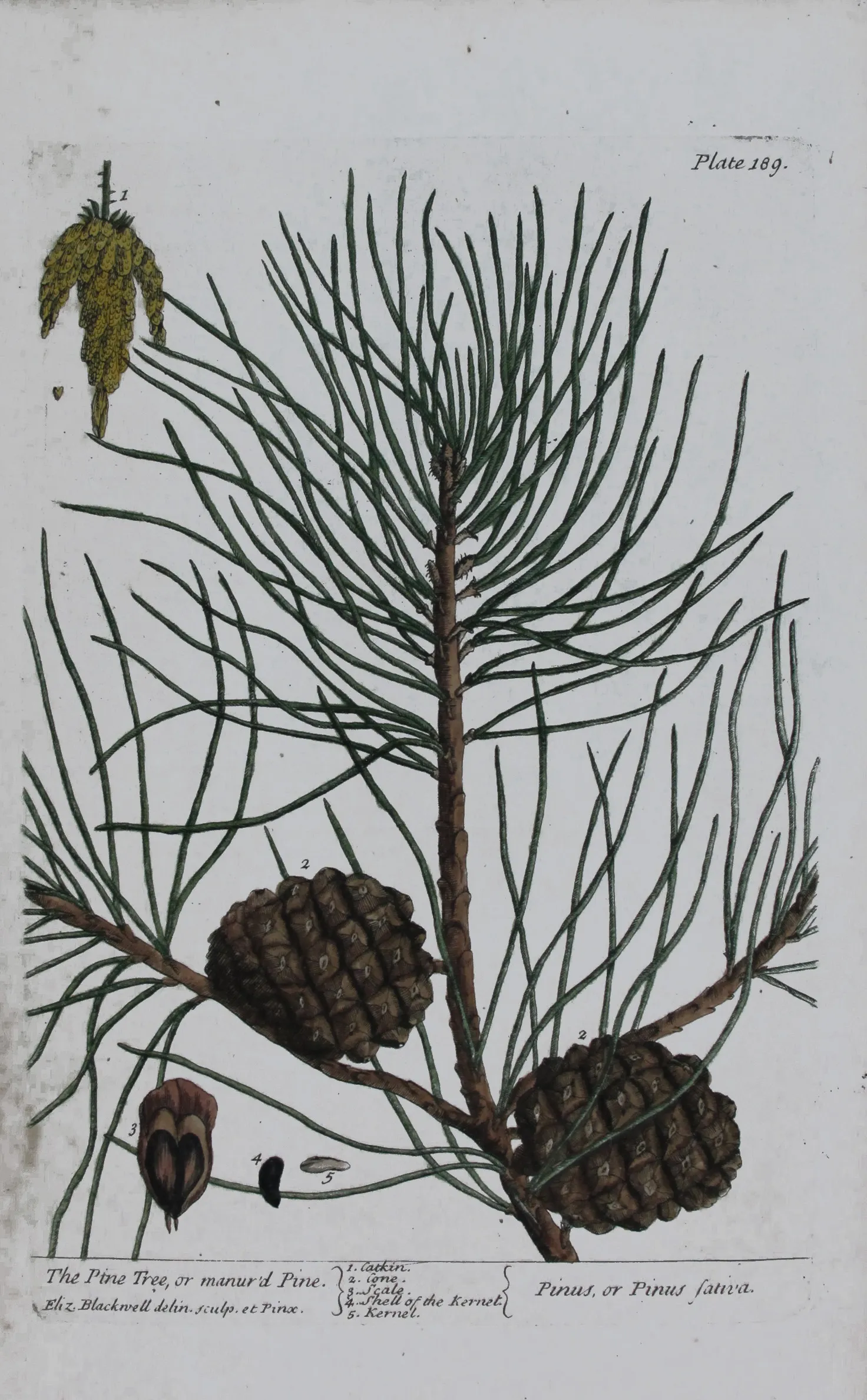

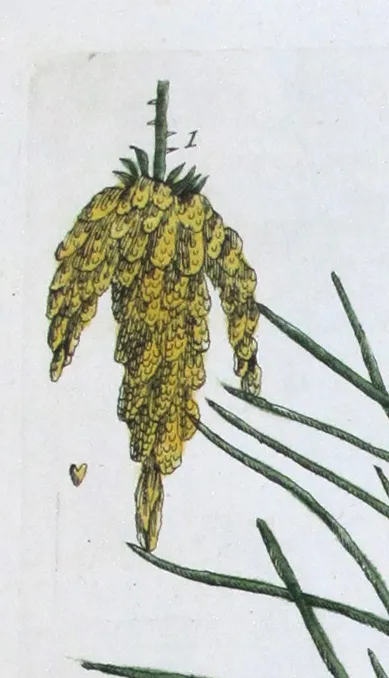
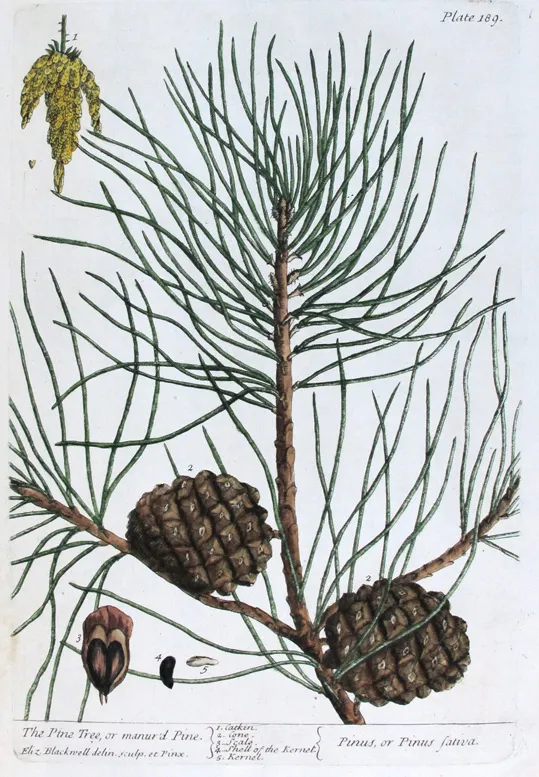
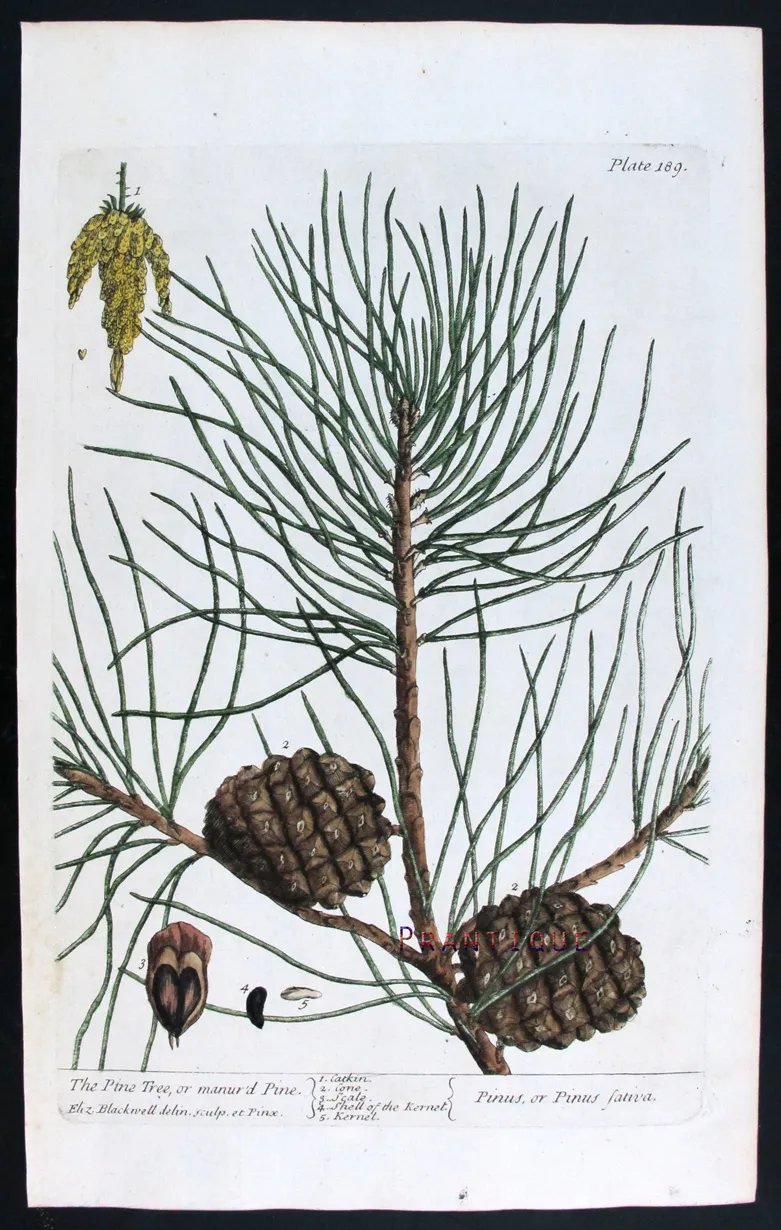


A dynamic pine composition with cones, needles, and golden pollen clusters.
 Delivery policy
Your print will be carefully prepared and shipped worldwide via trusted couriers (UPS or similar).
 Authentic antique prints
Original engravings from the 17th–19th century.
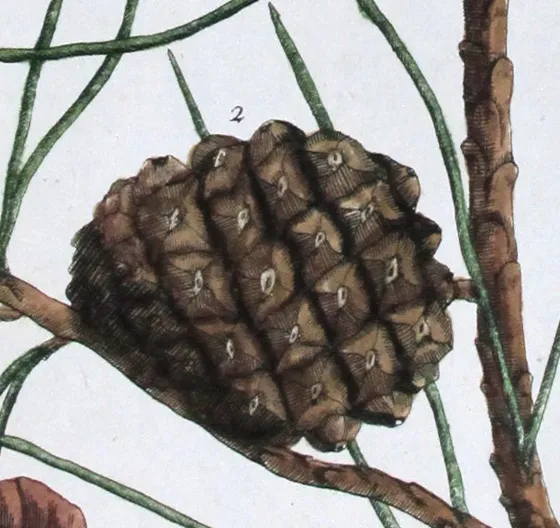
This refined botanical engraving depicts the Pine Tree (Pinus sylvestris), presenting a branch with needles, cones, and seed details arranged for clear botanical reference.
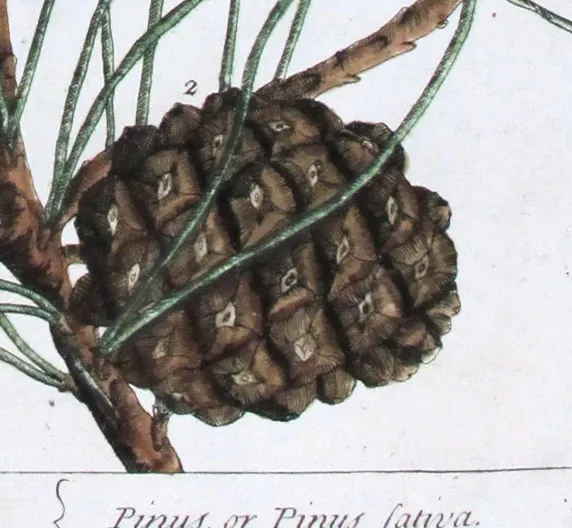
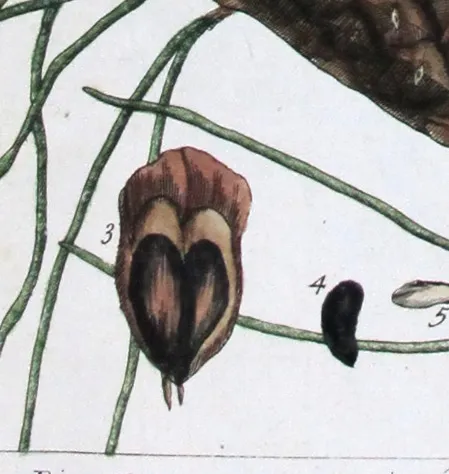
The composition is structured around a firm vertical axis, from which slender needles extend in radiating clusters. The pine cones provide visual weight and texture, while Elisabeth Blackwell’s precise handling ensures that each element—foliage, cone, and kernel—remains clearly legible within a balanced and orderly layout.
Created in the early eighteenth century, this plate belongs to A Curious Herbal, a foundational medical and botanical work distinguished by the unity of its production, in which drawing, copper engraving, and hand-colouring were executed by the same hand.
— • —
The long, linear needles introduce a sense of upward movement and spatial rhythm, contrasting with the dense, rounded structure of the cones. This interplay of line and mass creates a dynamic yet controlled composition, guiding the viewer’s eye across the plate.
Subtle variations in green and brown tones give depth to the foliage and cones, while restrained hand-colouring preserves the engraving’s documentary clarity. The overall aesthetic balances botanical precision with quiet decorative strength.
Pine trees (Pinus) occupied an important place in early European medicine and domestic practice, valued not only for timber but for resin, pitch, and distilled oils derived from needles and cones. These substances were widely used in warming, antiseptic, and restorative preparations, particularly for respiratory and muscular ailments. Because resinous strength and medicinal application could vary significantly between species, herbals placed emphasis on cones, needles, and seed structure as diagnostic features. Blackwell’s inclusion of cones, kernels, and foliage reflects this practical concern, presenting the pine as a multifunctional plant whose medicinal value depended on accurate botanical identification.
The engraving is in exceptionally fine antique condition, printed on original handmade laid paper typical of early 18th-century botanical publications. No watermark has been observed. The surface remains fresh and stable, with light, even age-related toning consistent with period paper. The impression is crisp and legible throughout, with well-preserved margins. The engraved credit “Eliz. Blackwell delin. sculp. et pinx.” is present and fully legible, confirming the unified authorship of the plate.
For further context on Elisabeth Blackwell and the unified authorship behind A Curious Herbal, see our editorial feature:
Specific References
Lively Hawthorn branch with crisp green leaves and clusters of rich red berries, a classic countryside motif for warm, welcoming interiors.
Graceful 18th-century botanical engraving of the Female Fern by Elizabeth Blackwell, with airy fronds and exposed root, beautiful in minimalist or nature-focused spaces.
Refined 18th-century engraving of Mountain Calamint by Elizabeth Blackwell, with upright stems and pink blossoms, ideal for calm, herbal or cottage-inspired interiors.
Elegant Silver Fir with upright cones and finely spaced needles, a refined forest motif for sophisticated interiors and collectors of conifer imagery.
Elegant botanical engraving of Great Figwort (Scrophularia major) with branching stems, clustered flowers and root detail.
19th-century hand-colored engraving of Water Pepper (Hydropiper), a graceful botanical with slender leaves and pink florets.
Striking composition of the Pitch Tree with tall central stem and large cones, bringing strong graphic presence to botanical displays or rustic interiors.
Fine 18th-century engraving of the Cornel Tree by Elisabeth Blackwell, with red fruit and delicate foliage.
Lively 18th-century engraving of Polypody of the Oak by Elizabeth Blackwell, showing rhythmic fern fronds and creeping rhizomes, perfect for naturalist or woodland-themed decor.
Hand-colored 18th-century engraving of Yellow Asphodel, a vivid botanical composition from Elisabeth Blackwells A Curious Herbal.
Fine 18th-century engraving of the Medlar Tree by Elisabeth Blackwell, featuring fruit, blossom, and botanical detail.
18th-century hand-colored engraving of a Garden Cucumber by Elisabeth Blackwell, with curling tendrils and yellow blossoms.
Elegant pink-white blossoms with upright stems and finely shaped leaves, a graceful 18th?century botanical.
Elegant 18th-century hand-colored engraving of a Raspberry Bush by Elisabeth Blackwell, with ripe fruit and soft blossom.
Charming study with pink blossoms and vivid red rosehips, a classic countryside motif.
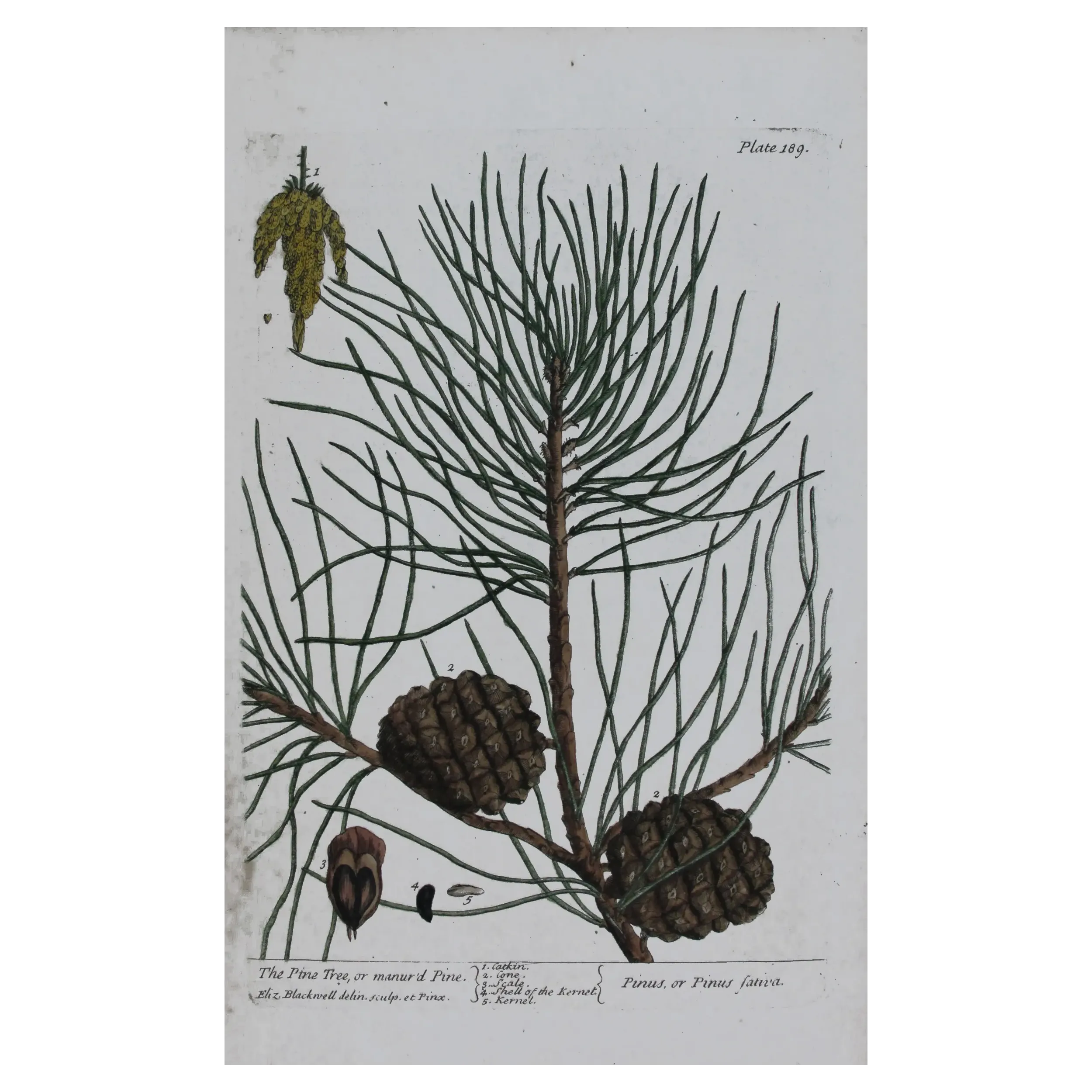
A dynamic pine composition with cones, needles, and golden pollen clusters.


