

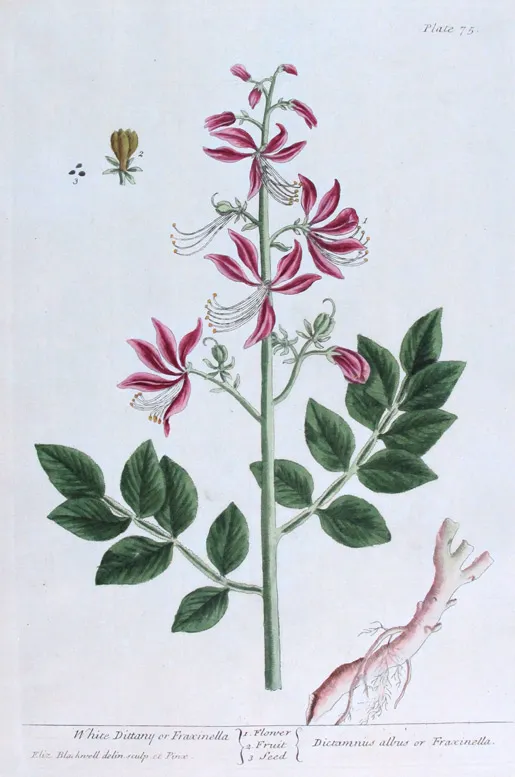
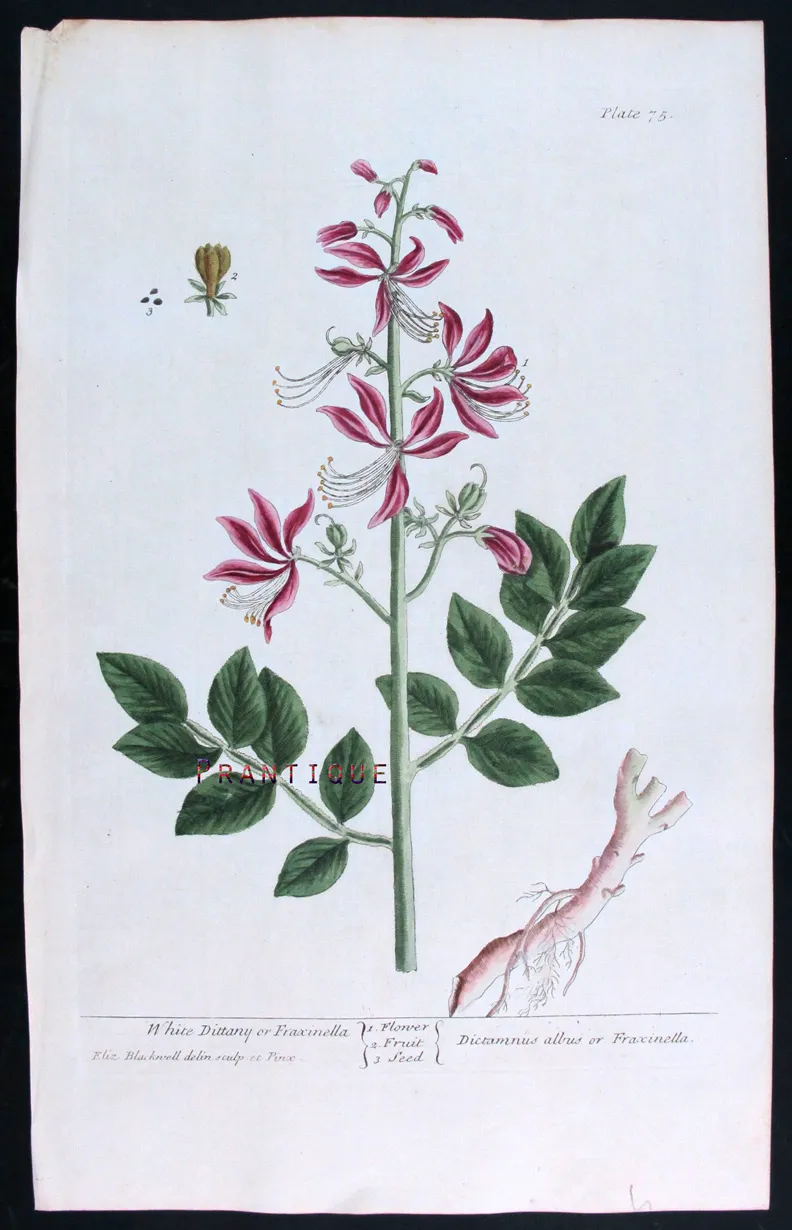


Elegant pink-white blossoms with upright stems and finely shaped leaves, a graceful 18th?century botanical.
 Delivery policy
Your print will be carefully prepared and shipped worldwide via trusted couriers (UPS or similar).
 Authentic antique prints
Original engravings from the 17th–19th century.
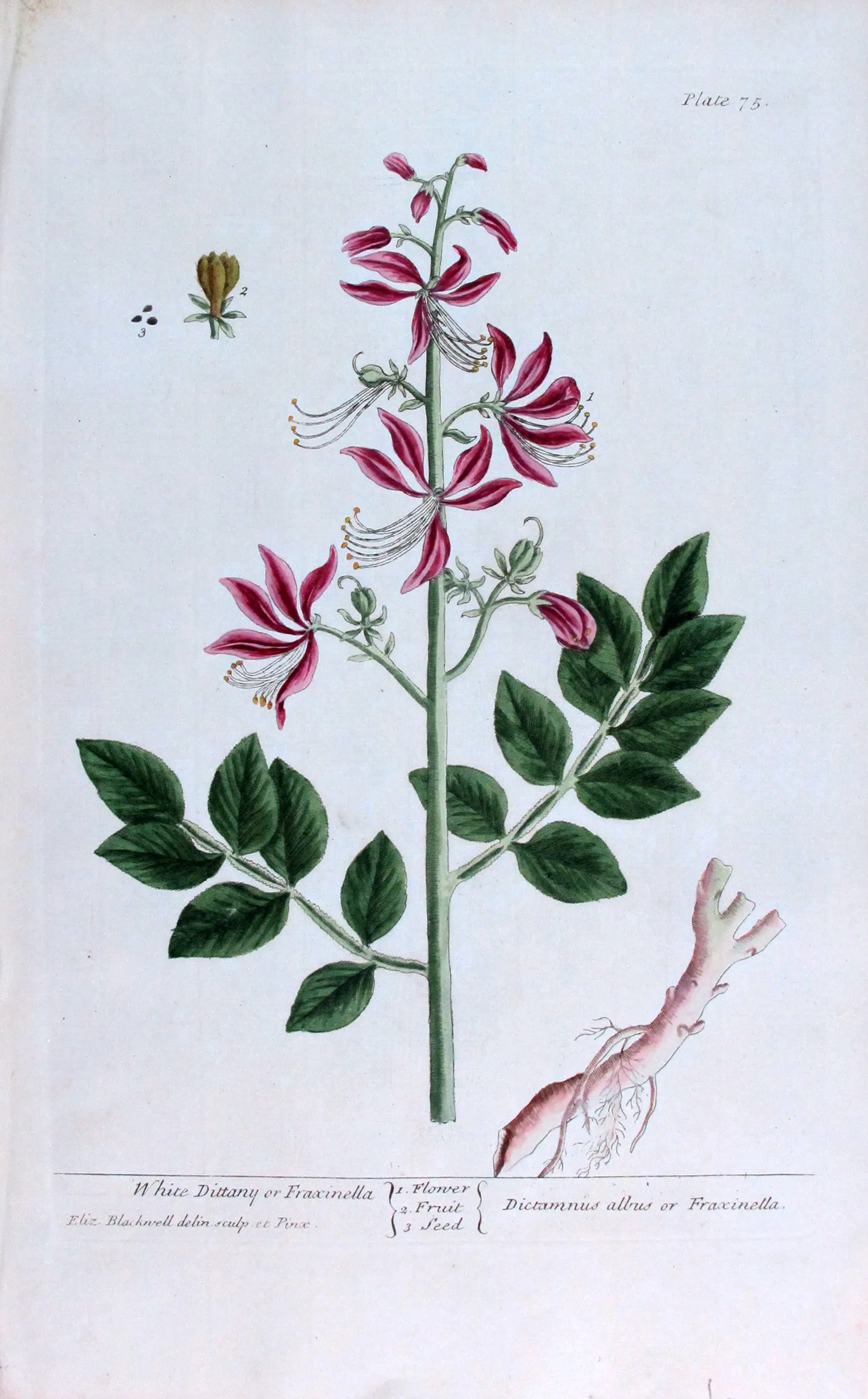
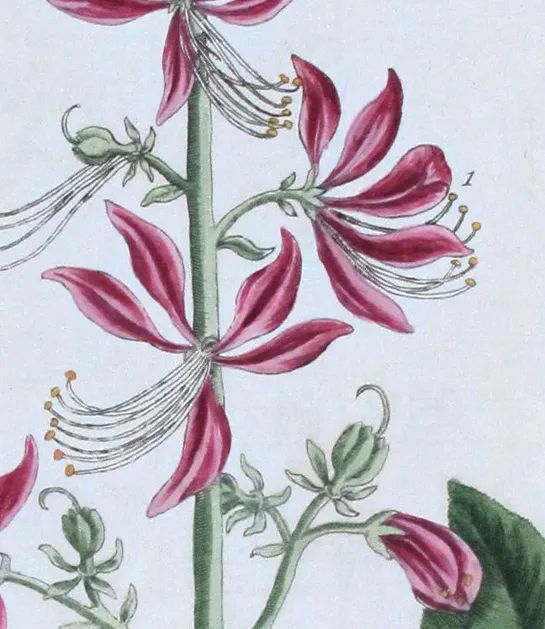
This refined botanical engraving depicts White Dittany (Dictamnus albus), a tall flowering plant distinguished by its upright habit and striking star-shaped blossoms arranged along a central stem.
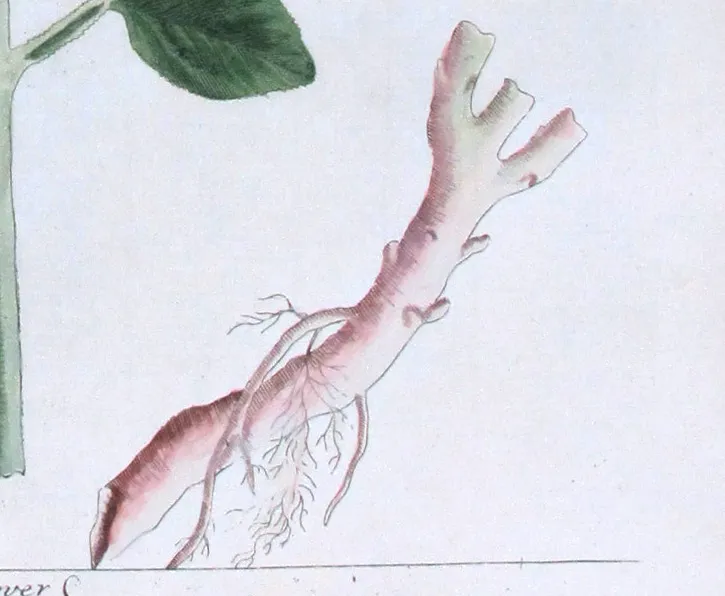
The composition balances delicacy and structure: pale pink flowers with elongated stamens emerge rhythmically along the axis, while deep green, compound leaves anchor the plant visually. A separate rendering of the root emphasizes its medicinal significance, underscoring the plant’s practical importance beyond its ornamental appeal.
Executed in the early eighteenth century, this plate forms part of A Curious Herbal, Elisabeth Blackwell’s ambitious work combining direct observation with medical utility, at a time when botanical illustration served both scientific study and pharmacy.
— • —
The plant is organized along a strong vertical axis, punctuated by blossoms that radiate outward with measured symmetry. The elongated stamens introduce a sense of movement and lightness, contrasting with the solid, grounded presence of the stem and foliage.
Hand-colouring is applied with restraint, enhancing the natural contrast between flower, leaf, and stem without overwhelming the composition. The overall effect is poised and elegant, combining botanical clarity with visual harmony.
White dittany, also known historically as fraxinella (Dictamnus albus), was valued in early European medicine for its aromatic oils and its use in preparations associated with digestion, inflammation, and nervous conditions. The plant was widely noted for its strong scent and for the belief—based on observable phenomena—that it could emit flammable vapours in hot weather. Its presence in A Curious Herbal reflects the close relationship between botanical observation, medicinal application, and experiential knowledge in early modern Europe, where sensory qualities played an important role in therapeutic classification.
The engraving is in exceptionally fine antique condition, printed on original handmade laid paper typical of early 18th-century botanical publications. A period watermark is visible on the sheet, consistent with contemporary papermaking practices. The surface remains fresh and stable, with light, even age-related toning. The hand-colouring is well preserved, and the engraved text and original inscriptions are clear and fully legible, including the artist’s credit “Eliz. Blackwell delin. sculp. et pinx.”
For deeper context on Elisabeth Blackwell’s work and the medical-botanical framework of A Curious Herbal, see our editorial article:
Specific References
Hand-colored engraving of Water Figwort (Scrophularia aquatica), featuring vertical stems, red blossoms and a caterpillar study.
Broad heart-shaped leaves with yellow tubular blooms, beautifully rendered in subtle tones.
Elegant 18th-century hand-colored engraving of the Male Fern by Elizabeth Blackwell, with finely shaded fronds ideal for nature-inspired walls or botanical galleries.
A dynamic pine composition with cones, needles, and golden pollen clusters.
Elegant botanical engraving of Great Figwort (Scrophularia major) with branching stems, clustered flowers and root detail.
Elegant botanical engraving of the Bean plant with pods and seed details.
Graceful 18th-century botanical engraving of the Female Fern by Elizabeth Blackwell, with airy fronds and exposed root, beautiful in minimalist or nature-focused spaces.
Fine 18th-century engraving of the Cornel Tree by Elisabeth Blackwell, with red fruit and delicate foliage.
Original 18th-century engraving of the Wild Cucumber by Elisabeth Blackwell, with spined fruit and yellow flowers.
A graceful hand-colored engraving of Marshmallow (Althaea officinalis) with soft pink flowers and expressive root study.
Charming study with pink blossoms and vivid red rosehips, a classic countryside motif.
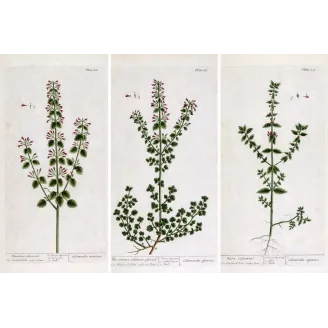
A curated botanical trio illustrating three closely related Calamintha species — officinalis, montana, and aquatica — as engraved and hand-colored by Elisabeth Blackwell for A Curious Herbal (1737–1739). Presented together, these plates offer a rare comparative view of medicinal, habitat-specific, and morphological variation within a single genus, reflecting early modern botanical practice and apothecary knowledge.
Lively Hawthorn branch with crisp green leaves and clusters of rich red berries, a classic countryside motif for warm, welcoming interiors.
Hand-colored 18th-century engraving of the Sweet Cistus of Candy, a graceful botanical plate by Elisabeth Blackwell.
Delicate pea stems with curling tendrils and soft green pods, elegantly hand-colored.
Fine engraving of Black Alder with berries and elegant branching, ideal for natural interiors.
Fine engraving of Black Alder with berries and elegant branching, ideal for natural interiors.
Graceful vertical stem with rounded leaves and yellow blossoms, paired with a prominent root study.
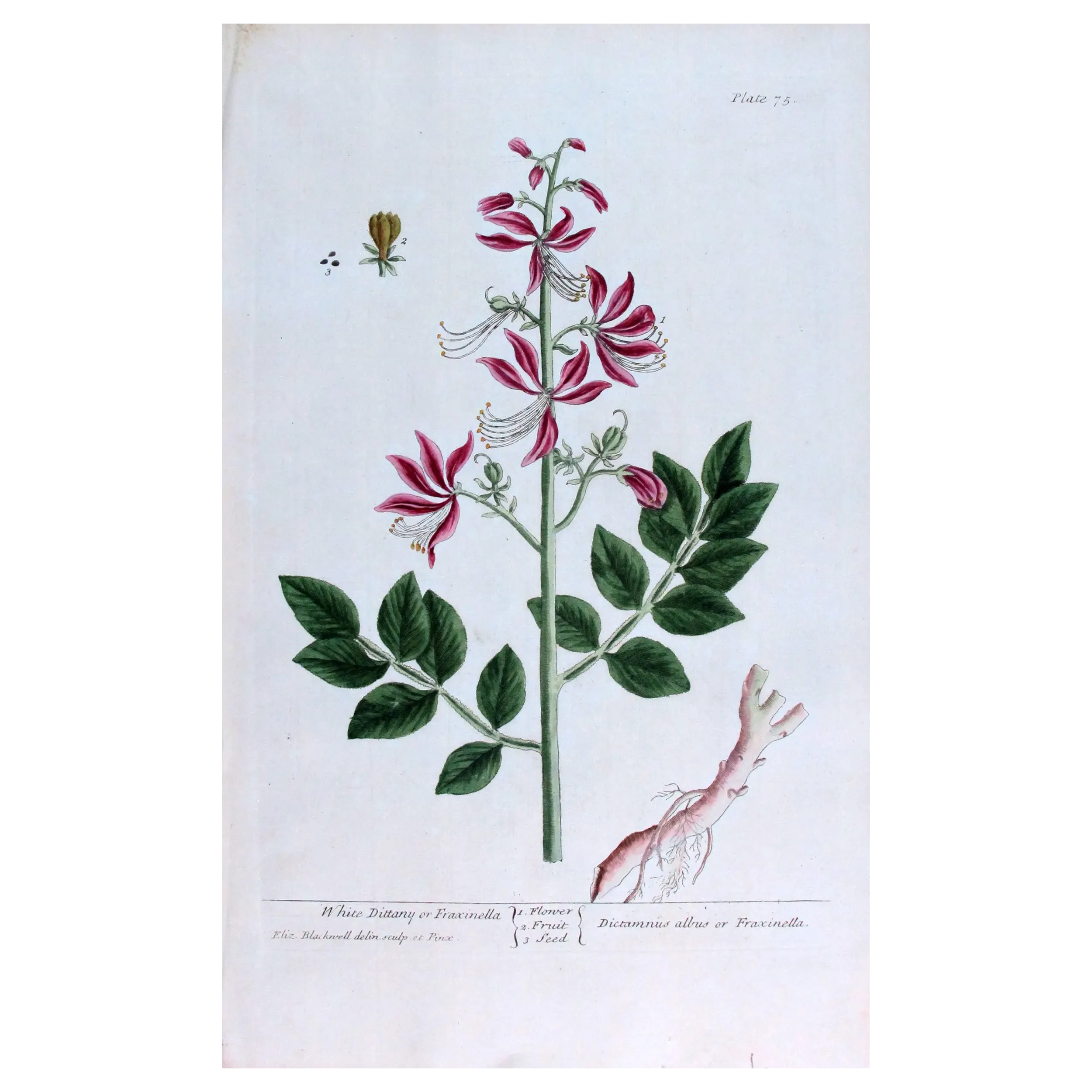
Elegant pink-white blossoms with upright stems and finely shaped leaves, a graceful 18th?century botanical.