
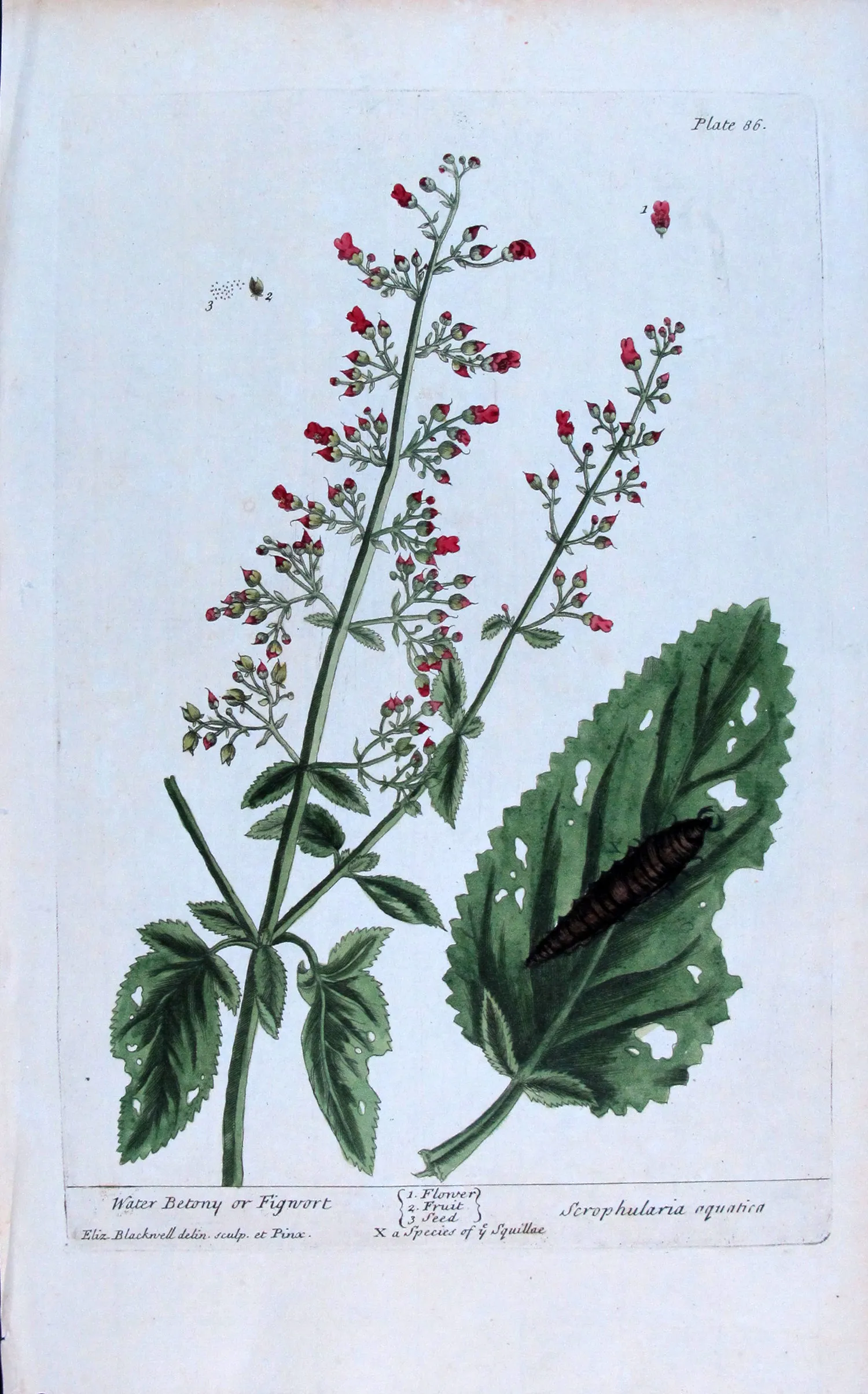

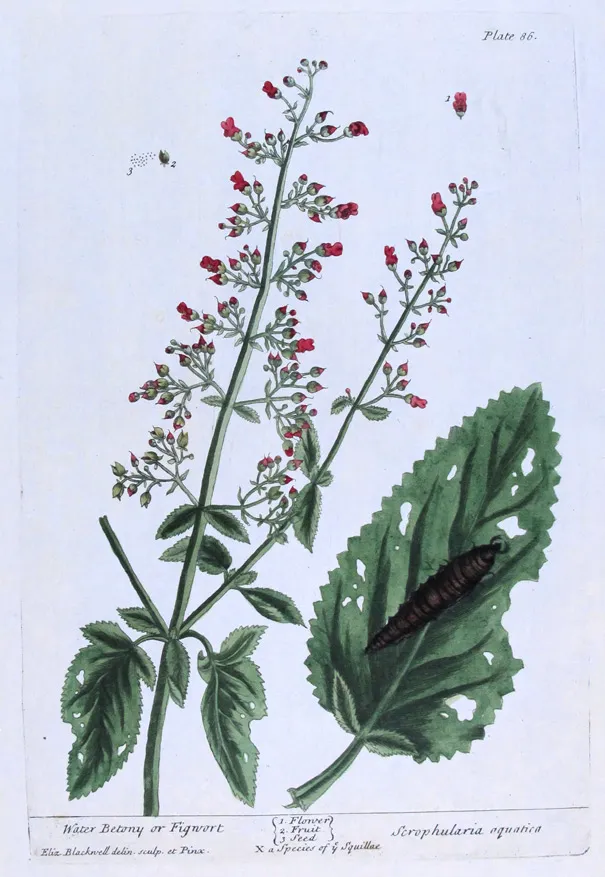
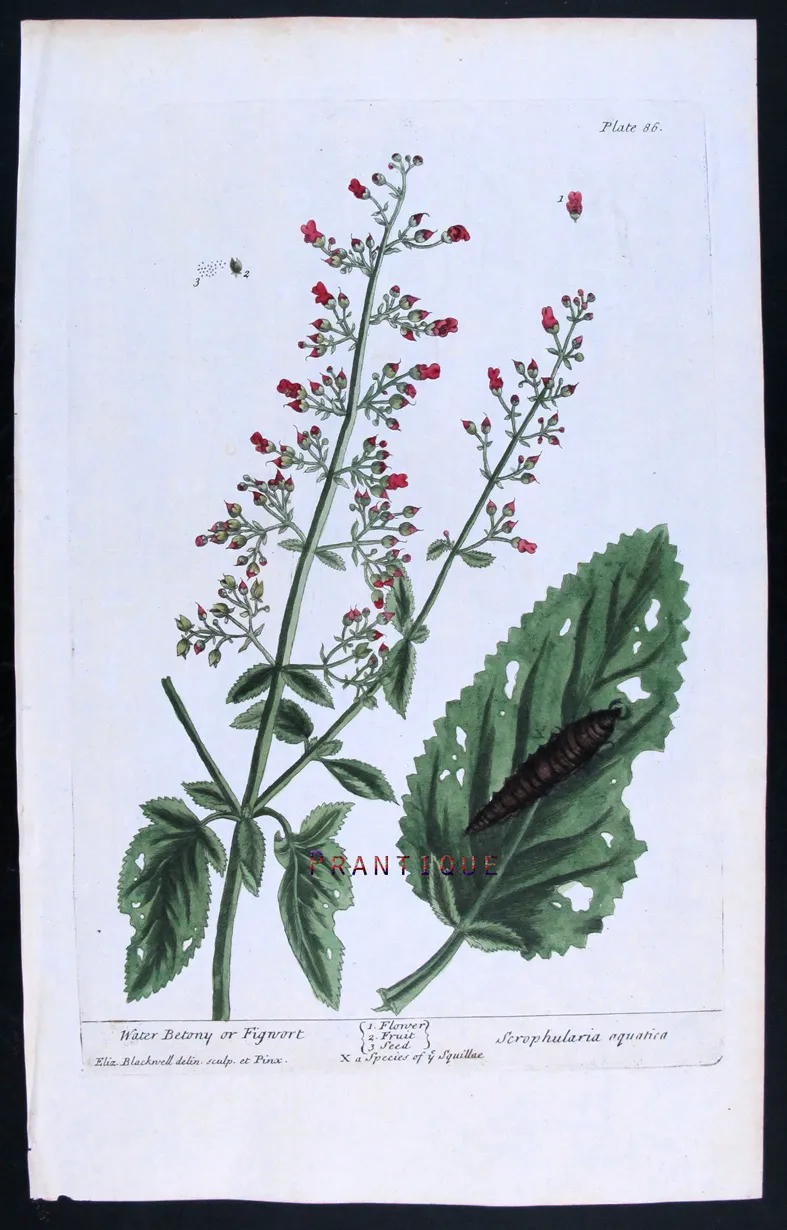


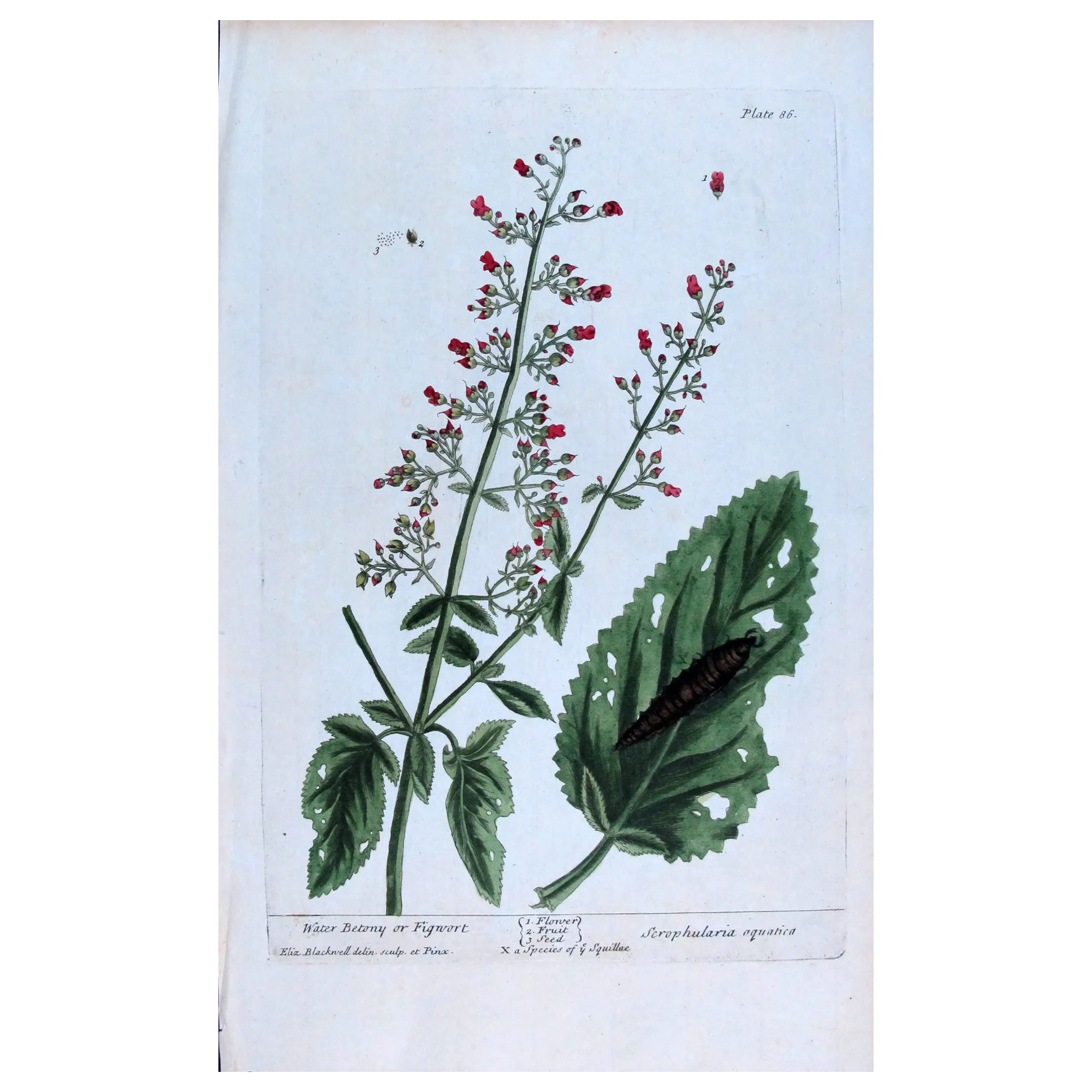
Hand-colored engraving of Water Figwort (Scrophularia aquatica), featuring vertical stems, red blossoms and a caterpillar study.
 Delivery policy
Your print will be carefully prepared and shipped worldwide via trusted couriers (UPS or similar).
 Authentic antique prints
Original engravings from the 17th–19th century.
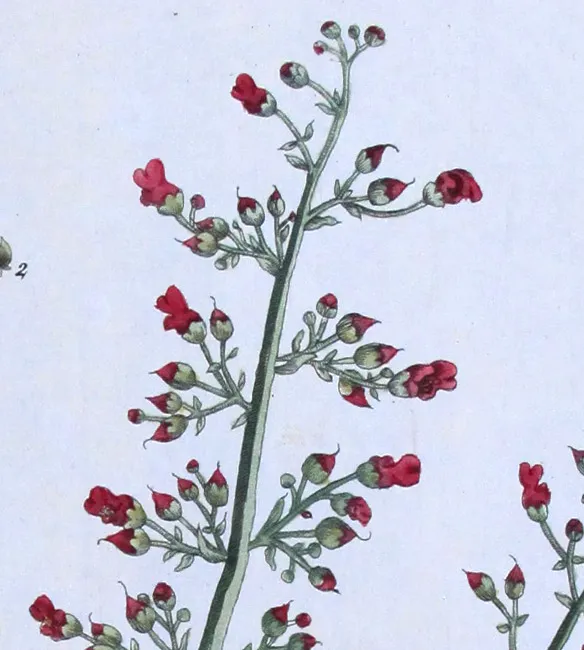
This striking botanical engraving depicts Water Betony, also known as Figwort (Scrophularia aquatica), presented with both scientific clarity and an unusually vivid natural presence. The plate shows the plant in full growth, with flowering stems and characteristic foliage carefully articulated alongside analytical details.
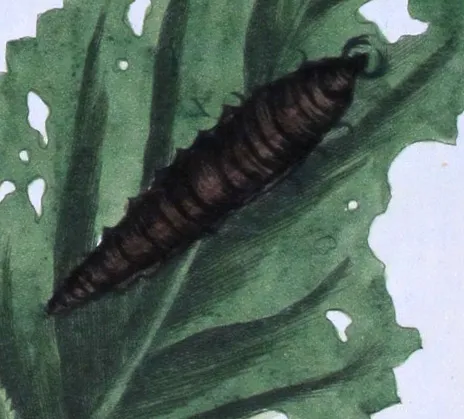
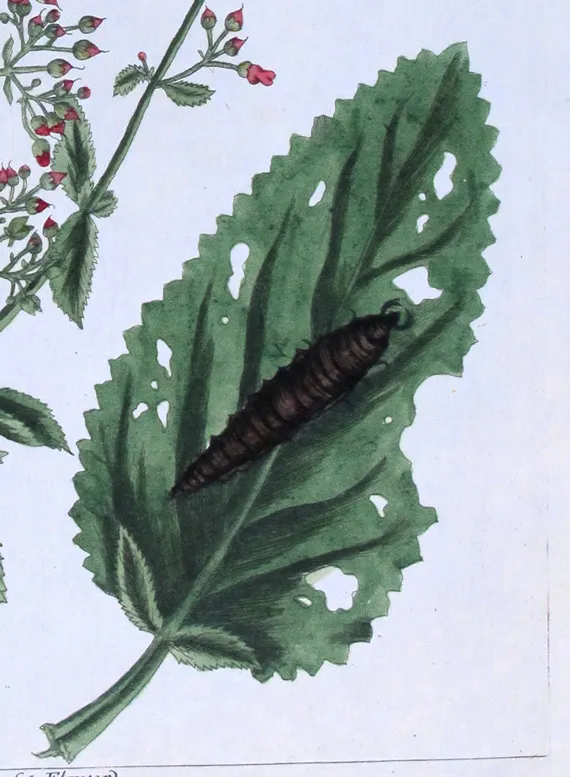
A tall vertical structure carries small clustered blossoms rendered in deep red tones, while the foliage is modelled with confident shading and crisp contour. A large leaf is shown with natural perforations and a small larval form resting upon it—an observational touch that reinforces the print’s documentary character and the lived reality of the plant in its habitat.
Produced in the early eighteenth century, this engraving belongs to A Curious Herbal (1737–1739), a foundational botanical and medical publication distinguished by the rare unity of authorship, in which drawing, copper engraving, and hand-colouring were executed by Elisabeth Blackwell herself.
— • —
The composition is anchored by a strong central stem that rises with architectural clarity, while branching flower sprays introduce measured asymmetry and a sense of upward motion. The chromatic contrast between the cool greens and the saturated reds creates a restrained but memorable visual rhythm.
The enlarged leaf element functions as both a botanical close-up and a compositional counterweight, adding dramatic scale variation. The natural leaf wear and the small larval presence introduce a subtle narrative note—an aesthetic of observation that feels remarkably modern while remaining faithful to the engraving’s analytical purpose.
Figworts (Scrophularia) were repeatedly recorded in early modern herbals for their place in household and apothecary practice, particularly in traditions concerned with external applications and “cooling” remedies. The common name “figwort” reflects historic associations with treatments for swellings and skin conditions, and clear identification mattered because related plants could share similar foliage and habit. Blackwell’s plate emphasizes reliable markers: the upright branching stems, the clustered tubular flowers, and the overall growth form typical of waterside environments. Within A Curious Herbal, this subject captures the book’s practical ambition: to provide readable, trustworthy botanical references at a time when medicine relied heavily on visual knowledge.
The engraving is preserved in like brand new antique condition, printed on original handmade laid paper typical of early eighteenth-century botanical publications. A period watermark is visible on the sheet, consistent with contemporary papermaking practices. The surface remains clean and stable, with a crisp impression and fresh original hand-colouring throughout. No notable defects are present. The engraved credit “Eliz. Blackwell delin. sculp. et pinx.” is fully legible, confirming that the drawing, engraving, and hand-colouring were executed by Elisabeth Blackwell herself.
For further context on Elisabeth Blackwell and the singular unity of authorship behind A Curious Herbal, see our editorial feature:
Specific References
Graceful engraving of Wheat varieties with seed details, ideal for rustic décor.
Broad heart-shaped leaves with yellow tubular blooms, beautifully rendered in subtle tones.
18th-century hand-colored engraving of the Wilding or Crab Tree by Elisabeth Blackwell, with blossom and fruit details.
A curated botanical trio illustrating three closely related Calamintha species — officinalis, montana, and aquatica — as engraved and hand-colored by Elisabeth Blackwell for A Curious Herbal (1737–1739). Presented together, these plates offer a rare comparative view of medicinal, habitat-specific, and morphological variation within a single genus, reflecting early modern botanical practice and apothecary knowledge.
Lively 18th-century engraving of Polypody of the Oak by Elizabeth Blackwell, showing rhythmic fern fronds and creeping rhizomes, perfect for naturalist or woodland-themed decor.
18th-century hand-colored engraving of the Almond Tree by Elisabeth Blackwell, with blossom, fruit and kernel beautifully rendered.
Dramatic lichen plate with sculptural fronds and rocky support, perfect for collectors who love unusual, textural natural history subjects.
Elegant 18th-century hand-colored engraving of the Male Fern by Elizabeth Blackwell, with finely shaded fronds ideal for nature-inspired walls or botanical galleries.
Fine engraving of Black Alder with berries and elegant branching, ideal for natural interiors.
Charming 18th-century engraving of Sage by Elizabeth Blackwell, with blue-green leaves and delicate flowers, perfect for kitchen walls or herb-themed gallery displays.
Graceful vertical stem with rounded leaves and yellow blossoms, paired with a prominent root study.
Striking composition of the Pitch Tree with tall central stem and large cones, bringing strong graphic presence to botanical displays or rustic interiors.
Hand-colored 18th-century engraving of the Sweet Cistus of Candy, a graceful botanical plate by Elisabeth Blackwell.
Elegant olive branches with vivid green leaves and fruit in subtle yellow tones.
Elegant botanical engraving of Great Figwort (Scrophularia major) with branching stems, clustered flowers and root detail.
Lively Hawthorn branch with crisp green leaves and clusters of rich red berries, a classic countryside motif for warm, welcoming interiors.
19th-century hand-colored engraving of Water Calamint, with delicate pink blooms and fine botanical details.
Hand-colored engraving of Water Figwort (Scrophularia aquatica), featuring vertical stems, red blossoms and a caterpillar study.