

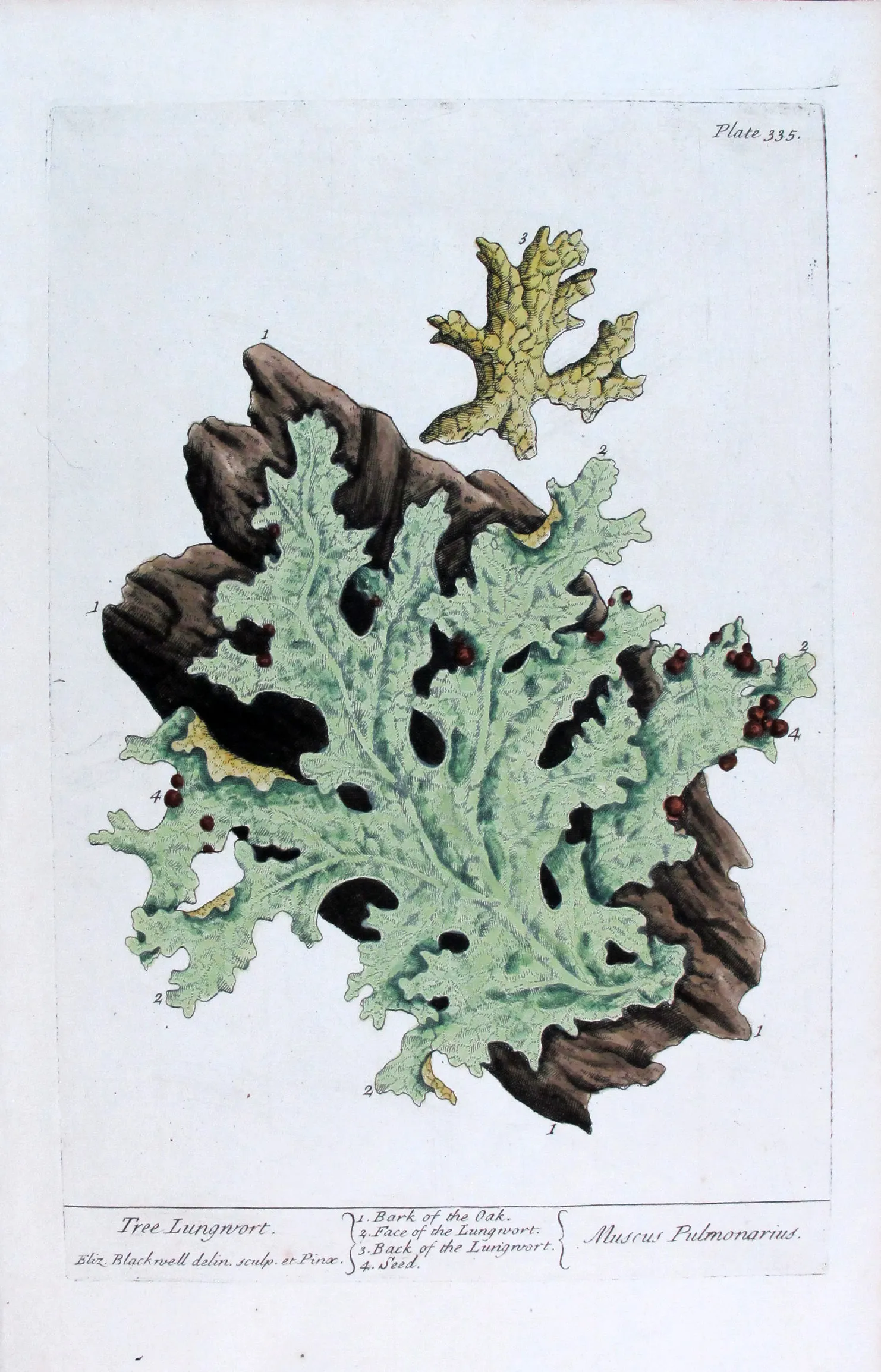

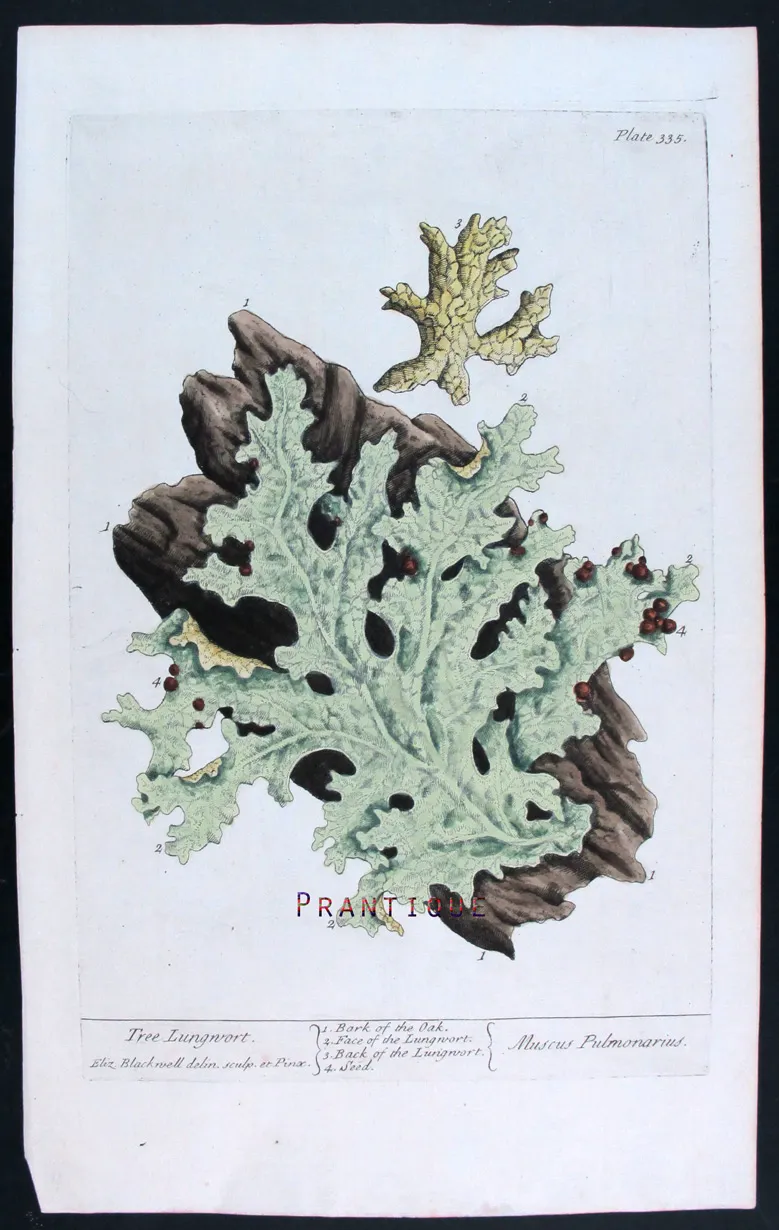


Dramatic lichen plate with sculptural fronds and rocky support, perfect for collectors who love unusual, textural natural history subjects.
 Delivery policy
Your print will be carefully prepared and shipped worldwide via trusted couriers (UPS or similar).
 Authentic antique prints
Original engravings from the 17th–19th century.
This refined botanical engraving depicts Tree Lungwort (Lobaria pulmonaria), a distinctive lichen characterized by broad, lobed fronds with an irregular, leaf-like structure, shown in association with fragments of bark.
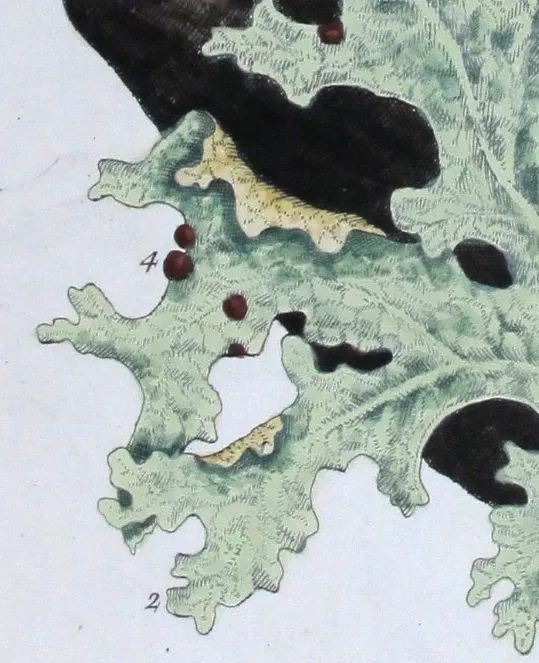
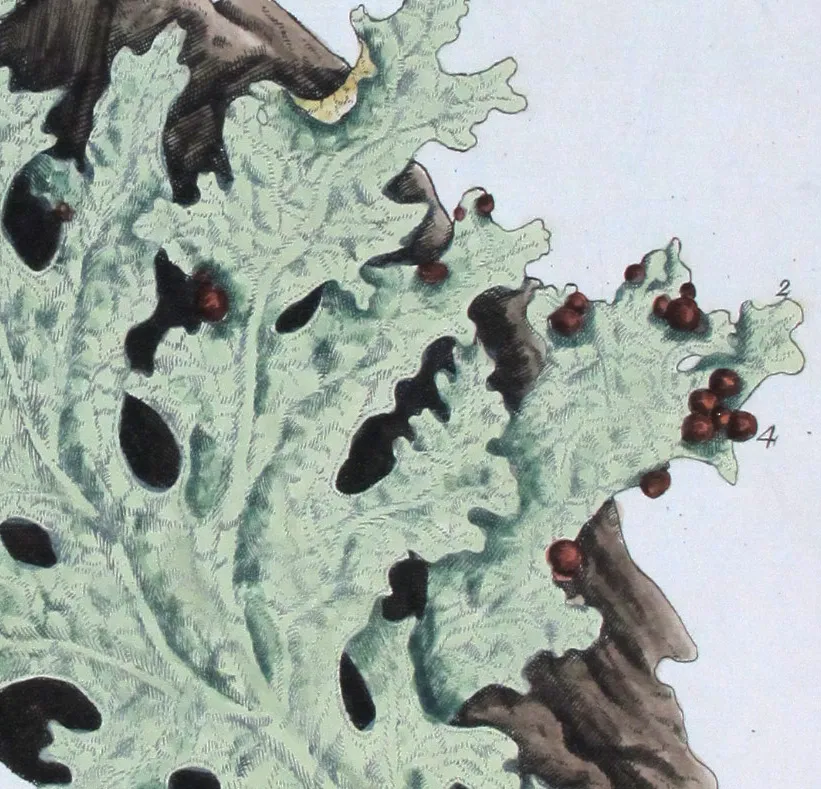
The specimen spreads outward from a central mass, its pale green surface punctuated by natural perforations and darker marginal zones. Elisabeth Blackwell presents the organism as it appears in situ, emphasizing layered texture and organic asymmetry rather than imposing rigid botanical symmetry.
Produced in the early eighteenth century, this plate forms part of A Curious Herbal, a work notable for its inclusion of plants, fungi, and cryptogams that played an important role in traditional medicine despite their marginal status in formal botany.
— • —
The composition is dominated by a wide, flattened thallus whose branching lobes create a rhythm of expansion and contraction. The contrast between the cool green surface and the darker bark fragments introduces depth and reinforces the organism’s close relationship with its host substrate.
Fine hand-colouring accentuates surface texture rather than decorative colour, guiding attention to structure and form. The result is an image that balances scientific observation with a quietly dramatic, almost sculptural presence.
Tree lungwort—referred to in early sources as Musci pulmonarius—was valued in European medical tradition under the doctrine of signatures, its lung-like form suggesting application in respiratory ailments. Commonly found growing on the bark of mature trees in damp woodlands, it was gathered rather than cultivated, making accurate visual recognition essential. Its presence in A Curious Herbal reflects a period when medicinal knowledge drew upon visual resemblance, habitat, and empirical use, and when organisms now classified as lichens or cryptogams were integrated into practical medical botany.
The engraving is in exceptionally fine antique condition, printed on original handmade laid paper typical of early 18th-century botanical publications. No watermark has been observed. The surface remains fresh and stable, with soft, even age-related toning consistent with period paper. The impression is crisp and clear, with well-preserved hand-colouring and intact engraved inscriptions, including the original title and the artist’s credit.
For further insight into Elisabeth Blackwell’s work and the medical context of A Curious Herbal, see our editorial article:
Specific References
Striking palm fronds paired with warm golden dates, a highly decorative composition.
Fine engraving of Great Centaury (Centaurium majus) with pinkish florets, slender stems, and a butterfly study.
Charming study with pink blossoms and vivid red rosehips, a classic countryside motif.
Elegant pink-white blossoms with upright stems and finely shaped leaves, a graceful 18th?century botanical.
Delicate pea stems with curling tendrils and soft green pods, elegantly hand-colored.
18th-century hand-colored engraving of Rhapontic with broad leaves and sculptural root, ideal for botanical décor.
19th-century hand-colored engraving of Water Calamint, with delicate pink blooms and fine botanical details.
Hand-colored engraving of Water Figwort (Scrophularia aquatica), featuring vertical stems, red blossoms and a caterpillar study.
19th-century hand-colored engraving of Water Pepper (Hydropiper), a graceful botanical with slender leaves and pink florets.
Elegant botanical engraving of the Bean plant with pods and seed details.
Elegant Silver Fir with upright cones and finely spaced needles, a refined forest motif for sophisticated interiors and collectors of conifer imagery.
Broad heart-shaped leaves with yellow tubular blooms, beautifully rendered in subtle tones.
Striking composition of the Pitch Tree with tall central stem and large cones, bringing strong graphic presence to botanical displays or rustic interiors.
18th-century hand-colored engraving of the Wilding or Crab Tree by Elisabeth Blackwell, with blossom and fruit details.
18th-century hand-colored engraving of a Garden Cucumber by Elisabeth Blackwell, with curling tendrils and yellow blossoms.
Hand-colored 18th-century engraving of the Sweet Cistus of Candy, a graceful botanical plate by Elisabeth Blackwell.
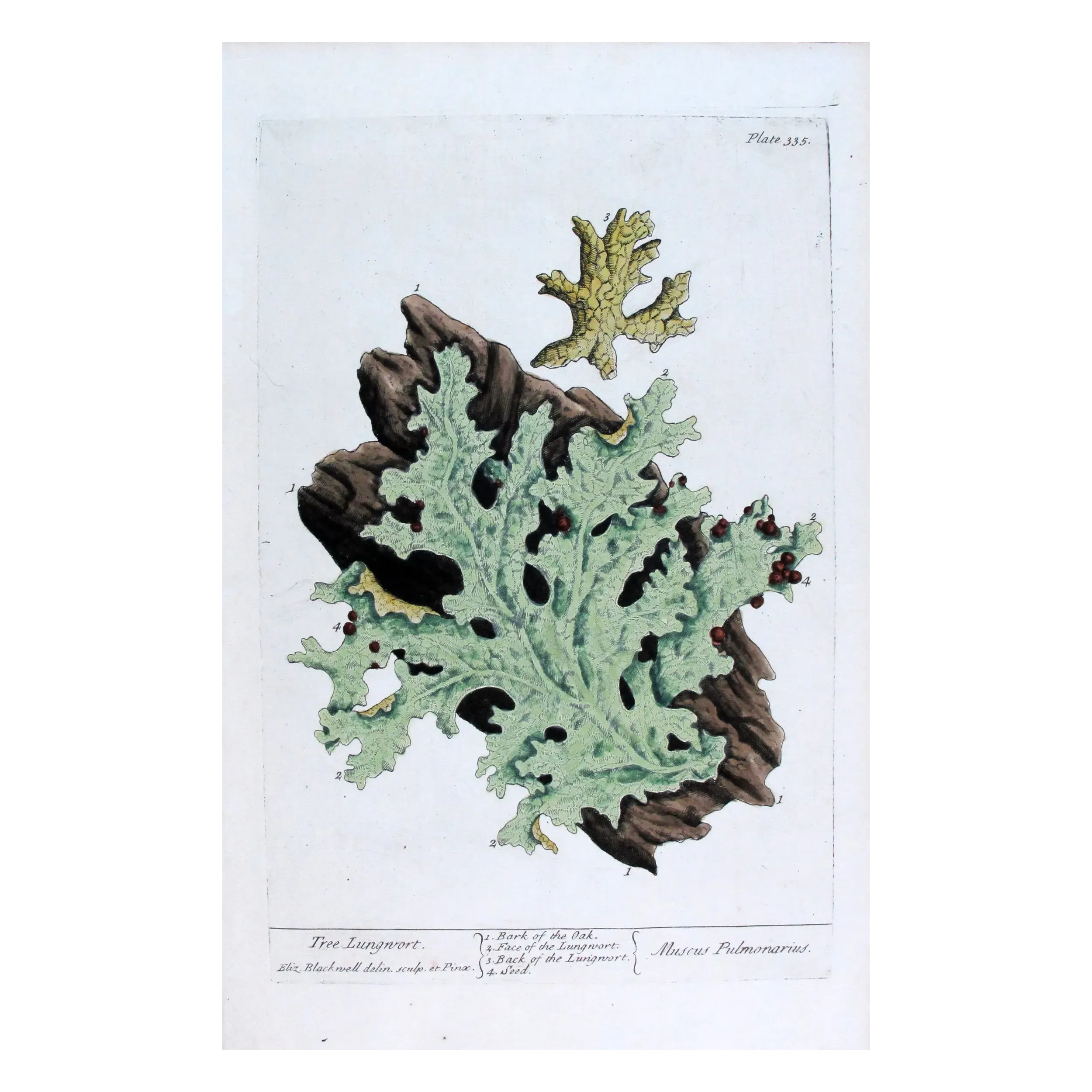
Dramatic lichen plate with sculptural fronds and rocky support, perfect for collectors who love unusual, textural natural history subjects.


