
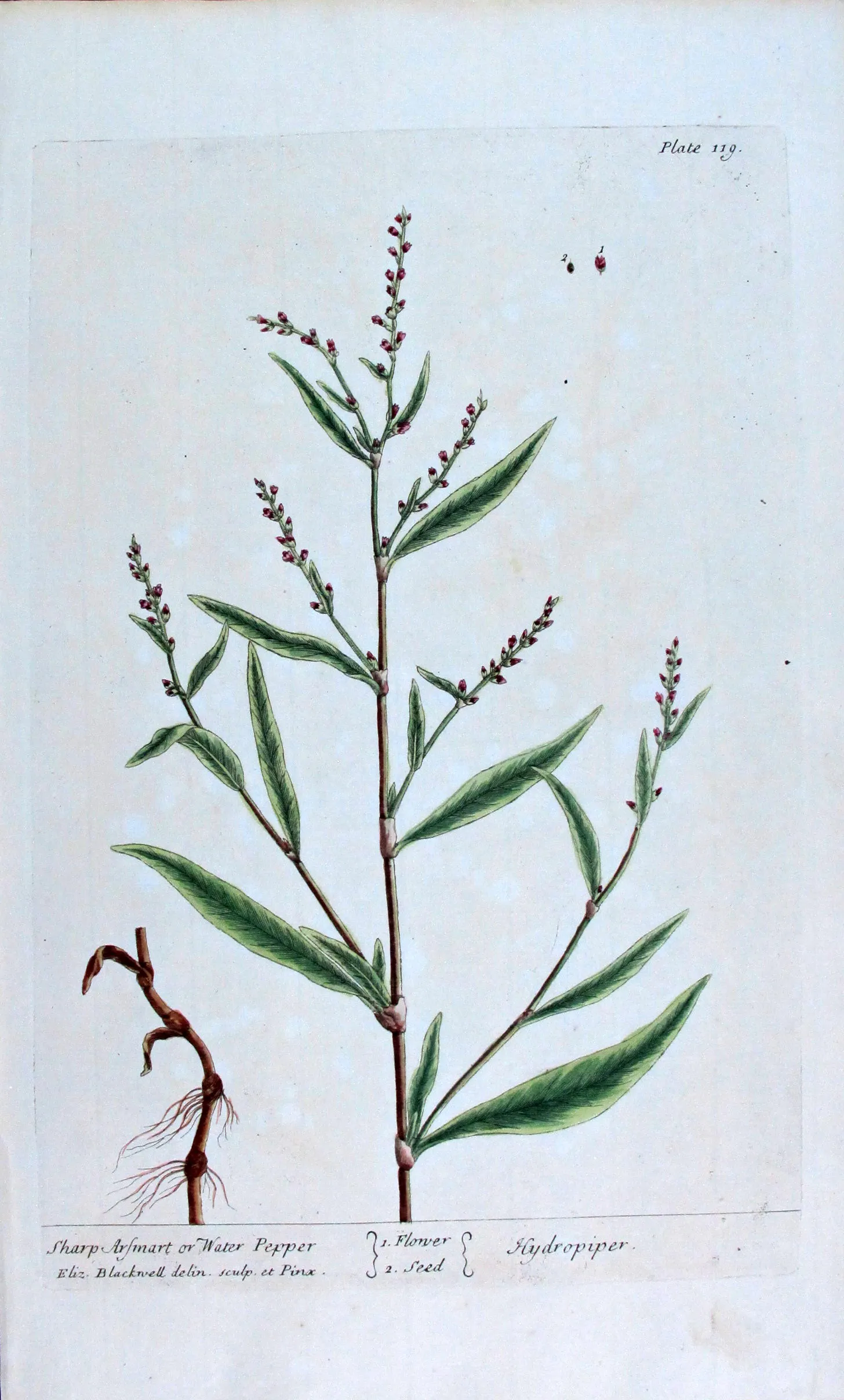
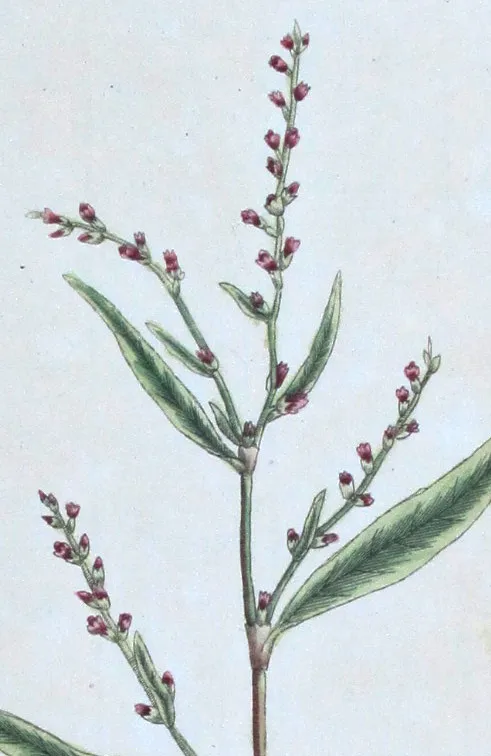

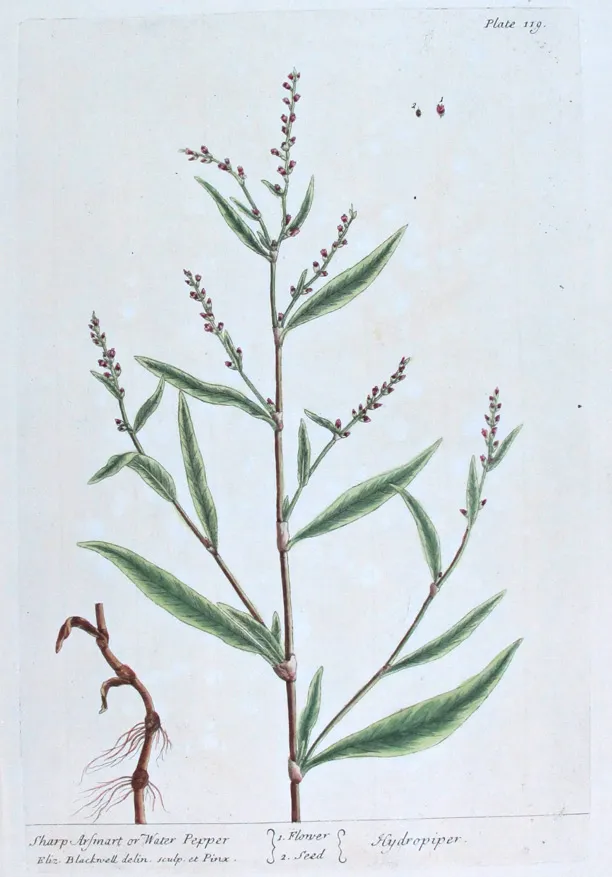
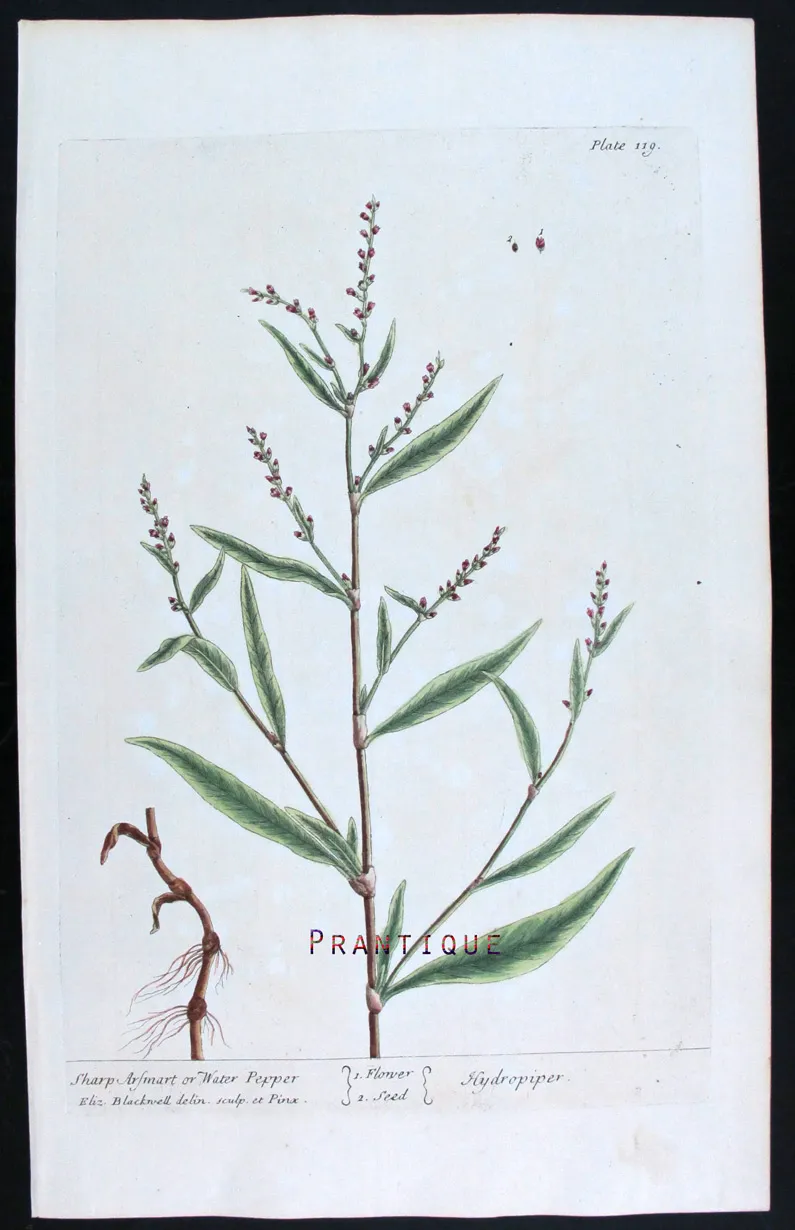


19th-century hand-colored engraving of Water Pepper (Hydropiper), a graceful botanical with slender leaves and pink florets.
 Delivery policy
Your print will be carefully prepared and shipped worldwide via trusted couriers (UPS or similar).
 Authentic antique prints
Original engravings from the 17th–19th century.
This refined botanical engraving illustrates Sharp Asmart, commonly known as Water Pepper (Persicaria hydropiper), a slender herbaceous plant traditionally associated with wet habitats and medicinal use. The plate presents the plant in a calm, upright composition that balances descriptive clarity with visual elegance.
A central vertical stem supports narrow lanceolate leaves, while delicate flowering spikes emerge rhythmically along the upper branches. Blackwell’s restrained hand-colouring emphasizes tonal harmony rather than decorative excess, allowing the structure of the plant to remain legible and composed.
Produced in the early eighteenth century, this engraving belongs to A Curious Herbal (1737–1739), a landmark botanical publication distinguished by the rare unity of authorship, in which drawing, engraving, and colouring were executed by Elisabeth Blackwell herself.
— • —
The composition is defined by a strong vertical axis, giving the plant a poised and architectural presence. The alternating leaves introduce gentle lateral movement, while the fine flowering spikes provide subtle points of visual interest without disturbing the overall balance.
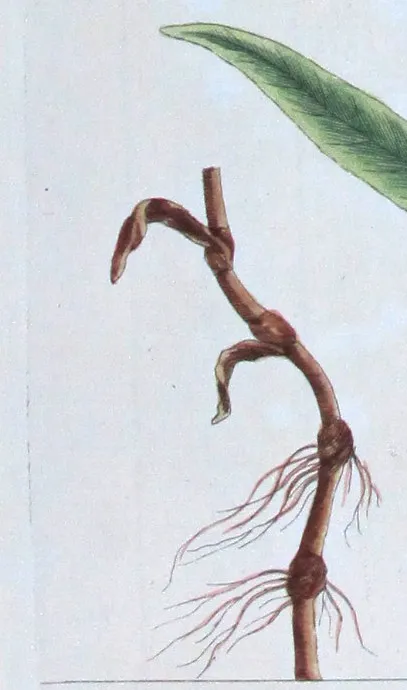
The palette remains deliberately limited, reinforcing botanical clarity and creating a soft, understated aesthetic. A small root detail positioned separately complements the main figure, underscoring the analytical intent of the engraving while preserving visual harmony.
Persicaria hydropiper, known historically as sharp asmart or water pepper, was valued in early modern herbal medicine for its pungent and stimulating properties. Frequently recorded in eighteenth-century pharmacopeias, the plant was associated with remedies requiring careful dosage and accurate identification. Blackwell’s depiction reflects this practical concern: the emphasis on leaf shape, flowering habit, and root structure provides a reliable visual reference for readers navigating medicinal plants with similar growth forms. Within A Curious Herbal, water pepper exemplifies the work’s function as a dependable guide for domestic and medical use, grounded in observation rather than ornament.
The engraving is preserved in like brand new antique condition, printed on original handmade laid paper typical of early eighteenth-century botanical publications. No watermark is visible on the sheet. The surface remains clean and stable, with a crisp impression and fresh original hand-colouring throughout. No notable defects are present. The engraved credit “Eliz. Blackwell delin. sculp. et pinx.” is fully legible, confirming that the drawing, engraving, and hand-colouring were executed by Elisabeth Blackwell herself.
For further context on Elisabeth Blackwell and the singular unity of authorship behind A Curious Herbal, see our editorial feature:
Specific References
Hand-colored 18th-century engraving of the Sweet Cistus of Candy, a graceful botanical plate by Elisabeth Blackwell.
Hand-colored botanical engraving of the Common Calamint, with dense foliage and soft pink-purple florets.
Fine 18th-century botanical of the Wild Pine, with graceful hanging cones and delicate needles ideal for woodland-themed interiors and natural history walls.
Hand-colored engraving of Water Figwort (Scrophularia aquatica), featuring vertical stems, red blossoms and a caterpillar study.
Lively 18th-century engraving of Polypody of the Oak by Elizabeth Blackwell, showing rhythmic fern fronds and creeping rhizomes, perfect for naturalist or woodland-themed decor.
Original 18th-century engraving of the Wild Cucumber by Elisabeth Blackwell, with spined fruit and yellow flowers.
18th-century hand-colored engraving of the Almond Tree by Elisabeth Blackwell, with blossom, fruit and kernel beautifully rendered.
Refined 18th-century engraving of Mountain Calamint by Elizabeth Blackwell, with upright stems and pink blossoms, ideal for calm, herbal or cottage-inspired interiors.
Fine 18th-century hand-colored engraving of Euphorbium by Elisabeth Blackwell, a striking botanical study ideal for collectors.
Graceful engraving of Wheat varieties with seed details, ideal for rustic décor.
Dramatic lichen plate with sculptural fronds and rocky support, perfect for collectors who love unusual, textural natural history subjects.
Graceful vertical stem with rounded leaves and yellow blossoms, paired with a prominent root study.
Charming study with pink blossoms and vivid red rosehips, a classic countryside motif.
Elegant Silver Fir with upright cones and finely spaced needles, a refined forest motif for sophisticated interiors and collectors of conifer imagery.
Fine 18th-century engraving of the Medlar Tree by Elisabeth Blackwell, featuring fruit, blossom, and botanical detail.
Little Black Cormorant (Carbo sulcirostris) – Original antique bird print by H. Grønvold
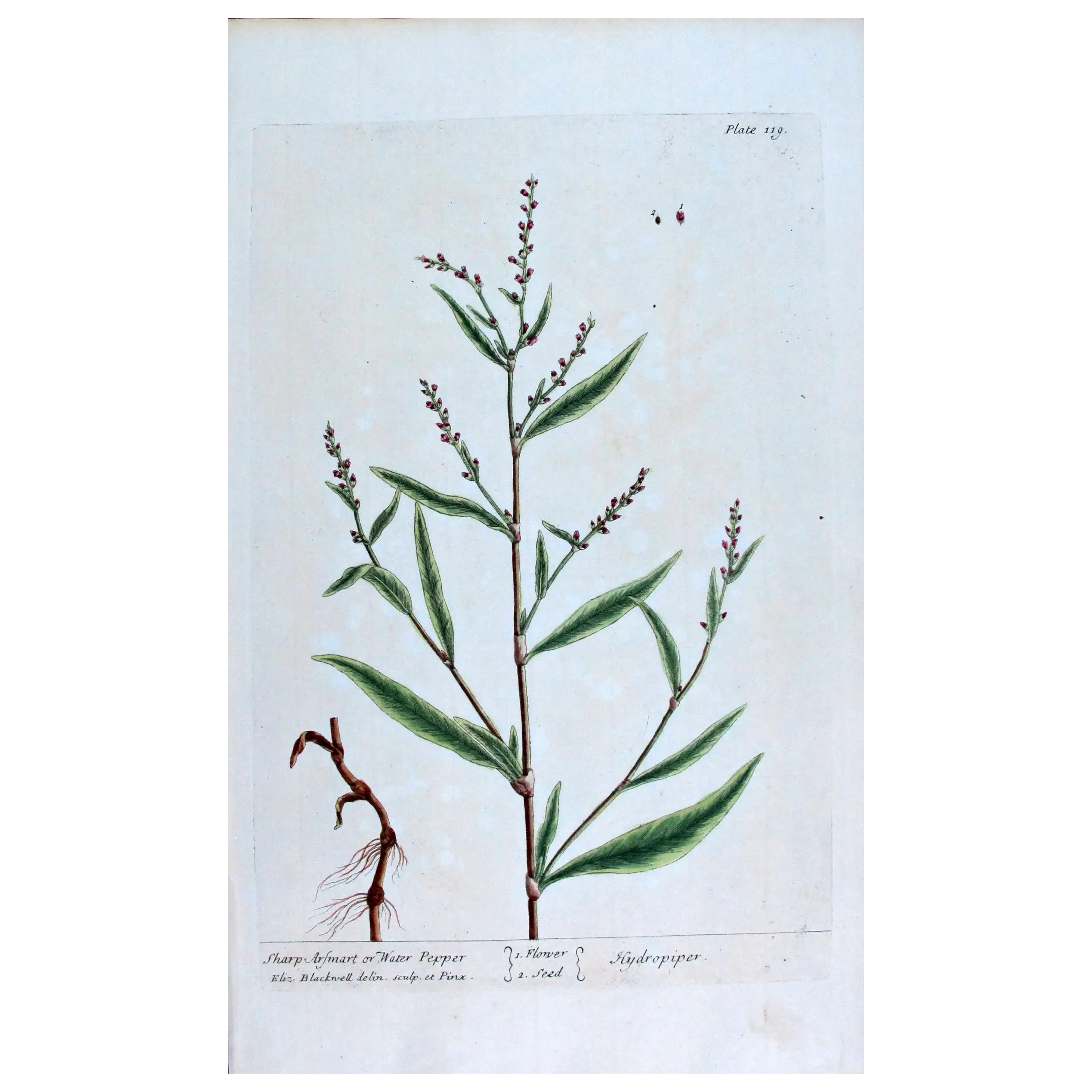
19th-century hand-colored engraving of Water Pepper (Hydropiper), a graceful botanical with slender leaves and pink florets.