

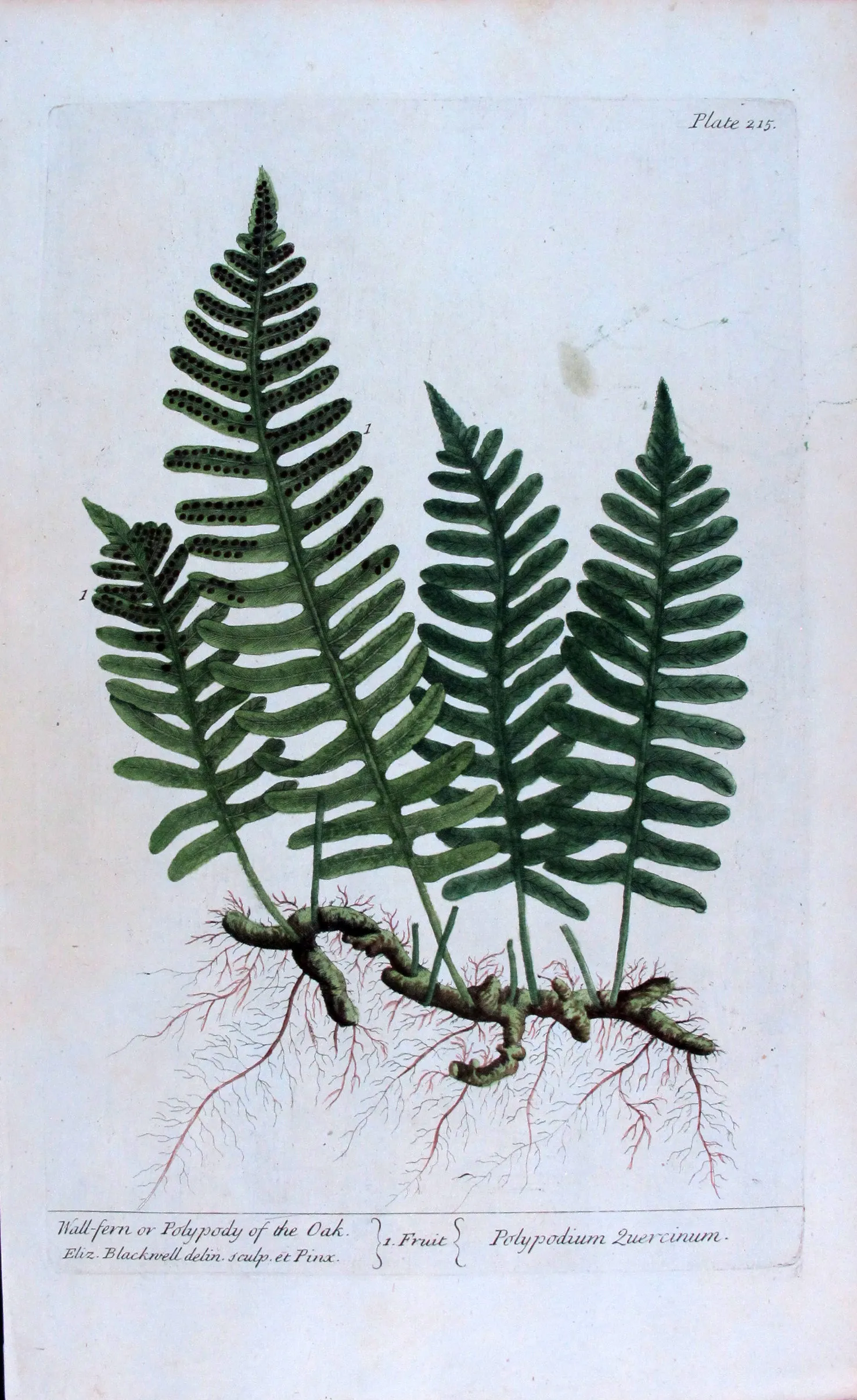

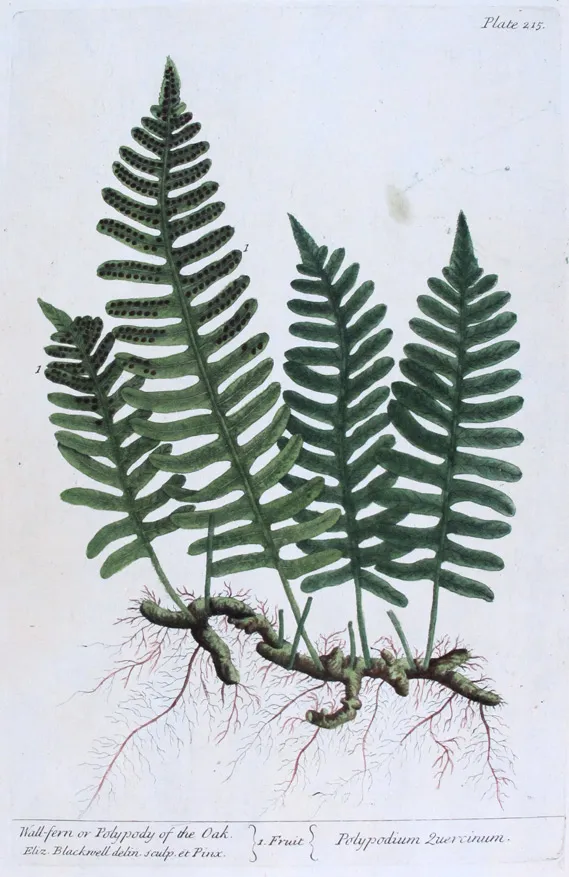


Lively 18th-century engraving of Polypody of the Oak by Elizabeth Blackwell, showing rhythmic fern fronds and creeping rhizomes, perfect for naturalist or woodland-themed decor.
 Delivery policy
Your print will be carefully prepared and shipped worldwide via trusted couriers (UPS or similar).
 Authentic antique prints
Original engravings from the 17th–19th century.
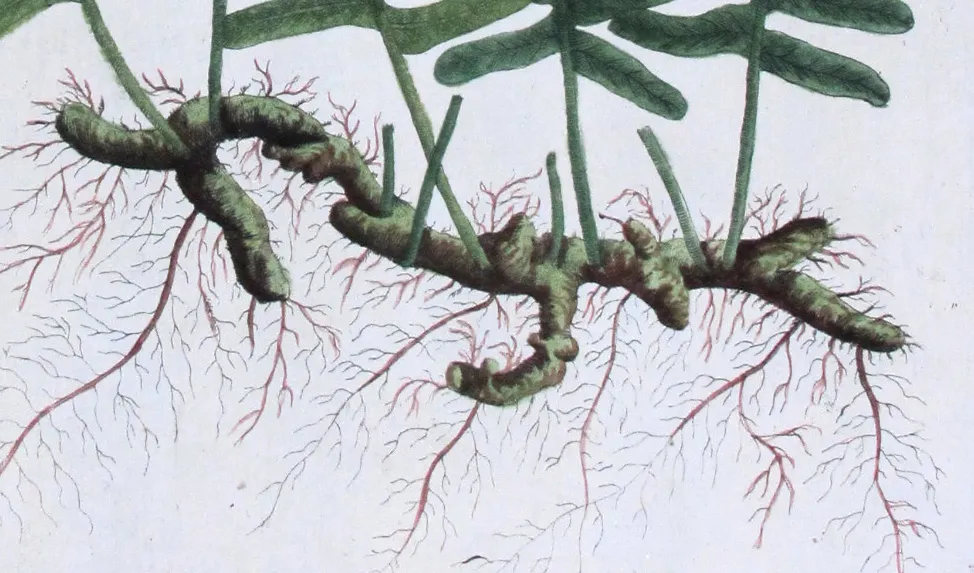
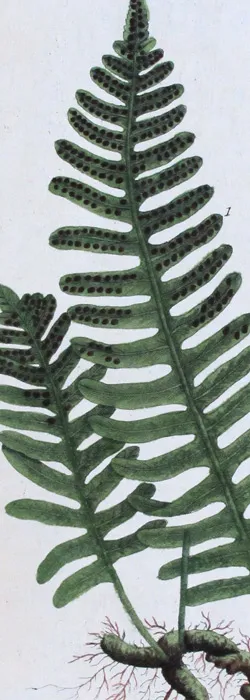
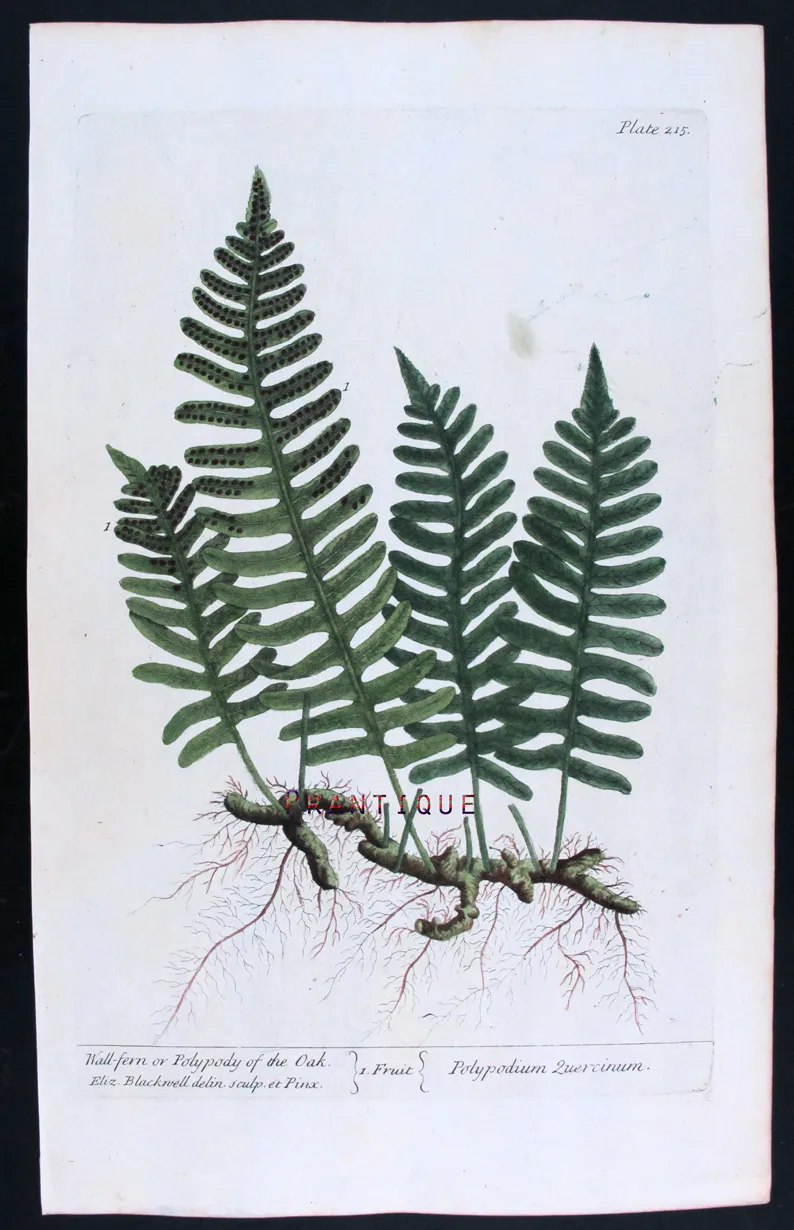
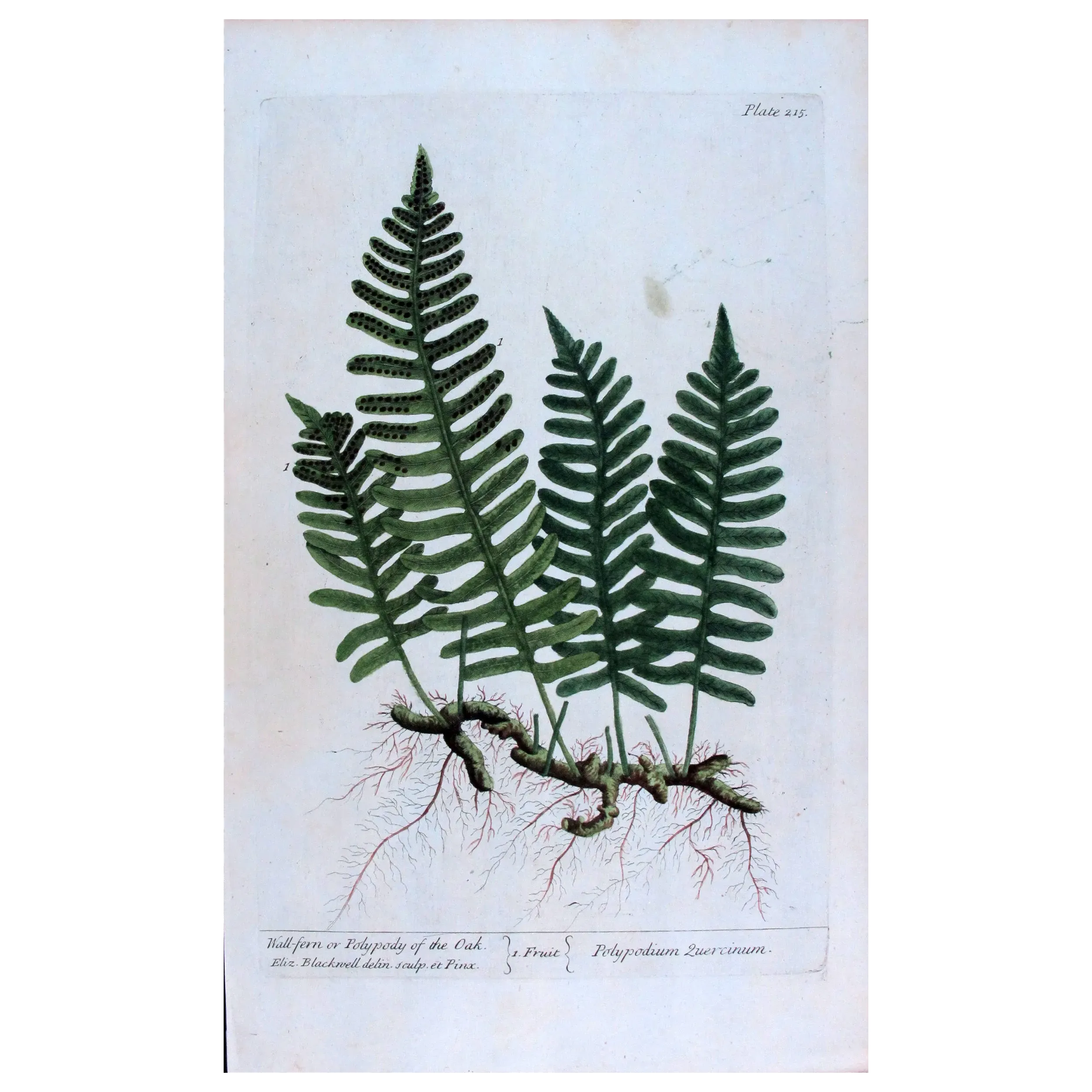
This refined botanical engraving depicts the Wall Fern, also known as the Polypody of the Oak (Polypodium quercinum), presenting several mature fronds arising from a creeping rhizome, with clear views of leaf structure and fruiting surfaces.
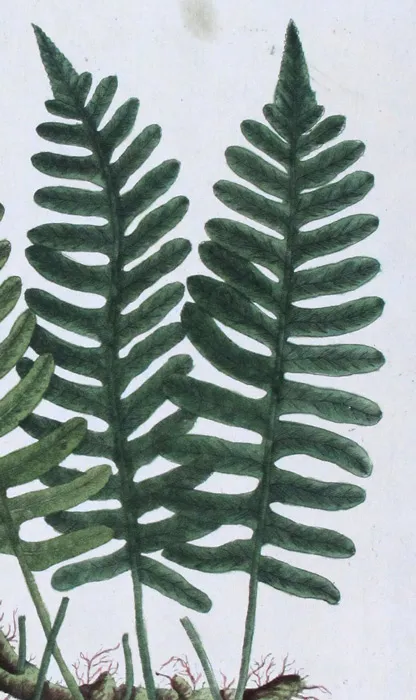
The fronds are rendered with measured symmetry and a leathery texture, their rounded lobes arranged along a central midrib. Elisabeth Blackwell emphasizes diagnostic features by including multiple fronds at different stages, as well as detailed views of the underside of the leaves, where the sori are clearly visible.
Produced in the early eighteenth century, this plate forms part of A Curious Herbal, a work notable for its careful documentation of ferns and cryptogams—plants of recognized medicinal value despite their lack of flowers and complex modes of reproduction.
— • —
The composition is horizontally grounded by the creeping rhizome, from which upright fronds emerge in a balanced sequence. This arrangement conveys both stability and organic growth, guiding the eye naturally across the plate.
Restrained hand-colouring accentuates the fronds’ texture and form rather than decorative effect. Subtle green tonal variations articulate the leaf surfaces, while the darker rhizome and fine roots provide visual anchoring and structural contrast.
The wall fern, historically referred to as Polypodium quercinum, commonly grows on tree trunks, stone walls, and rocky substrates, particularly in association with oak trees. In early European medicine, its creeping rhizome was valued for expectorant and cleansing properties and was used in preparations for respiratory and digestive ailments. As with many ferns, correct identification depended on leaf shape, sori placement, and root structure rather than flowers. Blackwell’s detailed depiction reflects this practical medical focus, presenting the plant as a functional medicinal resource rather than a purely ornamental subject.
The engraving is in very good antique condition, printed on original handmade laid paper typical of early 18th-century botanical publications. The surface remains stable, with light, even age-related toning. A few very small and fine colour smudges are visible in the upper right area, along with a small light green stain measuring approximately 1 cm in diameter in the same area. These minor marks are unobtrusive and consistent with historical hand-colouring and handling. The impression remains clear and well defined, with intact engraved inscriptions, including the artist’s credit “Eliz. Blackwell delin. sculp. et pinx.”
For further context on Elisabeth Blackwell and the medical significance of ferns and cryptogams in A Curious Herbal, see our editorial feature:
Specific References
Lively Hawthorn branch with crisp green leaves and clusters of rich red berries, a classic countryside motif for warm, welcoming interiors.
Graceful 18th-century botanical engraving of the Female Fern by Elizabeth Blackwell, with airy fronds and exposed root, beautiful in minimalist or nature-focused spaces.
Elegant Silver Fir with upright cones and finely spaced needles, a refined forest motif for sophisticated interiors and collectors of conifer imagery.
19th-century hand-colored engraving of Water Calamint, with delicate pink blooms and fine botanical details.
19th-century hand-colored engraving of Water Pepper (Hydropiper), a graceful botanical with slender leaves and pink florets.
Fine 18th-century engraving of the Cornel Tree by Elisabeth Blackwell, with red fruit and delicate foliage.
Graceful vertical stem with rounded leaves and yellow blossoms, paired with a prominent root study.
Hand-colored 18th-century engraving of Yellow Asphodel, a vivid botanical composition from Elisabeth Blackwells A Curious Herbal.
Charming study with pink blossoms and vivid red rosehips, a classic countryside motif.
Fine 18th-century botanical of the Wild Pine, with graceful hanging cones and delicate needles ideal for woodland-themed interiors and natural history walls.
Elegant pink-white blossoms with upright stems and finely shaped leaves, a graceful 18th?century botanical.
Striking palm fronds paired with warm golden dates, a highly decorative composition.
18th-century hand-colored engraving of the Almond Tree by Elisabeth Blackwell, with blossom, fruit and kernel beautifully rendered.
Light, airy branching with soft yellow flowers and delicately cut bluish-green foliage.
Refined 18th-century engraving of Mountain Calamint by Elizabeth Blackwell, with upright stems and pink blossoms, ideal for calm, herbal or cottage-inspired interiors.
Hand-colored botanical engraving of the Common Calamint, with dense foliage and soft pink-purple florets.
Lively 18th-century engraving of Polypody of the Oak by Elizabeth Blackwell, showing rhythmic fern fronds and creeping rhizomes, perfect for naturalist or woodland-themed decor.


