
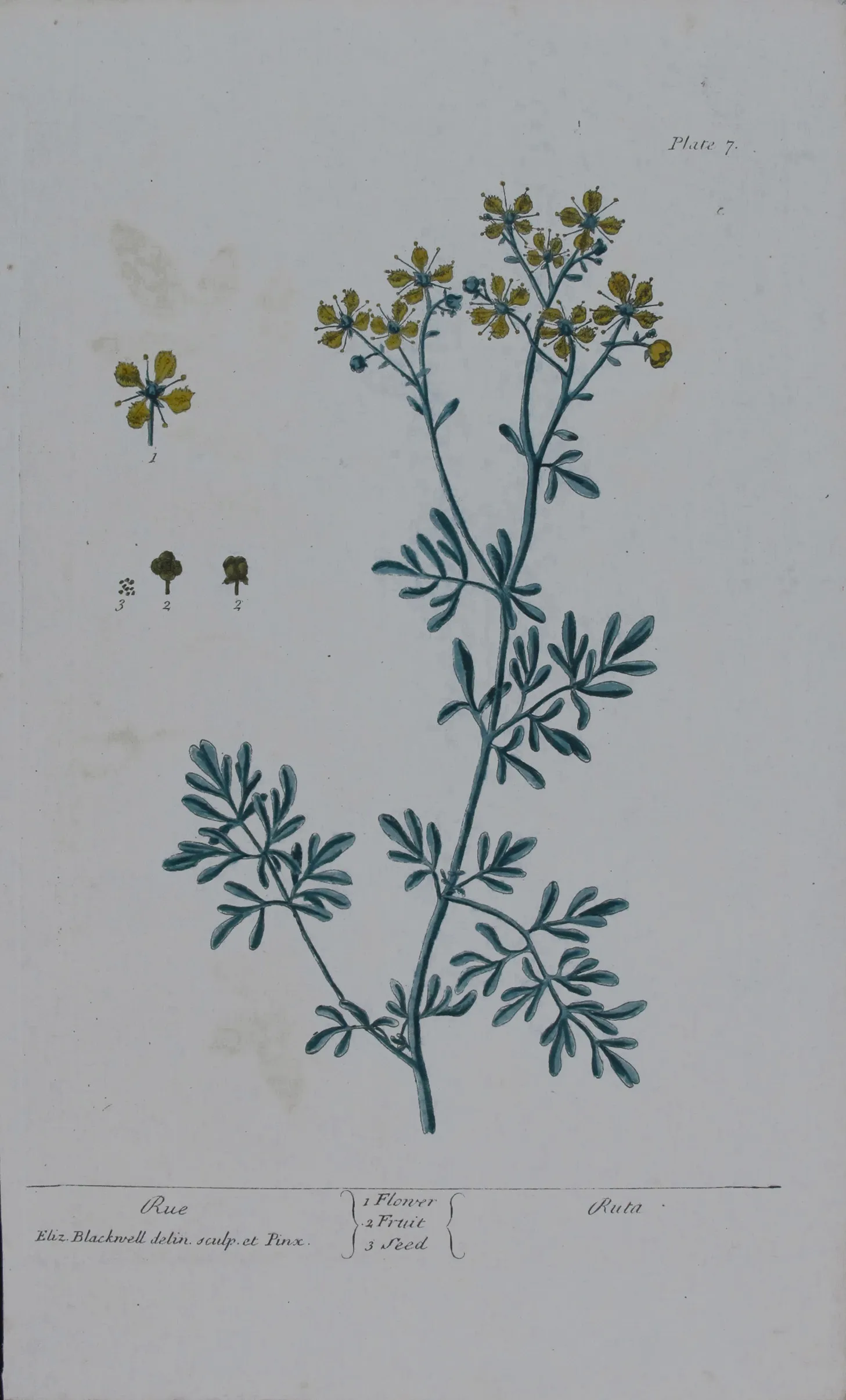
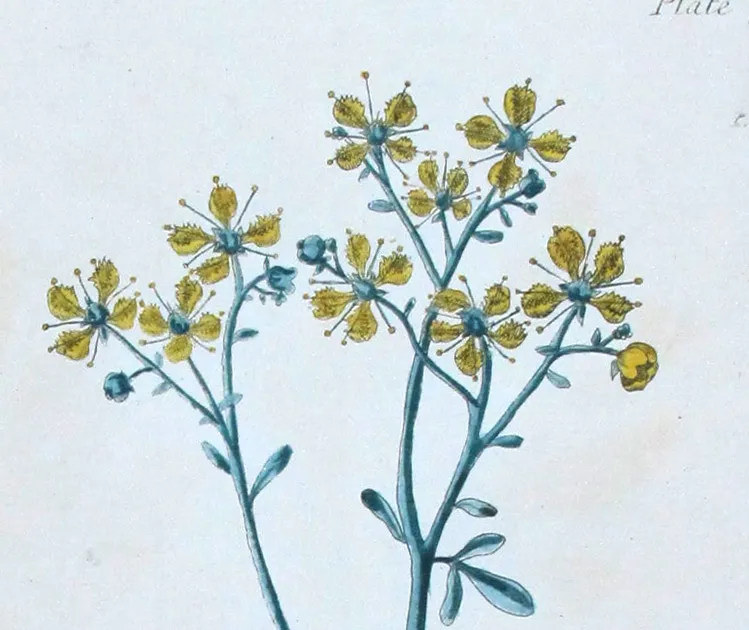

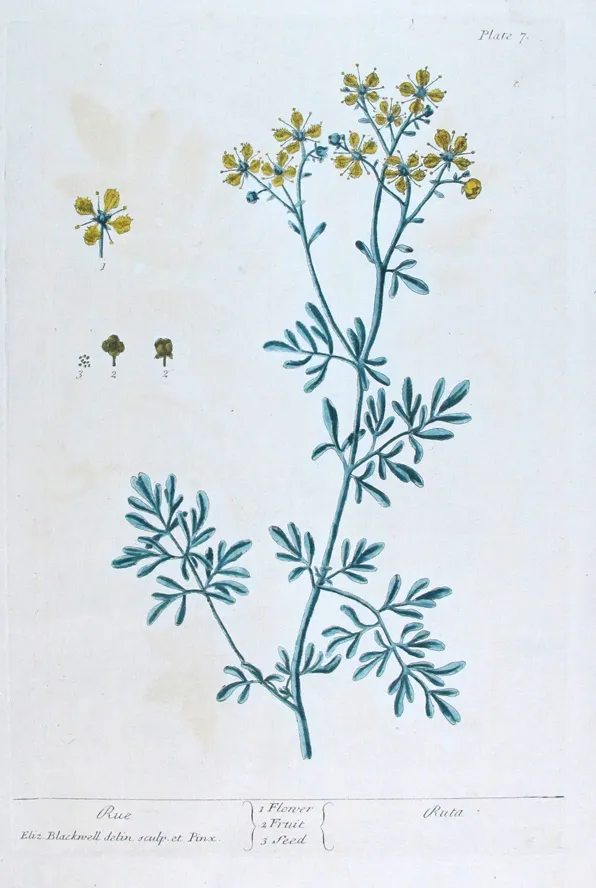


Light, airy branching with soft yellow flowers and delicately cut bluish-green foliage.
 Delivery policy
Your print will be carefully prepared and shipped worldwide via trusted couriers (UPS or similar).
 Authentic antique prints
Original engravings from the 17th–19th century.
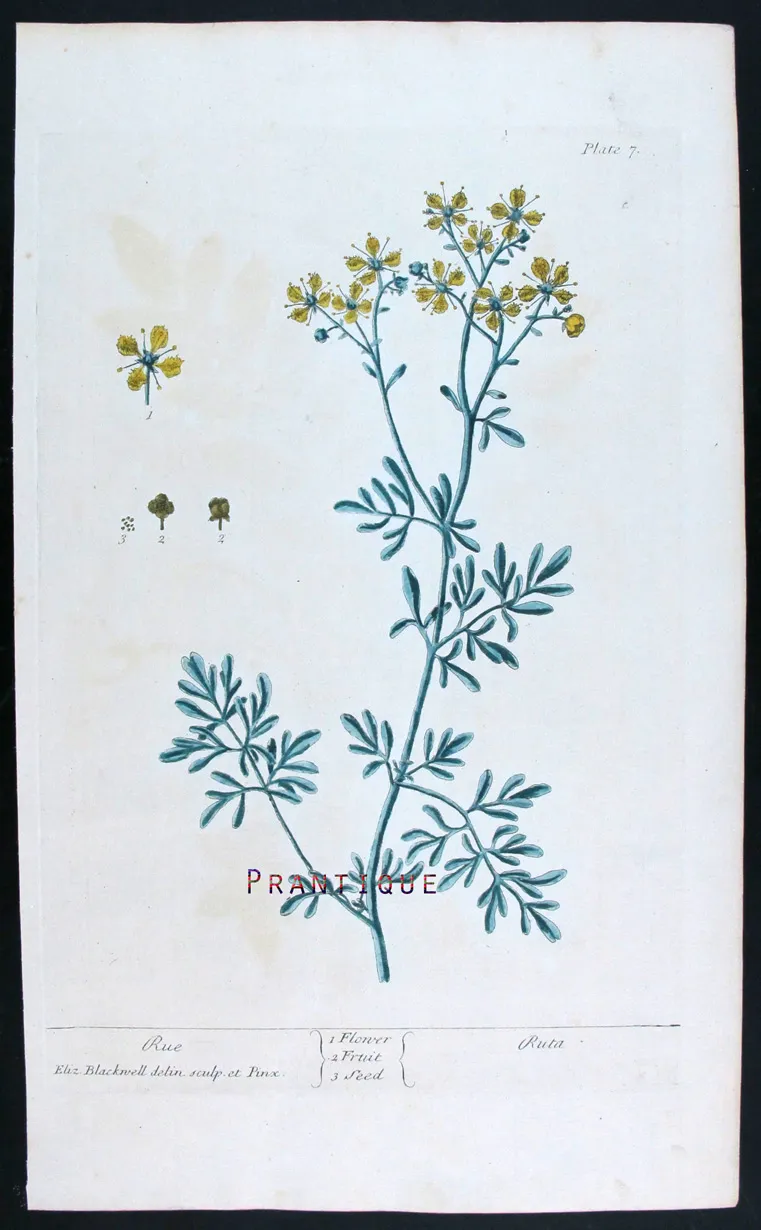
This elegant botanical engraving depicts Rue (Ruta graveolens), a perennial herb long associated with medicinal, domestic, and symbolic uses. The composition presents the plant in full vertical development, combining flowering stems, foliage, and analytical details within a clear and balanced structure.
The slender branching stem supports finely divided bluish-green leaves, while clusters of small yellow flowers crown the upper portion of the plate. Blackwell’s restrained palette and precise line work emphasize botanical clarity, allowing the viewer to distinguish each morphological element without visual excess.
Created in the early eighteenth century, this engraving forms part of A Curious Herbal (1737–1739), a landmark work in which scientific observation, copper engraving, and hand-colouring were unified under a single authorship.
— • —
The composition is structured along a strong vertical axis, lending the plant an upright, almost architectural presence. The alternating leaf clusters create rhythmic intervals along the stem, while the flowering heads introduce lightness and visual punctuation at the summit.
Subtle tonal modulation models the foliage with gentle depth, and the limited colour range reinforces legibility. The small auxiliary details positioned to the side of the main figure serve an analytical function, anchoring the plate within the tradition of practical botanical illustration.
Ruta graveolens, commonly known as rue, occupied a prominent place in early modern herbals due to its strong medicinal reputation and its widespread use in household remedies. In eighteenth-century medical practice, rue was valued for its perceived stimulant and protective properties, though it was also regarded as a plant to be handled with care. Accurate visual identification was therefore essential. Blackwell’s depiction reflects this practical concern: the emphasis on flowering structure, leaf form, and overall habit provides a reliable reference for readers navigating a pharmacopeia based largely on visual knowledge. Within A Curious Herbal, rue exemplifies the intersection of botanical science and everyday medicine that defined the work’s enduring importance.
The engraving is preserved in very good antique condition, printed on original handmade laid paper characteristic of early eighteenth-century botanical publications. A period watermark is visible, consistent with contemporary papermaking practices. A very light and small offset is observable at the upper left corner, unobtrusive and typical of historic printing processes. The surface remains stable and well preserved, with fresh original hand-colouring and a clear, crisp impression throughout. The engraved credit “Eliz. Blackwell delin. sculp. et pinx.” is present and fully legible, confirming that the drawing, engraving, and hand-colouring were executed by Elisabeth Blackwell herself.
For further context on Elisabeth Blackwell and the singular unity of authorship behind A Curious Herbal, see our editorial feature:
Specific References
Fine 18th-century hand-colored engraving of Euphorbium by Elisabeth Blackwell, a striking botanical study ideal for collectors.
18th-century hand-colored engraving of the Wilding or Crab Tree by Elisabeth Blackwell, with blossom and fruit details.
18th-century hand-colored engraving of a Garden Cucumber by Elisabeth Blackwell, with curling tendrils and yellow blossoms.
Lively 18th-century engraving of Polypody of the Oak by Elizabeth Blackwell, showing rhythmic fern fronds and creeping rhizomes, perfect for naturalist or woodland-themed decor.
Hand-colored engraving of Water Figwort (Scrophularia aquatica), featuring vertical stems, red blossoms and a caterpillar study.
Broad heart-shaped leaves with yellow tubular blooms, beautifully rendered in subtle tones.
Dramatic lichen plate with sculptural fronds and rocky support, perfect for collectors who love unusual, textural natural history subjects.
Fine engraving of Great Centaury (Centaurium majus) with pinkish florets, slender stems, and a butterfly study.
Striking composition of the Pitch Tree with tall central stem and large cones, bringing strong graphic presence to botanical displays or rustic interiors.
A graceful hand-colored engraving of Marshmallow (Althaea officinalis) with soft pink flowers and expressive root study.
Fine 18th-century engraving of the Cornel Tree by Elisabeth Blackwell, with red fruit and delicate foliage.
Fine engraving of Black Alder with berries and elegant branching, ideal for natural interiors.
Elegant botanical engraving of Great Figwort (Scrophularia major) with branching stems, clustered flowers and root detail.
Elegant botanical engraving of the Bean plant with pods and seed details.
Original 18th-century engraving of the Wild Cucumber by Elisabeth Blackwell, with spined fruit and yellow flowers.
Graceful 18th-century botanical engraving of the Female Fern by Elizabeth Blackwell, with airy fronds and exposed root, beautiful in minimalist or nature-focused spaces.
Australian Black Cormorant (Carbo novæ-hollandiæ) – Original antique bird print by H. Grønvold.
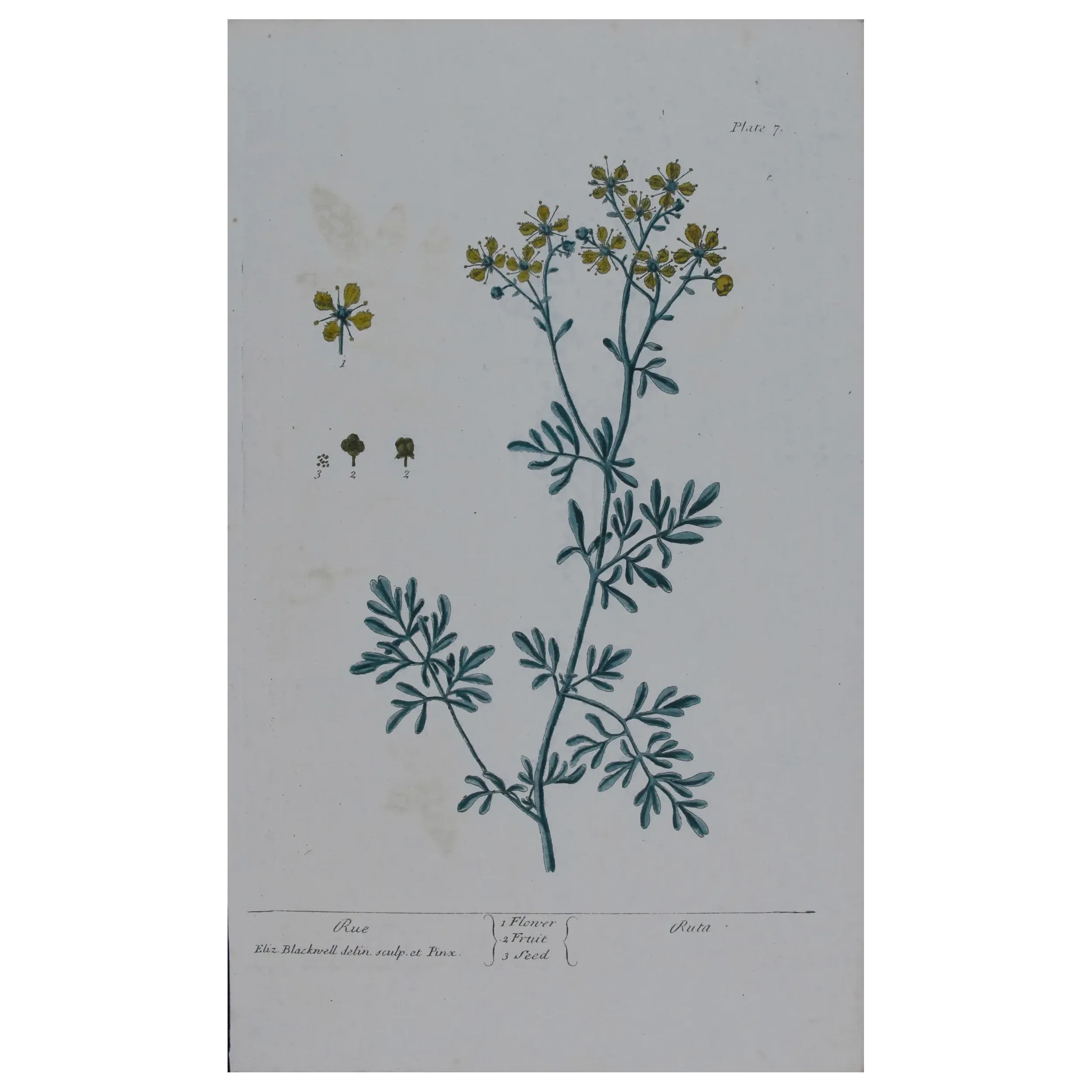
Light, airy branching with soft yellow flowers and delicately cut bluish-green foliage.