
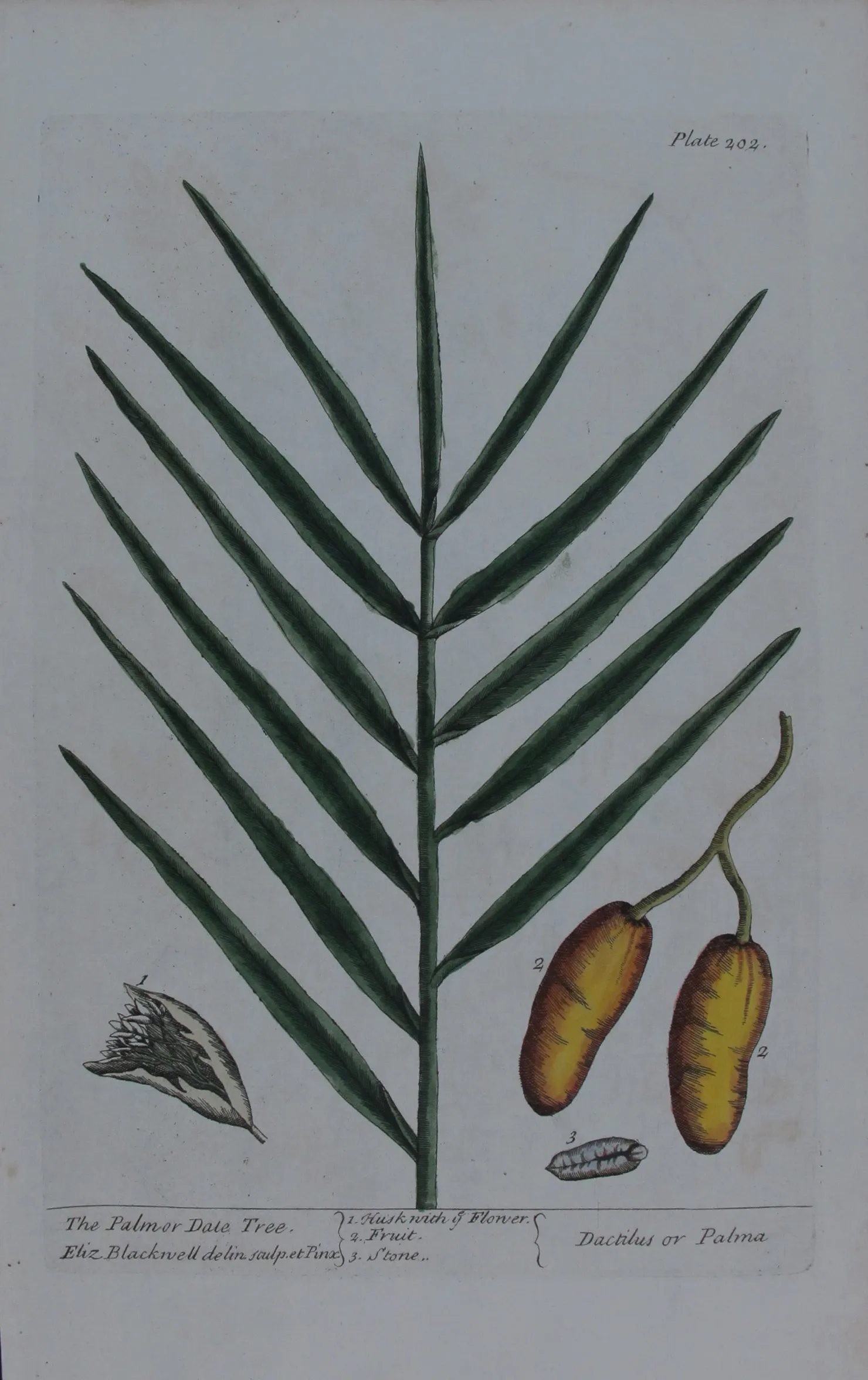



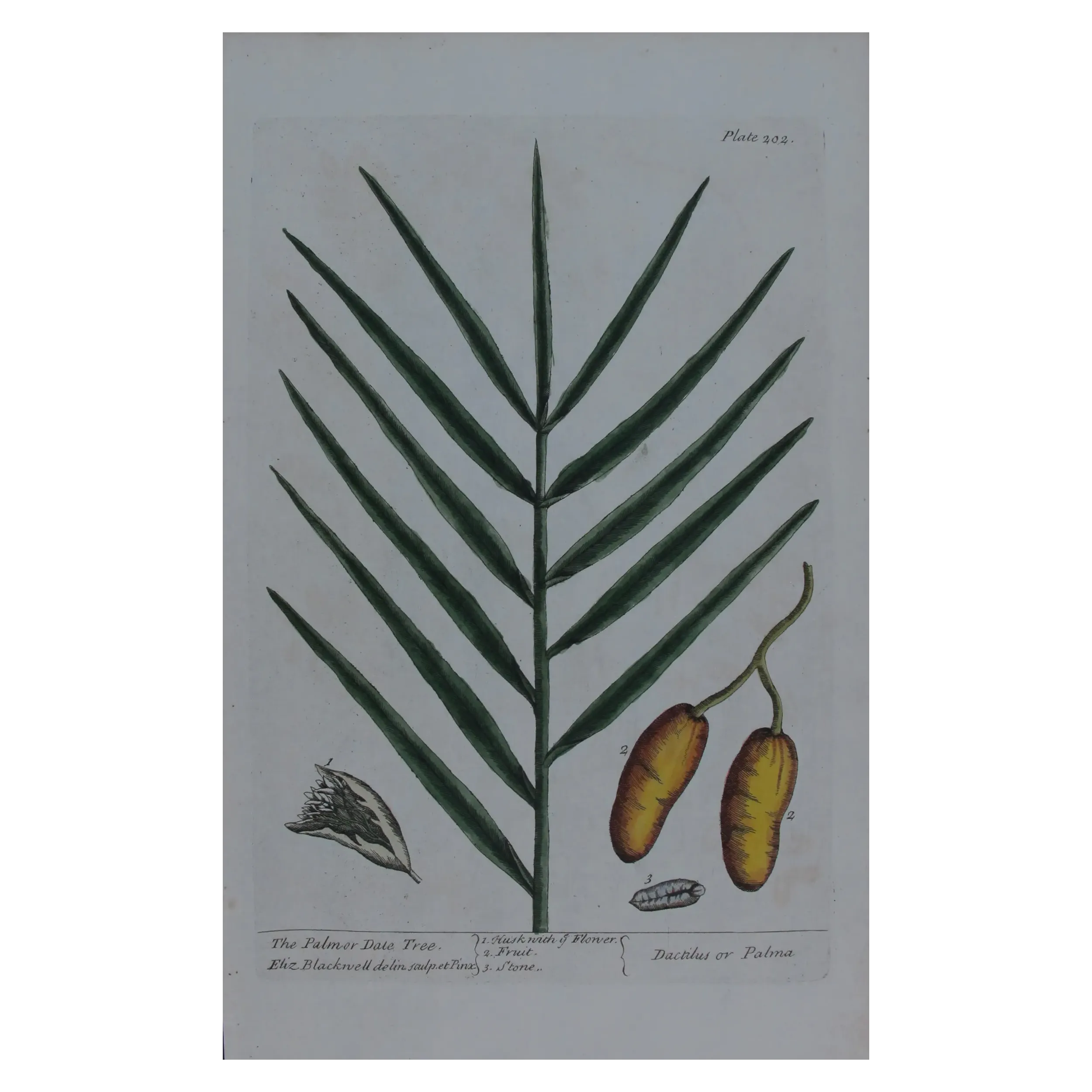
Striking palm fronds paired with warm golden dates, a highly decorative composition.
 Delivery policy
Your print will be carefully prepared and shipped worldwide via trusted couriers (UPS or similar).
 Authentic antique prints
Original engravings from the 17th–19th century.
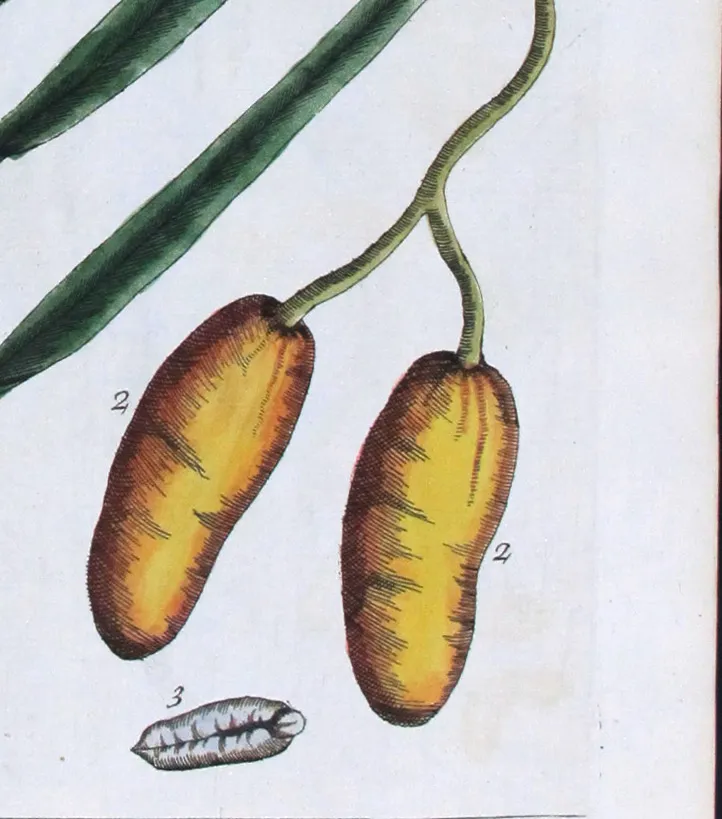
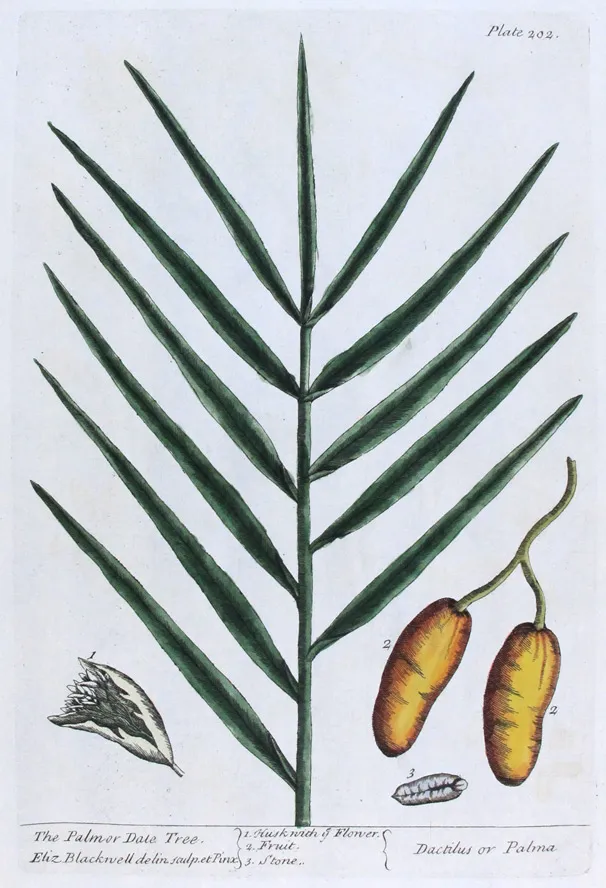
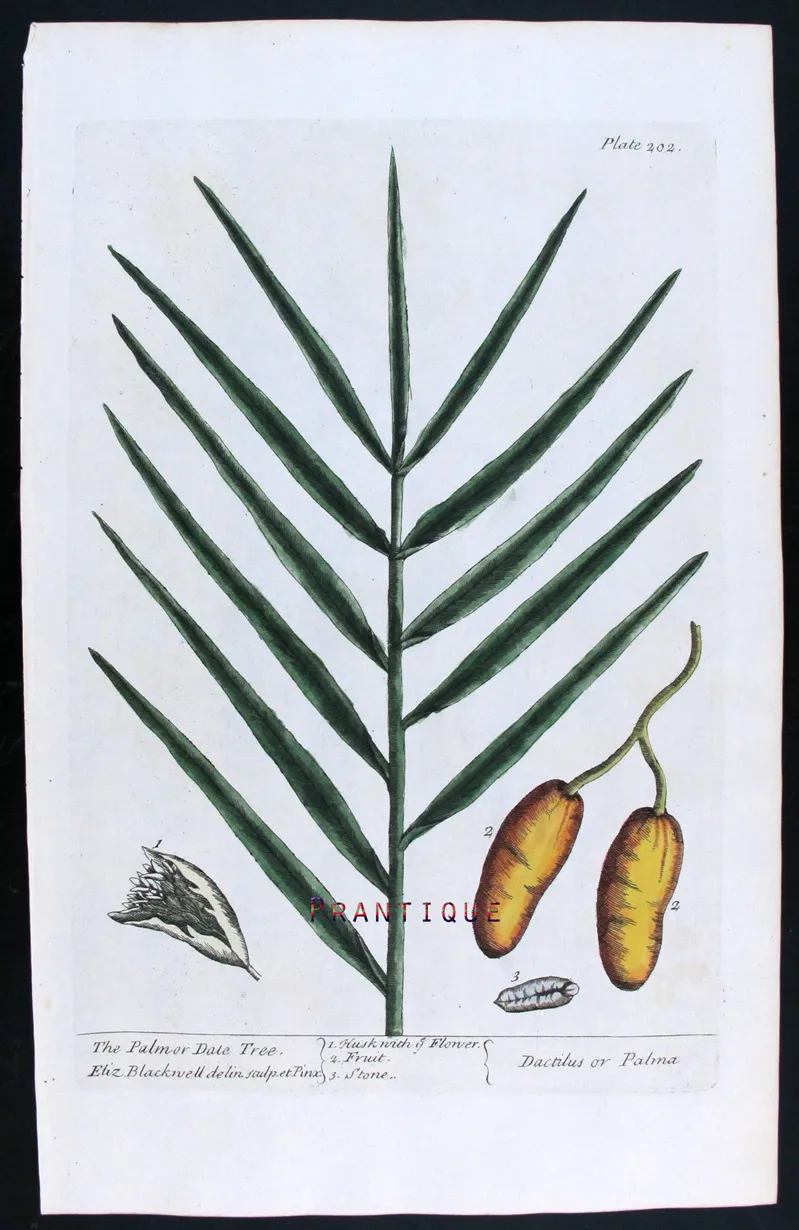
This refined botanical engraving depicts the Date Palm (Phoenix dactylifera), presenting a distinctive frond structure accompanied by fruit and stone for clear botanical reference.
The composition is defined by a strong vertical axis, from which long, narrow leaflets radiate with rhythmic regularity. Elisabeth Blackwell’s rendering emphasizes clarity and proportion, allowing the characteristic architecture of the palm to be read immediately, while the accompanying fruit details provide essential contextual information.
Created in the early eighteenth century, this plate belongs to A Curious Herbal, a foundational medical and botanical work distinguished by the unity of its production, in which drawing, copper engraving, and hand-colouring were executed by the same hand.
— • —
The frond is rendered with measured symmetry, its repeated leaflets creating a strong linear rhythm that guides the eye upward. The inclusion of fruit and stone offsets the verticality of the foliage, introducing visual balance and functional context.
Restrained tonal gradations give depth to the leaves without disrupting their graphic clarity, while the warm colouring of the dates provides a subtle chromatic contrast. The overall effect is one of structural elegance combined with analytical precision.
The date palm (Phoenix dactylifera) held a dual status in early European herbals: a sustaining food of arid regions and an ingredient within materia medica, where its fruit was associated with nourishing and restorative uses. As European compilers absorbed botanical knowledge from travel, trade, and earlier Arabic and Mediterranean sources, the date became an emblematic “eastern” plant—both familiar through commerce and still exotic in its growth habit. Accurate depiction mattered, because a palm’s architecture is unlike most temperate plants; Blackwell’s plate therefore focuses on the frond’s characteristic structure while adding fruit and stone as practical identifiers for the medicinal and culinary commodity circulating in European markets.
The engraving is in exceptionally fine antique condition, printed on original handmade laid paper typical of early 18th-century botanical publications. A period watermark is visible on the sheet, consistent with contemporary papermaking practices. The surface remains fresh and stable, with light, even age-related toning consistent with period paper. The impression is crisp and legible throughout, with well-preserved margins. The engraved credit “Eliz. Blackwell delin. sculp. et pinx.” is present and fully legible, confirming the unified authorship of the plate.
For further context on Elisabeth Blackwell and the unified authorship behind A Curious Herbal, see our editorial feature:
Specific References
Hand-colored 18th-century engraving of Yellow Asphodel, a vivid botanical composition from Elisabeth Blackwells A Curious Herbal.
Striking composition of the Pitch Tree with tall central stem and large cones, bringing strong graphic presence to botanical displays or rustic interiors.
18th-century hand-colored engraving of the Almond Tree by Elisabeth Blackwell, with blossom, fruit and kernel beautifully rendered.
Delicate pea stems with curling tendrils and soft green pods, elegantly hand-colored.
Fine 18th-century engraving of the Cornel Tree by Elisabeth Blackwell, with red fruit and delicate foliage.
Fine engraving of Black Alder with berries and elegant branching, ideal for natural interiors.
18th-century hand-colored engraving of the Wilding or Crab Tree by Elisabeth Blackwell, with blossom and fruit details.
Hand-colored engraving of Water Figwort (Scrophularia aquatica), featuring vertical stems, red blossoms and a caterpillar study.
18th-century hand-colored engraving of Rhapontic with broad leaves and sculptural root, ideal for botanical décor.
Elegant Silver Fir with upright cones and finely spaced needles, a refined forest motif for sophisticated interiors and collectors of conifer imagery.
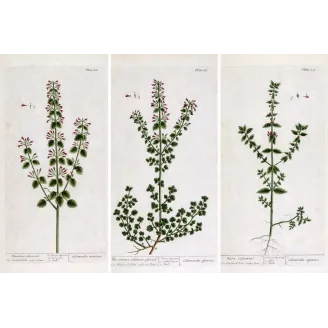
A curated botanical trio illustrating three closely related Calamintha species — officinalis, montana, and aquatica — as engraved and hand-colored by Elisabeth Blackwell for A Curious Herbal (1737–1739). Presented together, these plates offer a rare comparative view of medicinal, habitat-specific, and morphological variation within a single genus, reflecting early modern botanical practice and apothecary knowledge.
Fine 18th-century engraving of the Medlar Tree by Elisabeth Blackwell, featuring fruit, blossom, and botanical detail.
Charming 18th-century engraving of Sage by Elizabeth Blackwell, with blue-green leaves and delicate flowers, perfect for kitchen walls or herb-themed gallery displays.
Delicate engraving of Madder with berries and exposed roots, ideal for refined botanical décor.
Elegant botanical engraving of Great Figwort (Scrophularia major) with branching stems, clustered flowers and root detail.
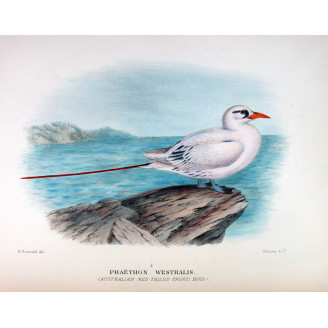
Australian Red-Tailed Tropic Bird (Phaëthon westralis), original Mathews lithograph.
Striking palm fronds paired with warm golden dates, a highly decorative composition.