

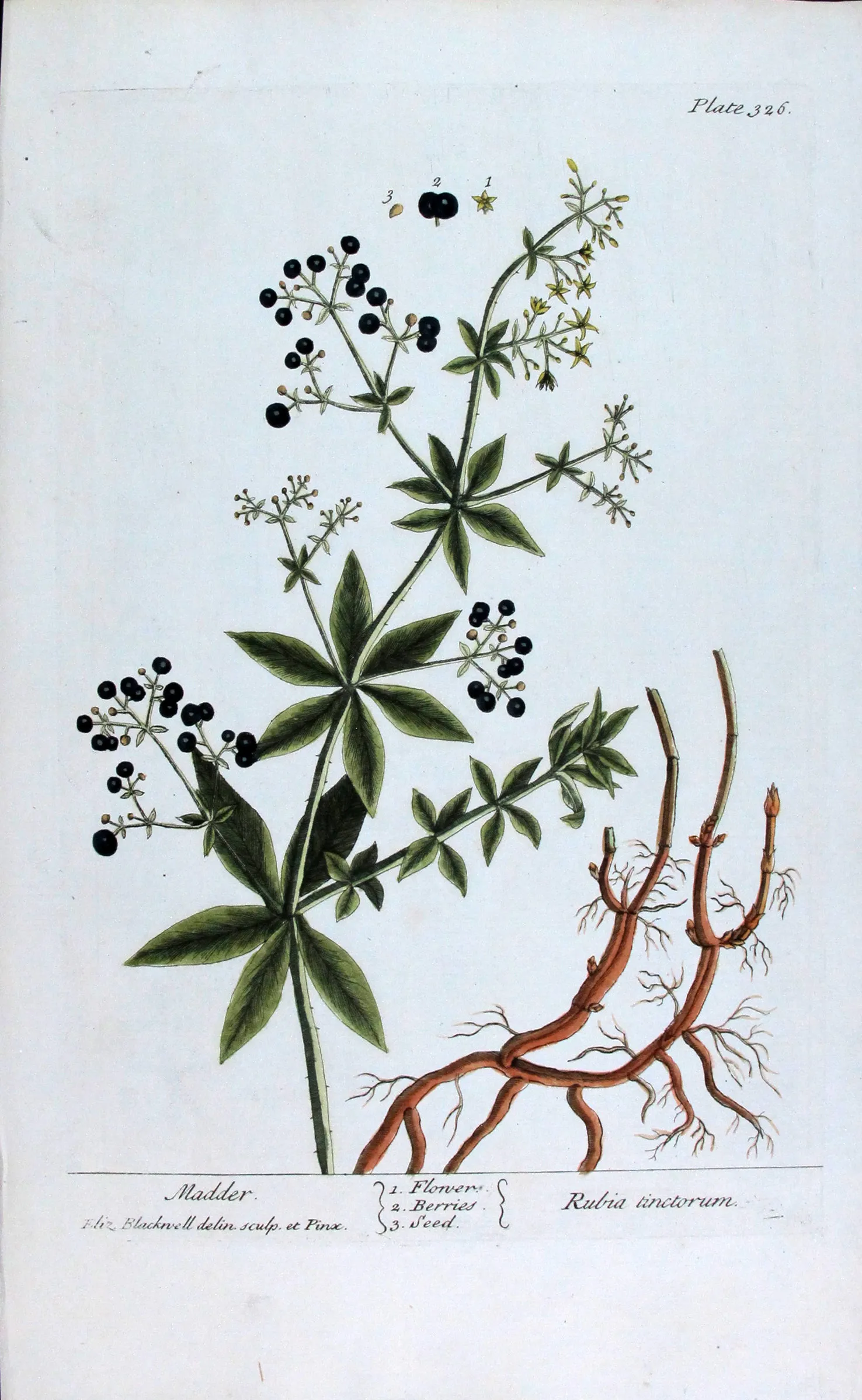

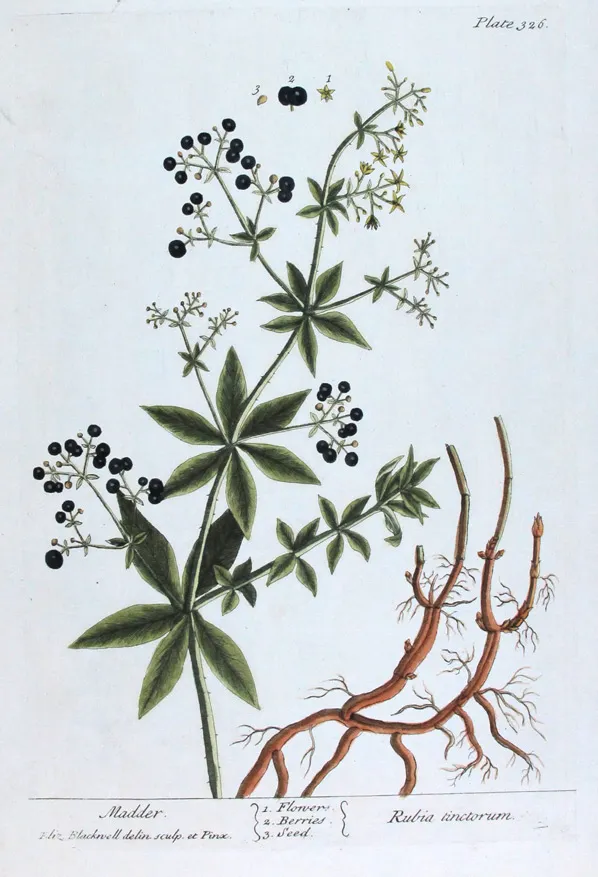
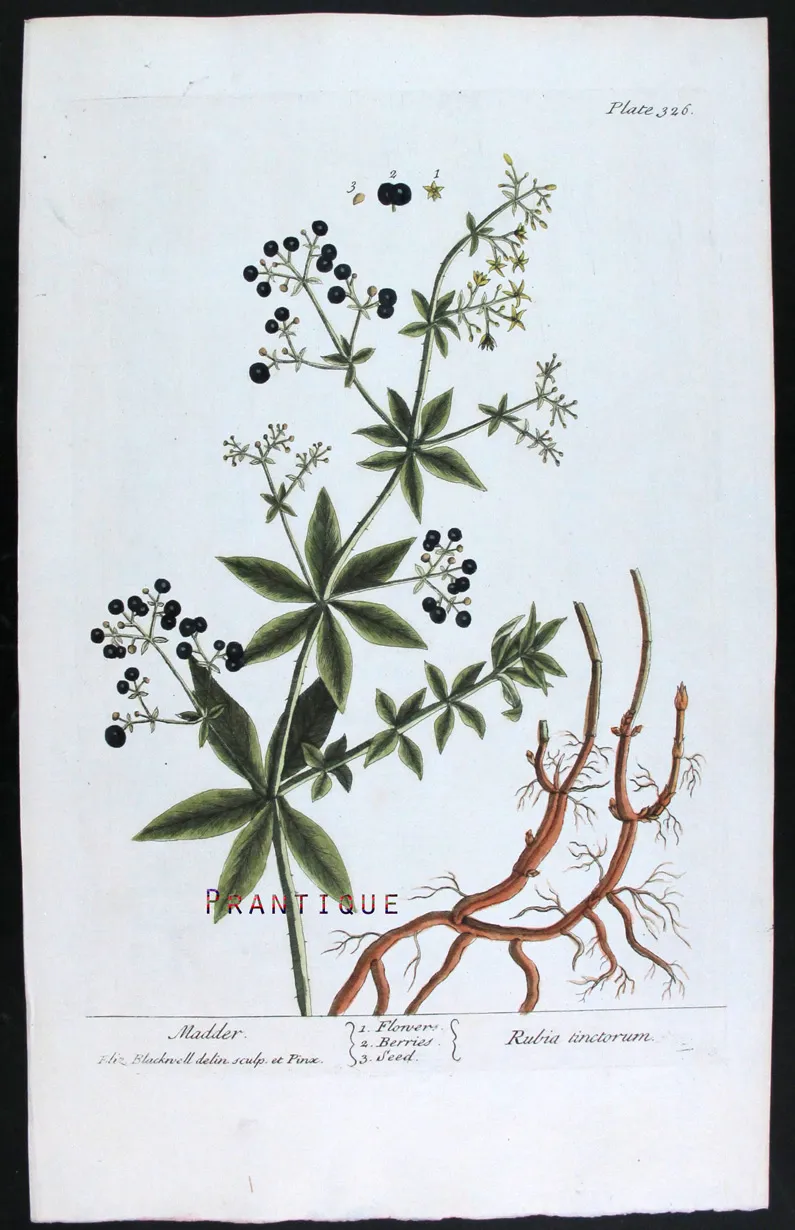


Delicate engraving of Madder with berries and exposed roots, ideal for refined botanical décor.
 Delivery policy
Your print will be carefully prepared and shipped worldwide via trusted couriers (UPS or similar).
 Authentic antique prints
Original engravings from the 17th–19th century.
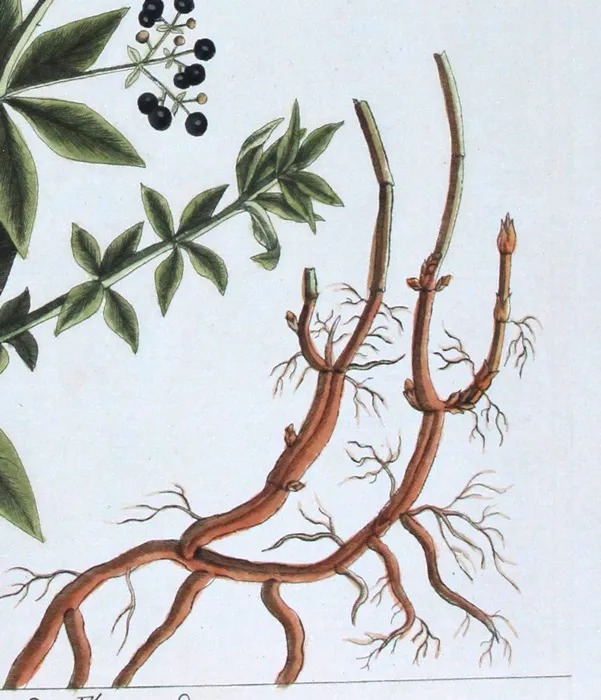
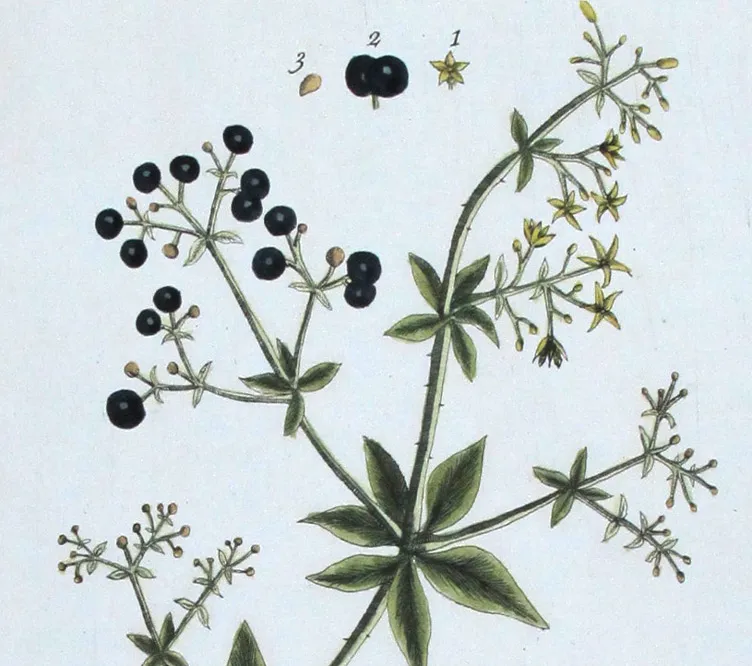
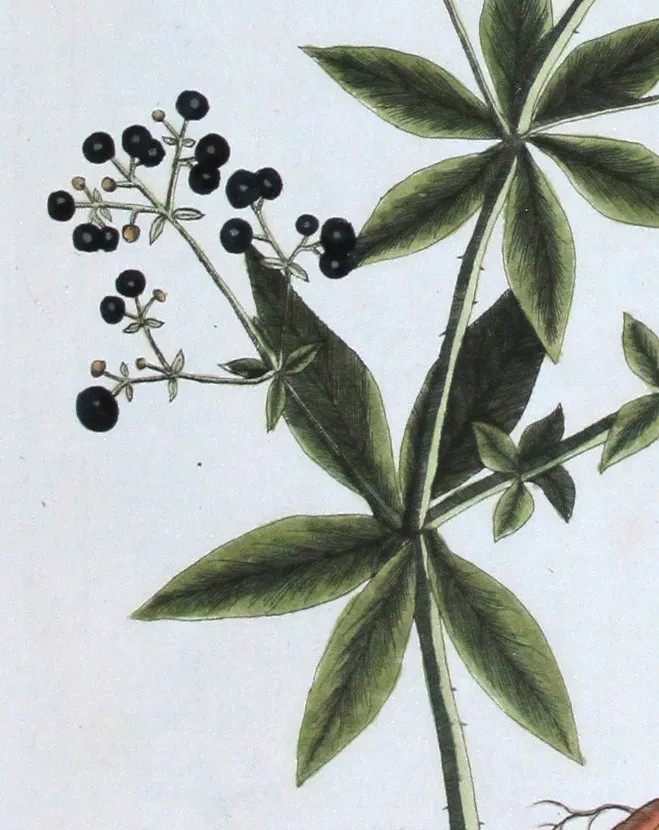
This elegant botanical engraving depicts Madder (Rubia tinctorum), a plant of exceptional historical and material importance, represented with both botanical precision and strong visual presence. The composition presents the flowering stems and characteristic whorled leaves alongside an extensive and carefully rendered root system.
Slender upright stems carry small star-like blossoms and clusters of dark berries, while the foliage forms rhythmic, radiating patterns along the axis of the plant. The prominently displayed roots—twisting, branching, and richly coloured—anchor the composition and immediately draw the eye, giving the plate a sculptural and grounded character.
Produced in the early eighteenth century, this engraving forms part of A Curious Herbal (1737–1739), a landmark botanical and medical work distinguished by the rare unity of authorship in which drawing, copper engraving, and hand-colouring were executed by :contentReference[oaicite:0]{index=0} herself.
— • —
The composition balances vertical growth with horizontal expansion, creating a dynamic but controlled structure. The whorled leaves introduce a graphic rhythm that contrasts with the organic complexity of the root system, while the berries provide small, dark accents that punctuate the upper register.
The roots act as a visual counterweight to the airy stems, adding depth, texture, and historical gravitas. Their inclusion transforms the engraving from a simple botanical portrait into a complete material study, enhancing both its decorative appeal and its documentary strength.
Rubia tinctorum, commonly known as madder, was one of the most important dye plants in Europe from antiquity through the early modern period. Its roots were the primary source of durable red pigments used in textiles, producing a wide spectrum of tones—from soft rose and brick red to deep crimson—depending on preparation techniques and mordants. Long before the introduction of synthetic dyes, madder formed the backbone of red coloration in clothing, furnishings, and ceremonial fabrics across Europe.
Among the most celebrated results of madder-based dyeing was the so-called “Turkey red”, a vivid and highly stable crimson achieved through complex multi-stage processes involving the plant’s roots. This colour became synonymous with quality, permanence, and technical mastery in textile production. Because the dye was extracted specifically from the subterranean parts of the plant, accurate identification of the root was essential not only for medicinal use but also for cultivation, trade, and craft. Blackwell’s engraving reflects this practical reality by giving the root system visual prominence, presenting madder not merely as a botanical specimen, but as a material resource that underpinned significant sectors of eighteenth-century domestic industry and commerce.
The engraving is preserved in like brand new antique condition, printed on original handmade laid paper typical of early eighteenth-century botanical publications. A period watermark is visible on the sheet, consistent with contemporary papermaking practices. The surface remains clean and stable, with a crisp impression and fresh original hand-colouring throughout. No notable defects are present. The engraved credit “Eliz. Blackwell delin. sculp. et pinx.” is fully legible, confirming that the drawing, engraving, and hand-colouring were executed by Elisabeth Blackwell herself.
For further context on Elisabeth Blackwell and the singular unity of authorship behind A Curious Herbal, see our editorial feature:
Specific References
Elegant botanical engraving of the Bean plant with pods and seed details.
Light, airy branching with soft yellow flowers and delicately cut bluish-green foliage.
Dramatic lichen plate with sculptural fronds and rocky support, perfect for collectors who love unusual, textural natural history subjects.
Fine engraving of Great Centaury (Centaurium majus) with pinkish florets, slender stems, and a butterfly study.
Hand-colored 18th-century engraving of Yellow Asphodel, a vivid botanical composition from Elisabeth Blackwells A Curious Herbal.
Fine 18th-century botanical of the Wild Pine, with graceful hanging cones and delicate needles ideal for woodland-themed interiors and natural history walls.
Charming study with pink blossoms and vivid red rosehips, a classic countryside motif.
Delicate pea stems with curling tendrils and soft green pods, elegantly hand-colored.
Elegant botanical engraving of Great Figwort (Scrophularia major) with branching stems, clustered flowers and root detail.
Lively Hawthorn branch with crisp green leaves and clusters of rich red berries, a classic countryside motif for warm, welcoming interiors.
Elegant 18th-century hand-colored engraving of the Male Fern by Elizabeth Blackwell, with finely shaded fronds ideal for nature-inspired walls or botanical galleries.
Lively 18th-century engraving of Polypody of the Oak by Elizabeth Blackwell, showing rhythmic fern fronds and creeping rhizomes, perfect for naturalist or woodland-themed decor.
Refined 18th-century engraving of Mountain Calamint by Elizabeth Blackwell, with upright stems and pink blossoms, ideal for calm, herbal or cottage-inspired interiors.
Hand-colored engraving of Water Figwort (Scrophularia aquatica), featuring vertical stems, red blossoms and a caterpillar study.
18th-century hand-colored engraving of the Wilding or Crab Tree by Elisabeth Blackwell, with blossom and fruit details.
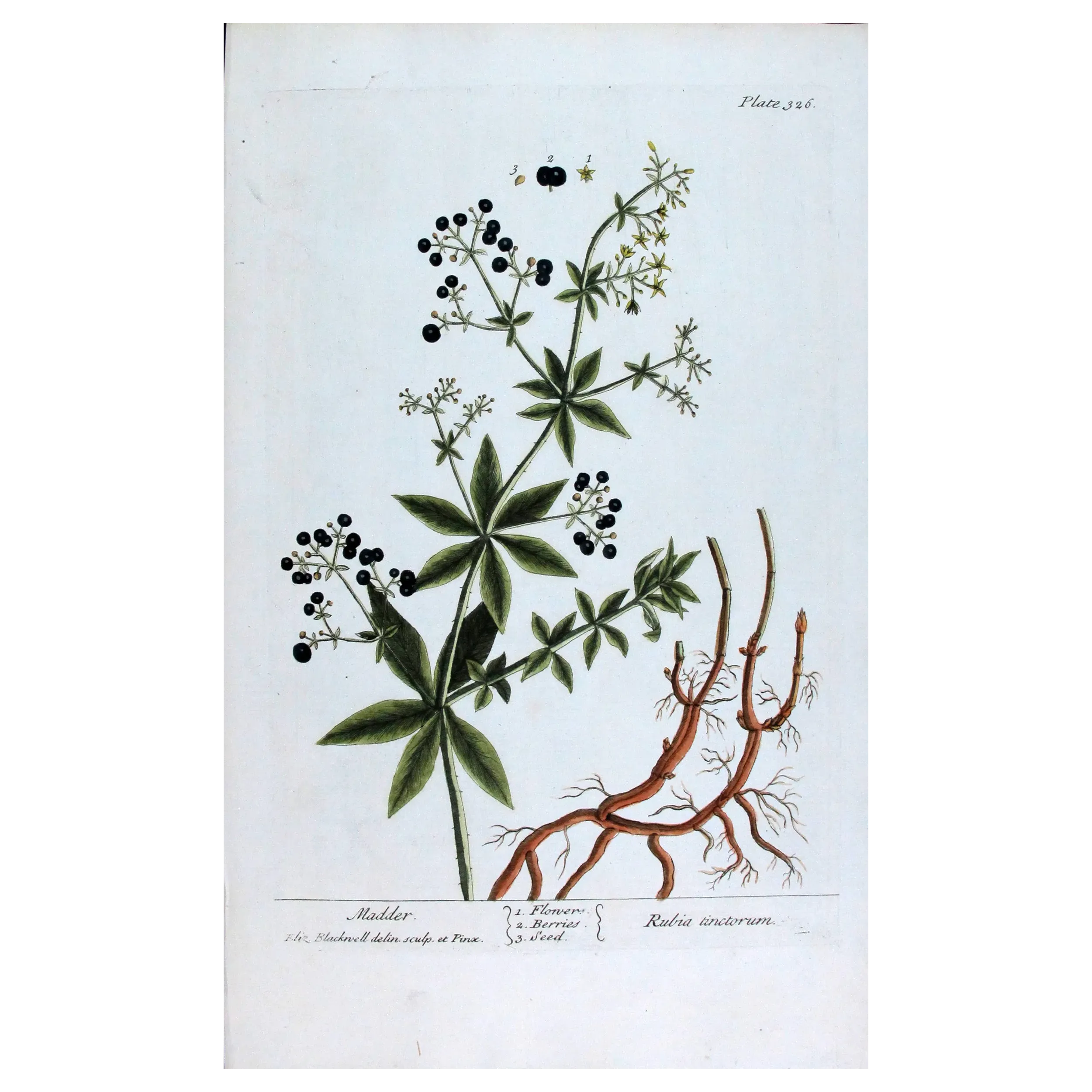
Delicate engraving of Madder with berries and exposed roots, ideal for refined botanical décor.


