
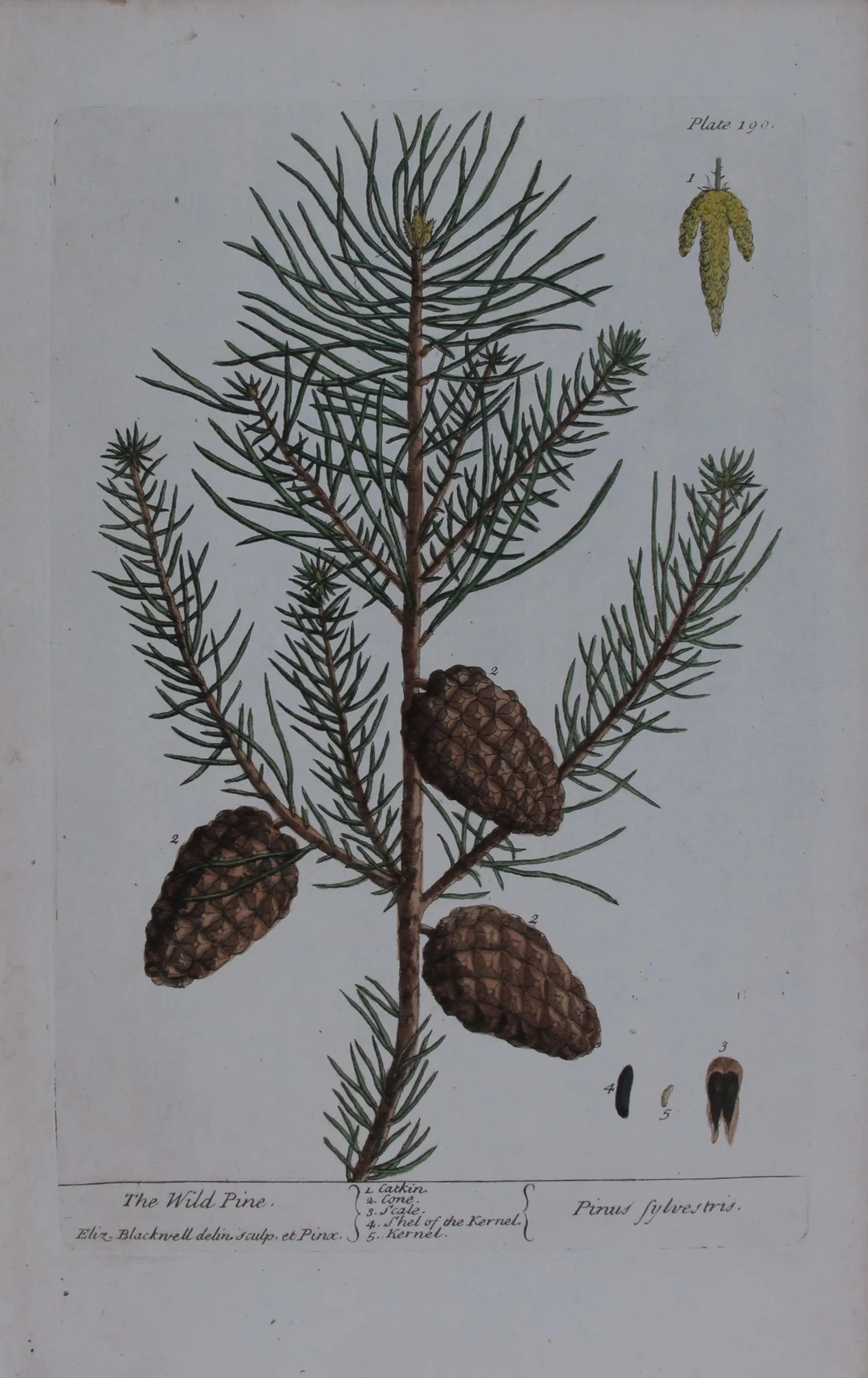
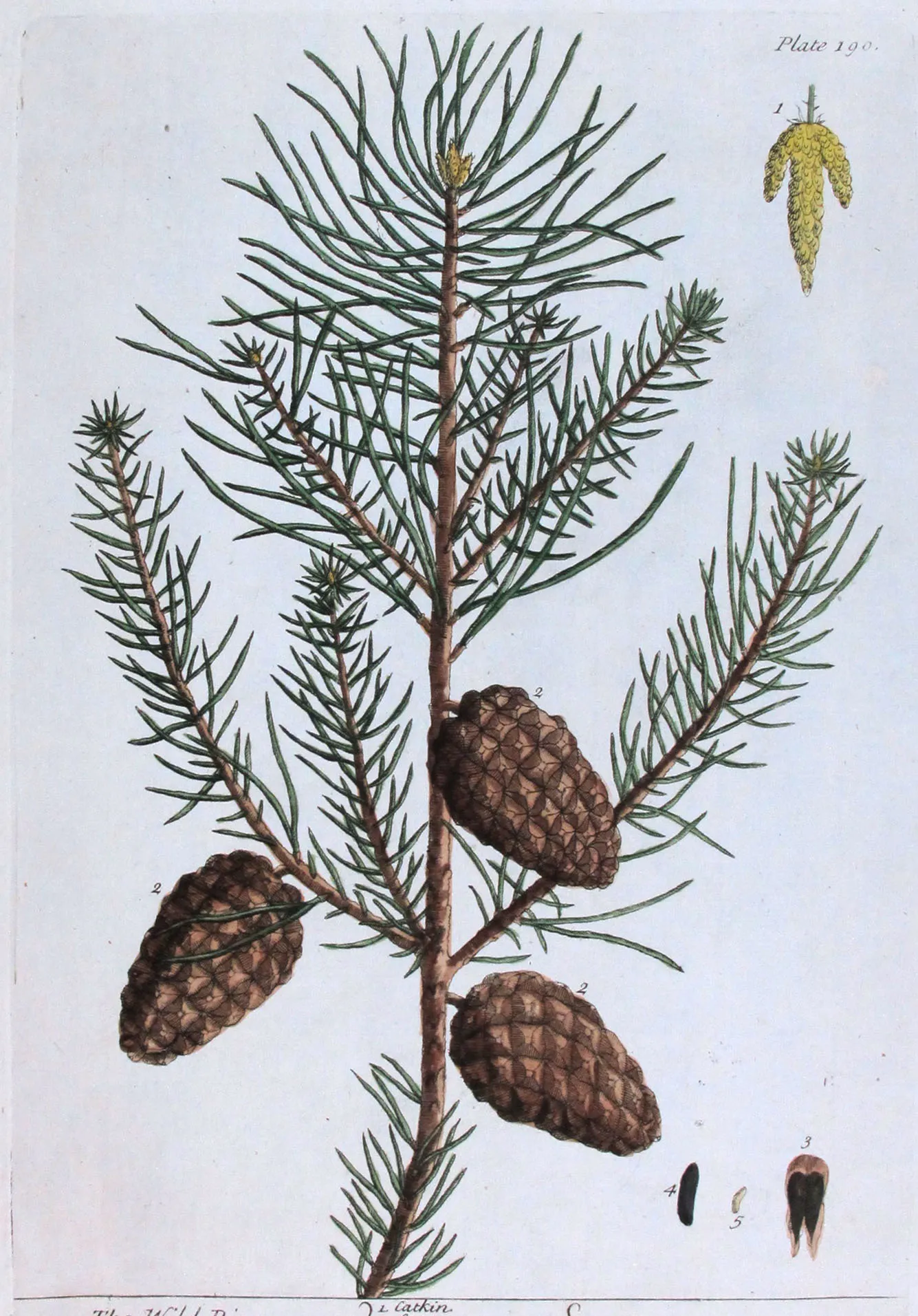
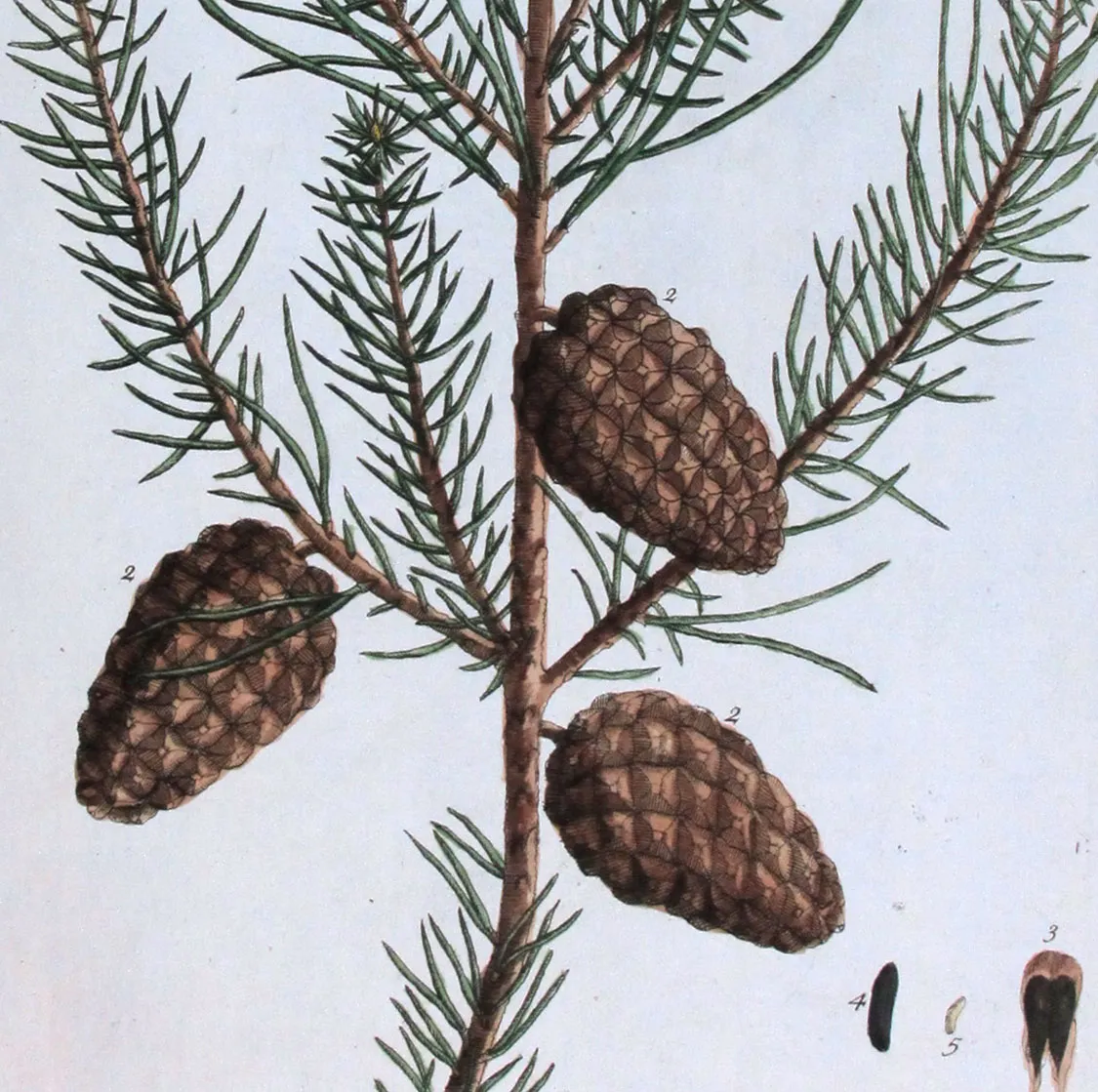
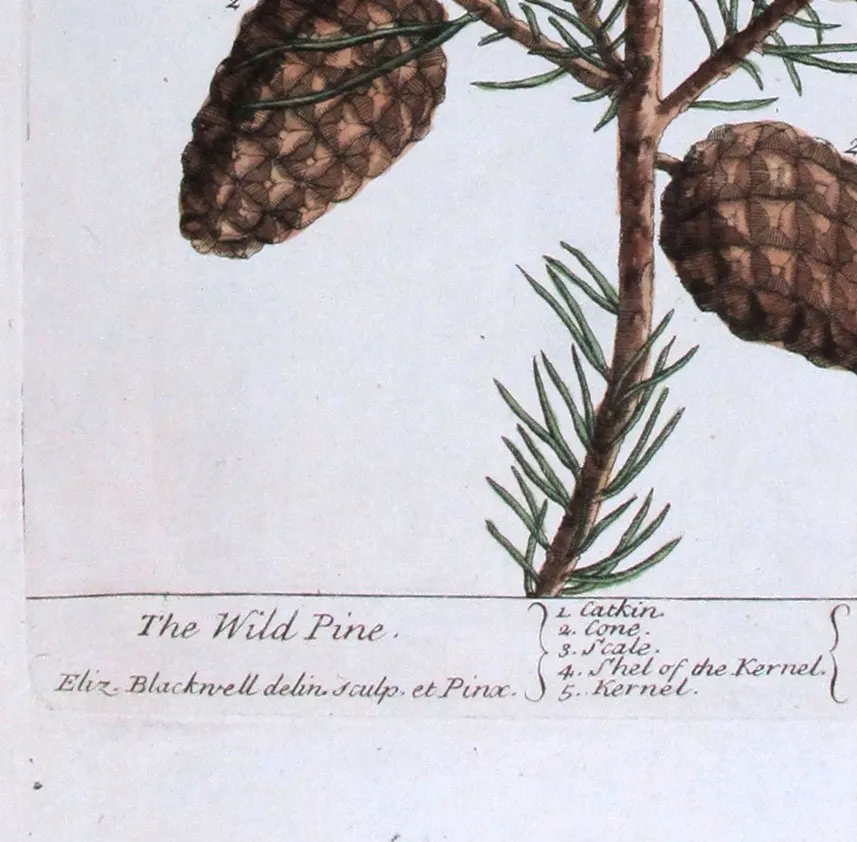
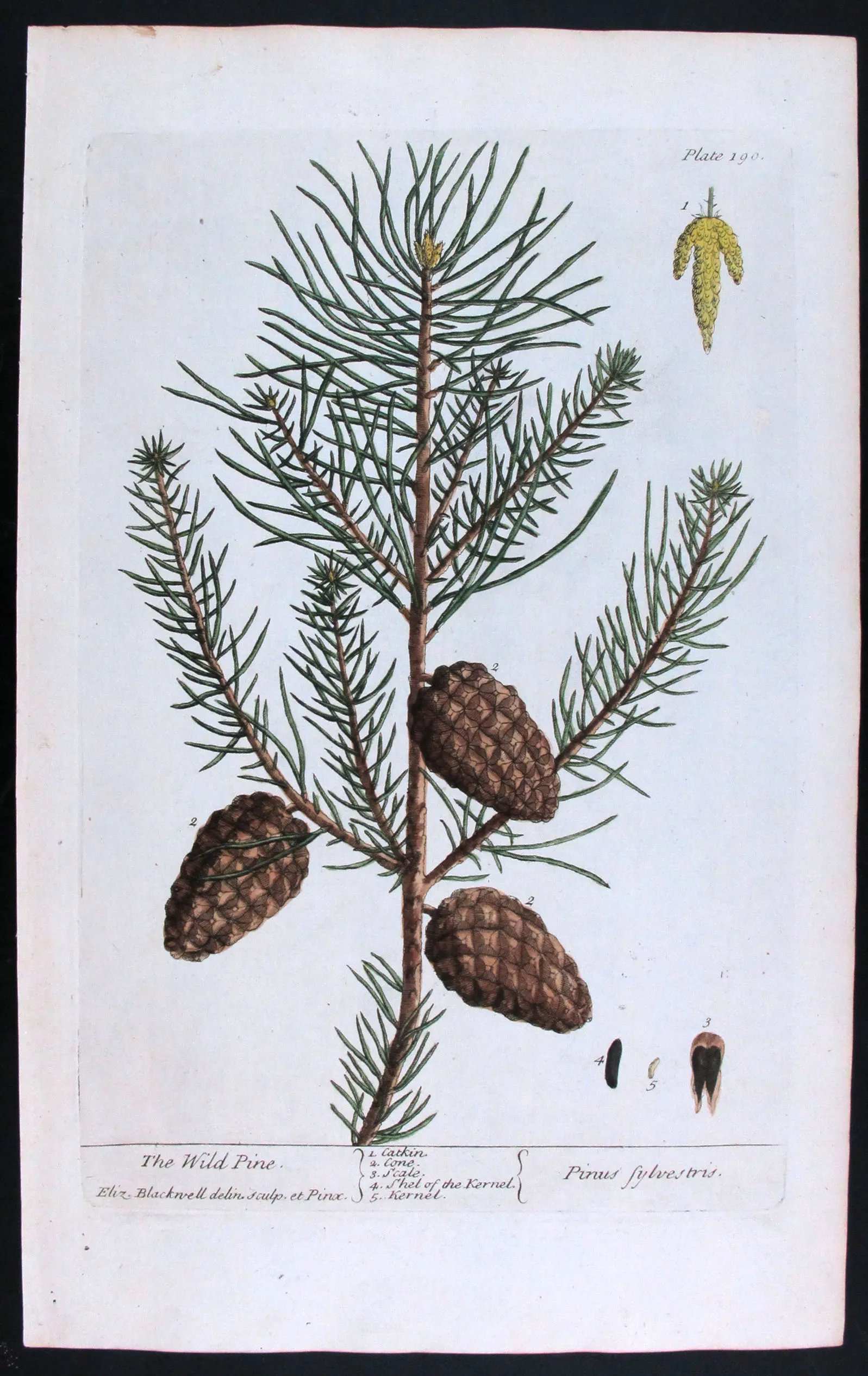


Fine 18th-century botanical of the Wild Pine, with graceful hanging cones and delicate needles ideal for woodland-themed interiors and natural history walls.
 Delivery policy
Your print will be carefully prepared and shipped worldwide via trusted couriers (UPS or similar).
 Authentic antique prints
Original engravings from the 17th–19th century.
This refined botanical engraving depicts the Spruce or Fir Tree (Picea abies), presenting a branch with slender needles, mature cones, and seed details arranged for clear botanical identification.
The composition is organized along a central stem, from which flexible branches extend downward with characteristic softness. The fine, elongated needles create a lighter visual texture than that of other conifers, while the cones introduce density and structural contrast. Elisabeth Blackwell’s rendering emphasizes differentiation of species through precise form and proportion.
Created in the early eighteenth century, this plate belongs to A Curious Herbal, a foundational medical and botanical work distinguished by the unity of its production, in which drawing, copper engraving, and hand-colouring were executed by the same hand.
— • —
The drooping arrangement of the branches introduces a gentle downward movement, contrasting with the firm vertical axis of the stem. This interplay creates a sense of natural elasticity and helps distinguish the species from more rigid conifer forms.
Subtle tonal shifts model the needles with depth while maintaining clarity, and the muted browns of the cones anchor the composition visually. The restrained palette reinforces the engraving’s analytical intent and quiet authority.
Fir and spruce trees were grouped and described with some fluidity in early taxonomy, yet their practical value was well understood. Aromatic needles, young shoots, and resinous exudates were widely employed in household and apothecary preparations associated with respiratory comfort, restorative baths, and warming rubs. Because similar conifers could differ in scent, resin quality, and customary use, herbals relied on diagnostic details such as needle character, cone form, and seed structure for dependable identification. Blackwell’s plate reflects this applied purpose: it presents the tree not as timber alone, but as a resinous medicinal resource whose utility depended on recognising the correct species.
The engraving is in exceptionally fine antique condition, printed on original handmade laid paper typical of early 18th-century botanical publications. No watermark has been observed. The surface remains fresh and stable, with light, even age-related toning consistent with period paper. The impression is crisp and legible throughout, with well-preserved margins. The engraved credit “Eliz. Blackwell delin. sculp. et pinx.” is present and fully legible, confirming the unified authorship of the plate.
For further context on Elisabeth Blackwell and the unified authorship behind A Curious Herbal, see our editorial feature:
Specific References
Broad heart-shaped leaves with yellow tubular blooms, beautifully rendered in subtle tones.
18th-century hand-colored engraving of Rhapontic with broad leaves and sculptural root, ideal for botanical décor.
Fine engraving of Great Centaury (Centaurium majus) with pinkish florets, slender stems, and a butterfly study.
Striking composition of the Pitch Tree with tall central stem and large cones, bringing strong graphic presence to botanical displays or rustic interiors.
Graceful 18th-century botanical engraving of the Female Fern by Elizabeth Blackwell, with airy fronds and exposed root, beautiful in minimalist or nature-focused spaces.
Hand-colored 18th-century engraving of Yellow Asphodel, a vivid botanical composition from Elisabeth Blackwells A Curious Herbal.
Dramatic lichen plate with sculptural fronds and rocky support, perfect for collectors who love unusual, textural natural history subjects.
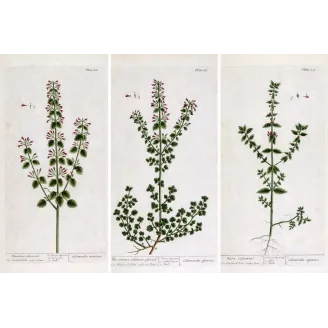
A curated botanical trio illustrating three closely related Calamintha species — officinalis, montana, and aquatica — as engraved and hand-colored by Elisabeth Blackwell for A Curious Herbal (1737–1739). Presented together, these plates offer a rare comparative view of medicinal, habitat-specific, and morphological variation within a single genus, reflecting early modern botanical practice and apothecary knowledge.
Elegant 18th-century hand-colored engraving of a Raspberry Bush by Elisabeth Blackwell, with ripe fruit and soft blossom.
18th-century hand-colored engraving of the Almond Tree by Elisabeth Blackwell, with blossom, fruit and kernel beautifully rendered.
Elegant Silver Fir with upright cones and finely spaced needles, a refined forest motif for sophisticated interiors and collectors of conifer imagery.
Charming 18th-century engraving of Sage by Elizabeth Blackwell, with blue-green leaves and delicate flowers, perfect for kitchen walls or herb-themed gallery displays.
A graceful hand-colored engraving of Marshmallow (Althaea officinalis) with soft pink flowers and expressive root study.
Charming study with pink blossoms and vivid red rosehips, a classic countryside motif.
Fine 18th-century engraving of the Cornel Tree by Elisabeth Blackwell, with red fruit and delicate foliage.
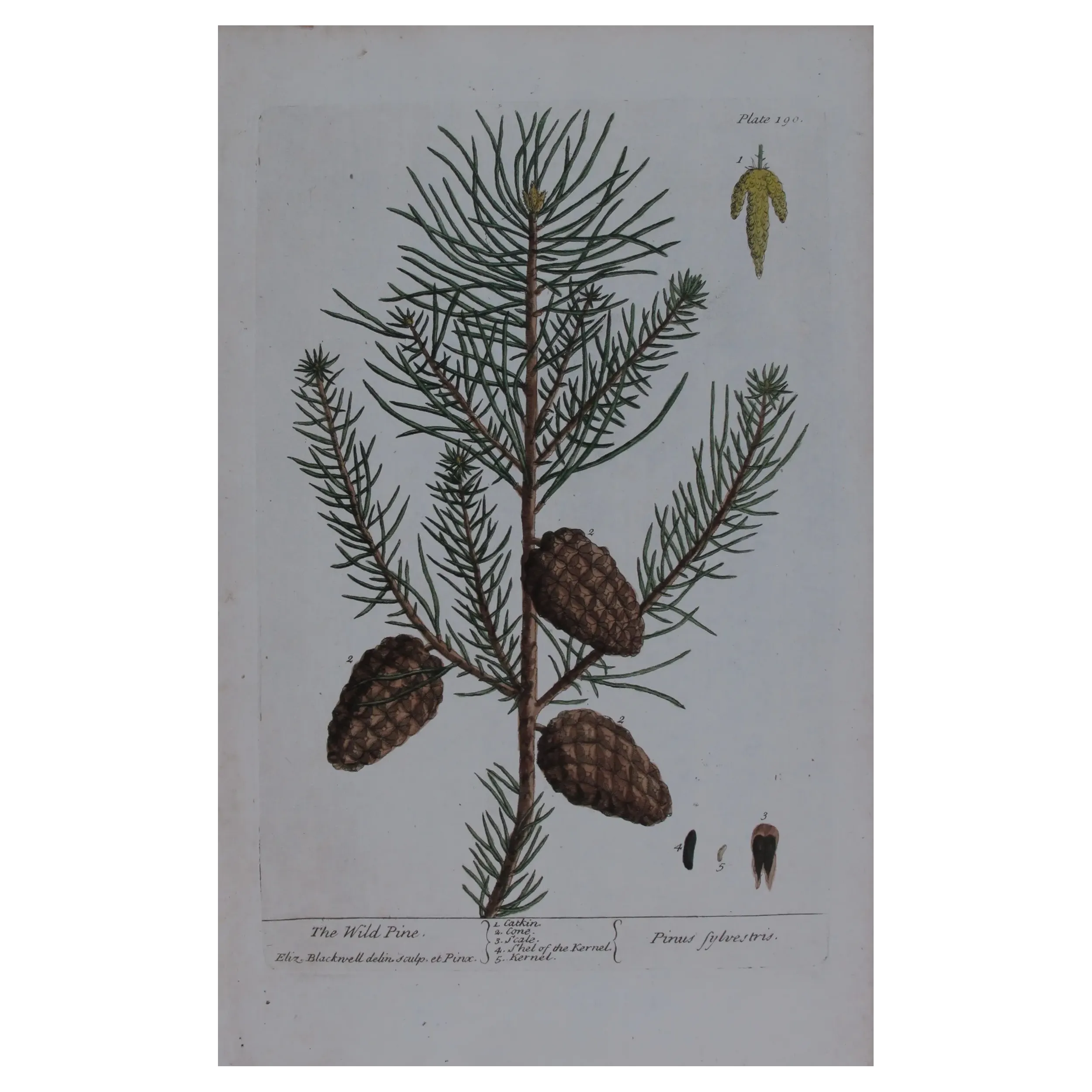
Fine 18th-century botanical of the Wild Pine, with graceful hanging cones and delicate needles ideal for woodland-themed interiors and natural history walls.