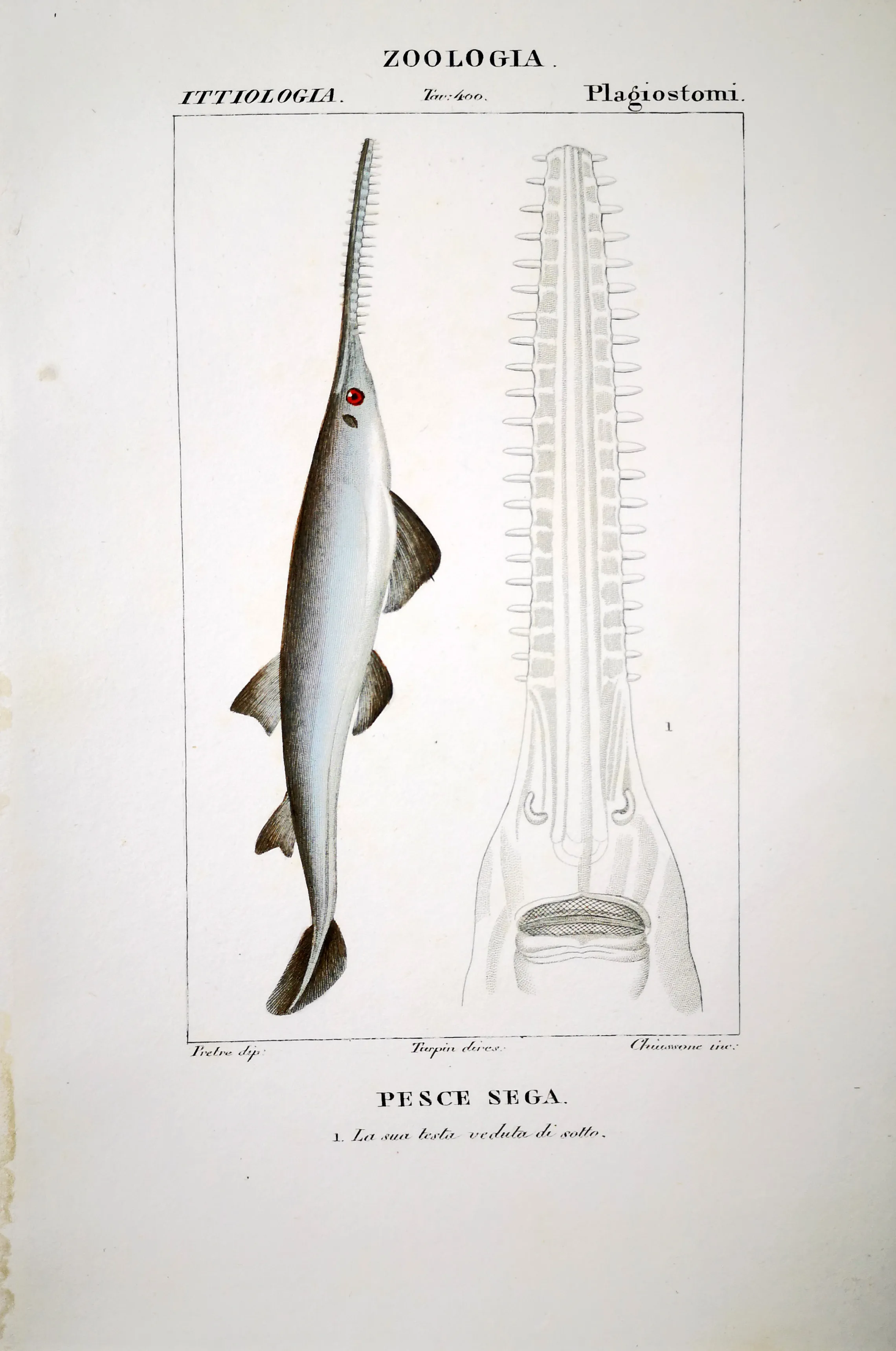
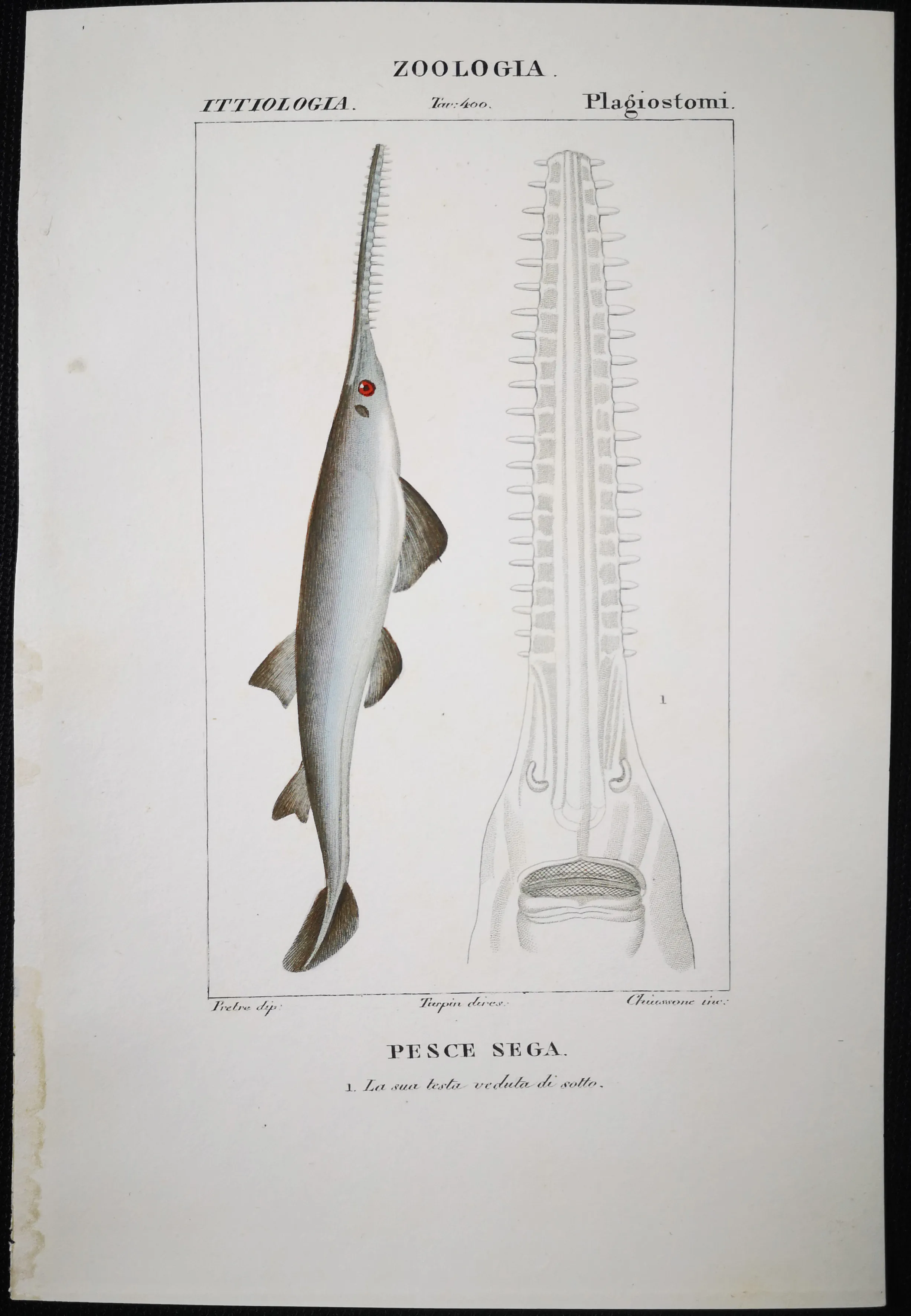



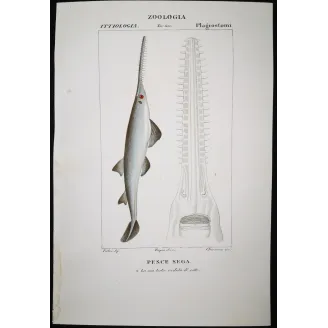
Exceptional 19th-century antique print by Pierre Antoine Prêtre depicting the majestic Sawfish with anatomical accuracy and rare charm.
 Delivery policy
Your print will be carefully prepared and shipped worldwide via trusted couriers (UPS or similar).
 Authentic antique prints
Original engravings from the 17th–19th century.
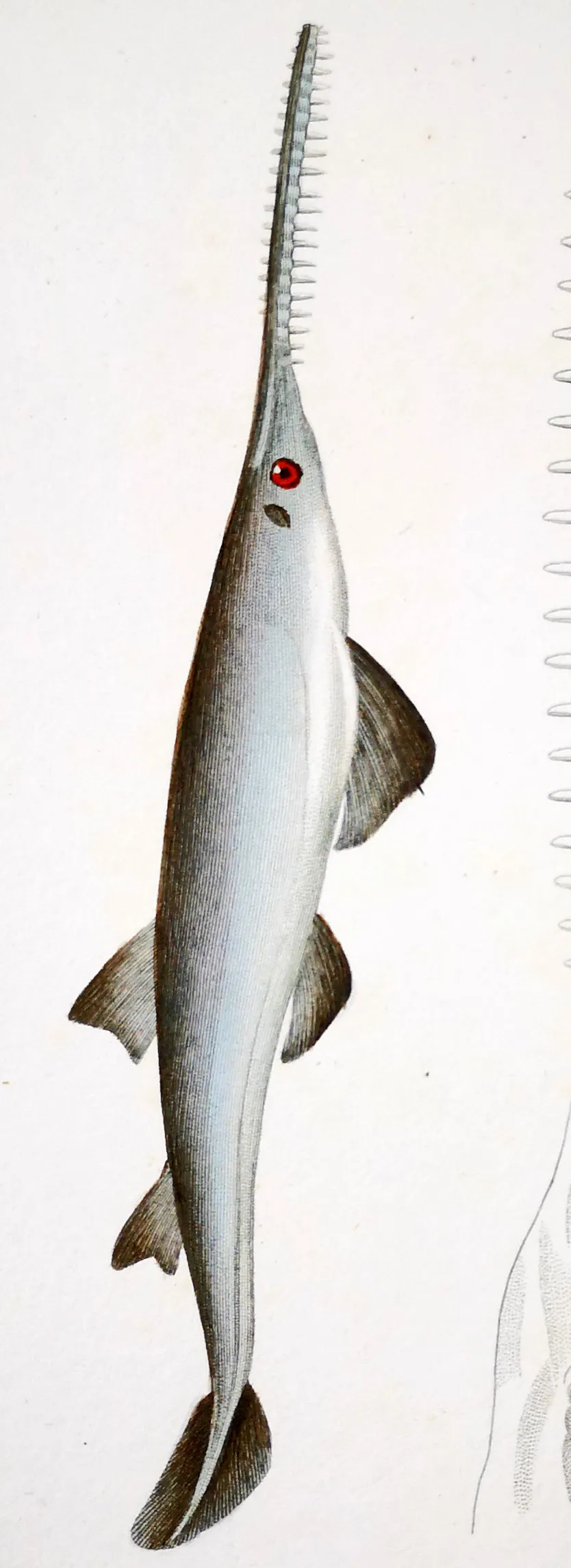
This original hand-colored engraving portrays the Sawfish (Pristis pristis), identified on the plate as “Pesce Sega.” Few marine animals match its immediate impact: an elongated body culminating in a serrated rostrum that appears less like anatomy than an instrument — a structure so distinctive that it becomes the entire identity of the species.
Prêtre reinforces that singularity through composition. The main figure is accompanied by a separate study of the saw-like head, presented with clinical clarity, as if to insist that this is not myth or exaggeration, but a measurable reality.
The engraving belongs to the Italian edition of the Dizionario di Scienze Naturali (Florence, Battelli press), a monumental publication in which Pierre Antoine Prêtre’s zoological subjects stand out for their refinement and display quality.
— • —
The body is rendered in cool silvery blues, shaded with a delicate gradient that gives the fish a clean, almost metallic presence. Darker fins anchor the form, while the rostrum rises in a sharp vertical line, drawing the eye upward like a spear.
To the right, the detailed head study becomes an engraved diagram: evenly spaced lateral teeth, the internal structure suggested with restrained line, and a sense of scale that transforms wonder into comprehension. The overall effect is both dramatic and orderly — a cabinet-of-curiosities subject disciplined by the page.
In nineteenth-century encyclopedias, the sawfish occupied a privileged place because it embodied the era’s fascination with the extraordinary made legible. The rostrum — used for sensing, defense, and striking — was a feature that invited explanation, and illustrations like this functioned as a form of proof for readers far from the sea. The “saw” metaphor is itself cultural: a human tool projected onto an animal, making the unfamiliar memorable through analogy. Within monumental works such as the Dizionario di Scienze Naturali, the sawfish stands as one of the most emblematic subjects — a reminder that nature could appear engineered, yet remained entirely its own.
This engraving forms part of the historic Dizionario di Scienze Naturali, preserved today in the Sacchetti Collection. These works are nearly two centuries old, created in an era when nature was celebrated through monumental publishing projects — ambitious enterprises that are now practically unachievable.
For the wider context of this noble provenance and its cultural value, we invite you to read “Not Just Another Print”.
The engraving is in excellent antique condition, with clean margins and a fresh, well-preserved hand-coloured surface. Printed on original smooth wove paper (non-laid), consistent with Italian scientific editions of the period. No watermark has been observed. The impression is clear and the colour remains vibrant, with no visible losses.
For further context on Pierre Antoine Prêtre and his contribution to nineteenth-century zoological illustration, see our editorial feature:
Pierre Antoine Prêtre – Illustrator of Natural Science and Marine Life
Looking for: sawfish engraving, Pristis pristis antique print, Pesce Sega plate, Prêtre rostrum study, 19th-century marine curiosity illustration.
Specific References
Striped body with blue-spotted fins; a refined 19th-century marine engraving ideal for study walls and coastal interiors.
Brilliant peacock wrasse with patterned fins and a silver boga; lively palette and refined stippling for elegant interiors.
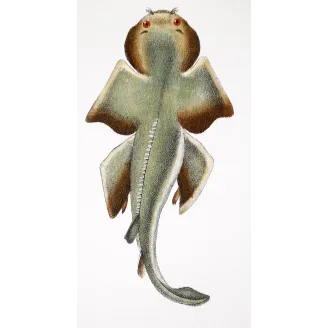
Graceful 19th-century engraving of the Angelshark by Pierre Antoine Prêtre, rich in soft tones and fine anatomical accuracy.
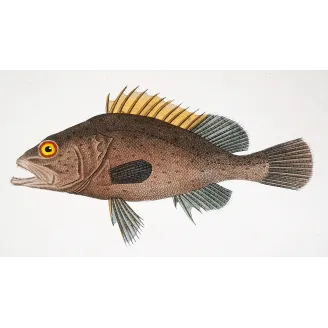
Robust Brown Grouper illustrated with fine detail and earthy, natural tones.
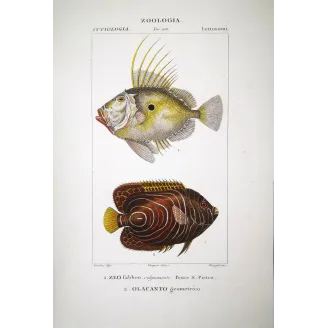
Iconic plate with the celebrated John Dory and a striking angelfishsuperb color contrasts and collector appeal.
Expressive 19th-century engraving of the European Eel and Wolffish by Pierre Antoine Prêtre, contrasting silhouettes and textures.
Remarkable plate with armored cowfish and boxfishhexagonal patterning and sculptural spines, superb for marine-themed decor.
Elegant coastal plate with shimmering scales and yellow-olive fins; a balanced, classic choice for study or living spaces.
Fine 19th-century antique print depicting Porbeagle and Spiny Dogfish by Pierre Antoine Prêtre, detailed and vibrant marine pair.
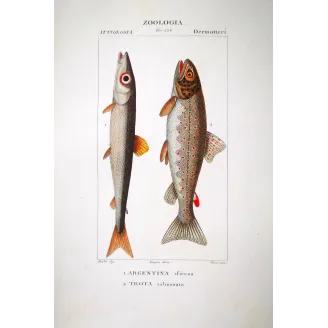
Classic natural history pairingsilver argentine and spotted troutclean composition and fine stippling for timeless appeal.
Vibrant 19th-century antique print by Pierre Antoine Prêtre depicting a Hammerhead Shark and Smoothhound, remarkable for color contrast and composition.
Silver and golden marine pair with crisp scales; a balanced 19th-century composition for refined coastal interiors.
Spectacular 19th-century antique print of the Basking Shark by Pierre Antoine Prêtre, capturing monumental scale and serene presence.
Vivid 19th-century engraving of Mediterranean Rainbow Wrasse and Lesser Sandeel by Pierre Antoine Prêtre, bright palette and crisp lines.
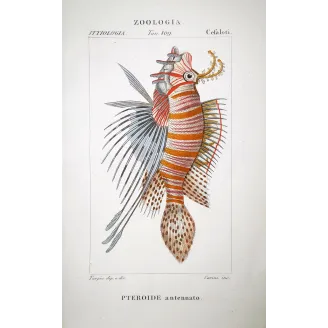
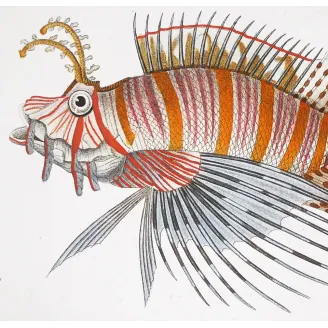
Striking depiction of the Antennata Lionfish with vivid red and orange fins, full of exotic elegance.
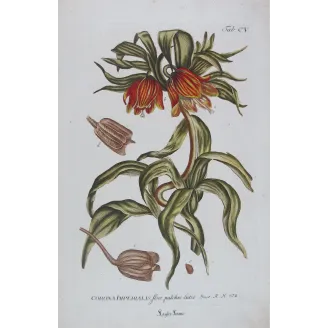
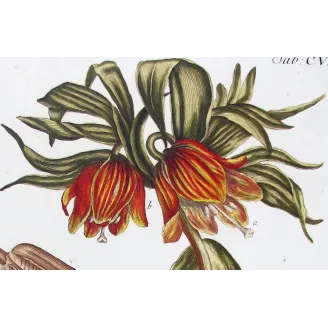
A striking 18th-century botanical engraving of Crown Imperial (Fritillaria imperialis), distinguished by unusually bold hand-coloring and a dynamic, flowing composition. This plate exemplifies the expressive character of German botanical illustration, combining strong visual presence with refined natural observation.
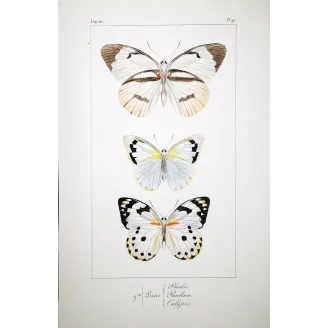
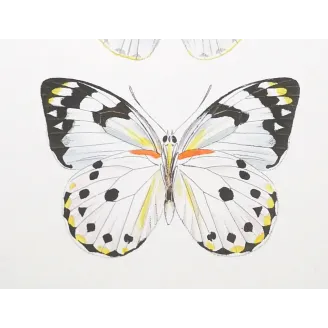
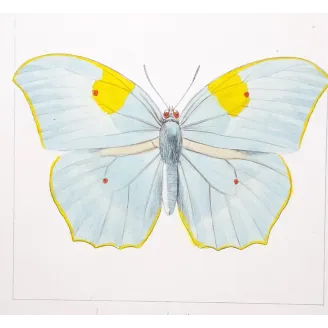
Delicate white butterflies with subtle yellow, orange, and black accents. A refined 1835 engraving with light and elegant decorative appeal.
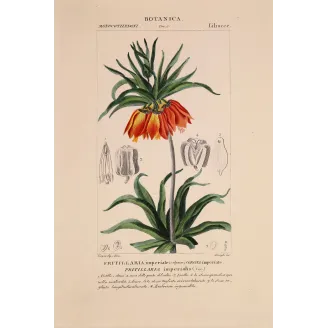
Striking antique print of Fritillaria imperialis with bright orange crown flowers.
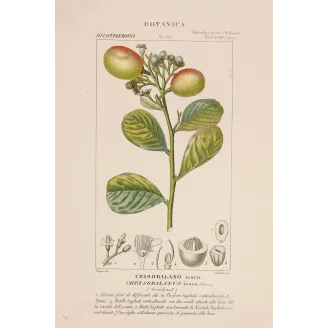
Elegant hand-colored botanical engraving of *Chrysobalanus icaco*, showing the round fruits and smooth glossy leaves in rich natural hues.
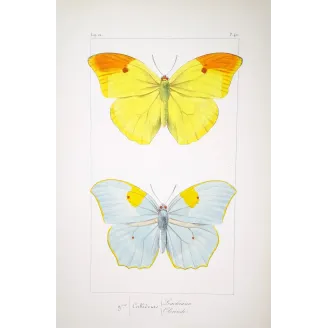
Soft yellow and pale blue butterflies with delicate orange accents. A refined 1835 engraving with elegant tones and subtle decorative appeal.
Original early 19th-century hand-colored engraving depicting King Vulture and Brown Vulture from the Dizionario di Scienze Naturali.
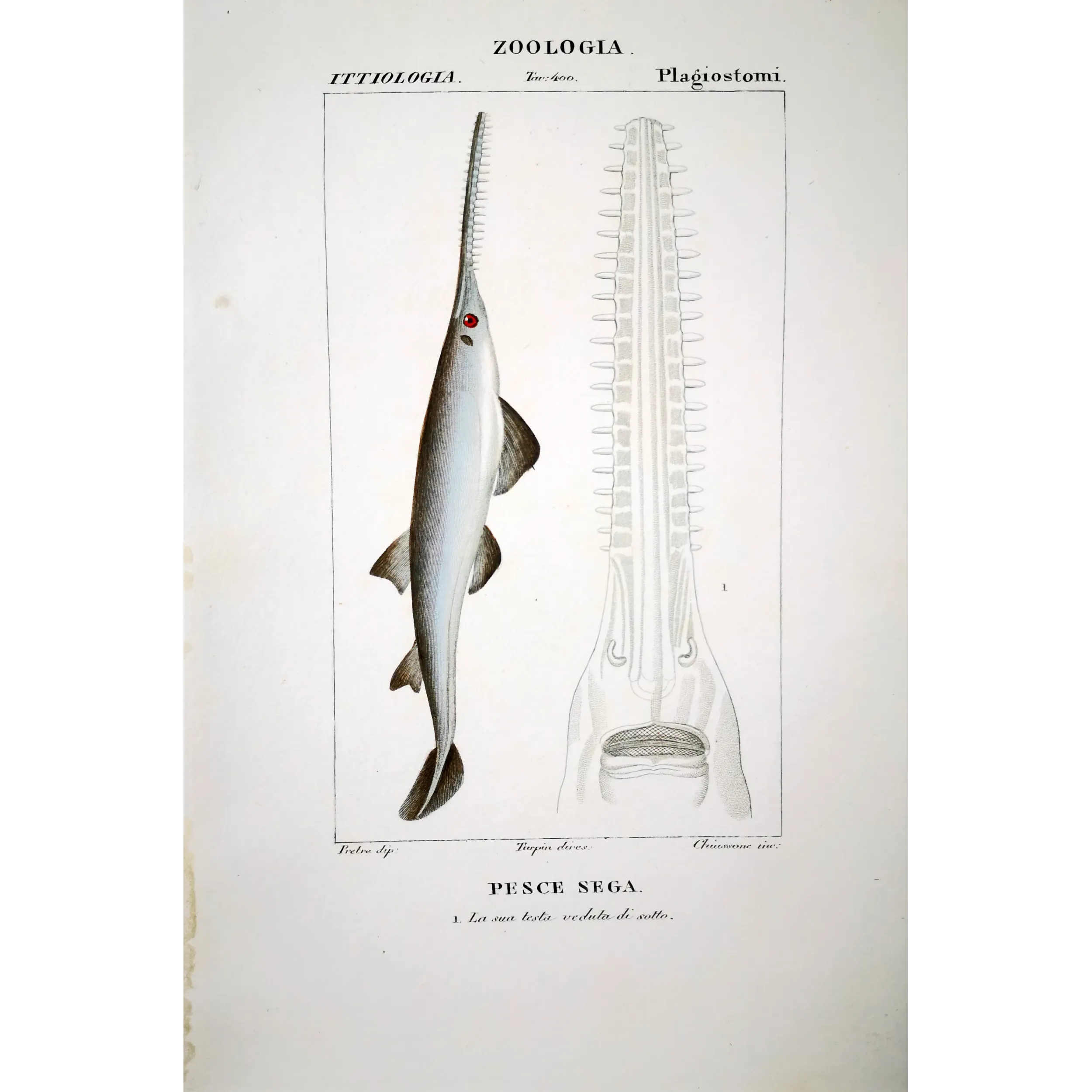
Exceptional 19th-century antique print by Pierre Antoine Prêtre depicting the majestic Sawfish with anatomical accuracy and rare charm.