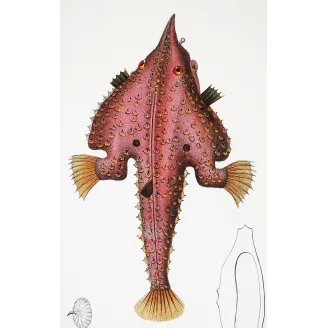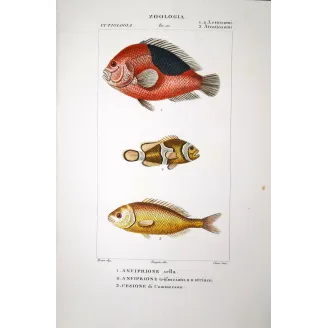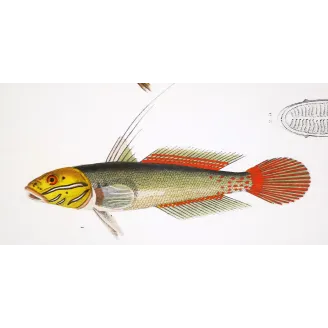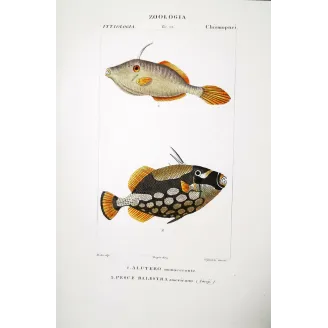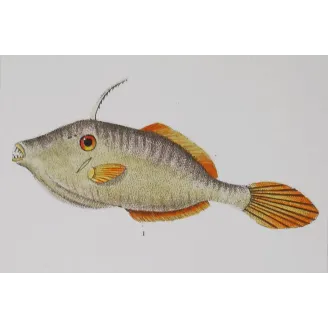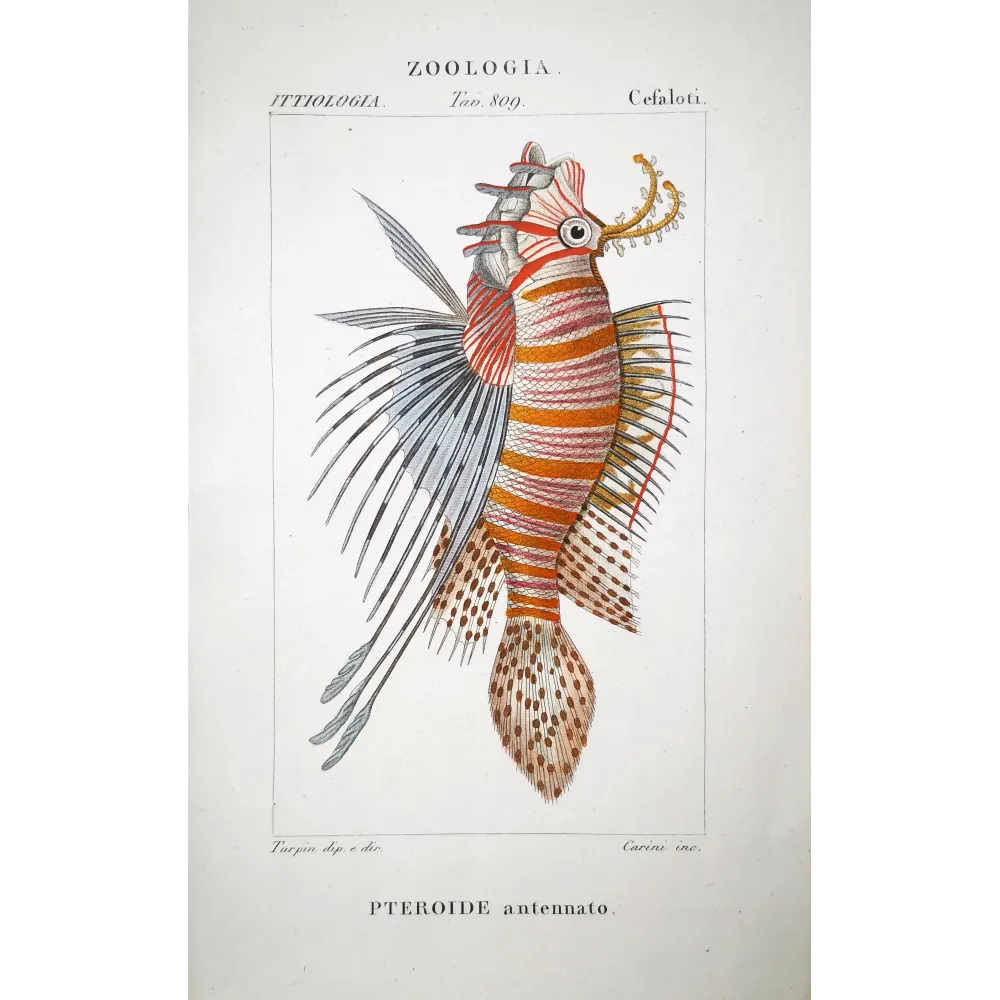
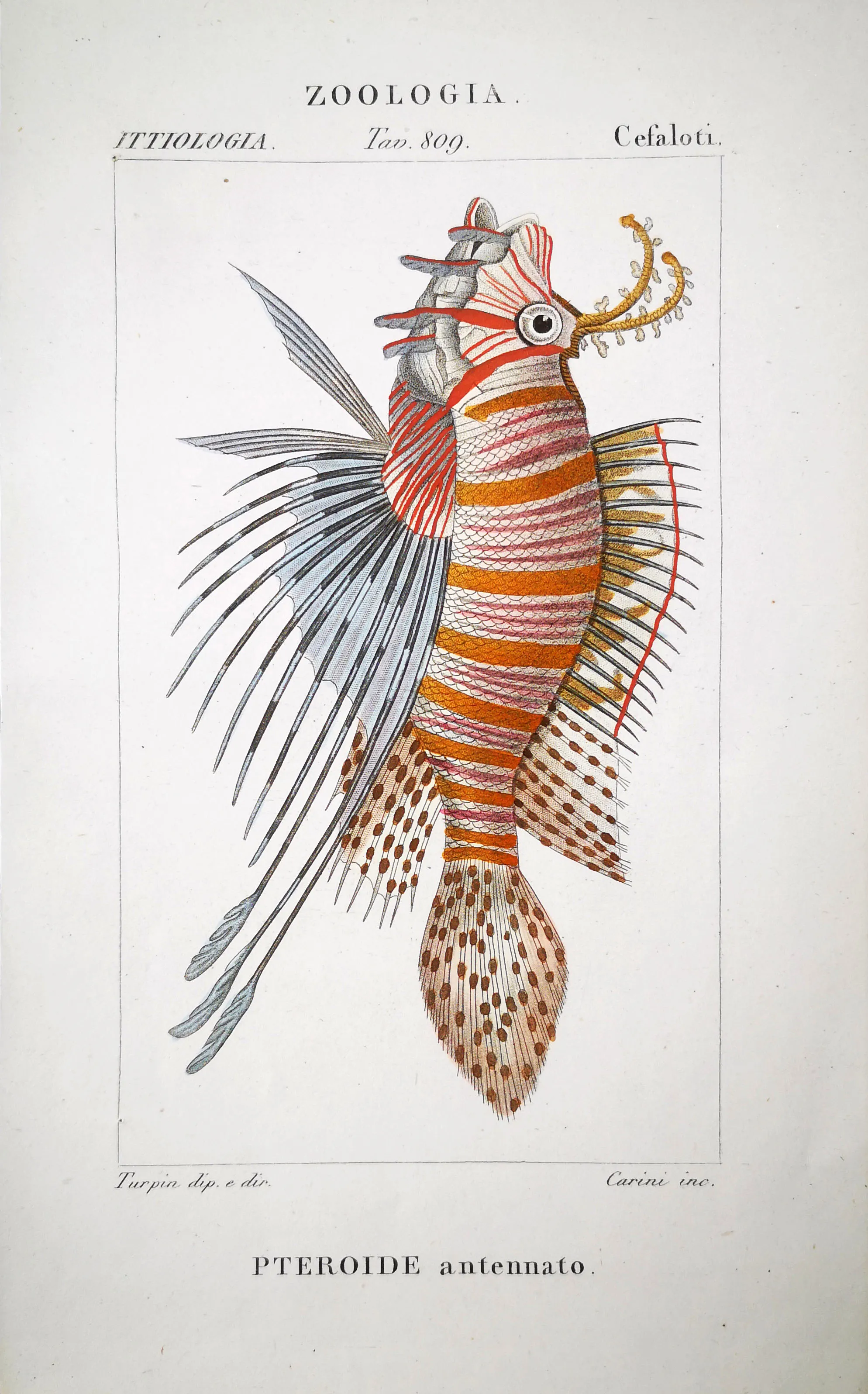
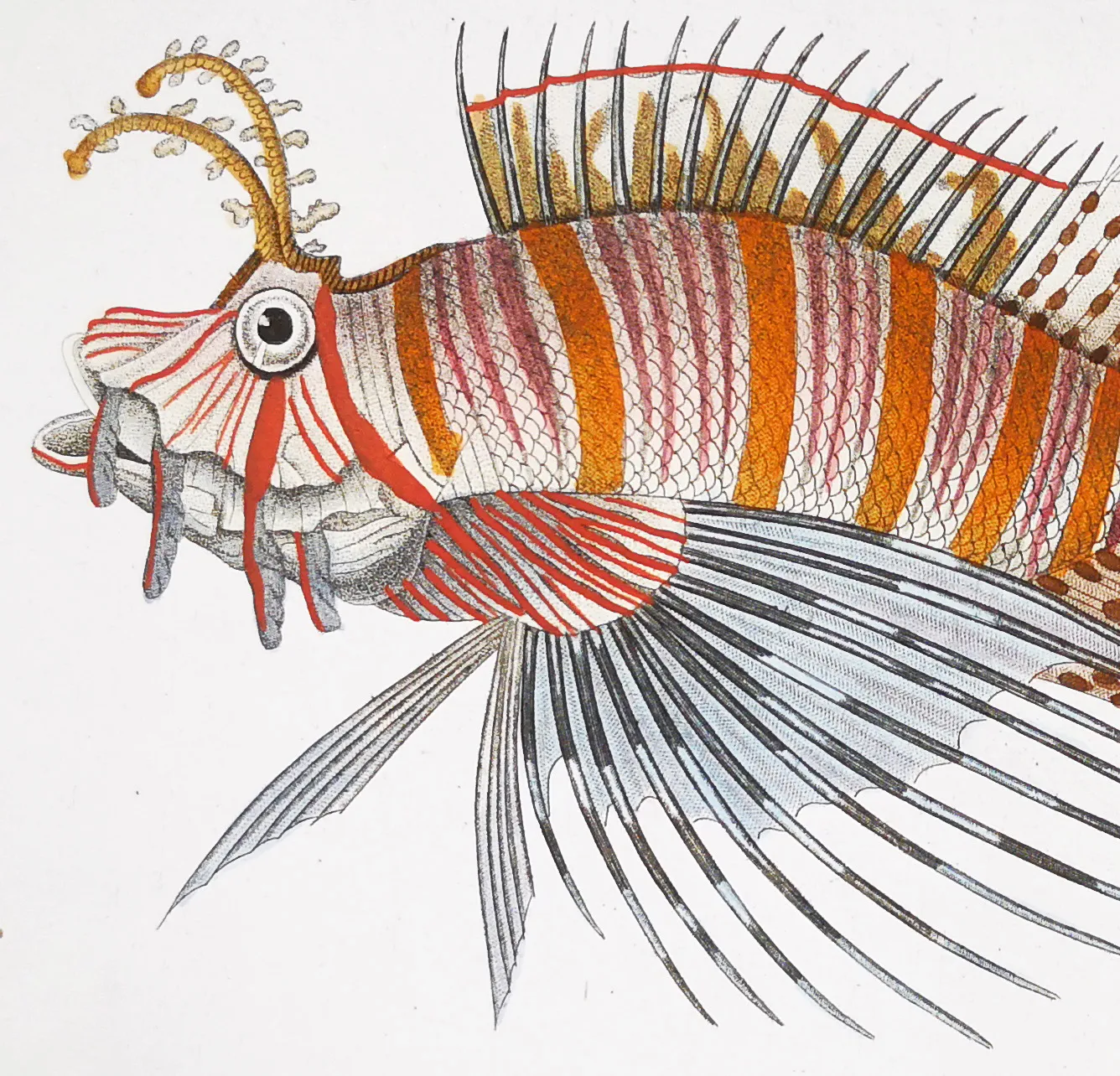
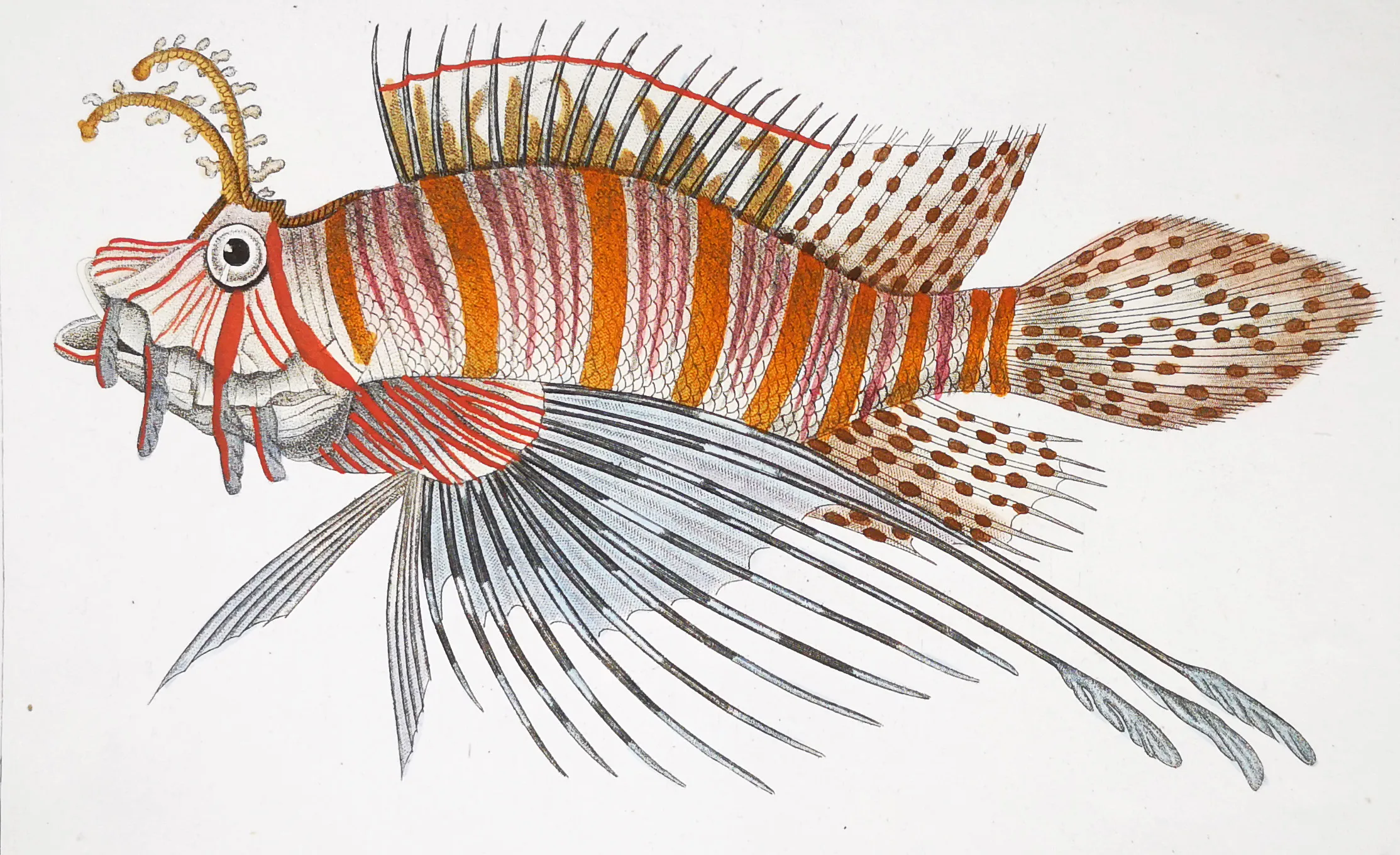
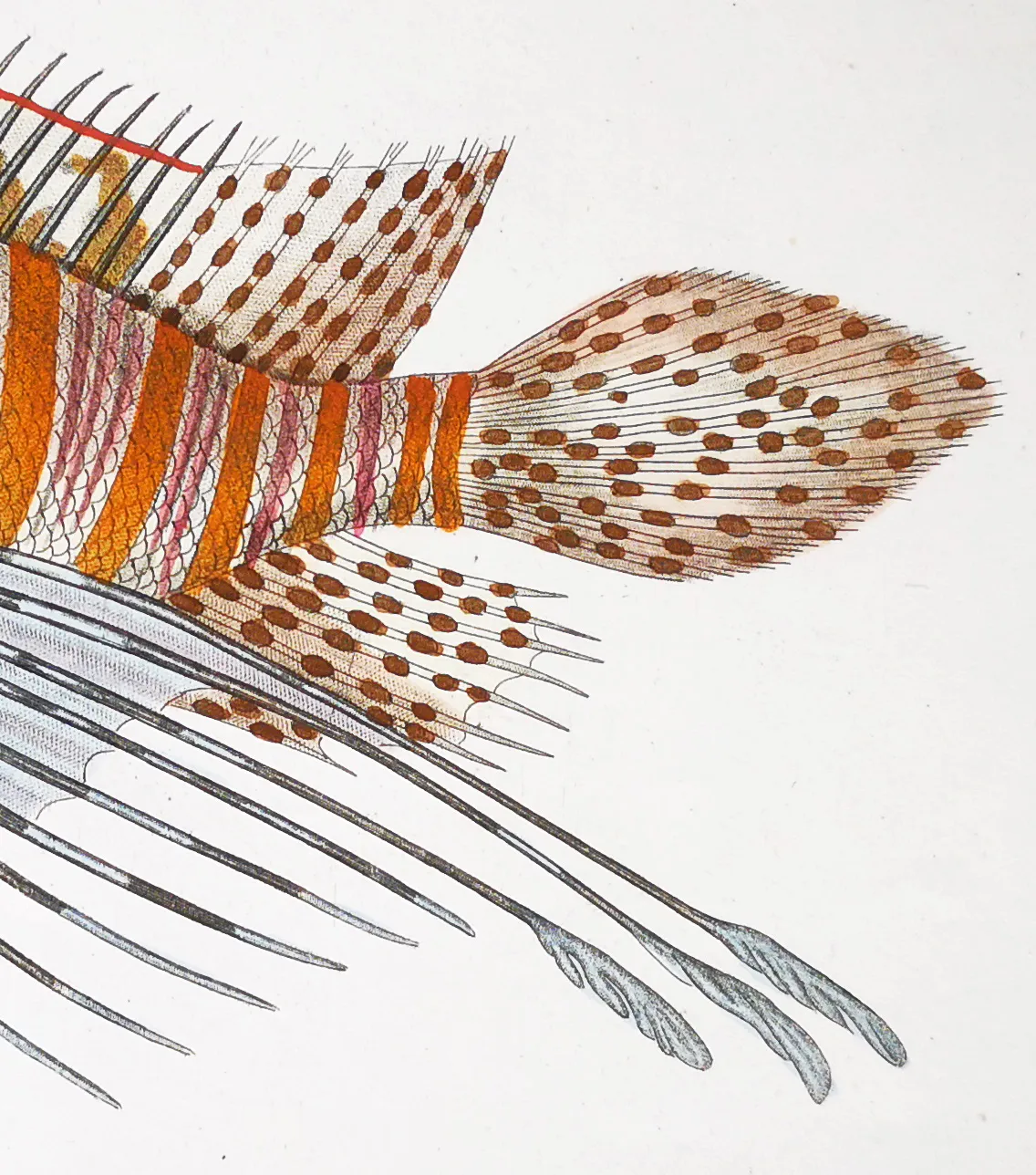
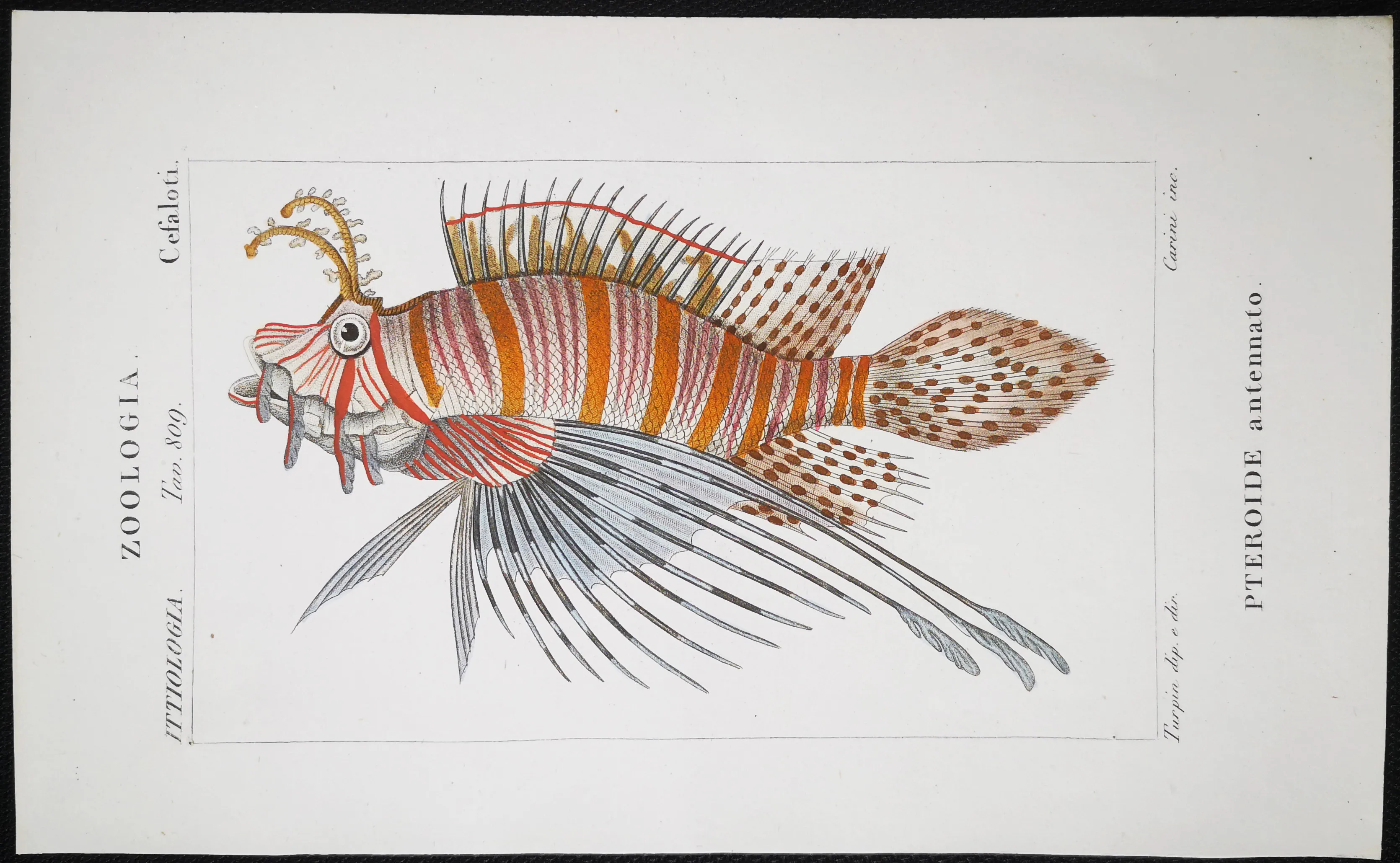

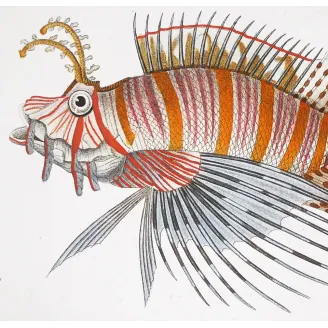
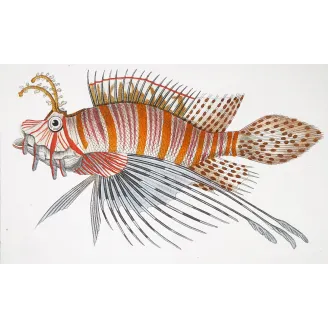
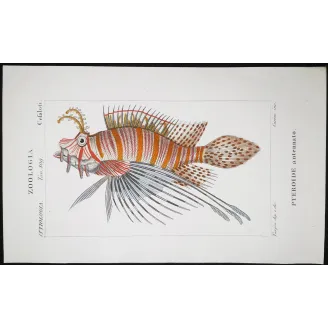

Striking depiction of the Antennata Lionfish with vivid red and orange fins, full of exotic elegance.
 Delivery policy
Your print will be carefully prepared and shipped worldwide via trusted couriers (UPS or similar).
 Authentic antique prints
Original engravings from the 17th–19th century.
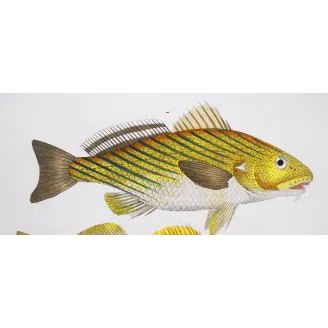
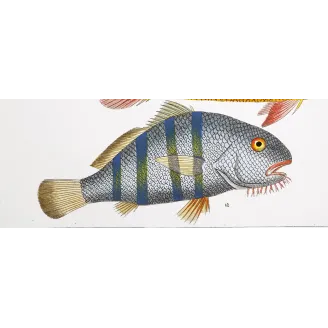
This refined zoological engraving depicts the Lionfish, Pterois volitans, rendered with structural clarity and dramatic presence. The specimen is presented in full lateral display, its radiating fins and articulated spines carefully delineated to balance visual spectacle with anatomical precision — a defining ambition of early nineteenth-century natural history publishing.
Unlike decorative marine imagery intended for ornament alone, this plate emphasizes morphological intelligibility. The dorsal rays are individually engraved, the striped body meticulously patterned, and the translucent fin membranes subtly heightened with controlled hand-colouring. The chromatic palette — alternating bands of crimson, amber, and warm ochre — enhances legibility while preserving compositional harmony.
The engraving belongs to the Italian edition of the Dizionario di Scienze Naturali (Florence, Battelli press), one of the most ambitious encyclopedic scientific enterprises of its time, for which Pierre Antoine Prêtre provided some of the finest zoological illustrations dedicated to marine life.
— • —
The composition is horizontally structured yet dynamically expansive. The extended pectoral fins unfold like ceremonial fans, establishing a radial rhythm across the sheet, while the dorsal spines create a serrated architectural silhouette. The eye, carefully accentuated, anchors the form and directs the viewer’s gaze along the alternating stripes of the torso.
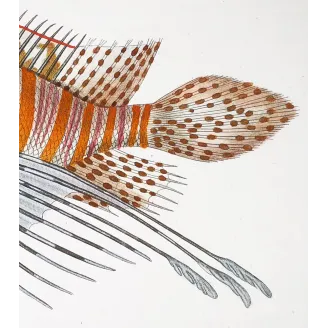
The delicate stippling of the fin membranes contrasts with the density of the body’s patterning, producing equilibrium between graphic intensity and spatial lightness. Prêtre achieves a synthesis of zoological documentation and decorative authority — a hallmark of nineteenth-century scientific engraving at its most refined.
Pterois volitans, commonly known as the Lionfish, is native to the Indo-Pacific region and has long fascinated naturalists for its striking striped appearance and elaborate venomous spines. During the age of global maritime exploration, such exotic marine species were documented through engraved plates that served as the primary visual medium of scientific transmission. The Lionfish’s dramatic anatomy made it an especially compelling subject within encyclopedic works dedicated to cataloguing the diversity of the natural world with intellectual rigor and visual authority.
This plate forms part of the historic Dizionario di Scienze Naturali, a monumental early nineteenth-century encyclopedic enterprise once preserved within a noble library and today housed in the Sacchetti Collection. Each engraving reflects a period in which scientific ambition was matched by exceptional artisanal execution — from the disciplined copperplate line to the luminous hand-colouring applied individually to every impression.
The result is not merely zoological documentation, but a refined synthesis of scholarship and craftsmanship, where artistic discipline elevates marine observation into a form of quiet visual authority. To discover the full story behind these rare prints and their noble provenance, we invite you to read our editorial feature “Not Just Another Print” — a tribute to the enduring harmony between knowledge, art and prestige embodied in the Dizionario di Scienze Naturali.
The engraving is in excellent antique condition. The sheet presents clean margins and a well-preserved impression. The paper is smooth early nineteenth-century wove paper (non-laid), consistent with Italian scientific editions of the period. No watermark has been observed. The original hand-colouring remains vivid and balanced, with no visible losses. The engraved zoological titling is clearly legible.
For further context on Pierre Antoine Prêtre and his contribution to nineteenth-century zoological illustration, see our editorial feature:
Pierre Antoine Prêtre – Illustrator of Natural Science and Marine Life
Specific References
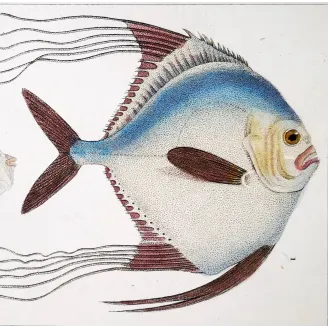
Exceptional 19th-century engraving of the Batfish by Pierre Antoine Prêtre, with rare pink tones and textured surface detail.
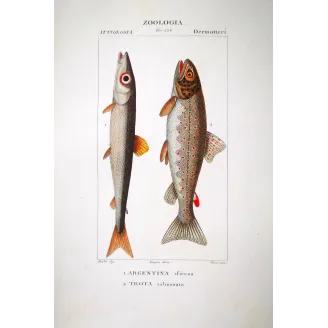
Classic natural history pairingsilver argentine and spotted troutclean composition and fine stippling for timeless appeal.
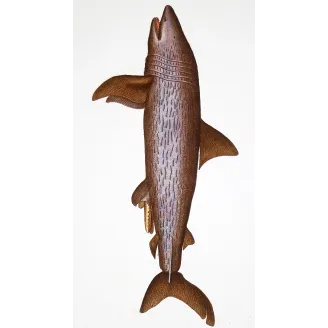
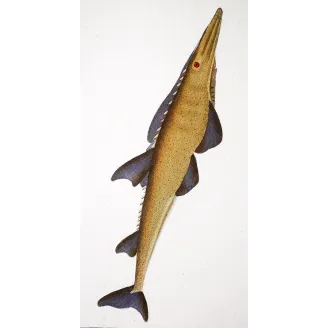
Spectacular 19th-century antique print of the Basking Shark by Pierre Antoine Prêtre, capturing monumental scale and serene presence.
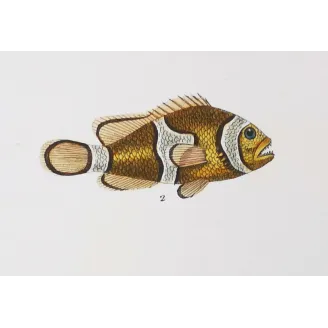
Charming clownfish with companion reef species, crisp colors and coral-reef appeal in a classic 19th-century plate.
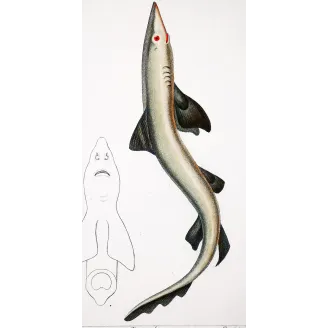
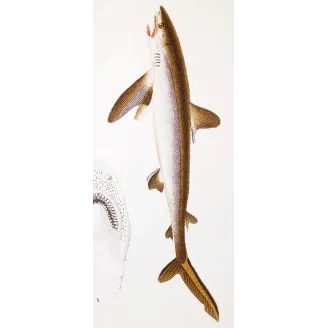
Refined 19th-century hand-colored engraving of the Tope Shark by Pierre Antoine Prêtre, notable for its elegant form and tonal realism.
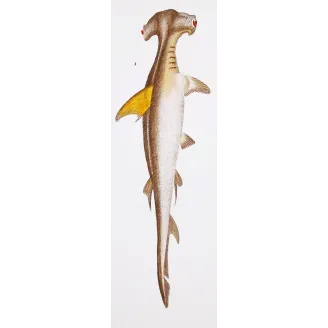
Vibrant 19th-century antique print by Pierre Antoine Prêtre depicting a Hammerhead Shark and Smoothhound, remarkable for color contrast and composition.
Detailed 19th-century engraving of the Small-Spotted Catshark by Pierre Antoine Prêtre, combining elegance and scientific accuracy.
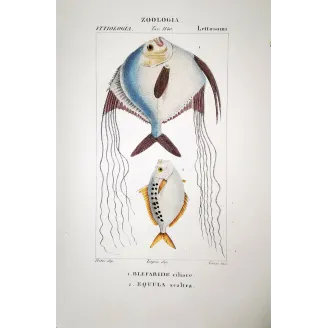
Delicate 19th-century hand-colored engraving of a ponyfish with companion species, ideal for marine-themed interiors and collectors.
Elegant coastal plate with shimmering scales and yellow-olive fins; a balanced, classic choice for study or living spaces.
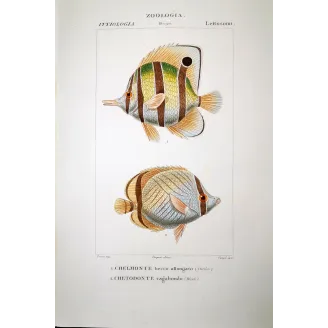
Iconic Antique Print with two vivid butterflyfishes, finely hand-coloredstriking geometry and coral-reef charm for collectors.
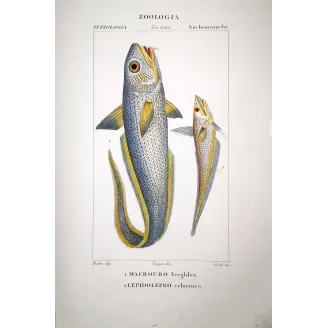
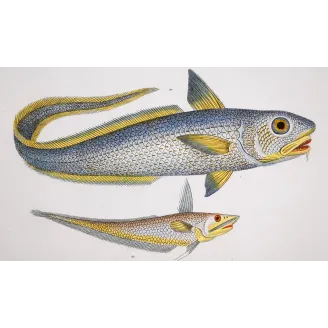
Grenadier and Ribbonfish illustrated with refined color balance and elegant detail.
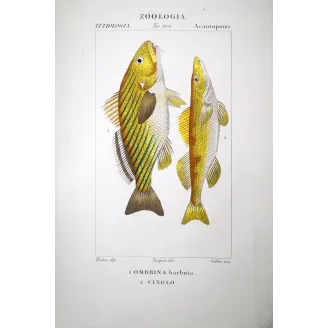
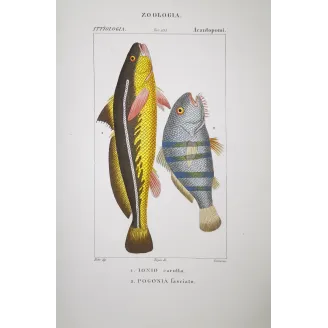
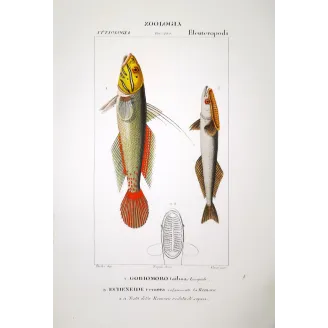
Graphic pairing with bold yellow stripe and banded companion; vibrant hand-coloring and clear natural history styling.
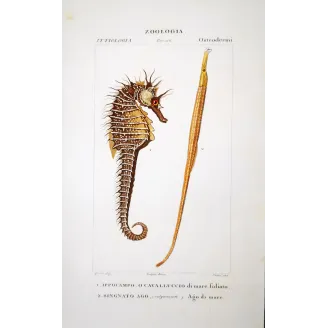
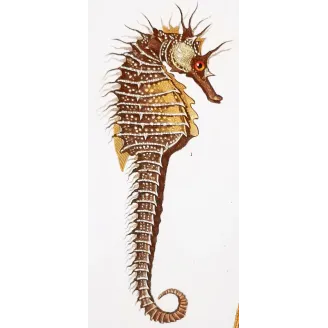
Vivid hand-colored Antique Print of a leafy seahorse with a slender pipefishan iconic duo for marine art lovers and collectors.
Distinctive composition with streamlined forms and the famous remora disktechnical curiosity with refined aesthetics.
Charming 19th-century engraving of the Smooth Guitarfish by Pierre Antoine Prêtre, highlighting elegant form and serene coloration.
Geometric patterns and bold contrasts; elegant plate featuring a refined filefish with a dramatic American triggerfish.
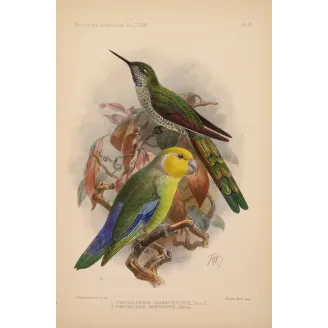
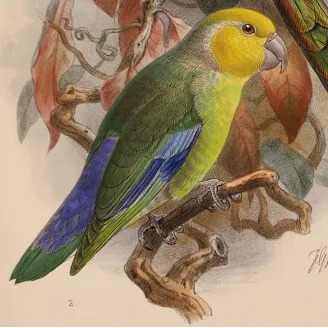
Original hand-coloured lithograph by John Gerrard Keulemans from Novitates Zoologicae, Volume II, Plate II, published in 1895. The composition depicts the Grey-bellied Comet and Yellow-faced Parrotlet against a restrained botanical background, with selective gum arabic highlights visible across parts of the hummingbird’s plumage. Printed on substantial wove paper by Mintern Bros. and preserved in very good condition.
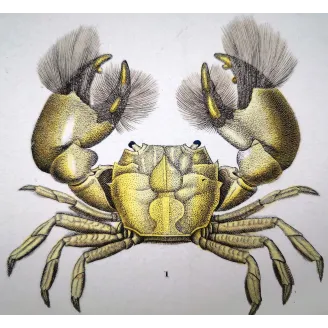
19th-century hand-colored engraving of *Grapsus penicillatus*, a vivid marine crab with expressive claws and warm tones.
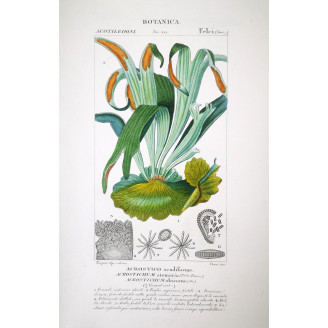
A complete set of 22 original hand-colored Engravings of ferns by Turpin, from the Dizionario di Scienze Naturali (c. 1830).
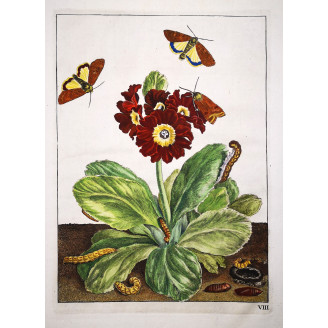
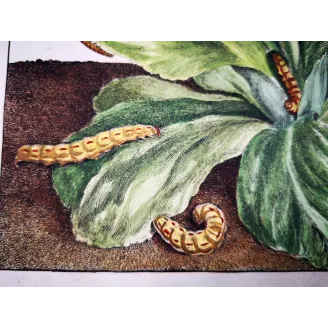
Original 1774 engraving by Jacob L'Admiral: Early Moth Stage among Willow Leaves.
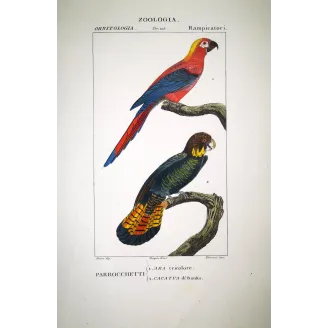
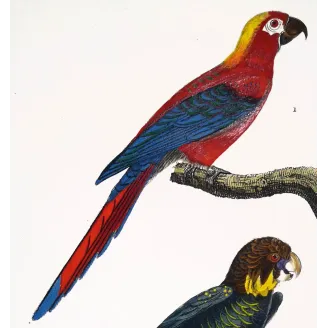
Vibrant parakeets perched on branches: a scarlet macaw and a black cockatoo with yellow and red highlights.
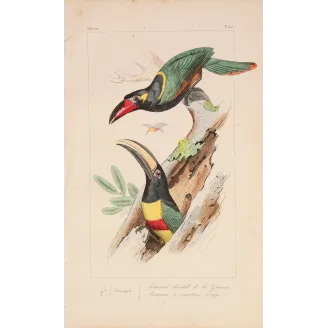
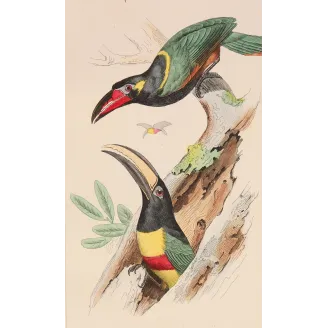
This vivid 19th-century engraving depicts two exotic aracaris, showcasing striking contrasts of green, red and yellow plumage. A highly decorative composition combining scientific observation with strong visual appeal, ideal for collectors of tropical ornithology and refined interior spaces.
Fine 18th-century engraving of the Medlar Tree by Elisabeth Blackwell, featuring fruit, blossom, and botanical detail.
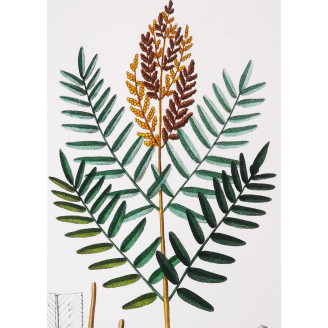
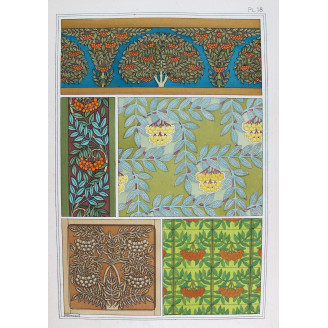
With its compound leaves and clusters of red berries, the sorb tree is rich in folk symbolism.
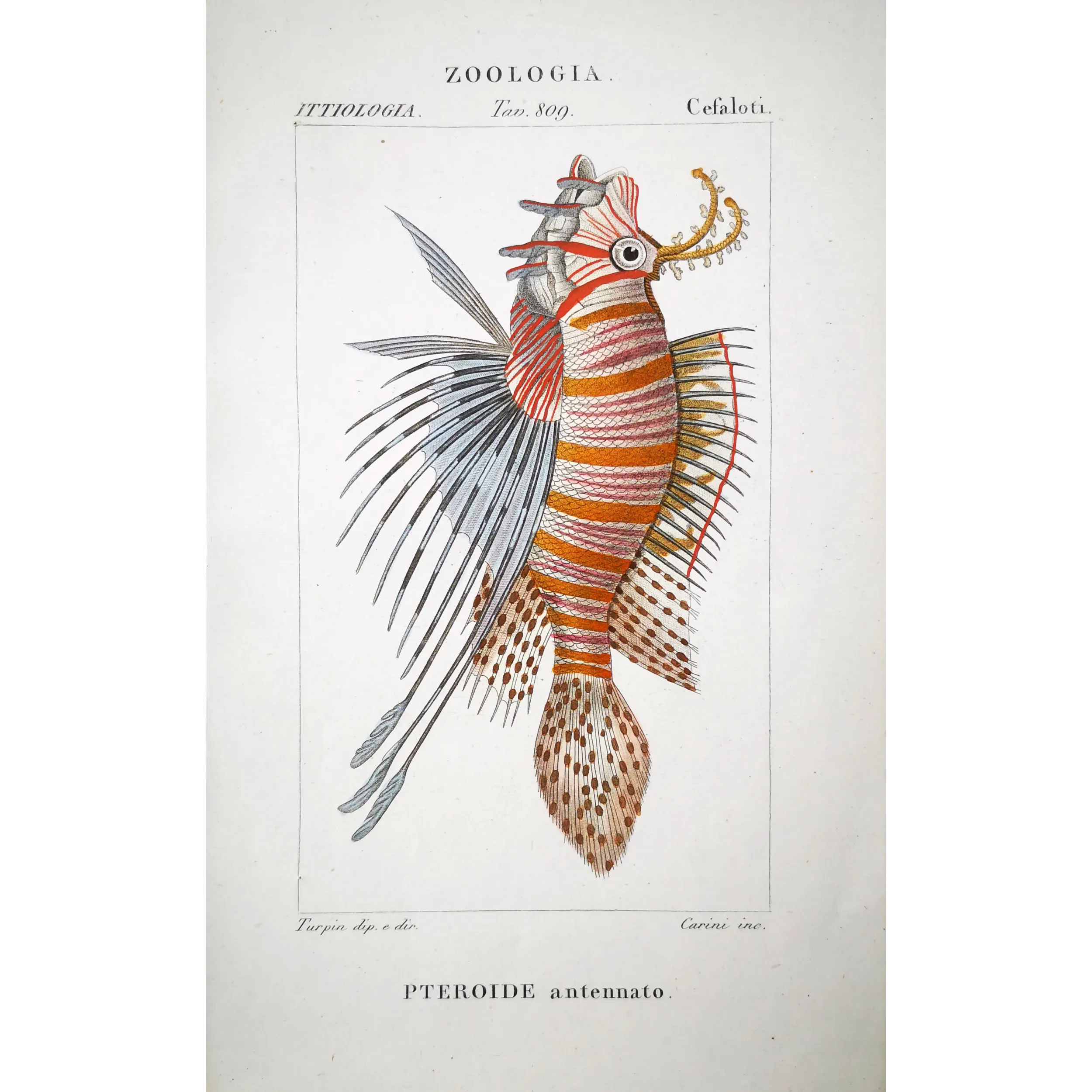
Striking depiction of the Antennata Lionfish with vivid red and orange fins, full of exotic elegance.