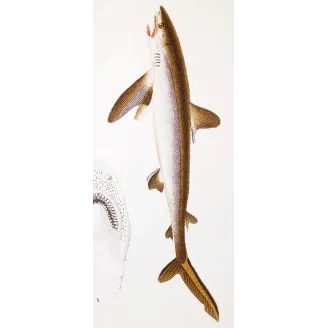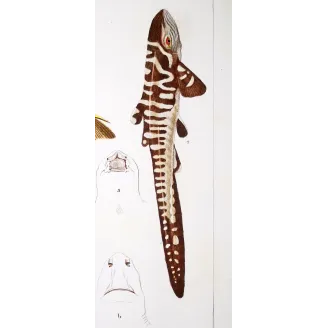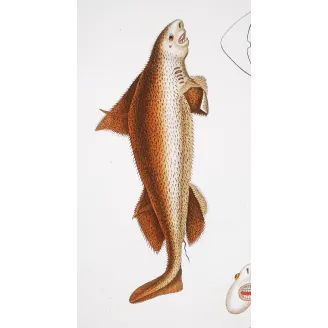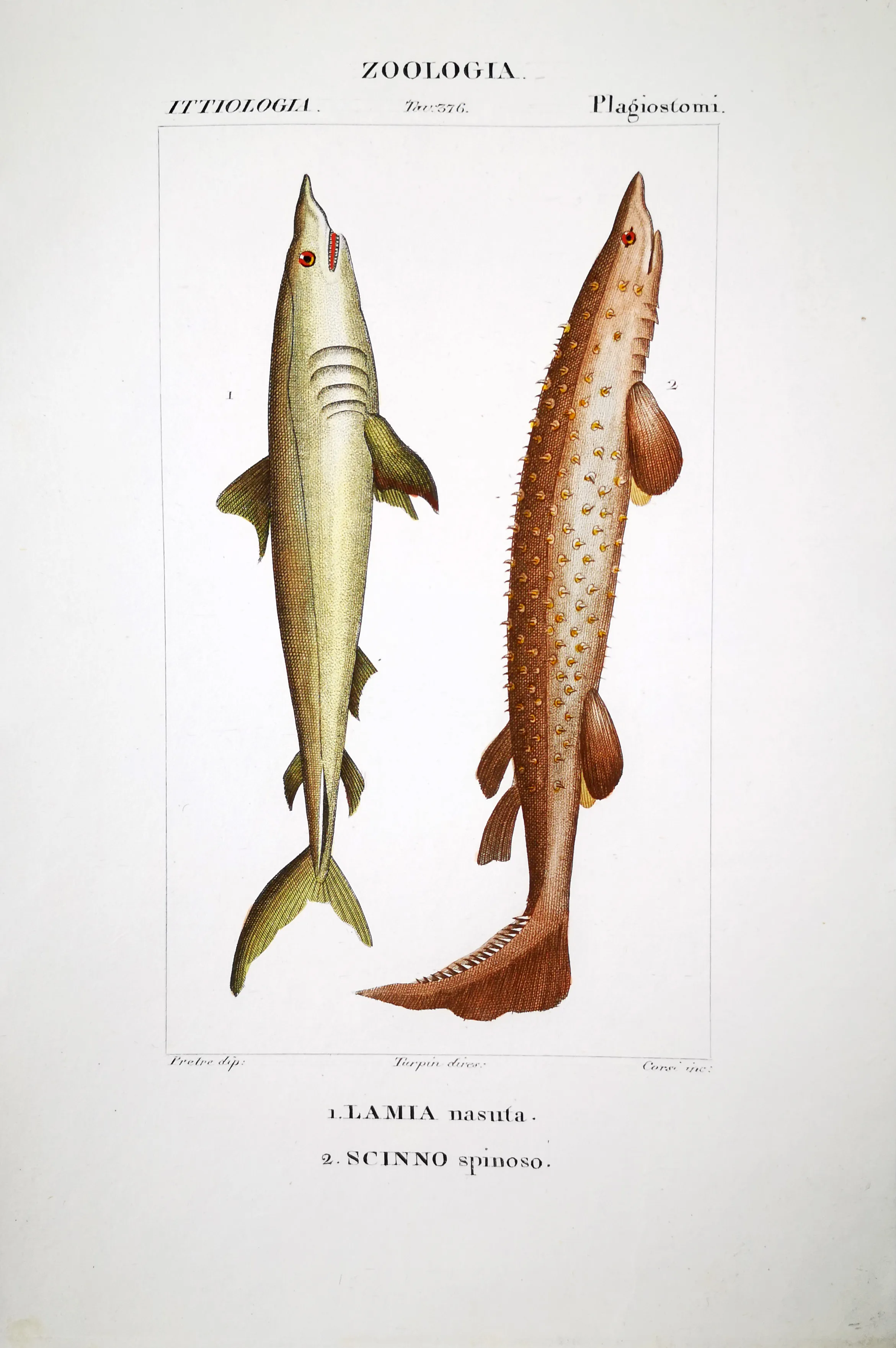
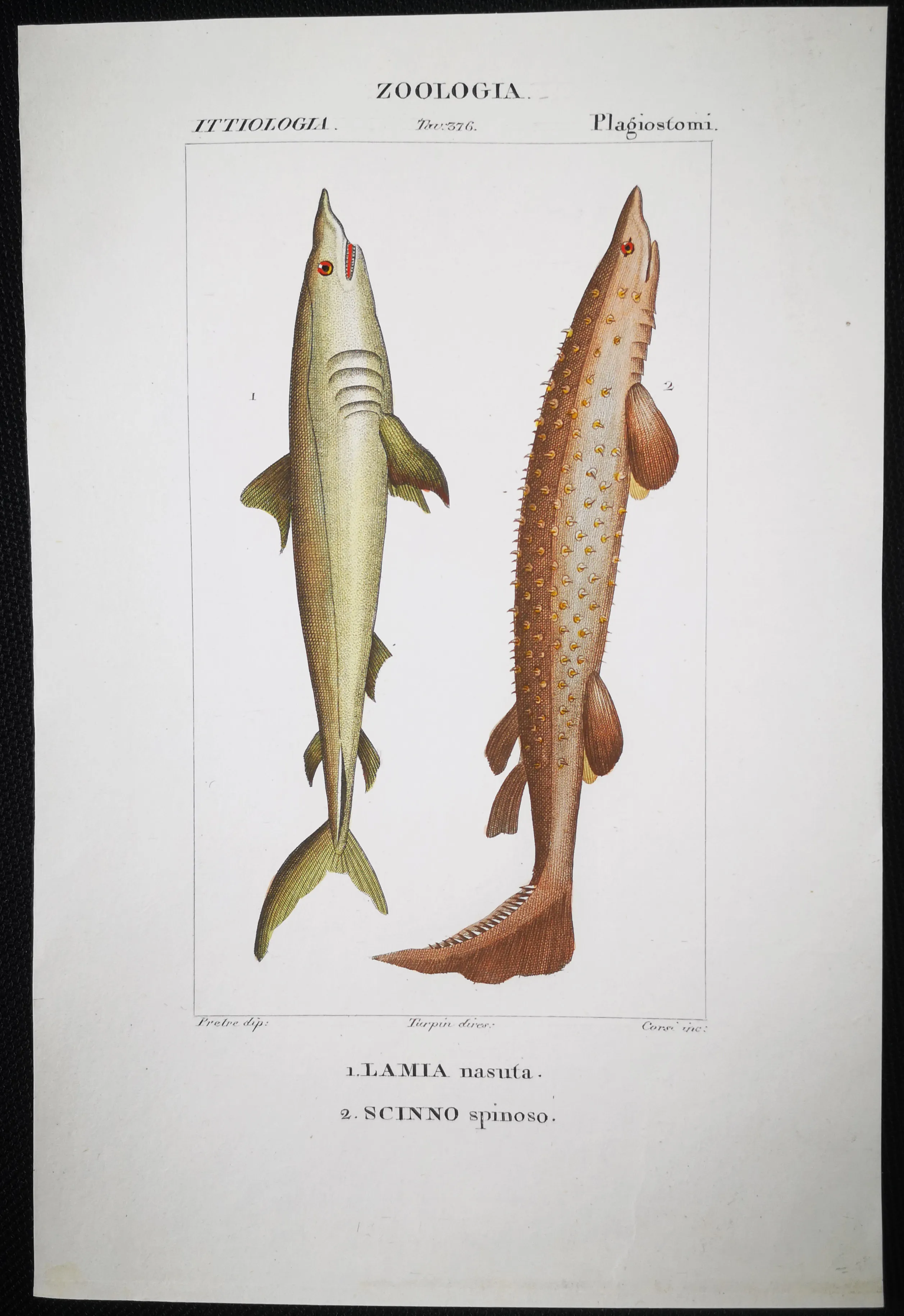




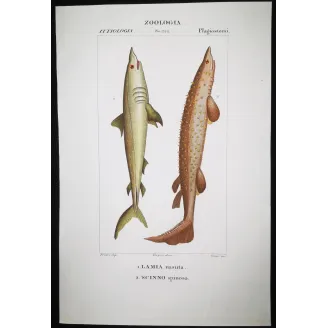

Fine 19th-century antique print depicting Porbeagle and Spiny Dogfish by Pierre Antoine Prêtre, detailed and vibrant marine pair.
 Delivery policy
Your print will be carefully prepared and shipped worldwide via trusted couriers (UPS or similar).
 Authentic antique prints
Original engravings from the 17th–19th century.
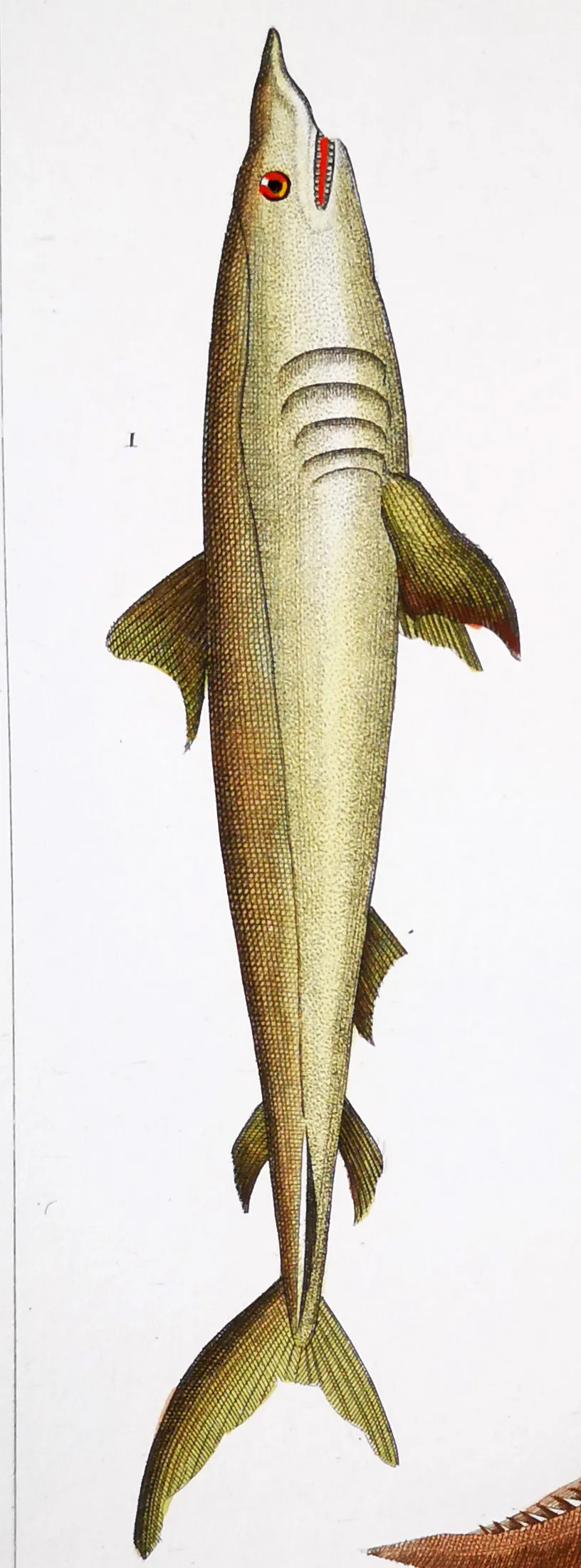
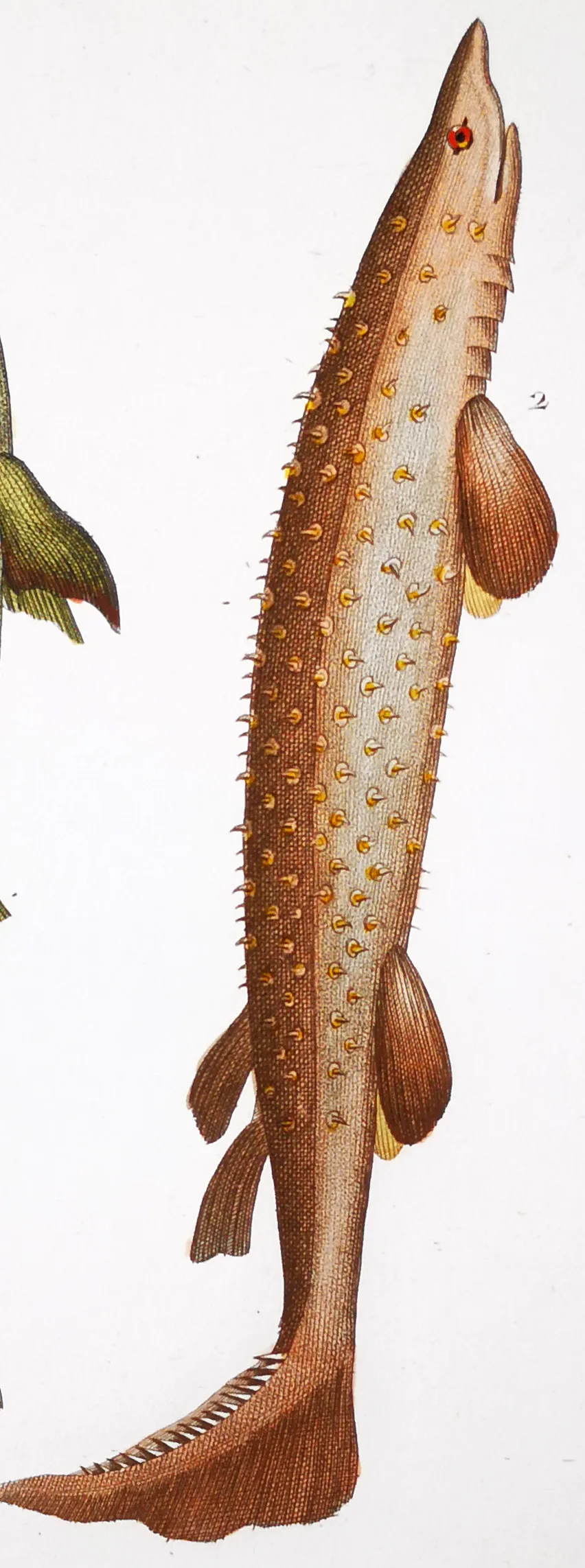
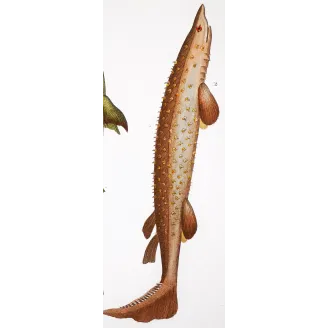
This original hand-colored engraving presents a paired study of the Porbeagle (Lamna nasus) and the Spiny Dogfish (Squalus acanthias), set side by side like contrasting essays in form. One is streamlined and pale, an emblem of open-water motion; the other darker and textured, marked by spines and a more rugged profile.
The pairing is quietly intelligent: the viewer reads difference at a glance — head shape, fin geometry, the articulation of the gill slits — yet the overall tone remains elegant and composed. Prêtre’s hand brings refinement even to predatory subjects, turning comparative zoology into a balanced, decorative plate.
The plate belongs to the Italian edition of the Dizionario di Scienze Naturali (Florence, Battelli press), a monumental publication in which Pierre Antoine Prêtre’s zoological subjects stand out for their refinement and display quality.
— • —
The Porbeagle is rendered in soft olive-greys and pale cream, with a subtle gradient that suggests glossy skin and a muscular, forward-driving body. Its clean silhouette reads like a classical profile — an economy of line that makes it feel swift even in stillness.
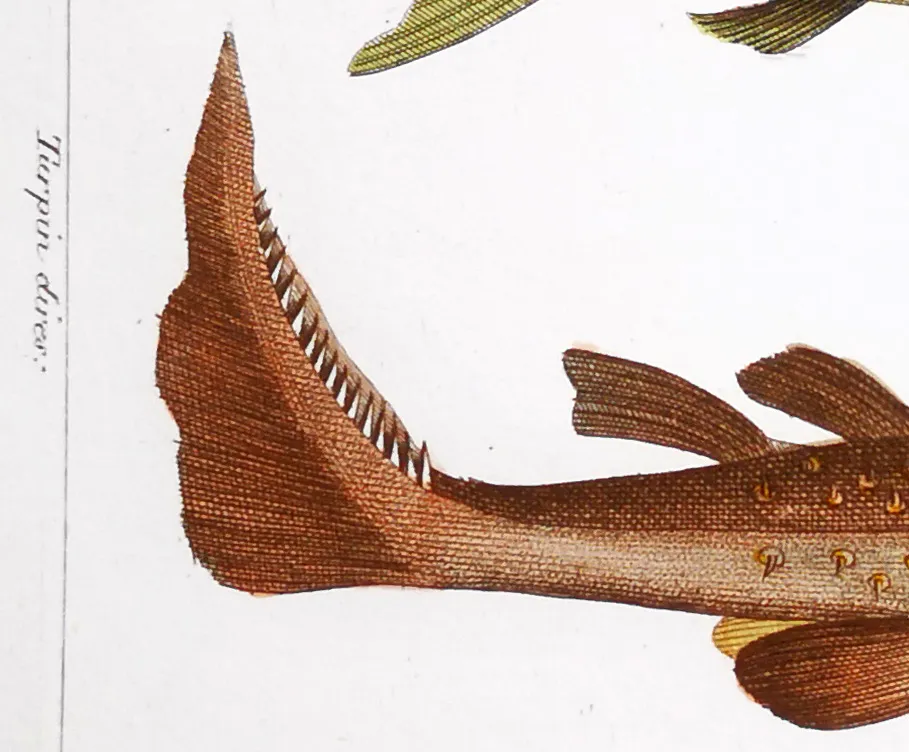
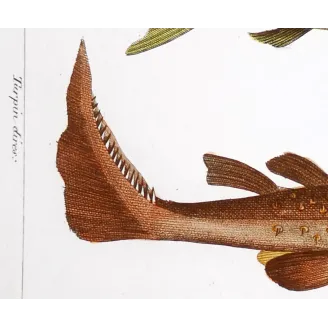
The Spiny Dogfish, by contrast, carries warmer browns and granular stippling. Small protrusions and the suggestion of dorsal spines introduce a tactile roughness, while the more compact body and heavier tail give the second figure an earthier, bottom-nearer character. Together, the two forms create a refined visual dialogue.
Nineteenth-century encyclopedias often used paired plates to teach through contrast: similarity of “sharkness,” but difference of design. The Porbeagle was associated with colder, offshore waters and a powerful build suited to sustained movement, while the Spiny Dogfish was recognized as resilient and widely distributed, armed with defensive spines that made it distinctive in both handling and appearance. In print culture of the period, these comparative plates served a double purpose — scientific classification and visual memory — giving readers a way to “recognize” the sea through form as much as through name.
This engraving forms part of the historic Dizionario di Scienze Naturali, preserved today in the Sacchetti Collection. These works are nearly two centuries old, created in an era when nature was celebrated through monumental publishing projects — ambitious enterprises that are now practically unachievable.
For the wider context of this noble provenance and its cultural value, we invite you to read “Not Just Another Print”.
The engraving is in excellent antique condition, with clean margins and a fresh, well-preserved hand-coloured surface. Printed on original smooth wove paper (non-laid), consistent with Italian scientific editions of the period. No watermark has been observed. The impression is clear and the colour remains vibrant, with no visible losses.
For further context on Pierre Antoine Prêtre and his contribution to nineteenth-century zoological illustration, see our editorial feature:
Pierre Antoine Prêtre – Illustrator of Natural Science and Marine Life
Looking for: porbeagle engraving, Lamna nasus print, spiny dogfish illustration, antique shark engraving by Prêtre.
Specific References
Exceptional 19th-century antique print by Pierre Antoine Prêtre depicting the majestic Sawfish with anatomical accuracy and rare charm.
Remarkable plate with armored cowfish and boxfishhexagonal patterning and sculptural spines, superb for marine-themed decor.
Vibrant 19th-century antique print by Pierre Antoine Prêtre depicting a Hammerhead Shark and Smoothhound, remarkable for color contrast and composition.
Detailed 19th-century engraving of the Small-Spotted Catshark by Pierre Antoine Prêtre, combining elegance and scientific accuracy.
Dynamic 19th-century antique print with Spiny Dogfish and Tiger Catshark by Pierre Antoine Prêtre, contrasting forms and rich marine tones.
Rare 19th-century engraving of the Angular Roughshark by Pierre Antoine Prêtre, remarkable for its unique texture and marine atmosphere.
Striking plate with long, elegant cornetfish and trumpetfish, hand-colored with vivid reds and tealsbold marine decor statement.
Striped body with blue-spotted fins; a refined 19th-century marine engraving ideal for study walls and coastal interiors.
Elegant coastal plate with shimmering scales and yellow-olive fins; a balanced, classic choice for study or living spaces.
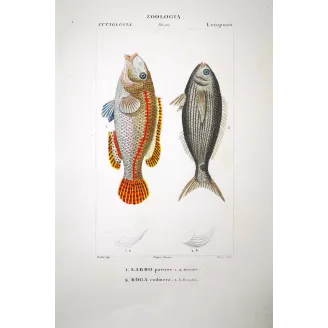
Brilliant peacock wrasse with patterned fins and a silver boga; lively palette and refined stippling for elegant interiors.
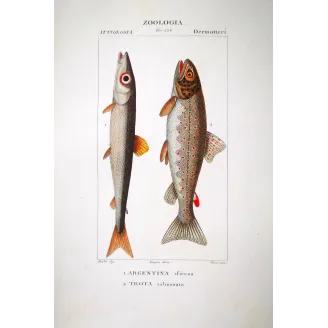
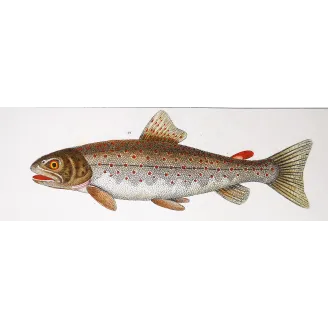
Classic natural history pairingsilver argentine and spotted troutclean composition and fine stippling for timeless appeal.
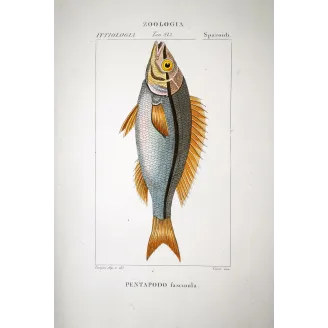
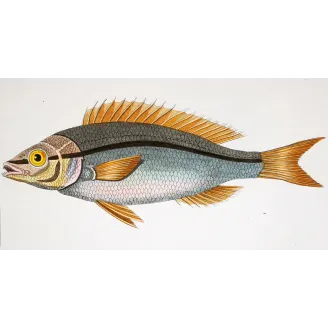
Elegant Pentapodus fish with shimmering orange-silver tones and refined aquatic poise.
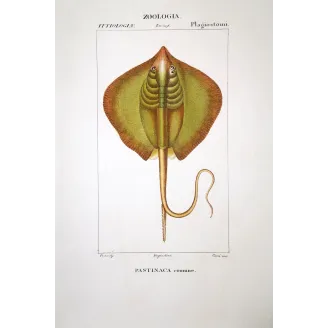
Graceful stingray with warm olive-brown tones and a long tail; tranquil marine subject with elegant presence.
Charming clownfish with companion reef species, crisp colors and coral-reef appeal in a classic 19th-century plate.
Original lithograph of the Lyrebird Tail Study (Tails of Menuridae) by Henrik Grønvold
Original lithograph of the Black Duck by H. Goodchild (Anas superciliosa).
Refined 18th-century engraving of Mountain Calamint by Elizabeth Blackwell, with upright stems and pink blossoms, ideal for calm, herbal or cottage-inspired interiors.
Classic natural history pairingsilver argentine and spotted troutclean composition and fine stippling for timeless appeal.
Eastern Frigate Bird from Mathews' Birds of Australia, drawn by Grönvold.
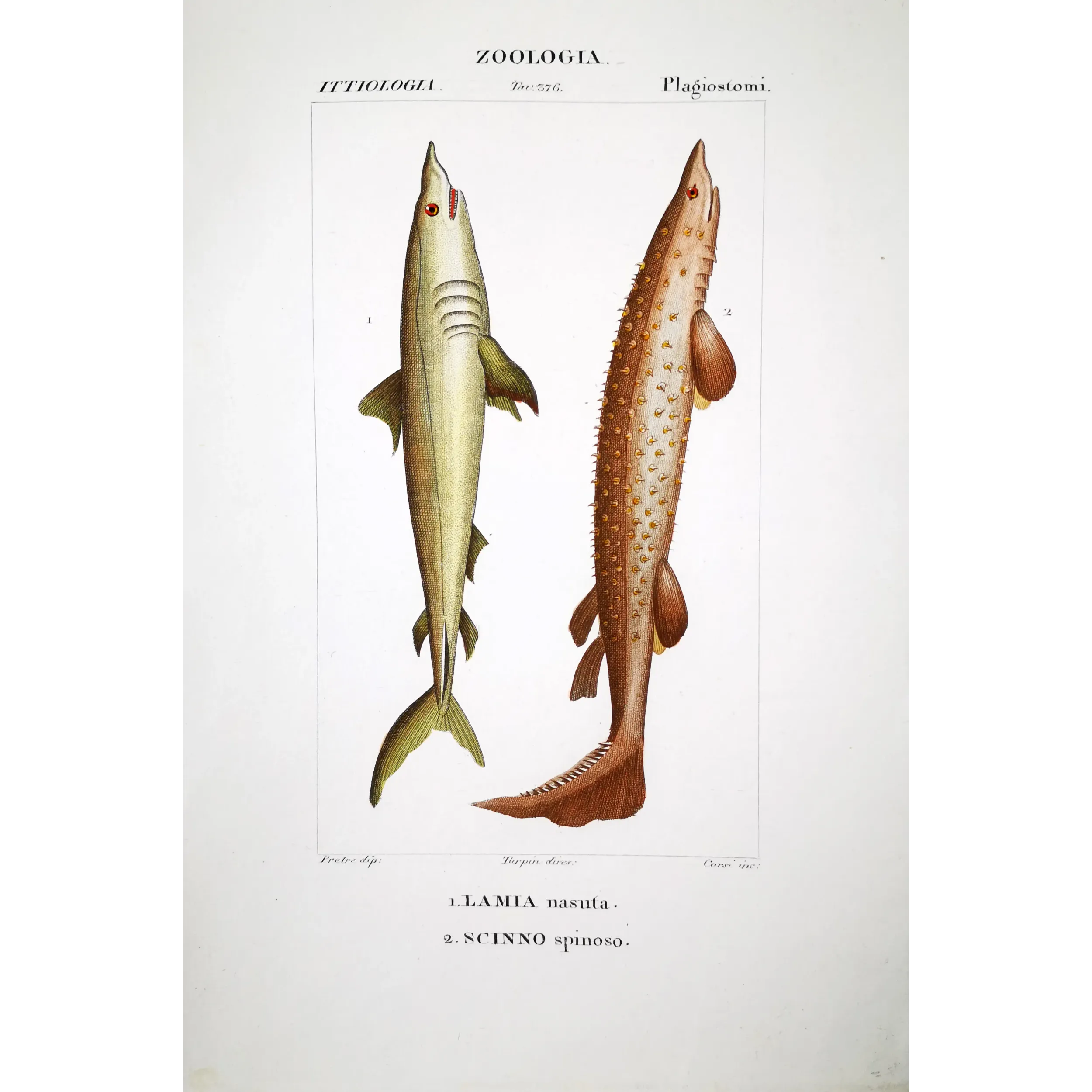
Fine 19th-century antique print depicting Porbeagle and Spiny Dogfish by Pierre Antoine Prêtre, detailed and vibrant marine pair.