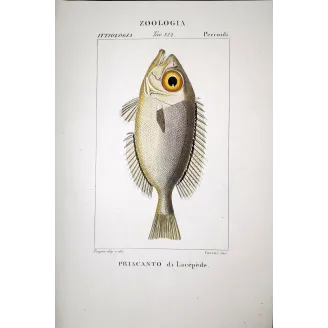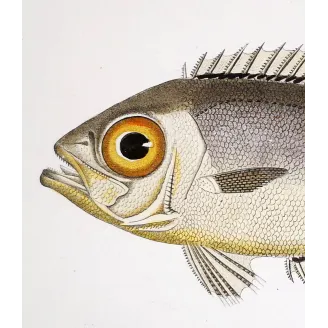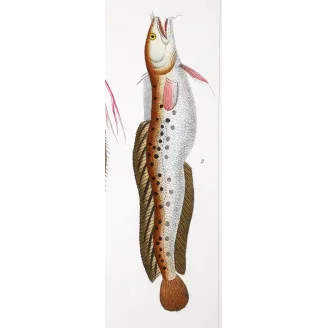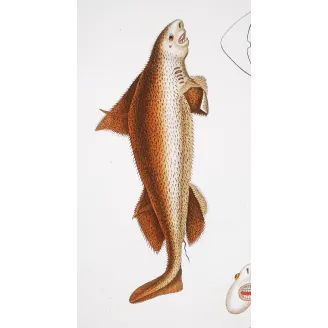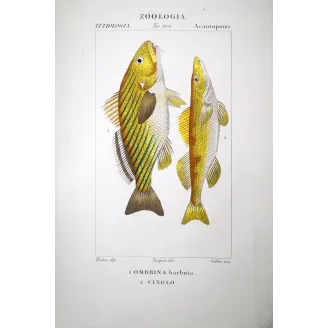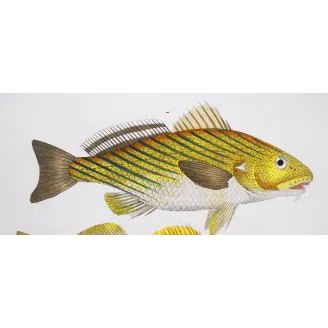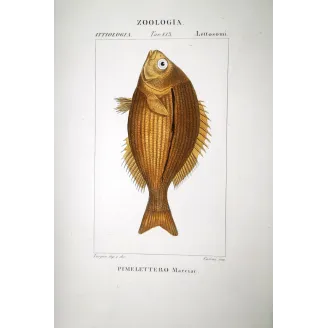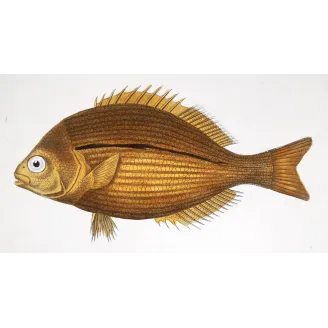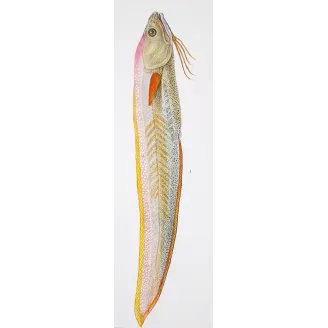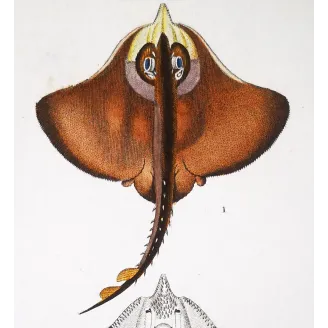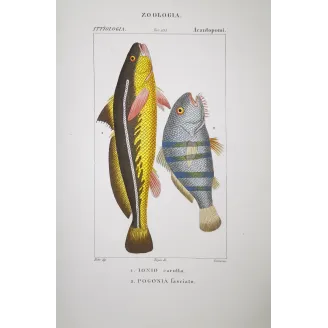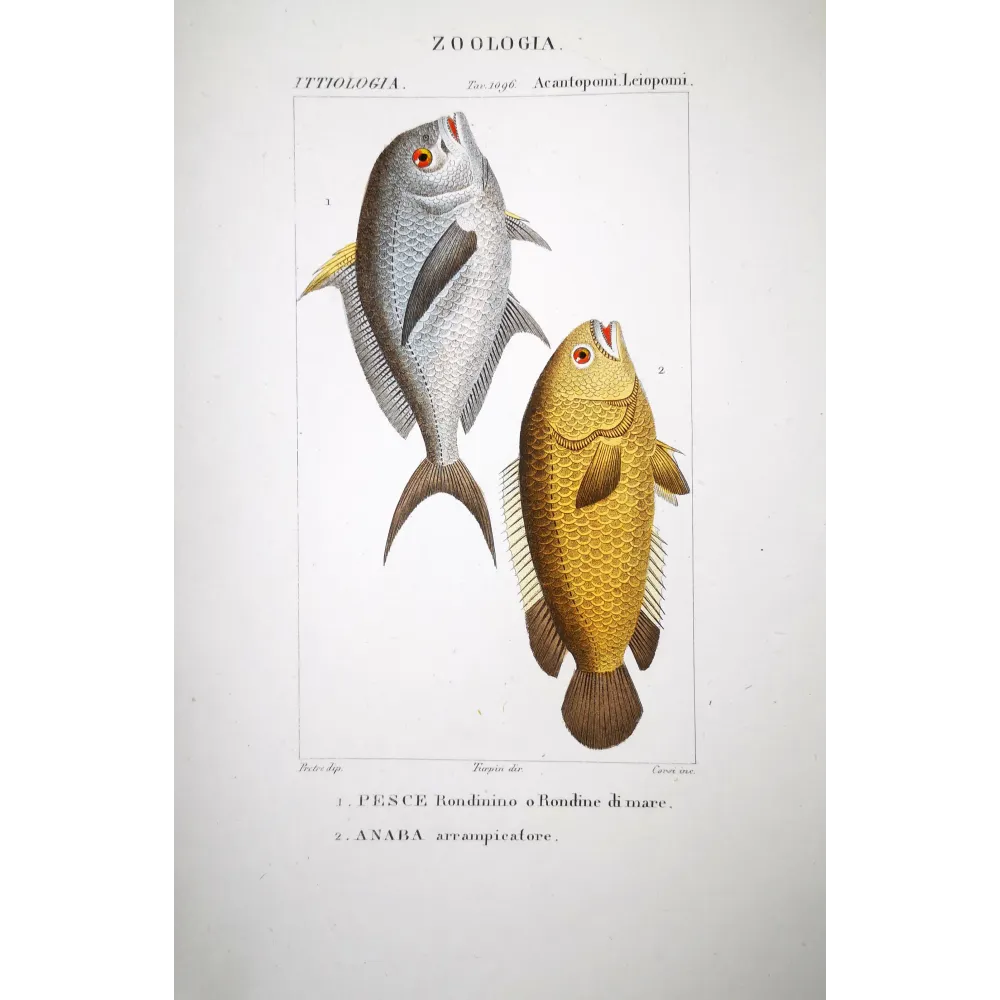
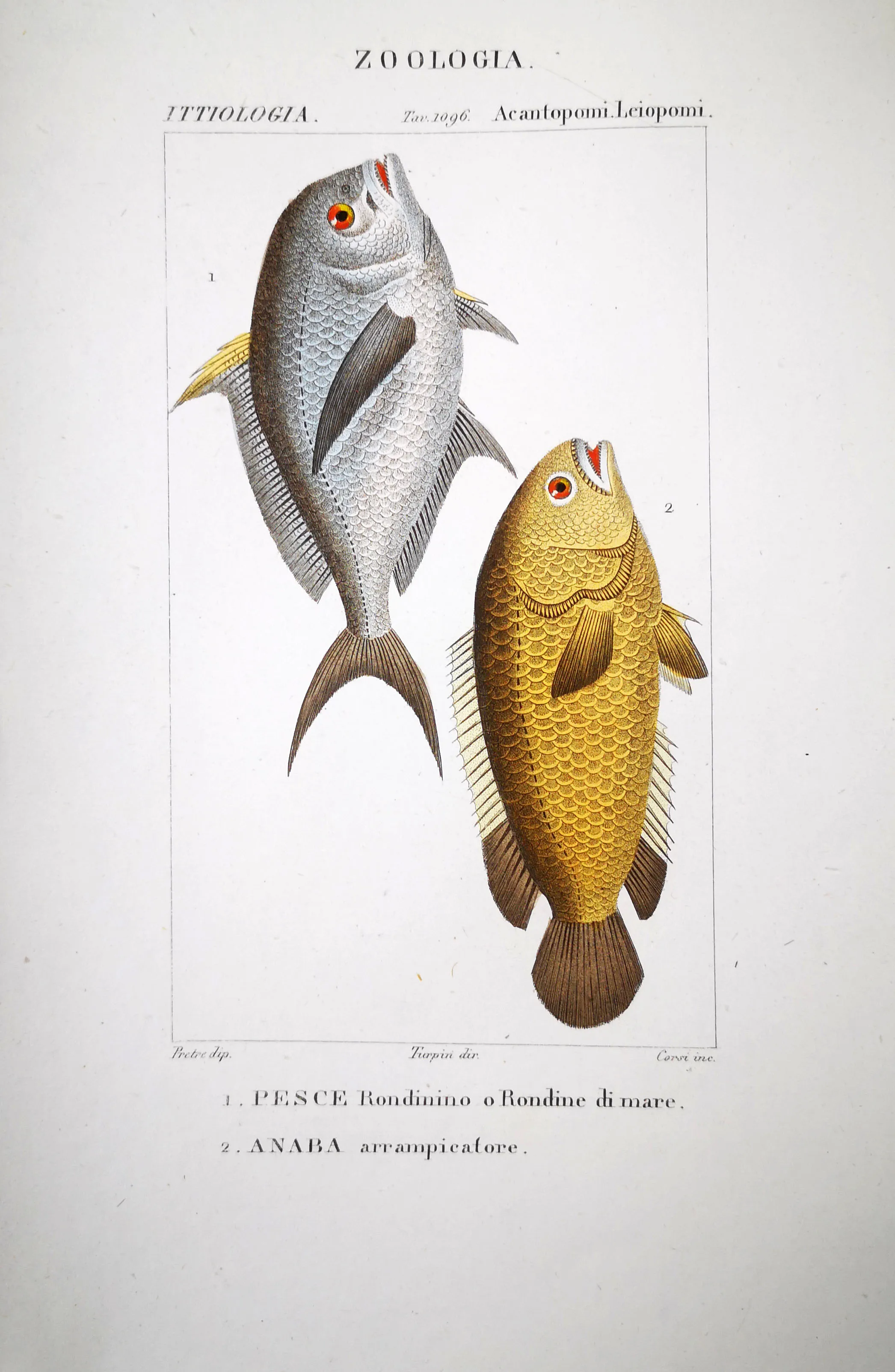
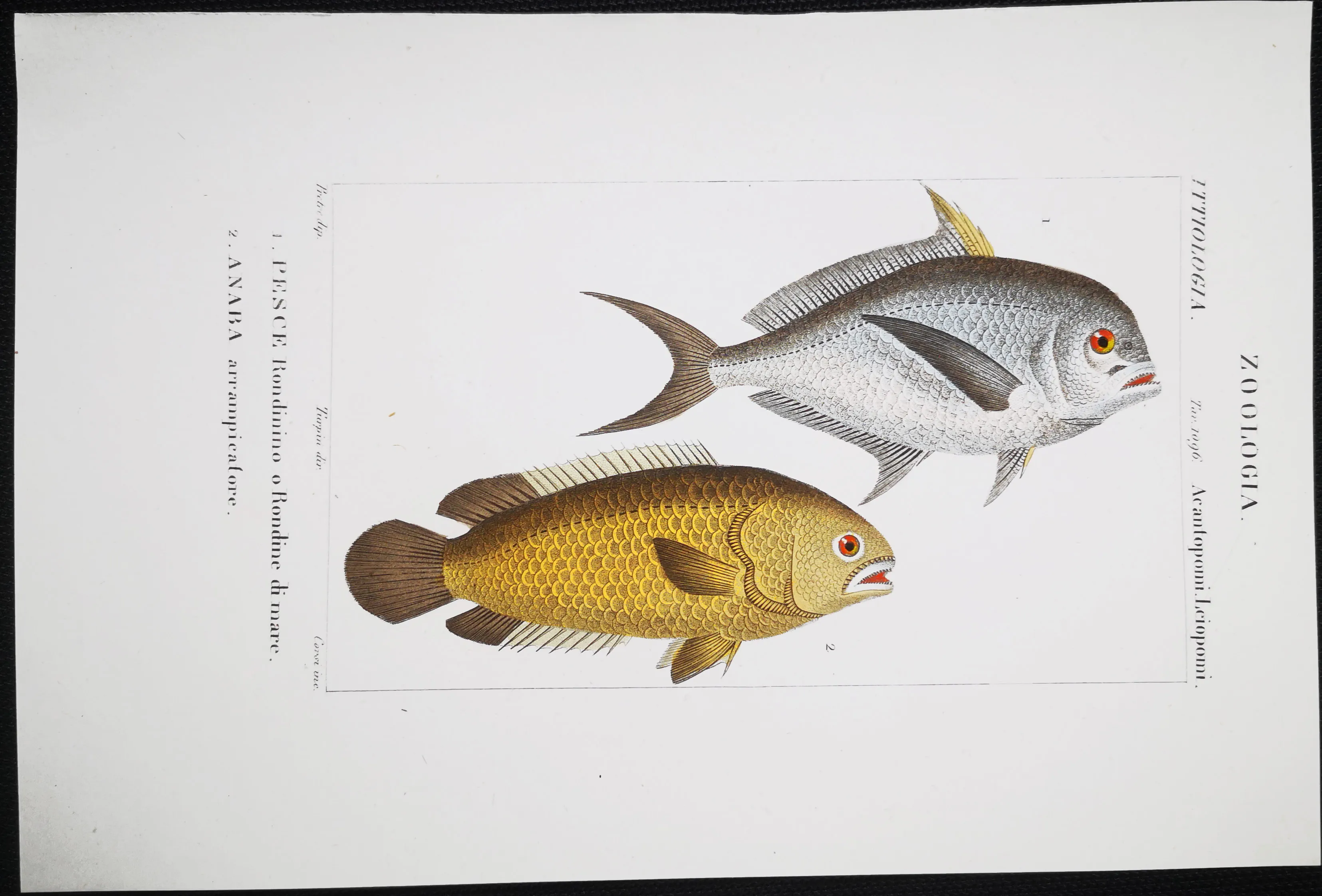
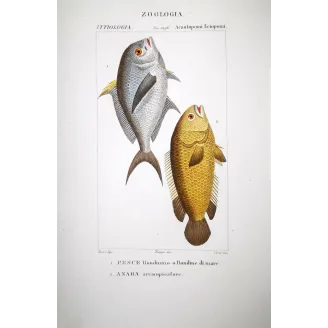
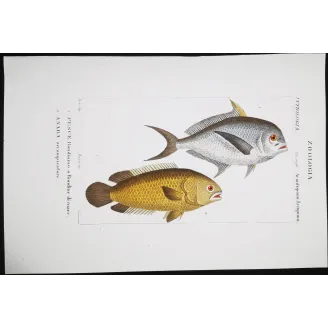
Silver and golden marine pair with crisp scales; a balanced 19th-century composition for refined coastal interiors.
 Delivery policy
Your print will be carefully prepared and shipped worldwide via trusted couriers (UPS or similar).
 Authentic antique prints
Original engravings from the 17th–19th century.
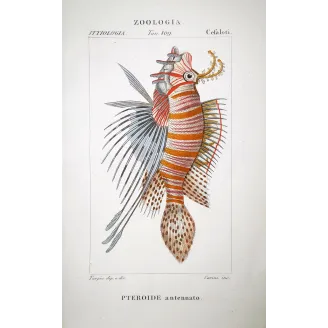
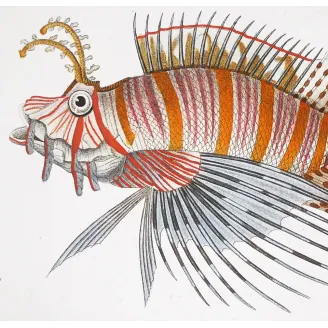
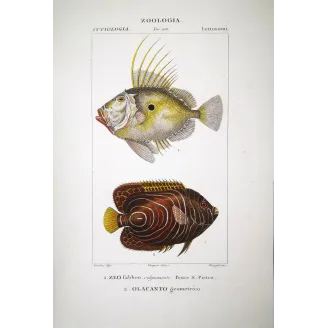
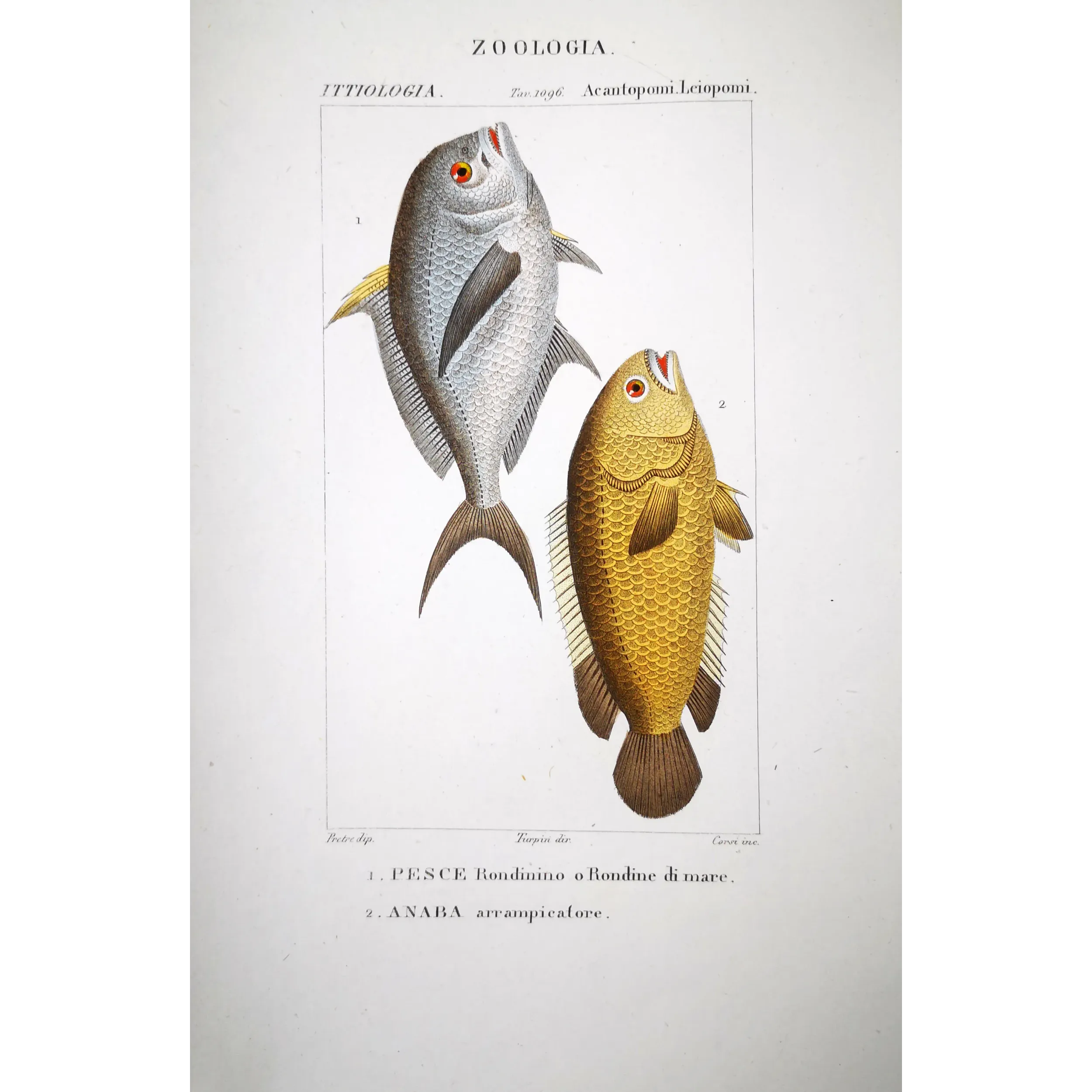
This original hand-colored engraving presents a distinctive pairing: a “Sea Swallow” figure associated with the flying-gurnard tradition, alongside the fish identified as Anabas sp. Prêtre isolates both specimens in clear profile, turning behavioural reputation and anatomical difference into a composed, readable contrast.
One subject suggests expansion and display through fin structure, while the other carries a more compact, resilient silhouette. Without scenery or narrative, the plate allows the viewer to read identity through outline alone — the classic visual logic of nineteenth-century zoological encyclopedias.
The plate belongs to the Italian edition of the Dizionario di Scienze Naturali (Florence, Battelli press), a monumental publication in which Pierre Antoine Prêtre’s zoological subjects stand out for their refinement and display quality.
— • —
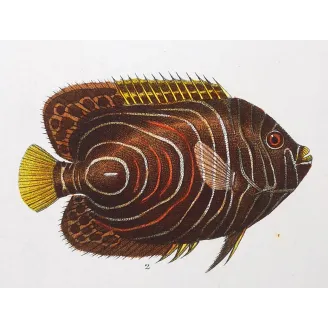
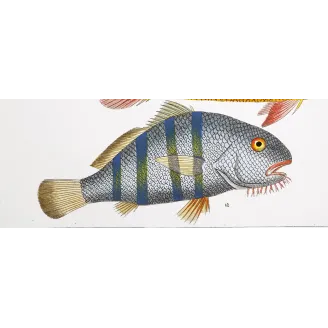
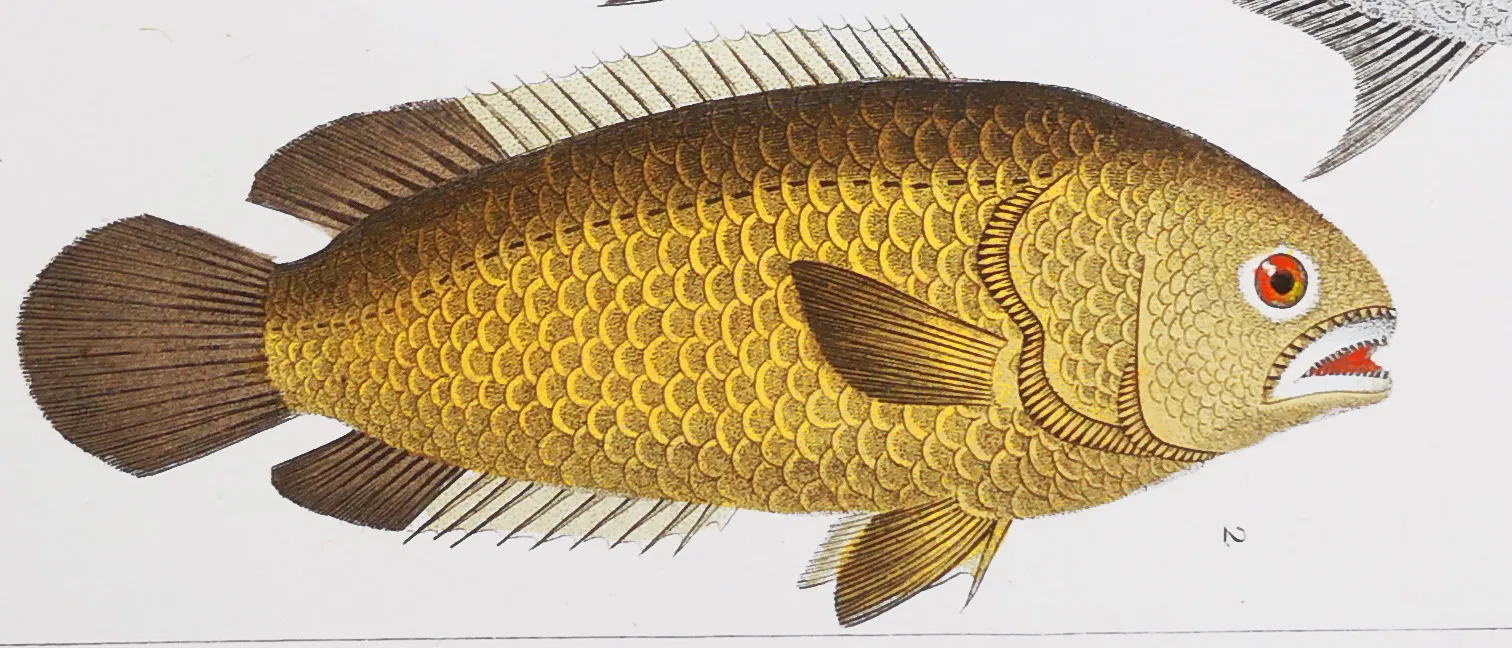
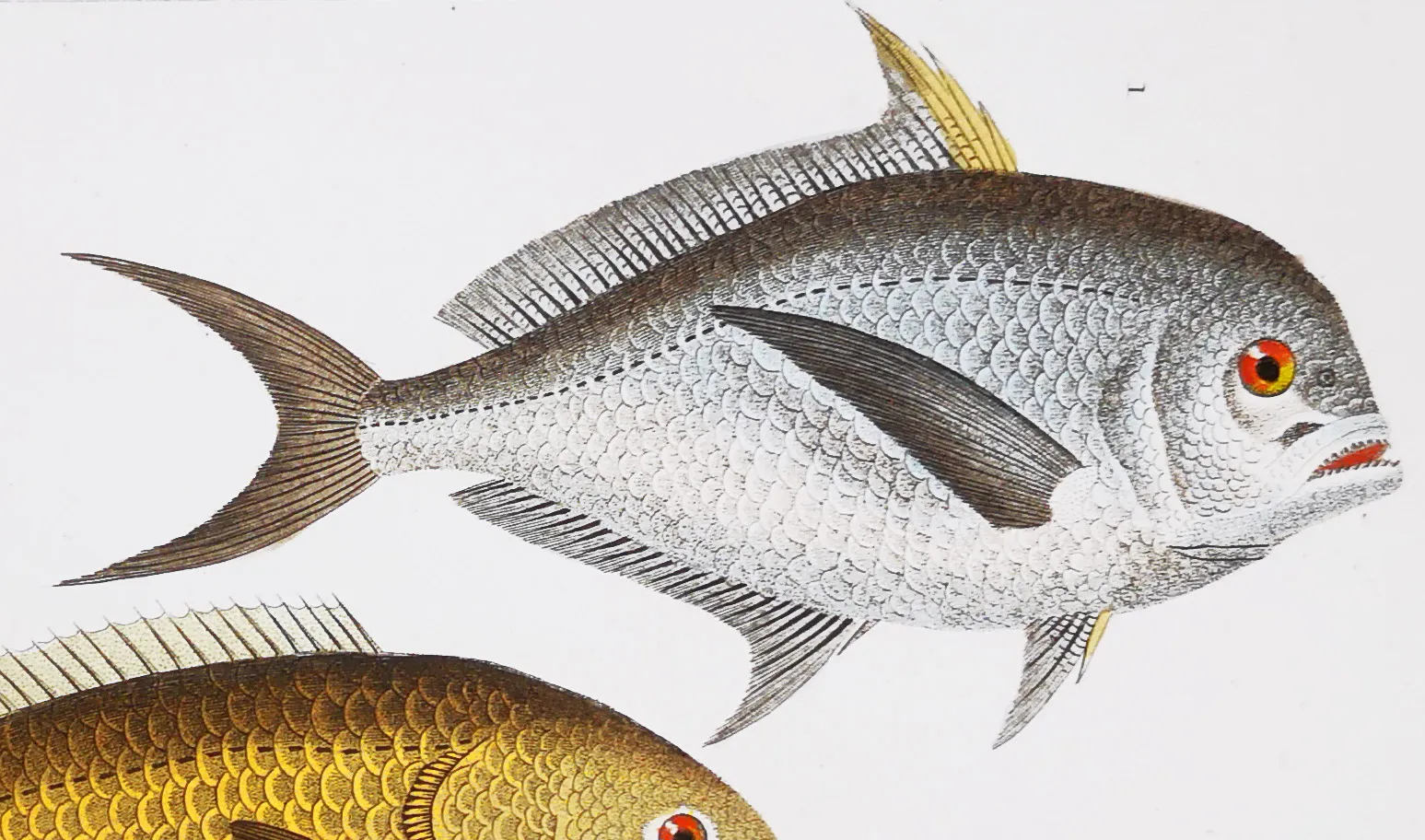
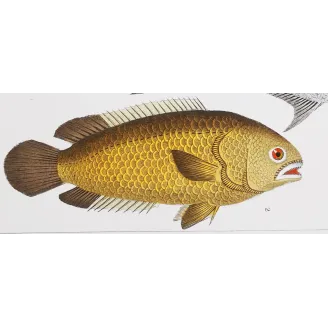
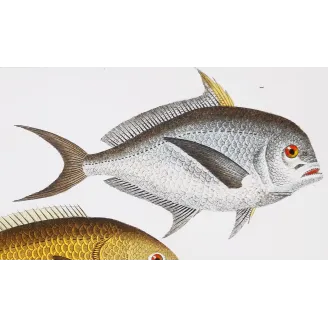
The upper fish is rendered in cool silvers with decisive dark fin structure, giving the profile a disciplined, almost geometric clarity. Below, the Anabas figure introduces warmer gold and olive tones, its scale patterning arranged in a steady, tactile rhythm across the body.
The palette remains restrained yet luminous, with crisp accents in the eye and fin edges. The wide white field frames both specimens with the stillness of a museum display, reinforcing the plate’s authority and its quiet elegance as a collectible work on paper.
Nineteenth-century natural history often favored species whose identity could be communicated instantly through profile: fin architecture, body compression, and surface patterning functioned as visual signatures. The “Sea Swallow” name itself reflects a period tendency to attach memorable, almost character-like titles to marine life, while Anabas carried a cultural reputation shaped by travel literature and the language of adaptation. In encyclopedic publishing, such pairings helped define the sea as a realm of extremes — not only abundant, but conceptually rich, worthy of preservation in monumental printed form.
This engraving forms part of the historic Dizionario di Scienze Naturali, preserved today in the Sacchetti Collection. These works are nearly two centuries old, created in an era when nature was celebrated through monumental publishing projects — ambitious enterprises that are now practically unachievable.
For the wider context of this noble provenance and its cultural value, we invite you to read “Not Just Another Print”.
The engraving is in excellent antique condition, with clean margins and a fresh, well-preserved hand-coloured surface. Printed on original smooth wove paper (non-laid), consistent with Italian scientific editions of the period. No watermark has been observed. The impression is clear and the colour remains vibrant, with no visible losses.
For further context on Pierre Antoine Prêtre and his contribution to nineteenth-century zoological illustration, see our editorial feature:
Pierre Antoine Prêtre – Illustrator of Natural Science and Marine Life
Looking for: sea swallow engraving, flying gurnard antique print, Anabas fish illustration, hand-colored marine life engraving.
Specific References
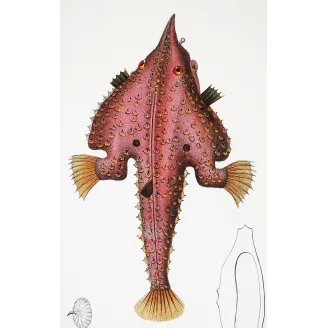
Striking depiction of the Antennata Lionfish with vivid red and orange fins, full of exotic elegance.
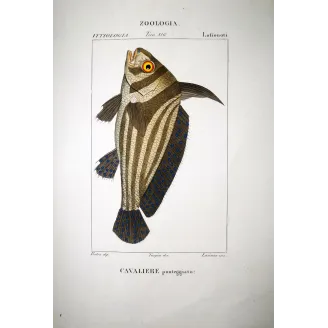
Iconic plate with the celebrated John Dory and a striking angelfishsuperb color contrasts and collector appeal.
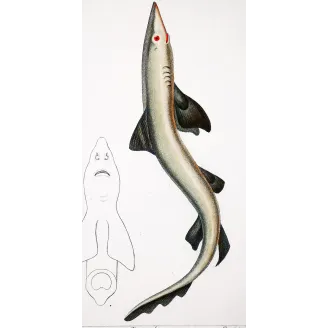
Detailed 19th-century engraving of the Small-Spotted Catshark by Pierre Antoine Prêtre, combining elegance and scientific accuracy.
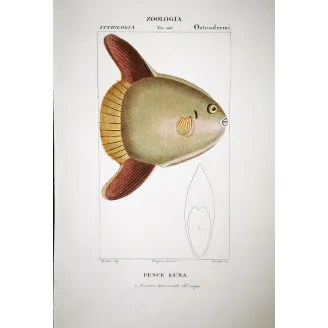
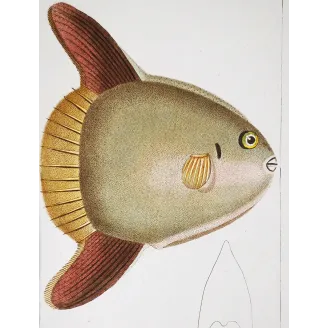
Ocean Sunfish illustrated with refined color balance and elegant detail.
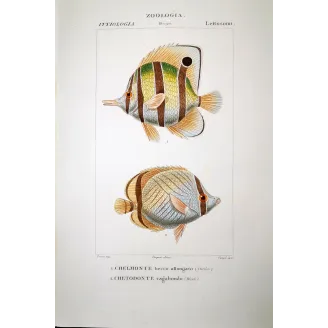
Iconic Antique Print with two vivid butterflyfishes, finely hand-coloredstriking geometry and coral-reef charm for collectors.
Graceful 19th-century engraving of the Angelshark by Pierre Antoine Prêtre, rich in soft tones and fine anatomical accuracy.
Classic 19th-century engraving of Greater Forkbeard and Rockling by Pierre Antoine Prêtre, subtle tones and elegant balance.
Rare 19th-century engraving of the Angular Roughshark by Pierre Antoine Prêtre, remarkable for its unique texture and marine atmosphere.
Elegant coastal plate with shimmering scales and yellow-olive fins; a balanced, classic choice for study or living spaces.
Exceptional 19th-century engraving of the Batfish by Pierre Antoine Prêtre, with rare pink tones and textured surface detail.
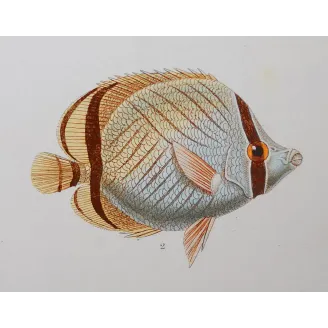
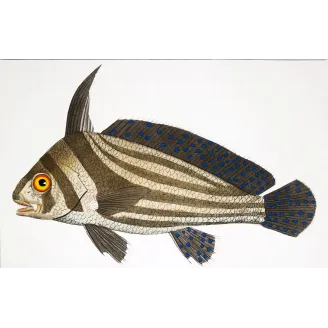
Striped body with blue-spotted fins; a refined 19th-century marine engraving ideal for study walls and coastal interiors.
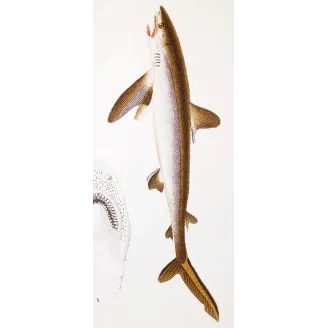
Refined 19th-century hand-colored engraving of the Tope Shark by Pierre Antoine Prêtre, notable for its elegant form and tonal realism.
Vivid 19th-century engraving of Mediterranean Rainbow Wrasse and Lesser Sandeel by Pierre Antoine Prêtre, bright palette and crisp lines.
Elegant 19th-century hand-colored engraving of the Brown Ray by Pierre Antoine Prêtre, featuring graceful symmetry and refined marine tones.
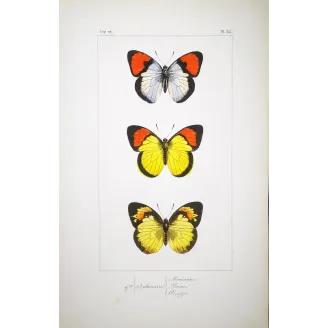
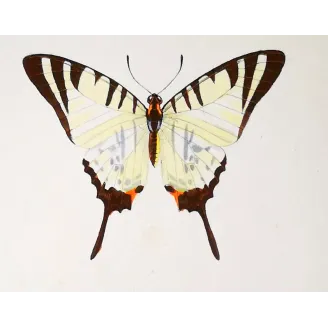
Elegant butterflies with vivid red tips and bright yellow tones. A refined 1835 engraving balancing delicacy and bold contrast.
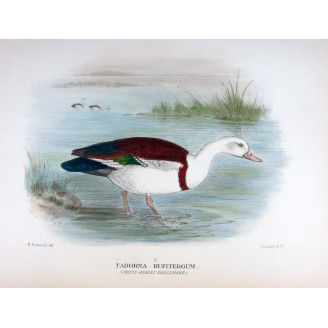
Original lithograph of the White-headed Sheldrake by Henrik Grønvold (Tadorna rufitergum).
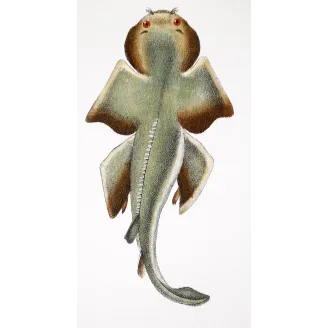
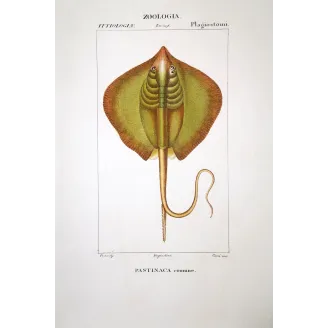
Graceful stingray with warm olive-brown tones and a long tail; tranquil marine subject with elegant presence.
Graphic pairing with bold yellow stripe and banded companion; vibrant hand-coloring and clear natural history styling.
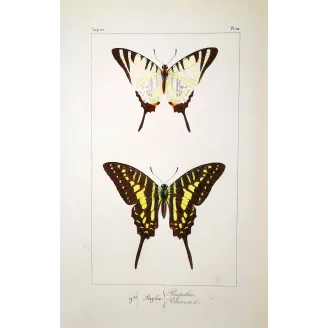
Black swallowtail butterflies with ivory, yellow and green patterns. A refined 1835 engraving, ideal as antique butterfly wall art.
Silver and golden marine pair with crisp scales; a balanced 19th-century composition for refined coastal interiors.