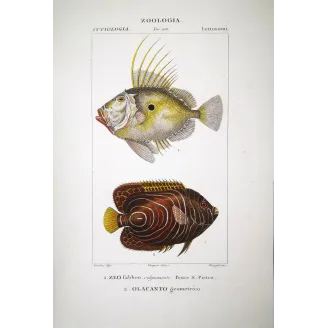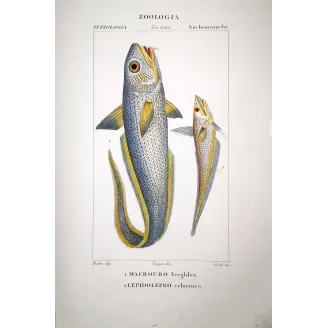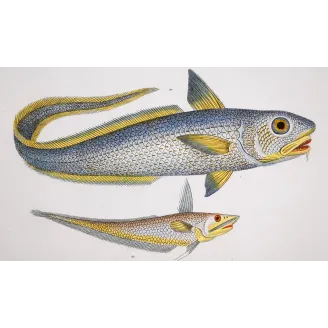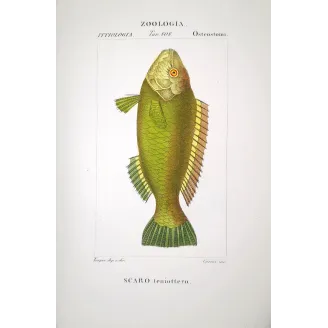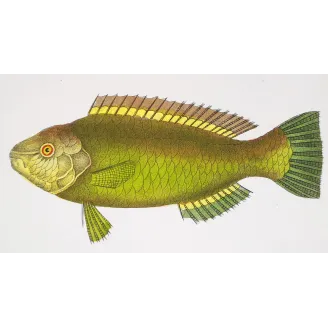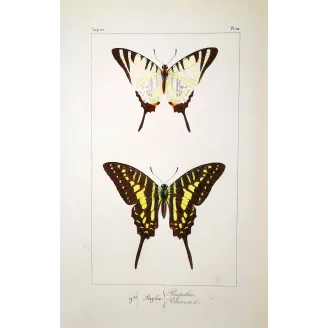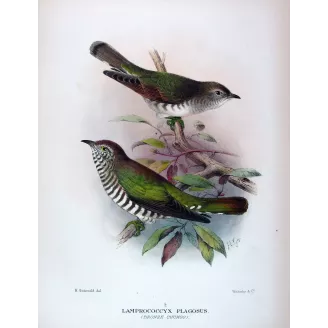


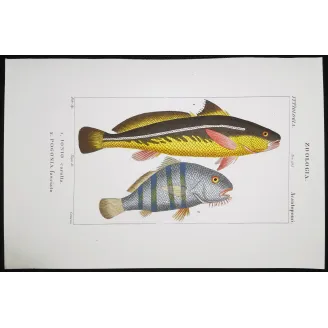

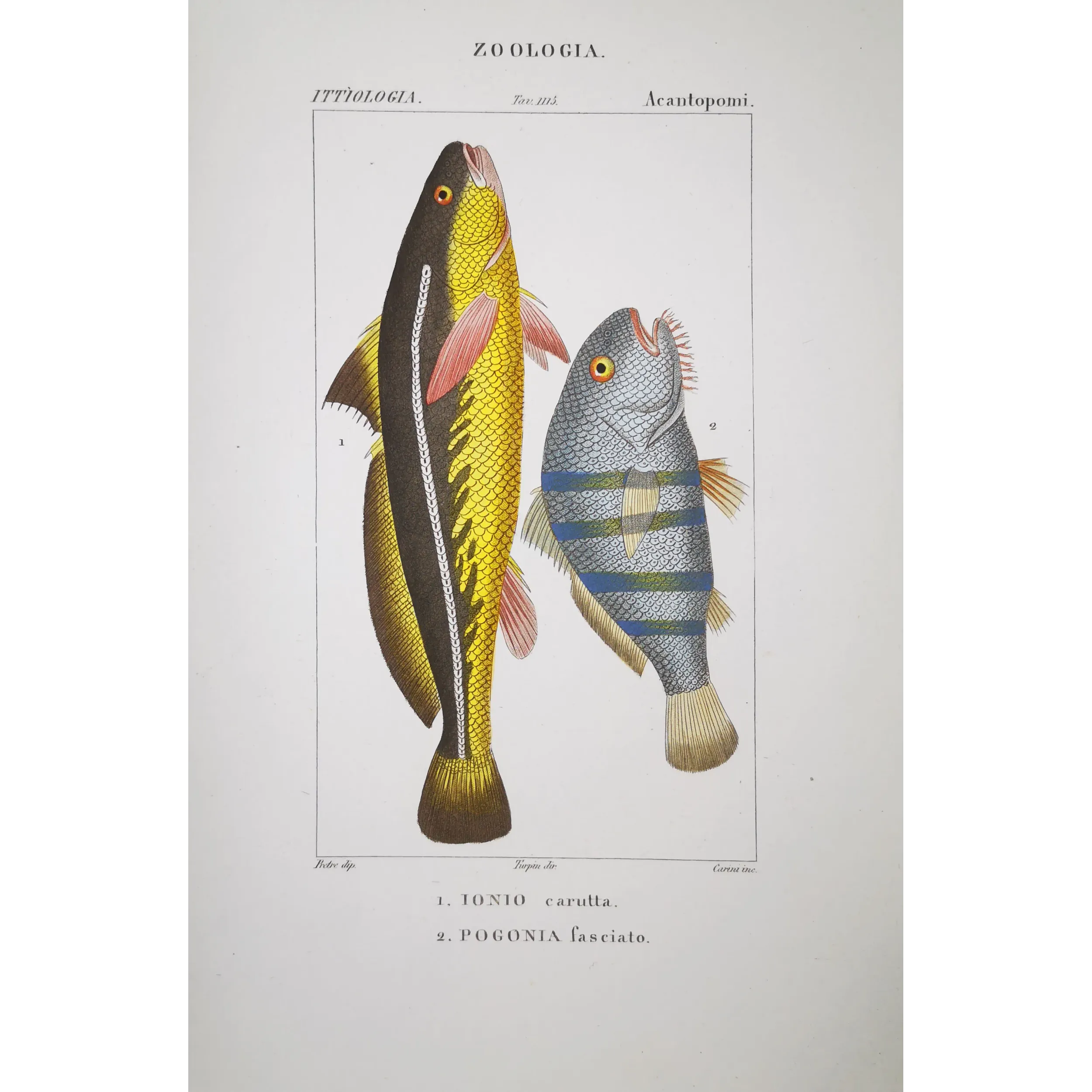
Graphic pairing with bold yellow stripe and banded companion; vibrant hand-coloring and clear natural history styling.
 Delivery policy
Your print will be carefully prepared and shipped worldwide via trusted couriers (UPS or similar).
 Authentic antique prints
Original engravings from the 17th–19th century.
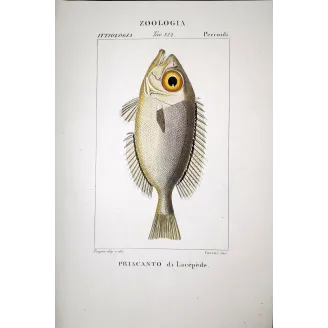
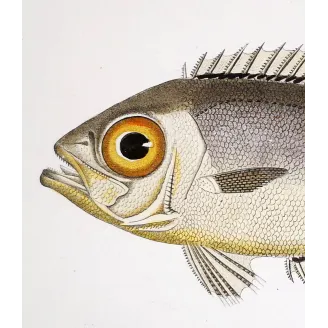
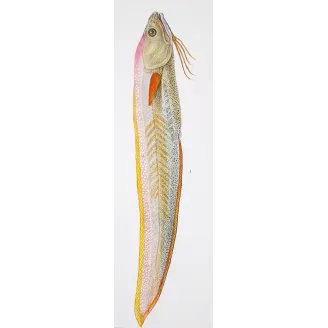
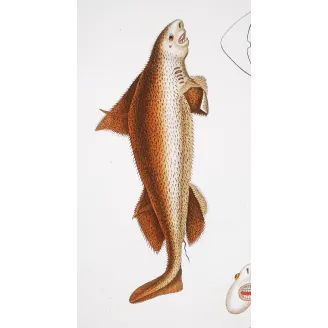
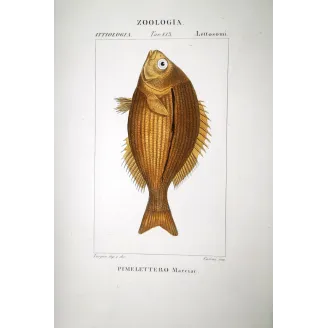
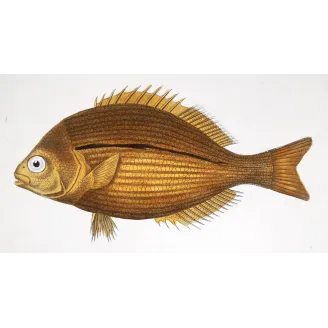
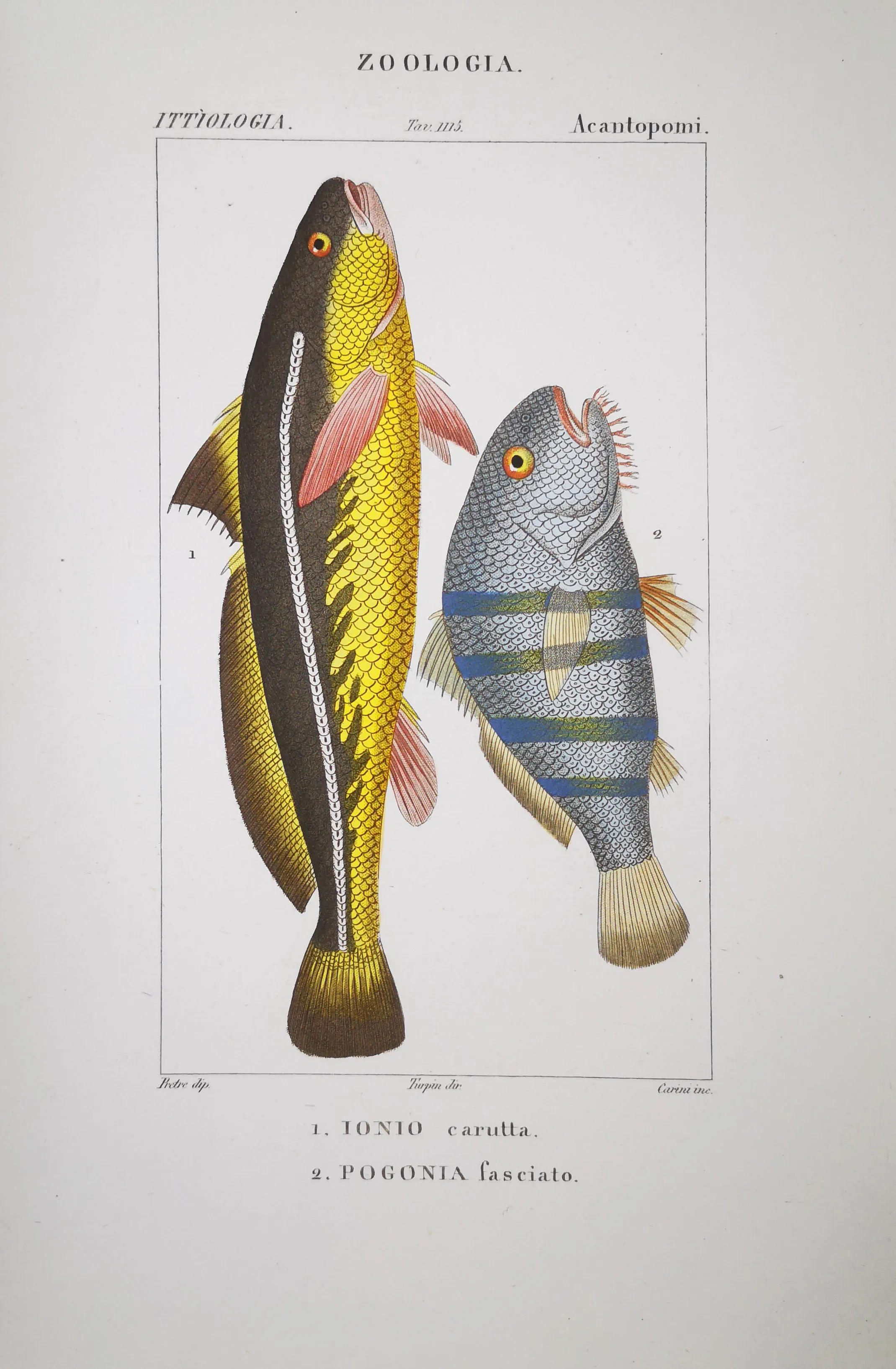
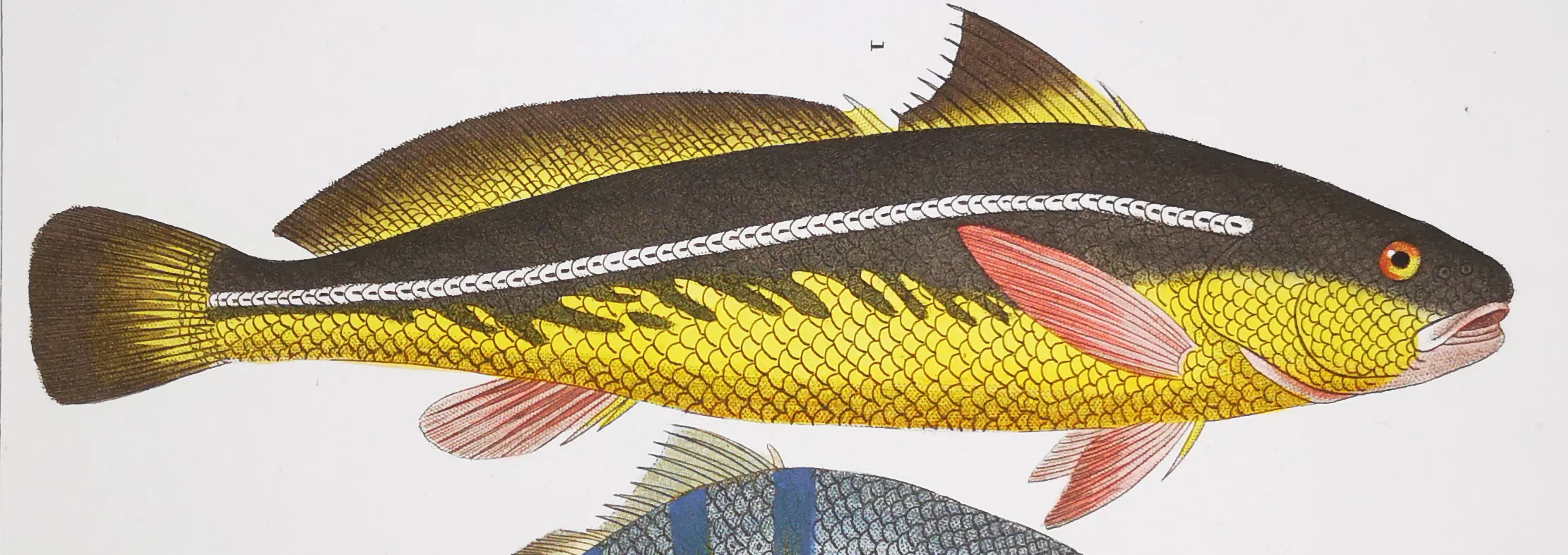
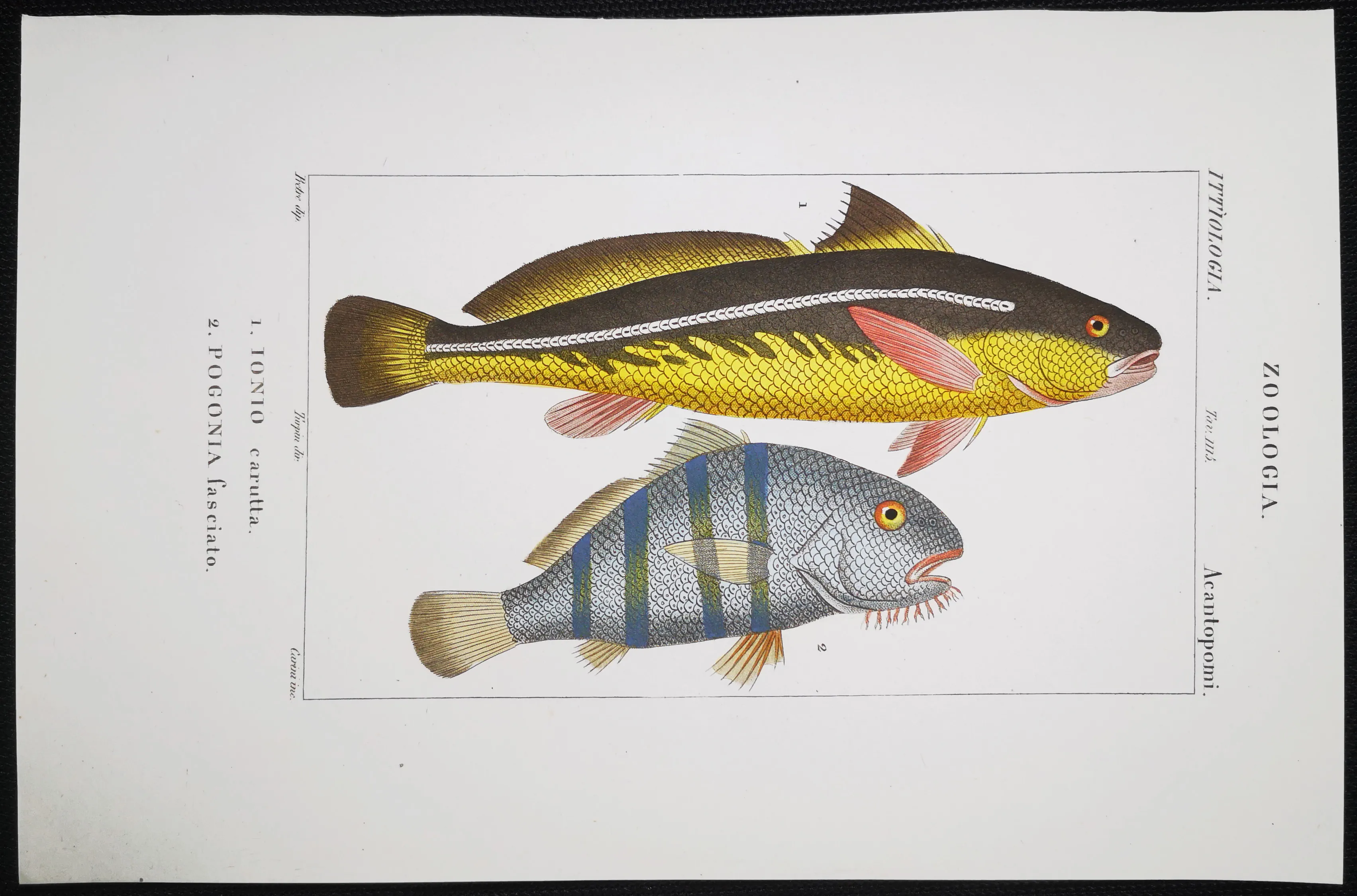
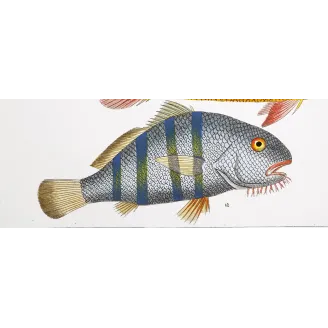
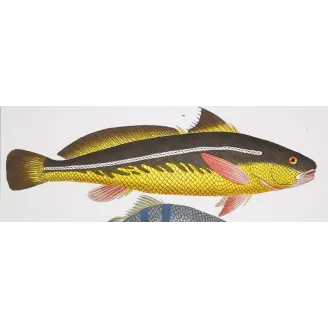
This original hand-colored engraving presents two fish types identified on the plate as “Ionius” and Pogonia, arranged in a clean, balanced pairing. Both figures are rendered in confident profile and isolated against a generous white field, allowing the viewer to read form, colour, and proportion with immediate clarity.
The plate’s strength lies in contrast: one specimen elongated and luminous, the other more compact, structured, and chromatically restrained. As with many Prêtre subjects, the image feels simultaneously documentary and decorative — a zoological record that holds its own as refined design.
The plate belongs to the Italian edition of the Dizionario di Scienze Naturali (Florence, Battelli press), a monumental publication in which Pierre Antoine Prêtre’s zoological subjects stand out for their refinement and display quality.
— • —
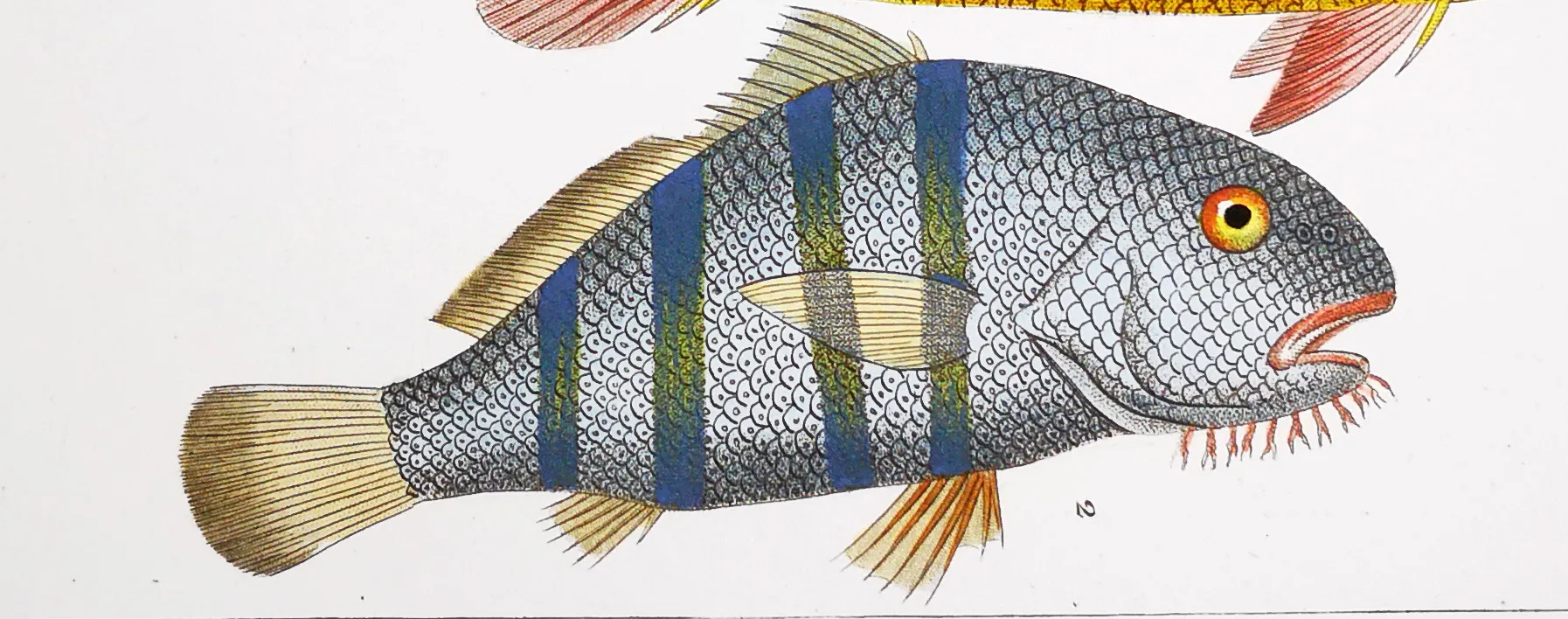
The upper fish is defined by a dark dorsal mass and a bright, golden underside, with a crisp pale line running the length of the body like an engraved highlight. Below, the Pogonia figure introduces cooler silvers and distinct vertical banding, softened by fine tonal transitions and precise scale articulation.
Together, the pair forms an elegant visual duet: one reads as streamlined and luminous, the other as patterned and architectural. The wide white field frames both specimens with museum-like stillness, reinforcing the plate’s authority and its quiet collectible presence.
Coastal fishes were frequently presented in nineteenth-century encyclopedic works as paired profiles because comparison was itself a method of knowledge: silhouette, banding, and fin placement could be understood instantly when set side by side. The name Pogonia carries the period’s taxonomic language, while “Ionius” suggests a geographic or descriptive layer typical of early natural history naming. In plates like this, the sea is translated into readable identities — not as narrative scenes, but as emblematic portraits meant to preserve recognition across time.
This engraving forms part of the historic Dizionario di Scienze Naturali, preserved today in the Sacchetti Collection. These works are nearly two centuries old, created in an era when nature was celebrated through monumental publishing projects — ambitious enterprises that are now practically unachievable.
For the wider context of this noble provenance and its cultural value, we invite you to read “Not Just Another Print”.
The engraving is in excellent antique condition, with clean margins and a fresh, well-preserved hand-coloured surface. Printed on original smooth wove paper (non-laid), consistent with Italian scientific editions of the period. No watermark has been observed. The impression is clear and the colour remains vibrant, with no visible losses.
For further context on Pierre Antoine Prêtre and his contribution to nineteenth-century zoological illustration, see our editorial feature:
Pierre Antoine Prêtre – Illustrator of Natural Science and Marine Life
Looking for: Pogonia fish engraving, antique fish print by Prêtre, striped coastal fish illustration, hand-colored marine life engraving.
Specific References
Vivid 19th-century engraving of Mediterranean Rainbow Wrasse and Lesser Sandeel by Pierre Antoine Prêtre, bright palette and crisp lines.
Rare 19th-century engraving of the Angular Roughshark by Pierre Antoine Prêtre, remarkable for its unique texture and marine atmosphere.
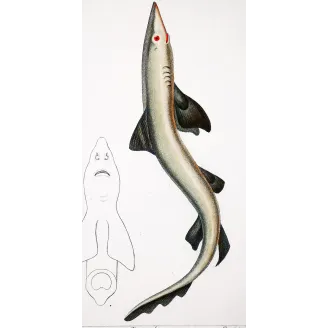
Refined 19th-century hand-colored engraving of the Tope Shark by Pierre Antoine Prêtre, notable for its elegant form and tonal realism.
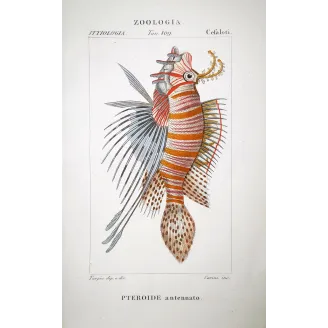
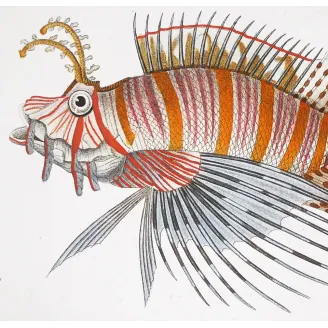
Striking depiction of the Antennata Lionfish with vivid red and orange fins, full of exotic elegance.
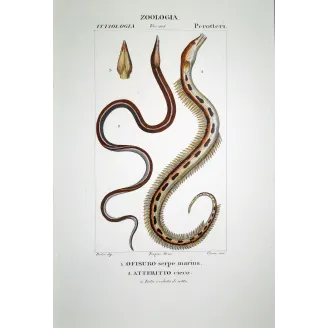
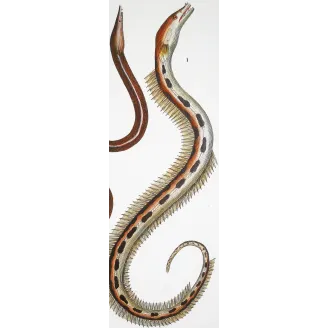
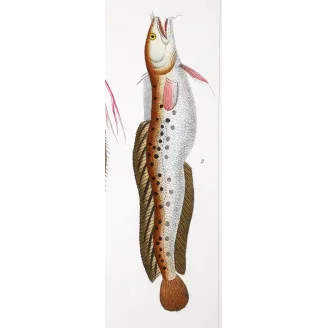
Dramatic eel composition with sinuous forms and precise stippling; a rare and architectural marine subject for refined interiors.
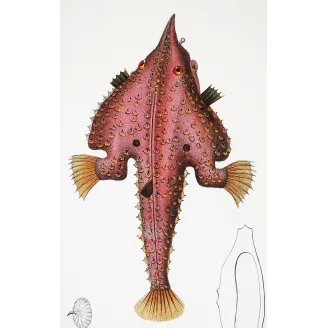
Exceptional 19th-century engraving of the Batfish by Pierre Antoine Prêtre, with rare pink tones and textured surface detail.
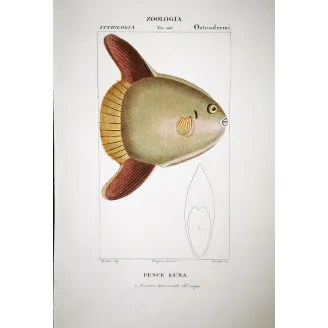
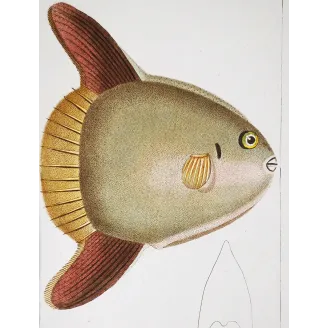
Ocean Sunfish illustrated with refined color balance and elegant detail.
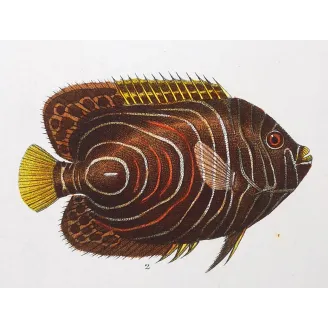
Iconic plate with the celebrated John Dory and a striking angelfishsuperb color contrasts and collector appeal.
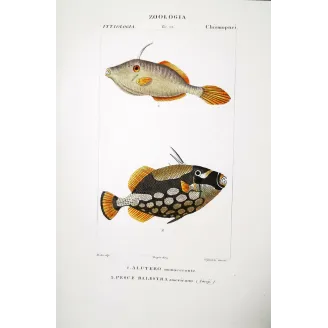
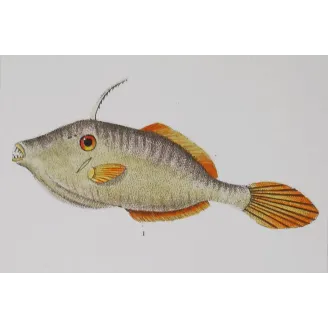
Geometric patterns and bold contrasts; elegant plate featuring a refined filefish with a dramatic American triggerfish.
Grenadier and Ribbonfish illustrated with refined color balance and elegant detail.
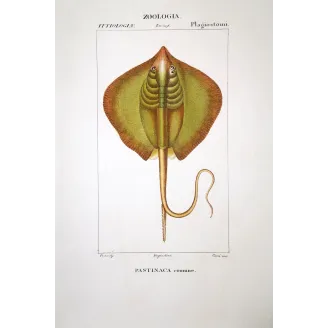
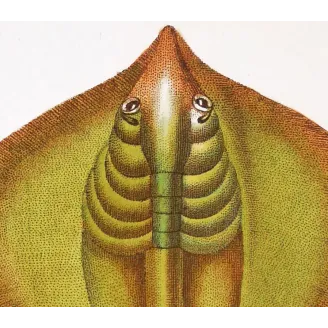
Graceful stingray with warm olive-brown tones and a long tail; tranquil marine subject with elegant presence.
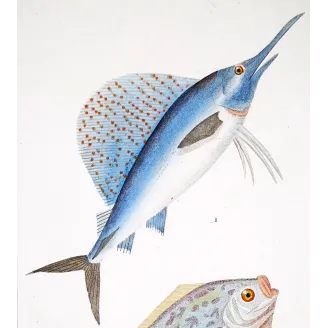
Elegant 19th-century antique print by Pierre Antoine Prêtre with Sailfish and Moonfish, luminous blues and refined detailing.
Classic 19th-century engraving of Greater Forkbeard and Rockling by Pierre Antoine Prêtre, subtle tones and elegant balance.
Black swallowtail butterflies with ivory, yellow and green patterns. A refined 1835 engraving, ideal as antique butterfly wall art.
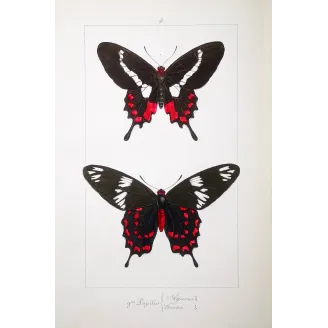
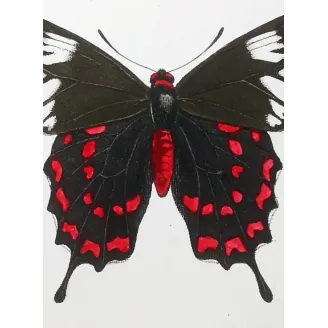
Crimson Rose swallowtails with deep black wings and vivid red markings. A dramatic 1835 engraving, perfect as bold antique butterfly wall art.
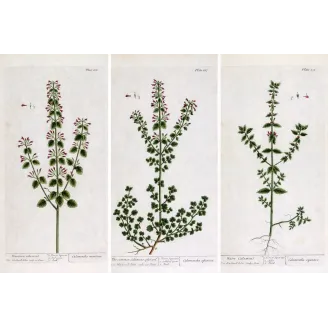
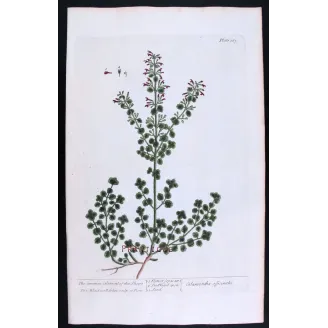
A curated botanical trio illustrating three closely related Calamintha species — officinalis, montana, and aquatica — as engraved and hand-colored by Elisabeth Blackwell for A Curious Herbal (1737–1739). Presented together, these plates offer a rare comparative view of medicinal, habitat-specific, and morphological variation within a single genus, reflecting early modern botanical practice and apothecary knowledge.
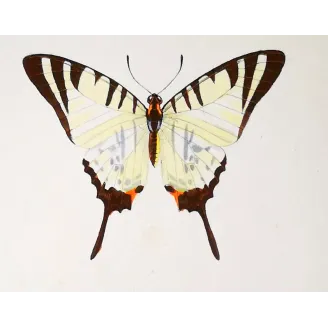
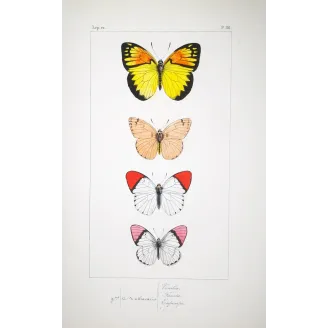
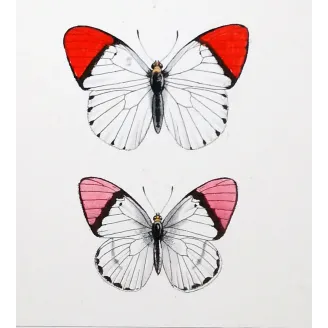
Bright yellow and white butterflies with vivid orange and pink tips. A refined 1835 engraving with strong decorative contrast.
Graphic pairing with bold yellow stripe and banded companion; vibrant hand-coloring and clear natural history styling.