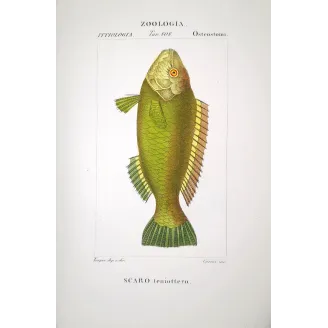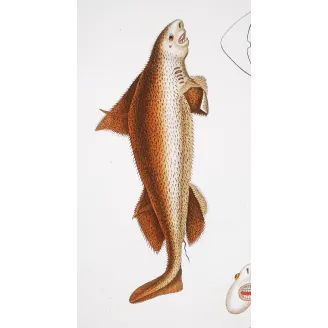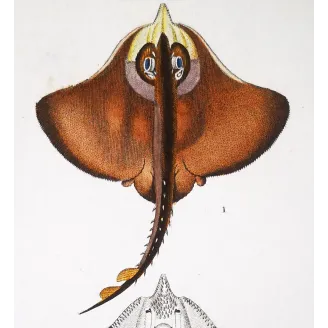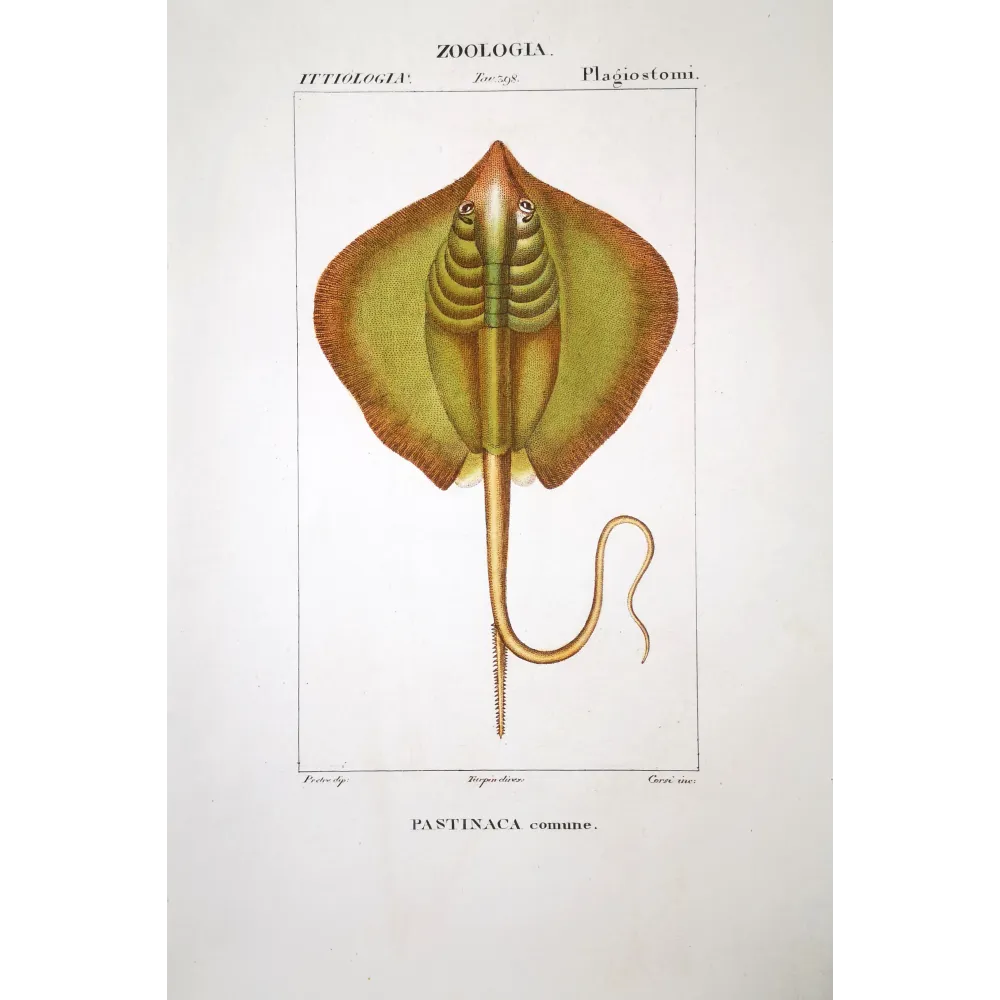
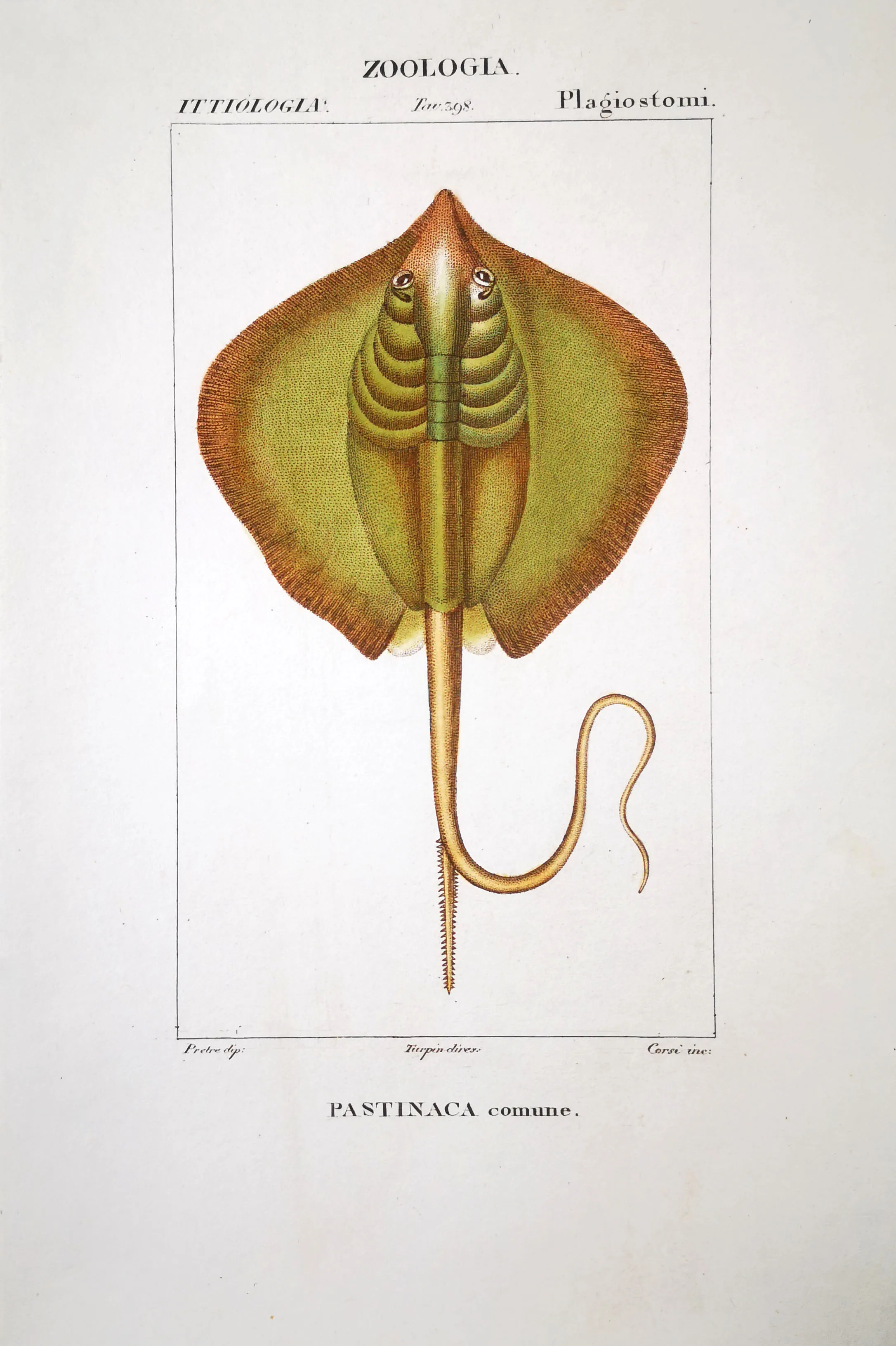
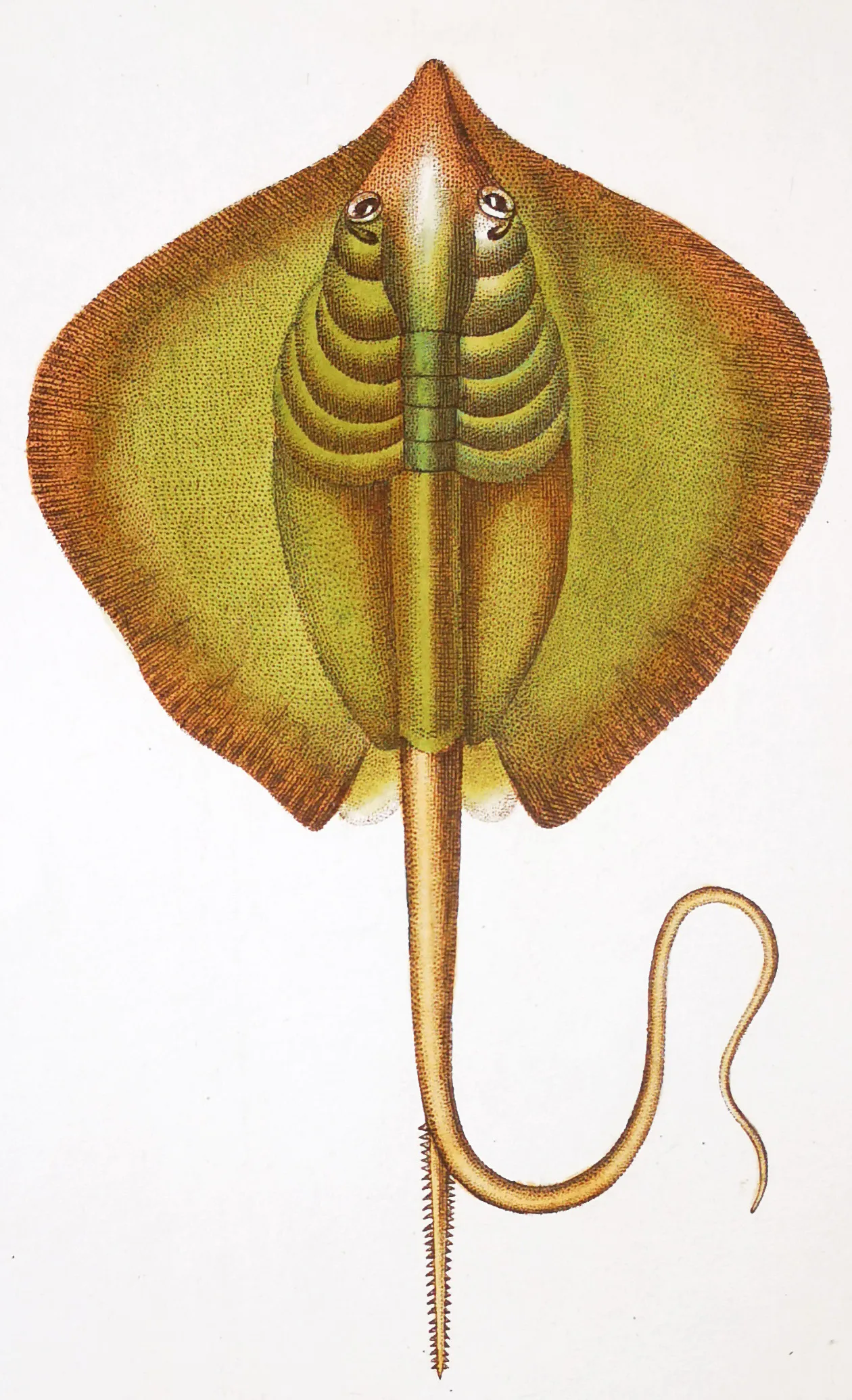
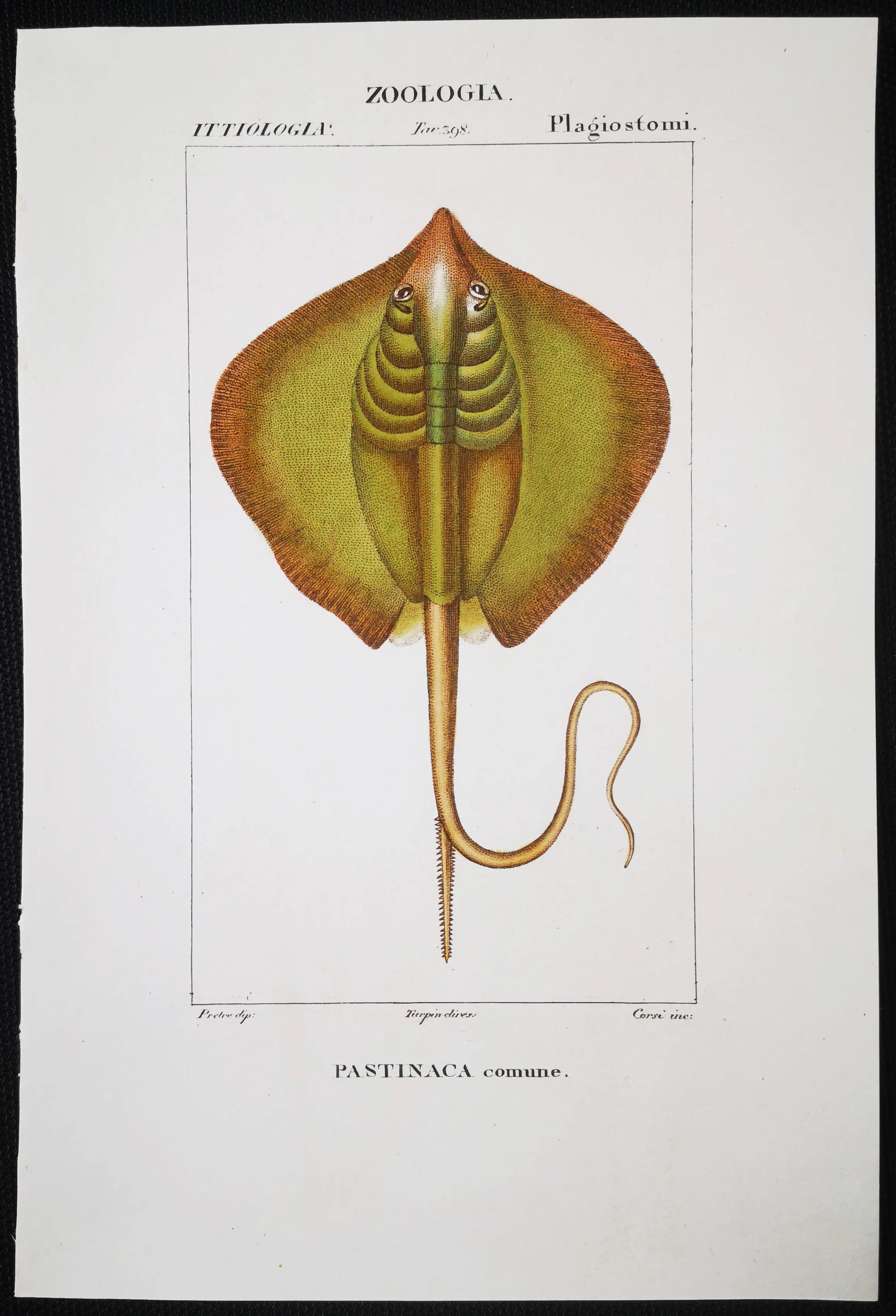



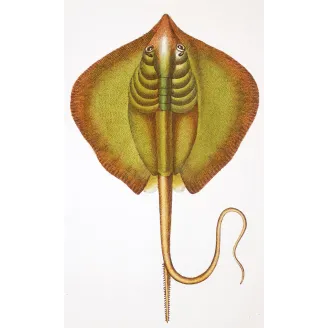
Graceful stingray with warm olive-brown tones and a long tail; tranquil marine subject with elegant presence.
 Delivery policy
Your print will be carefully prepared and shipped worldwide via trusted couriers (UPS or similar).
 Authentic antique prints
Original engravings from the 17th–19th century.
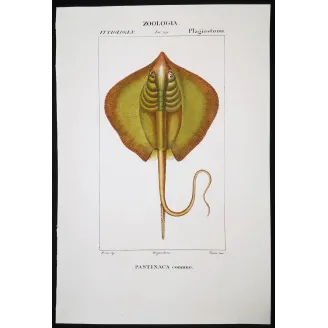
This original hand-colored engraving depicts the Common Stingray, Dasyatis pastinaca, presented in a single, frontal view that emphasizes symmetry, breadth, and calm authority. The body reads as a soft diamond, while the long tail extends downward like a deliberate line — a marine figure reduced to pure geometry without losing its natural presence.
The plate’s simplicity is its power: one specimen, fully given space, allowing contour and tonal gradation to carry the entire visual impact. It is scientific illustration, yet it possesses the stillness of an icon.
The plate belongs to the Italian edition of the Dizionario di Scienze Naturali (Florence, Battelli press), a monumental publication in which Pierre Antoine Prêtre’s zoological subjects stand out for their refinement and display quality.
— • —
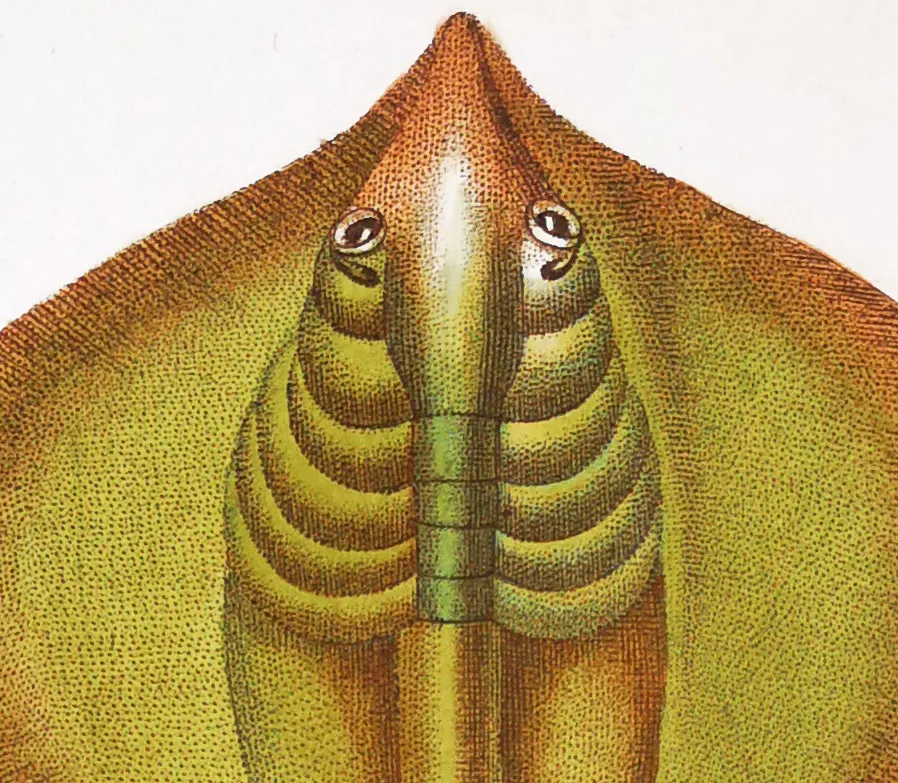
The body is modeled in warm olive and amber, with fine stippling that creates a velvety surface and a gentle internal shading. The head and eye placement anchor the symmetry, while the tail becomes a graphic extension — thin, controlled, and slightly severe in contrast to the soft wing-like disc.
The wide white field frames the stingray with museum-like isolation, amplifying its quiet elegance. The result feels both documentary and sculptural, as if the subject were a natural emblem designed for a cabinet collection.
Dasyatis pastinaca was a familiar coastal presence in European waters, and rays in general held a special place in nineteenth-century natural history because their anatomy challenged conventional “fish” expectations. Their flattened bodies, wing-like pectoral fins, and bottom-dwelling habits encouraged a different kind of observation — one focused on plan, symmetry, and surface rather than lateral silhouette. In encyclopedic publishing, the ray became a demonstration subject: a reminder that the sea contained forms as conceptually distinct as any terrestrial creature, and that illustration was essential for preserving such structural difference.
This engraving forms part of the historic Dizionario di Scienze Naturali, preserved today in the Sacchetti Collection. These works are nearly two centuries old, created in an era when nature was celebrated through monumental publishing projects — ambitious enterprises that are now practically unachievable.
For the wider context of this noble provenance and its cultural value, we invite you to read “Not Just Another Print”.
The engraving is in excellent antique condition, with clean margins and a fresh, well-preserved hand-coloured surface. Printed on original smooth wove paper (non-laid), consistent with Italian scientific editions of the period. No watermark has been observed. The impression is clear and the colour remains vibrant, with no visible losses.
For further context on Pierre Antoine Prêtre and his contribution to nineteenth-century zoological illustration, see our editorial feature:
Pierre Antoine Prêtre – Illustrator of Natural Science and Marine Life
Looking for: Dasyatis pastinaca engraving, antique stingray print, hand-colored ray illustration, 19th-century marine life engraving.
Specific References
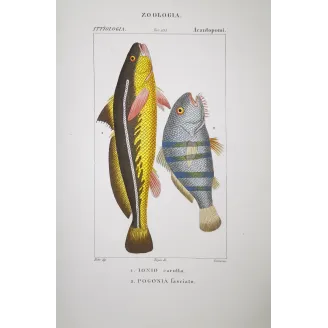
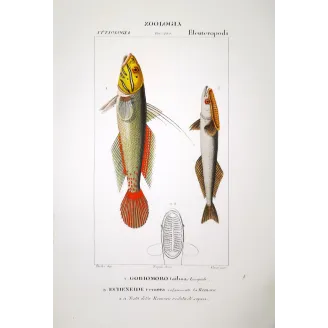
Graphic pairing with bold yellow stripe and banded companion; vibrant hand-coloring and clear natural history styling.
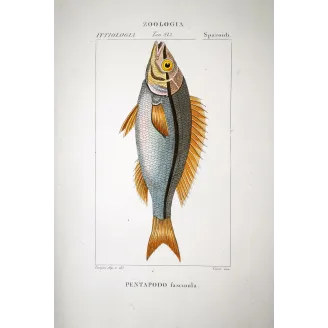
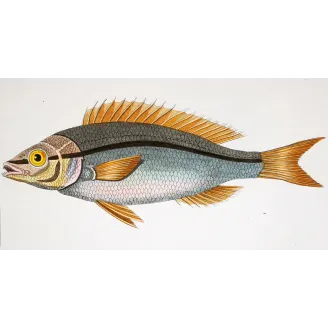
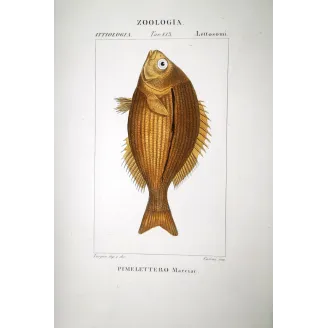
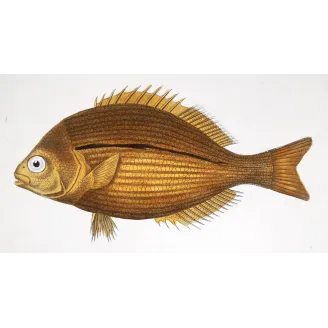
Elegant Pentapodus fish with shimmering orange-silver tones and refined aquatic poise.
Fine 19th-century antique print depicting Porbeagle and Spiny Dogfish by Pierre Antoine Prêtre, detailed and vibrant marine pair.
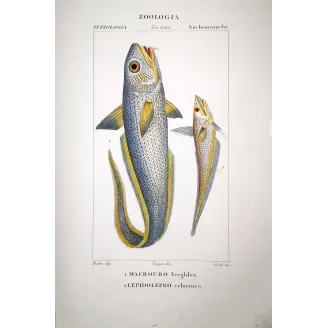
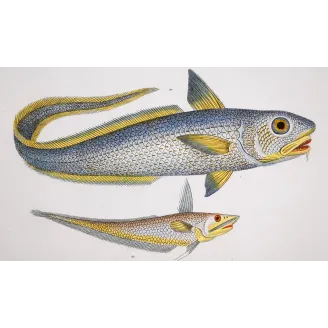
Grenadier and Ribbonfish illustrated with refined color balance and elegant detail.
Distinctive composition with streamlined forms and the famous remora disktechnical curiosity with refined aesthetics.
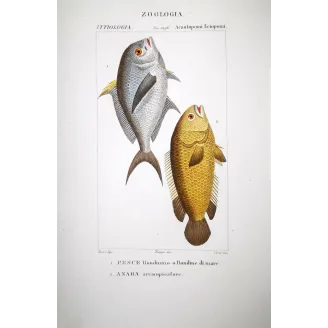
Silver and golden marine pair with crisp scales; a balanced 19th-century composition for refined coastal interiors.
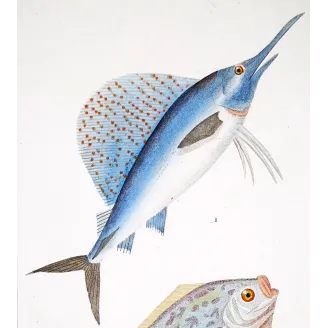
Elegant 19th-century antique print by Pierre Antoine Prêtre with Sailfish and Moonfish, luminous blues and refined detailing.
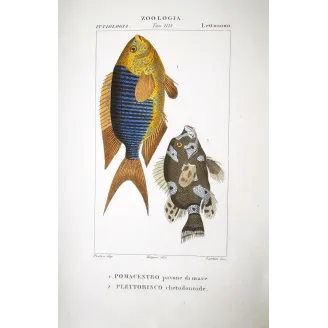
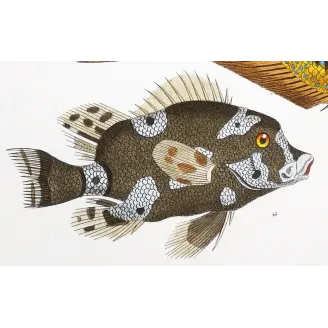
Two contrasting species in one plate: a delicate Damselfish and a robust Triggerfish, rich in color and texture.
Rare 19th-century engraving of the Angular Roughshark by Pierre Antoine Prêtre, remarkable for its unique texture and marine atmosphere.
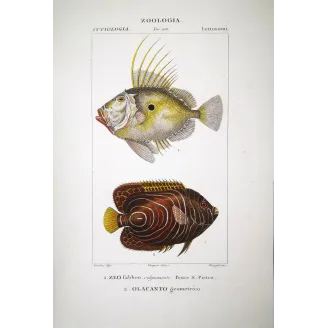
Iconic plate with the celebrated John Dory and a striking angelfishsuperb color contrasts and collector appeal.
Charming 19th-century engraving of the Smooth Guitarfish by Pierre Antoine Prêtre, highlighting elegant form and serene coloration.
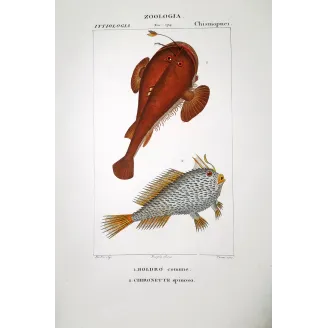
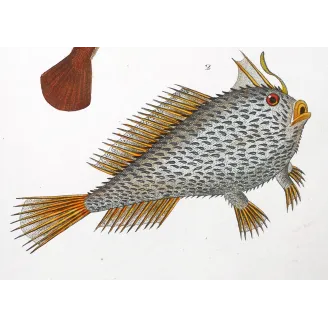
Iconic plate: dramatic anglerfish with lure and a spiny companionbold textures and collector appeal, a standout Antique Print.
Dramatic eel composition with sinuous forms and precise stippling; a rare and architectural marine subject for refined interiors.
Elegant 19th-century hand-colored engraving of the Brown Ray by Pierre Antoine Prêtre, featuring graceful symmetry and refined marine tones.
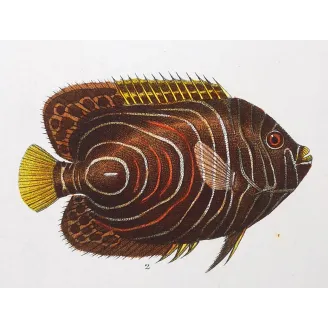
Graphic pairing with bold yellow stripe and banded companion; vibrant hand-coloring and clear natural history styling.
Black swallowtail butterflies with ivory, yellow and green patterns. A refined 1835 engraving, ideal as antique butterfly wall art.
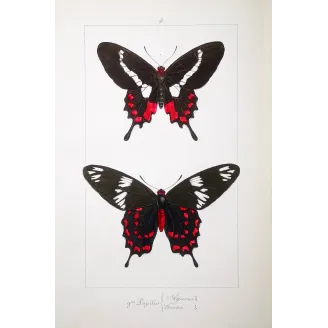
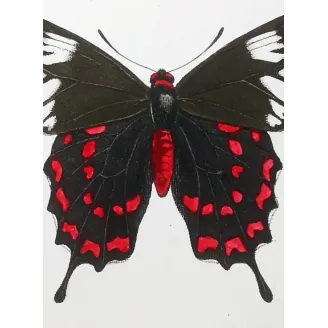
Crimson Rose swallowtails with deep black wings and vivid red markings. A dramatic 1835 engraving, perfect as bold antique butterfly wall art.
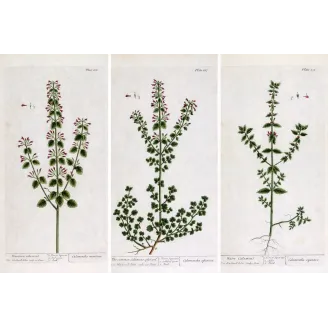
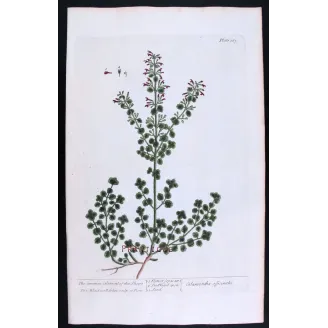
A curated botanical trio illustrating three closely related Calamintha species — officinalis, montana, and aquatica — as engraved and hand-colored by Elisabeth Blackwell for A Curious Herbal (1737–1739). Presented together, these plates offer a rare comparative view of medicinal, habitat-specific, and morphological variation within a single genus, reflecting early modern botanical practice and apothecary knowledge.
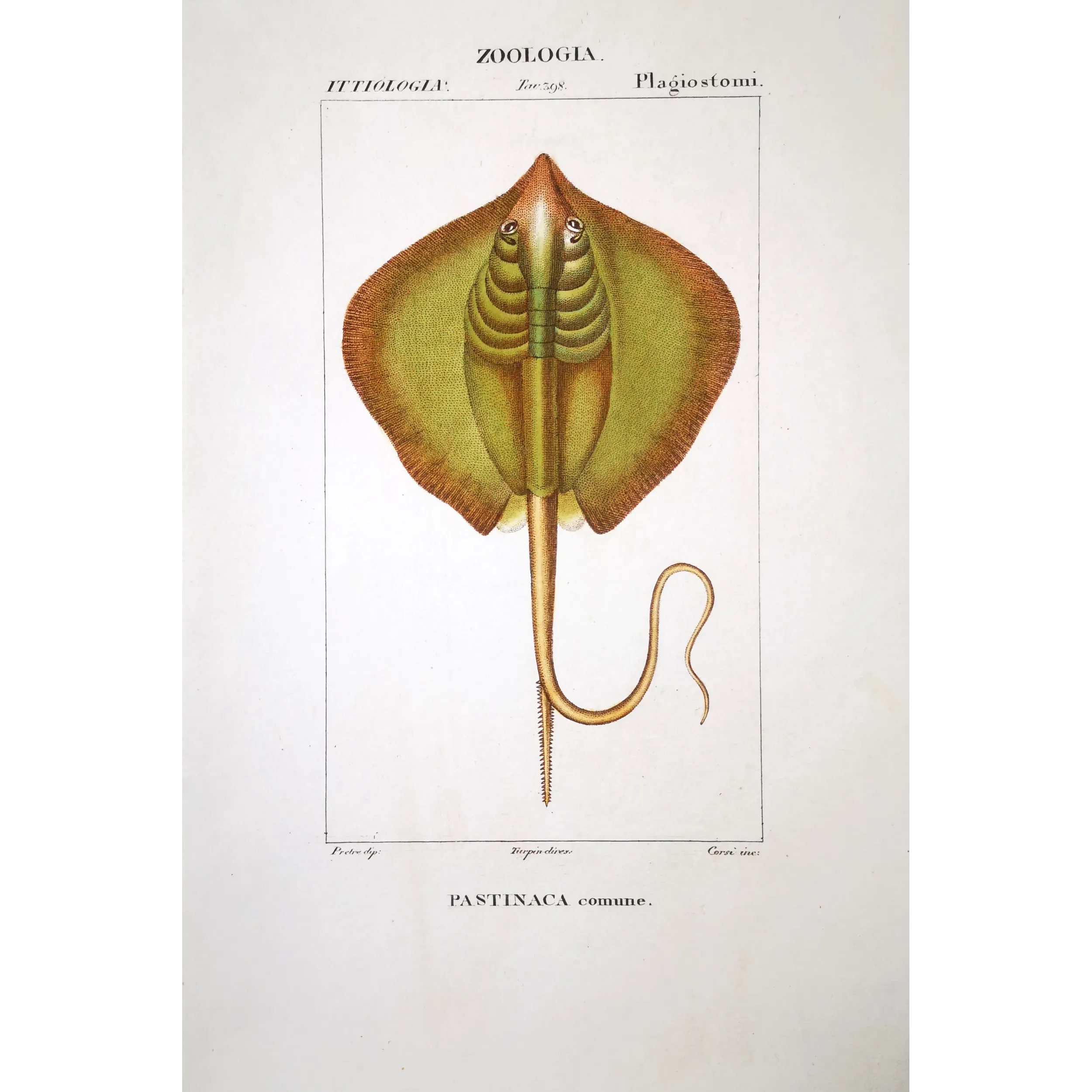
Graceful stingray with warm olive-brown tones and a long tail; tranquil marine subject with elegant presence.