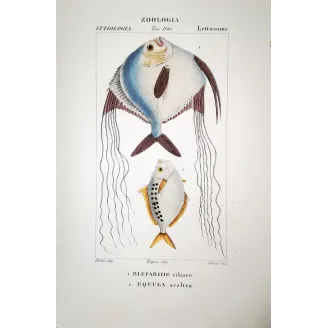
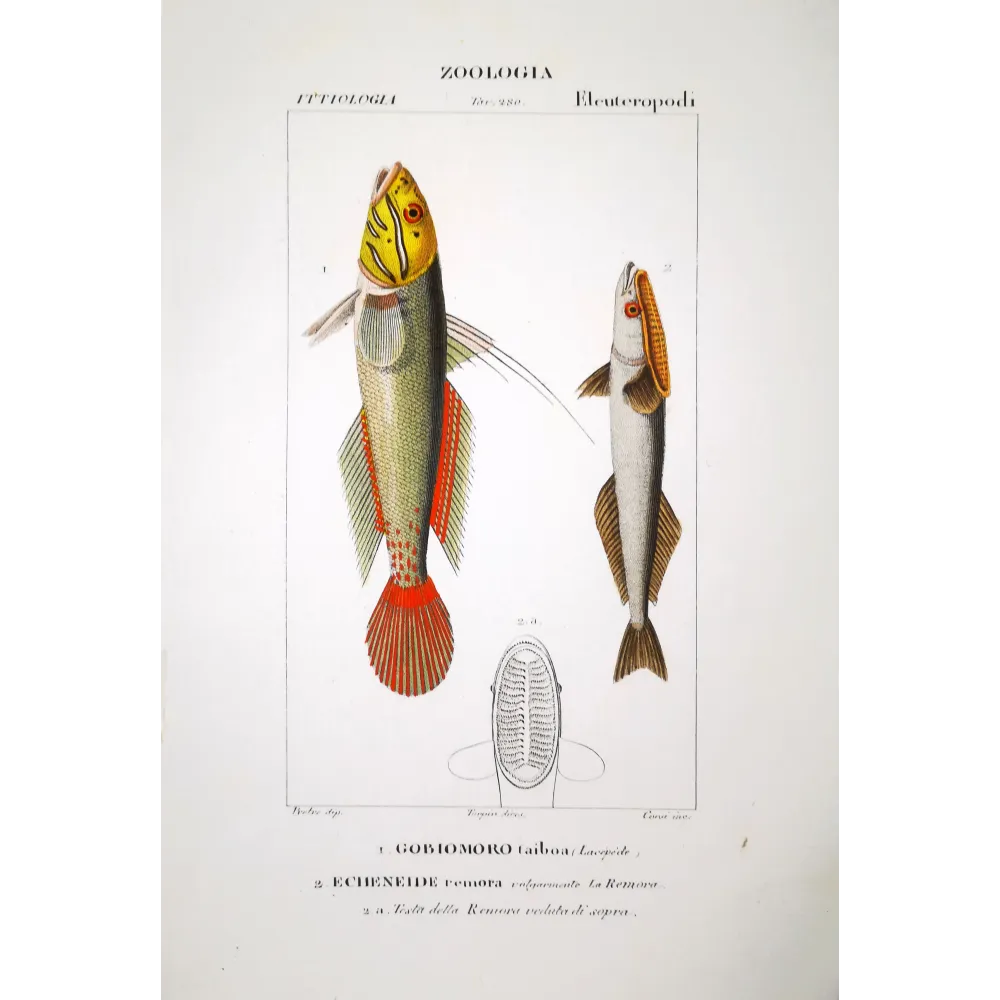
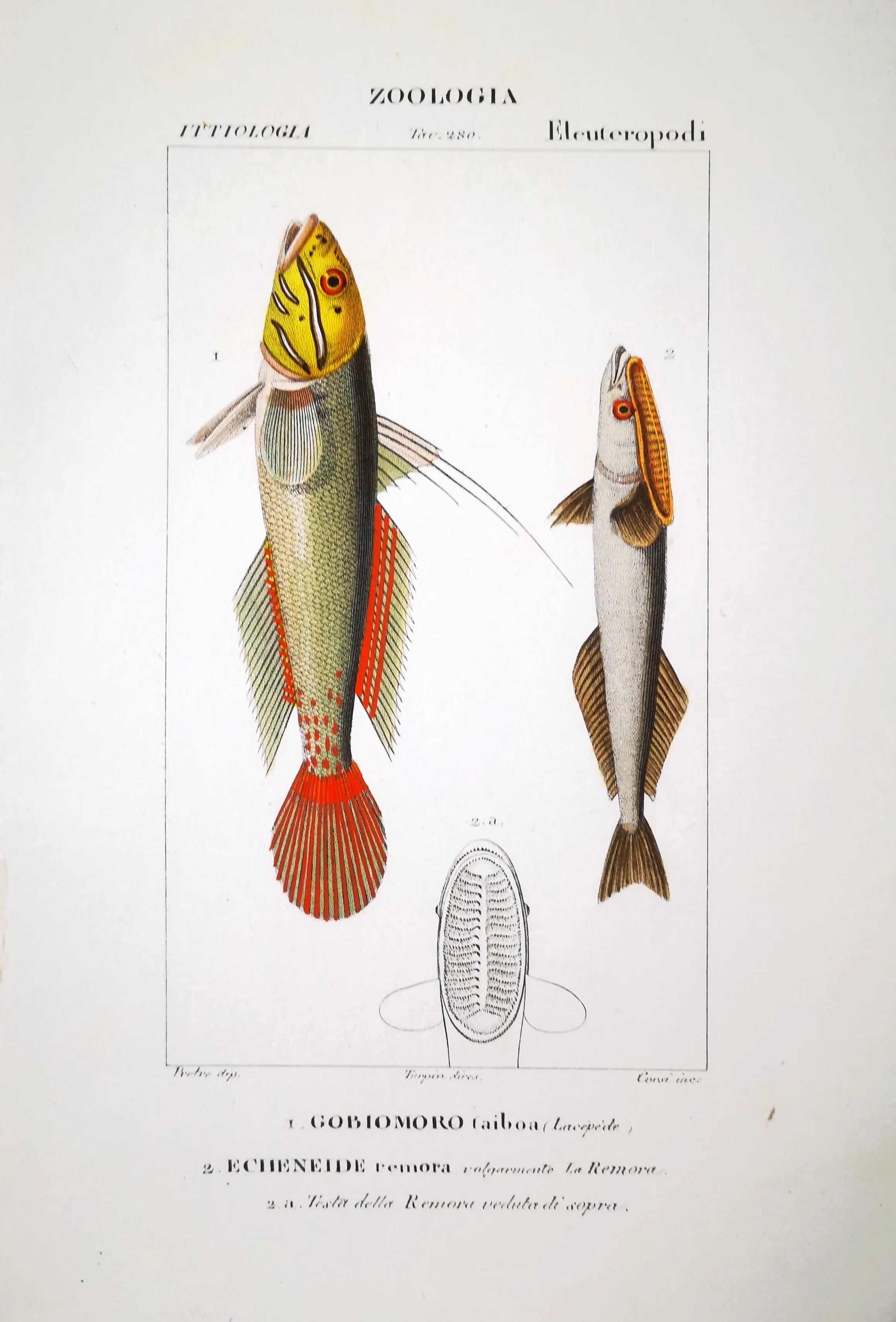



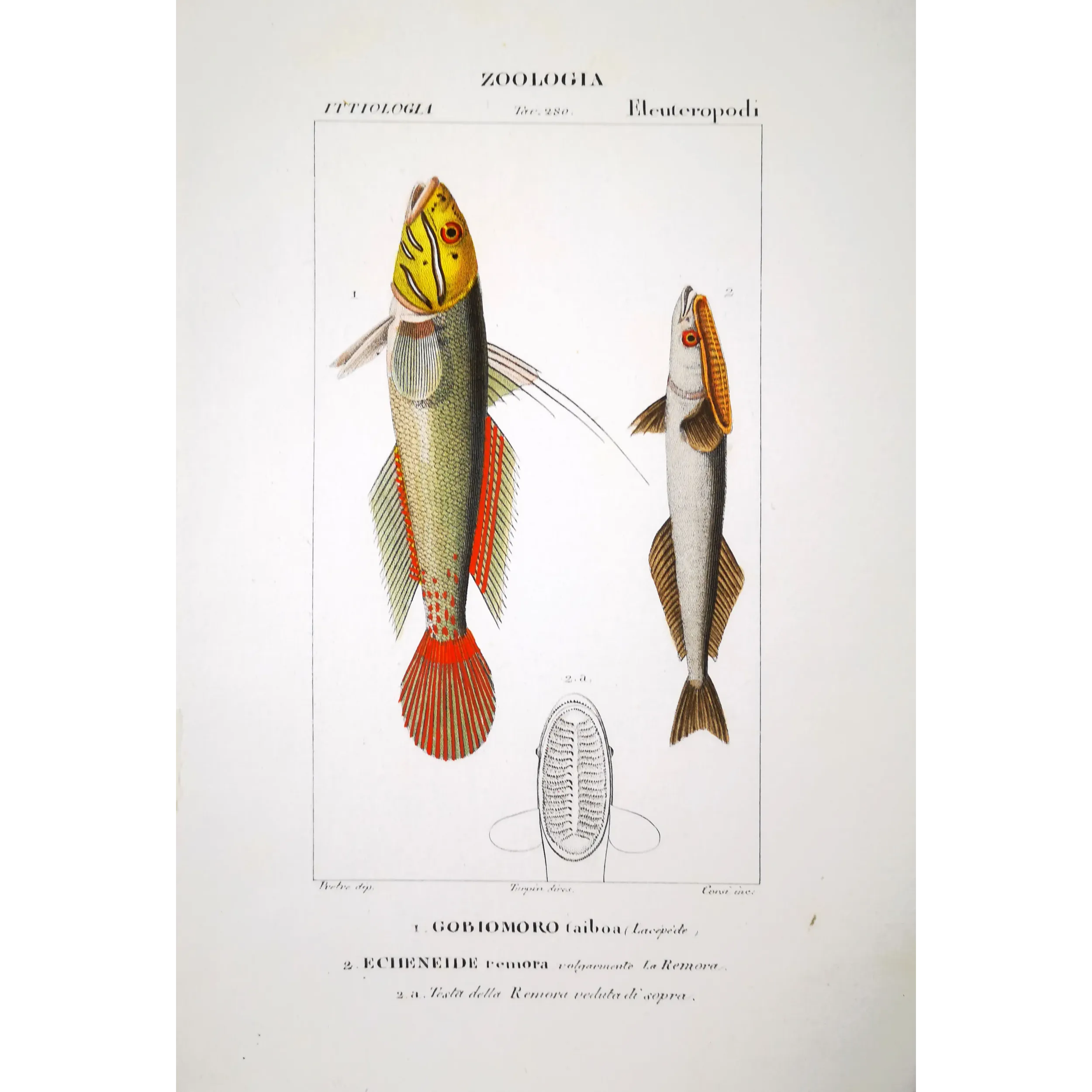
Distinctive composition with streamlined forms and the famous remora disktechnical curiosity with refined aesthetics.
 Delivery policy
Your print will be carefully prepared and shipped worldwide via trusted couriers (UPS or similar).
 Authentic antique prints
Original engravings from the 17th–19th century.
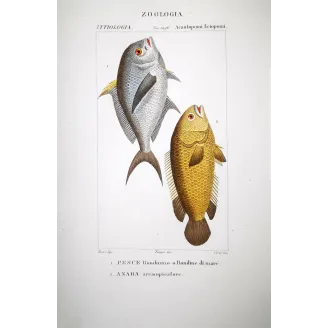
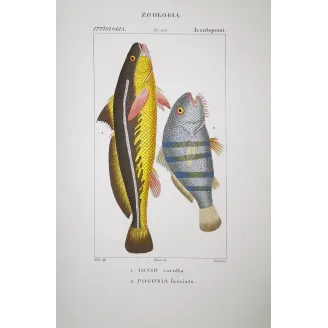
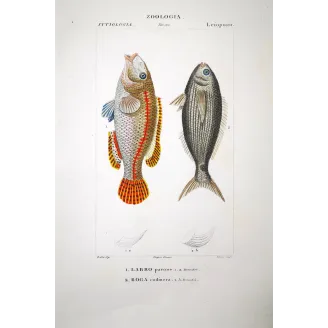
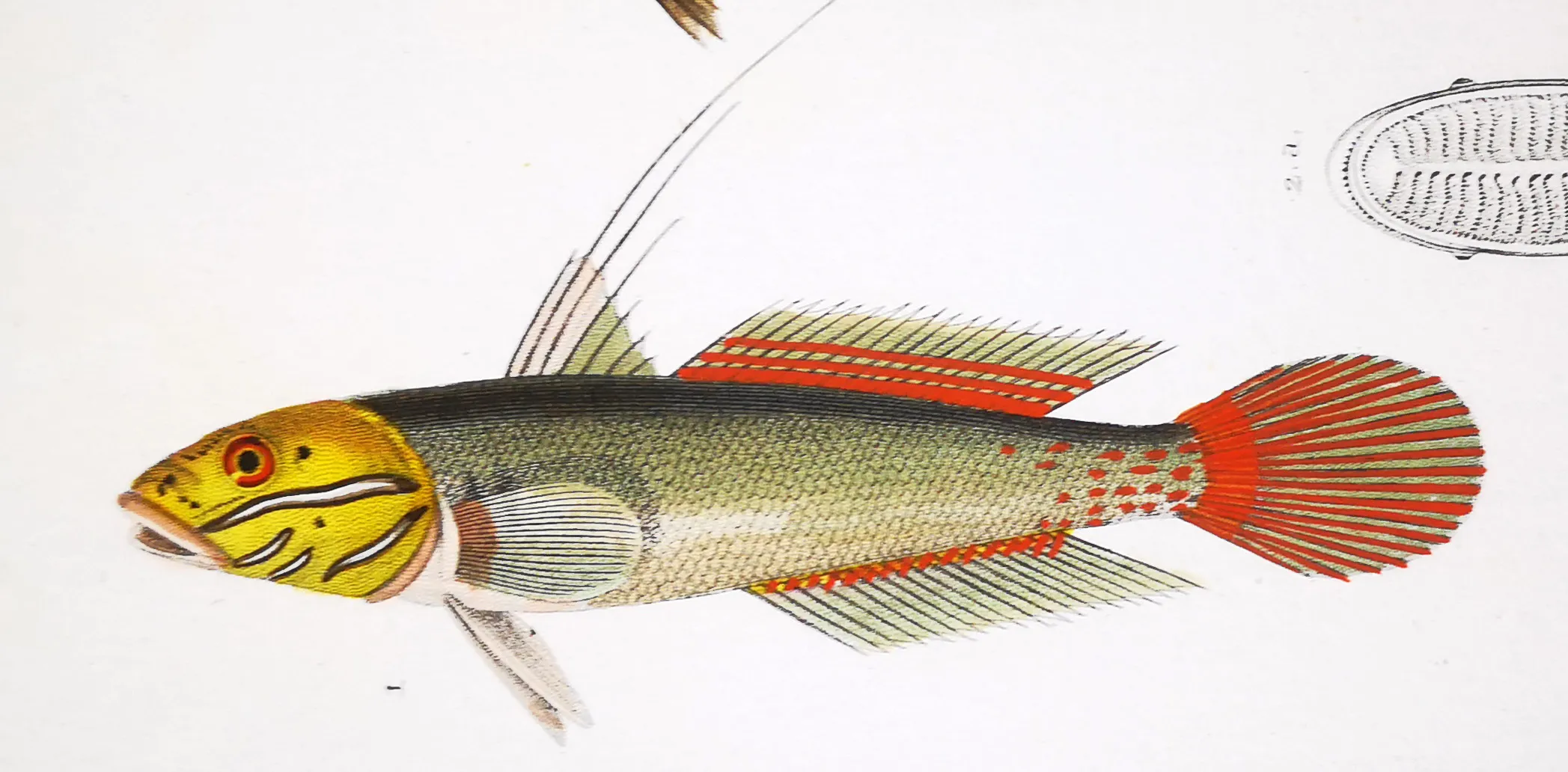
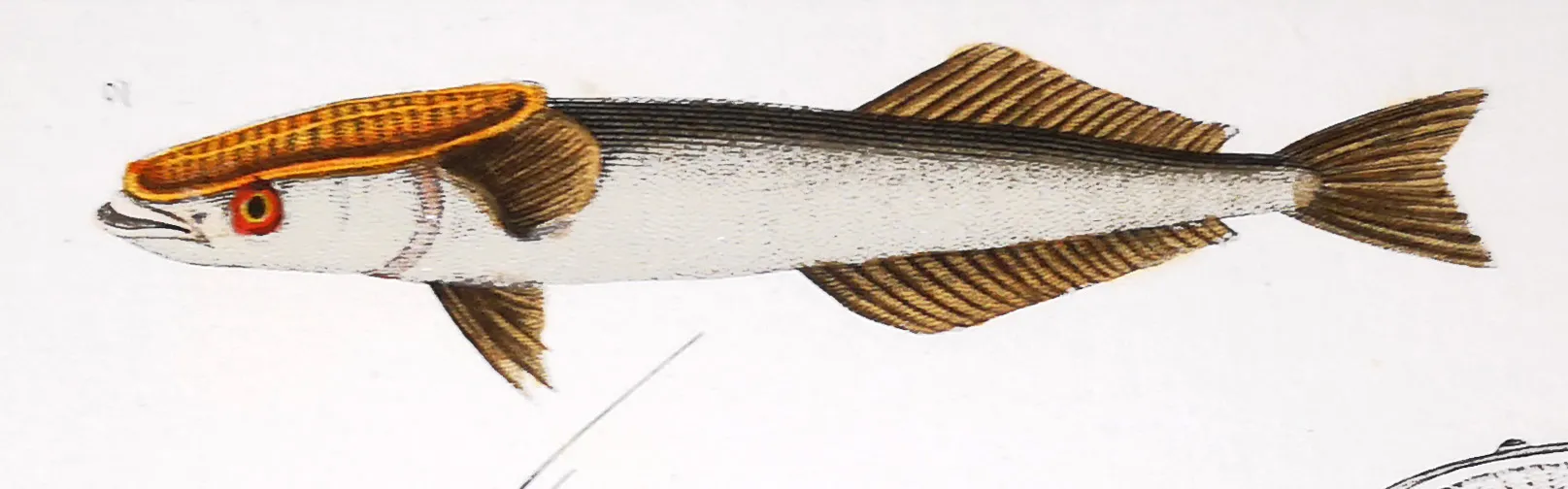
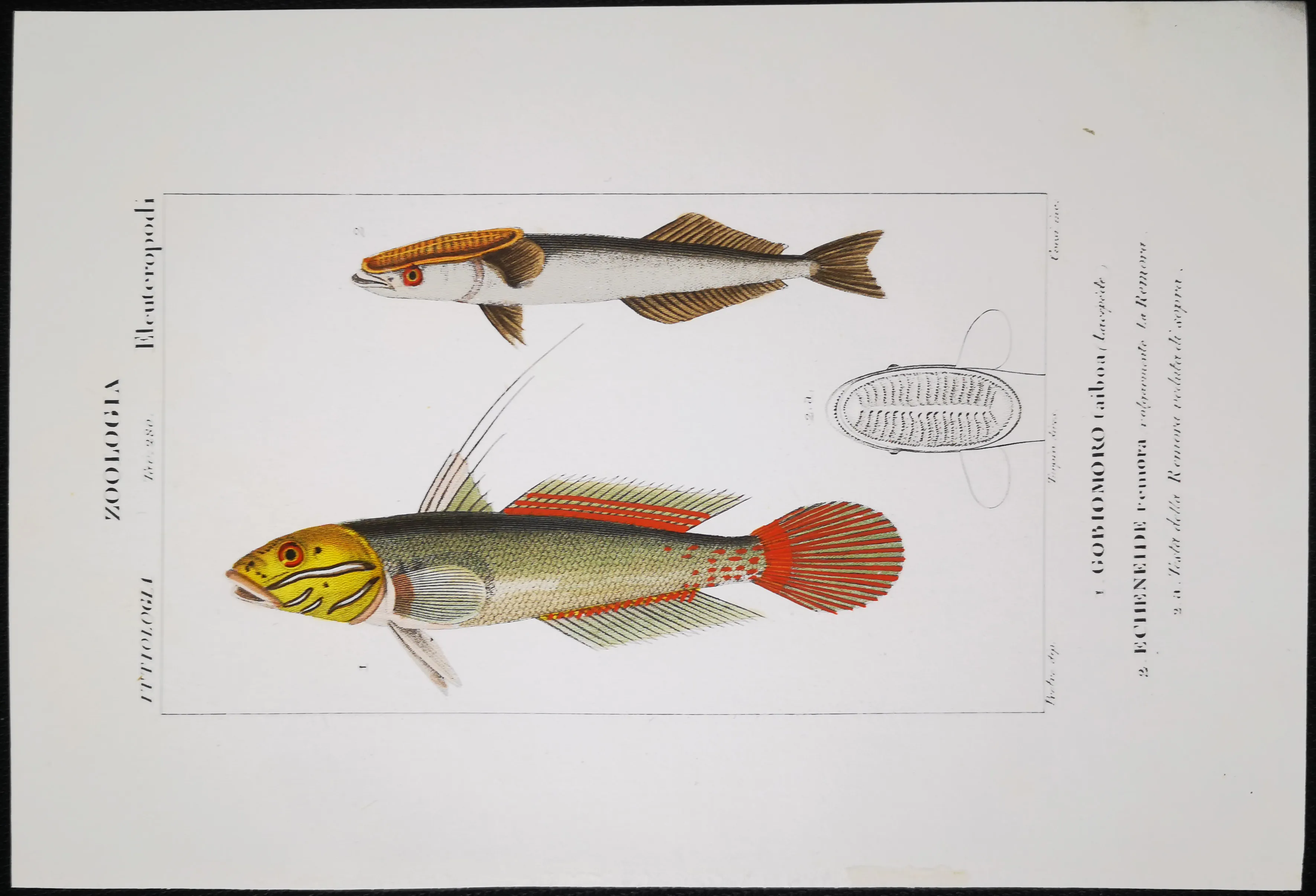
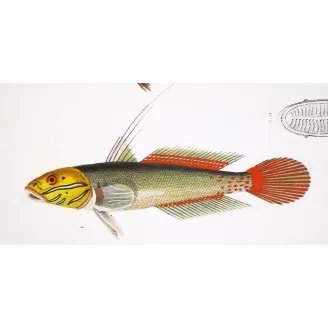
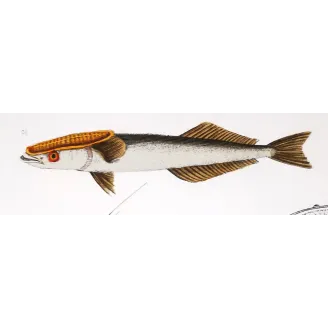
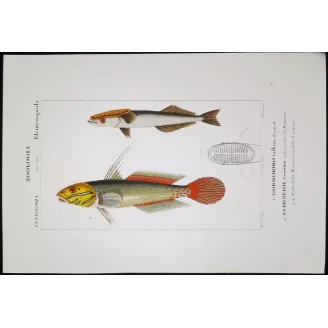
This original hand-colored engraving presents two fishes famous not for size or splendour, but for specialised survival: a Remora (Echeneis remora) and a Clingfish (Gobiesox sp.). The plate captures a nineteenth-century fascination with function — the idea that nature’s most intriguing designs are often those shaped by behaviour and attachment rather than ornament alone.
Executed with crisp engraving and controlled colour accents, the composition feels both scientific and decorative. The stronger chromatic presence of the lower fish — warm reds, green modulation, and graphic fin structure — is counterbalanced by the subdued, streamlined upper figure.
The plate belongs to the Italian edition of the Dizionario di Scienze Naturali (Florence, Battelli press), a work celebrated for turning zoological knowledge into enduring visual culture.
— • —
The lower fish is visually commanding: a luminous yellow head, red-lined fins, and a vivid tail that reads almost like an emblem. The upper fish, more muted and elongated, introduces a calm counter-register in browns and soft greys.
A small analytical diagram at the side reinforces the plate’s encyclopedic purpose without disturbing its compositional balance. The generous white field creates a modern clarity: a specimen presented as an object of study, yet equally suited to framed display.
Echeneis remora has long held a special place in European natural history lore, admired for its suction-disc adaptation and its habit of attaching to larger marine animals. The clingfish (Gobiesox sp.) offers a parallel lesson in adhesion and habitat intelligence, anchoring itself to surfaces in turbulent coastal zones. In nineteenth-century zoology, such species symbolised the ocean as a world of specialised strategies — where survival is written not only in form, but in behaviour.
This engraving forms part of the historic Dizionario di Scienze Naturali, preserved today in the Sacchetti Collection. These plates embody an era when the natural world was celebrated through monumental publishing — engraved, printed, and hand-finished as objects intended to last.
For the wider context of this noble provenance and its cultural value, we invite you to read “Not Just Another Print”.
The engraving is in excellent antique condition, with clean margins and a fresh, well-preserved hand-coloured surface. Printed on original smooth wove paper (non-laid), consistent with Italian scientific editions of the period. No watermark has been observed. The impression is clear and the colour remains vibrant, with no visible losses.
For further context on Pierre Antoine Prêtre and his contribution to nineteenth-century zoological illustration, see our editorial feature:
Pierre Antoine Prêtre – Illustrator of Natural Science and Marine Life
Looking for: remora engraving, Echeneis remora antique print, clingfish engraving, Gobiesox natural history plate.
Specific References
Silver and golden marine pair with crisp scales; a balanced 19th-century composition for refined coastal interiors.
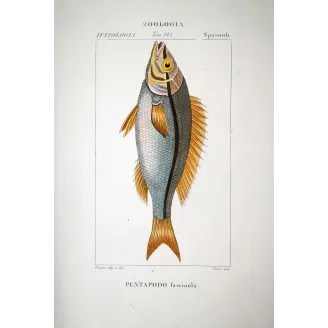
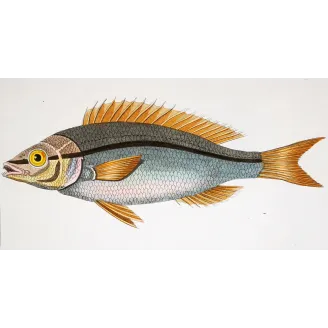
Elegant Pentapodus fish with shimmering orange-silver tones and refined aquatic poise.
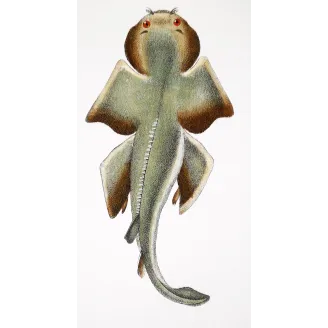
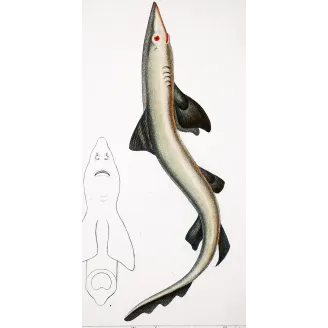
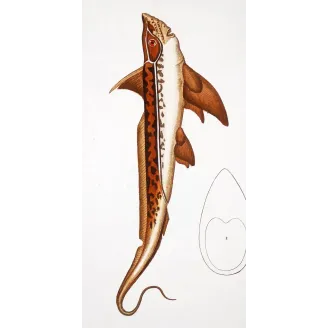
Graceful 19th-century engraving of the Angelshark by Pierre Antoine Prêtre, rich in soft tones and fine anatomical accuracy.
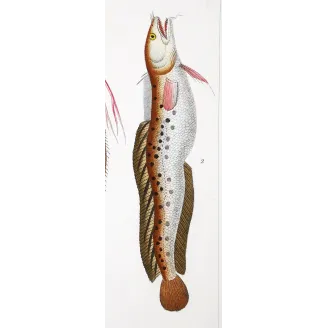
Classic 19th-century engraving of Greater Forkbeard and Rockling by Pierre Antoine Prêtre, subtle tones and elegant balance.
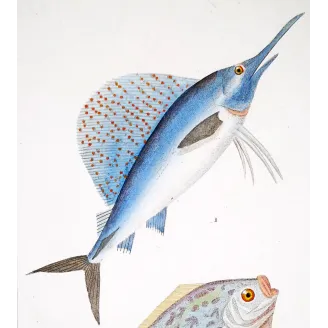
Elegant 19th-century antique print by Pierre Antoine Prêtre with Sailfish and Moonfish, luminous blues and refined detailing.
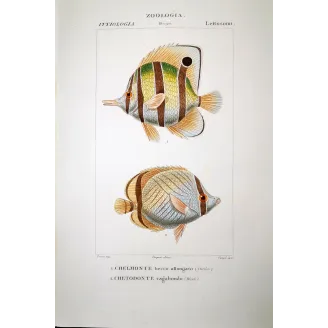
Iconic Antique Print with two vivid butterflyfishes, finely hand-coloredstriking geometry and coral-reef charm for collectors.
Graphic pairing with bold yellow stripe and banded companion; vibrant hand-coloring and clear natural history styling.
Brilliant peacock wrasse with patterned fins and a silver boga; lively palette and refined stippling for elegant interiors.
Expressive 19th-century engraving of the European Eel and Wolffish by Pierre Antoine Prêtre, contrasting silhouettes and textures.
Delicate 19th-century hand-colored engraving of a ponyfish with companion species, ideal for marine-themed interiors and collectors.
Graceful stingray with warm olive-brown tones and a long tail; tranquil marine subject with elegant presence.
Grenadier and Ribbonfish illustrated with refined color balance and elegant detail.
Refined 19th-century hand-colored engraving of the Tope Shark by Pierre Antoine Prêtre, notable for its elegant form and tonal realism.
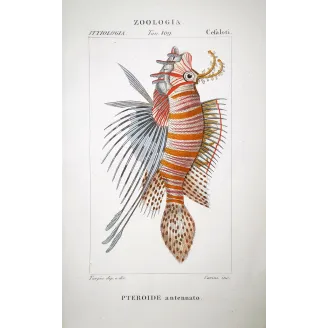
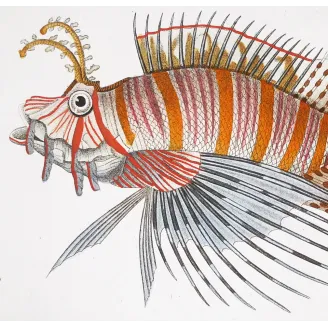
Striking depiction of the Antennata Lionfish with vivid red and orange fins, full of exotic elegance.
Rare 19th-century engraving of the Golden Chimaera by Pierre Antoine Prêtre, featuring warm tones and elegant anatomy.
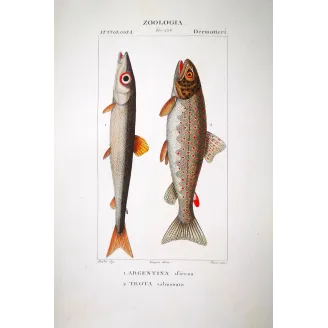
Classic natural history pairingsilver argentine and spotted troutclean composition and fine stippling for timeless appeal.
Distinctive composition with streamlined forms and the famous remora disktechnical curiosity with refined aesthetics.