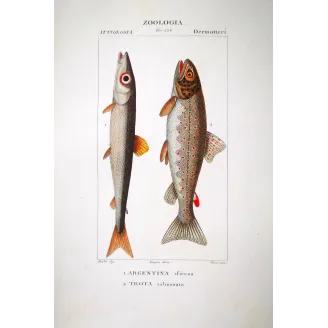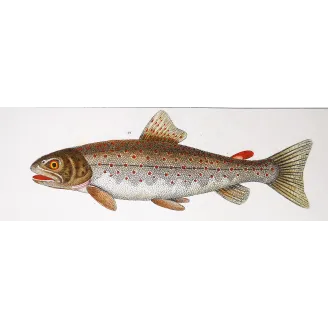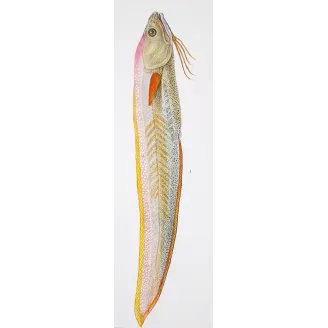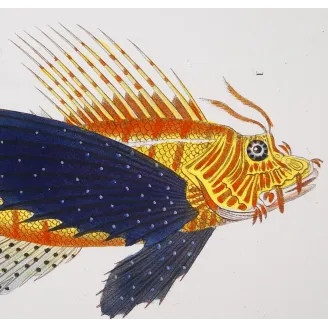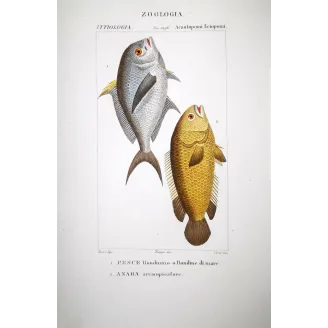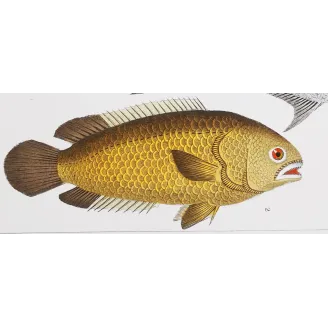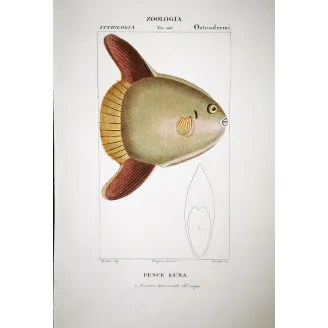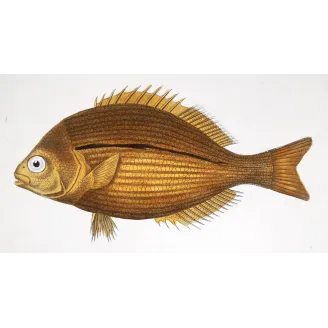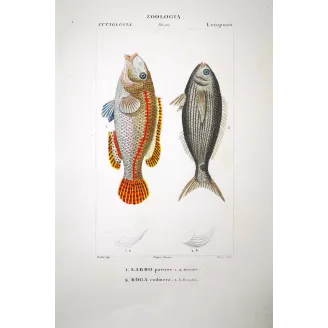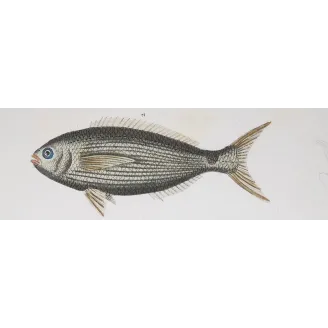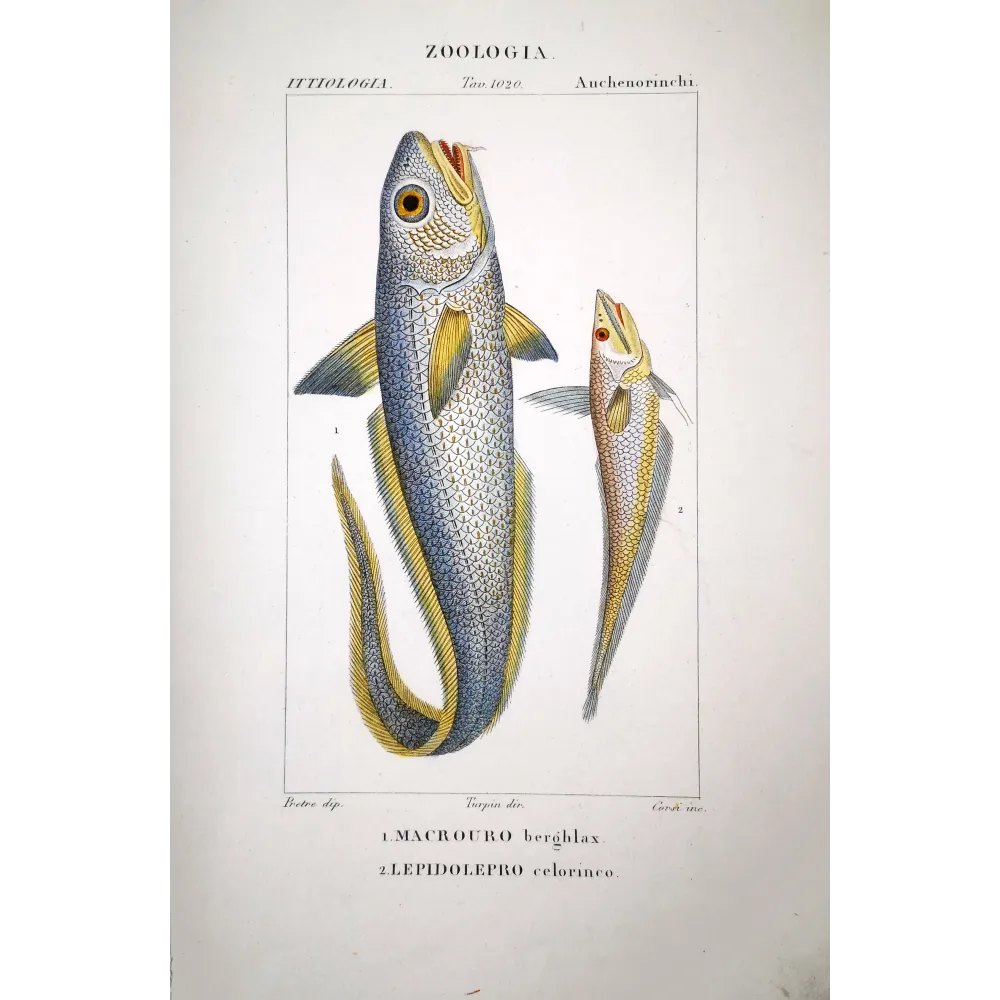
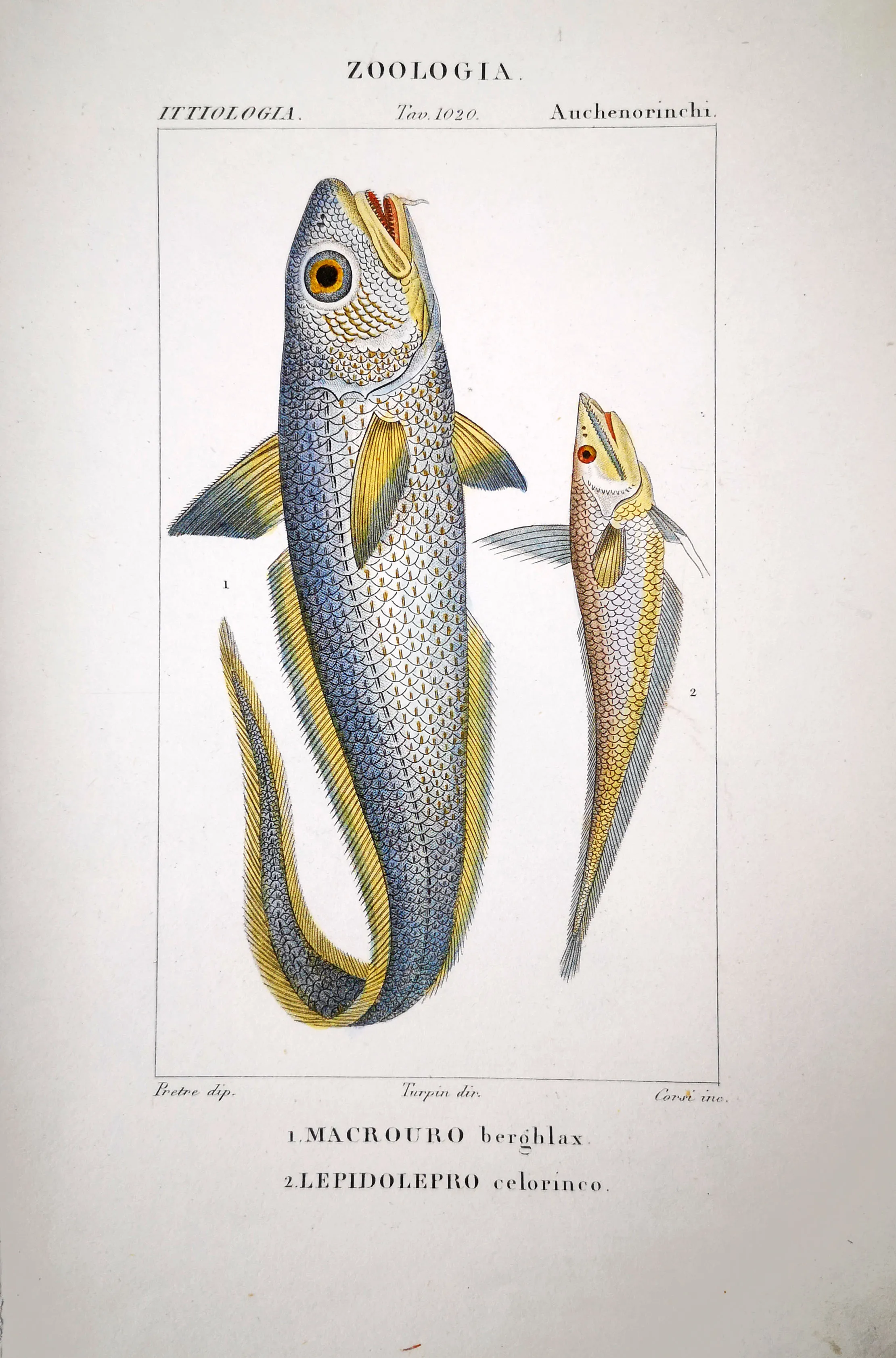
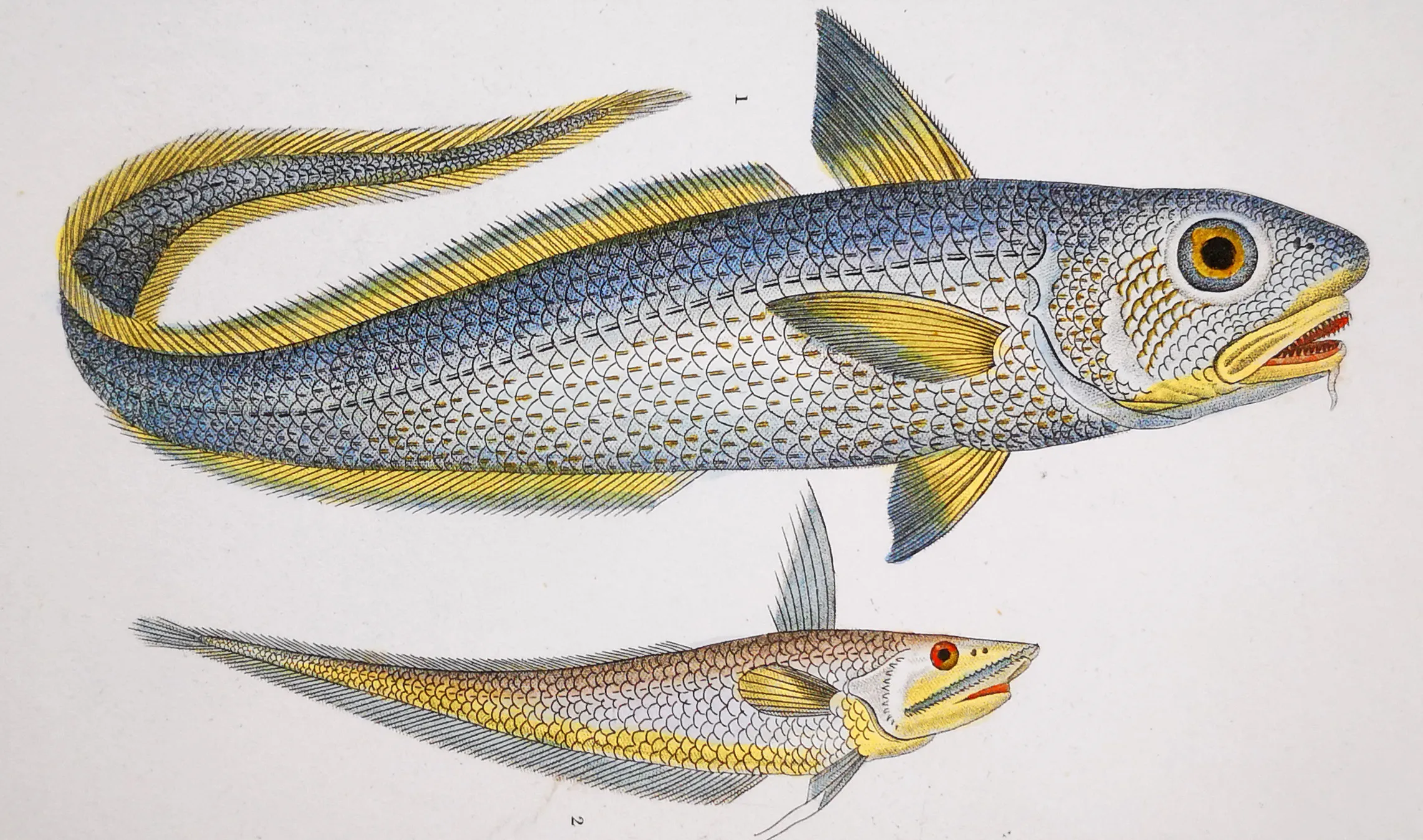



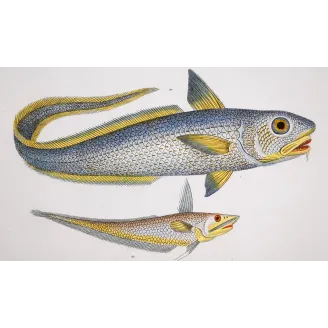
Grenadier and Ribbonfish illustrated with refined color balance and elegant detail.
 Delivery policy
Your print will be carefully prepared and shipped worldwide via trusted couriers (UPS or similar).
 Authentic antique prints
Original engravings from the 17th–19th century.
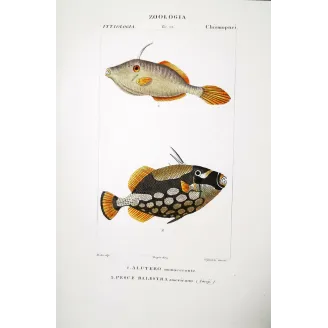
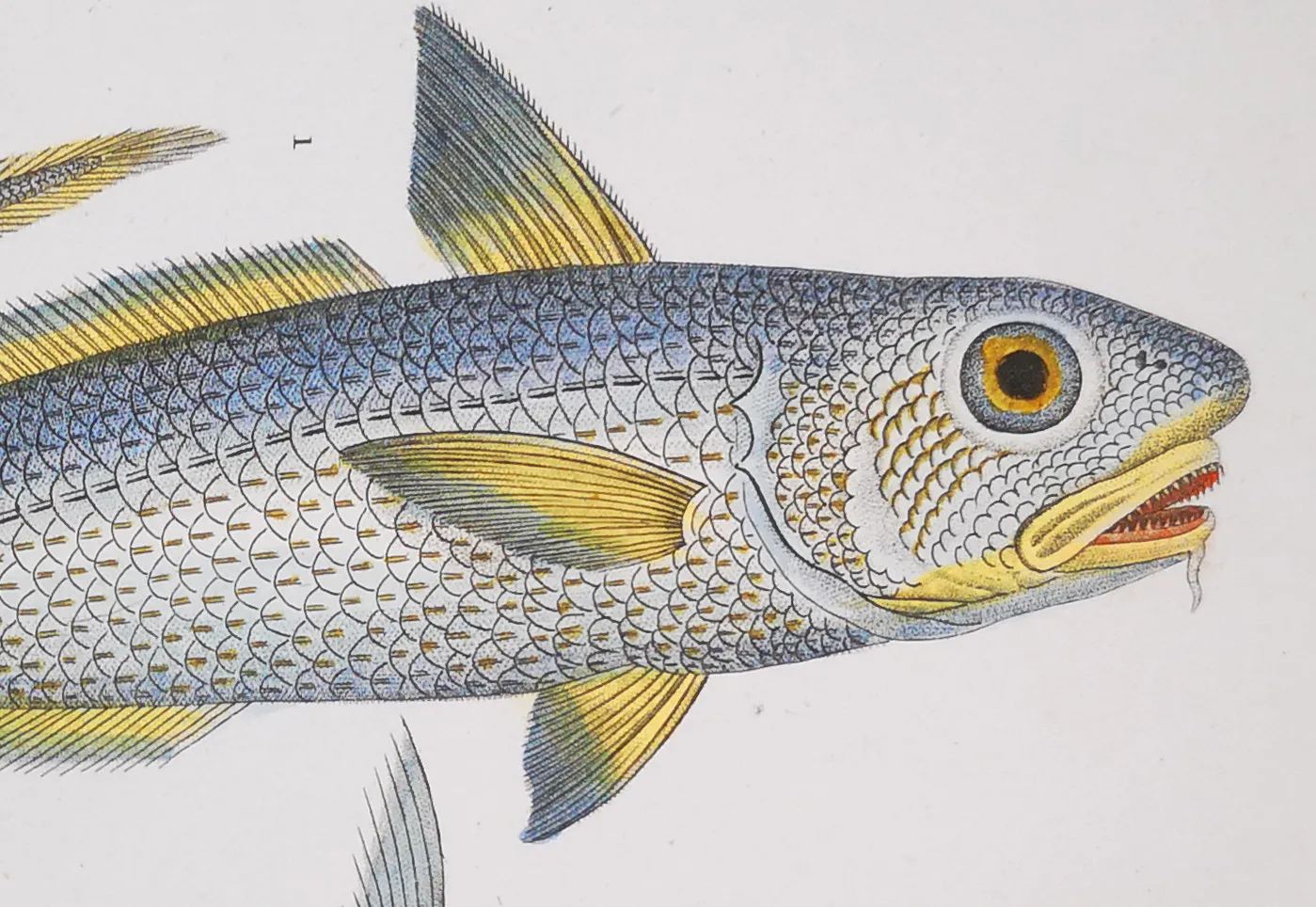
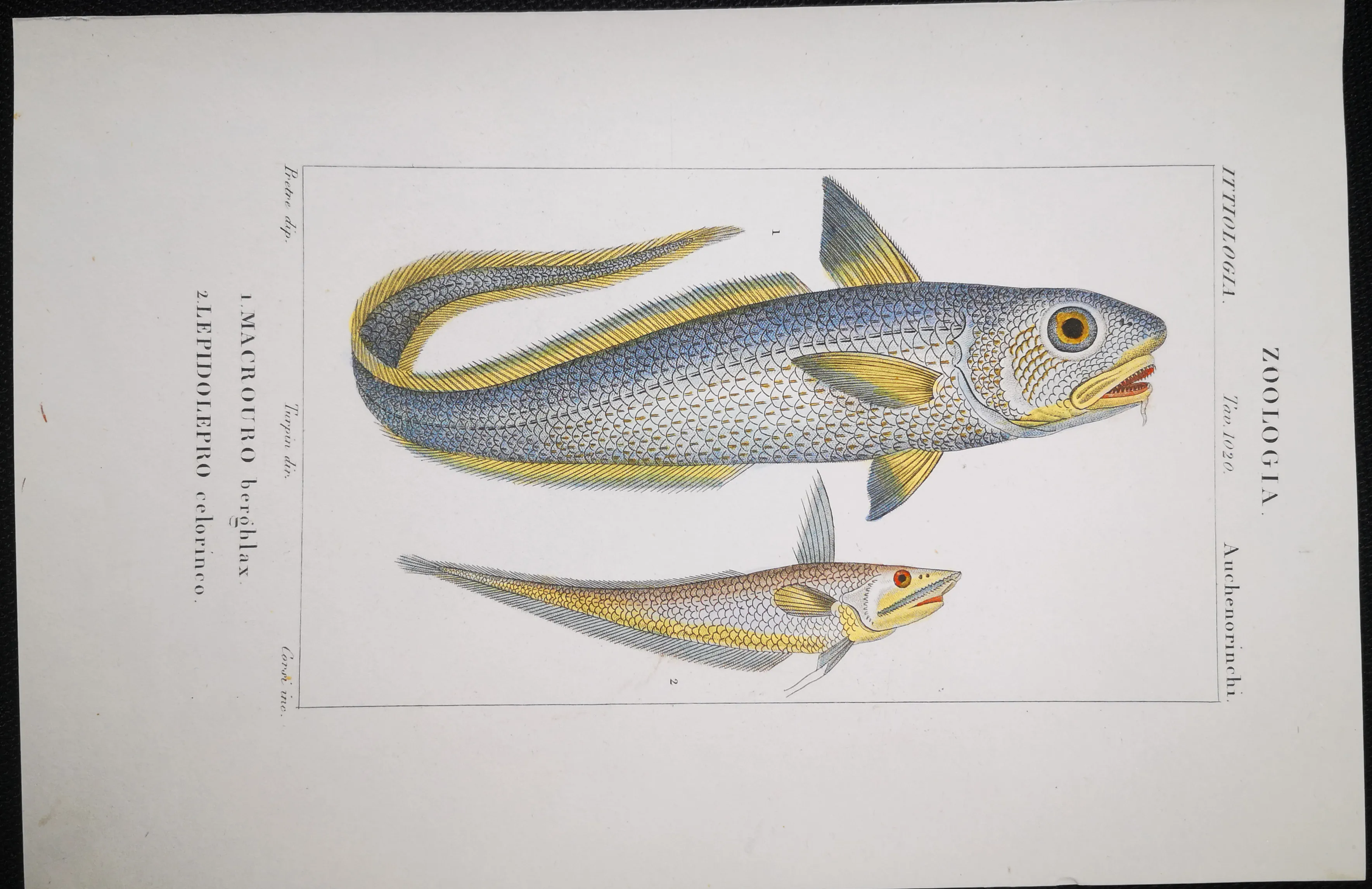
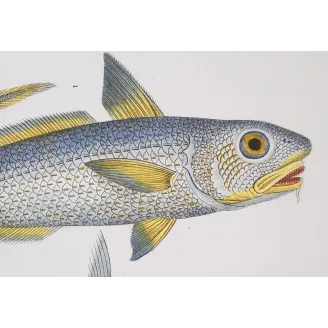
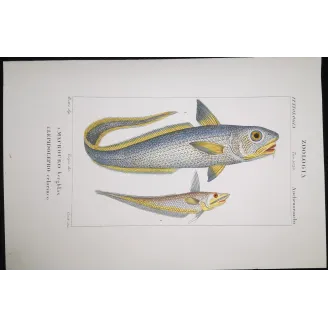
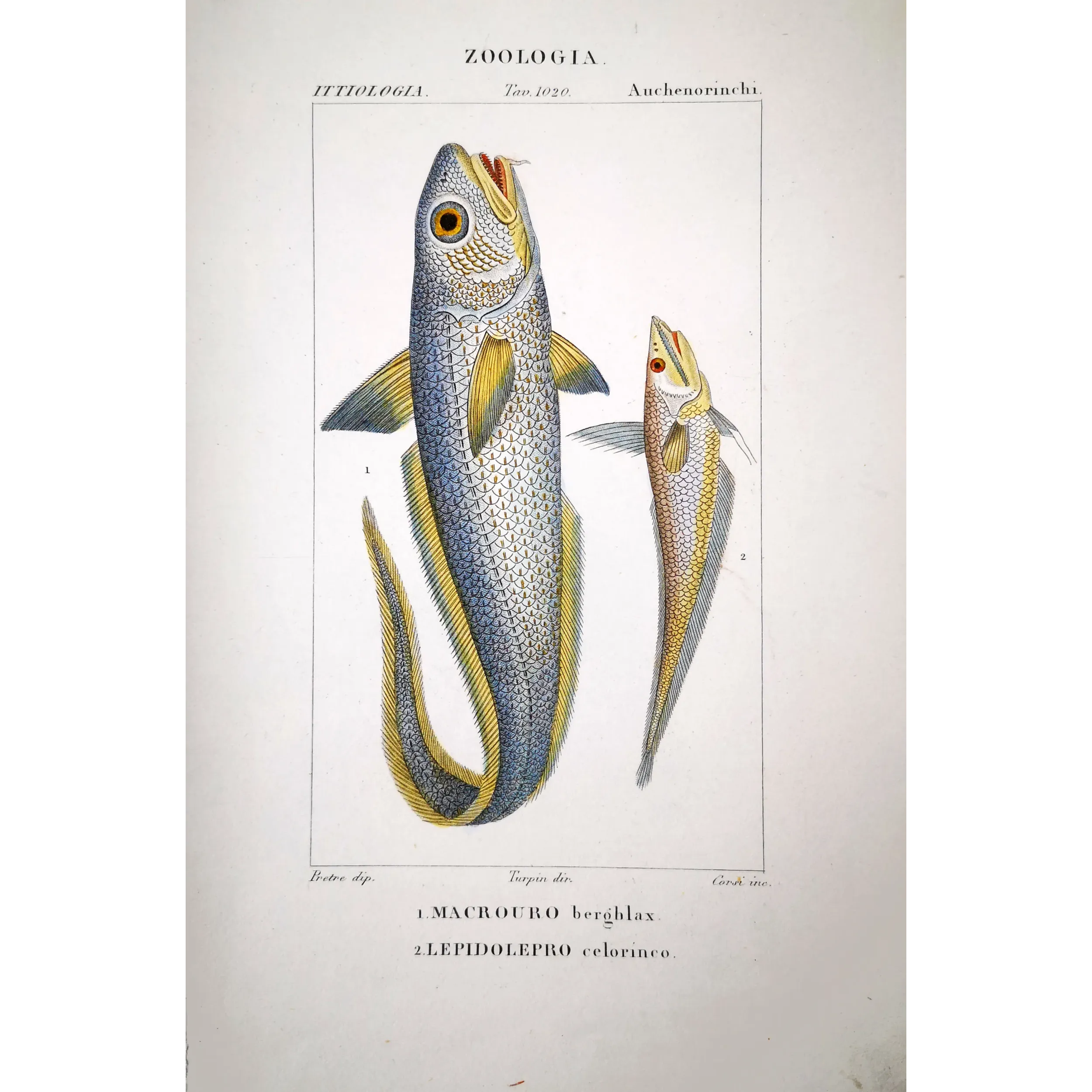
This original hand-colored engraving presents two marine fishes arranged for comparative study: a Grenadier, Macrourus beryllus, and a Ribbonfish, Lepidochirus columnus. The pairing foregrounds elongation and fin architecture — two of the most visually distinctive themes in early nineteenth-century ichthyology.
The engraving balances scientific clarity with decorative presence. Scale fields are articulated with consistent rhythm, fin membranes are carefully graded, and hand-colouring emphasizes contrast: cool blue-grey tonality is warmed by golden accents along fins and flanks, creating a luminous, controlled surface.
The plate belongs to the Italian edition of the Dizionario di Scienze Naturali (Florence, Battelli press), one of the most ambitious encyclopedic scientific enterprises of its time, for which Pierre Antoine Prêtre produced a remarkable series of marine life plates.
— • —
The larger specimen dominates through length and volume, its tail line extending the composition with elegant tension. The smaller fish acts as a counter-study, introducing a second geometry and reinforcing the encyclopedic principle of comparison.
The plate is particularly strong visually because it combines a bright, almost metallic tonal logic with the quiet authority of generous white space — a “museum-clean” presentation that suits modern display exceptionally well.
The Grenadier, Macrourus beryllus, and the Ribbonfish, Lepidochirus columnus, belong to a category of marine subjects that carried strong cultural fascination in the nineteenth century: elongated, deep-water or “unusual” forms that seemed to defy ordinary expectations of fish anatomy. Without photography, antique fish engravings like this were the primary means through which such species entered the public imagination — both as scientific specimens and as symbols of the sea’s hidden complexity. As a 19th-century marine life print, this plate offers powerful SEO relevance (deep-sea fish engraving, antique scientific illustration) and strong collector appeal: two distinct forms, one sheet, and an unmistakably elegant sense of discovery.
This plate forms part of the historic Dizionario di Scienze Naturali, a monumental early nineteenth-century encyclopedic enterprise once preserved within a noble library and today housed in the Sacchetti Collection. Each engraving reflects a period in which scientific ambition was matched by exceptional artisanal execution — from the disciplined copperplate line to the luminous hand-colouring applied individually to every impression.
To discover the full story behind these rare prints and their noble provenance, we invite you to read our editorial feature “Not Just Another Print”.
The engraving is in excellent antique condition. The sheet presents clean margins and a well-preserved impression. The paper is smooth early nineteenth-century wove paper (non-laid), consistent with Italian scientific editions of the period. No watermark has been observed. The original hand-colouring remains fresh and well preserved, with no visible losses.
For further context on Pierre Antoine Prêtre and his contribution to nineteenth-century zoological illustration, see our editorial feature:
Pierre Antoine Prêtre – Illustrator of Natural Science and Marine Life
Specific References
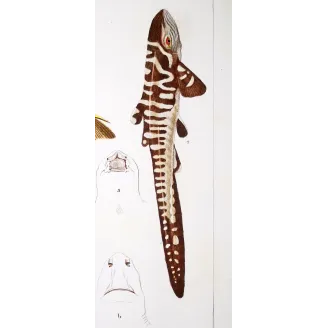
Dynamic 19th-century antique print with Spiny Dogfish and Tiger Catshark by Pierre Antoine Prêtre, contrasting forms and rich marine tones.
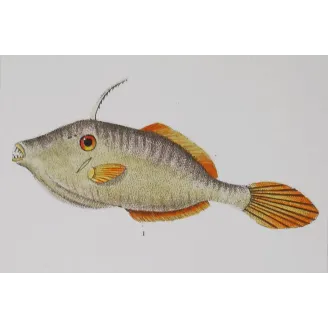
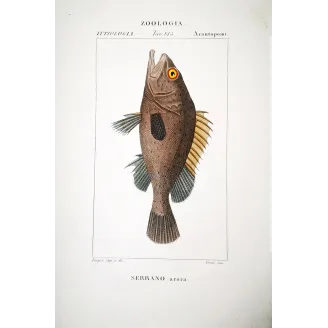
Geometric patterns and bold contrasts; elegant plate featuring a refined filefish with a dramatic American triggerfish.
Detailed 19th-century engraving of the Small-Spotted Catshark by Pierre Antoine Prêtre, combining elegance and scientific accuracy.
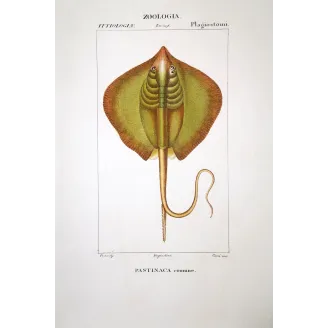
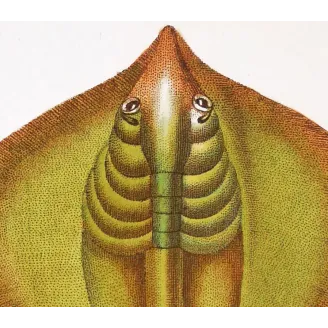
Graceful stingray with warm olive-brown tones and a long tail; tranquil marine subject with elegant presence.
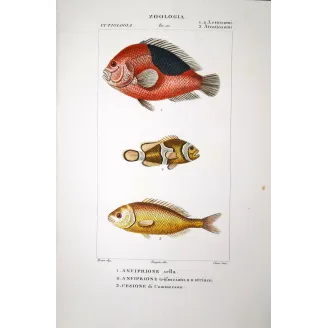
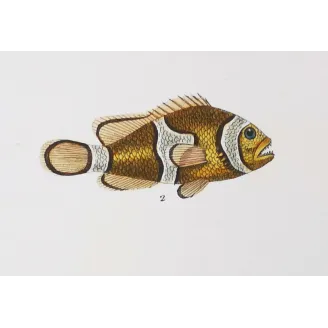
Charming clownfish with companion reef species, crisp colors and coral-reef appeal in a classic 19th-century plate.
Classic natural history pairingsilver argentine and spotted troutclean composition and fine stippling for timeless appeal.
Vivid 19th-century engraving of Mediterranean Rainbow Wrasse and Lesser Sandeel by Pierre Antoine Prêtre, bright palette and crisp lines.
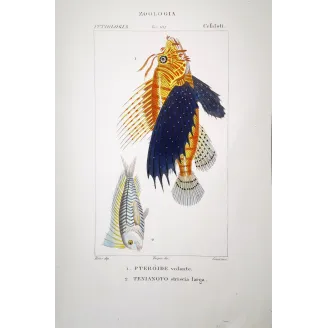
Vivid dual composition featuring the Flying Gurnard and Striped Wrasse, blending blue and golden hues.
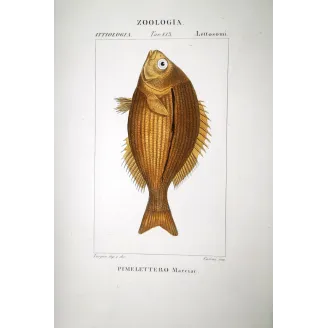
Silver and golden marine pair with crisp scales; a balanced 19th-century composition for refined coastal interiors.
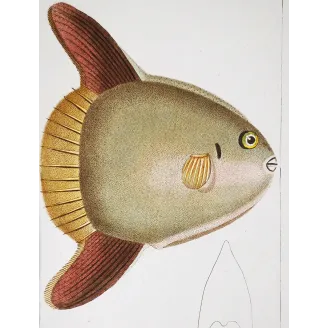
Ocean Sunfish illustrated with refined color balance and elegant detail.
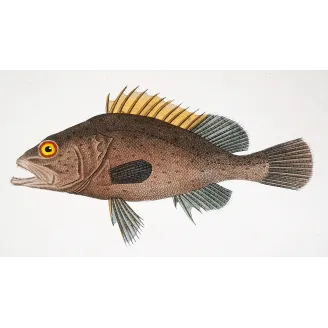
Robust Brown Grouper illustrated with fine detail and earthy, natural tones.
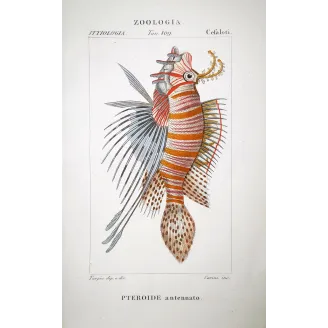
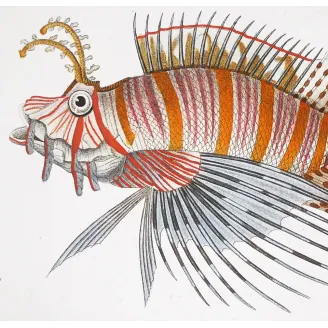
Striking depiction of the Antennata Lionfish with vivid red and orange fins, full of exotic elegance.
Brilliant peacock wrasse with patterned fins and a silver boga; lively palette and refined stippling for elegant interiors.
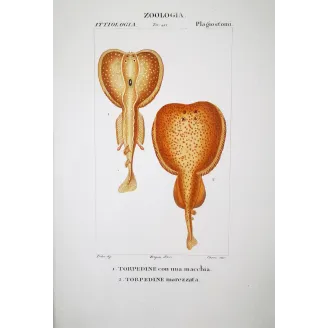
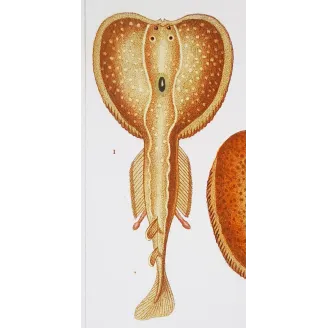
Spectacular electric rays with mottled patterns and sculptural forms; a rare and dramatic Antique Print for collectors.
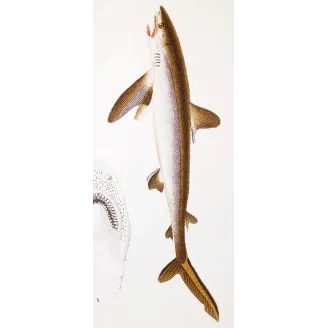
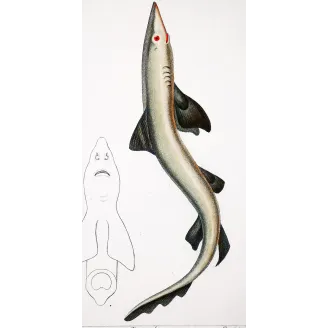
Refined 19th-century hand-colored engraving of the Tope Shark by Pierre Antoine Prêtre, notable for its elegant form and tonal realism.
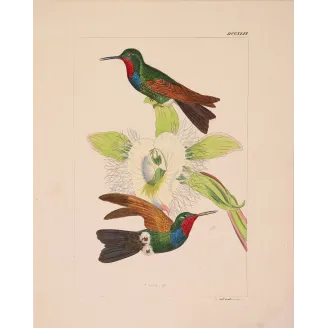
Original nineteenth-century hand-colored engraving depicting the Purple-throated Carib (Eulampis jugularis), one of the most spectacular Caribbean hummingbirds illustrated in Ludwig Reichenbach’s Trochilinarum Enumeratio.
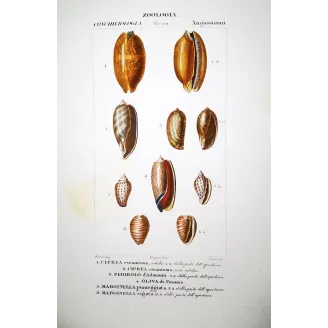
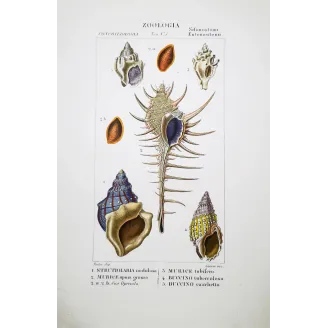
Fine antique print of Ciprea, Peribolo, Marginella highly decorative sea shells by Prêtre.
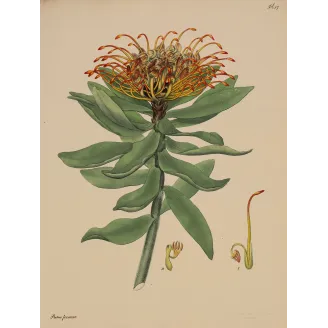
An original hand-coloured copper engraving of Protea formosa, published by Henry Charles Andrews in The Botanist's Repository (1799). Distinguished by its spectacular upward flowering styles, exceptionally delicate watercolour and refined botanical execution, this plate represents one of the most elegant Protea engravings of the series.
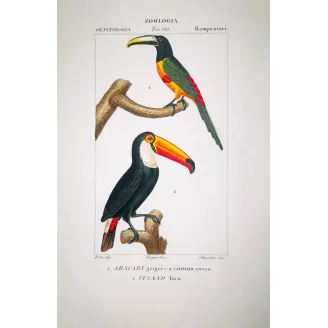
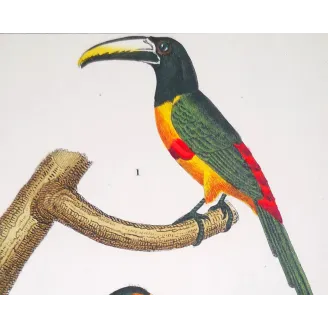
Colored illustration depicting two South American toucans: the Toco and the Red-belted Aracari.
Original 1931 pochoir print by Émile-Allain Séguy. From the rare portfolio *Prismes*.
Grenadier and Ribbonfish illustrated with refined color balance and elegant detail.