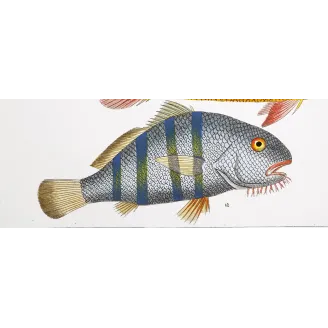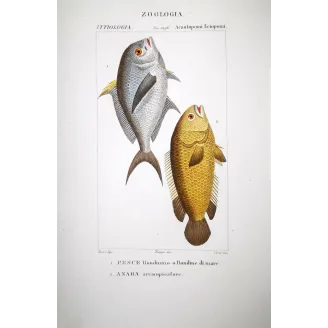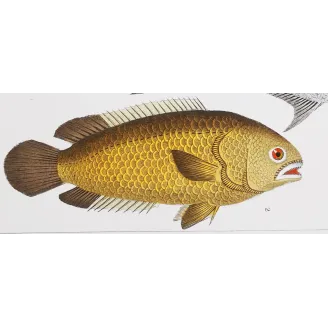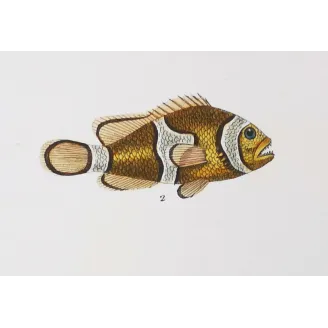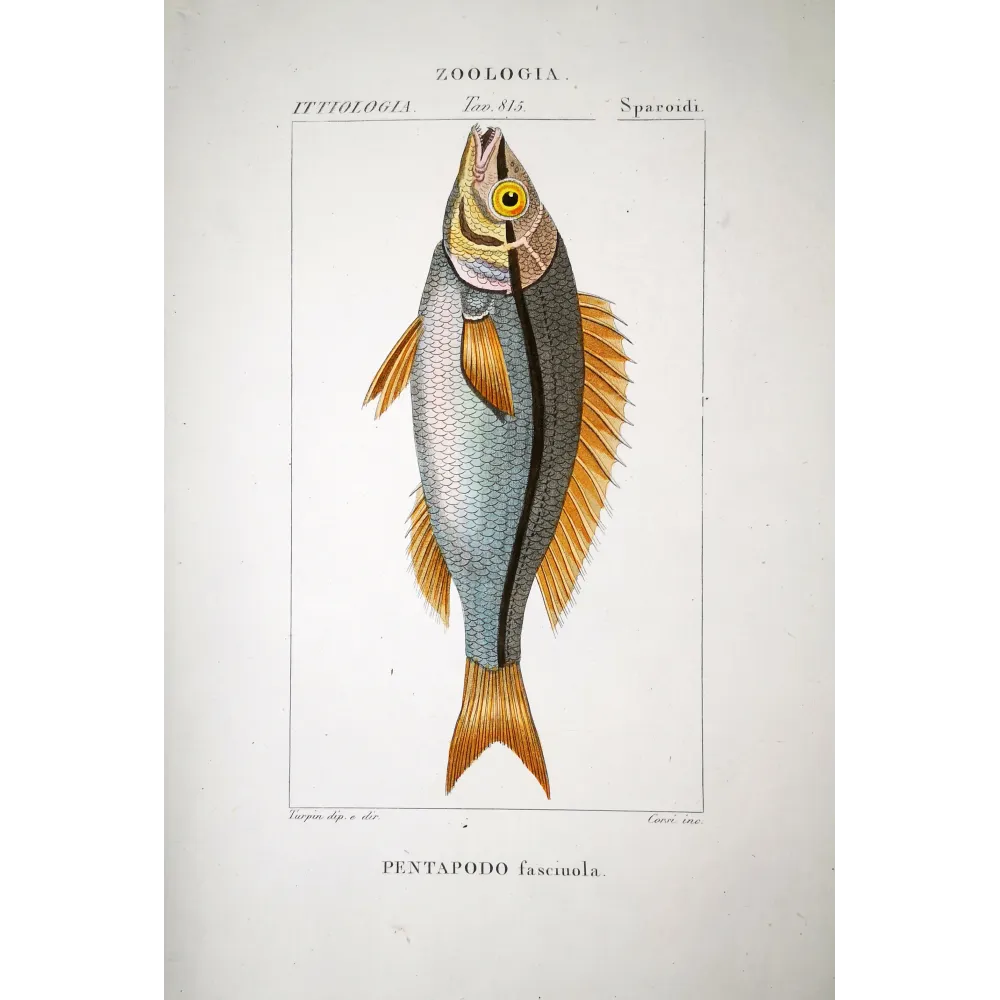
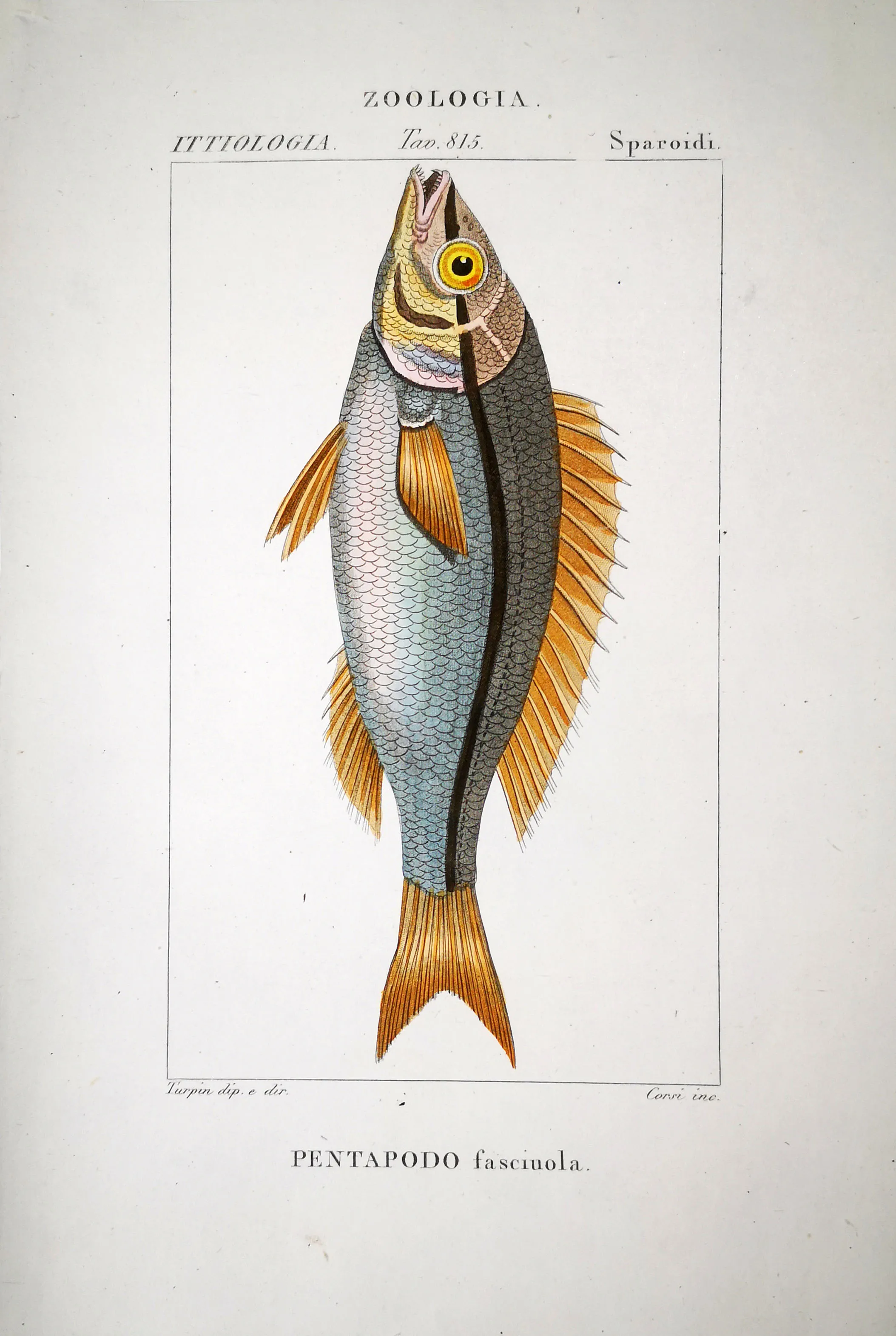
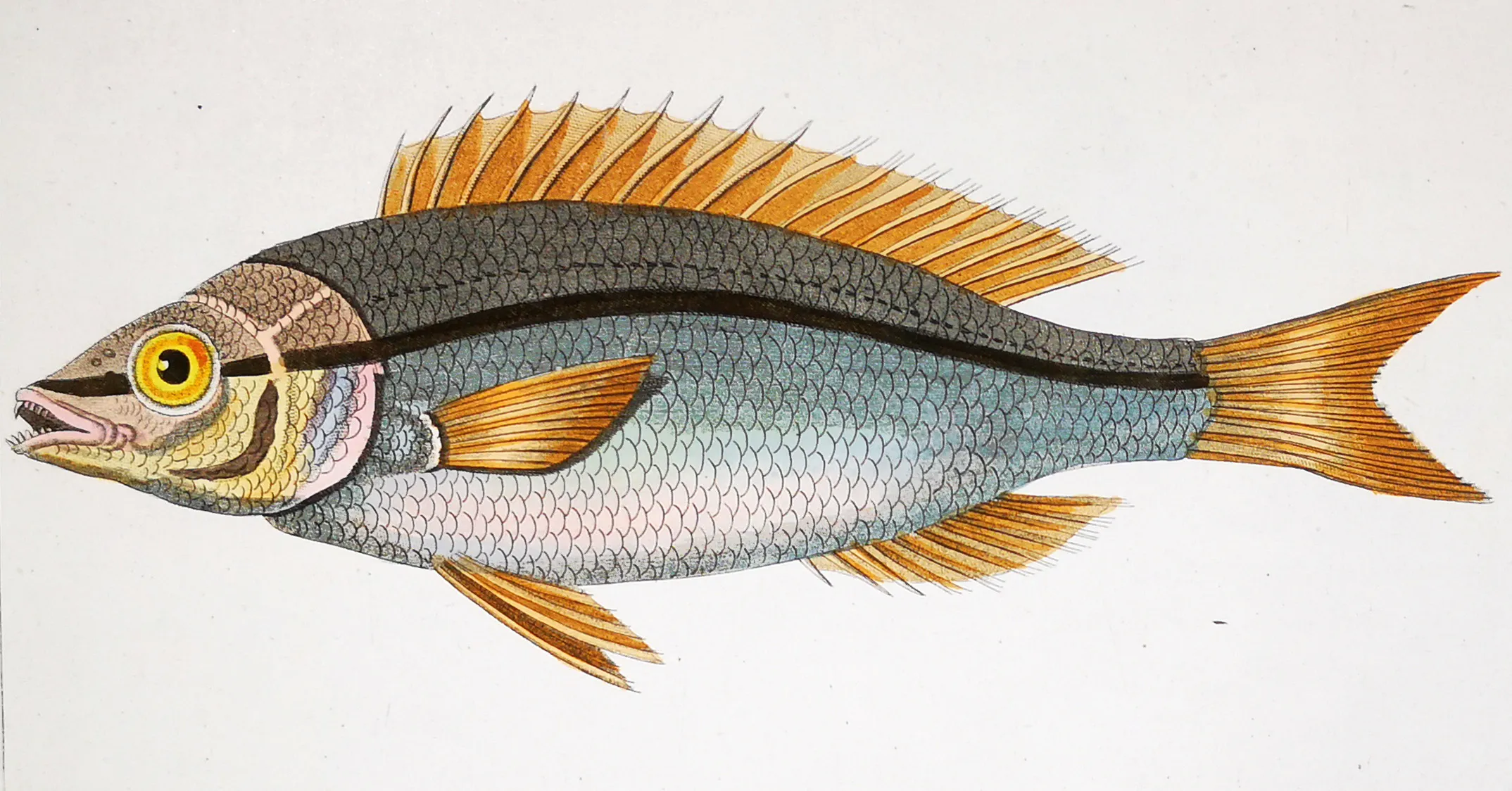
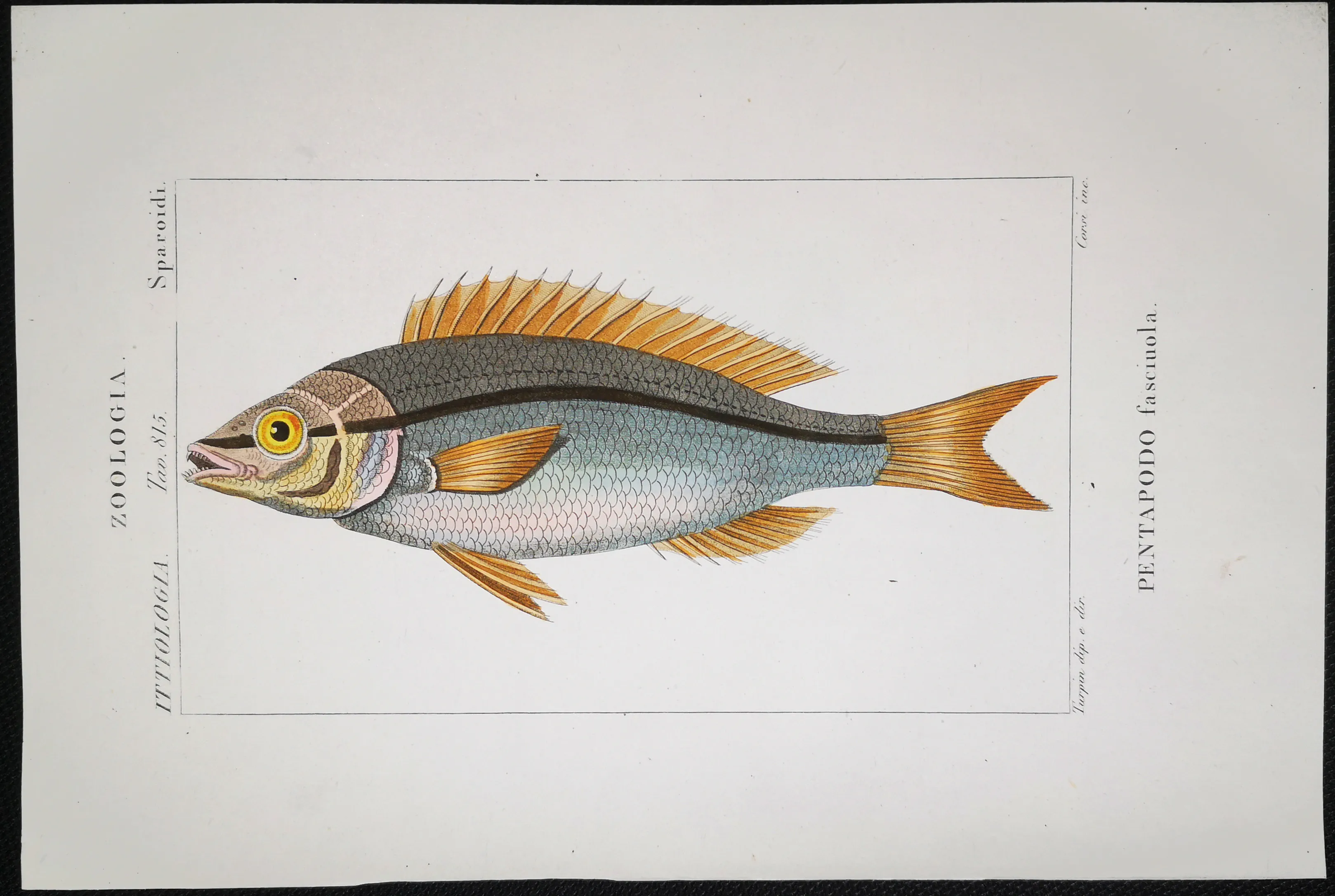

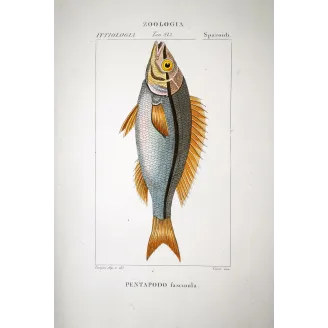
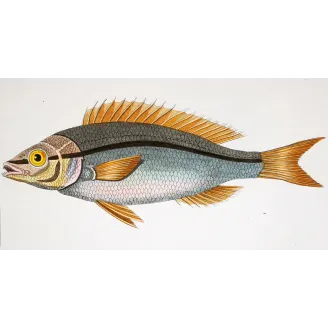
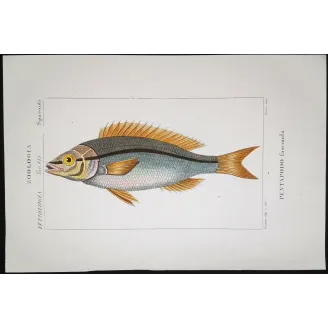
Elegant Pentapodus fish with shimmering orange-silver tones and refined aquatic poise.
 Delivery policy
Your print will be carefully prepared and shipped worldwide via trusted couriers (UPS or similar).
 Authentic antique prints
Original engravings from the 17th–19th century.
This refined zoological engraving depicts the Pentapodus Fish, Pentapodus fasciatus, presented in strict profile with an emphasis on proportion and diagnostic detail. The specimen’s form is rendered with disciplined clarity, allowing fin placement, scale structure, and lateral line to be read as primary scientific information.
Unlike plates designed for ornament alone, this work prioritizes morphological intelligibility. The scale field is engraved with consistent precision, the body mass is modelled through subtle tonal transitions, and the hand-colouring is calibrated to reinforce structure: cool silvery greys are warmed by amber fins and restrained golden accents.
The plate belongs to the Italian edition of the Dizionario di Scienze Naturali (Florence, Battelli press), one of the most ambitious encyclopedic scientific enterprises of its time, for which Pierre Antoine Prêtre produced some of the finest zoological illustrations of marine life.
— • —
The composition is horizontally balanced and deliberately calm. A luminous body field occupies the central register, while warm fins provide a structured cadence at the dorsal, ventral, and caudal edges. The sharply defined eye acts as a focal point that animates the otherwise serene silhouette.
The restrained palette enhances the plate’s decorative versatility, allowing it to sit naturally within both classical and contemporary interiors. It reads as quietly sophisticated rather than theatrical — an engraving whose authority lies in refinement and precision.
The Pentapodus Fish, Pentapodus fasciatus, embodies the nineteenth-century ideal of the “readable specimen”: a form best understood through stable profile, proportion, and clearly observed surface detail. In the era before marine photography, antique fish engravings like this were essential scientific references, used to transmit knowledge through engraved line and controlled hand-applied colour. For collectors today, plates of elegantly banded or structured fishes offer a distinctive kind of marine art — refined, calm, and intellectually grounded — making this 19th-century marine life print especially suited to studies, libraries, and interiors that value understated authority.
This plate forms part of the historic Dizionario di Scienze Naturali, a monumental early nineteenth-century encyclopedic enterprise once preserved within a noble library and today housed in the Sacchetti Collection. Each engraving reflects a period in which scientific ambition was matched by exceptional artisanal execution — from the disciplined copperplate line to the luminous hand-colouring applied individually to every impression.
The result is not merely zoological documentation, but a refined synthesis of scholarship and craftsmanship, where artistic discipline elevates marine observation into a form of quiet visual authority. To discover the full story behind these rare prints and their noble provenance, we invite you to read our editorial feature “Not Just Another Print” — a tribute to the enduring harmony between knowledge, art and prestige embodied in the Dizionario di Scienze Naturali.
The engraving is in excellent antique condition. The sheet presents clean margins and a well-preserved impression. The paper is smooth early nineteenth-century wove paper (non-laid), consistent with Italian scientific editions of the period. No watermark has been observed. The original hand-colouring remains fresh and well preserved, with no visible losses.
For further context on Pierre Antoine Prêtre and his contribution to nineteenth-century zoological illustration, see our editorial feature:
Pierre Antoine Prêtre – Illustrator of Natural Science and Marine Life
Specific References
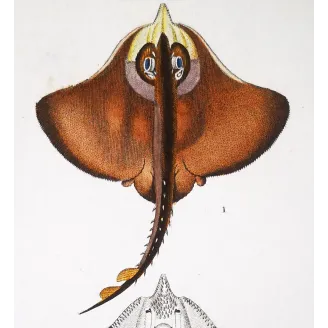
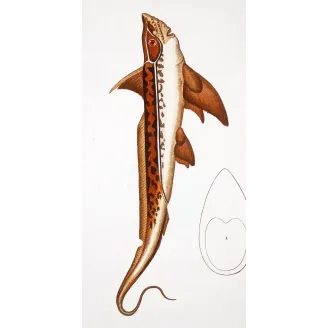
Elegant 19th-century hand-colored engraving of the Brown Ray by Pierre Antoine Prêtre, featuring graceful symmetry and refined marine tones.
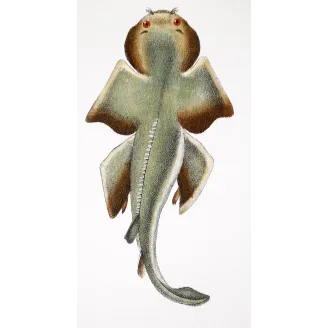
Graceful 19th-century engraving of the Angelshark by Pierre Antoine Prêtre, rich in soft tones and fine anatomical accuracy.
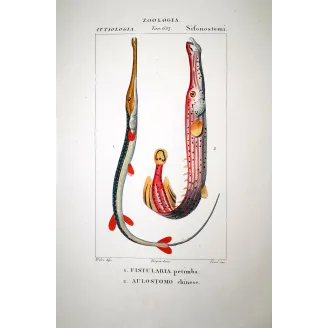
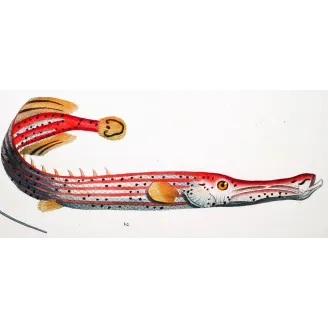
Striking plate with long, elegant cornetfish and trumpetfish, hand-colored with vivid reds and tealsbold marine decor statement.
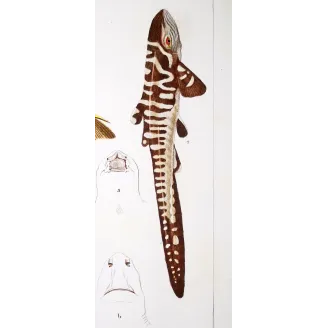
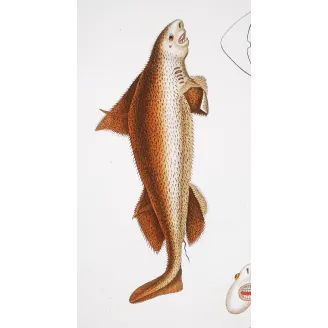
Dynamic 19th-century antique print with Spiny Dogfish and Tiger Catshark by Pierre Antoine Prêtre, contrasting forms and rich marine tones.
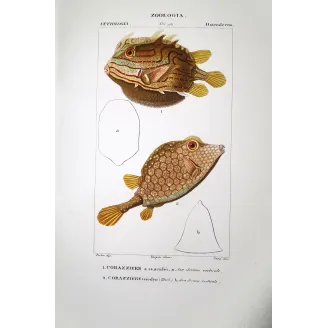
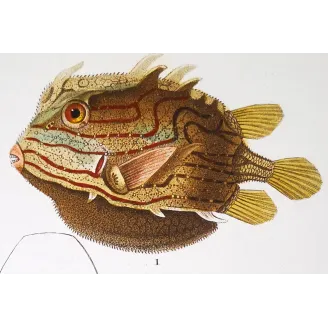
Remarkable plate with armored cowfish and boxfishhexagonal patterning and sculptural spines, superb for marine-themed decor.
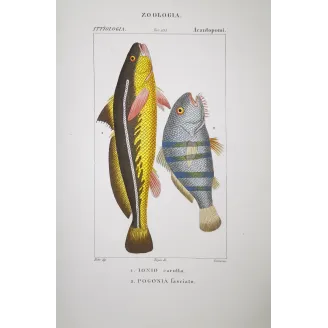
Graphic pairing with bold yellow stripe and banded companion; vibrant hand-coloring and clear natural history styling.
Rare 19th-century engraving of the Golden Chimaera by Pierre Antoine Prêtre, featuring warm tones and elegant anatomy.
Rare 19th-century engraving of the Angular Roughshark by Pierre Antoine Prêtre, remarkable for its unique texture and marine atmosphere.
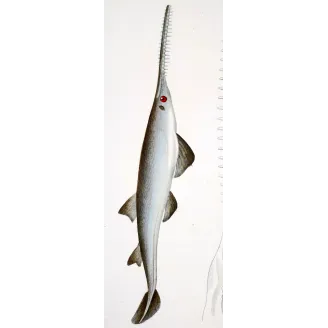
Exceptional 19th-century antique print by Pierre Antoine Prêtre depicting the majestic Sawfish with anatomical accuracy and rare charm.
Silver and golden marine pair with crisp scales; a balanced 19th-century composition for refined coastal interiors.
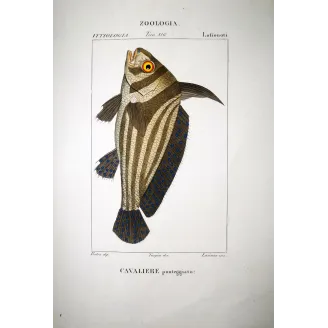
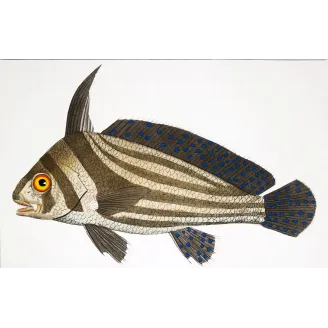
Striped body with blue-spotted fins; a refined 19th-century marine engraving ideal for study walls and coastal interiors.
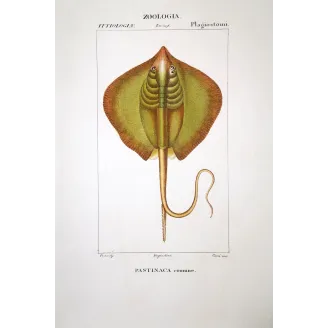
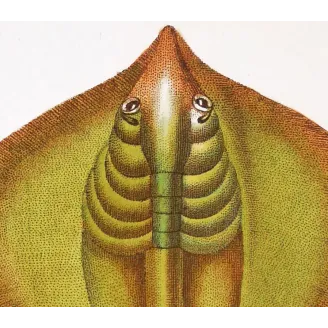
Graceful stingray with warm olive-brown tones and a long tail; tranquil marine subject with elegant presence.
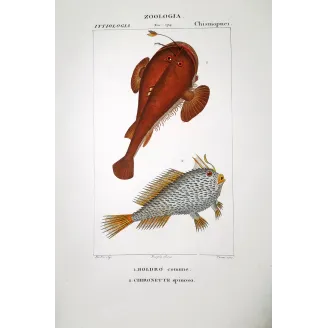
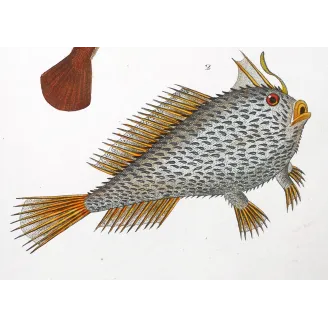
Iconic plate: dramatic anglerfish with lure and a spiny companionbold textures and collector appeal, a standout Antique Print.
Refined 19th-century hand-colored engraving of the Tope Shark by Pierre Antoine Prêtre, notable for its elegant form and tonal realism.
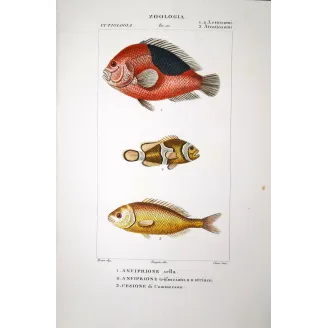
Charming clownfish with companion reef species, crisp colors and coral-reef appeal in a classic 19th-century plate.
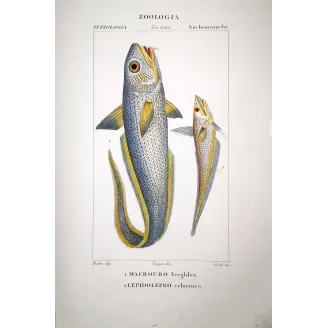
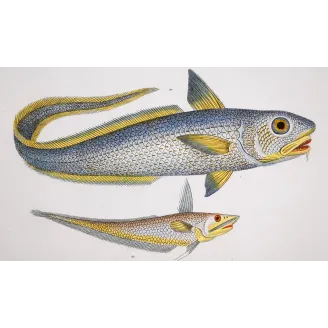
Grenadier and Ribbonfish illustrated with refined color balance and elegant detail.
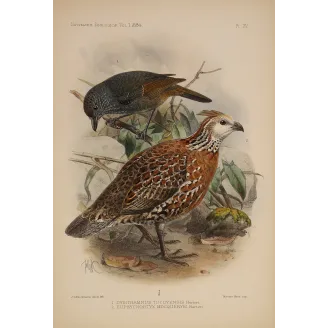
Original hand-coloured lithograph by John Gerrard Keulemans from Novitates Zoologicae, Volume I, Plate XV, published in 1894. The composition presents a Venezuelan White-streaked Antvireo above a richly patterned Crested Bobwhite, using vertical placement to suggest two distinct ecological levels within the same natural environment. Selective gum arabic remains visible on the pupils of both subjects and more extensively across the plumage of the lower bird. Printed by Mintern Bros. on substantial wove paper and preserved in very good condition.
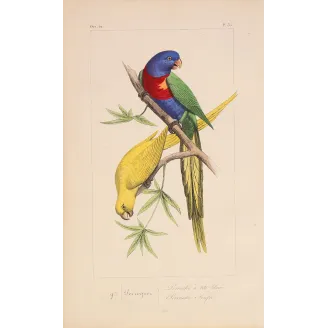
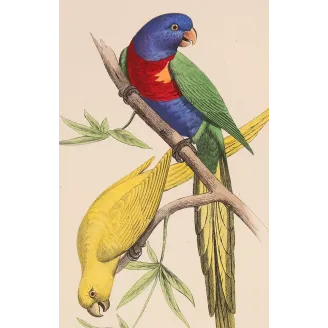
Highly decorative 19th-century engraving of exotic parakeets with vivid blue, red and yellow plumage. A striking and colorful antique bird print.
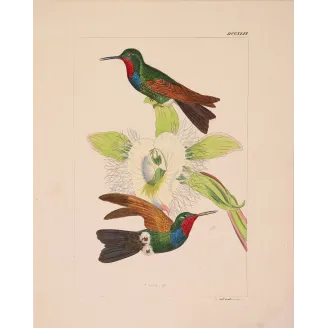
Original nineteenth-century hand-colored engraving depicting the Purple-throated Carib (Eulampis jugularis), one of the most spectacular Caribbean hummingbirds illustrated in Ludwig Reichenbach’s Trochilinarum Enumeratio.
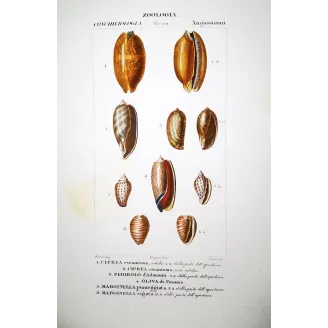
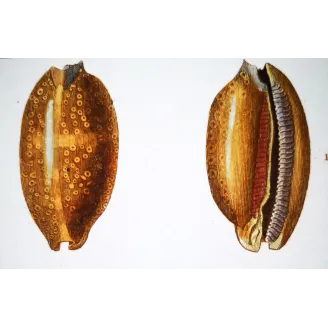
Fine antique print of Ciprea, Peribolo, Marginella highly decorative sea shells by Prêtre.
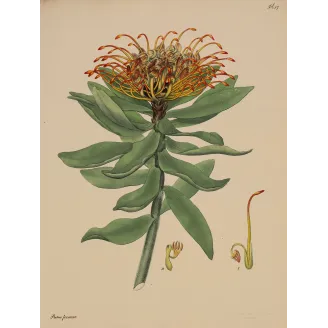
An original hand-coloured copper engraving of Protea formosa, published by Henry Charles Andrews in The Botanist's Repository (1799). Distinguished by its spectacular upward flowering styles, exceptionally delicate watercolour and refined botanical execution, this plate represents one of the most elegant Protea engravings of the series.
Colored illustration depicting two South American toucans: the Toco and the Red-belted Aracari.
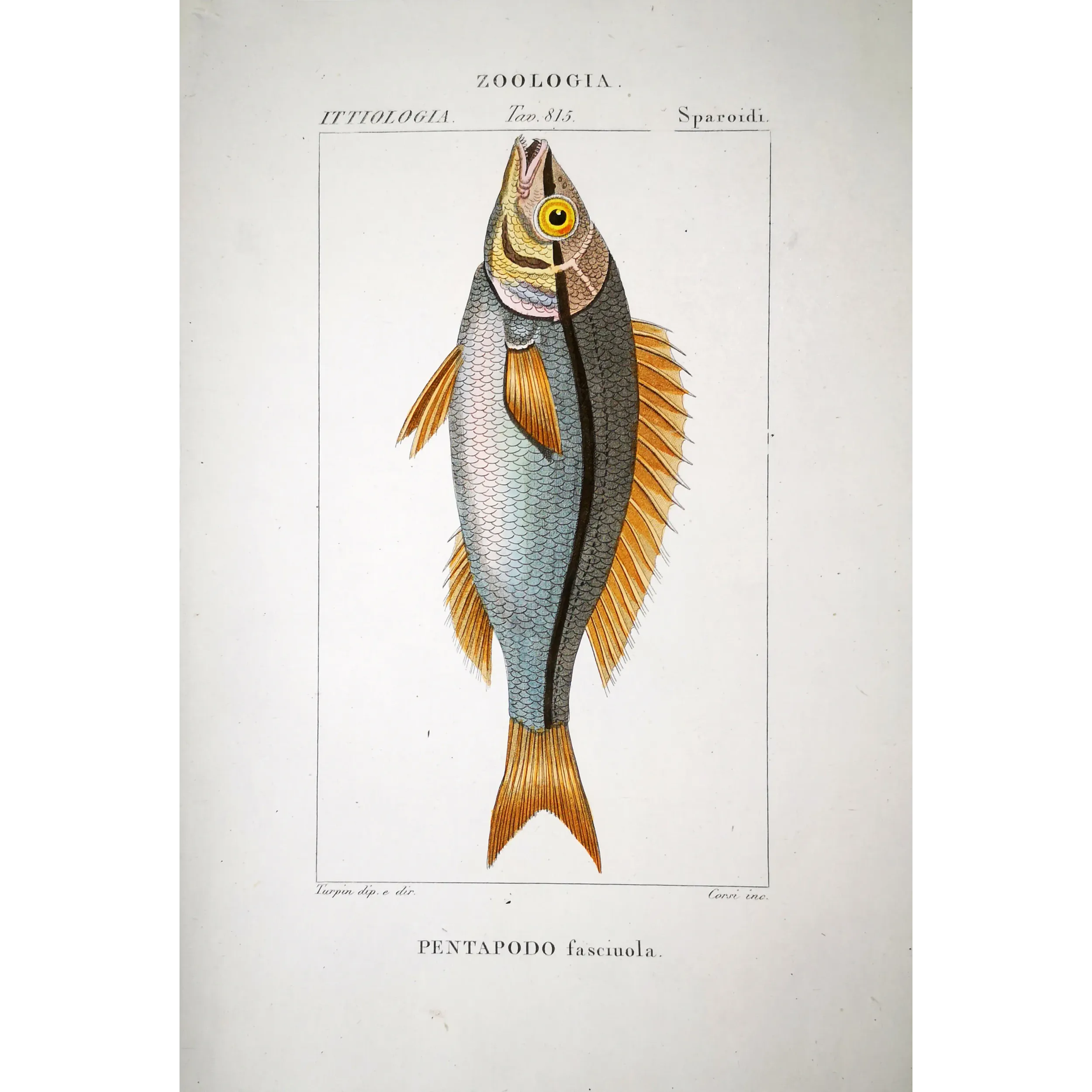
Elegant Pentapodus fish with shimmering orange-silver tones and refined aquatic poise.