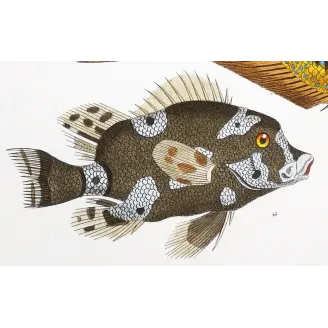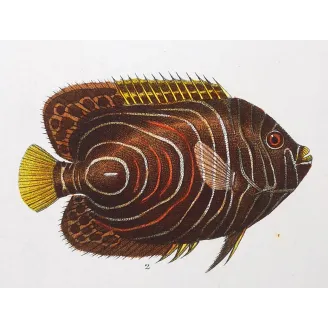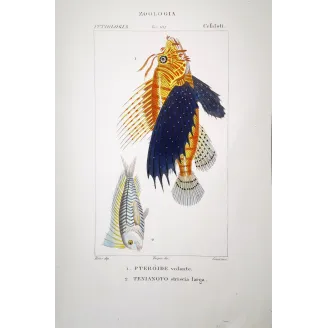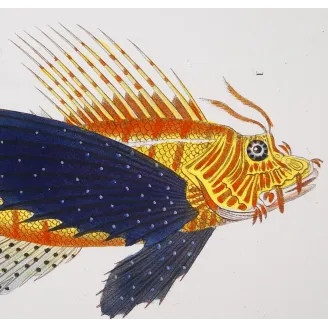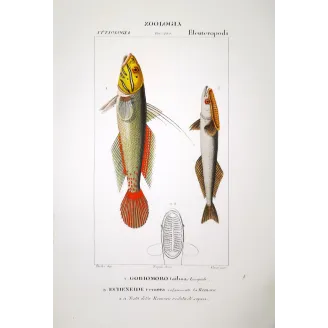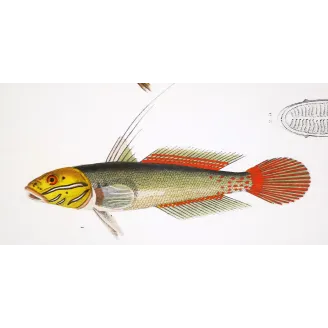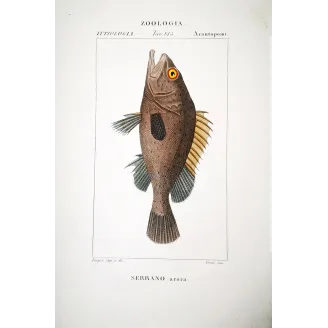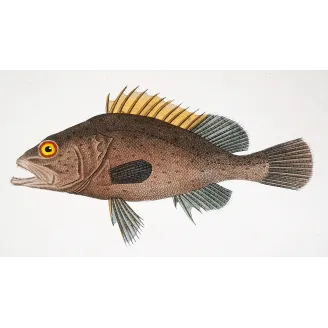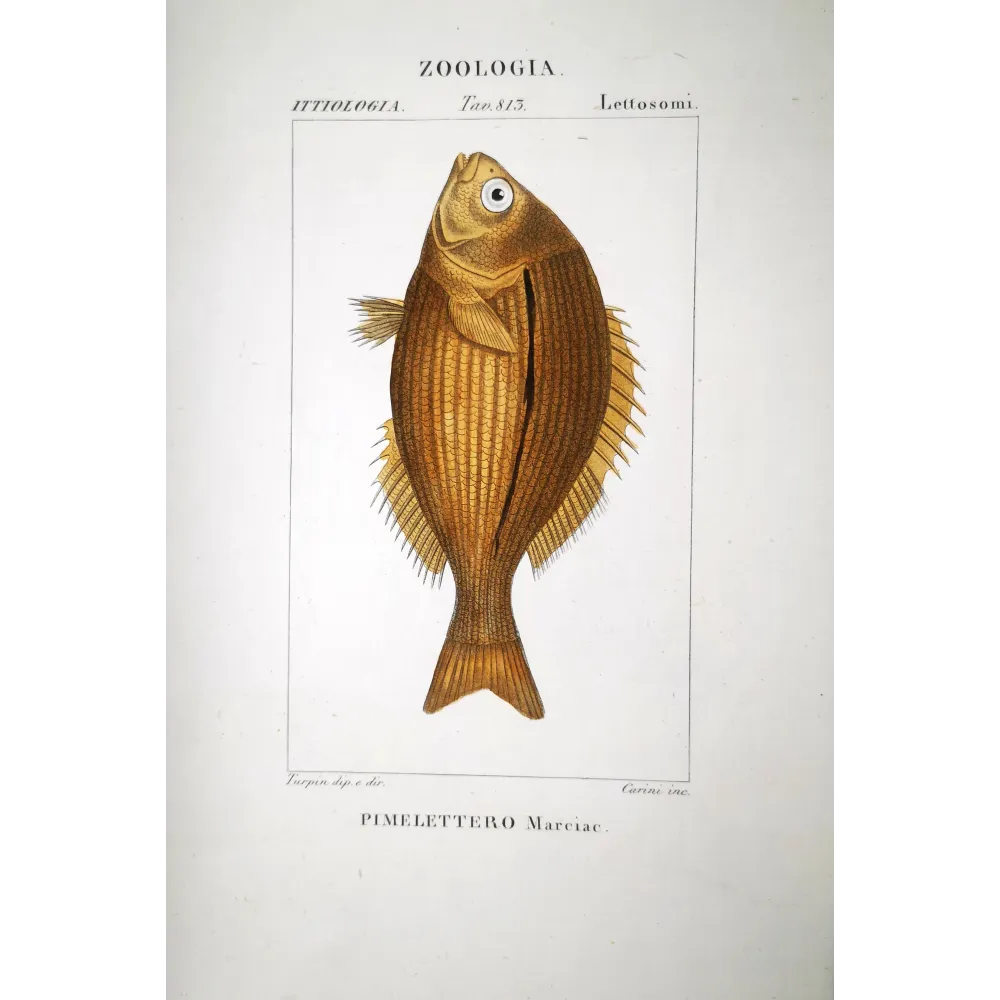
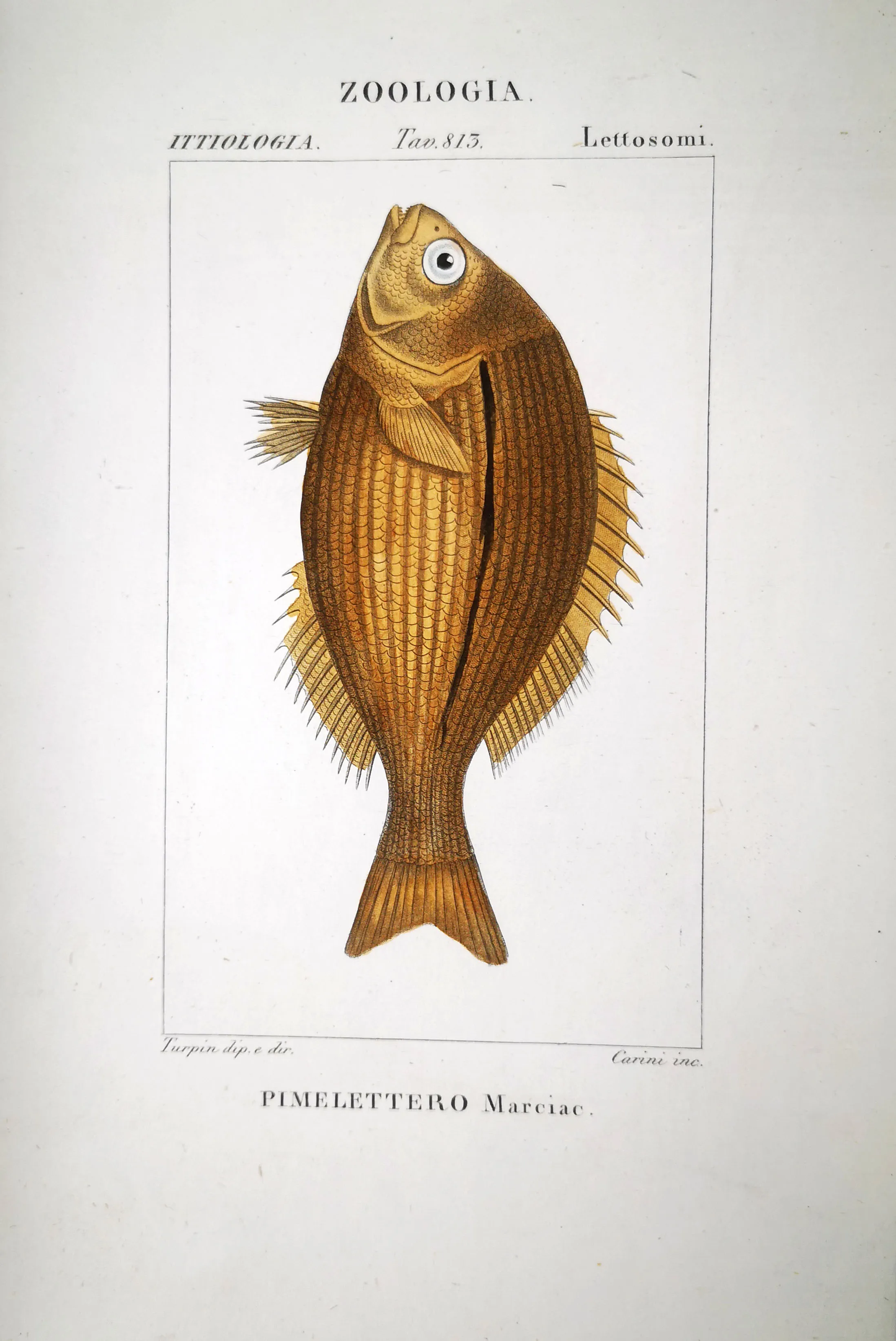
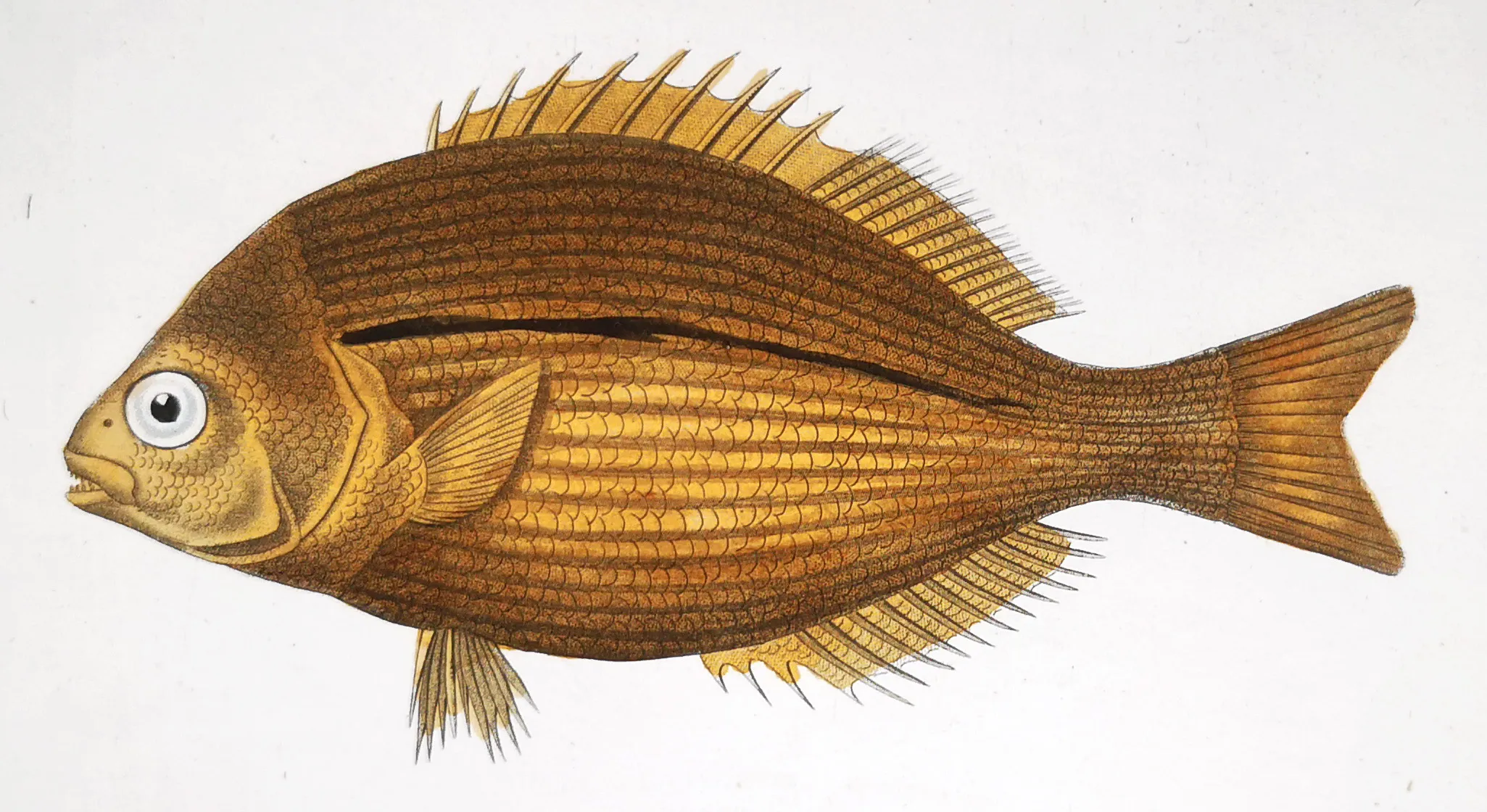
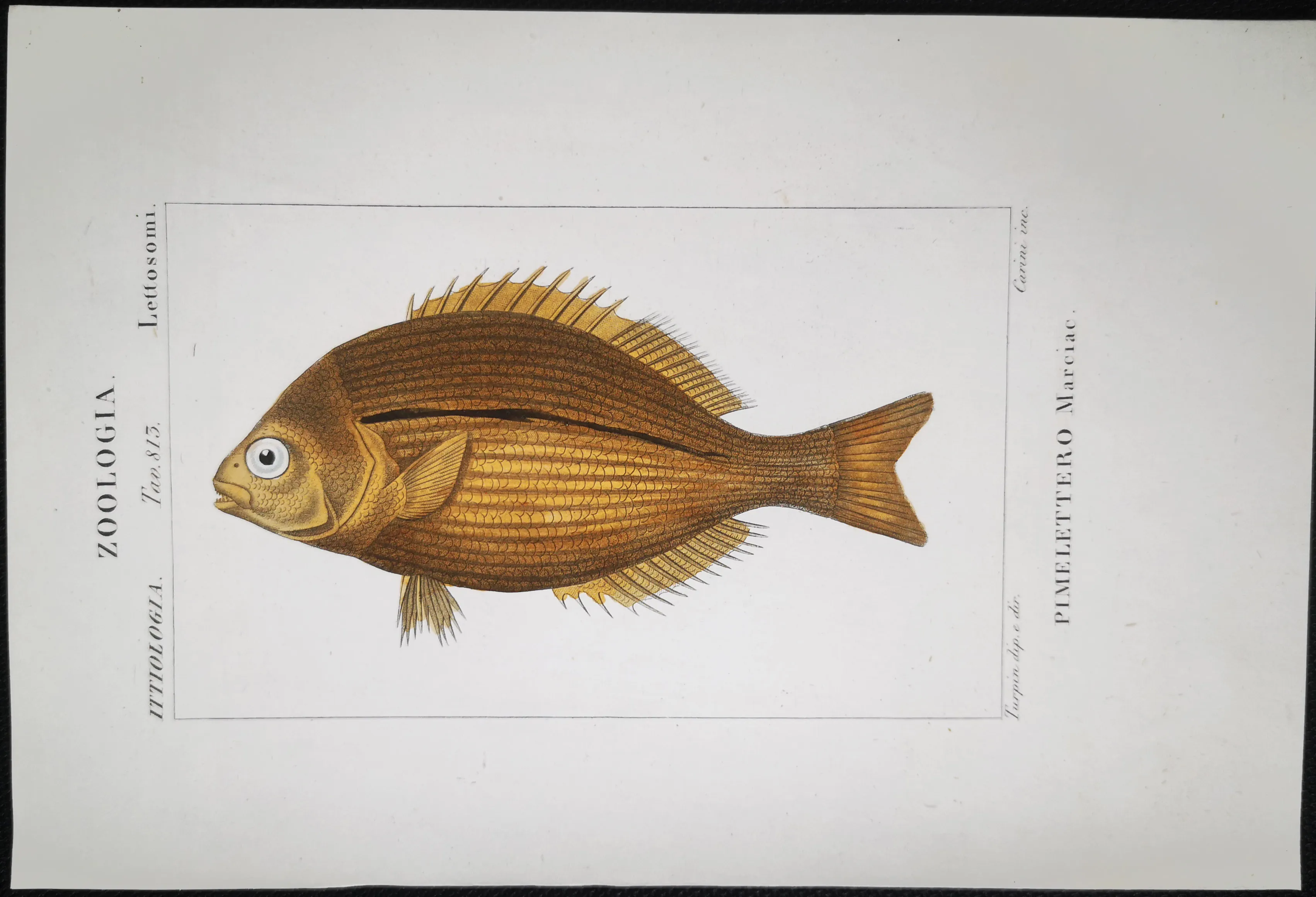

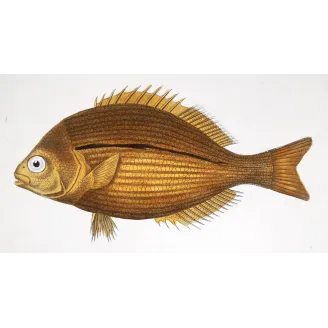
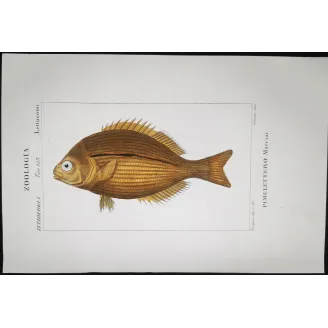
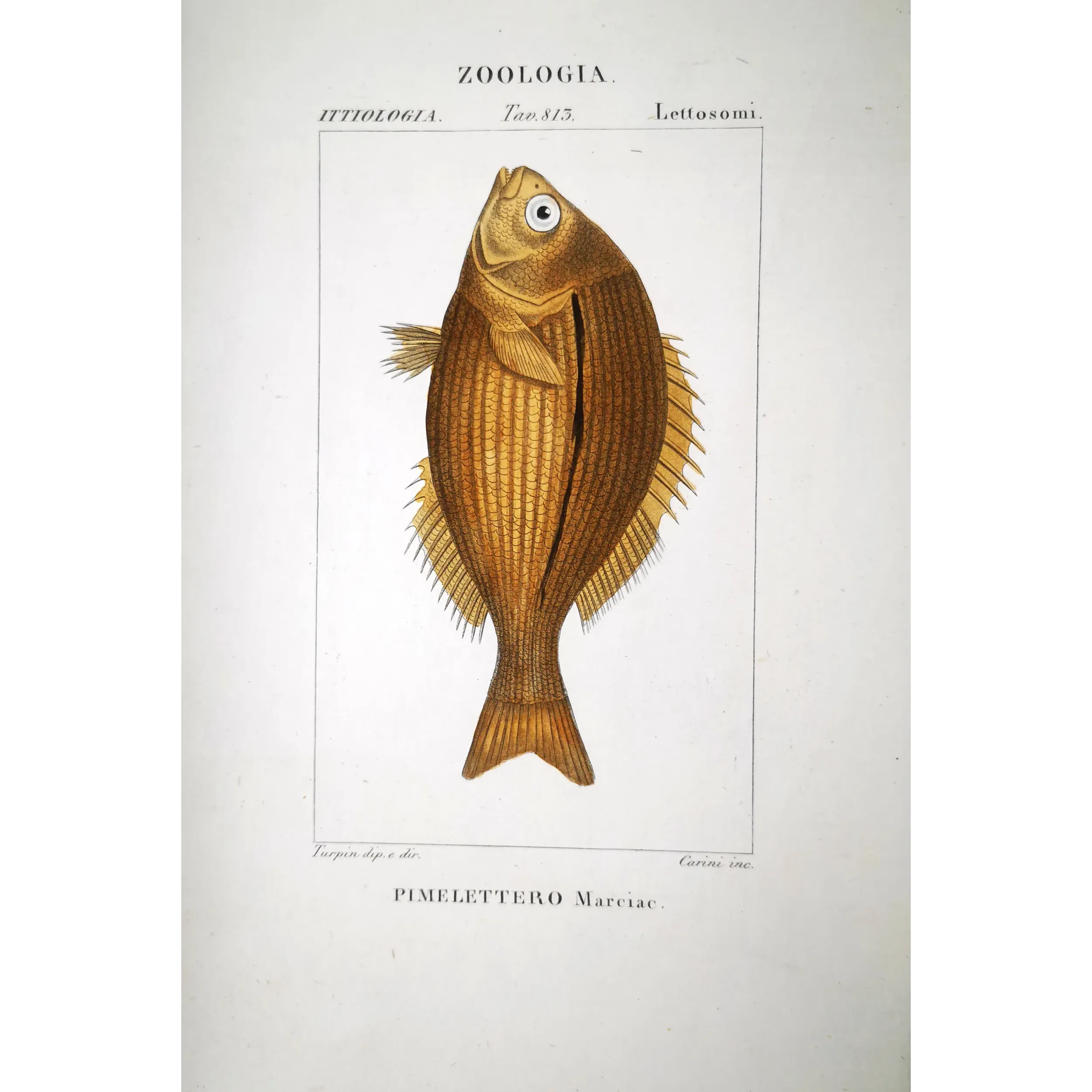
Goldband Fish illustrated with refined color balance and elegant detail.
 Delivery policy
Your print will be carefully prepared and shipped worldwide via trusted couriers (UPS or similar).
 Authentic antique prints
Original engravings from the 17th–19th century.
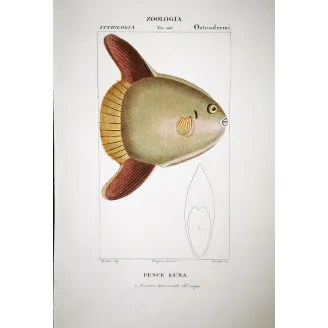
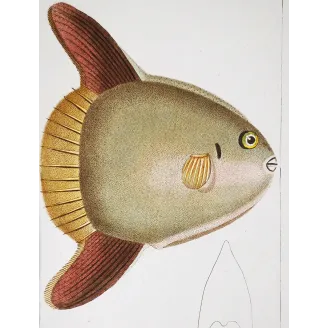
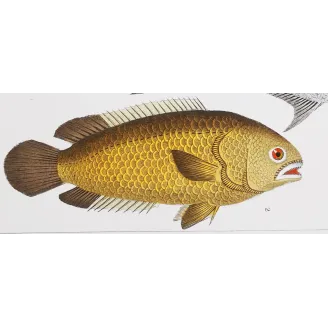
This original hand-colored engraving depicts the Goldband Fish, Pimelepterus muraeae, presented in a calm lateral profile that emphasizes proportion, surface rhythm, and the disciplined language of scientific observation. The specimen is rendered with controlled clarity, allowing the viewer to read body mass, fin architecture, and scale structure as primary information.
Rather than relying on theatrical colour, the plate builds presence through tonal coherence. Warm golden browns and honeyed highlights are laid over a finely engraved scale field, while the dorsal fin spines and secondary fins introduce a delicate, almost textile-like cadence across the silhouette.
The engraving belongs to the Italian edition of the Dizionario di Scienze Naturali (Florence, Battelli press), one of the most ambitious encyclopedic scientific enterprises of its time, for which Pierre Antoine Prêtre produced a distinguished series of marine life plates.
— • —
The composition is deliberately minimal, isolating the fish against a generous white field to heighten precision and elegance. The scale pattern is engraved with consistent structure, and the body is modelled through subtle gradation rather than heavy outline, creating a refined, luminous surface.
Chromatically, the plate is unusually interior-friendly: amber tones and soft browns read as warm neutrals, while the clean margins preserve a sense of quiet museum-like authority.
The Goldband Fish, Pimelepterus muraeae, exemplifies the nineteenth-century preference for “readable” marine specimens — fishes whose identifying character was captured through profile, fin structure, and surface patterning. In the pre-photographic era, antique fish engravings like this served as both scientific reference and cultural object: they translated the sea into a legible catalogue of forms, circulating knowledge through engraved line and controlled hand colour. For collectors today, this 19th-century marine life print offers a distinctly refined aesthetic — understated, warm-toned, and grounded in the intellectual prestige of antique scientific illustration.
This plate forms part of the historic Dizionario di Scienze Naturali, a monumental early nineteenth-century encyclopedic enterprise once preserved within a noble library and today housed in the Sacchetti Collection. Each engraving reflects a period in which scientific ambition was matched by exceptional artisanal execution — from the disciplined copperplate line to the luminous hand-colouring applied individually to every impression.
The result is not merely zoological documentation, but a refined synthesis of scholarship and craftsmanship, where artistic discipline elevates marine observation into a form of quiet visual authority. To discover the full story behind these rare prints and their noble provenance, we invite you to read our editorial feature “Not Just Another Print”.
The engraving is in excellent antique condition. The sheet presents clean margins and a well-preserved impression. The paper is smooth early nineteenth-century wove paper (non-laid), consistent with Italian scientific editions of the period. No watermark has been observed. The original hand-colouring remains fresh and well preserved, with no visible losses.
For further context on Pierre Antoine Prêtre and his contribution to nineteenth-century zoological illustration, see our editorial feature:
Pierre Antoine Prêtre – Illustrator of Natural Science and Marine Life
Specific References
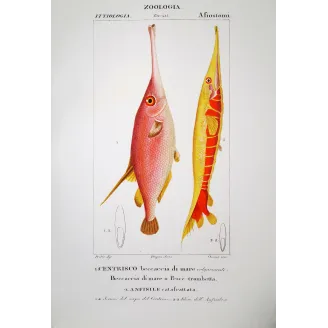
Vivid coral-pink snipefish with golden pipefish; long elegant silhouettes, striking color contrast for refined marine decor.
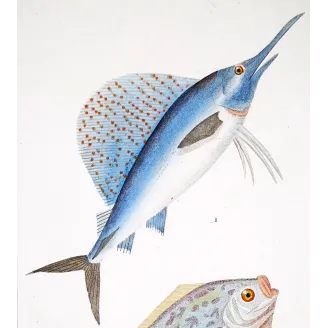
Elegant 19th-century antique print by Pierre Antoine Prêtre with Sailfish and Moonfish, luminous blues and refined detailing.
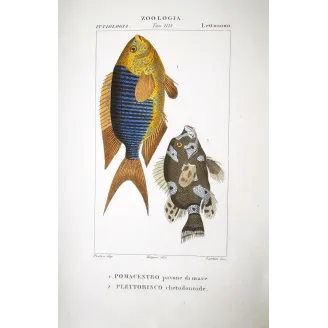
Two contrasting species in one plate: a delicate Damselfish and a robust Triggerfish, rich in color and texture.
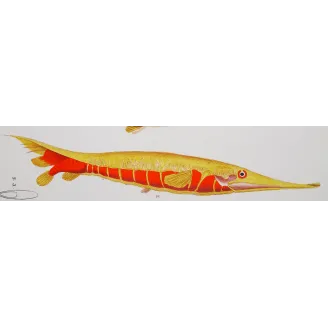
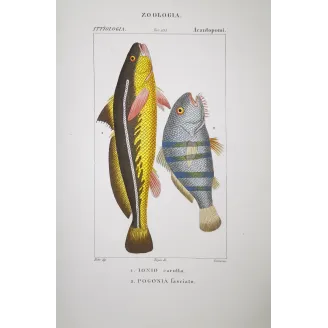
Graphic pairing with bold yellow stripe and banded companion; vibrant hand-coloring and clear natural history styling.
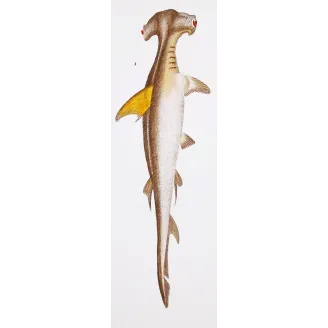
Vibrant 19th-century antique print by Pierre Antoine Prêtre depicting a Hammerhead Shark and Smoothhound, remarkable for color contrast and composition.
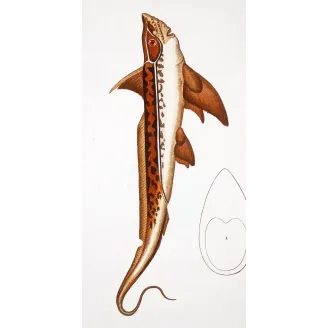
Rare 19th-century engraving of the Golden Chimaera by Pierre Antoine Prêtre, featuring warm tones and elegant anatomy.
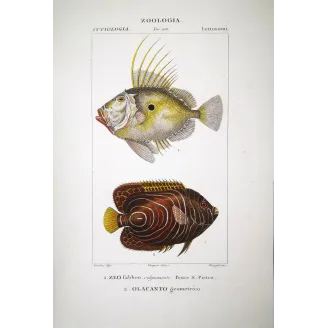
Iconic plate with the celebrated John Dory and a striking angelfishsuperb color contrasts and collector appeal.
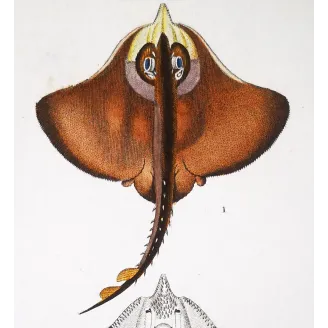
Elegant 19th-century hand-colored engraving of the Brown Ray by Pierre Antoine Prêtre, featuring graceful symmetry and refined marine tones.
Vivid dual composition featuring the Flying Gurnard and Striped Wrasse, blending blue and golden hues.
Distinctive composition with streamlined forms and the famous remora disktechnical curiosity with refined aesthetics.
Ocean Sunfish illustrated with refined color balance and elegant detail.
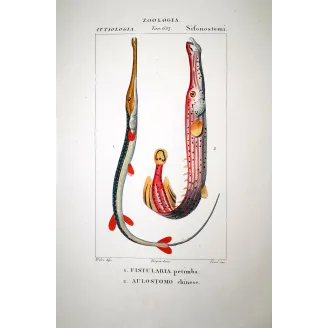
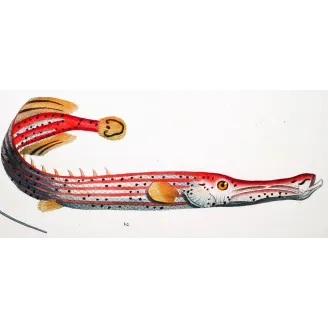
Striking plate with long, elegant cornetfish and trumpetfish, hand-colored with vivid reds and tealsbold marine decor statement.
Spectacular electric rays with mottled patterns and sculptural forms; a rare and dramatic Antique Print for collectors.
Robust Brown Grouper illustrated with fine detail and earthy, natural tones.
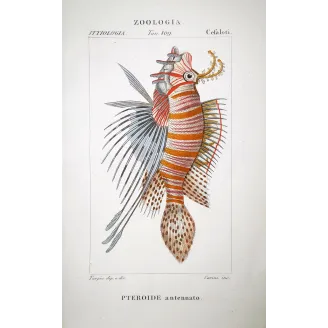
Striking depiction of the Antennata Lionfish with vivid red and orange fins, full of exotic elegance.
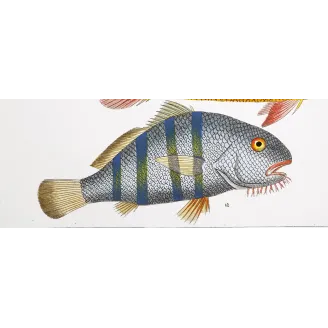
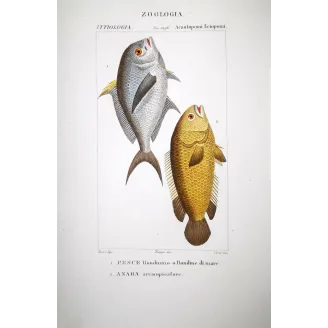
Silver and golden marine pair with crisp scales; a balanced 19th-century composition for refined coastal interiors.
Original 1774 engraving by Jacob LâAdmiral: Swallowtail Butterfly on Thistle.
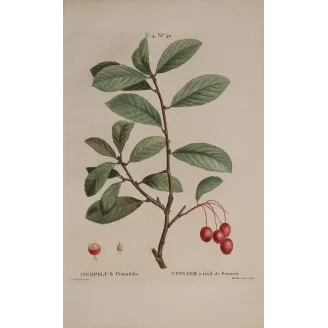
Original botanical engraving of Mespilus prunifolia by Redouté. Elegant branch and fruit, perfect for refined interiors.
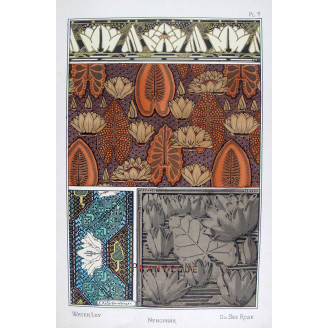
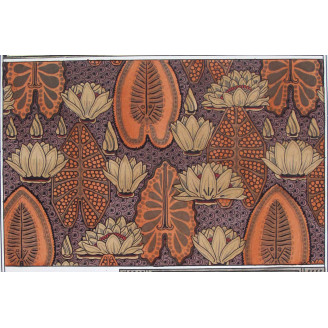
his extraordinary plate by Eugène Grasset features the water-lily (Nénuphar), rendered with both botanical accuracy and ornamental imagination.
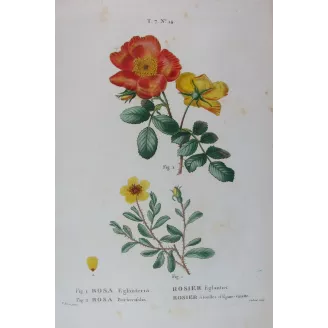
Eglantine & Berberis-leaved Rose Rosier à feuilles d'Épine-vinette Original hand-colored botanical engraving by Pancrace Bessa.
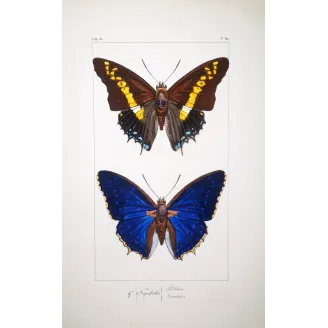
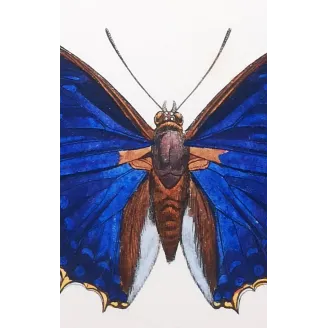
Original 1835 hand-colored copper engraving depicting the butterflies Pollux and Eurilochus. A visually striking double-specimen plate from Hippolyte Lucas’ celebrated Exotic Butterflies, engraved by Pauquet, with strong appeal as natural history art and antique butterfly wall art.
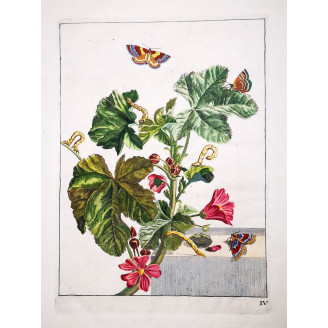
Original 1774 engraving by Jacob L'Admiral: Red Twin-spot Carpet on Mallow.
18th-century hand-colored engraving of the Wilding or Crab Tree by Elisabeth Blackwell, with blossom and fruit details.
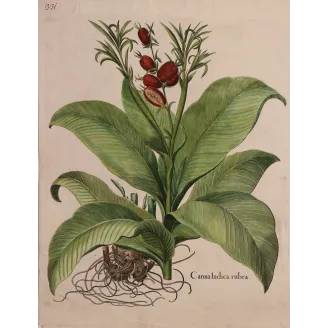
Original seventeenth-century hand-colored botanical engraving of Canna Indica rubra from Basilius Besler's monumental Hortus Eystettensis, first published in 1613. The imposing composition combines sweeping green foliage, exposed roots and vivid red botanical forms, while the laid-paper sheet preserves a watermark and the remarkable printed autumnal heading “SECVNDVS ORDO COLLECTARVM PLANTARVM AVTVMNALIVM” on its verso.
Goldband Fish illustrated with refined color balance and elegant detail.