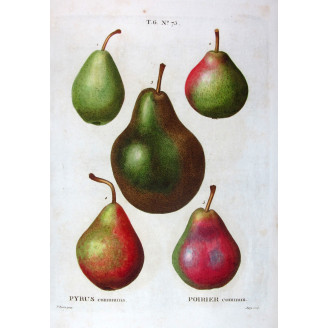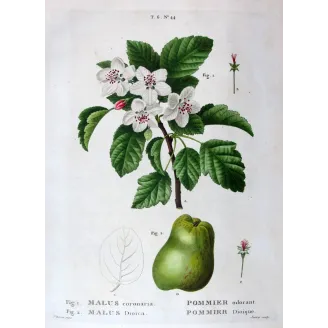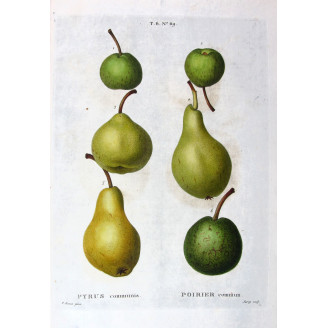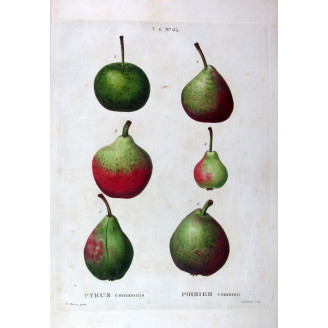
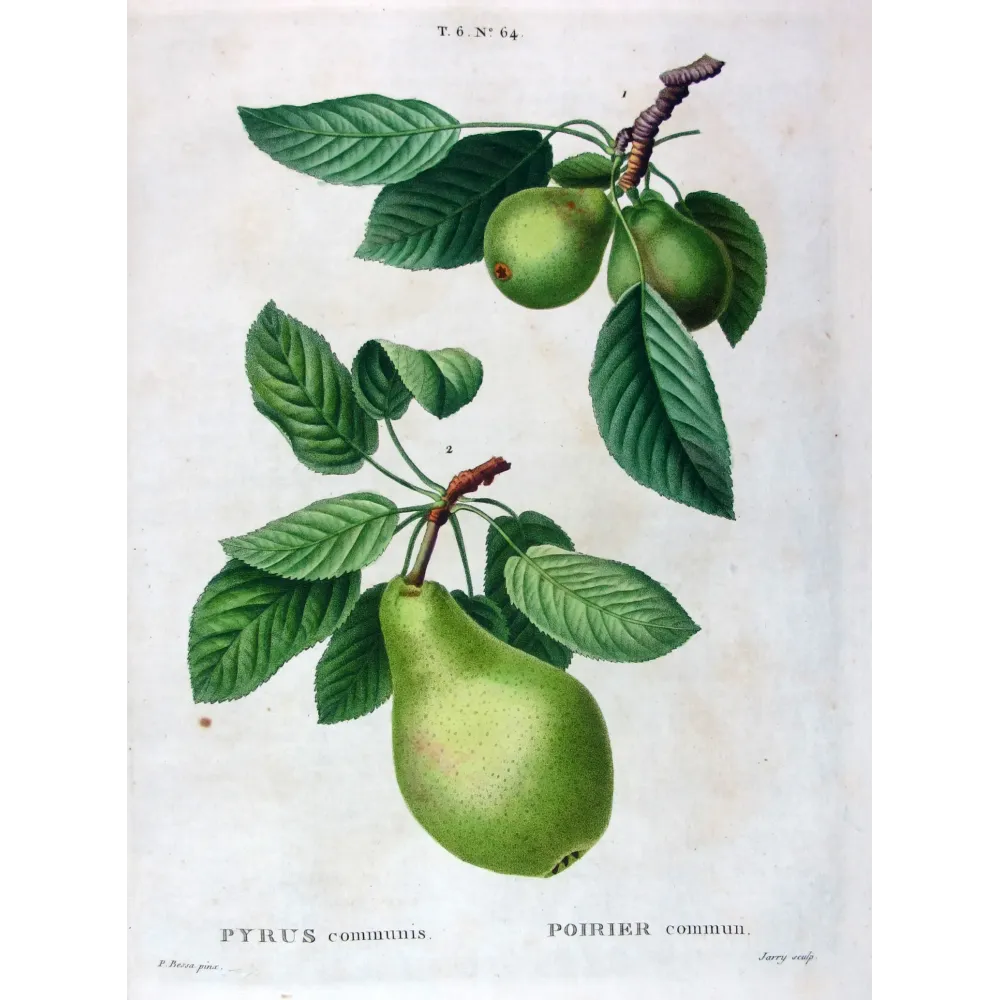
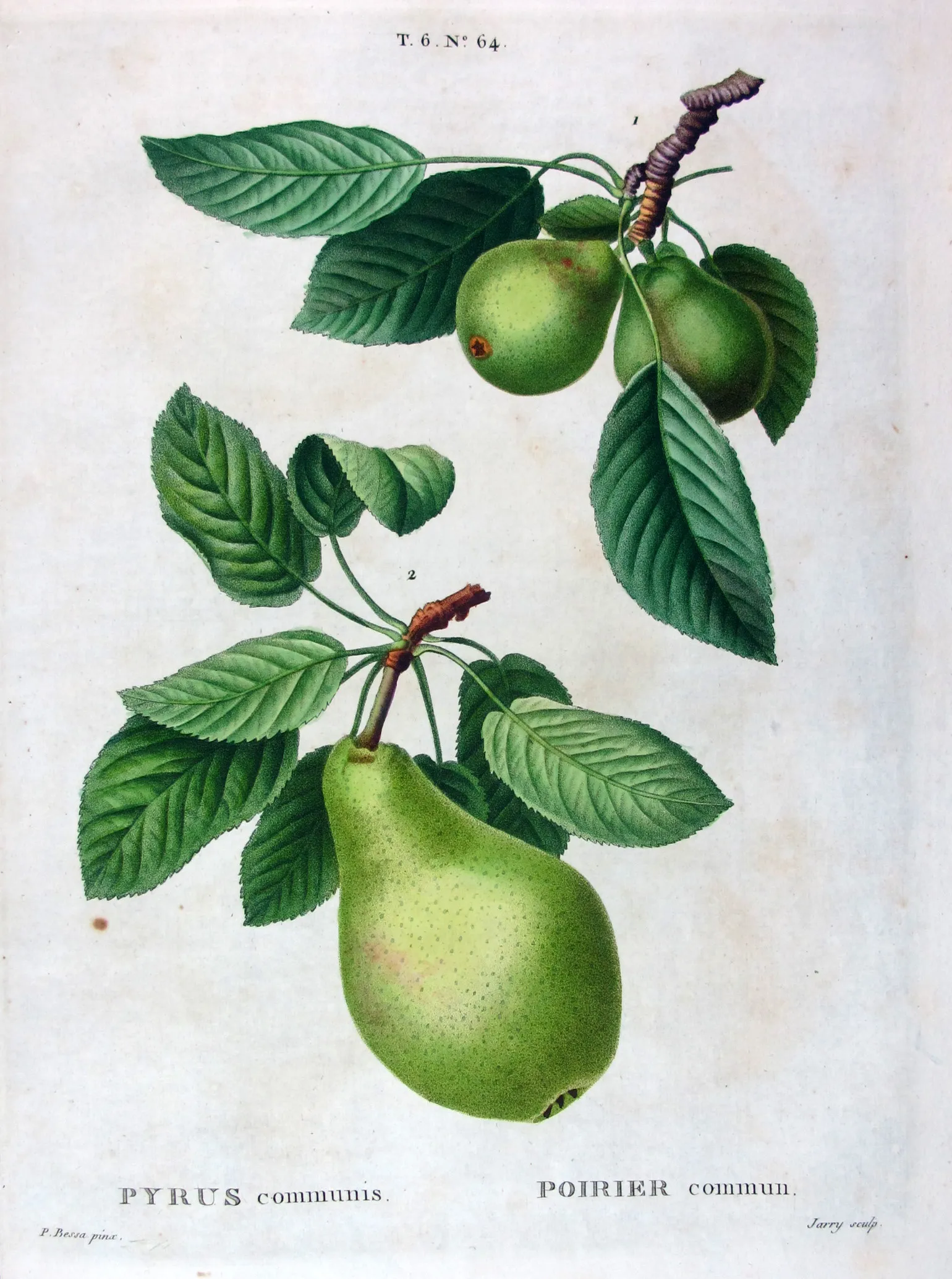
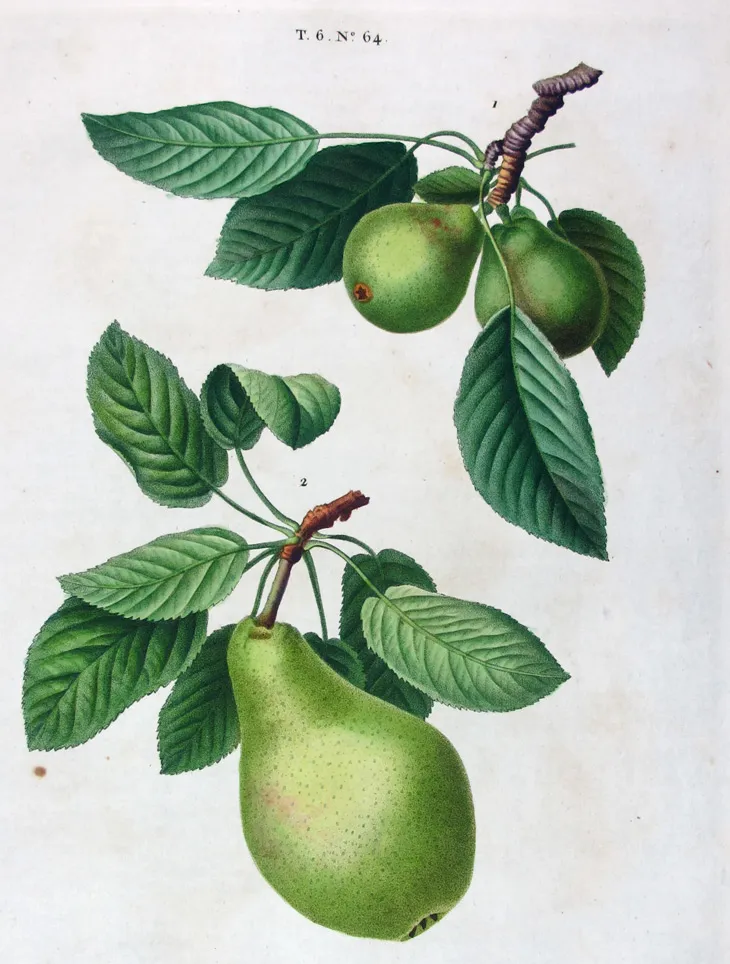
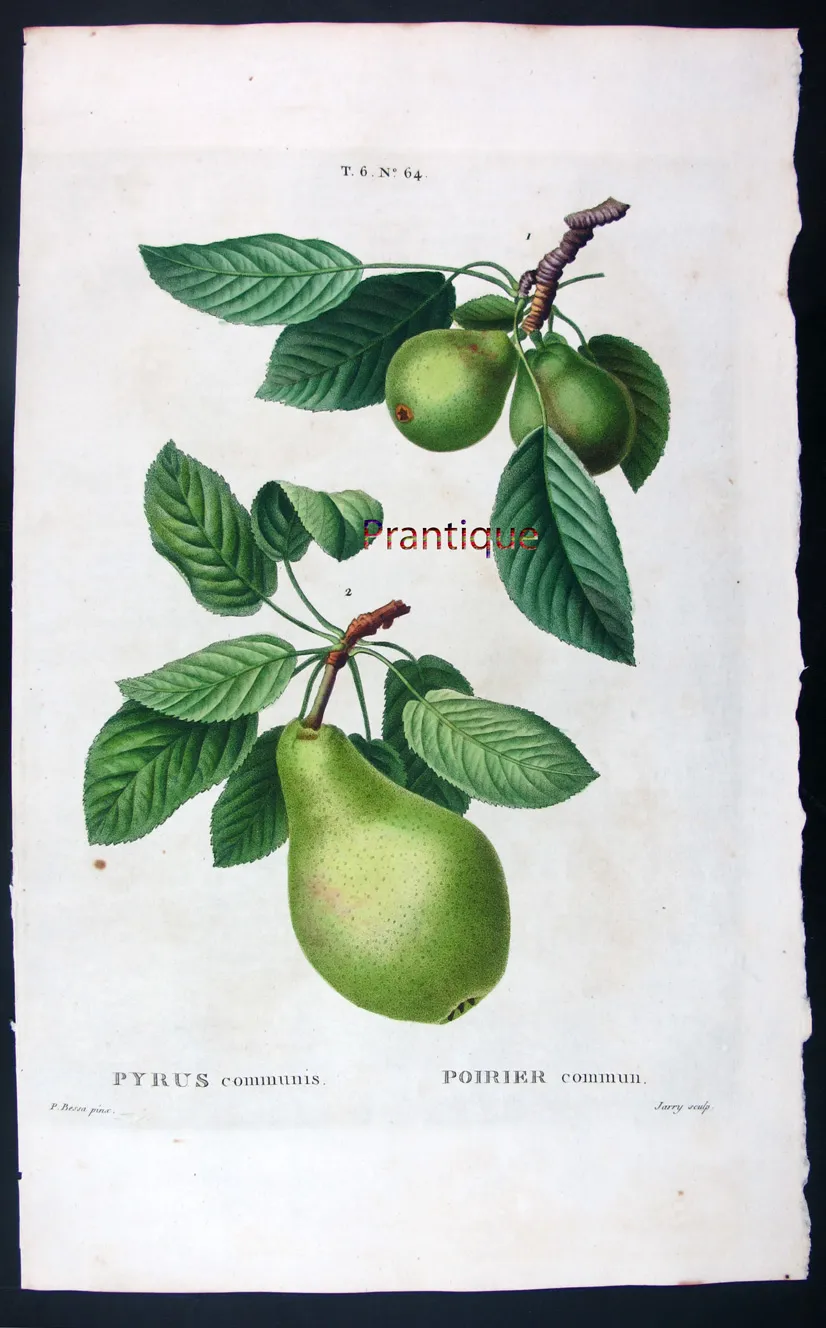
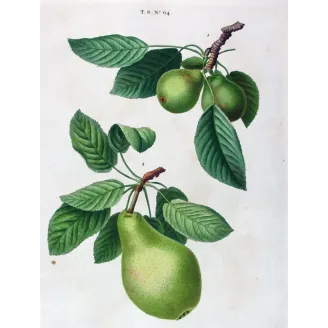
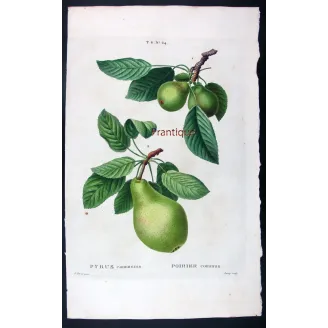
A refined early 19th-century botanical engraving depicting cultivated pear varieties (Pyrus communis), drawn by Pancrace Bessa and engraved for Arbres et Arbustes. Executed with restraint and clarity, the plate exemplifies the elegance of French pomological illustration, uniting scientific precision with a calm, decorative sensibility. The harmonious composition and subtle hand-colouring make it a timeless and highly collectible work.
 Delivery policy
Your print will be carefully prepared and shipped worldwide via trusted couriers (UPS or similar).
 Authentic antique prints
Original engravings from the 17th–19th century.
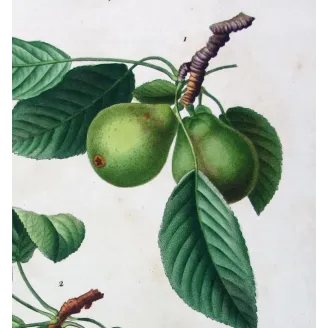
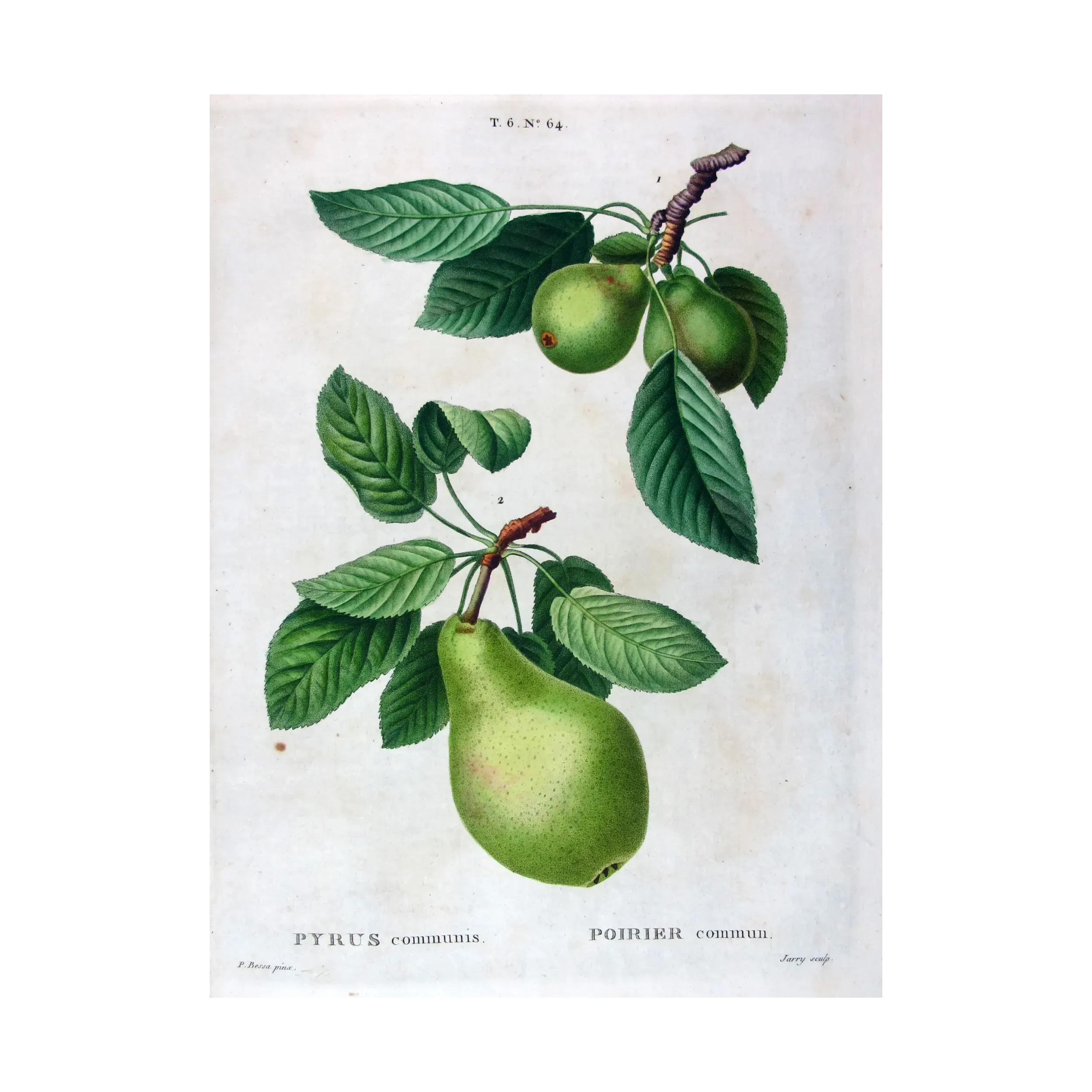
This original botanical engraving presents a cultivated pear branch with two fruiting studies, rendered with calm precision and a distinctly refined sense of balance. The composition is intentionally minimal: generous negative space frames the subject, allowing the fruit and foliage to read with clarity and a gentle, almost sculptural presence.
Bessa’s hand is evident in the measured modelling of the pears, where subtle tonal transitions define volume without theatricality. The foliage is painted in layered greens with crisp veining and soft shadowing, creating a stable canopy that supports the fruits’ quiet prominence.
The engraving forms part of Arbres et Arbustes, among the most accomplished French botanical publications of the early nineteenth century, in which Pancrace Bessa elevated cultivated orchard subjects through refined observation and compositional restraint.
— • —
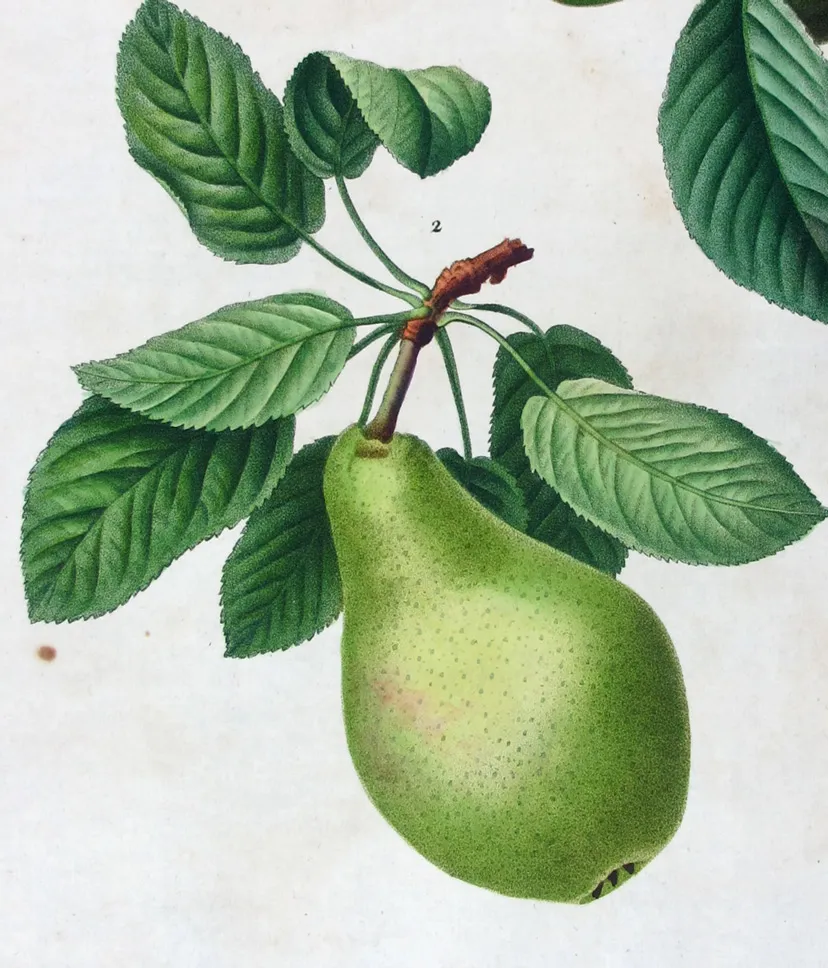
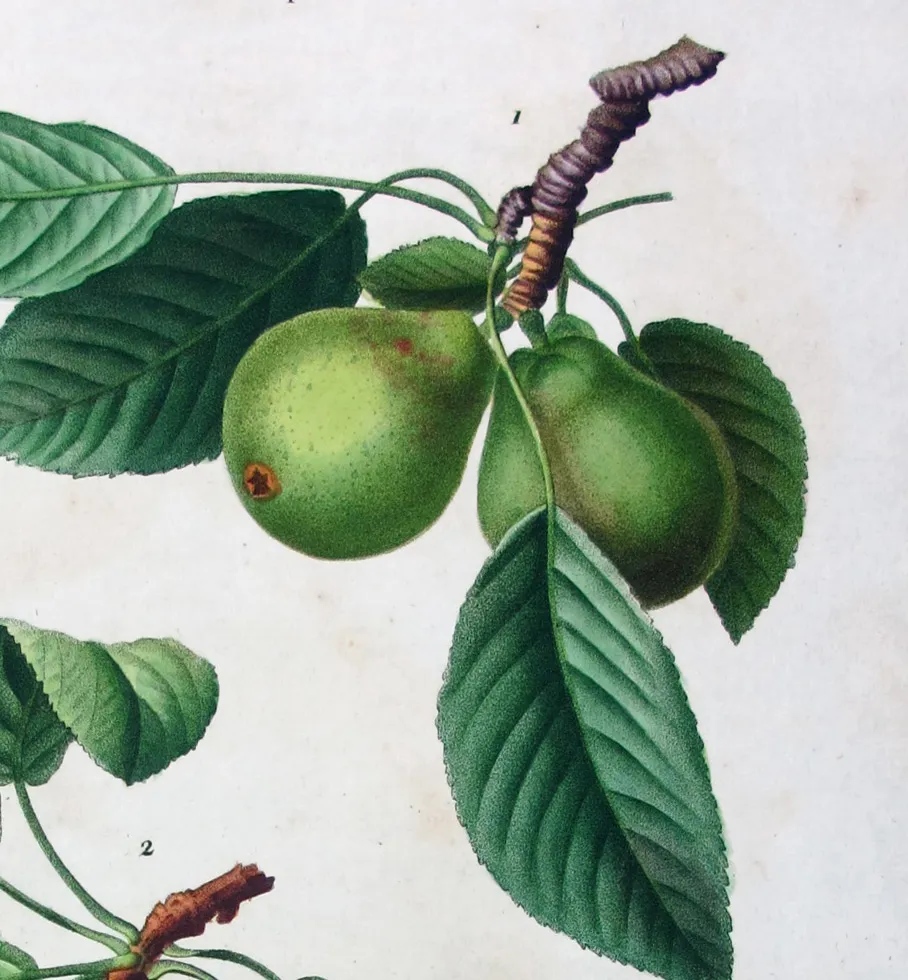
The plate is built around two complementary fruit studies: a pair of smaller pears above and a single, fuller pear below. This upper–lower structure creates a gentle rhythm, guiding the eye through leaf forms and fruit silhouettes while maintaining a strong sense of calm order.
The palette remains intentionally restrained—fresh greens, muted shadows, and discreet warm notes—producing an engraving that feels both botanical and contemporary in its simplicity. The result is particularly well suited to modern interiors where understated natural subjects are preferred over overtly decorative colour.
The plate is classified as Pyrus communis (common pear). In the original publication, the subjects are specified as two cultivated varieties shown on separate branches: Petite Cassolette (Fig. 1) and Grande-Épine d’été (Fig. 2). This reflects the period’s orchard documentation, where distinct cultivated forms were recorded for their fruit shape, surface character, and seasonal identity.
Bessa’s approach emphasizes recognisable structure over ornament. The fruit is presented with clear proportions and a natural surface texture, while the leaves provide botanical context through careful veining and disciplined arrangement. Even without floral or sectional diagrams, the plate retains strong documentary value through its directness and visual clarity.
As an orchard subject, this engraving offers a refined, historically grounded portrait of cultivated pears in early nineteenth-century France—quietly elegant, highly legible, and enduringly decorative.
The engraving is in very good antique condition. Light, even browning is present, consistent with the natural ageing of early nineteenth-century paper. A few near-invisible areas of faint toning can be observed in places, remaining discreet and not distracting from the image. No watermark has been observed. The original hand-colouring is well preserved across foliage and fruit, with no significant defects affecting the overall presentation. The engraved credits “P. Bessa pinx.” and “Jarry sculp.” are present, attesting to the original drawing by Pancrace Bessa and the engraving executed by Jarry.
For further context on Pancrace Bessa and his distinctive contribution to French botanical illustration, see our editorial feature:
Specific References
Hundred-petaled Rose Rose à cent feuilles Original hand-colored botanical engraving by Pancrace Bessa.
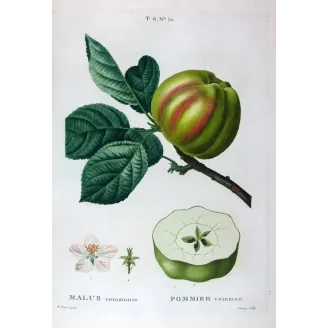
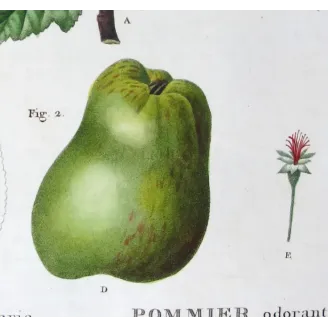
A finely executed early 19th-century botanical engraving illustrating a cultivated apple variety (Malus communis), drawn by Pancrace Bessa for Arbres et Arbustes. The composition combines precise botanical observation with refined decorative balance, presenting fruit and foliage with clarity and quiet elegance. Exceptional hand-colouring and careful modelling reflect the sophistication of French pomological illustration at its height.
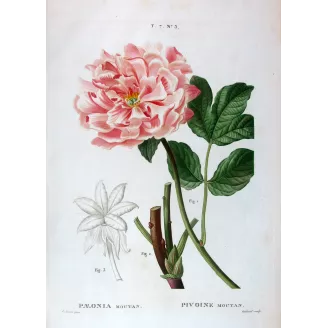
Tree Peony Pivoine moutan Original hand-colored botanical engraving by Pancrace Bessa.
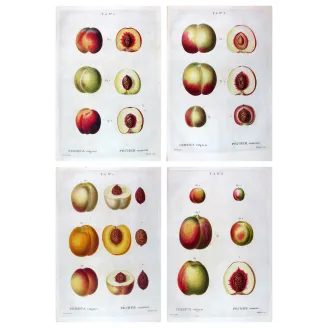
A refined study of cultivated pears, presenting five distinct fruit forms arranged in a balanced and harmonious composition. Subtle variations in shape, colour, and surface texture create a quiet visual rhythm, reflecting Pancrace Bessa’s ability to transform orchard subjects into works of enduring elegance.
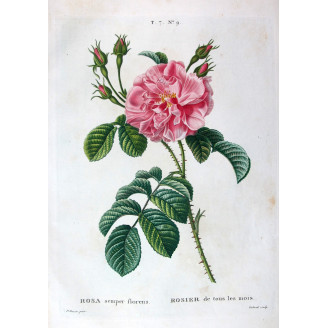
Monthly Rose Rosier de tous les mois Original hand-colored botanical engraving by Pancrace Bessa.
A finely executed early 19th-century botanical engraving illustrating a cultivated apple variety (Malus communis), drawn by Pancrace Bessa for Arbres et Arbustes. The composition combines precise botanical observation with refined decorative balance, presenting fruit and foliage with clarity and quiet elegance. Exceptional hand-colouring and careful modelling reflect the sophistication of French pomological illustration at its height.
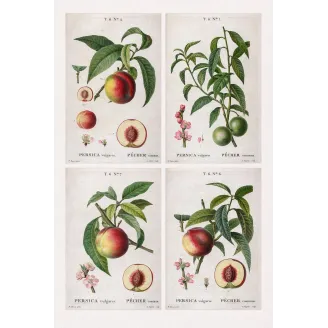
Original pochoir print of the peach tree, Prunus persica, with detailed flowering and fruit.
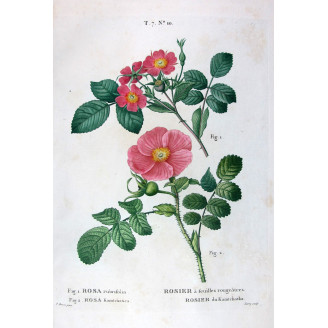
Kamchatka Rose Rosier du Kamchatka Original hand-colored botanical engraving by Pancrace Bessa.
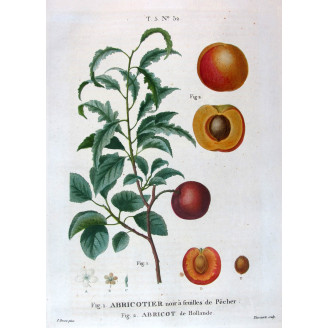
Dutch Apricot Abricot de Hollande Original hand-colored botanical engraving by Pancrace Bessa.
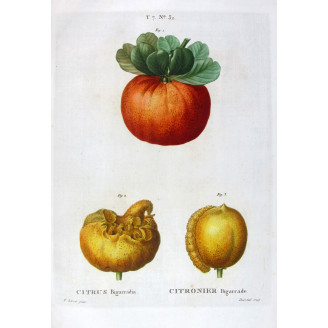
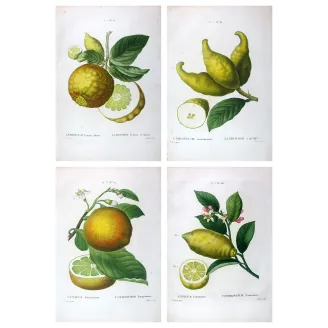
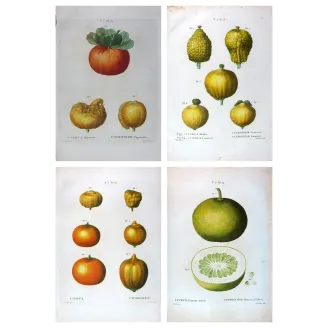
Nine original citrus engravings by Pancrace Bessa, uniting rare cedrats, sculptural lemons, and monumental Pomme d’Adam varieties into a coherent Napoleonic-era ensemble. Botanical study and refined color harmonize in a portfolio conceived to be read as a whole.
A refined early 19th-century botanical engraving depicting cultivated pear varieties (Pyrus communis), drawn by Pancrace Bessa and engraved for Arbres et Arbustes. Executed with restraint and clarity, the plate exemplifies the elegance of French pomological illustration, uniting scientific precision with a calm, decorative sensibility. The harmonious composition and subtle hand-colouring make it a timeless and highly collectible work.