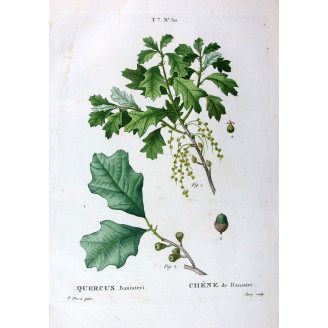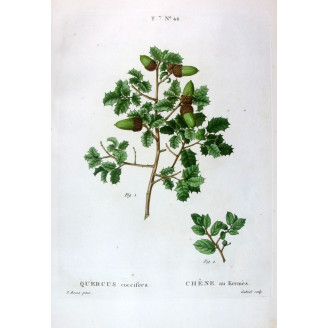
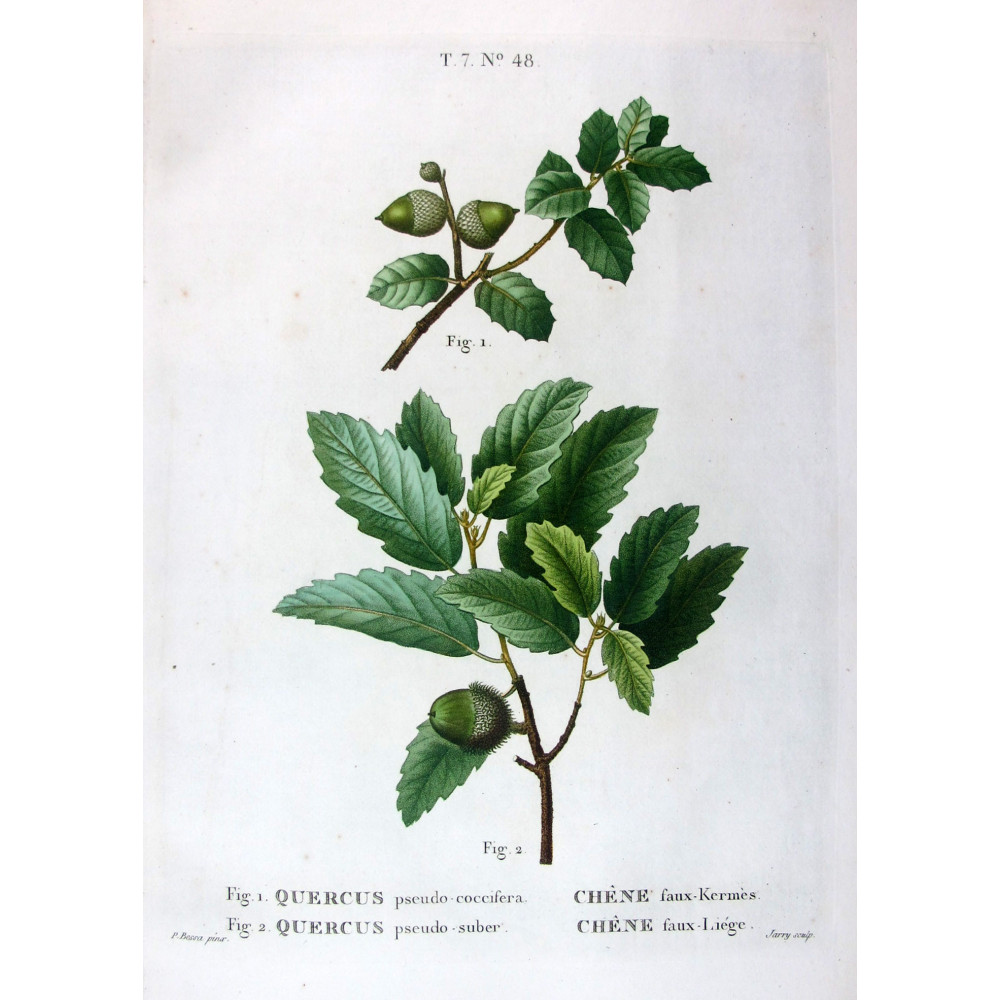
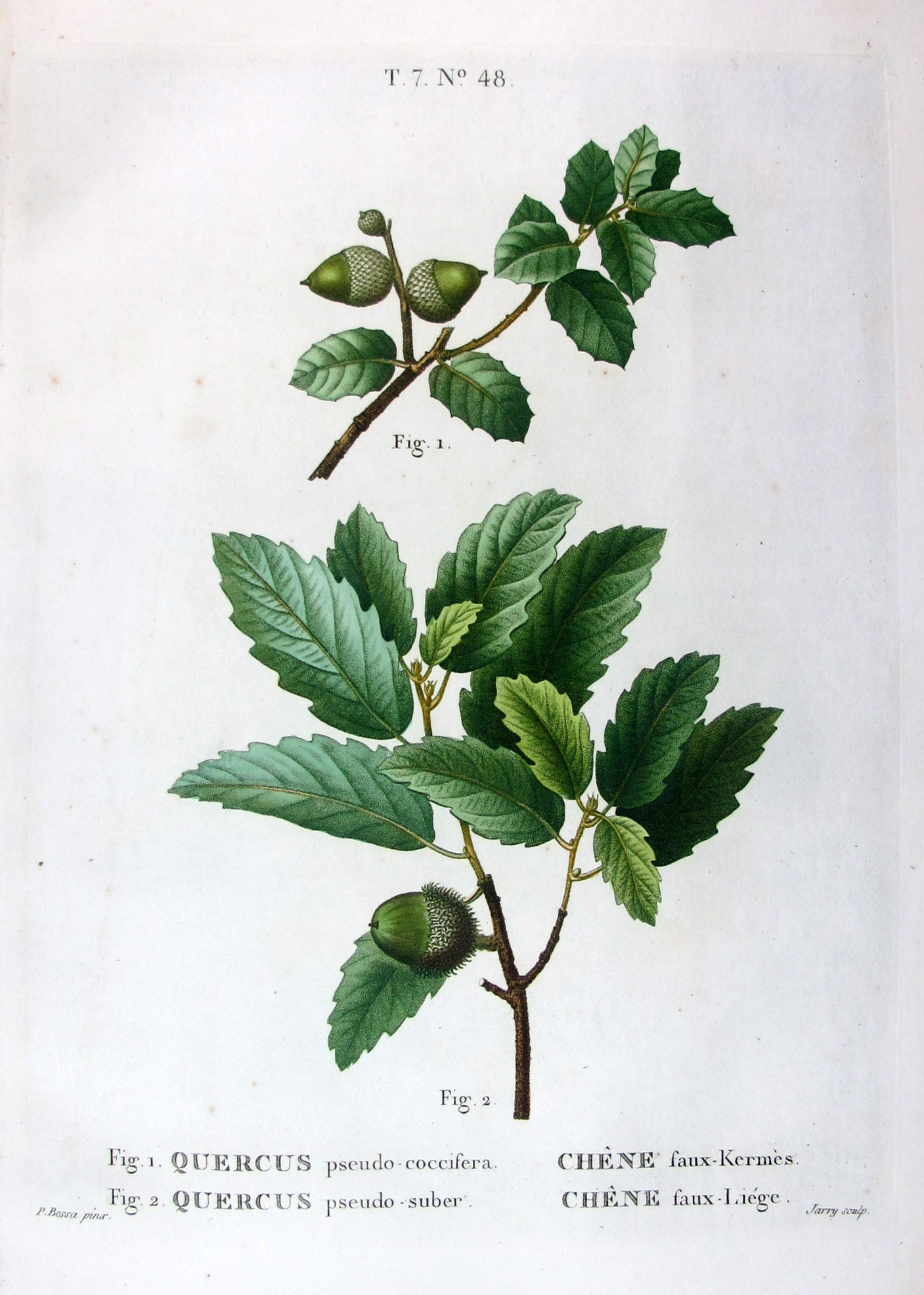
Delicate oak study with acorns and foliage by Bessa.
 Delivery policy
Your print will be carefully prepared and shipped worldwide via trusted couriers (UPS or similar).
 Authentic antique prints
Original engravings from the 17th–19th century.
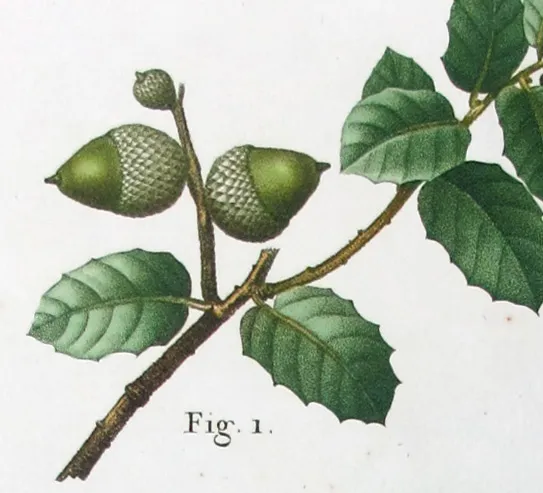
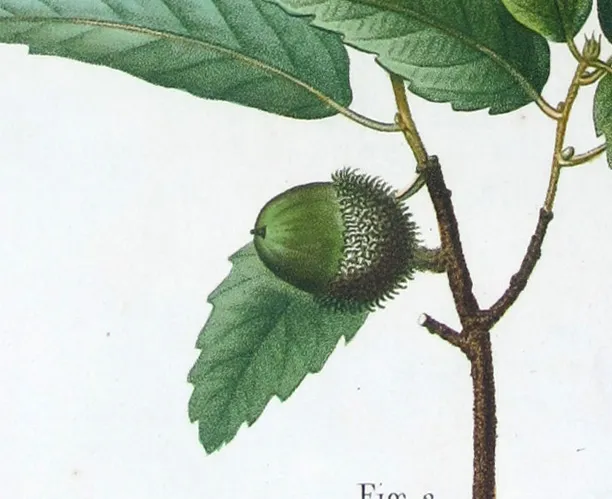
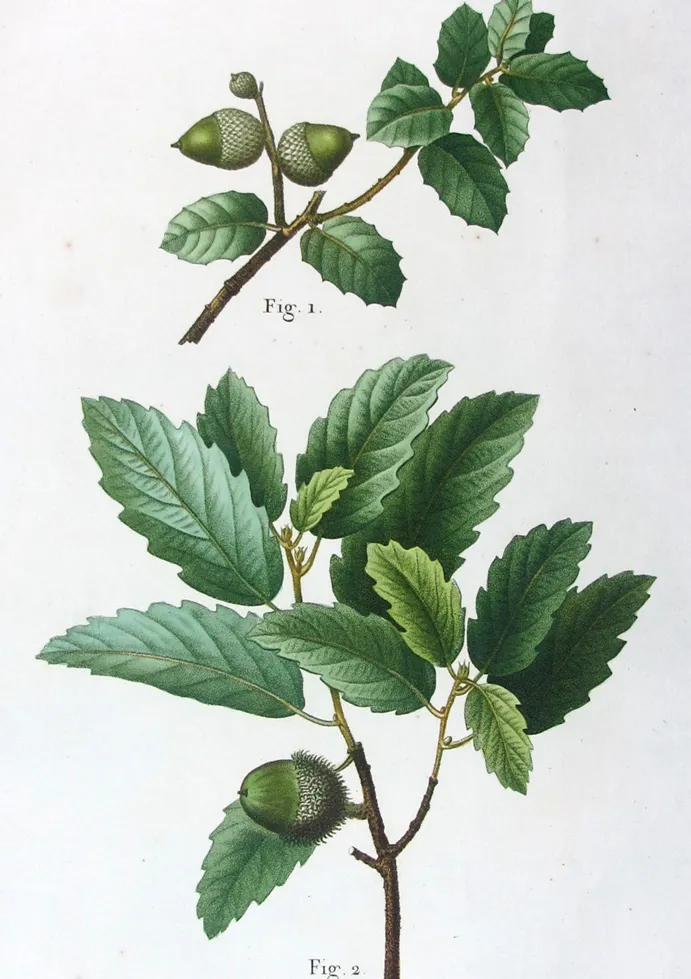
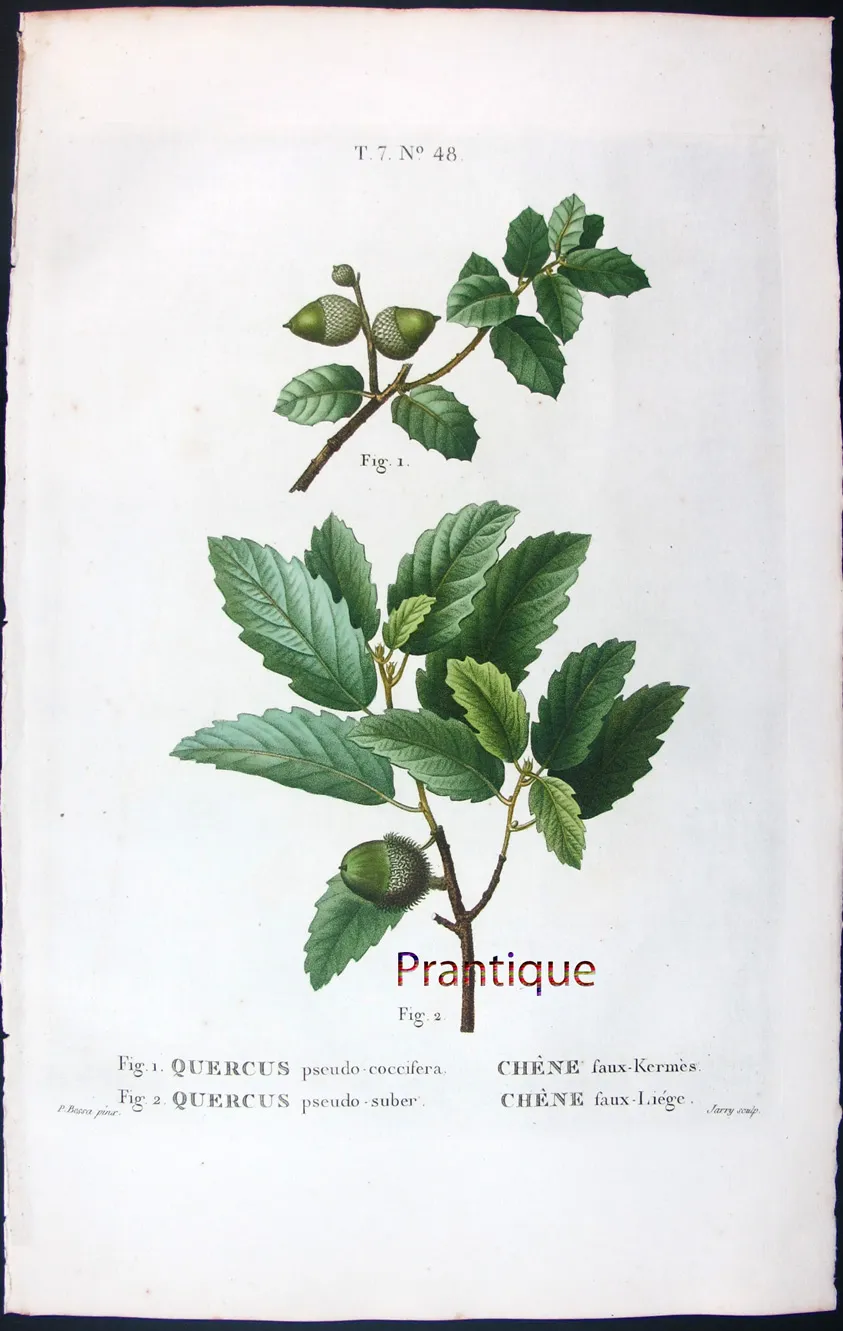
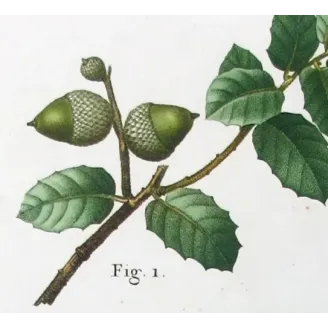
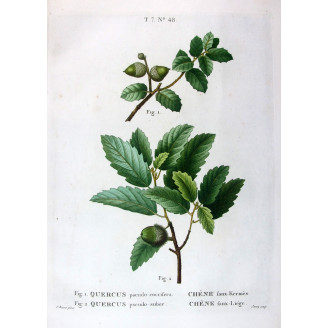
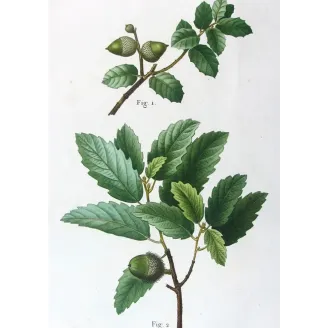
This original botanical engraving presents two closely related evergreen oaks from the Mediterranean world: Quercus pseudo-coccifera and Quercus pseudo-suber. Rather than depicting a monumental trunk, the plate isolates branch, foliage, and acorn structure, allowing the viewer to read botanical character with clarity and compositional restraint.
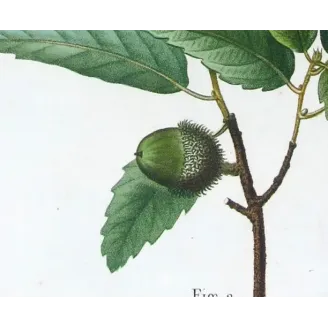
The arrangement is deliberately balanced. A smaller upper figure functions as a concise reference study, while the larger lower branch provides a fuller visual statement, with broad, leathery leaves and a prominent acorn cup rendered in deep, confident greens. The result is both scientific and decorative: an image with the quiet authority typical of early nineteenth-century French botanical illustration.
Here lies a particularly intriguing detail: in the early nineteenth century, botanists were not entirely certain whether these Mediterranean oaks were distinct species or regional expressions of the cork oak. The subtle variations in leaf serration and the structure of the acorn cup shown in this plate were not ornamental refinements — they were visual arguments in an ongoing scientific debate.
— • —
The stipple engraving produces soft tonal modelling across the leaves, conveying their dense evergreen texture without heaviness. Quercus pseudo-coccifera reveals sharper, more defensive margins, while Quercus pseudo-suber appears broader and more regular in outline, giving the lower figure a calmer, more grounded rhythm.
The acorn cups offer the most compelling comparison. One appears tighter and more textured; the other suggests the thicker structural development associated with cork-bearing relatives. This transitional morphology is precisely what made such plates essential in the refinement of botanical taxonomy — an elegant synthesis of observation, classification, and aesthetic control.
Quercus pseudo-coccifera, often referred to as a false Kermes oak, and Quercus pseudo-suber, a false cork oak, belong to the evergreen oak group native to the Mediterranean basin. Their ecological resilience and relationship to economically valuable cork-producing species attracted considerable attention in nineteenth-century France, where forestry and agricultural science were increasingly formalised. Beyond their botanical significance, oaks have long symbolised endurance and permanence — qualities that lend this plate a particular resonance in studies, libraries, and more classically inclined interiors.
The engraving is in Like Brand New condition. The sheet remains clean and well preserved, with a strong natural paper tone and fresh original hand-colouring, showing no visible losses or abrasions. No watermark has been observed. The engraved credits confirm the original drawing by Pancrace Bessa and the engraving executed by Jarry, attesting to its authenticity as an original early nineteenth-century plate.
For further context on Pancrace Bessa and his distinctive contribution to French botanical illustration, see our editorial feature:
Specific References
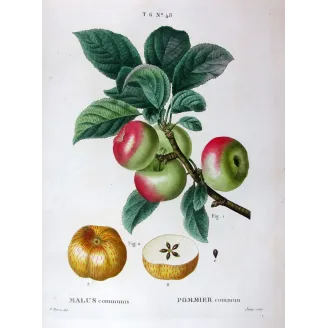
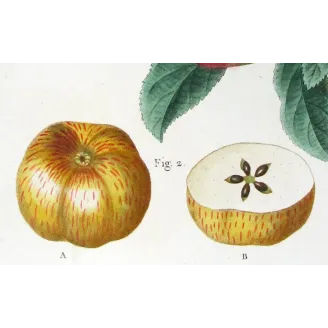
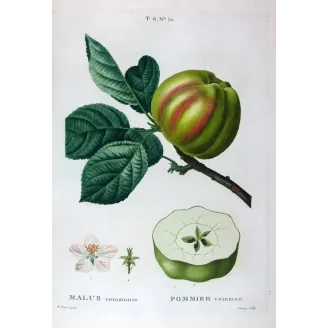
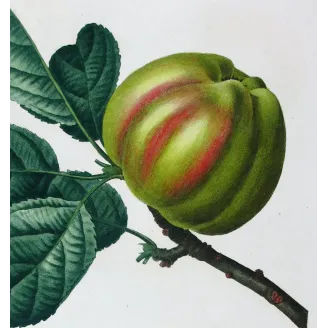
A finely executed early 19th-century botanical engraving illustrating a cultivated apple variety (Malus communis), drawn by Pancrace Bessa for Arbres et Arbustes. The composition combines precise botanical observation with refined decorative balance, presenting fruit and foliage with clarity and quiet elegance. Exceptional hand-colouring and careful modelling reflect the sophistication of French pomological illustration at its height.
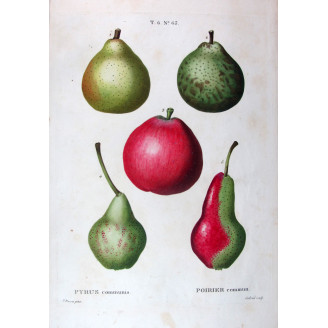
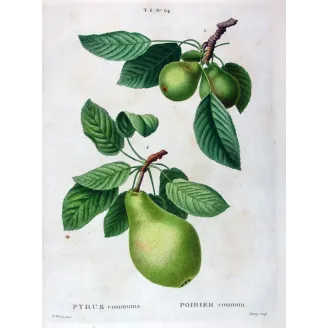
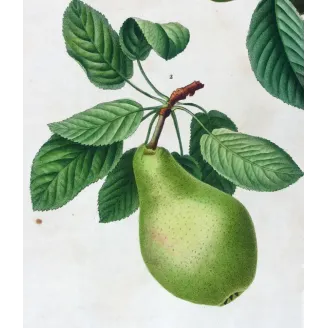
A refined study of French cultivated pear varieties, distinguished by subtle chromatic contrasts and carefully modelled forms. This hand-colored engraving reflects Pancrace Bessa’s ability to elevate orchard subjects through balance, restraint, and quiet visual authority.
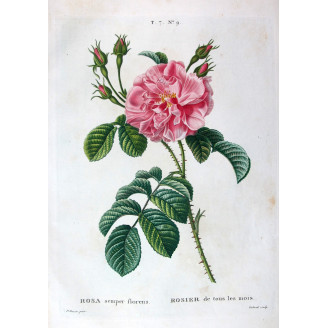
Monthly Rose Rosier de tous les mois Original hand-colored botanical engraving by Pancrace Bessa.
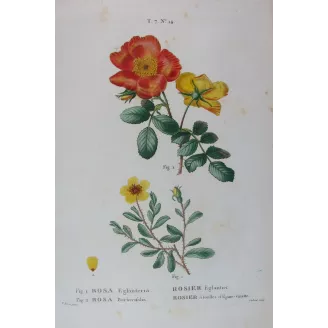
Eglantine & Berberis-leaved Rose Rosier à feuilles d'Épine-vinette Original hand-colored botanical engraving by Pancrace Bessa.
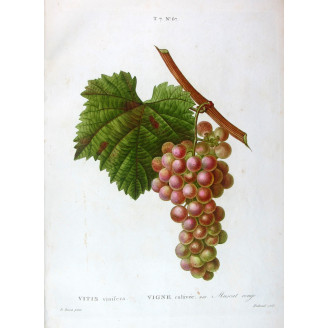
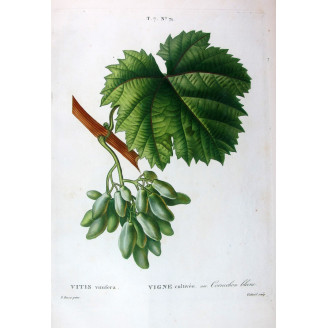
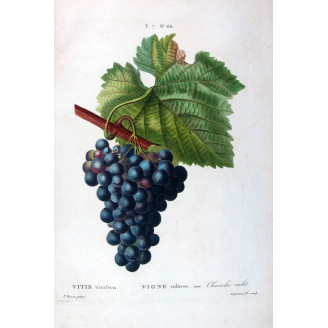
Original antique print of the common grape vine, Vitis vinifera, illustrated by Pancrace Bessa.
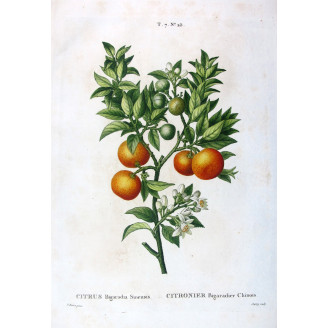
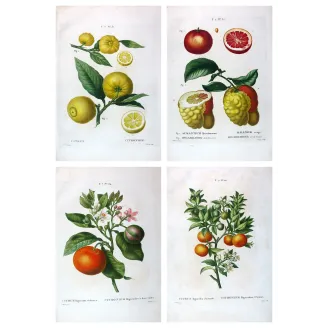
A coherent ensemble of eight original orange and bigarade engravings by Pancrace Bessa, reflecting the cultivated discipline of French orangeries in the Napoleonic era. Botanical precision and architectural composure unite in a refined citrus portfolio preserved as a complete series.
Depiction of golden grapes with vivid green leaves in fine detail.
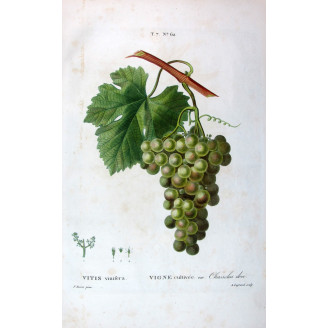
Original antique print of the cultivated Chasselas grape vine, Vitis vinifera, by Pancrace Bessa.
A refined early 19th-century botanical engraving depicting cultivated pear varieties (Pyrus communis), drawn by Pancrace Bessa and engraved for Arbres et Arbustes. Executed with restraint and clarity, the plate exemplifies the elegance of French pomological illustration, uniting scientific precision with a calm, decorative sensibility. The harmonious composition and subtle hand-colouring make it a timeless and highly collectible work.
A finely executed early 19th-century botanical engraving illustrating a cultivated apple variety (Malus communis), drawn by Pancrace Bessa for Arbres et Arbustes. The composition combines precise botanical observation with refined decorative balance, presenting fruit and foliage with clarity and quiet elegance. Exceptional hand-colouring and careful modelling reflect the sophistication of French pomological illustration at its height.
Original 1931 pochoir print by Émile-Allain Séguy. From the rare portfolio *Prismes*.
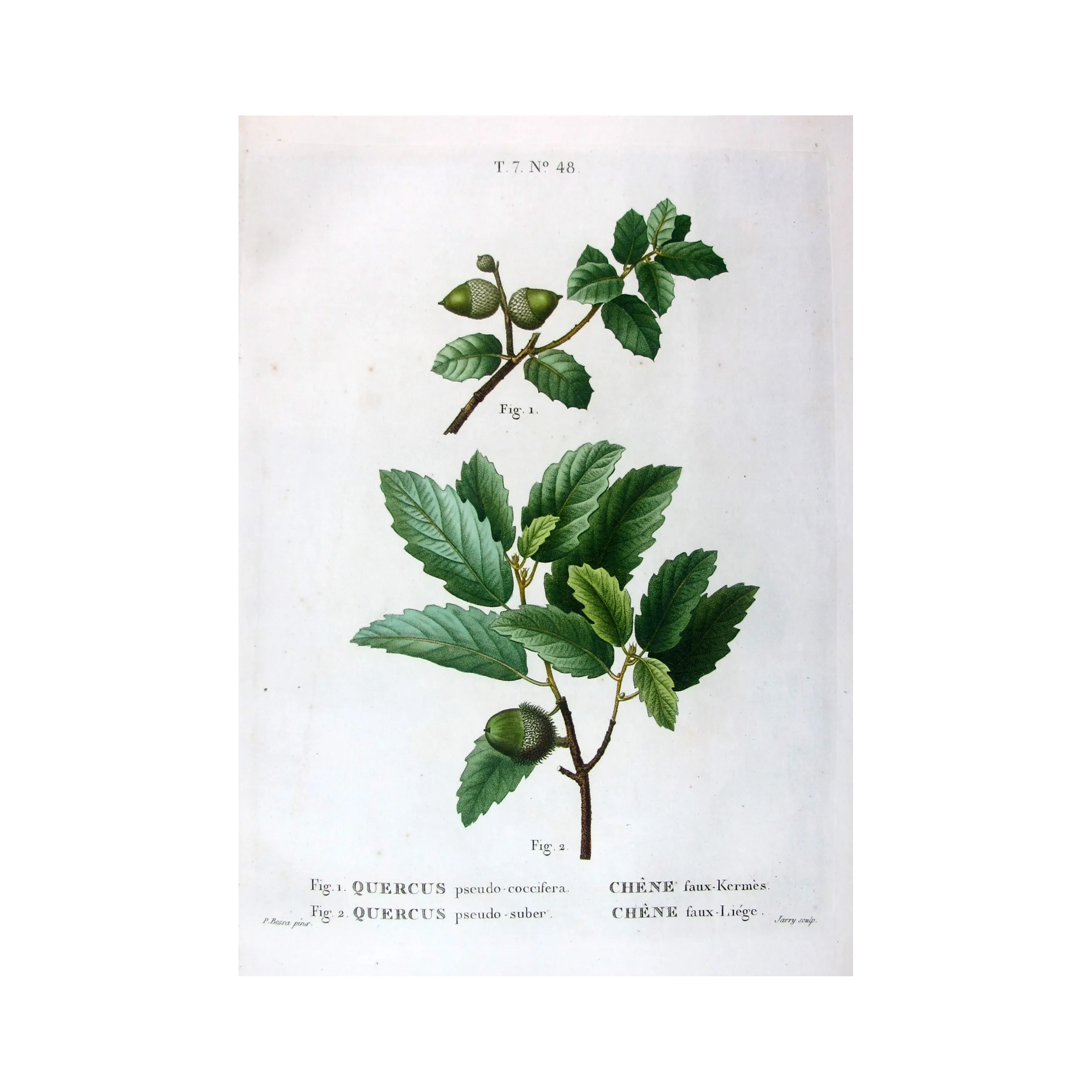
Delicate oak study with acorns and foliage by Bessa.