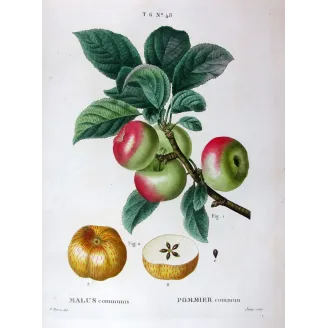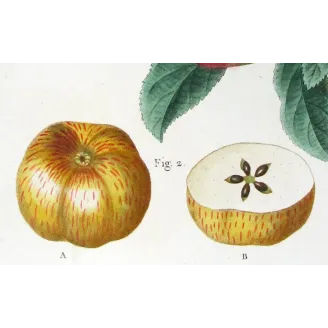
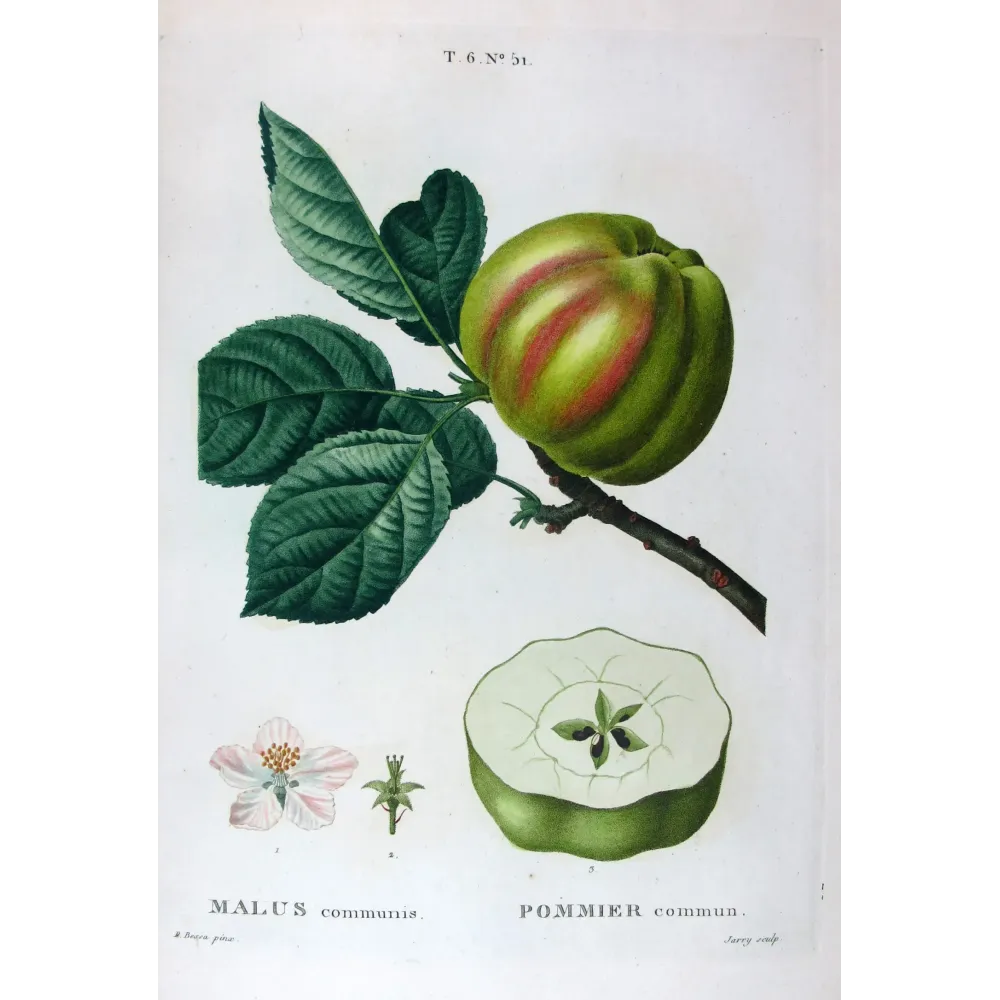
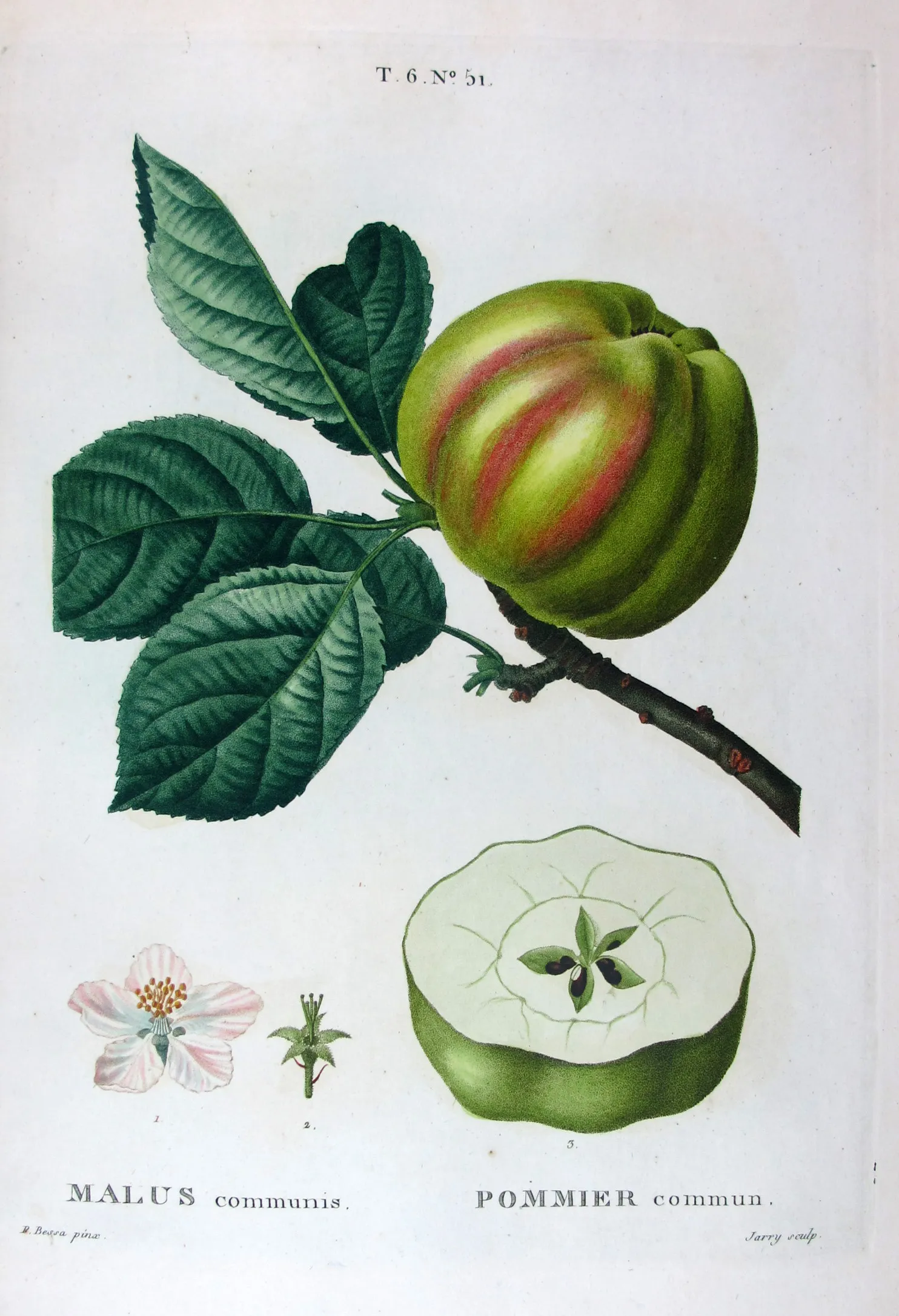
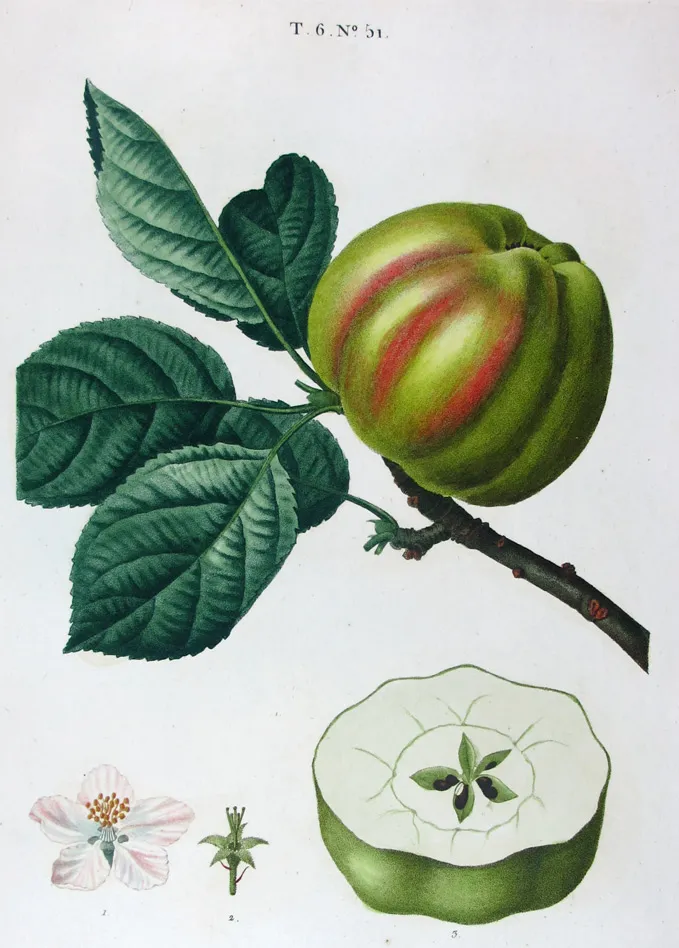
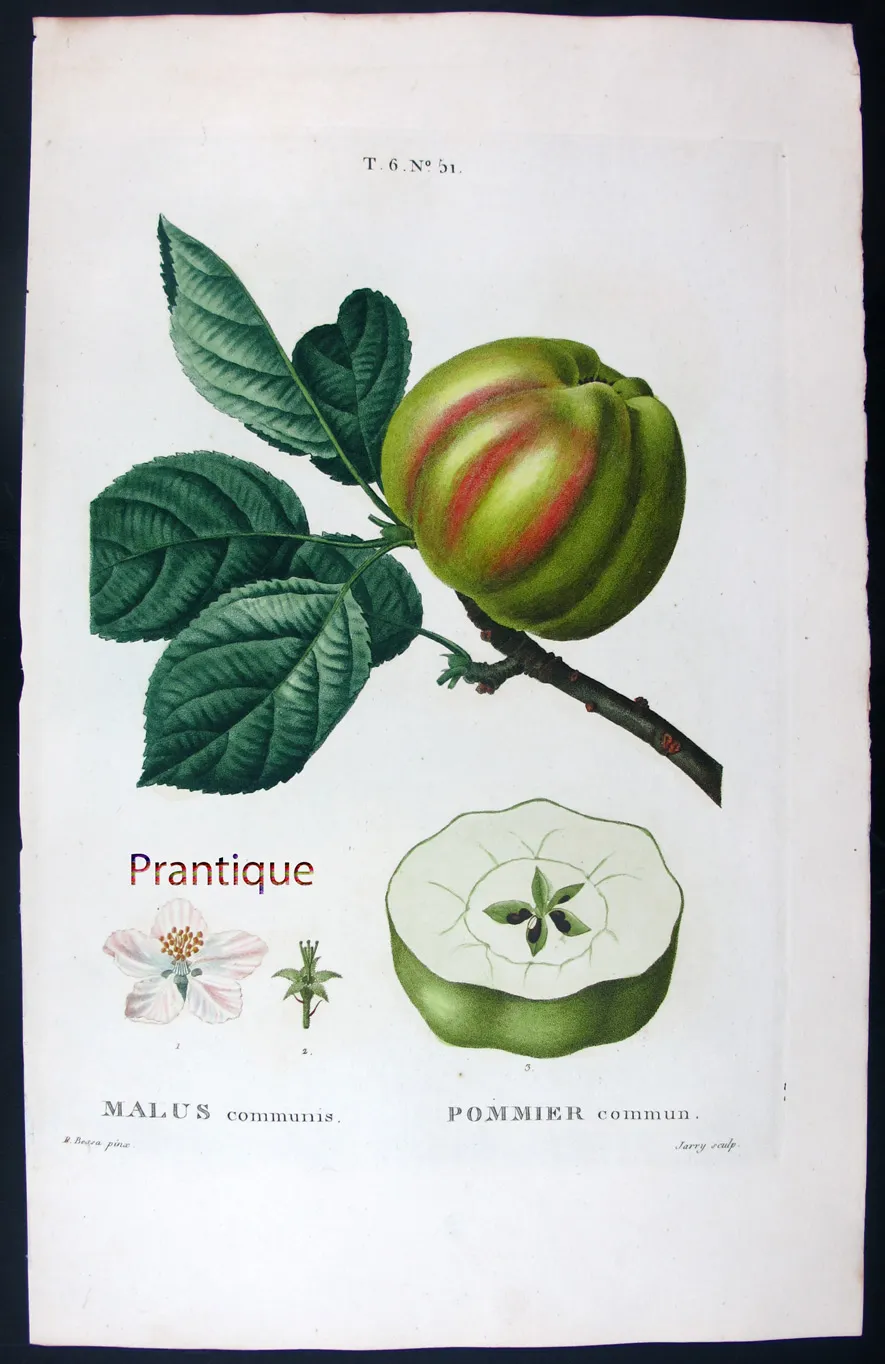
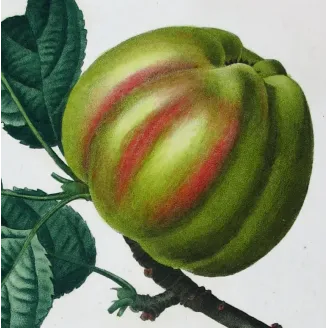
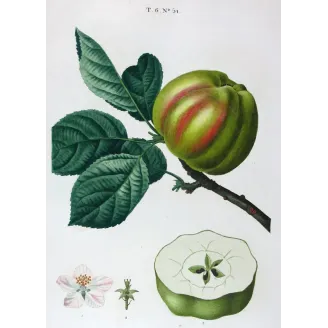
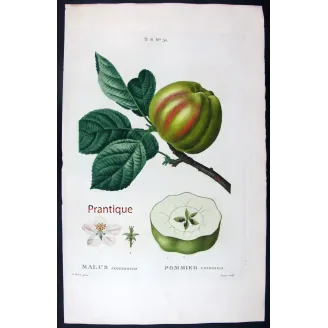
A finely executed early 19th-century botanical engraving illustrating a cultivated apple variety (Malus communis), drawn by Pancrace Bessa for Arbres et Arbustes. The composition combines precise botanical observation with refined decorative balance, presenting fruit and foliage with clarity and quiet elegance. Exceptional hand-colouring and careful modelling reflect the sophistication of French pomological illustration at its height.
 Delivery policy
Your print will be carefully prepared and shipped worldwide via trusted couriers (UPS or similar).
 Authentic antique prints
Original engravings from the 17th–19th century.
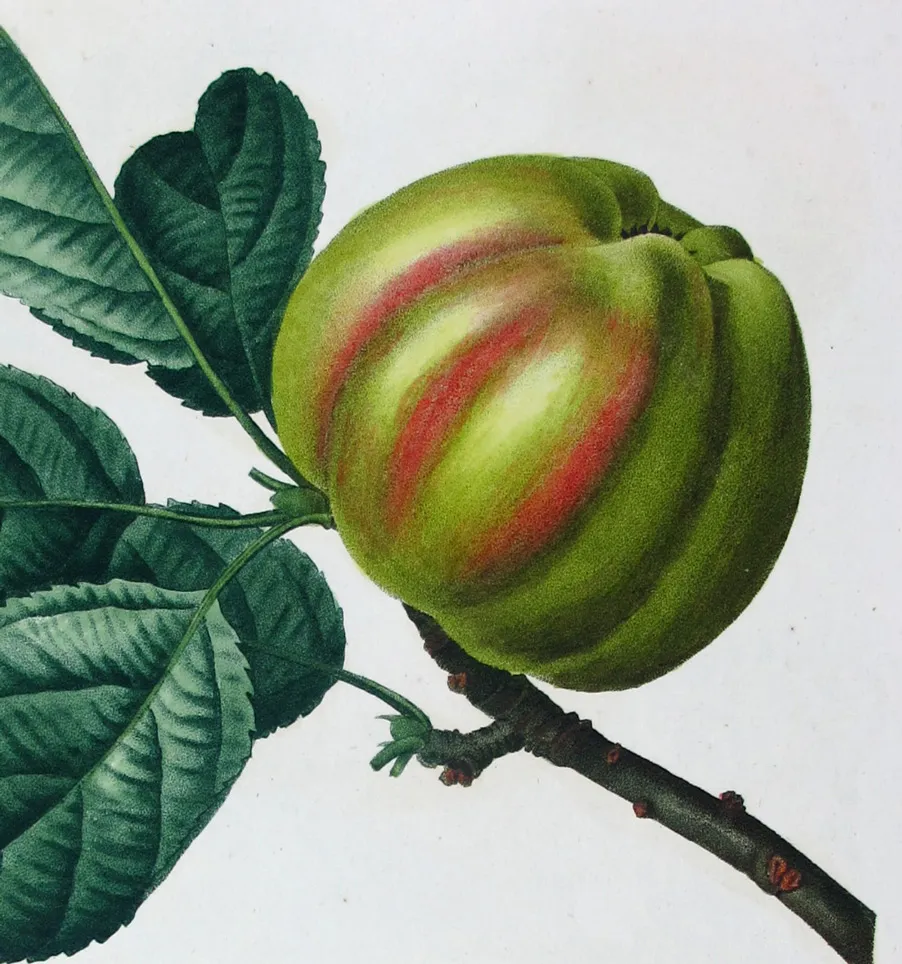
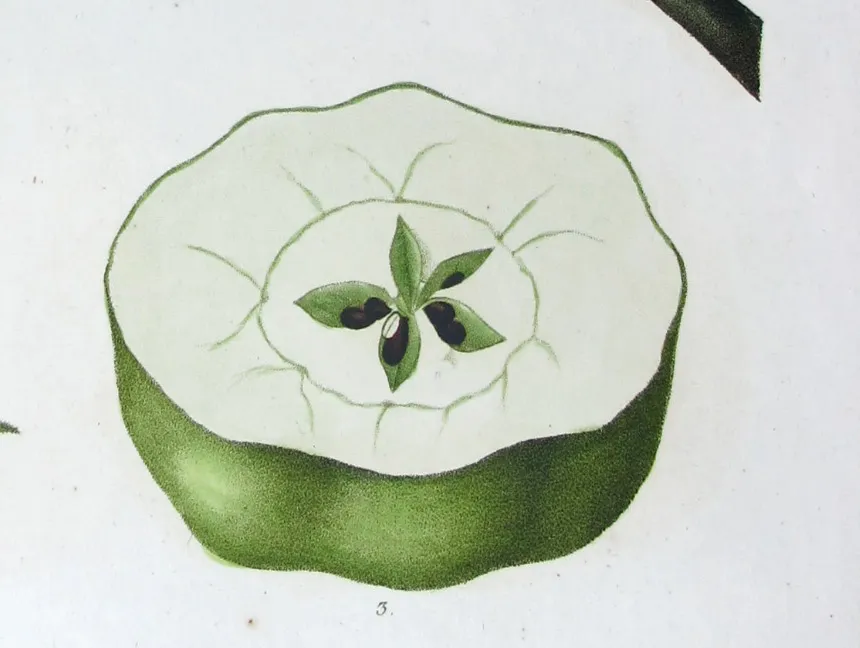
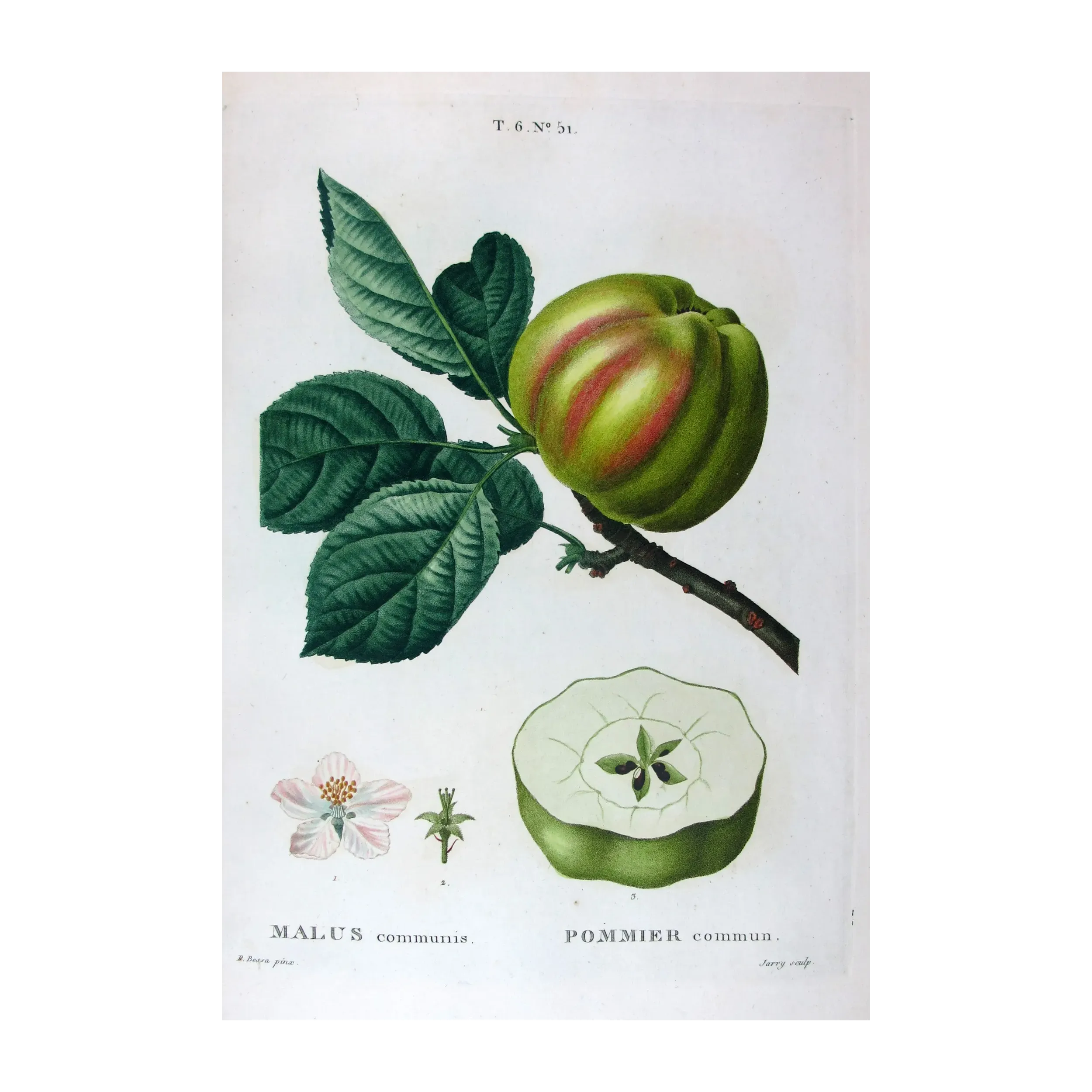
This original botanical engraving presents a remarkably refined study of an apple tree, combining foliage, blossom detail, a mature fruit, and a carefully rendered cross-section. The composition is both restrained and commanding: a single apple dominates the sheet with quiet monumentality, while the auxiliary figures provide botanical completeness without disturbing the plate’s calm balance.
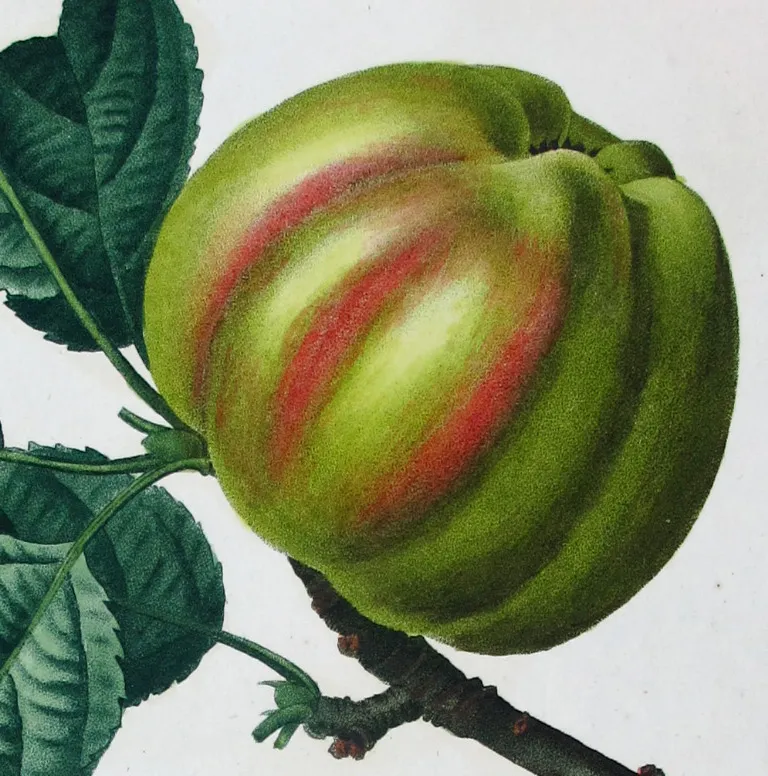
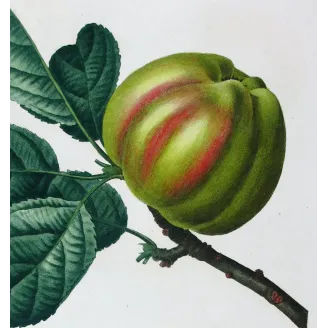
Bessa’s painterly discipline is especially evident here. The fruit is modelled through soft tonal transitions—green deepening into subtle rosy bands—suggesting ripening and natural bloom on the skin. The leaves are rendered in cool, layered greens with crisp veining, framing the fruit and reinforcing its sense of volume and weight.
This engraving forms part of Arbres et Arbustes, among the most accomplished French botanical publications of the early nineteenth century, where Pancrace Bessa elevated orchard subjects through refined observation and elegant pictorial structure.
— • —
The composition is organized around a strong diagonal branch that carries the fruit into the upper register, creating a sense of lift and presence. The apple becomes the focal centre of the plate, while the surrounding leaves introduce rhythm and balance. Below, the horizontal cross-section adds a second, quieter axis—almost architectural in its clarity—reinforcing both scientific intent and decorative harmony.
Colour application is restrained yet highly effective. The apple’s green surface is animated by warm blush accents that lend immediacy and depth, while the interior slice is rendered in pale, clean tones that emphasize structure and symmetry. The overall palette feels fresh and surprisingly modern, making this engraving exceptionally suitable for both contemporary interiors and traditional library settings.
Although traditionally classified under the broad category Malus communis, this plate is more precisely identified in the original publication as representing the Calville blanche apple. One of the most celebrated French apple varieties of the eighteenth and early nineteenth centuries, the Calville blanche was prized for its distinctive ribbed form, aromatic flesh, and importance within cultivated orchards.
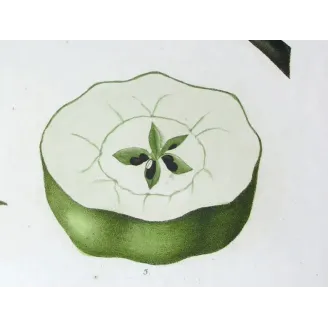
The inclusion of a horizontal cross-section reflects the attention paid to internal structure in early pomological works, where varieties were documented not only for their outward appearance but also for their inner organization. Such plates served both scientific study and refined domestic culture, bridging horticulture and visual elegance.
In this engraving, the apple is presented almost as an object of design: a sculptural volume paired with a lucid internal diagram. This balance between sensory appeal and analytical clarity is characteristic of Bessa’s finest work and explains the enduring interest in fruit plates of this calibre.
The engraving is in outstanding antique condition. Light, even browning is minimal, and the sheet presents with exceptional cleanliness and clarity—so well preserved that it can appear almost like a later reproduction at first glance. No watermark has been observed. The original hand-colouring remains remarkably fresh and precise throughout the foliage, fruit, and cross-section, with no significant defects affecting the image. The engraved credits “P. Bessa pinx.” and “Janinet sculp.” are present, attesting to the original drawing by Pancrace Bessa and the engraving executed by Janinet.
For further context on Pancrace Bessa and his distinctive contribution to French botanical illustration, see our editorial feature:
Specific References
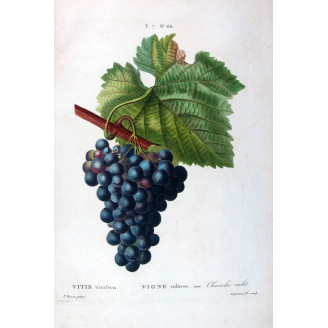
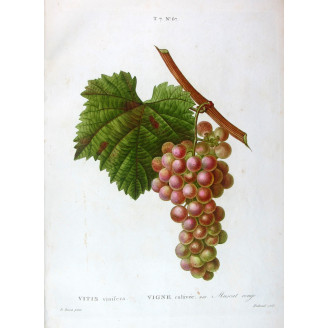
Original antique print of the cultivated Chasselas grape vine, Vitis vinifera, by Pancrace Bessa.
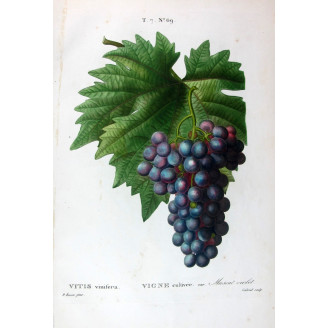
Elegant depiction of a rich purple Muscat grape variety by Pancrace Bessa.
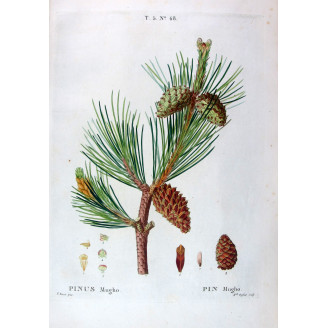
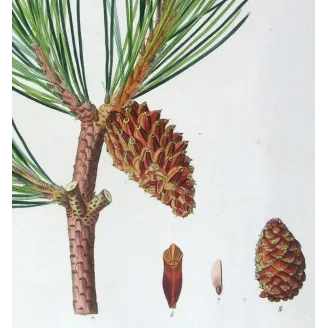
Antique engraving of Pinus Mugho by Bessa, rich in botanical detail.
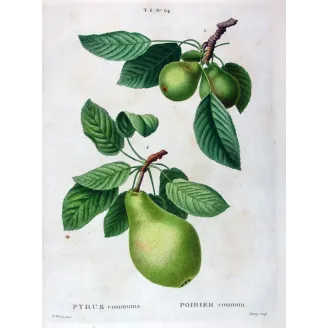
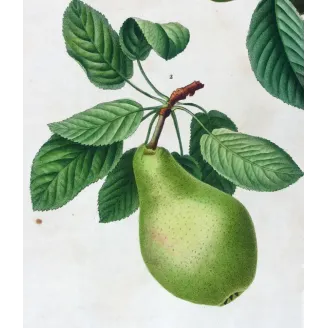
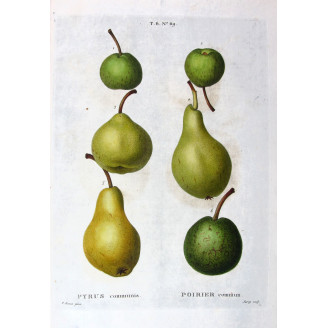
A refined early 19th-century botanical engraving depicting cultivated pear varieties (Pyrus communis), drawn by Pancrace Bessa and engraved for Arbres et Arbustes. Executed with restraint and clarity, the plate exemplifies the elegance of French pomological illustration, uniting scientific precision with a calm, decorative sensibility. The harmonious composition and subtle hand-colouring make it a timeless and highly collectible work.
A finely executed early 19th-century botanical engraving illustrating a cultivated apple variety (Malus communis), drawn by Pancrace Bessa for Arbres et Arbustes. The composition combines precise botanical observation with refined decorative balance, presenting fruit and foliage with clarity and quiet elegance. Exceptional hand-colouring and careful modelling reflect the sophistication of French pomological illustration at its height.
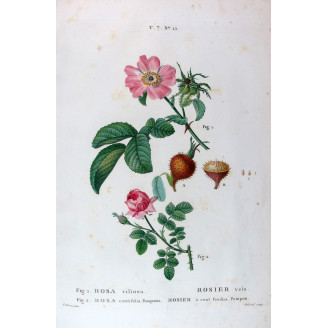
Velvet Rose & Pompon Centifolia Rosier velu & Rosier à cent feuilles, Pompon Original hand-colored botanical engraving by Pancrace Bessa.
A finely executed early 19th-century botanical engraving illustrating a cultivated apple variety (Malus communis), drawn by Pancrace Bessa for Arbres et Arbustes. The composition combines precise botanical observation with refined decorative balance, presenting fruit and foliage with clarity and quiet elegance. Exceptional hand-colouring and careful modelling reflect the sophistication of French pomological illustration at its height.