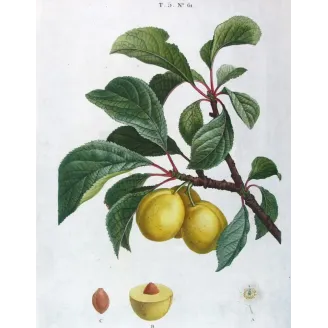
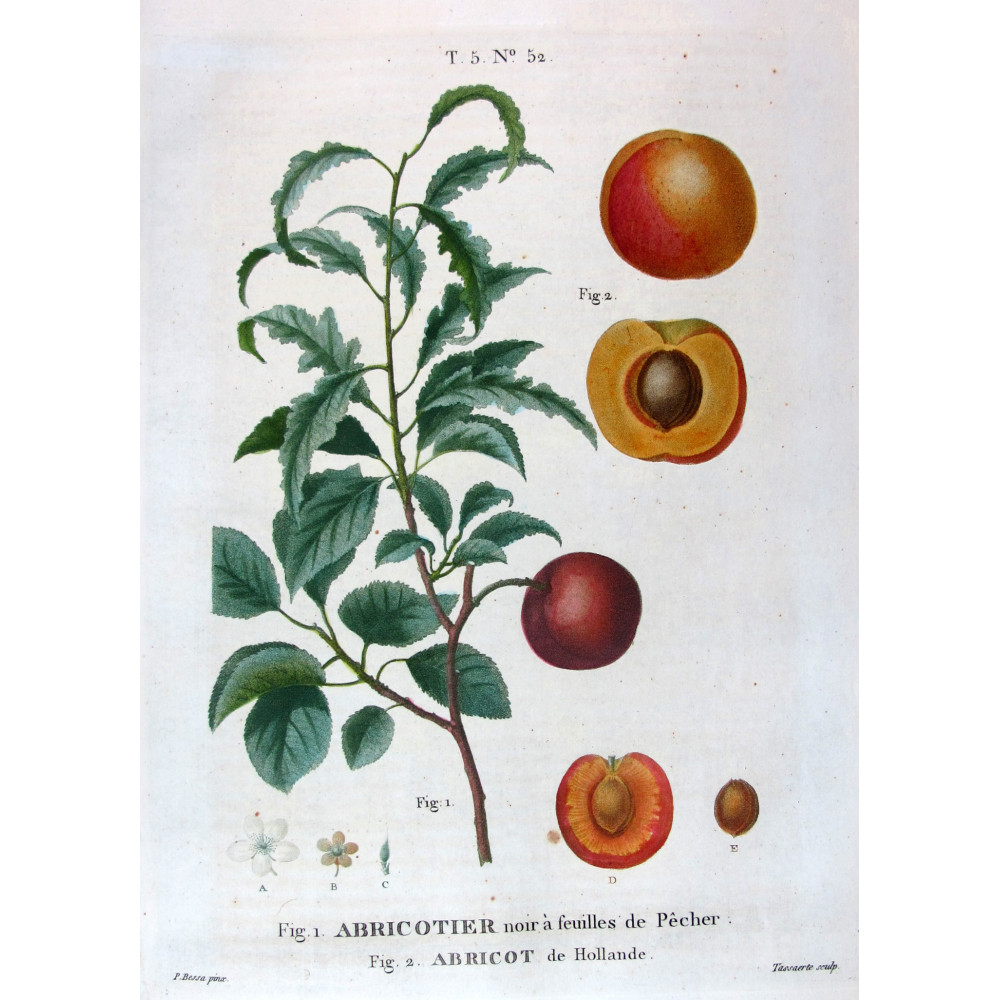
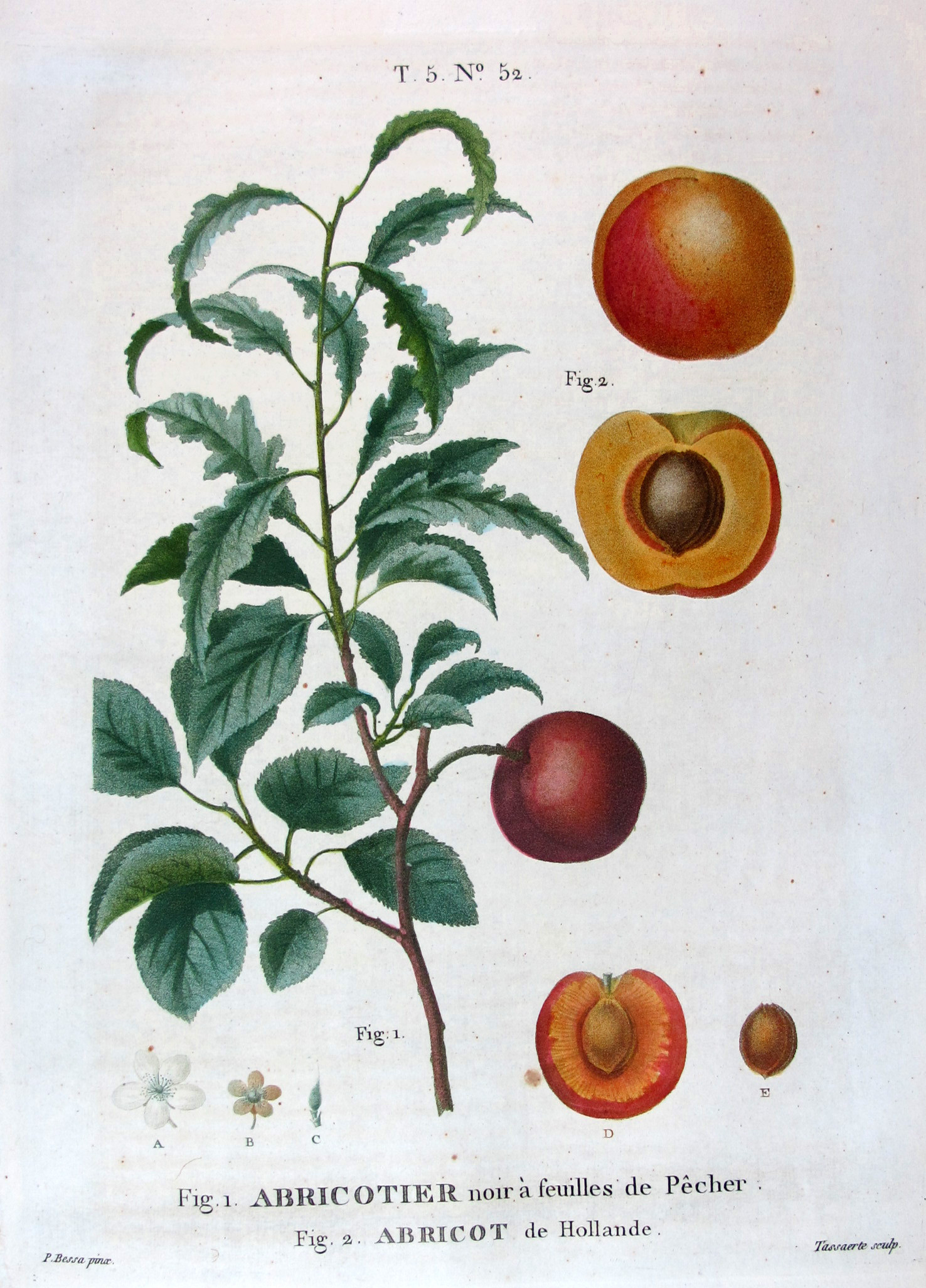
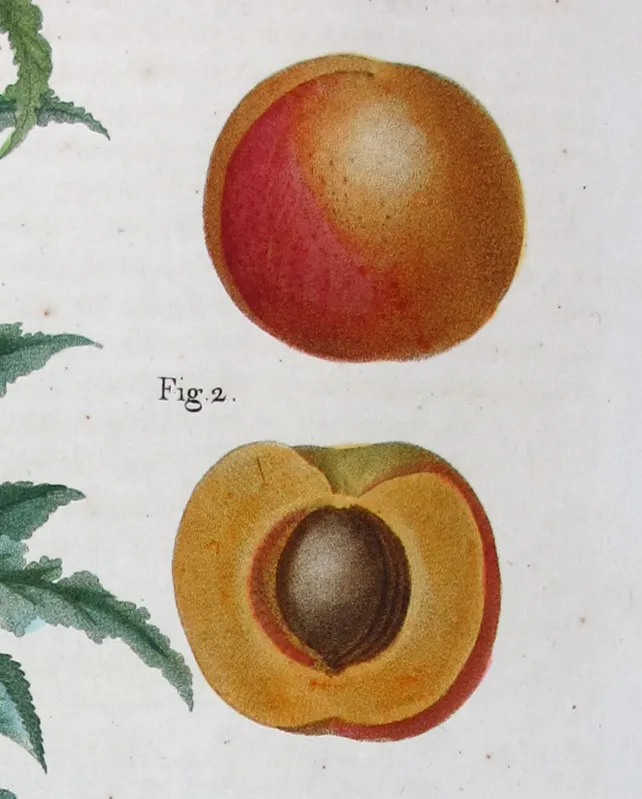
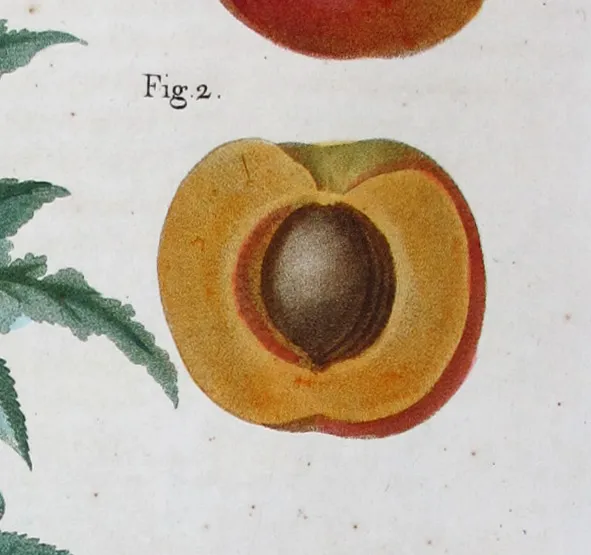
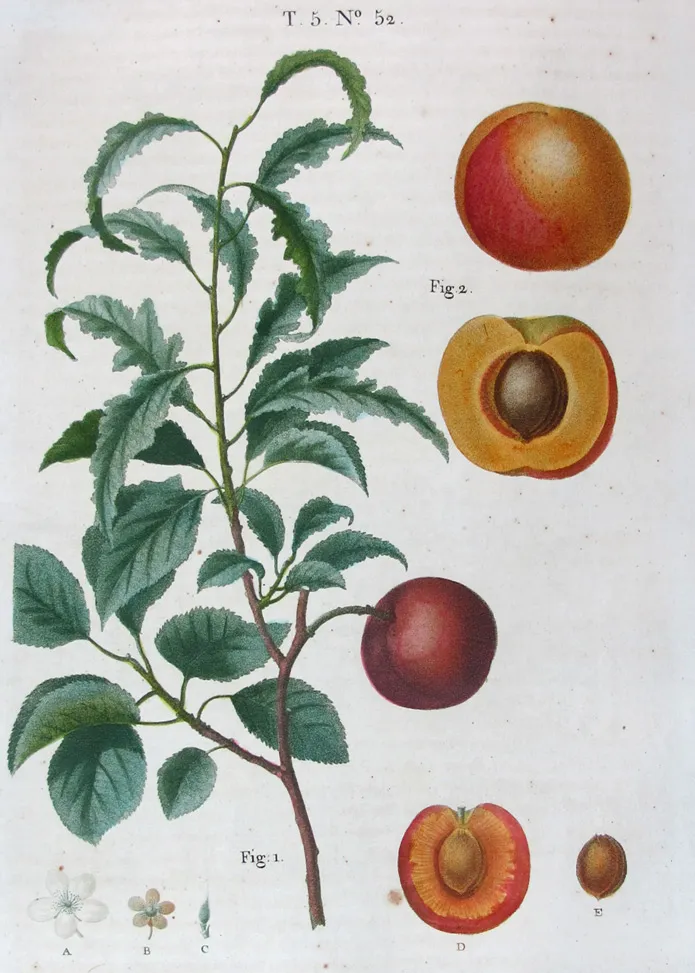
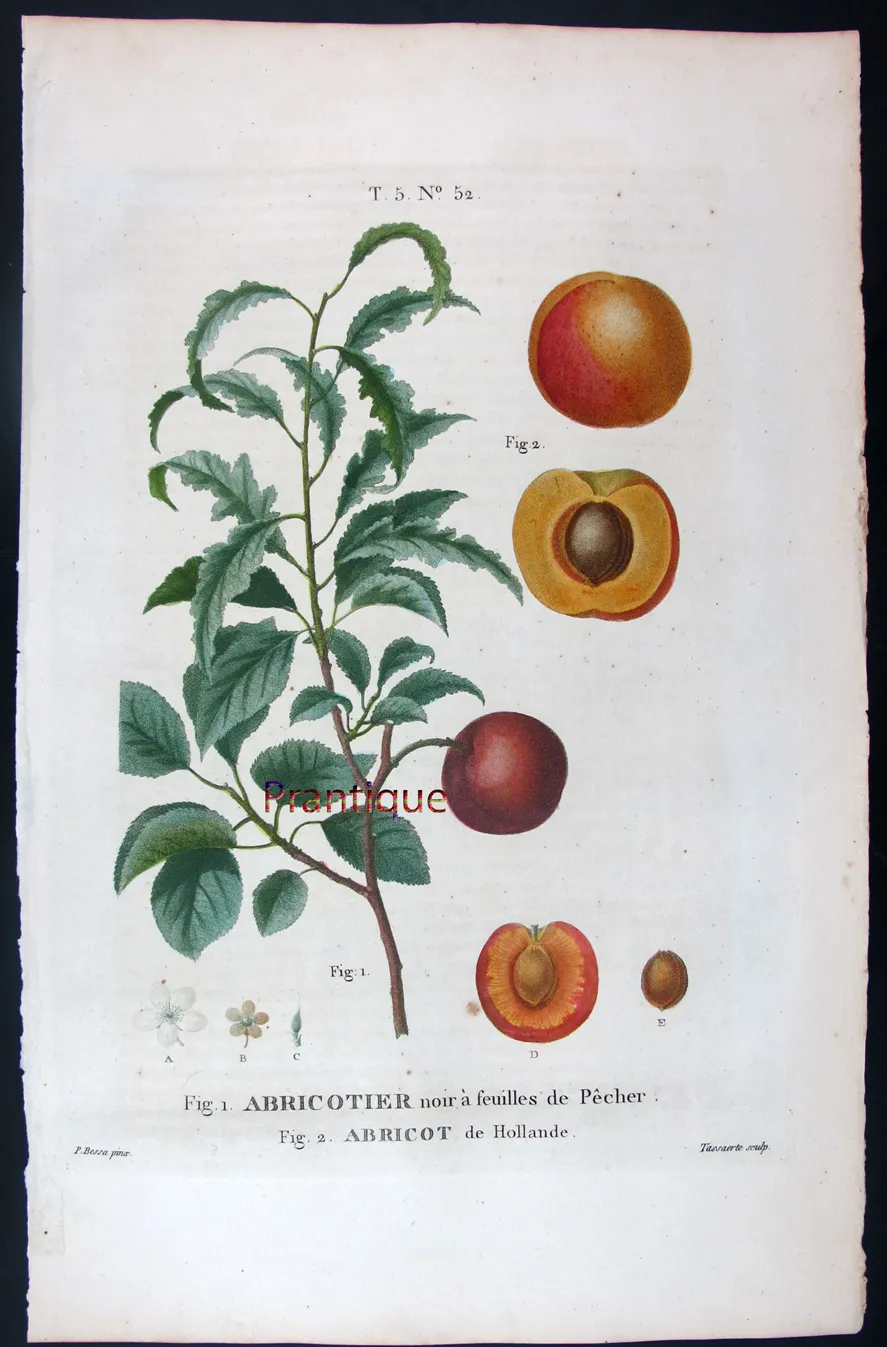
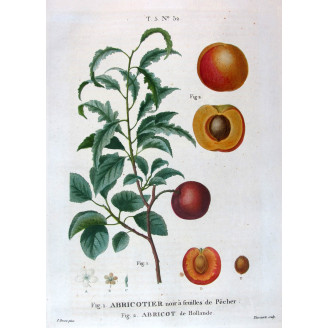

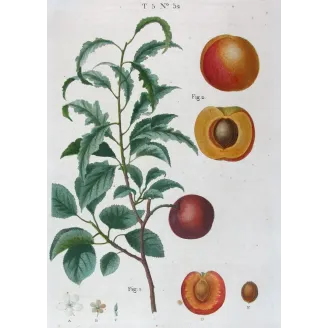
Dutch Apricot Abricot de Hollande Original hand-colored botanical engraving by Pancrace Bessa.
 Delivery policy
Your print will be carefully prepared and shipped worldwide via trusted couriers (UPS or similar).
 Authentic antique prints
Original engravings from the 17th–19th century.
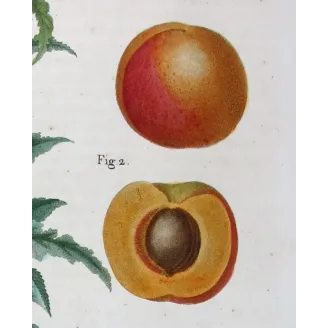
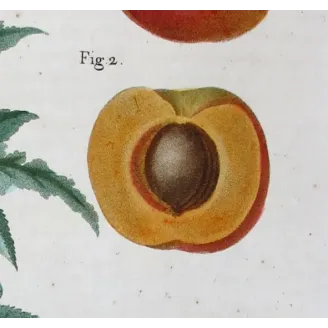
This original botanical engraving presents a composed and richly informative study of the apricot tree, combining foliage, blossom, and fruit at successive stages of development. The principal branch is rendered with clarity and balance, while adjacent figures explore the fruit both whole and in section, revealing the internal structure with quiet precision.
Bessa’s approach is distinctly painterly, even within this analytical framework. The leaves are treated with soft tonal modulation, creating volume without rigidity, while the fruits display warm chromatic transitions that convey ripeness and texture. The result is a plate that balances scientific completeness with refined visual harmony.
This engraving forms part of Arbres et Arbustes, one of the most accomplished French botanical publications of the early nineteenth century, in which Pancrace Bessa consistently united botanical observation with an elevated decorative sensibility.
— • —
The composition is structured vertically, with the branching foliage occupying the left side of the sheet and the fruit studies arranged to the right. This clear separation allows the viewer to move naturally from vegetative structure to mature fruit, establishing a calm visual rhythm across the page.
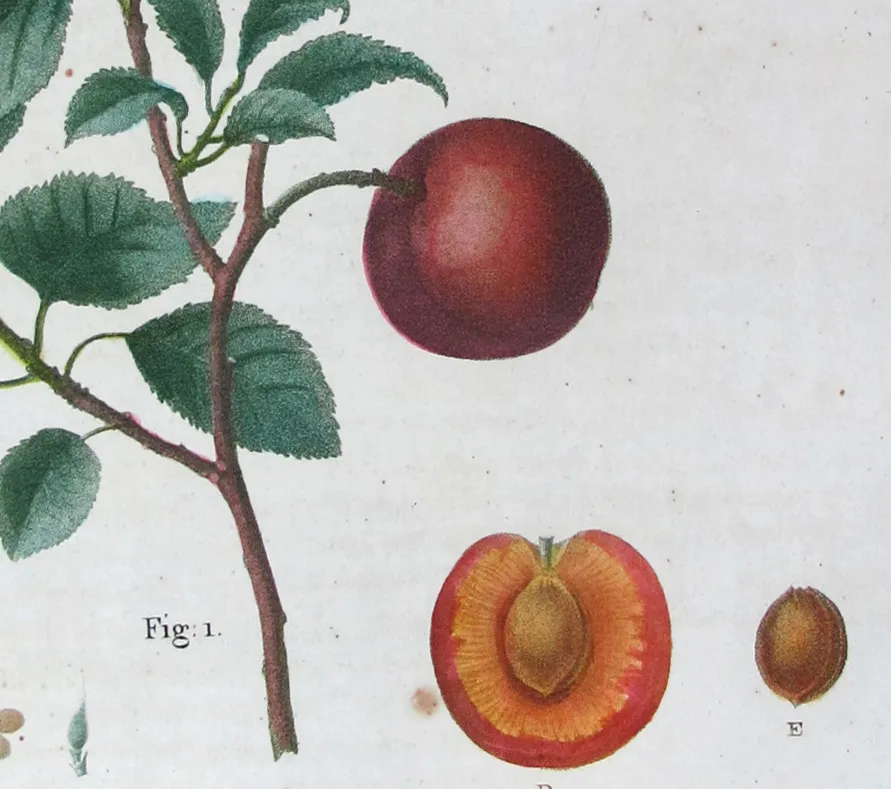
Hand-colouring is applied with restraint and confidence. The greens of the foliage are cool and softly graduated, while the apricots introduce warmer tones—amber, orange, and red—that add chromatic depth. The sliced fruit, revealing the stone within, provides a focal point of quiet intensity, reinforcing the sense of seasonal maturity and botanical completeness.
Prunus armeniaca, commonly known as the apricot, has long been cultivated in Europe for both its fruit and ornamental qualities. Valued for its early blossom and richly coloured fruit, it occupied an important place in horticultural collections of the eighteenth and nineteenth centuries. In botanical works such as Arbres et Arbustes, apricot trees were depicted not only for identification, but also to illustrate the full cycle of flowering, ripening, and fruit structure, making them particularly well suited to composite plates of this kind.
The engraving is in good antique condition. A very light, nearly imperceptible offset of the printed text is visible, most noticeable in the upper portion of the sheet; this is subtle and consistent with period printing practices. No watermark has been observed. The original hand-colouring remains fresh and well preserved across foliage and fruit. The image retains excellent legibility and balance, with no significant defects affecting the visual presentation. The engraved credits “P. Bessa pinx.” and “Tessier sculp.” are present, attesting to the original drawing by Pancrace Bessa and the engraving executed by Tessier.
For further context on Pancrace Bessa and his distinctive contribution to French botanical illustration, see our editorial feature:
Specific References
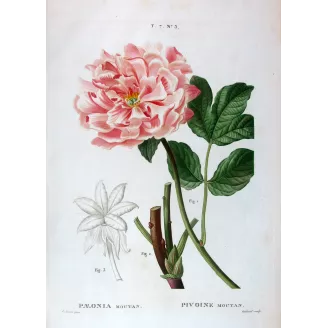
Tree Peony Pivoine moutan Original hand-colored botanical engraving by Pancrace Bessa.
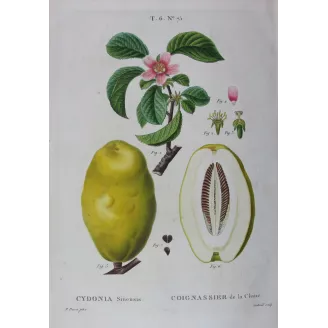
Chinese Quince Coignassier de la Chine Original hand-colored botanical engraving by Pancrace Bessa.
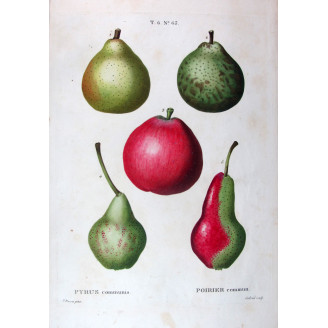
A refined study of French cultivated pear varieties, distinguished by subtle chromatic contrasts and carefully modelled forms. This hand-colored engraving reflects Pancrace Bessa’s ability to elevate orchard subjects through balance, restraint, and quiet visual authority.
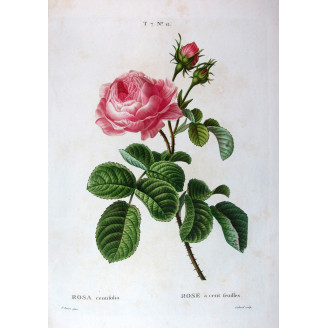
Hundred-petaled Rose Rose à cent feuilles Original hand-colored botanical engraving by Pancrace Bessa.
Botanical illustration of the Saint Catherine plum, a delicate fruit-bearing tree, by Pancrace Bessa.
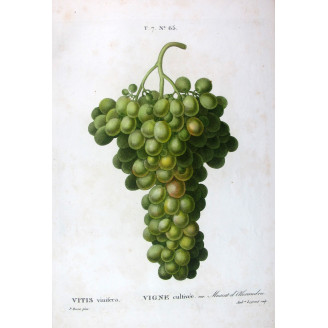
Depiction of golden grapes with vivid green leaves in fine detail.
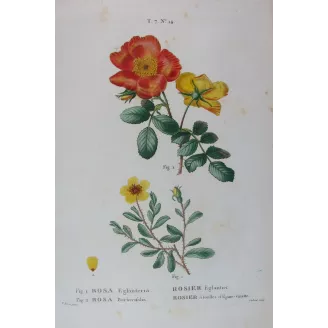
Eglantine & Berberis-leaved Rose Rosier à feuilles d'Épine-vinette Original hand-colored botanical engraving by Pancrace Bessa.
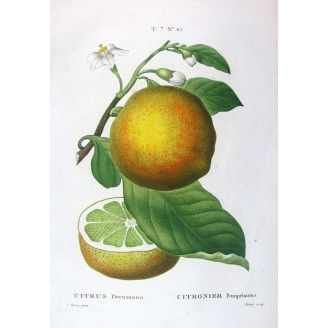
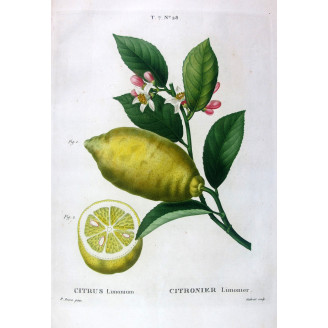
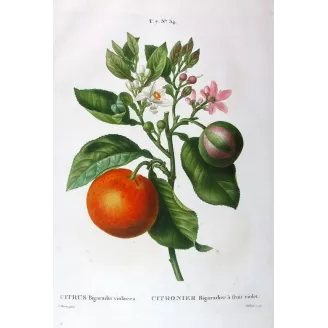
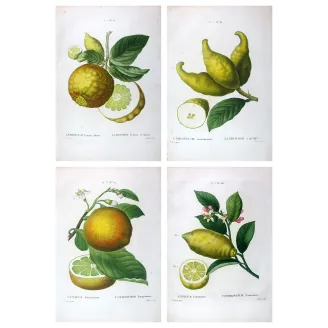
Nine original citrus engravings by Pancrace Bessa, uniting rare cedrats, sculptural lemons, and monumental Pomme d’Adam varieties into a coherent Napoleonic-era ensemble. Botanical study and refined color harmonize in a portfolio conceived to be read as a whole.
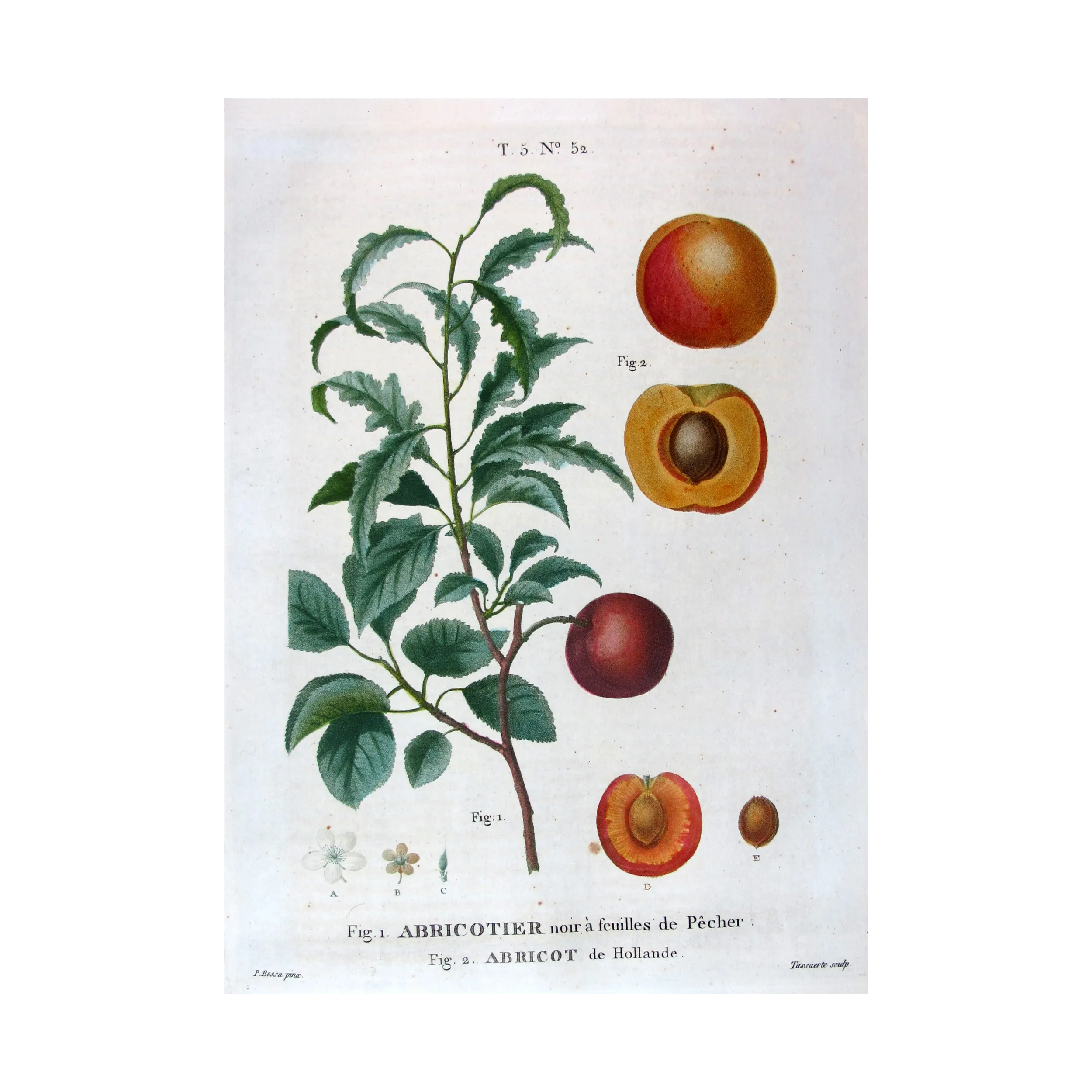
Dutch Apricot Abricot de Hollande Original hand-colored botanical engraving by Pancrace Bessa.