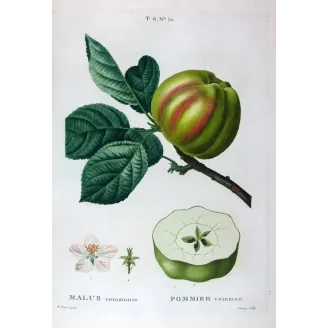
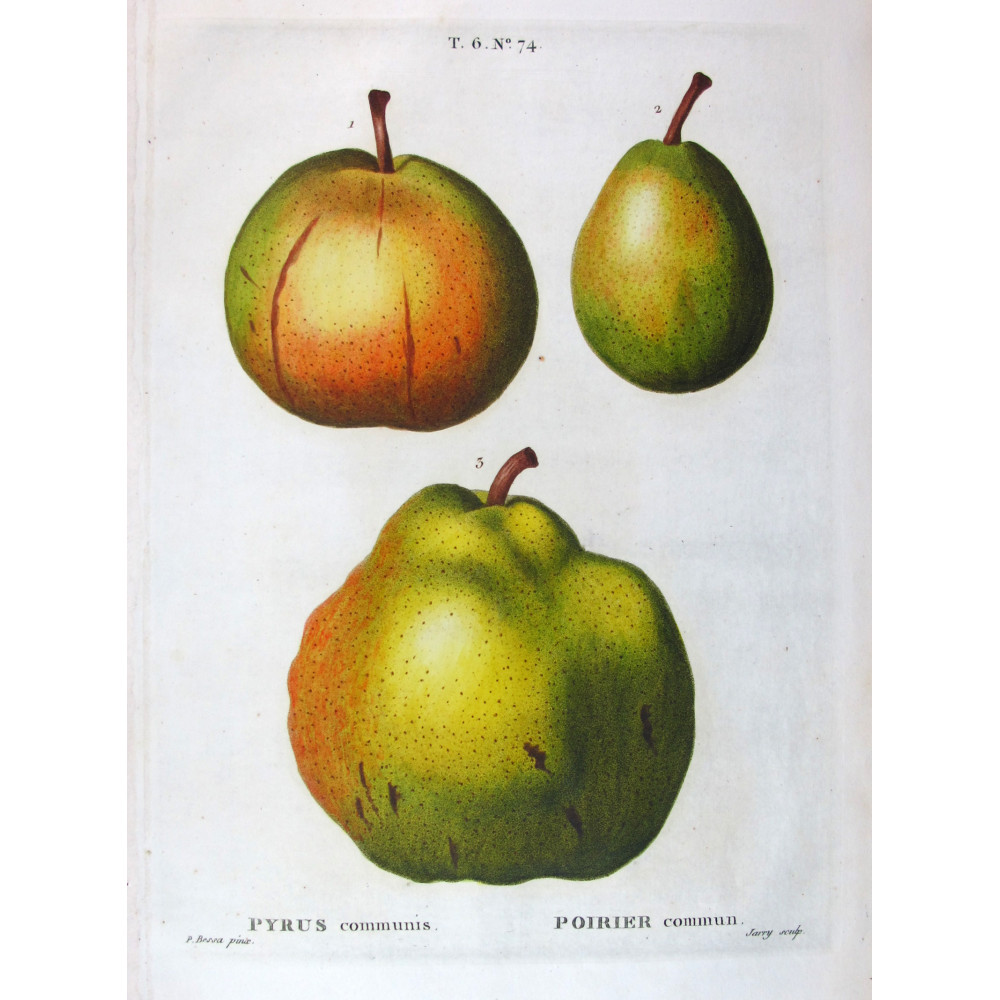
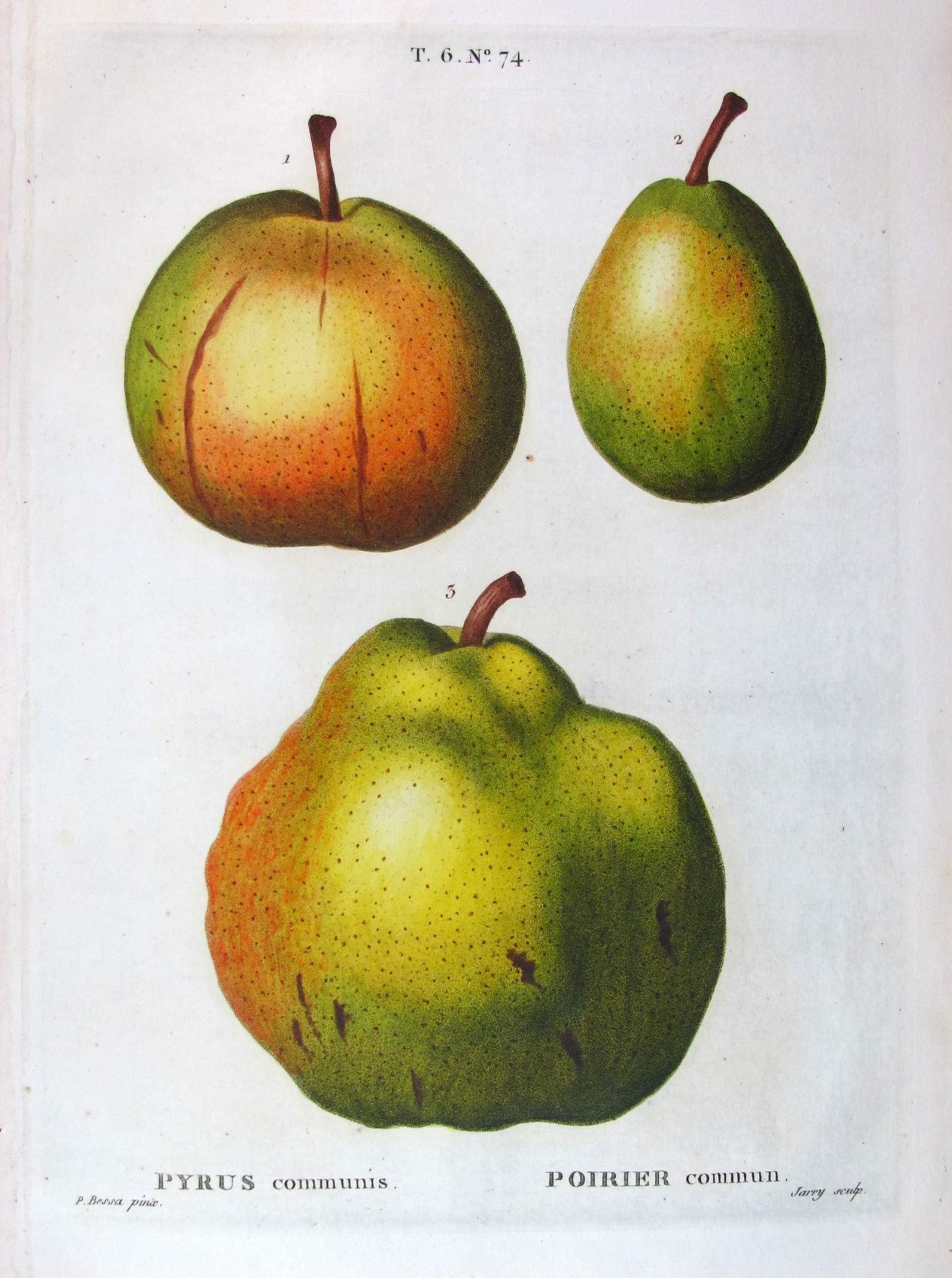
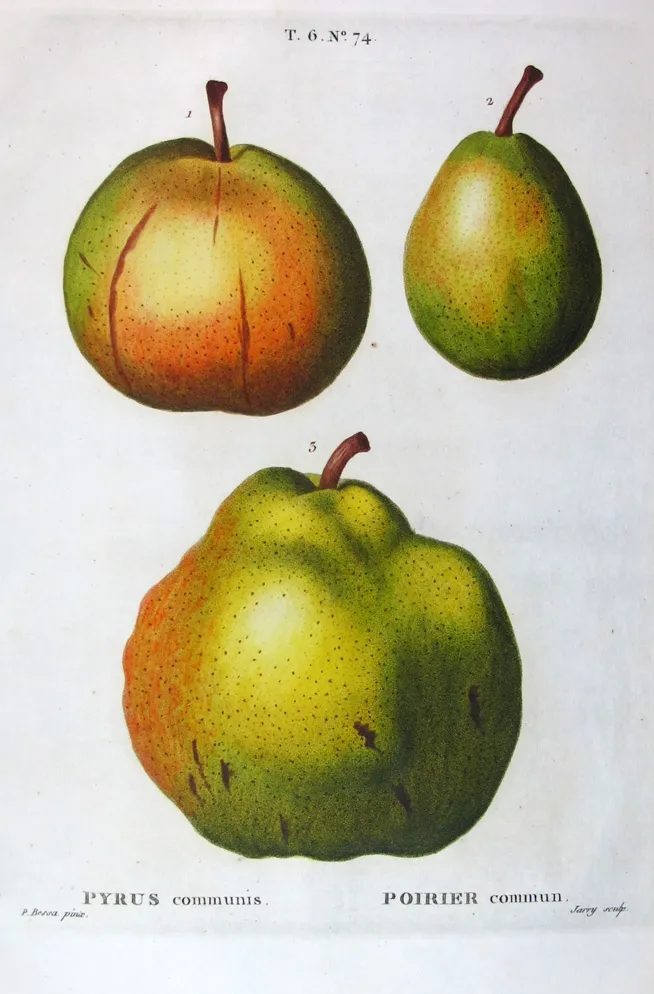
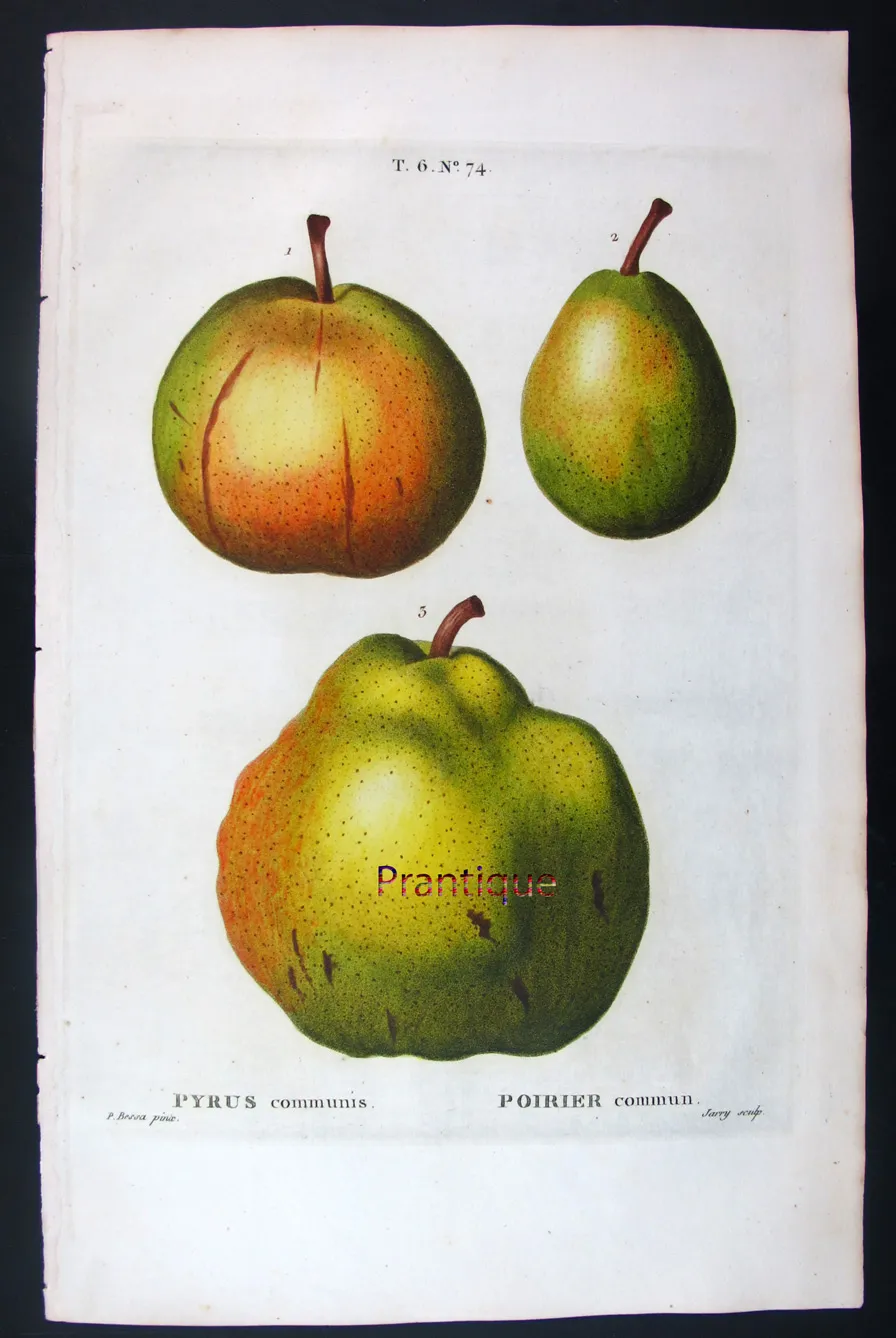

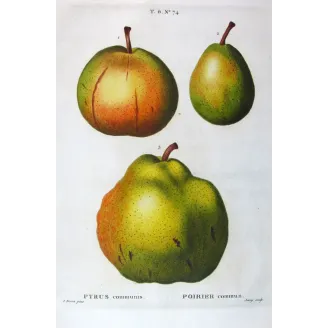
A sculptural study of cultivated fruit, defined by rounded volumes and restrained modelling, rendered with quiet elegance and visual balance.
 Delivery policy
Your print will be carefully prepared and shipped worldwide via trusted couriers (UPS or similar).
 Authentic antique prints
Original engravings from the 17th–19th century.
c
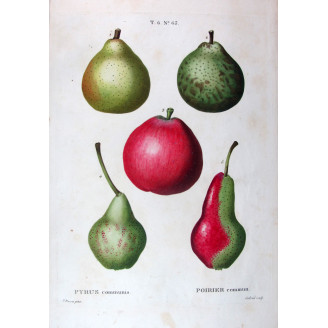
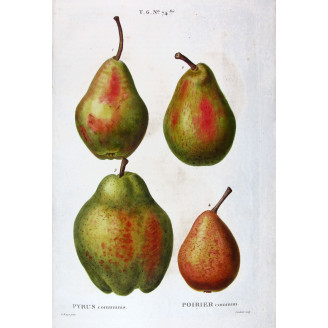
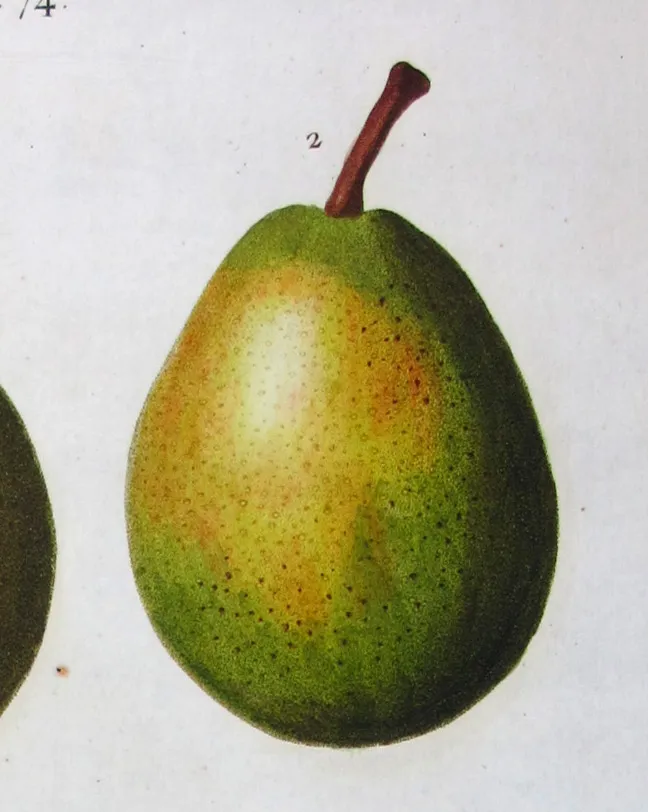
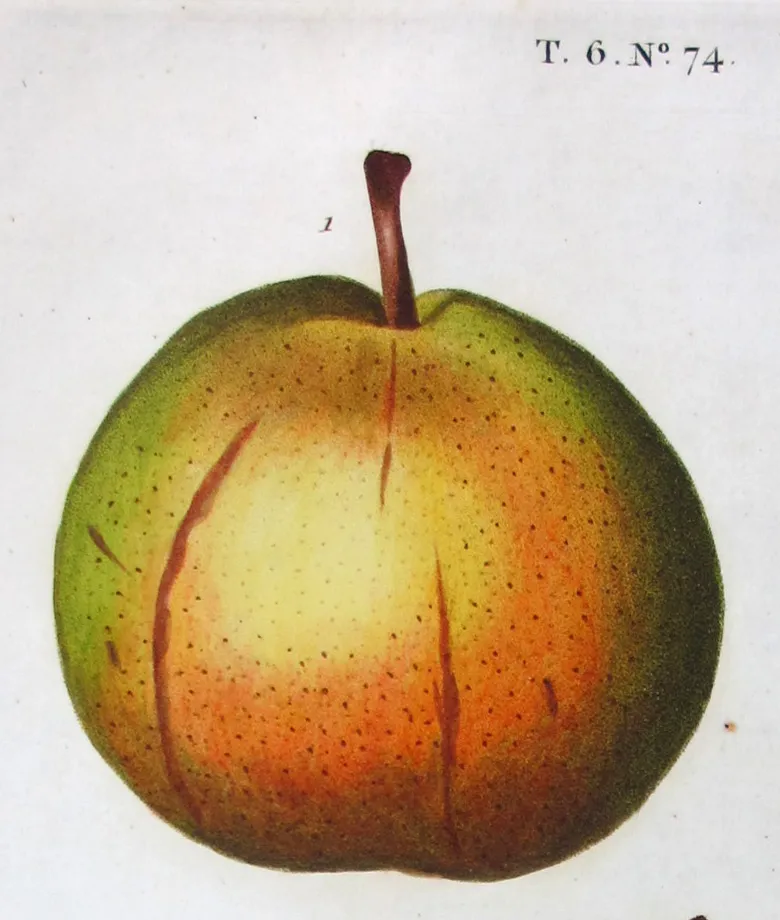
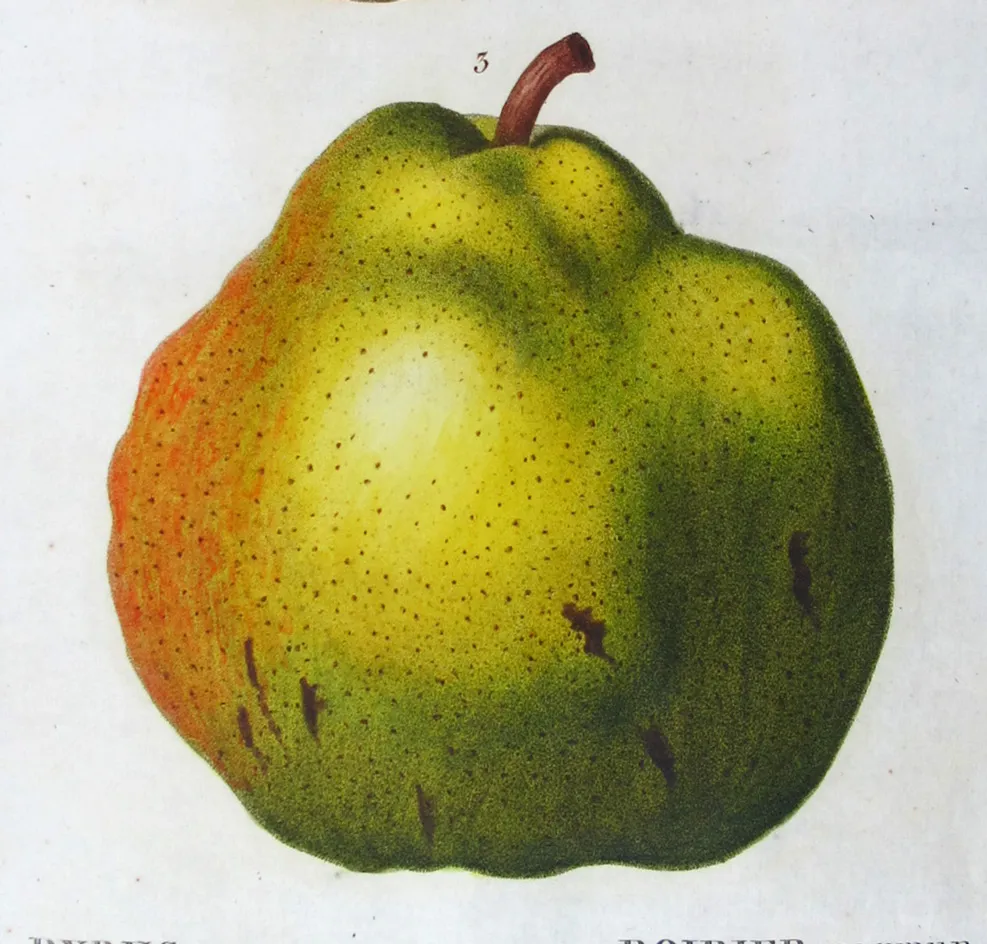
This original botanical engraving presents three cultivated pear studies arranged with striking simplicity and precision. Isolated against generous negative space, the fruits read as individual sculptural forms—each with its own silhouette, weight, and surface character—creating a plate that feels both historically grounded and visually contemporary.
Bessa’s approach here is notably restrained: the modelling is achieved through calm tonal transitions rather than dramatic contrast, producing an effect of real volume without theatricality. The colour remains controlled—soft greens, warm orchard tones, and discreet russet notes—allowing the fruit to hold the viewer’s attention through realism and proportion rather than decorative excess.
The engraving forms part of Arbres et Arbustes, among the most accomplished French botanical publications of the early nineteenth century, where cultivated orchard subjects were elevated through refined observation and disciplined composition.
— • —
The plate is built as a trio: two pears above—distinct in outline and surface shading—balanced by a larger, more monumental fruit below. This upper–lower rhythm creates a measured visual cadence, guiding the eye from the paired studies to the fuller form beneath, while maintaining an overall sense of calm order.
The restraint of the palette is one of the plate’s strengths. The fruits are rendered with subtle highlights and softly graded shadows, producing a convincing three-dimensional presence. The result is particularly well suited to interiors where understated natural subjects are preferred over overtly decorative colour—quietly elegant, assured, and timeless.
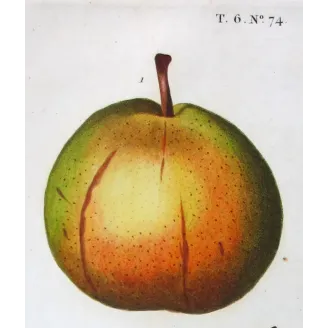
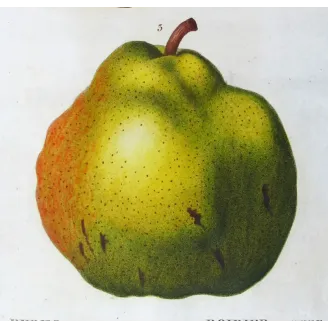
The plate is classified as Pyrus communis (common pear). In the original publication, the three fruits are identified as specific cultivated varieties: Belle Audibert (Fig. 1), Virgouleuse (Fig. 2), and Poire de quarante onces (Fig. 3). This reflects the period’s orchard documentation, where cultivars were recorded for their characteristic size, surface texture, and distinctive form.
Unlike branch-and-blossom plates intended to describe the whole tree, this composition privileges the fruit as the primary object of study. Each variety is shown with clear proportions and a naturalistic skin texture, offering a refined portrait of cultivated pears as they were known and valued in early nineteenth-century France.
As an orchard subject, the engraving carries both documentary and decorative strength: it preserves a historically specific record of cultivated fruit, while presenting an exceptionally modern clarity of design—minimal, balanced, and visually enduring.
The engraving is in like brand new condition, with an exceptionally fresh and clean appearance for an early nineteenth-century impression. The sheet shows no distracting toning or defects that affect presentation. No watermark has been observed. The original hand-colouring is very well preserved, with stable hues and refined modelling across all three fruits. The engraved credits “P. Bessa pinx.” and “Jarry sculp.” are present, attesting to the original drawing by Pancrace Bessa and the engraving executed by Jarry.
For further context on Pancrace Bessa and his distinctive contribution to French botanical illustration, see our editorial feature:
Specific References
A refined study of French cultivated pear varieties, distinguished by subtle chromatic contrasts and carefully modelled forms. This hand-colored engraving reflects Pancrace Bessa’s ability to elevate orchard subjects through balance, restraint, and quiet visual authority.
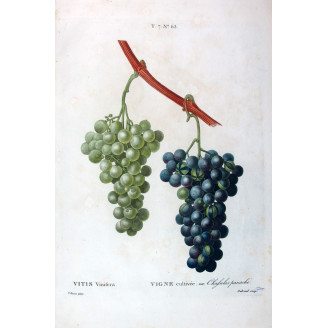
Rare depiction of striped Chasselas grape clusters, unique in its pattern and color.
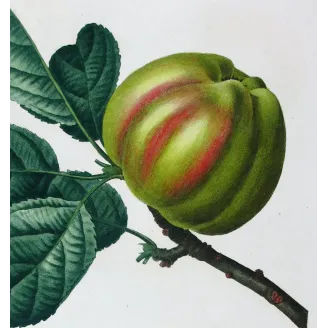
A finely executed early 19th-century botanical engraving illustrating a cultivated apple variety (Malus communis), drawn by Pancrace Bessa for Arbres et Arbustes. The composition combines precise botanical observation with refined decorative balance, presenting fruit and foliage with clarity and quiet elegance. Exceptional hand-colouring and careful modelling reflect the sophistication of French pomological illustration at its height.
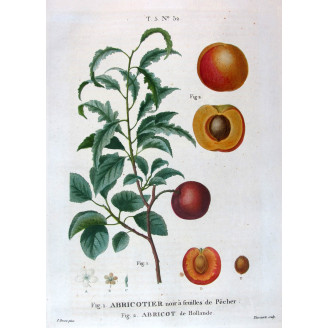
Dutch Apricot Abricot de Hollande Original hand-colored botanical engraving by Pancrace Bessa.
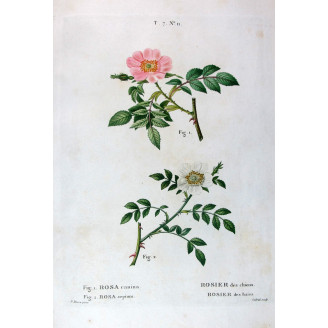
Dog Rose & Hedge Rose Rosier des chiens & Rosier des haies Original hand-colored botanical engraving by Pancrace Bessa.
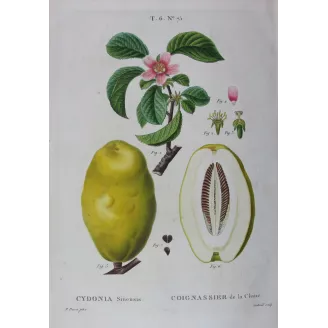
Chinese Quince Coignassier de la Chine Original hand-colored botanical engraving by Pancrace Bessa.
A refined orchard subject where volume and proportion are carefully balanced, giving the fruit a calm, almost sculptural presence.
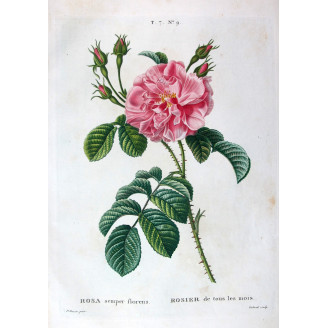
Monthly Rose Rosier de tous les mois Original hand-colored botanical engraving by Pancrace Bessa.
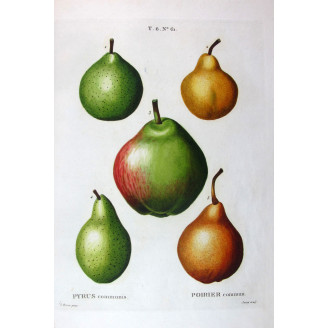
A refined study of five historic pear cultivars, combining varietal precision with sculptural balance and luminous hand-colouring.
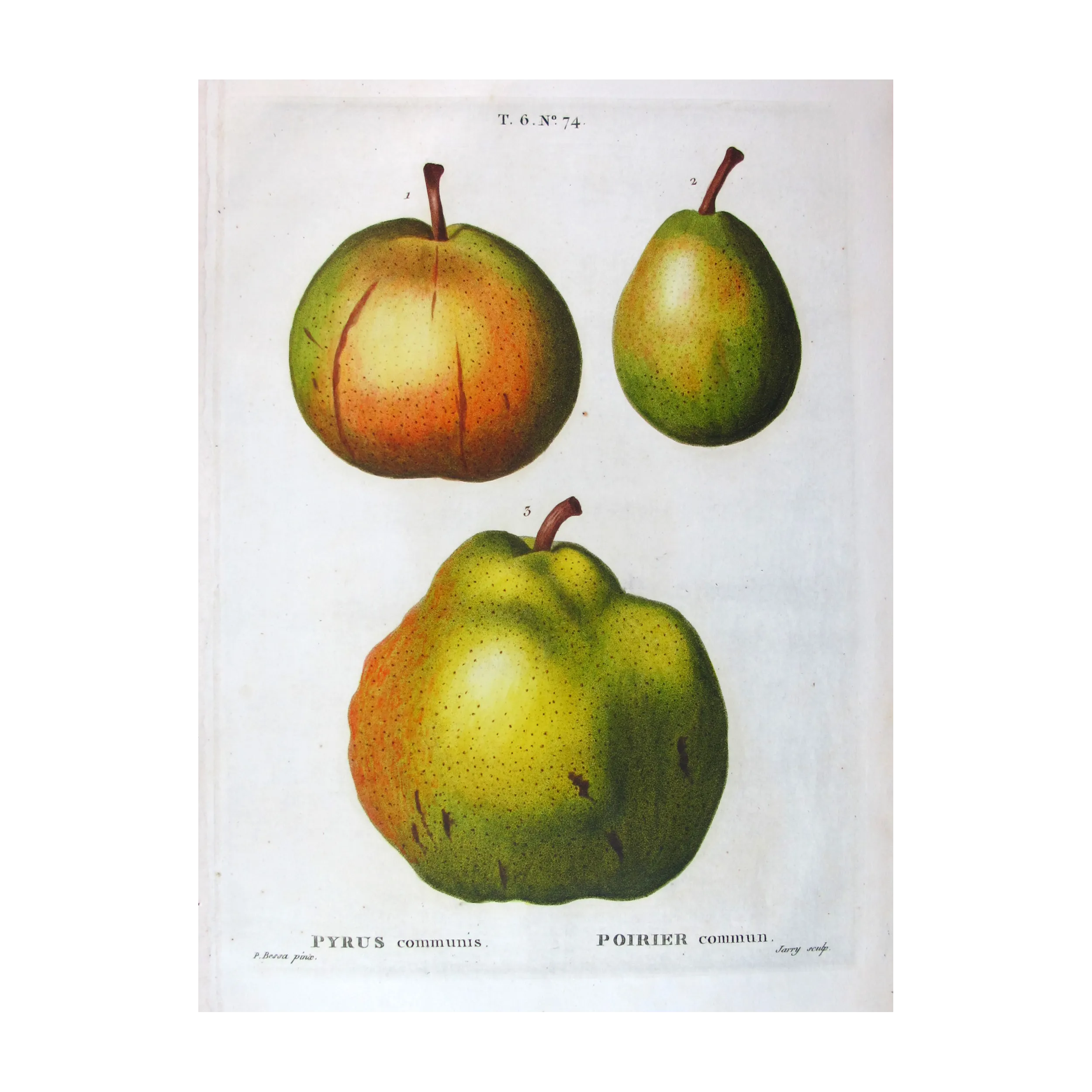
A sculptural study of cultivated fruit, defined by rounded volumes and restrained modelling, rendered with quiet elegance and visual balance.