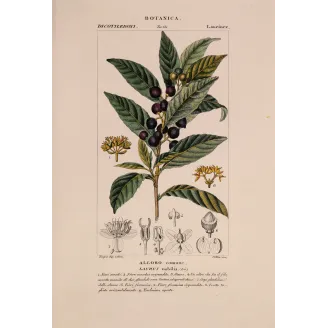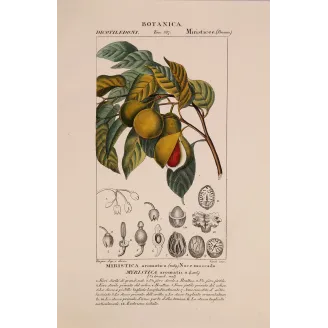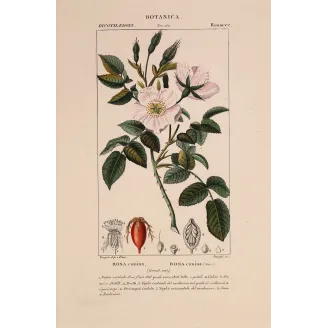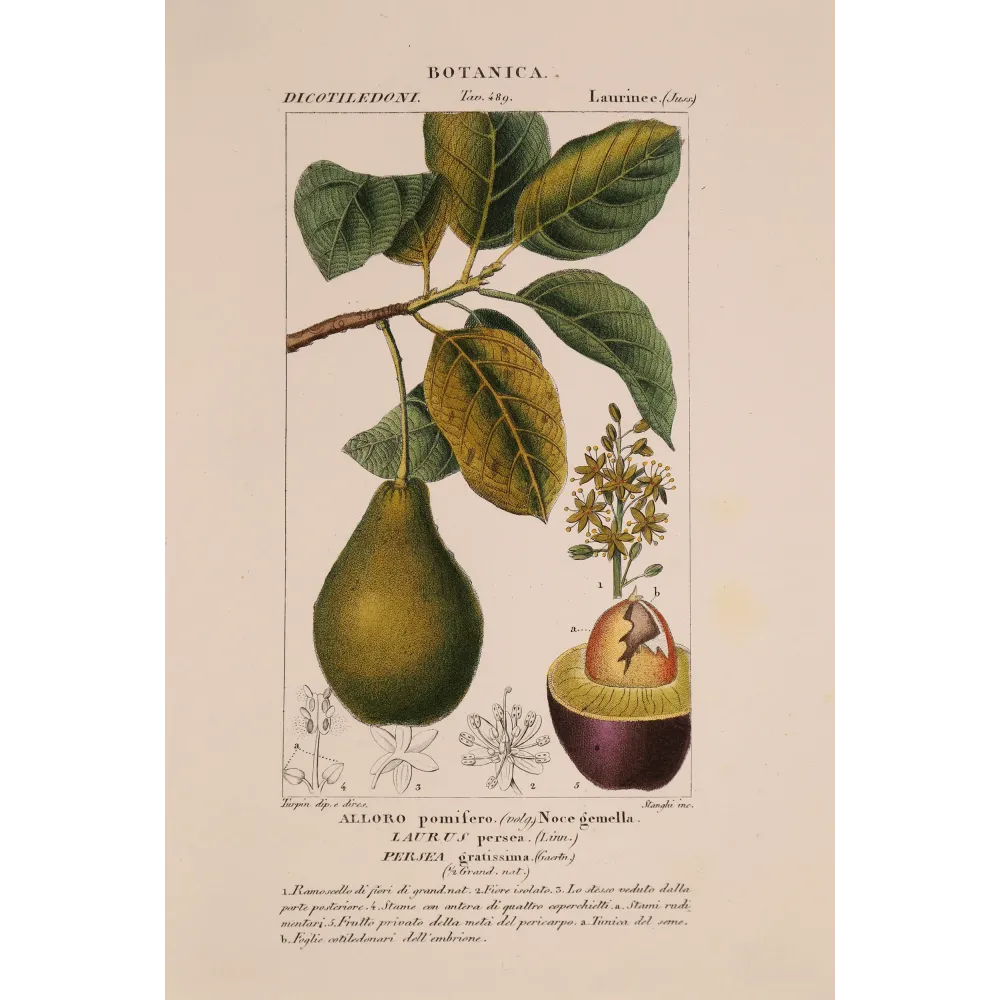
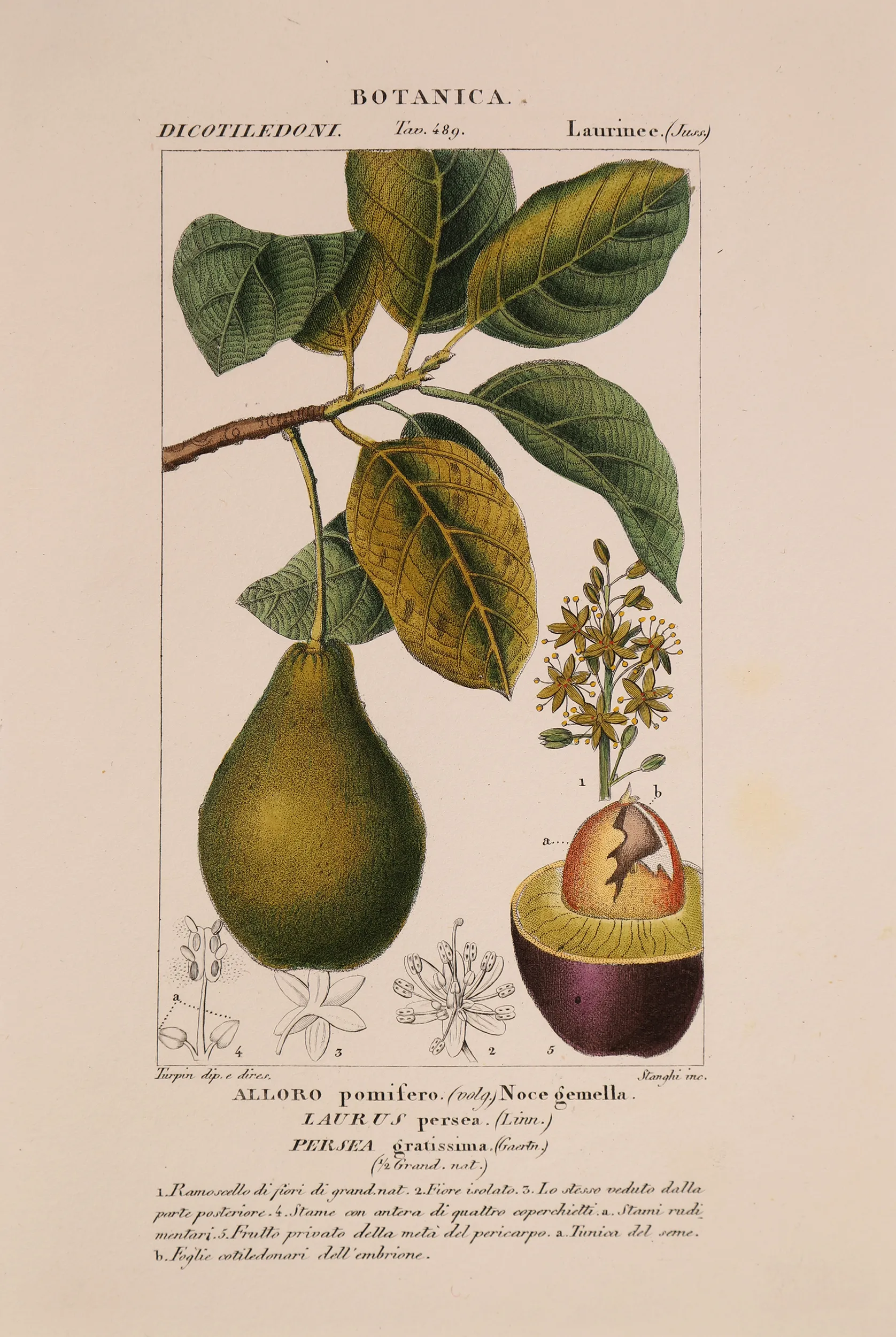
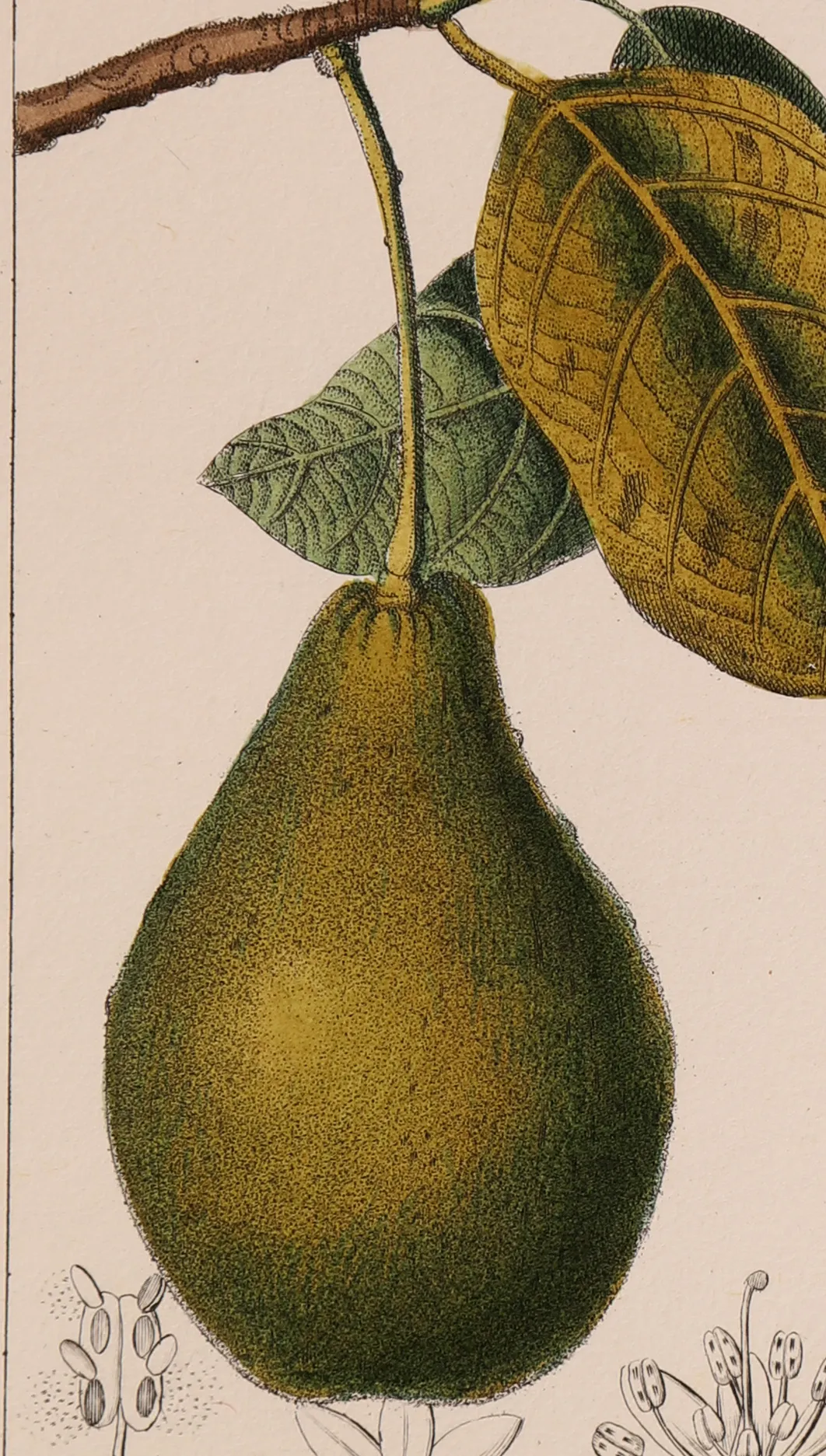
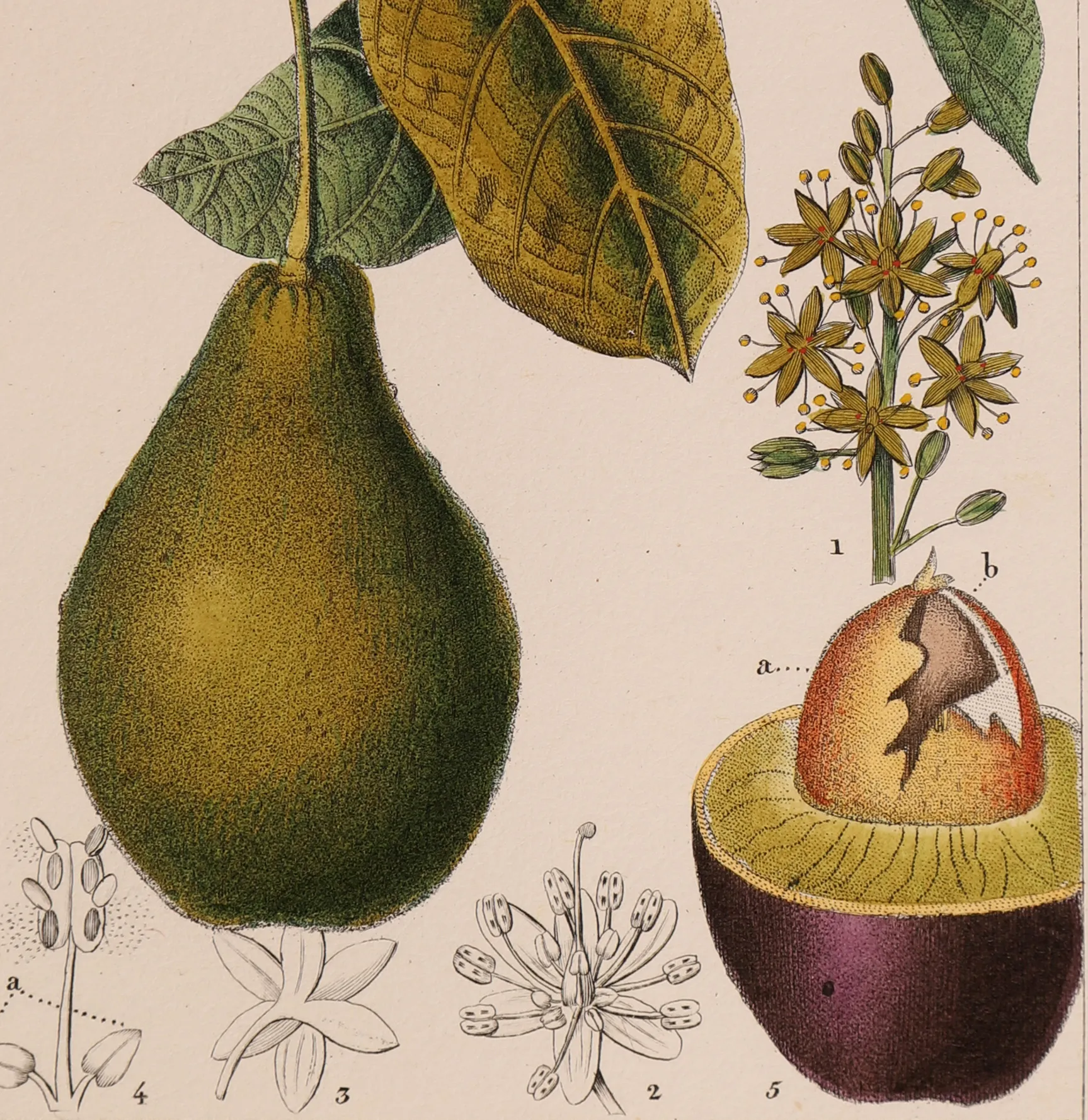
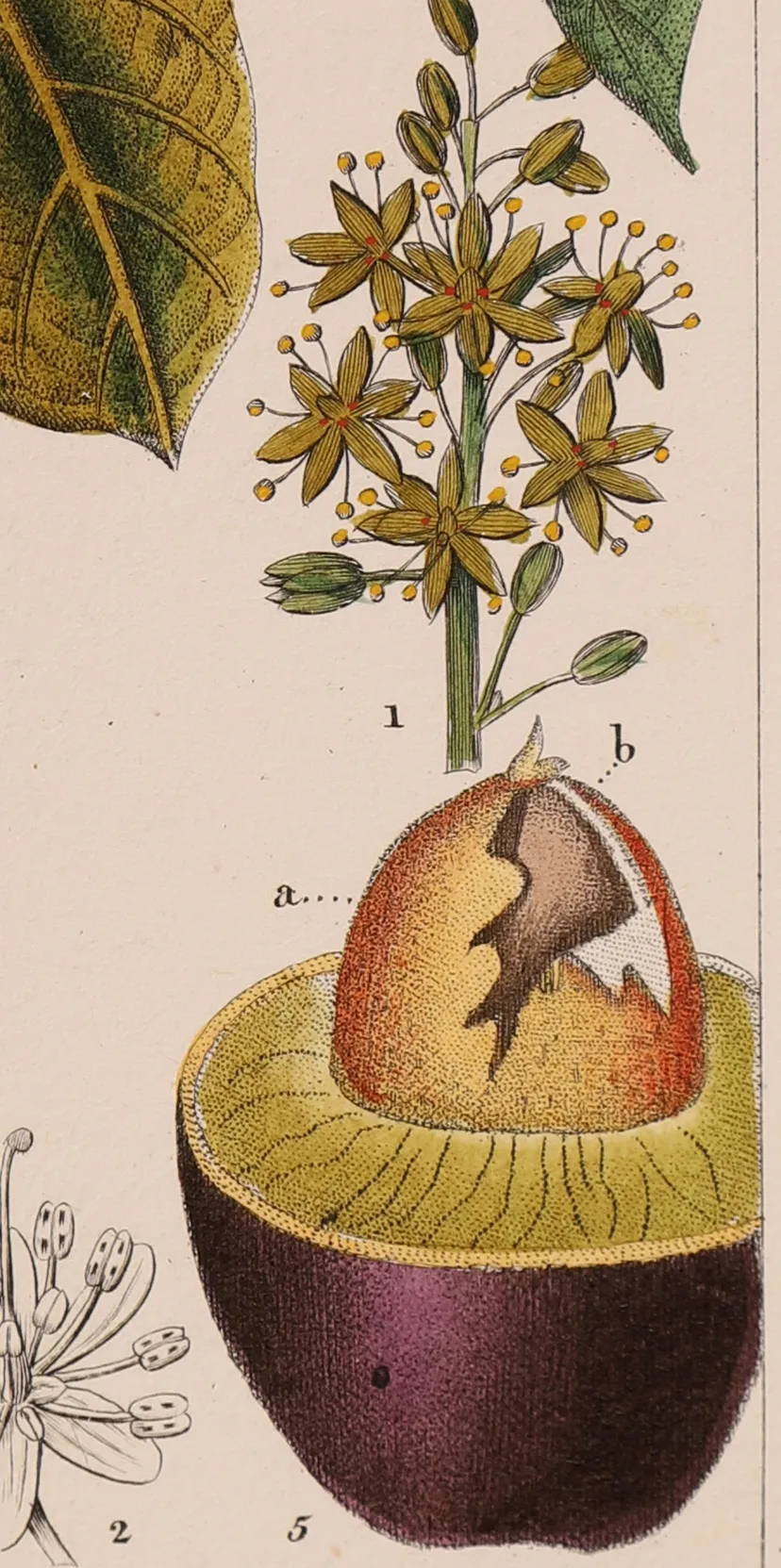

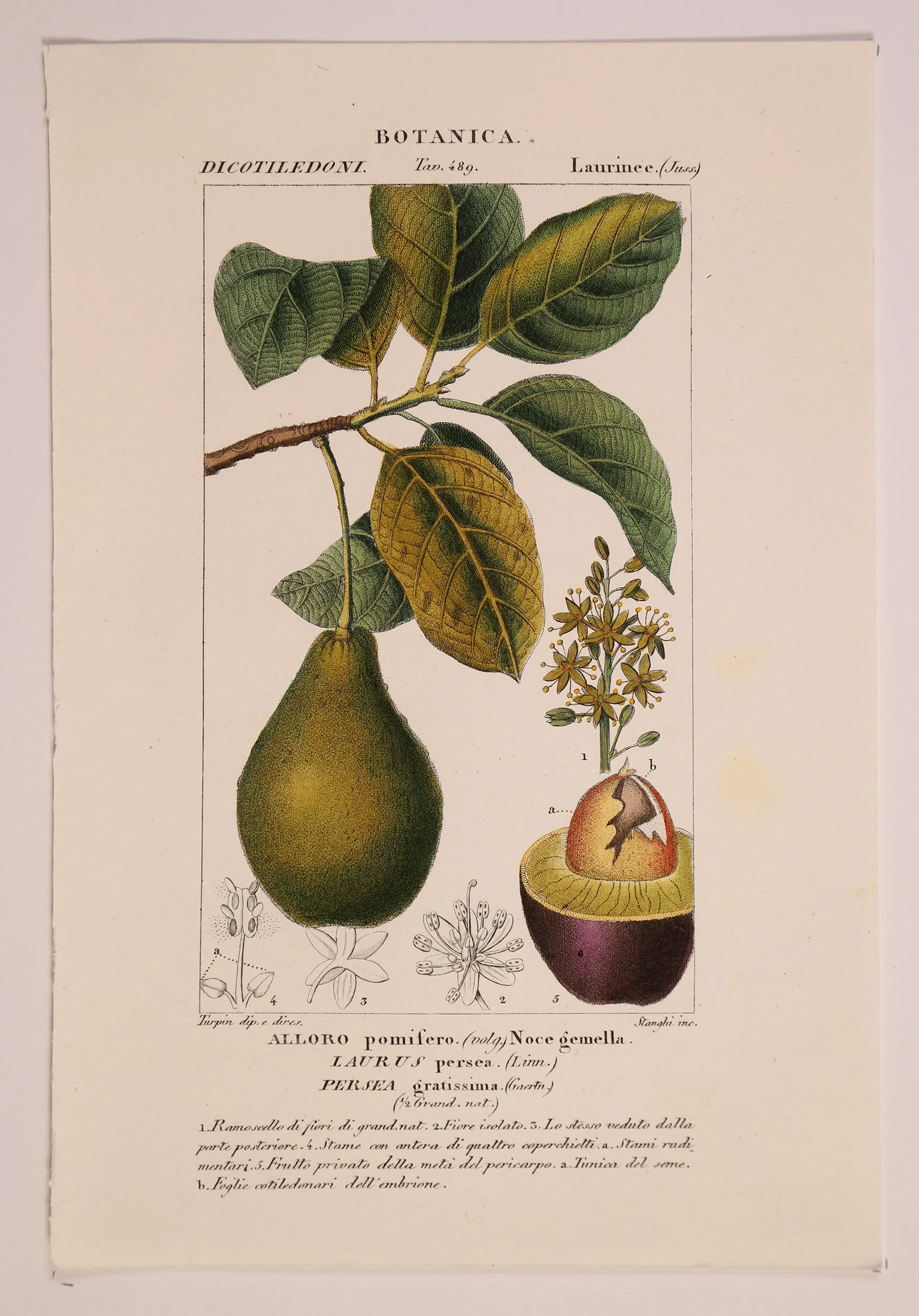
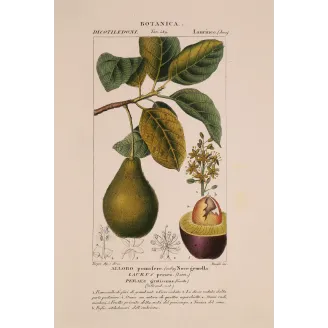
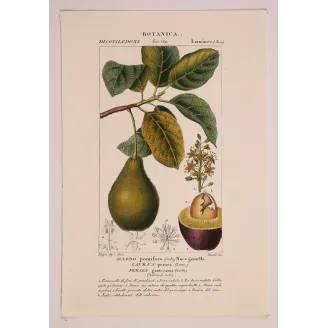
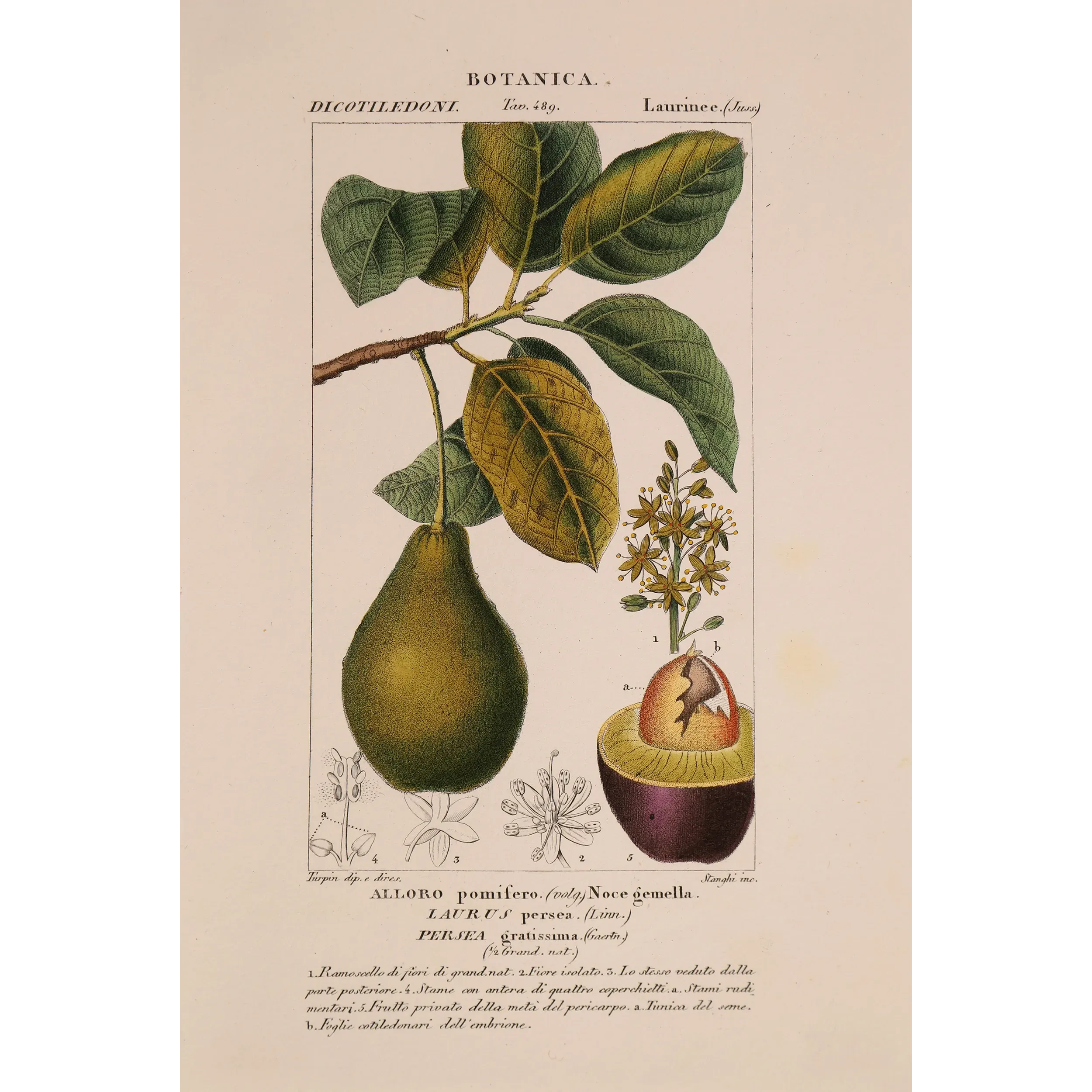
Botanical plate of avocado with whole fruit, seed, and internal anatomy.
 Delivery policy
Your print will be carefully prepared and shipped worldwide via trusted couriers (UPS or similar).
 Authentic antique prints
Original engravings from the 17th–19th century.
This original early nineteenth-century engraving depicts the avocado tree, historically classified as Laurus persea and later Persea gratissima, today known as Persea americana. The plate combines botanical authority with strong visual presence, presenting a monumental pear-shaped fruit alongside a detailed sectional view revealing the seed and internal structure.
Produced for the Italian edition of the Dizionario di Scienze Naturali (Florence, Battelli press), the engraving reflects the encyclopedic ambition of the period: exotic species newly integrated into European scientific classification were documented with precision, clarity and aesthetic discipline.
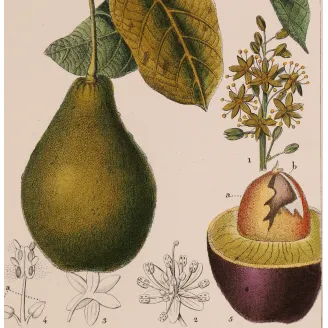
The composition captures the avocado not merely as a tropical fruit, but as a subject of systematic botanical study, supported by floral and anatomical details arranged along the lower margin.
— • —
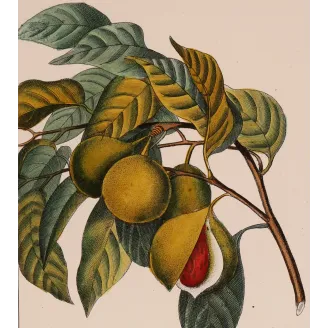
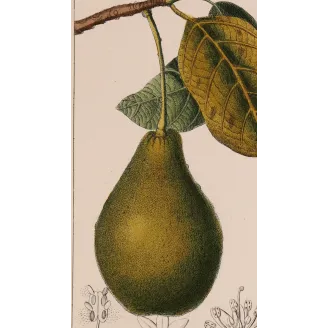
The engraving is structured around a dominant central fruit, whose smooth volume anchors the composition. The gradation from luminous yellow-green to deeper olive tones creates dimensional realism. Surrounding foliage is rendered with carefully articulated venation, ranging from cool grey-green to warm golden hues.
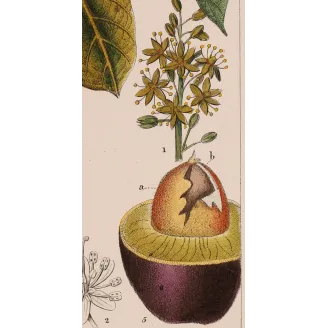
Particularly striking is the sectional depiction of the fruit: the exposed seed and contrasting purple-toned pericarp introduce chromatic depth and scientific clarity. The sheet balances decorative impact with anatomical precision, making it equally suited to a botanical study, a contemporary interior, or a culinary-inspired setting.
Native to Central and South America, the avocado entered European botanical knowledge during the age of exploration. By the early nineteenth century, naturalists sought to integrate such economically and nutritionally significant species into formal classification systems. The historical denomination “Alloro pomifero” reflects earlier taxonomic attempts to associate the plant with the laurel family. This engraving preserves that transitional moment in botanical science — where global exchange, taxonomy and artistic documentation intersect.
This plate forms part of the historic Dizionario di Scienze Naturali, preserved within the distinguished Sacchetti Collection. Each engraving reflects a period when scientific rigor was matched by refined copperplate craftsmanship and luminous hand-colouring.
To explore the broader cultural and historical context of these works, we invite you to read our feature “Not Just Another Print”.
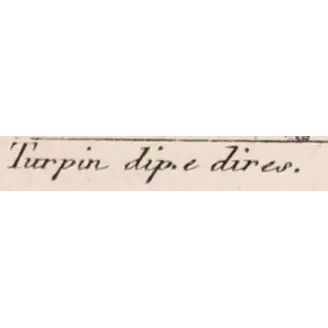
The engraving is in exceptional antique condition, remarkably close to “like brand new.” The sheet presents clean margins and a crisp, well-inked impression. The paper is smooth early nineteenth-century wove paper (non-laid). No watermark has been observed. The original hand-colouring remains fresh and evenly preserved, with no visible losses. The engraved credit “Turpin dis.” confirms the original drawing by Pierre Jean François Turpin.
For further context on Turpin’s contribution to botanical illustration, see:
Pierre Jean François Turpin – The Botanical Illustrator of Natural Harmony
Specific References
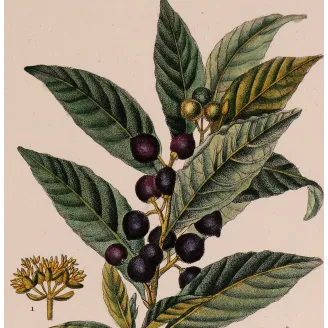
Graceful composition of bay laurel with fruits, blossoms, and internal flower structure.
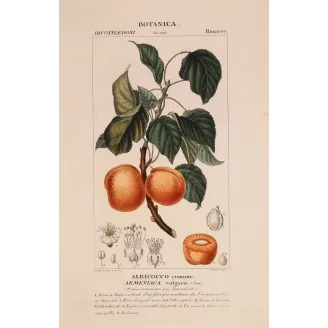
Original 19th-century botanical engraving of the common apricot, showing its velvety orange fruits and lush green leaves, rendered with great naturalistic balance.
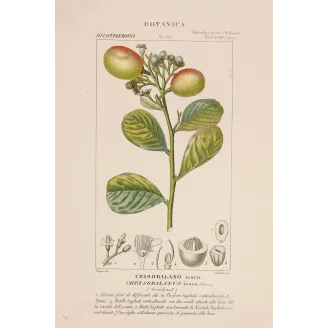
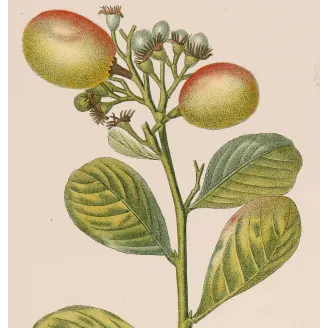
Elegant hand-colored botanical engraving of *Chrysobalanus icaco*, showing the round fruits and smooth glossy leaves in rich natural hues.
Striking botanical print of nutmeg fruit with cutaway sections and seed structure.
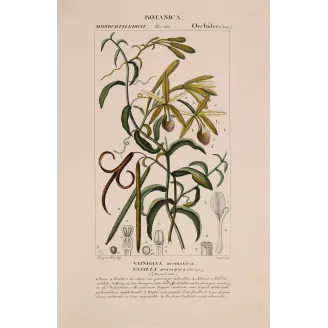
Delicate orchid illustration showing flower, pod and internal anatomy of vanilla.
Detailed depiction of the black pepper vine with fruiting spikes and leaves.
Delicate dog rose flower with soft pink petals and fine botanical details.
Unusual and fascinating botanical study of truffle morphology, rich in scientific detail.
A complete set of 22 original hand-colored Engravings of ferns by Turpin, from the Dizionario di Scienze Naturali (c. 1830).
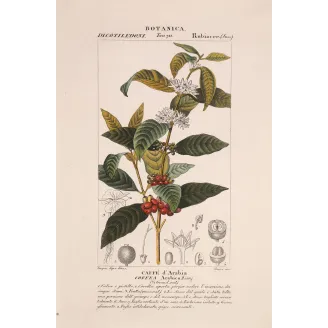
Botanical plate of Coffea arabica with vivid red berries and detailed floral structure.
Vibrant caper plant illustration with both flowers and fruiting structures.
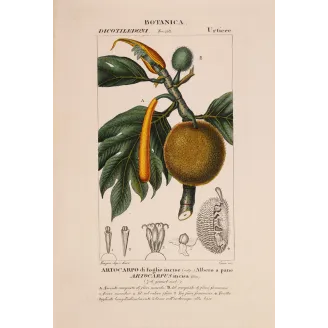
An extraordinary 19th-century engraving of *Artocarpus incisa*, the breadfruit tree, showcasing its bold leaves and unique fruit texture.
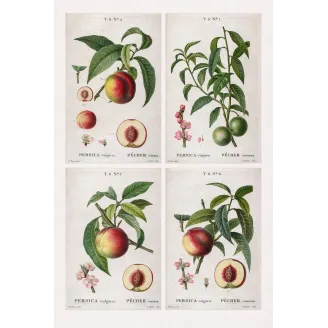
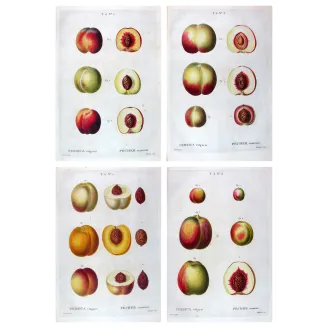
Original pochoir print of the peach tree, Prunus persica, with detailed flowering and fruit.
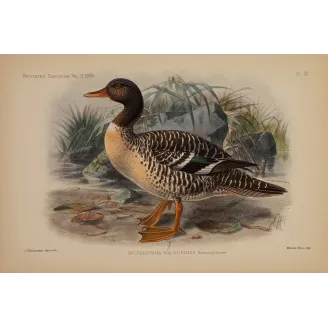
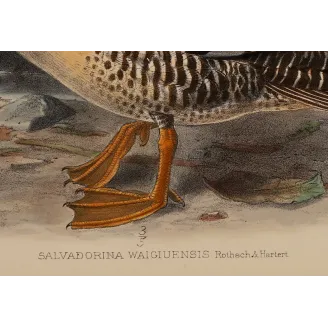
Original hand-coloured lithograph by John Gerrard Keulemans from Novitates Zoologicae, Volume II, Plate III, published in 1895. Depicting the remarkable Waigeu Duck (Salvadorina waigiuensis), the composition combines precise zoological observation with a carefully constructed wetland landscape. Selective gum arabic remains visible across the wing feathers, tail, pupil and neck. Printed by Mintern Bros. on substantial wove paper and preserved in very good condition.
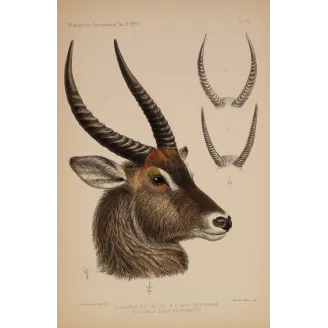
Original hand-coloured lithograph by John Gerrard Keulemans from Novitates Zoologicae, Volume II, Plate IV, published in 1895. The sheet combines a finely observed portrait of an African waterbuck with comparative studies of three horn forms used for zoological identification. Selective gum arabic remains visible on the forehead, pupil, nose and darker portions of the principal horns. Printed by Mintern Bros. on substantial wove paper and preserved in very good condition.
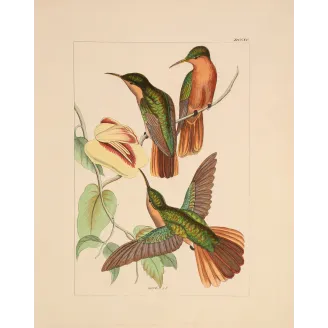
Original nineteenth-century hand-colored engraving depicting the Jamaican Mango (Anthracothorax mango), a striking tropical hummingbird illustrated by Ludwig Reichenbach in his celebrated Trochilinarum Enumeratio.
Delicate orchid illustration showing flower, pod and internal anatomy of vanilla.
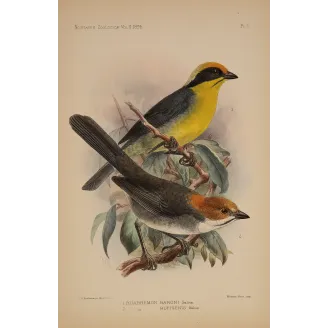
Original hand-coloured lithograph by John Gerrard Keulemans from Novitates Zoologicae, Volume II, Plate I, published in 1895. The composition depicts two Peruvian Andean brushfinches against a restrained botanical setting, with selective gum arabic highlights around the eyes and across parts of the upper bird’s wings. Printed by Mintern Bros. on substantial wove paper and preserved in very good condition.
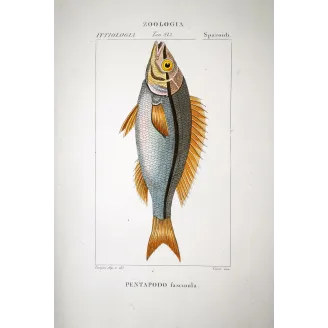
Elegant Pentapodus fish with shimmering orange-silver tones and refined aquatic poise.
Original hand-coloured lithograph by John Gerrard Keulemans from Novitates Zoologicae, Volume I, Plate XV, published in 1894. The composition presents a Venezuelan White-streaked Antvireo above a richly patterned Crested Bobwhite, using vertical placement to suggest two distinct ecological levels within the same natural environment. Selective gum arabic remains visible on the pupils of both subjects and more extensively across the plumage of the lower bird. Printed by Mintern Bros. on substantial wove paper and preserved in very good condition.
Botanical plate of avocado with whole fruit, seed, and internal anatomy.