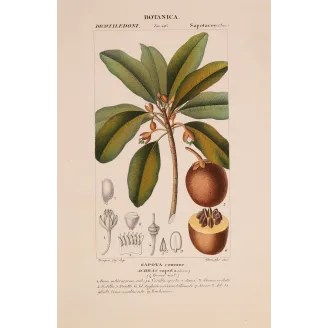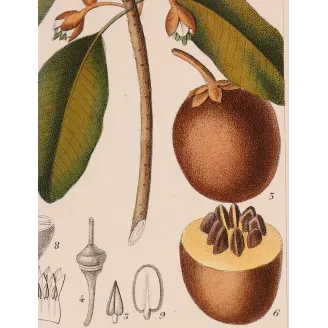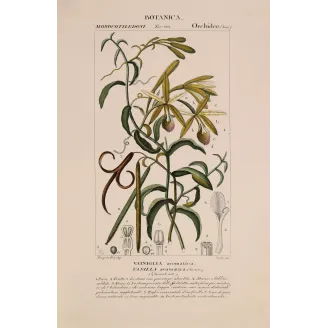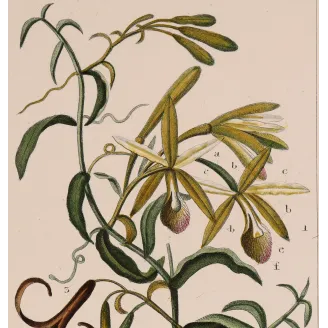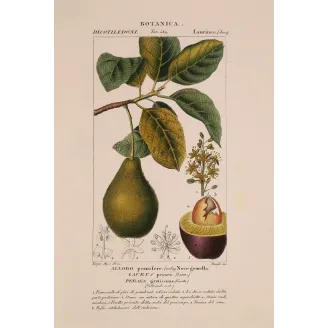
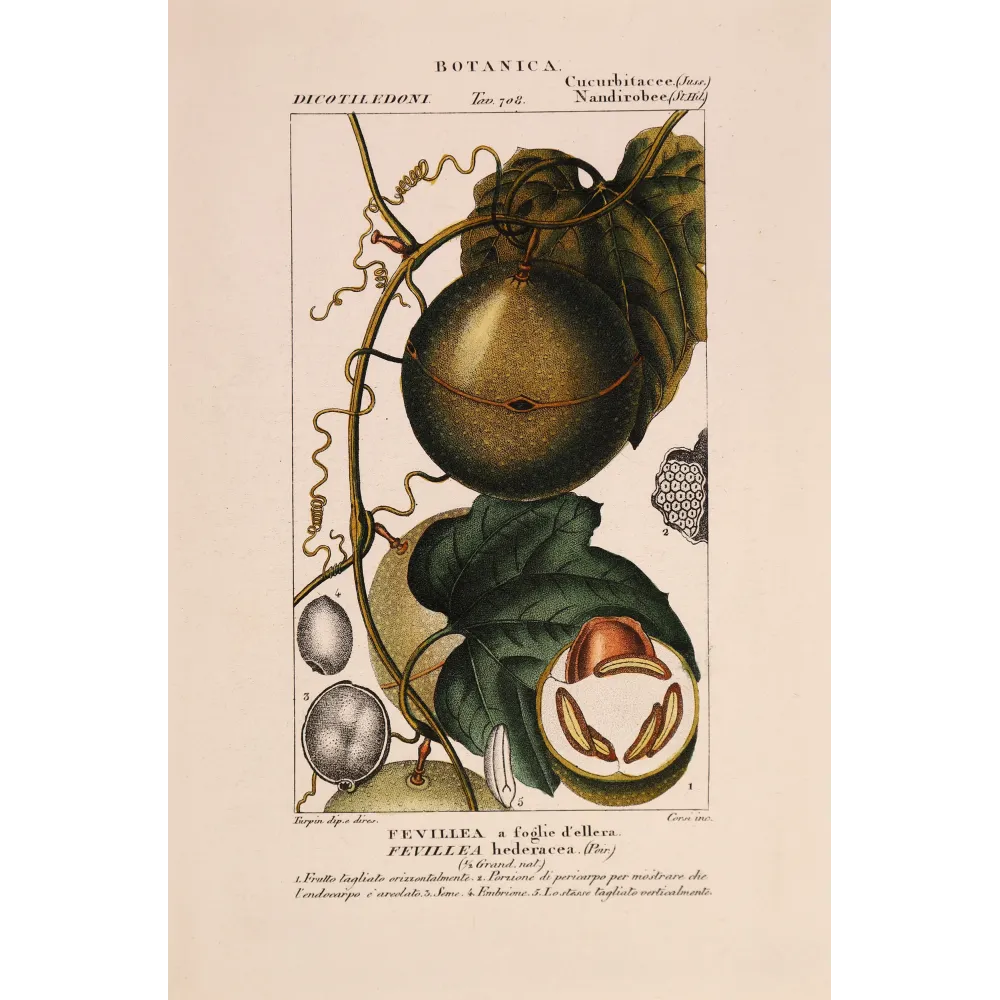
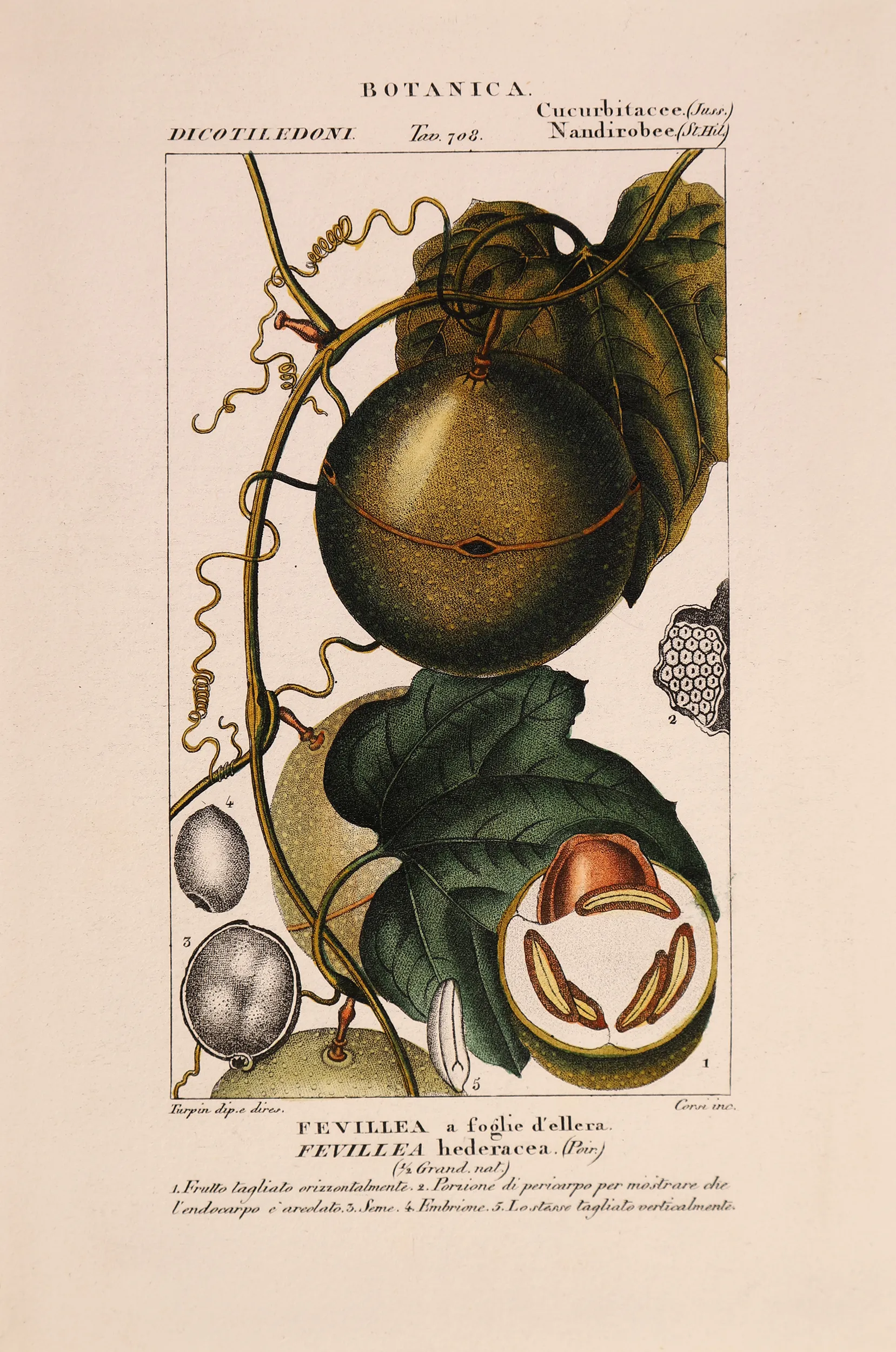
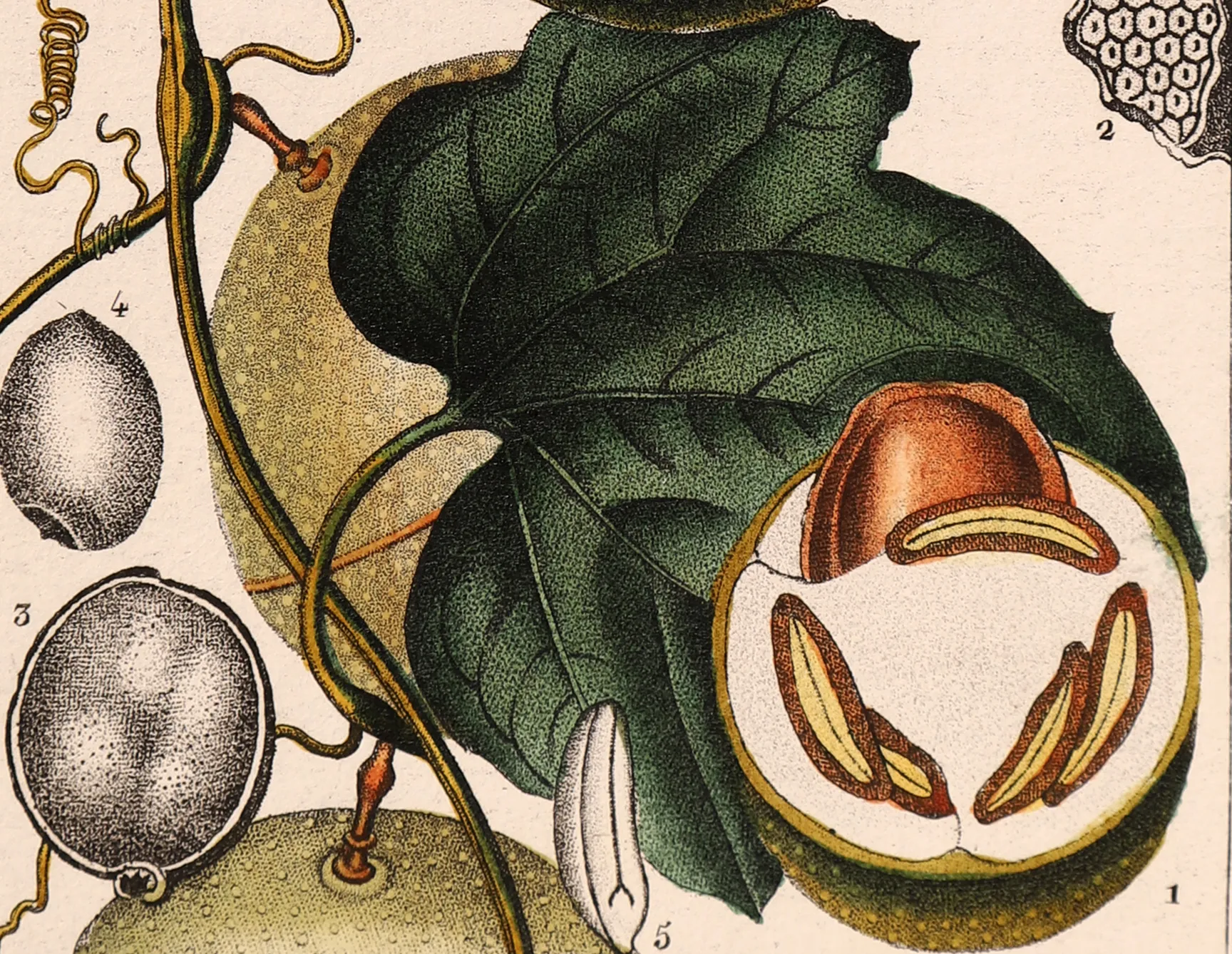
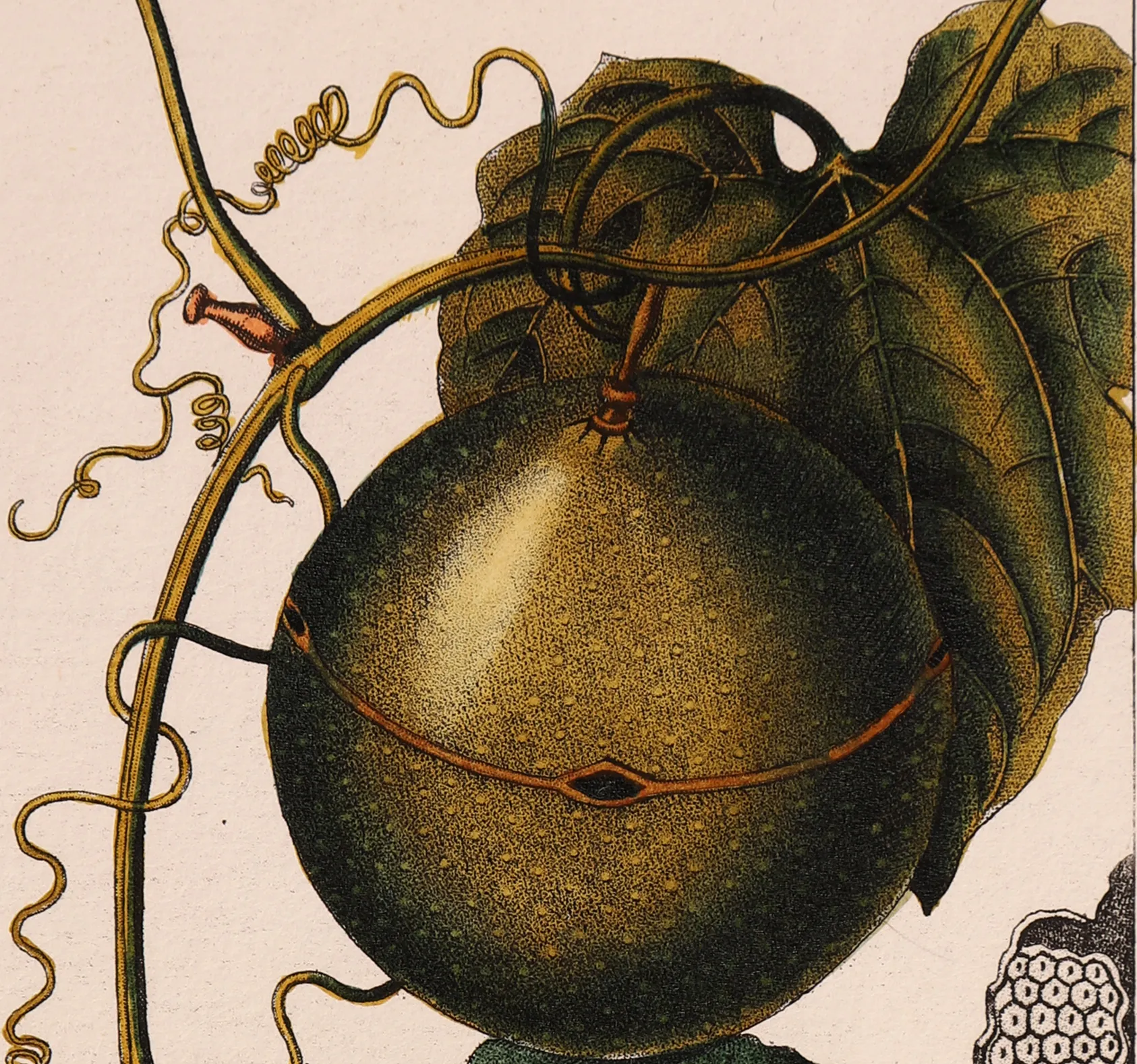
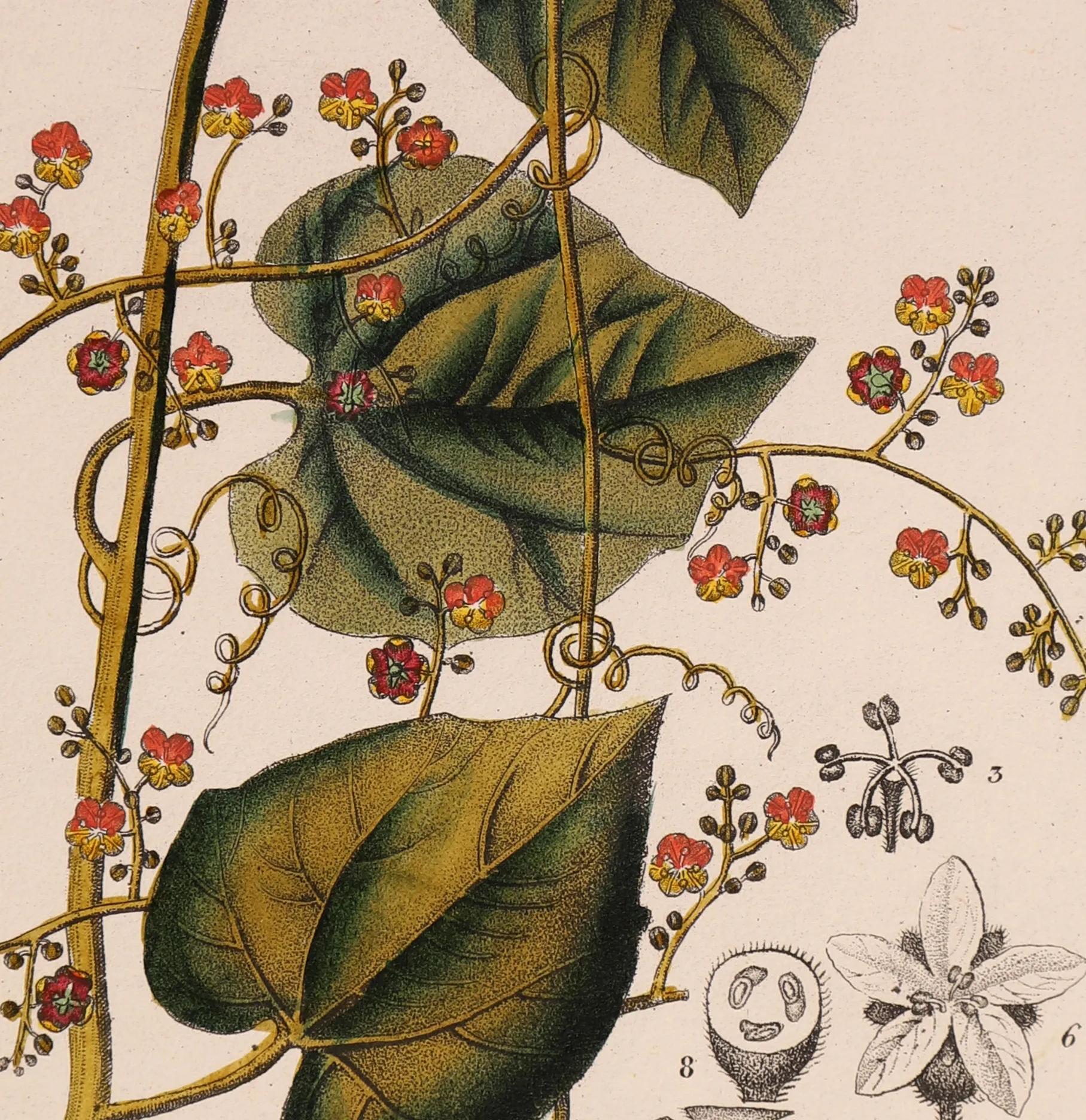

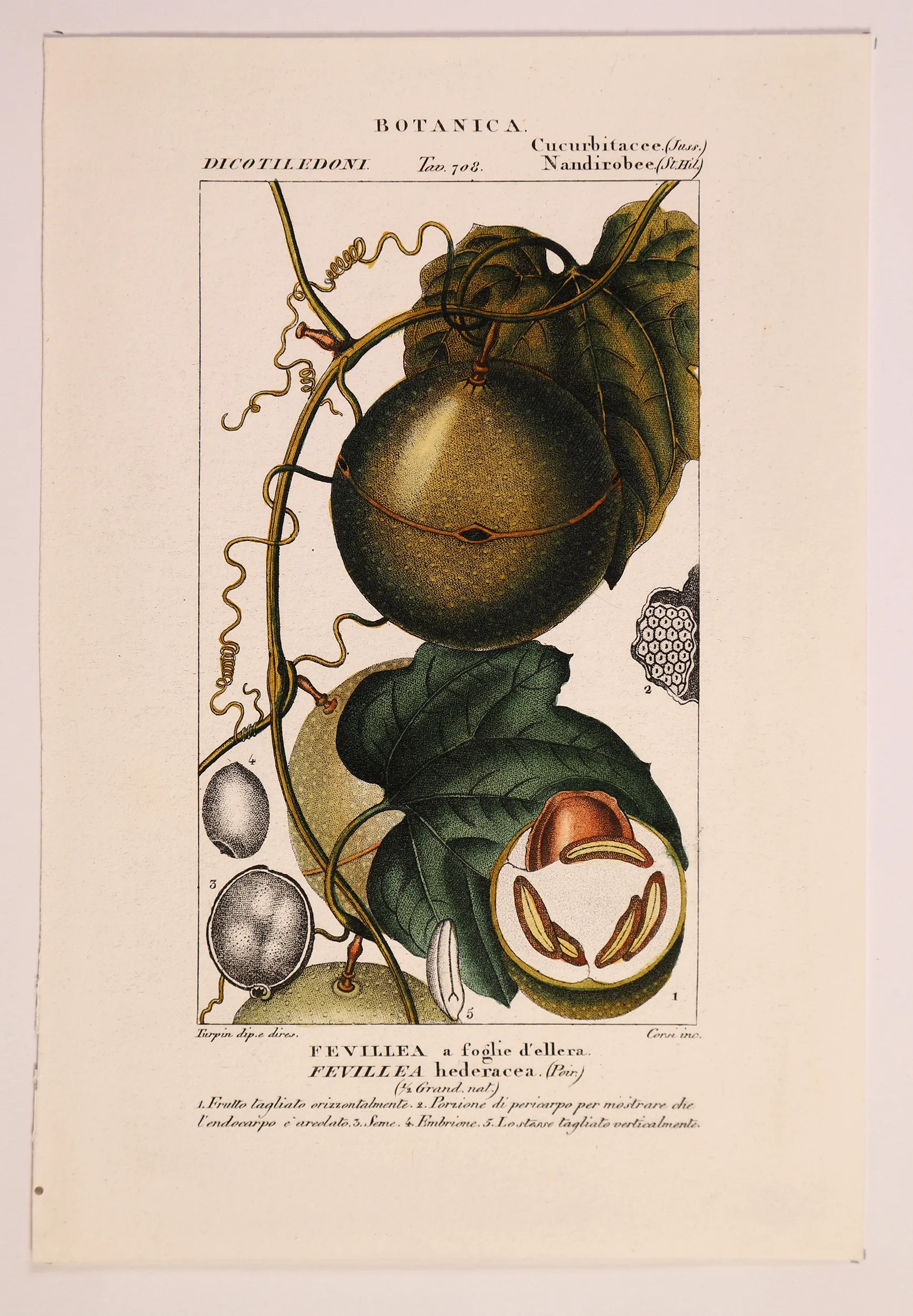
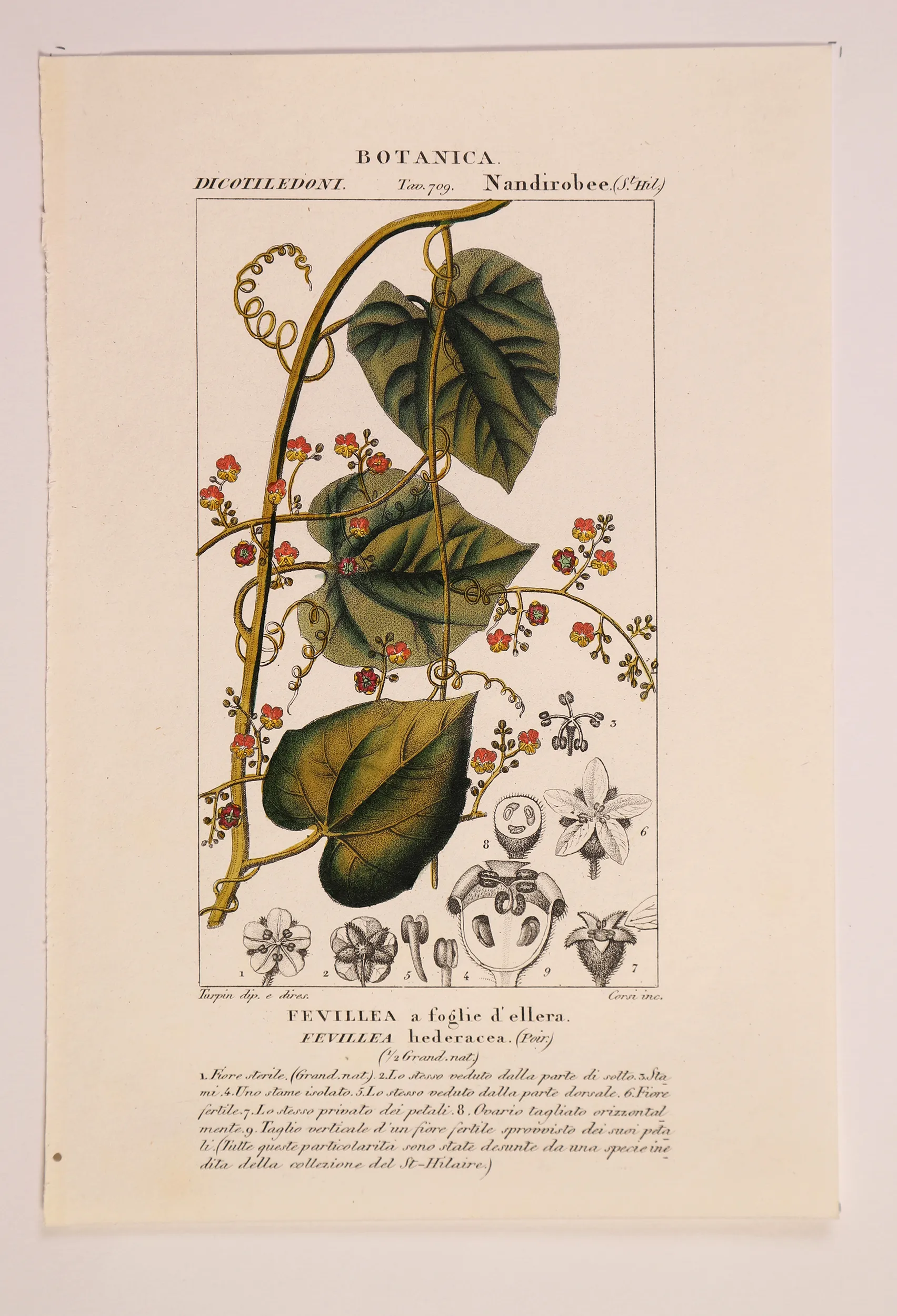
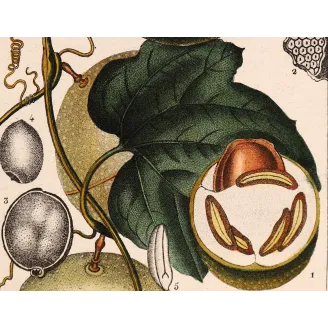
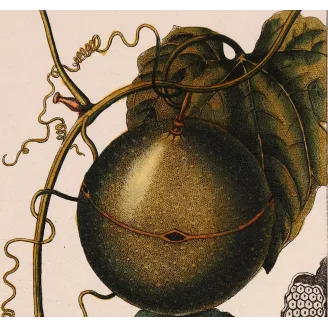
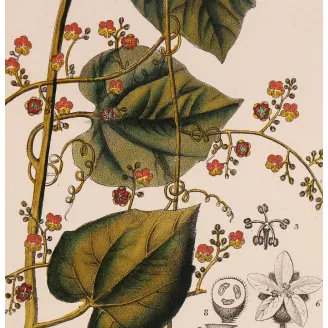
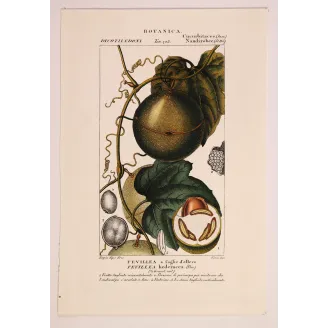
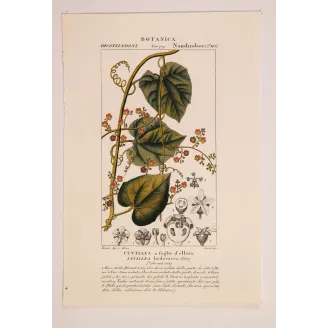
A coordinated pair of engravings depicting *Fevillea hederacea*, with intricate tendrils and elegant fruit structure, hand-colored with precision.
 Delivery policy
Your print will be carefully prepared and shipped worldwide via trusted couriers (UPS or similar).
 Authentic antique prints
Original engravings from the 17th–19th century.
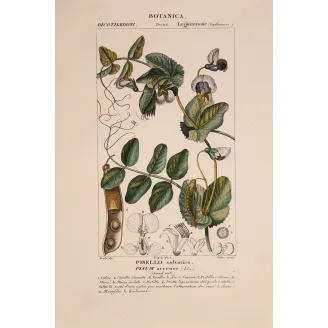
This micro-ensemble brings together two original hand-colored engravings dedicated to Fevillea hederacea, a climbing vine of the Cucurbitaceae family. Conceived as a paired study, the plates alternate between presence and explanation: one emphasizes the fruit’s volume and internal structure, while the companion plate expands the floral anatomy and reproductive forms in finely engraved detail.
The composition is unmistakably Turpin: restrained, lucid, and quietly elegant. The suspended fruit—rendered as a weighty orb with subtle tonal modulation—creates a visual anchor, while the curling tendrils and broad leaves introduce movement and rhythm without becoming ornamental excess. The careful cut sections and magnified details below preserve the plate’s scientific authority, yet remain integrated into the overall balance.
Both engravings belong to the Italian edition of the Dizionario di Scienze Naturali (Florence, Battelli press), a monumental early nineteenth-century encyclopedic publication dedicated to systematic natural history.
— • —
As a pair, the two plates read like a single visual narrative. The first is built around mass and suspension: the fruit’s rounded form is set against a disciplined architecture of leaf planes, with tendrils acting as elegant calligraphic lines. The second plate shifts the focus toward botanical “grammar”—flower structures and sectional views—yet retains a decorative coherence through scale, spacing, and the measured distribution of detail.
The palette is controlled and interior-friendly: deep greens, olive shadows, and warm fruit tones that feel both natural and curated. Hung together, they offer the rare balance of intellectual clarity and decorative calm—an artwork you can admire at a distance and “read” up close.
Fevillea hederacea is a tropical climbing plant within the gourd family, admired for its vigorous tendrils, architectural foliage, and distinctive fruit. In botanical illustration, vines such as this offer an ideal subject: they unite structure and movement, the geometry of fruit with the delicacy of floral anatomy.
Within early nineteenth-century European publishing, such species can be understood as part of Turpin’s “fruits of the global age” — plants that entered botanical literature alongside expanding commercial networks and scientific exchange between continents. These plates therefore reflect not only a botanical specimen, but an era when knowledge traveled and nature was catalogued with unprecedented ambition.
These two plates form part of the historic Dizionario di Scienze Naturali, once preserved within a noble library and today housed in the Sacchetti Collection. Each engraving embodies a period when scientific investigation was supported by exceptional artisanal skill — from the precision of the engraved copperplate line to the carefully applied hand-colouring executed sheet by sheet.
To explore the refined provenance of these works, we invite you to read our editorial feature “Not Just Another Print”.
Both engravings are preserved in excellent antique condition. The sheets present clean margins and sharp, well-defined impressions. The original early nineteenth-century smooth wove paper remains stable and evenly toned. No watermark has been observed. The hand-colouring retains clarity, particularly in the fruit’s subtle tonal gradations, the deep green foliage, and the fine engraved analytical details.
For further context on Pierre Jean François Turpin and his contribution to nineteenth-century botanical science, see our editorial feature:
Pierre Jean François Turpin – The Botanical Illustrator of Natural Harmony
Specific References
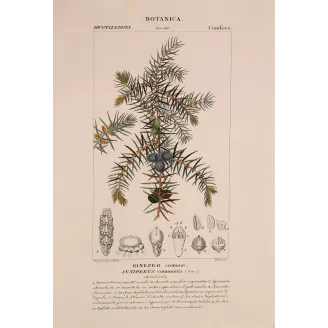
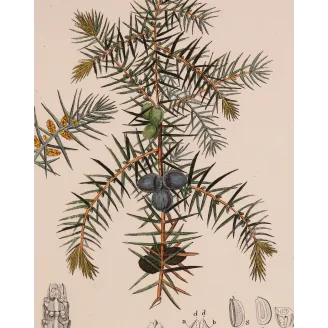
Elegant hand-colored plate of the juniper plant with berries and cone structure.
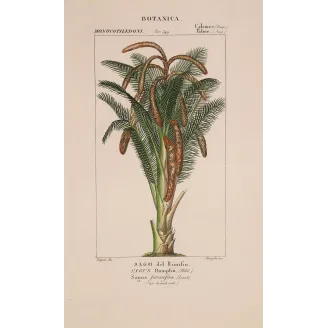
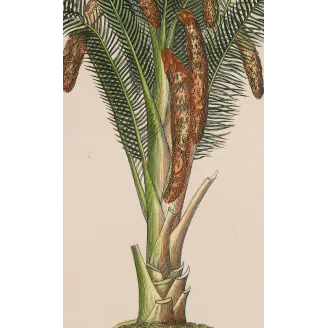
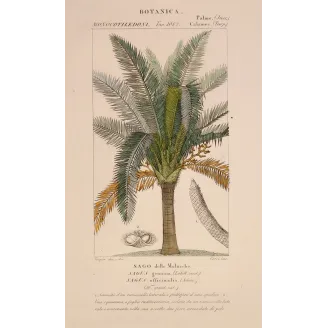
A pair of plates dedicated to the sago palm tree and its structural details.
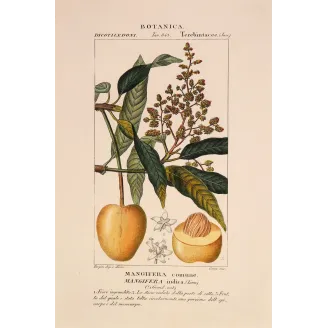
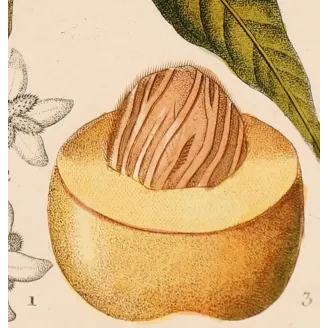
Vibrant hand-colored depiction of *Mangifera indica*, the mango tree, highlighting its lush leaves, golden fruit, and floral details.
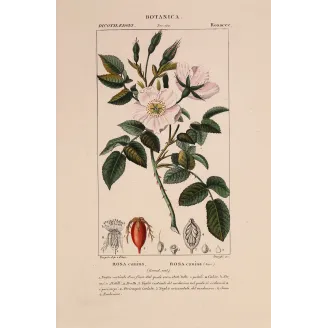
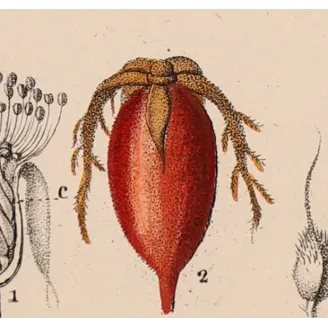
Delicate dog rose flower with soft pink petals and fine botanical details.
A warm-toned botanical engraving of *Achras sapota*, featuring its rounded fruit and large green leaves with exquisite texture
Delicate orchid illustration showing flower, pod and internal anatomy of vanilla.
Botanical plate of avocado with whole fruit, seed, and internal anatomy.
Colorful botanical illustration of Pisum arvense, wild pea, engraved by Turpin.
A unique lot of 7 hand-colored antique prints depicting various species of algae, illustrated by Turpin and Prêtre.
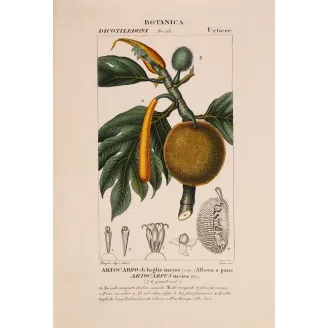
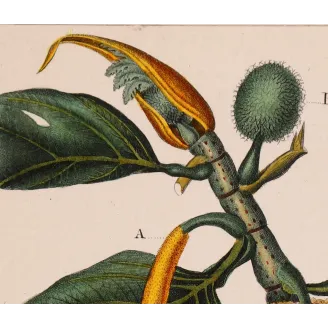
An extraordinary 19th-century engraving of *Artocarpus incisa*, the breadfruit tree, showcasing its bold leaves and unique fruit texture.
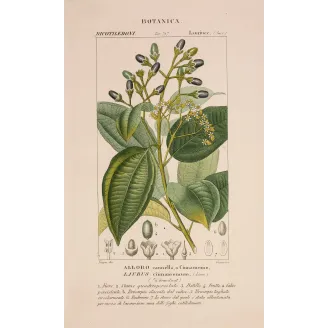
Finely detailed print of Laurus cinnamomum by Turpin, from the Dizionario di Scienze Naturali.
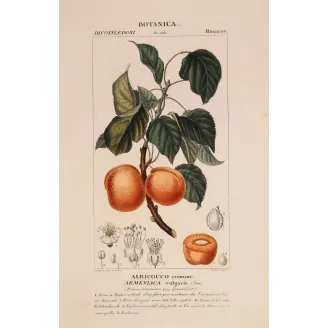
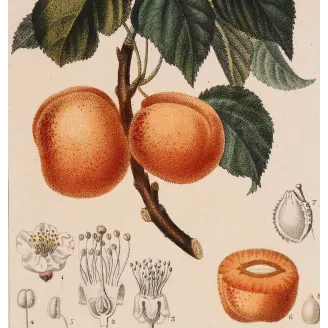
Original 19th-century botanical engraving of the common apricot, showing its velvety orange fruits and lush green leaves, rendered with great naturalistic balance.
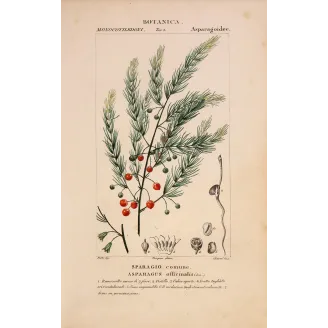
Botanical print of Asparagus officinalis by Turpin, featuring vivid orange berries.
Graceful composition of bay laurel with fruits, blossoms, and internal flower structure.
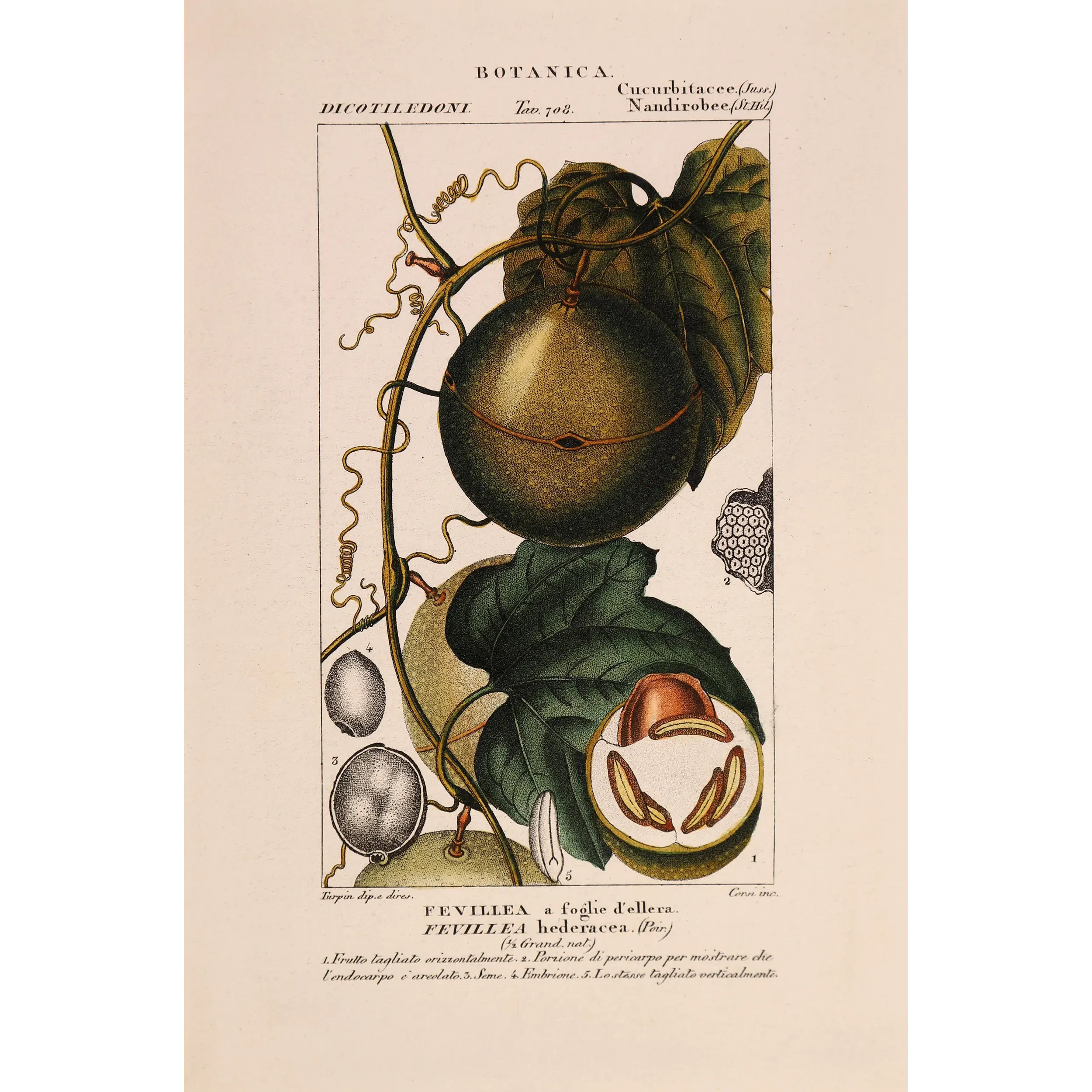
A coordinated pair of engravings depicting *Fevillea hederacea*, with intricate tendrils and elegant fruit structure, hand-colored with precision.