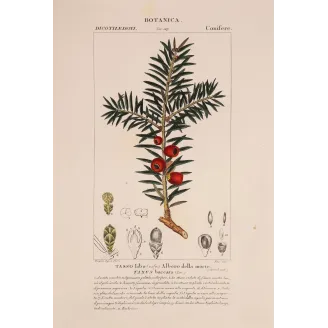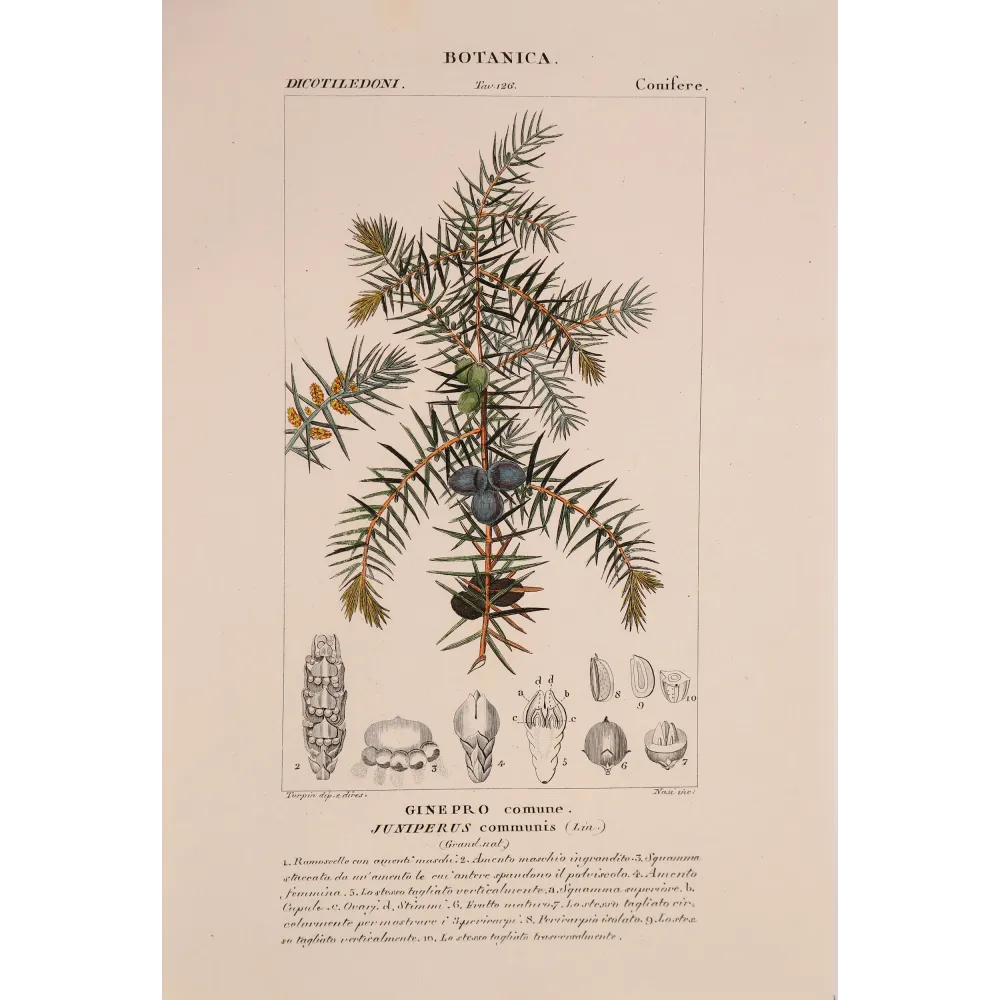
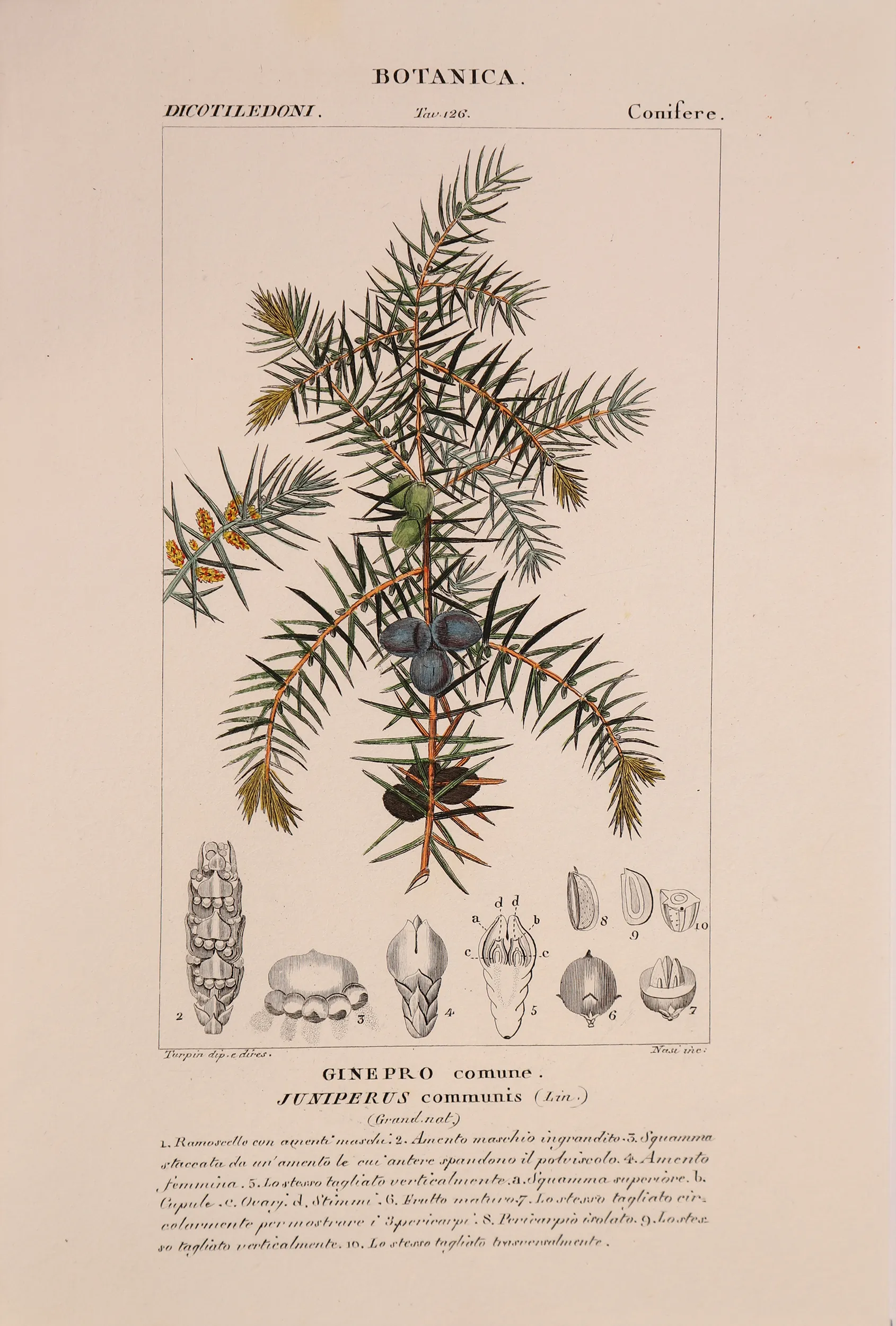
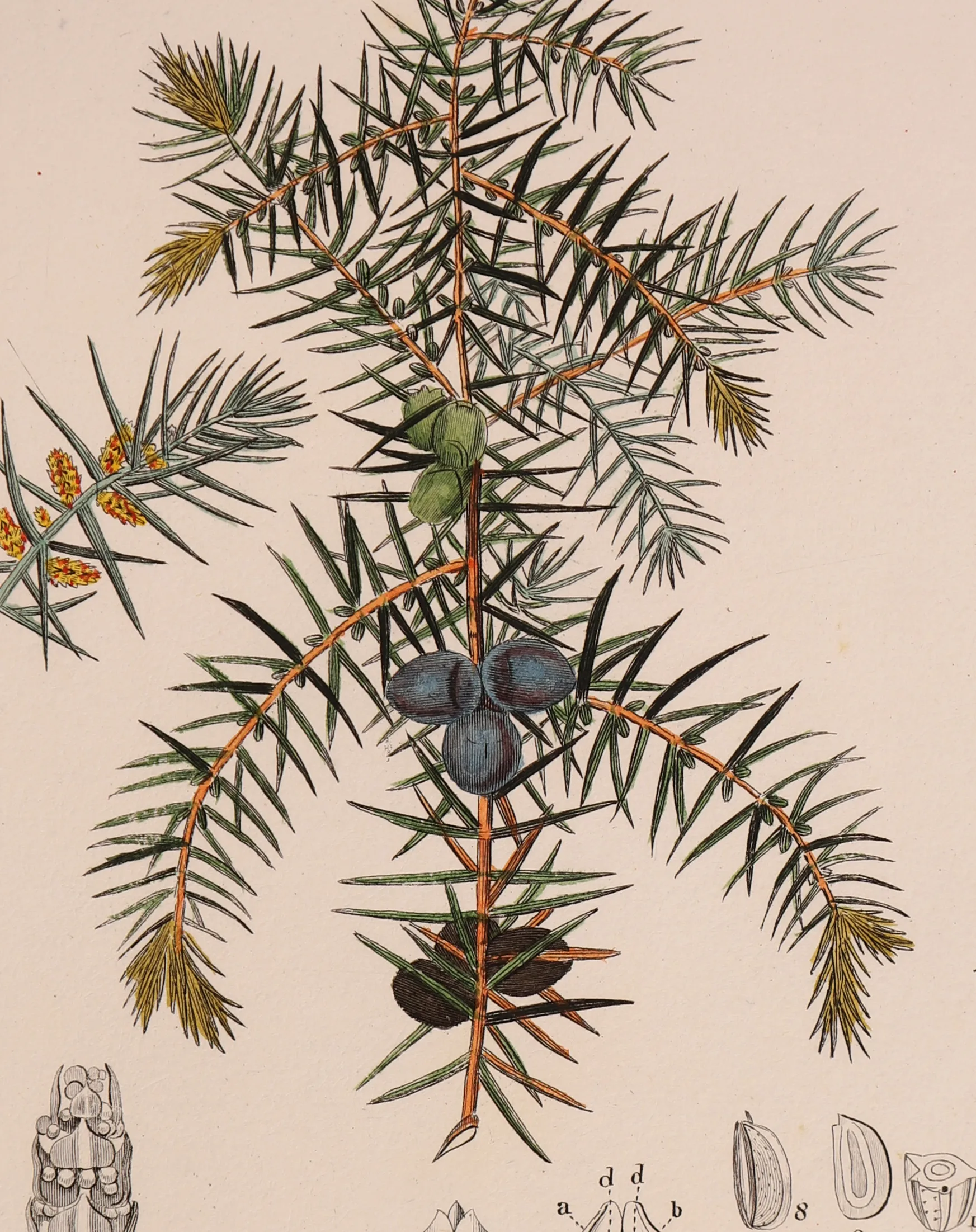

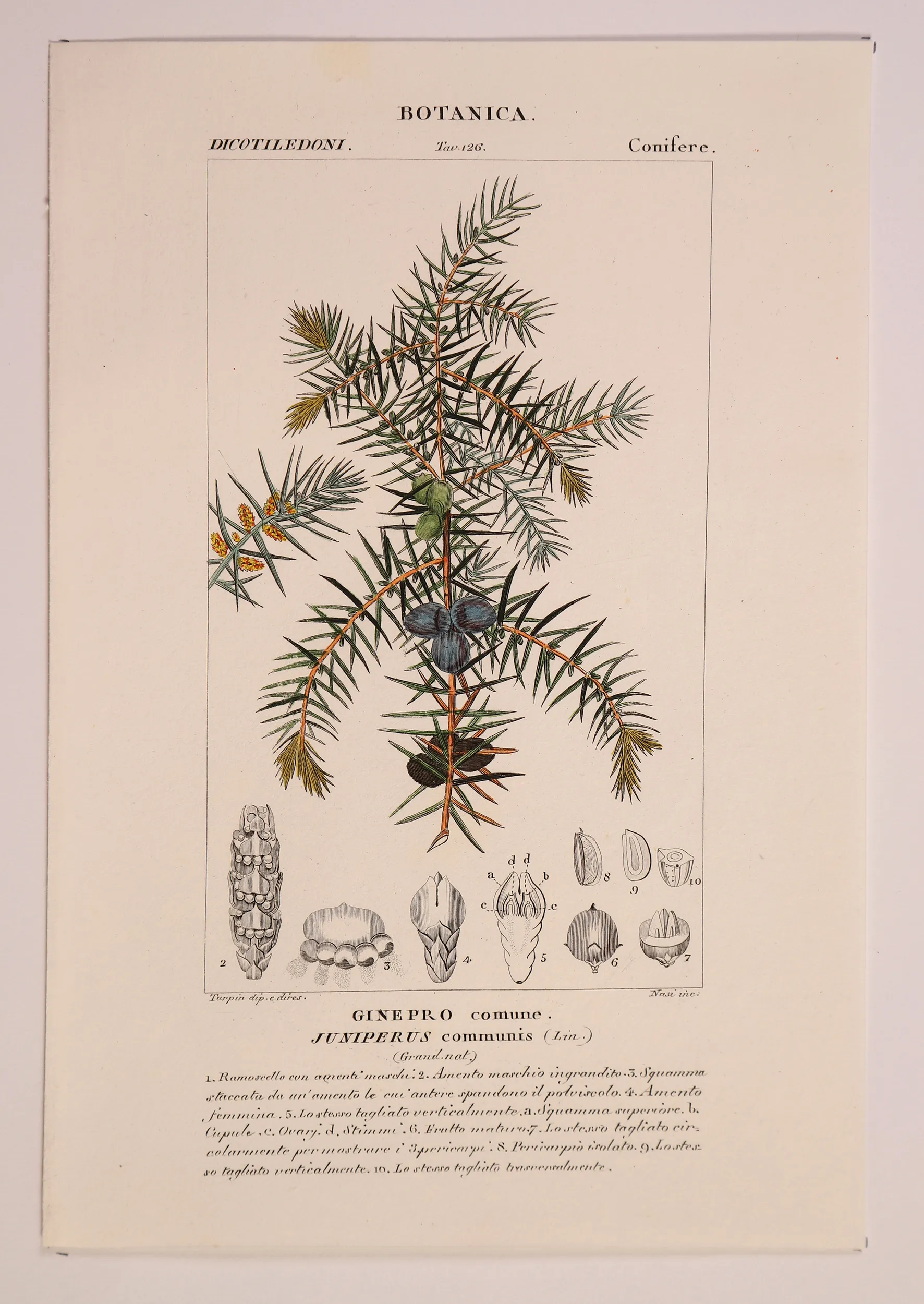
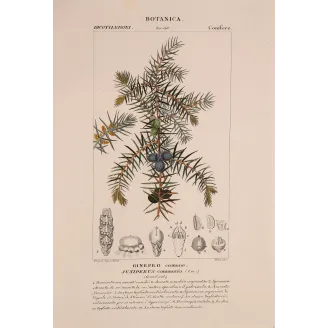
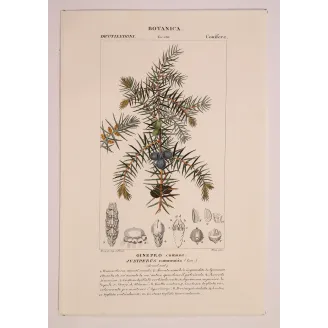
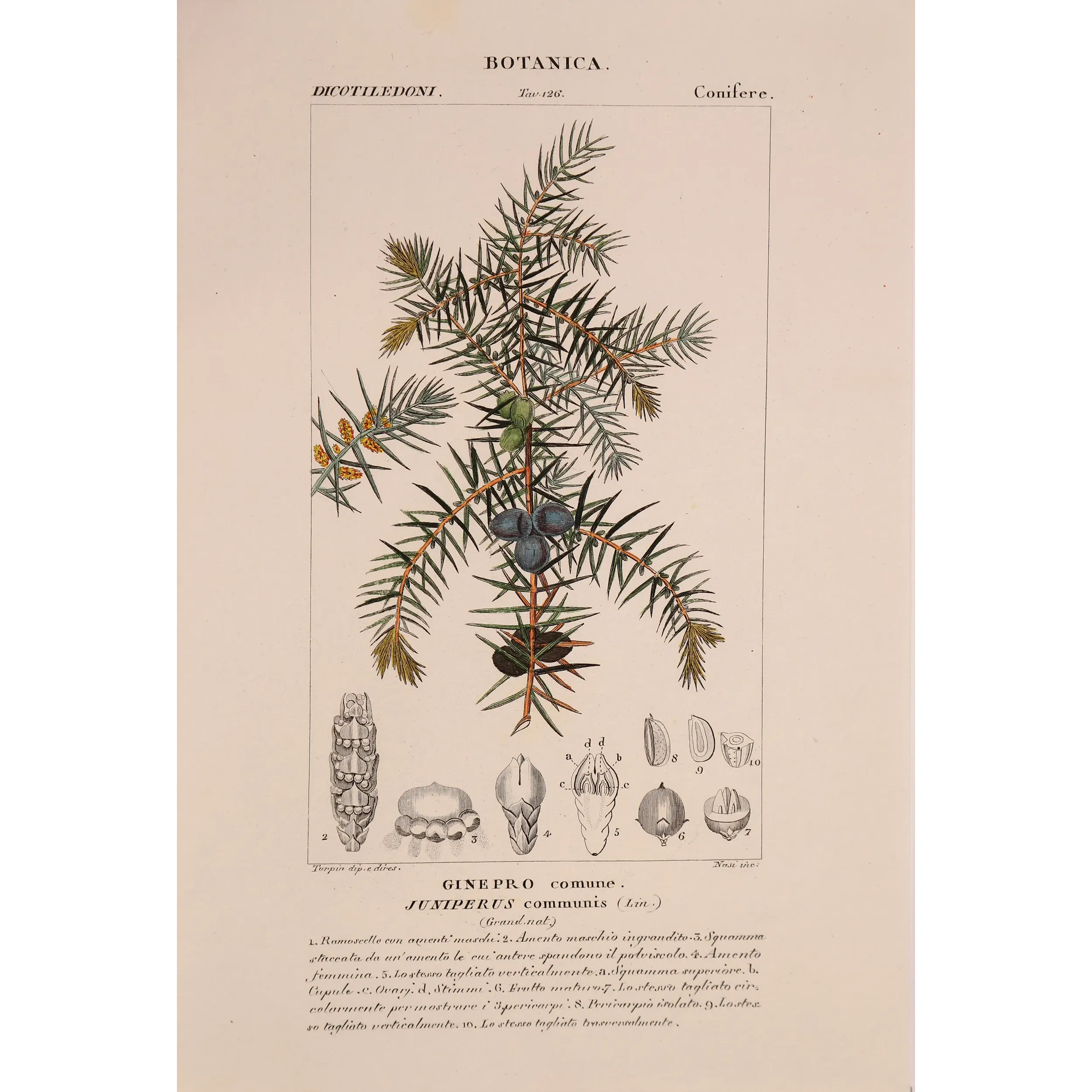
Elegant hand-colored plate of the juniper plant with berries and cone structure.
 Delivery policy
Your print will be carefully prepared and shipped worldwide via trusted couriers (UPS or similar).
 Authentic antique prints
Original engravings from the 17th–19th century.
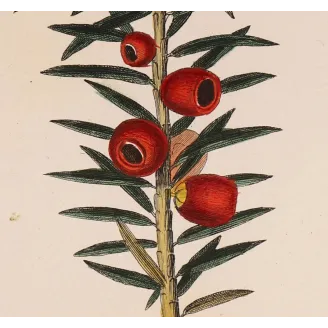
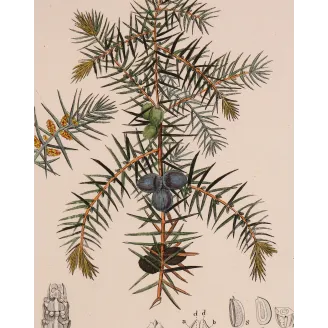
This finely executed engraving depicts Juniperus communis, the common juniper, presented with botanical clarity and compositional restraint. The branching structure, needle-like foliage and characteristic bluish berry-cones are rendered with precision, combining aesthetic balance with taxonomic intelligibility.
Turpin isolates the specimen against a neutral ground, allowing the architectural quality of the branch to unfold vertically. The mature cones, with their distinctive deep blue tone, introduce a subtle chromatic accent within the otherwise restrained palette of greens and muted browns.
The plate belongs to the Italian edition of the Dizionario di Scienze Naturali (Florence, Battelli press), an early nineteenth-century encyclopedic work dedicated to documenting the natural world through rigorous observation and refined engraving.
— • —
The composition unfolds along a slender vertical axis, with lateral branches extending rhythmically on either side. The spiny foliage creates a dynamic interplay of line and negative space, giving the plate an almost graphic sharpness. The rounded berry-cones provide visual counterpoints to the angular needles, establishing balance between geometry and organic irregularity.
The lower analytical figures — cones, seeds and sectional studies — reinforce the scientific integrity of the sheet without disrupting its visual harmony. The restrained hand-colouring enhances structure rather than decoration, maintaining clarity of form.
Juniperus communis is one of the most widely distributed conifers in the Northern Hemisphere, thriving in harsh climates and poor soils where few other woody plants can survive. Its aromatic berry-cones have long been valued in European culinary and medicinal traditions, and from the seventeenth century onward became essential in the production of gin, lending the spirit its defining botanical character. In botanical classification, the juniper occupies an important position among conifers, illustrating reproductive structures distinct from flowering plants and thus broadening early nineteenth-century understanding of plant diversity. Its inclusion in encyclopedic works such as the Dizionario di Scienze Naturali reflects both ecological significance and economic relevance within European culture.
This plate forms part of the historic Dizionario di Scienze Naturali, once preserved within a noble library and today housed in the Sacchetti Collection. Each engraving reflects a period when scientific scholarship was supported by exceptional artisanal execution — from the precision of the engraved copperplate line to the carefully balanced hand-colouring applied individually to every sheet.
Such works stand not merely as decorative images, but as authoritative visual documents of knowledge. To explore the broader story of these rare prints and their refined provenance, we invite you to read our editorial feature “Not Just Another Print”.
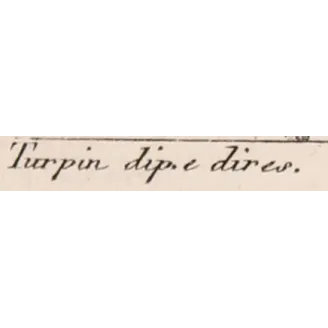
The engraving is in excellent antique condition. The sheet presents clean margins and a clear impression. The paper is smooth early nineteenth-century wove paper (non-laid). No watermark has been observed. The original hand-colouring remains fresh and well preserved. The engraved credit “Turpin dis.” is present, confirming the original drawing by Pierre Jean François Turpin.
For further context on Pierre Jean François Turpin and his contribution to nineteenth-century botanical science, see our editorial feature:
Pierre Jean François Turpin – The Botanical Illustrator of Natural Harmony

Specific References
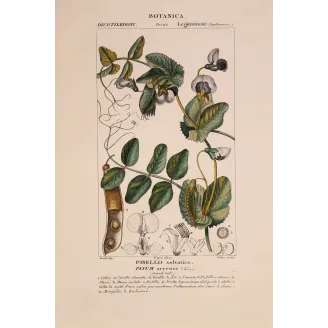
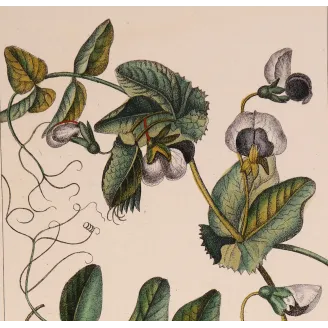
Colorful botanical illustration of Pisum arvense, wild pea, engraved by Turpin.
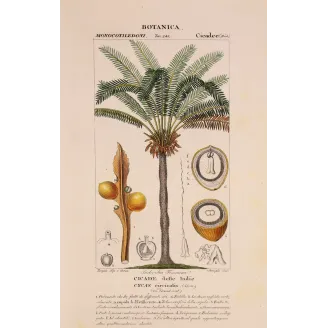
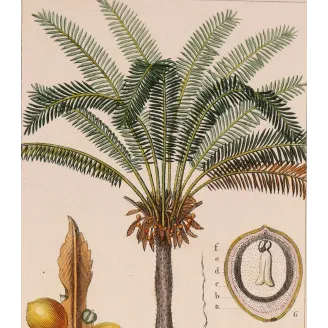
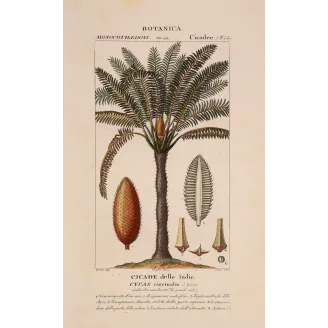
A detailed antique plate of Cycas circinalis, the Indian Sago Palm, showing the female specimen and fruit anatomy.
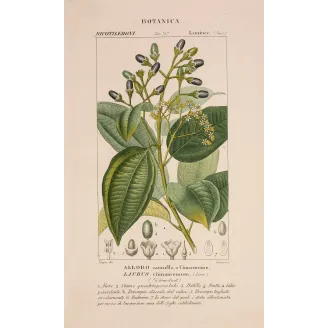
Finely detailed print of Laurus cinnamomum by Turpin, from the Dizionario di Scienze Naturali.
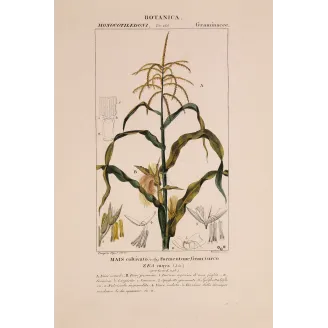
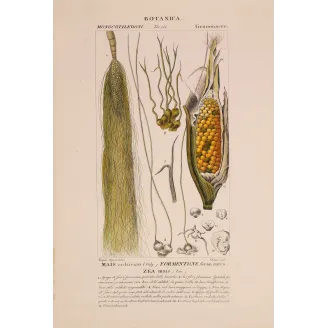
Double plate of cultivated maize (Zea mays) from Turpins botanical series.
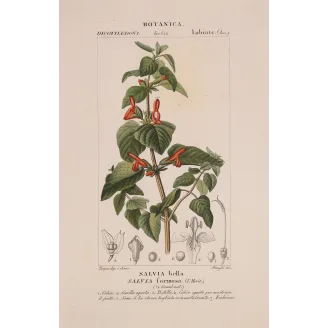
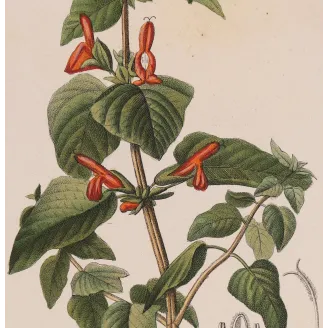
Vivid botanical plate of Salvia formosa, with striking red-orange tubular flowers.
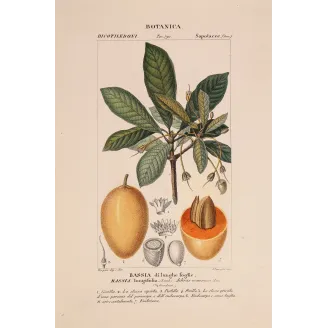
A rare depiction of *Bassia longifolia*, showing its elongated leaves and fruit sections in precise scientific detail and soft hand-colored tones.
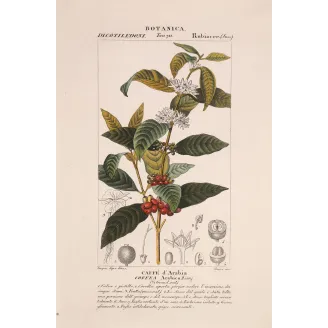
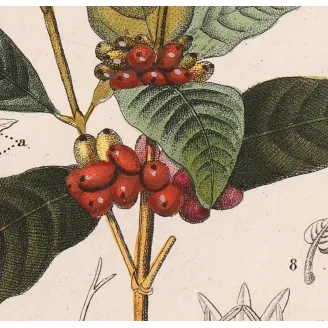
Botanical plate of Coffea arabica with vivid red berries and detailed floral structure.
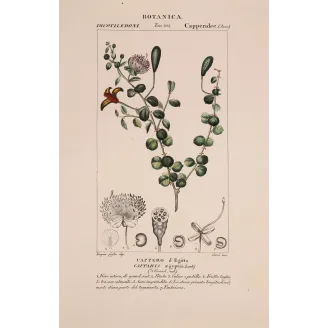
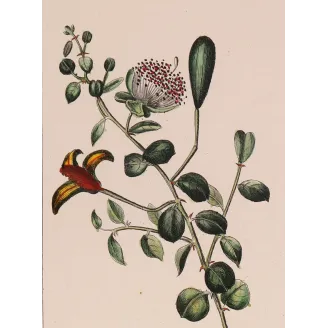
Vibrant caper plant illustration with both flowers and fruiting structures.
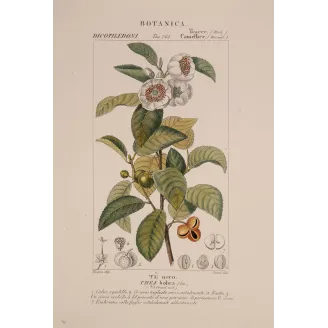
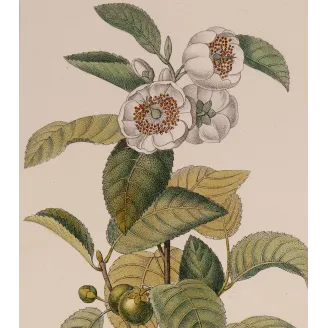
Delicate and detailed illustration of the tea plant, with floral and seed elements beautifully depicted.
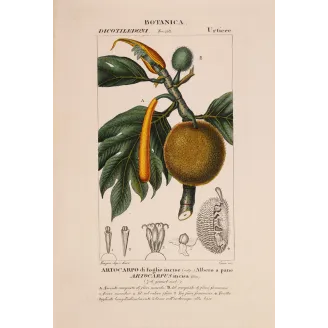
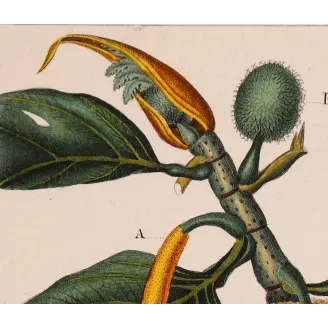
An extraordinary 19th-century engraving of *Artocarpus incisa*, the breadfruit tree, showcasing its bold leaves and unique fruit texture.
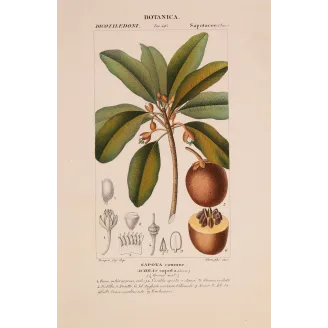
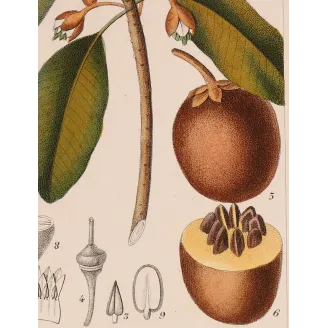
A warm-toned botanical engraving of *Achras sapota*, featuring its rounded fruit and large green leaves with exquisite texture
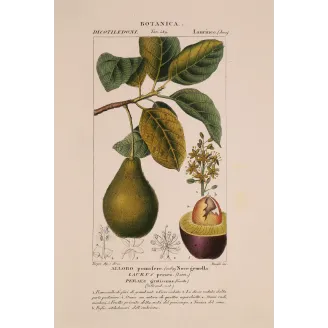
Botanical plate of avocado with whole fruit, seed, and internal anatomy.
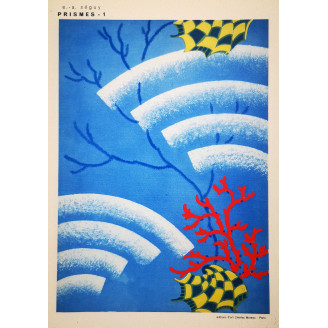
Original 1931 pochoir print by Émile-Allain Séguy. From the rare portfolio *Prismes*.
Elegant hand-colored plate of the juniper plant with berries and cone structure.